Get 50% OFF All Premium 3D & STL Models!

In the vibrant world of 3D visualization, from cinematic automotive rendering to immersive game development and detailed 3D printing, the demand for exceptionally crafted 3D car models and vehicle assets is constant. Artists and developers strive to achieve photorealism and functional accuracy, pushing the boundaries of digital creation. Crafting a vehicle model that not only looks stunning in a still render but also performs flawlessly in real-time environments requires a deep understanding of both artistic detail and technical optimization.
This pursuit of digital perfection is perfectly embodied by the Harley-Davidson FXDR 114 3D Model. It’s not just a collection of polygons; it’s a meticulously engineered digital twin of a legendary power cruiser, designed to meet the rigorous demands of professional workflows. Whether you’re a seasoned 3D artist looking for the next centerpiece for your portfolio, a game developer in need of a high-performance hero asset, or a hobbyist eager to bring a physical replica to life, this model offers unparalleled fidelity and versatility. Let’s delve into what makes a premium 3D vehicle asset truly stand out and how the FXDR 114 exemplifies these qualities.
The choice of file format for your 3D models is far more than a minor technical detail; it dictates compatibility, performance, and the scope of what you can achieve with your asset. For a versatile asset like the Harley-Davidson FXDR 114 3D Model, offered through platforms like 88cars3d.com, providing a comprehensive array of formats ensures maximum utility across diverse professional pipelines. Understanding each format’s strengths and weaknesses is crucial for optimizing your workflow, whether you’re focusing on automotive rendering, game assets, or physical production.
The .blend format is native to Blender, a powerful open-source 3D creation suite. When you receive a .blend file, you’re getting the complete scene, including the model’s geometry, materials, textures, lighting setups, cameras, and any modifiers or rigging applied. This makes it ideal for artists who primarily work in Blender, offering full editability and direct access to every aspect of the model. For the FXDR 114, this means a Blender user can immediately dive into customizing materials, adjusting topology, or even animating components with all original scene data preserved.
.fbx (Filmbox) is an industry-standard format developed by Autodesk, renowned for its ability to store not just geometry but also scene information like animations, cameras, lights, and skeleton deformations. It’s the go-to format for exporting assets between different 3D software packages and is almost universally supported by game engines like Unreal Engine and Unity. The .fbx version of the FXDR 114 3D Model ensures that its separate components (wheels, steering, suspension) are correctly grouped and pivoted for animation, making it game-engine ready for complex simulations and interactive experiences.
The .obj (Wavefront Object) format is one of the most widely supported and simplest 3D file formats. It primarily stores geometry (vertices, normals, texture coordinates, and faces) and can reference external .mtl (material) files for basic material properties. While it doesn’t support advanced features like animation or rigging, its universal compatibility makes it an excellent choice for straightforward mesh transfer between virtually any 3D software. For the FXDR 114, the .obj provides a clean, raw mesh suitable for import into obscure software or for users who prefer to set up materials from scratch.
.glb (GL Transmission Format Binary) is the binary version of glTF, a royalty-free specification for the efficient transmission and loading of 3D scenes and models by applications. It’s often called the “JPEG of 3D” due to its optimization for web and real-time viewing, combining model data, textures, and animations into a single, compact file. This format is perfect for integrating the FXDR 114 into AR/VR experiences, online product configurators, or interactive 3D viewers directly in a web browser, ensuring fast loading and consistent visual quality.
The .stl (Standard Tessellation Language or Stereolithography) format represents 3D surfaces using a collection of interconnected triangles. It is the de facto standard for 3D printing, defining only the surface geometry of a 3D object without any color, texture, or material information. The inclusion of an .stl file for the FXDR 114 explicitly caters to hobbyists and professionals looking to physically manifest the model, offering a direct path to creating display-scale replicas with recommended print settings for optimal detail.
.ply (Polygon File Format) is a file format for storing graphical objects as a collection of polygons. It’s similar to .obj but can store more complex properties, including color, transparency, and even specific data for each vertex or face. While not as common for general asset exchange, it’s often used in applications involving 3D scanning, scientific visualization, or CAD/CAM due to its precision and ability to handle complex point cloud data. For specialized analysis or reverse engineering tasks involving the FXDR 114, the .ply format offers a robust mesh representation.
The .unreal format, or more accurately, an optimized asset specifically prepared for Unreal Engine, typically refers to an .fbx import that has been carefully configured within Unreal. This includes proper material setup using Unreal’s PBR workflow, collision meshes, LODs (Levels of Detail), and appropriate pivot points for interactive elements. While not a standalone file extension in the same way as .fbx or .obj, providing a “.unreal” optimized asset means the FXDR 114 has been tested and packaged to drop directly into an Unreal Engine project with minimal setup, saving significant development time for game developers.
The .max format is the native file type for Autodesk 3ds Max, one of the most widely used 3D modeling, animation, and rendering software packages in the industry. Like .blend, it contains all scene information, allowing 3ds Max users full access to the model’s construction, materials, lighting, and animation setups. For those working in architectural visualization, high-end commercial rendering, or product design, the .max version of the FXDR 114 offers the most flexibility for integration into existing 3ds Max scenes and leveraging its powerful rendering capabilities.
This comprehensive suite of formats for the Harley-Davidson FXDR 114 3D Model available on 88cars3d.com underscores a commitment to flexibility and professional utility, ensuring that artists and developers can access and utilize the model in their preferred software and pipeline with minimal friction.
The allure of the Harley-Davidson FXDR 114 lies in its audacious design and powerful stance. Translating this real-world presence into a compelling 3D model requires an acute eye for detail and a mastery of digital craftsmanship. The Harley-Davidson FXDR 114 3D Model distinguishes itself by meticulously replicating every curve, component, and characteristic that defines this iconic machine, making it an invaluable asset for any creative project.
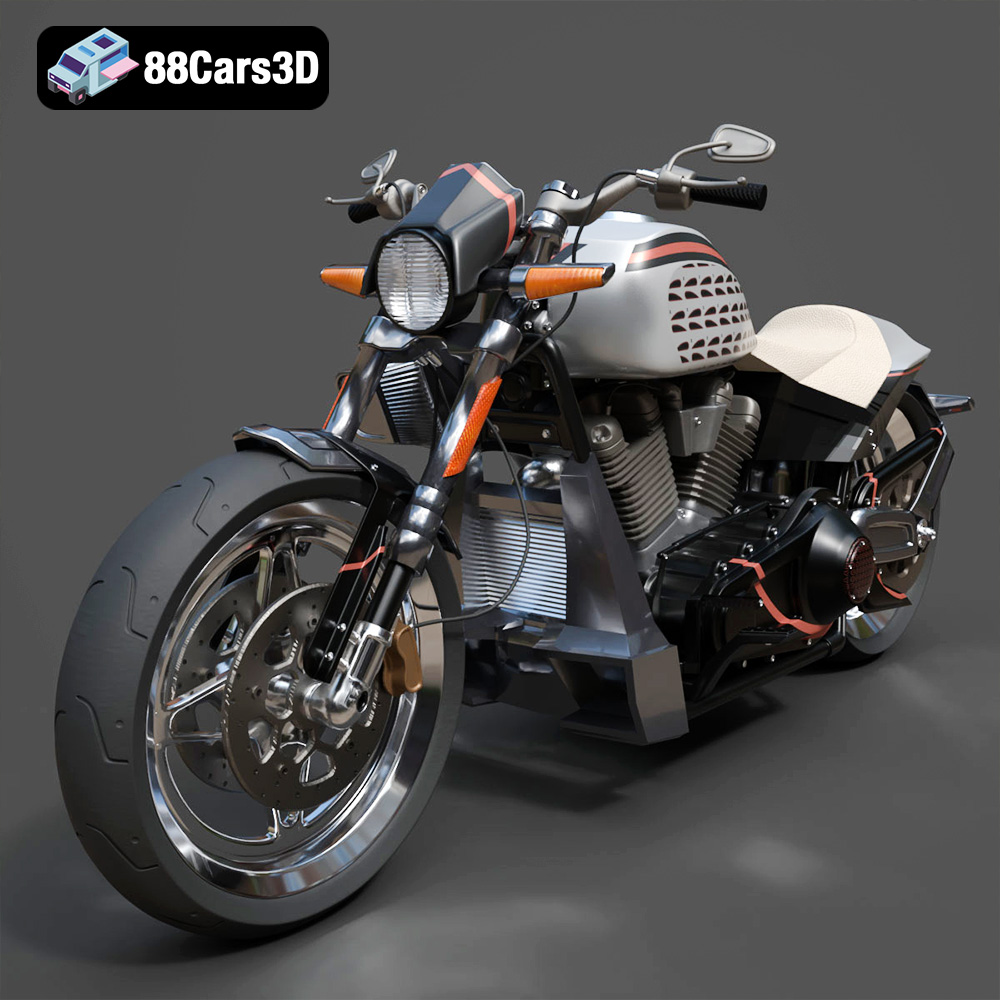
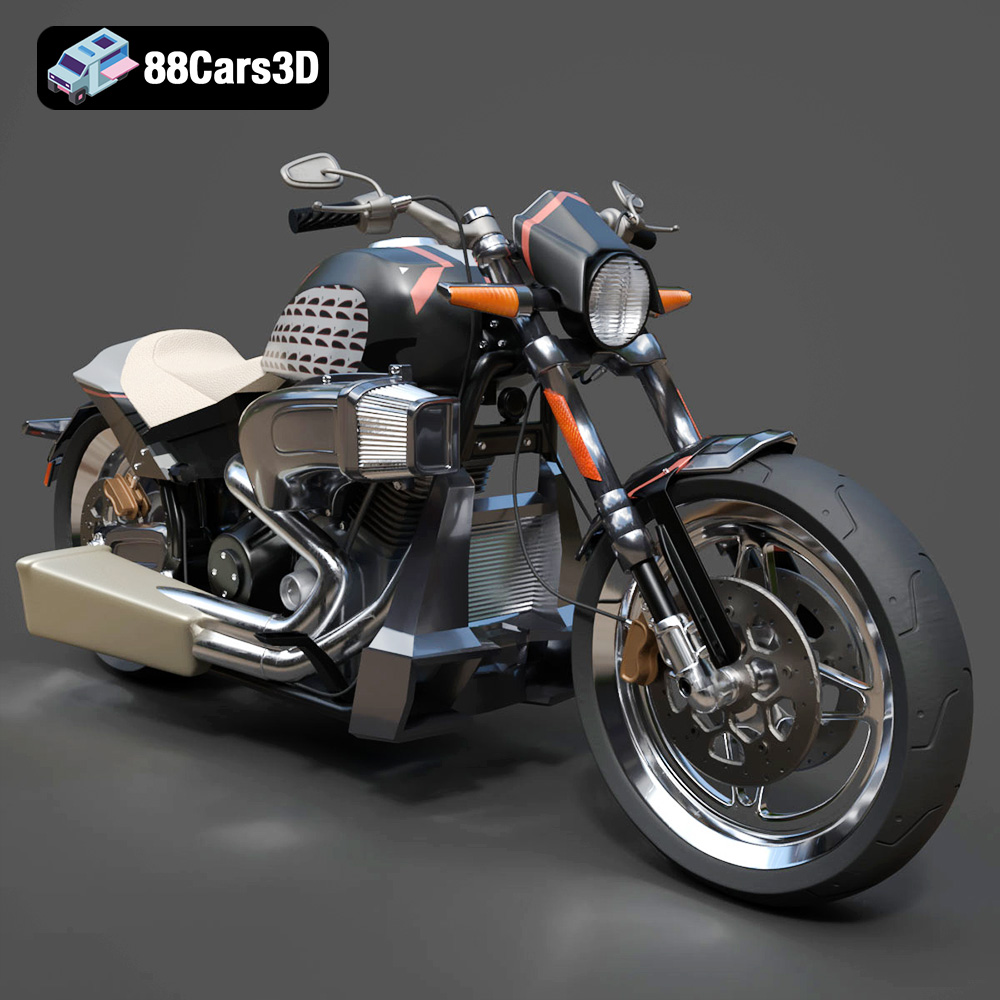
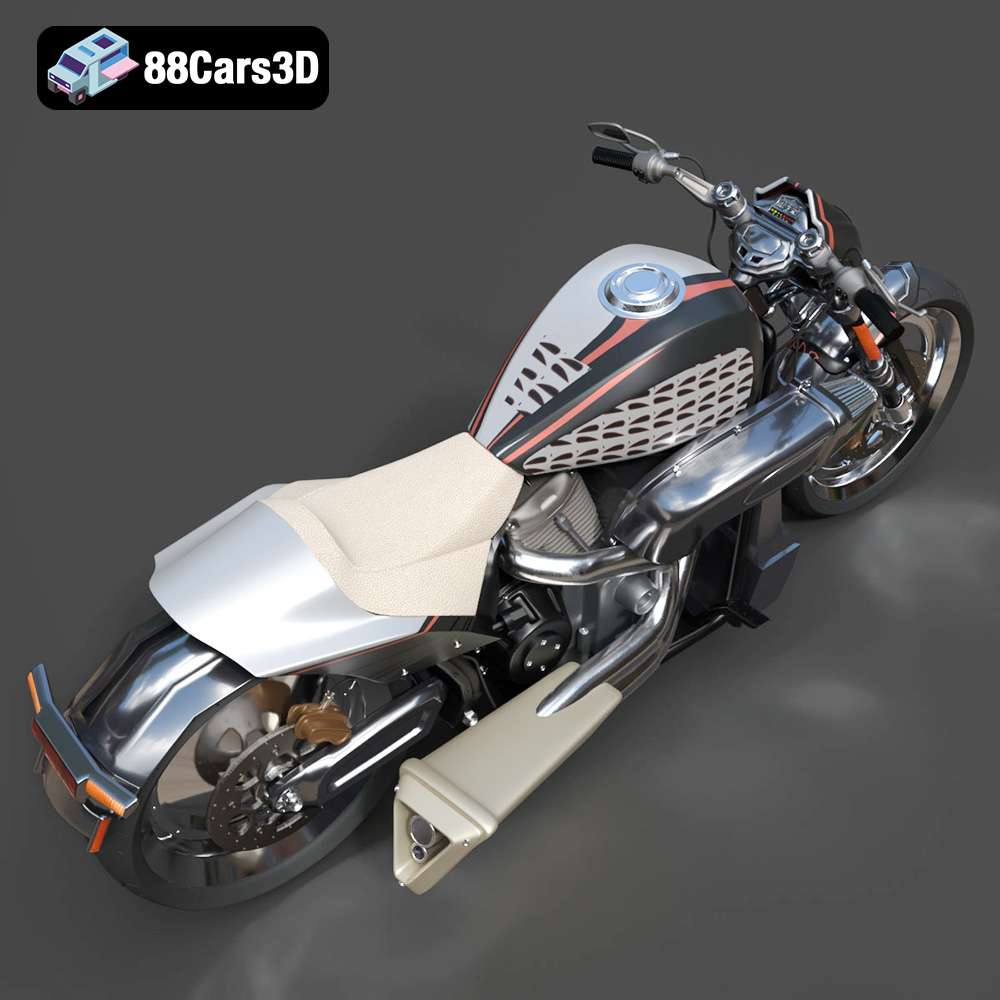
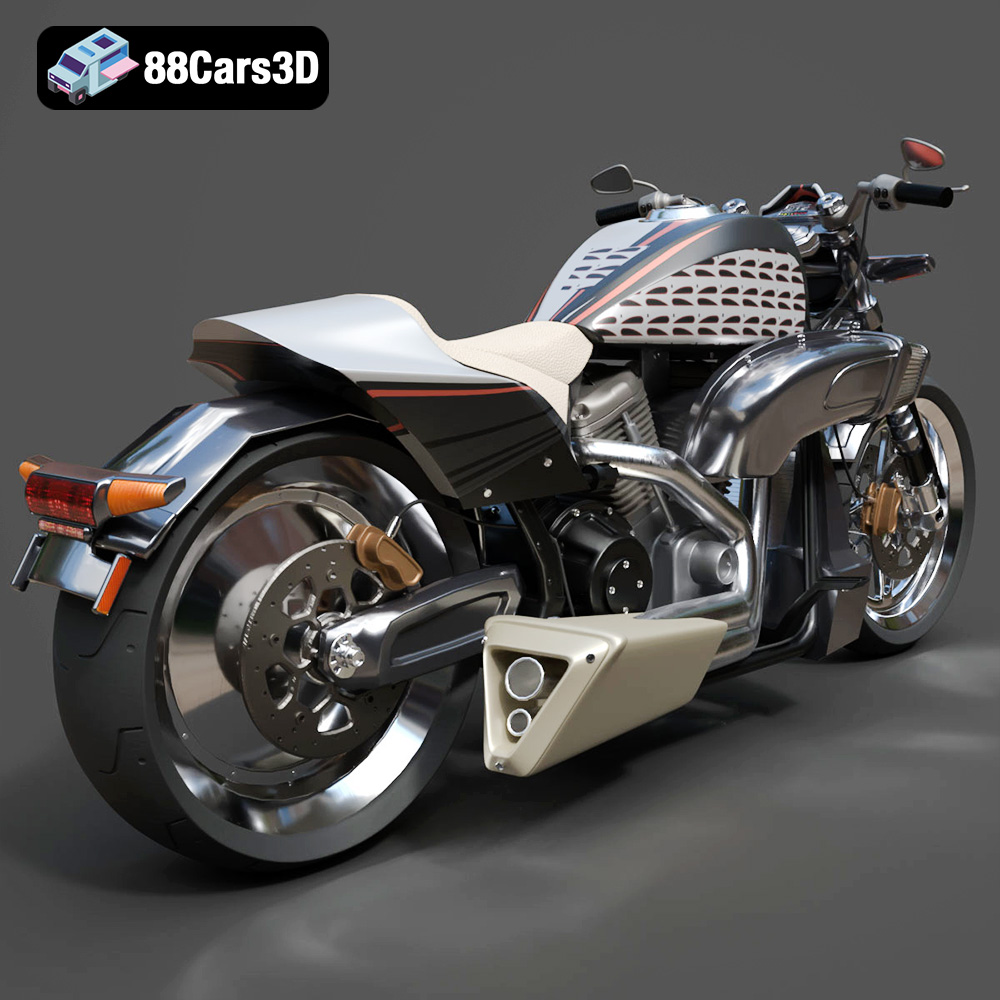
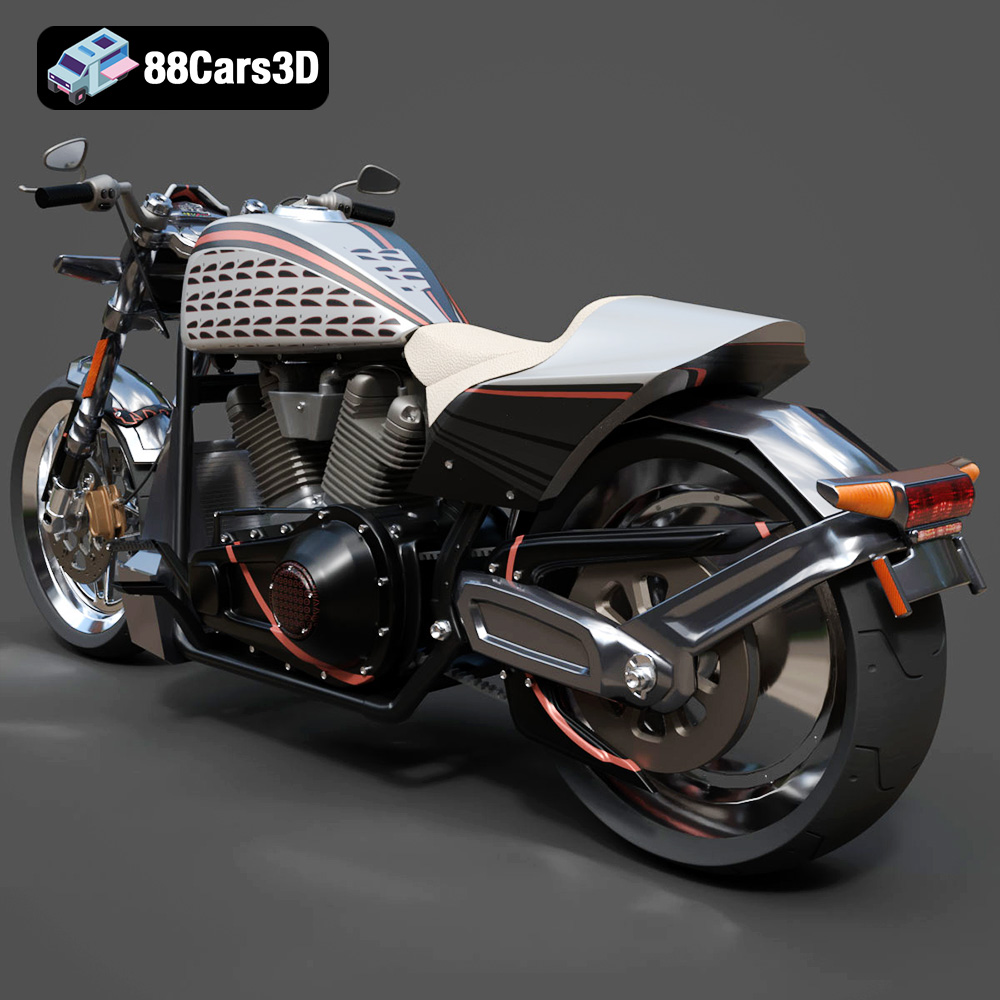
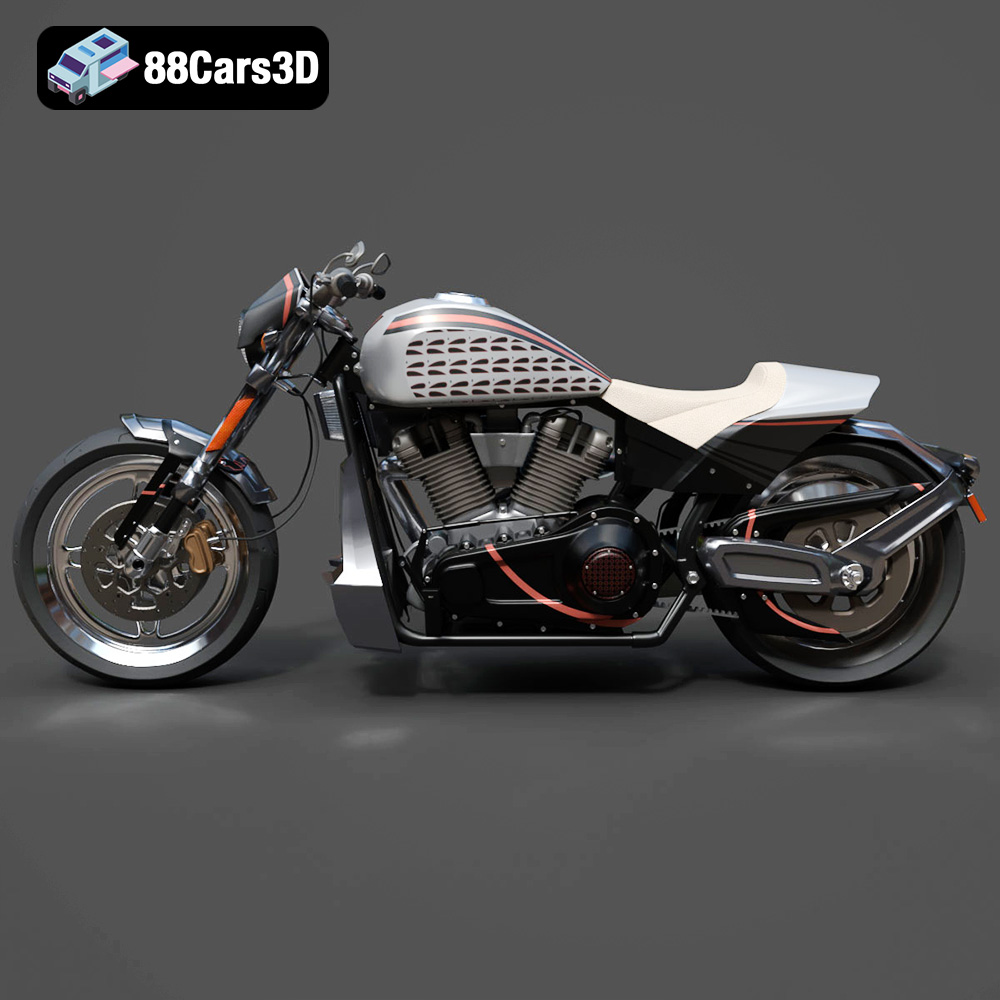
From the ground up, this 3D model accurately mirrors the FXDR 114’s aggressive, drag-inspired proportions. The distinctive Softail chassis geometry is faithfully recreated, providing a robust foundation for the rest of the bike’s detailed features. The heart of any Harley is its engine, and here, the highly detailed Milwaukee-Eight 114 V-Twin engine block, complete with its primary drive and signature forward-facing air intake, is rendered with stunning precision. Every fin, bolt, and hose is thoughtfully considered, ensuring visual authenticity even in extreme close-up shots. The performance 2-into-1 exhaust system, a key visual and auditory element of the real bike, is also accurately modeled. Furthermore, the massive 240mm rear tire, a hallmark of its drag-bike attitude, along with the lightweight cast-aluminum swingarm geometry, contributes significantly to the model’s authentic appearance. The LED Daymaker headlight assembly, an inverted front fork, and detailed disc brake assemblies complete the aggressive stance, while separate geometry for wheels, steering components, and suspension allows for realistic animation and customization.
Beyond the exterior, the rider’s interface is equally crucial for creating an immersive experience, especially for game assets or virtual reality applications. The Harley-Davidson FXDR 114 3D Model features a deep, drag-style solo saddle geometry that immediately conveys the bike’s posture. The forward-reaching aluminum clip-on style handlebars, minimalist digital riser gauge cluster, and authentic forward foot control and peg placements are all meticulously modeled. This attention to the cockpit ensures that the model is not only visually appealing from an external view but also optimized for immersive first-person perspectives, critical for realistic driving simulations and VR experiences.
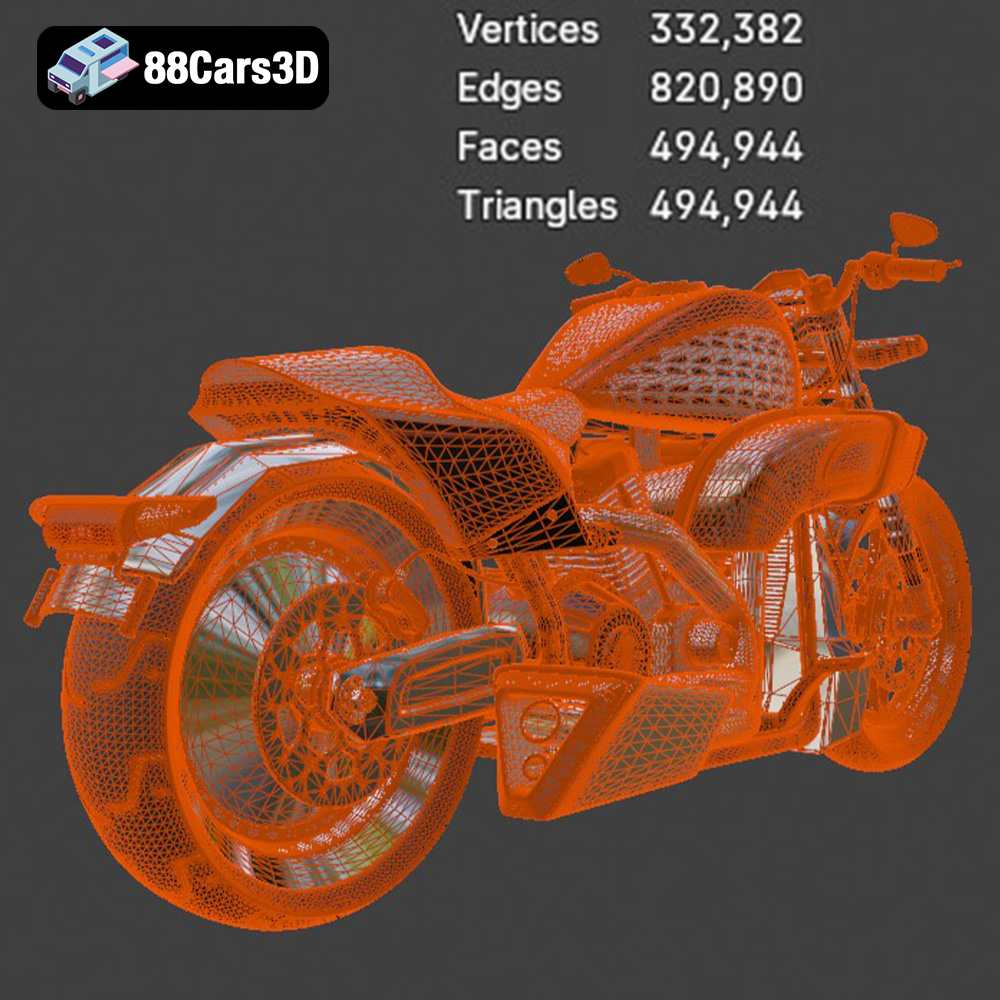
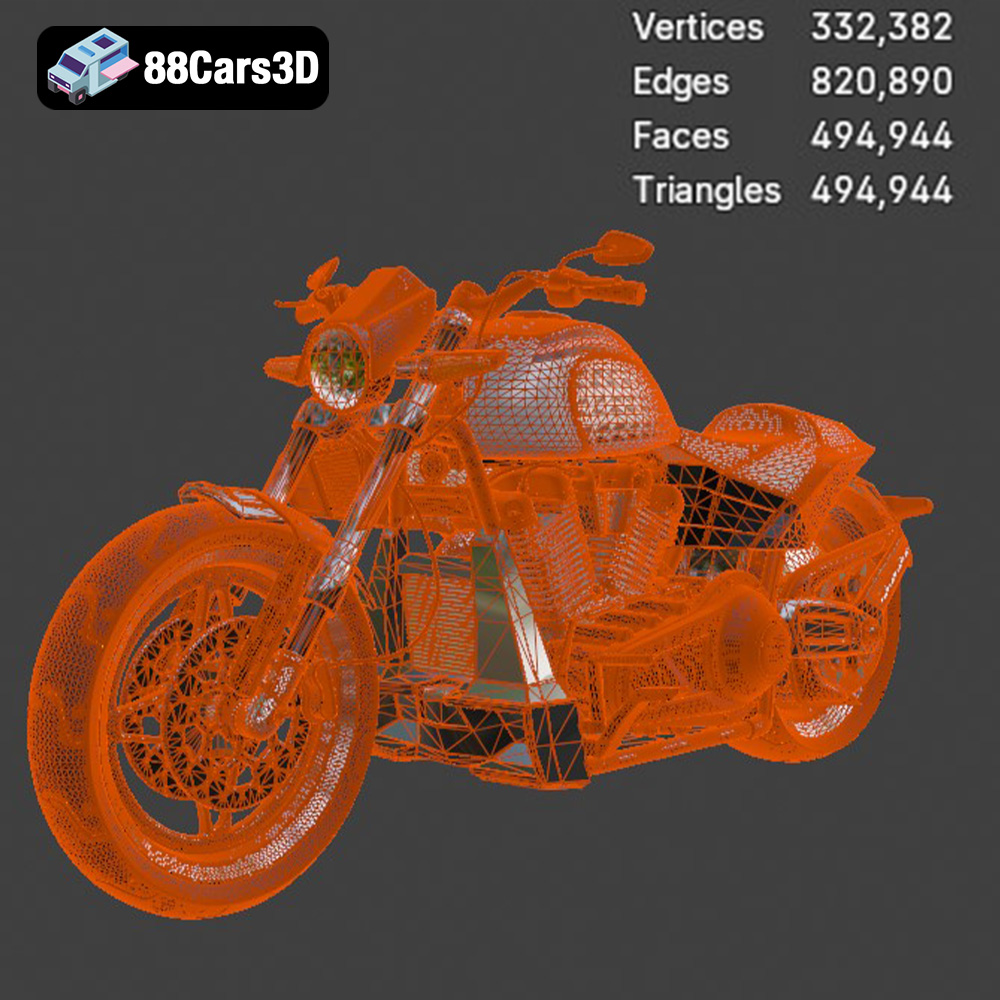
At the core of this model’s versatility are its carefully balanced technical specifications. With 332,382 vertices, 820,890 edges, and 494,944 faces/polygons (triangles), the FXDR 114 strikes a fantastic balance. This “perfectly balanced topology” means it offers premium visual fidelity for close-up automotive rendering without burdening modern current-gen game engines with an unmanageable polycount. This mid-to-high polygon count allows for excellent detail—from the engine cooling fins to the wheel spokes—while remaining optimized for real-time performance. Its real-world scale accuracy and proper pivot setup for steering, wheel rotation, and kickstand articulation further underscore its readiness for professional use in a variety of applications.
Automotive rendering is an art form that merges technical precision with creative vision. The Harley-Davidson FXDR 114 3D Model provides a robust foundation for stunning visual compositions, whether for high-profile advertising campaigns, product showcases, or personal artistic endeavors. Its exceptional detail and optimized topology make it a dream asset for rendering artists.
For professional automotive rendering, the quality of materials and lighting is paramount. The FXDR 114 model, with its clean geometry, allows for straightforward application of Physically Based Rendering (PBR) materials within software like 3ds Max or Blender. Artists can define complex shader networks for metallic flake paint, highly reflective chrome, matte black engine components, and realistic rubber tires. Using High Dynamic Range Imaging (HDRI) environments is crucial for capturing accurate reflections and subtle lighting nuances that bring the bike to life. Imagine meticulously crafted shaders for the Milwaukee-Eight 114 V-Twin engine’s cast texture, or the subtle metallic sheen on the 2-into-1 exhaust system, all responding realistically to studio-grade lighting setups. The model’s topology ensures smooth subdivisions for flawless reflections and highlights, crucial for capturing that coveted “showroom” look or the gritty realism of a street scene.
A vehicle model truly shines when placed within a compelling environment. The FXDR 114 is perfect for conceptualizing gritty urban street-racing scenes, dynamic lifestyle brand campaigns, or sleek automotive visualizations. Artists can integrate the model into photorealistic backplates or fully 3D environments, leveraging its presence to tell a story. For instance, a cinematic render might feature the FXDR 114 parked under a neon-lit city bridge, its chrome reflecting the vibrant signs, or tearing down an open road with a dramatic backdrop. The model’s separate components (wheels, steering) facilitate dynamic poses for action shots, while its realistic proportions ensure it scales perfectly within any scene. This versatility allows artists to craft narratives that resonate with the aggressive spirit of the real motorcycle, capturing powerful imagery for marketing, film, or personal art.
The demand for high-quality game assets that balance visual fidelity with real-time performance is constant in the gaming industry. The Harley-Davidson FXDR 114 3D Model is engineered to excel in modern game development pipelines, particularly for current-gen console and PC titles using engines like Unreal Engine 5 or Unity HDRP.
At just under 500,000 triangles, the FXDR 114 is perfectly positioned as a “hero” drivable vehicle. This means it offers exceptional detail when viewed up close, ideal for player vehicles or cinematic in-game sequences, without causing significant performance bottlenecks. While modern engines can handle high poly counts, effective optimization involves more than just raw numbers. The model’s clean topology ensures efficient UV mapping for texture atlases, allowing for fewer draw calls. For open-world games, implementing Level of Detail (LOD) meshes derived from the base model would further optimize performance, swapping lower-poly versions when the bike is far from the player. Accurate collision meshes, crucial for realistic physics and player interaction, can be easily generated from the model’s clean geometry. The proper pivot setup for steering and wheel rotation also means less setup time for game developers, allowing for quicker implementation of driving mechanics.
Beyond traditional gaming, the FXDR 114 finds an ideal application in augmented reality (AR) and virtual reality (VR) experiences. The model’s optimized geometry and support for formats like .glb make it perfect for high-end virtual motorcycle showrooms or interactive part configurators. Imagine a customer exploring the FXDR 114 in a VR environment, walking around it, changing paint colors, or even “sitting” on it from a first-person perspective, all powered by the model’s detailed cockpit features. For AR applications, the .glb format allows the bike to be seamlessly superimposed onto real-world environments via a smartphone or tablet, offering an engaging preview of the motorcycle in a user’s driveway. This blend of visual fidelity and real-time readiness positions the FXDR 114 as a powerful tool for next-generation interactive marketing and product showcasing.
The versatility of the Harley-Davidson FXDR 114 3D Model extends beyond the digital realm into the tangible world of 3D printing. For motorcycle enthusiasts, collectors, or model makers, having a high-fidelity STL version of this iconic bike opens up new avenues for custom physical creations. This model is explicitly designed to be convertible to .stl format, catering to display-scale custom motorcycle hobbyists.
The product description recommends specific scales: 1:12, 1:10, and 1:8. These scales provide a balance between manageable print size and the ability to capture intricate details. For preserving the fine details like the engine cooling fins, the spokes of the cast aluminum wheels, and the distinctive LED Daymaker headlight assembly, resin printing (SLA/DLP) is highly recommended. Resin printers offer superior resolution and finer layer heights (0.04–0.08 mm) compared to filament-based FDM printers, ensuring that the model’s delicate components are reproduced with crisp accuracy. While FDM might be suitable for larger, less detailed parts, the nuanced geometry of a motorcycle demands the precision of resin to truly shine.
Successful 3D printing is often just the first step; post-processing transforms a raw print into a finished masterpiece. The FXDR 114 model requires careful consideration for supports, especially for the forward air intake, handlebars, exhaust pipes, and kickstand, which protrude and would otherwise sag during printing. A thoughtful print orientation, such as printing the frame angled for structural integrity and separately printing wheels and exhaust, minimizes visible layer lines and optimizes strength. After printing, meticulous sanding and priming are essential to create a smooth surface ready for paint. Hobbyists can then choose from classic finishes like Vivid Black or Industrial Gray Denim for the tank, complementing them with bronze or matte metallic accents for the engine and exhaust. This level of detail in the digital model translates directly into a rewarding physical customization process, allowing enthusiasts to create their unique scale replica.
One of the most significant advantages of investing in a premium 3D model like the Harley-Davidson FXDR 114 3D Model from 88cars3d.com is the inherent flexibility it offers for customization. Professional projects rarely use a model straight out of the box; adaptation is key. This model is built with that versatility in mind, allowing artists to tailor it to specific creative visions or technical requirements.
The ability to easily modify the visual characteristics of the FXDR 114 is a huge asset. Artists can effortlessly change the fuel tank and tail cowl colors, experimenting with factory options like Vivid Black, Rawhide Denim, or Black Denim, or inventing entirely new schemes to match a brand or concept. Beyond color, the modular nature of the model allows for more significant aesthetic changes. Imagine swapping the massive 2-into-1 exhaust system for custom aftermarket pipes to give the bike a unique silhouette, or adding custom accessories to reflect a specific rider’s style. This level of modularity significantly reduces the time and effort typically required for such modifications, empowering artists to iterate quickly and achieve their desired look.
For those pushing the boundaries of realism or optimizing for extremely demanding real-time applications, advanced techniques come into play. The clean topology of the FXDR 114 makes it an ideal candidate for baking custom normal maps. This process allows artists to simulate even higher-poly engine casing details or intricate surface textures without actually increasing the polygon count, maintaining performance while boosting visual fidelity. Furthermore, the model’s adaptability extends to its integration within diverse environments. Lighting can be adapted for moody, neon-lit cyberpunk streets, bright, sun-drenched canyon carving runs, or the stark, clinical glow of a virtual showroom. The model’s materials are designed to react realistically to various lighting conditions, making it a dynamic asset that can truly live within any digital scene you create.
In the evolving landscape of 3D production, having access to high-quality, versatile, and technically sound assets is paramount. The Harley-Davidson FXDR 114 3D Model stands as a prime example of such an asset, meticulously crafted to serve a multitude of professional needs. From its perfectly balanced topology that supports both extreme close-up automotive rendering and efficient real-time game assets, to its accurate representation of a legendary power cruiser, this model is a testament to precision and utility.
Its comprehensive technical specifications, including a mid-to-high polygon count, real-world scale, and proper pivot setups, ensure it seamlessly integrates into diverse workflows. The wide array of included file formats—.blend, .fbx, .obj, .glb, .stl, .ply, .unreal, and .max—guarantees compatibility with virtually any 3D software or engine you choose, whether you are creating immersive AR/VR experiences, developing next-gen video games, or bringing physical miniatures to life through 3D printing. The customization options further extend its value, allowing artists to inject their unique vision into this powerful machine.
For professionals and enthusiasts alike seeking top-tier 3D car models and vehicle assets, 88cars3d.com offers a curated selection of models designed to elevate your projects. The Harley-Davidson FXDR 114 3D Model is more than just a digital object; it’s a powerful tool ready to accelerate your creative endeavors and bring your automotive visions to life with unparalleled detail and performance.
The Harley-Davidson FXDR 114 3D Model is a high-detail digital recreation of the aggressive, drag-inspired power cruiser. Built to represent raw, unapologetic muscle, the FXDR 114 combines the massive torque of the Milwaukee-Eight 114 V-Twin engine with weight-saving aluminum components, a clipped tail, and a massive 240mm rear tire. This 3D model accurately captures the drag-strip attitude of the original bike, featuring the signature forward-reaching air intake, 2-into-1 tuned exhaust, lightweight cast aluminum swingarm, and the sleek LED Daymaker headlamp surround. Built with an optimized mid-to-high polygon topology (just under 500k triangles), it strikes a fantastic balance between premium visual fidelity for close-up rendering and manageable performance for modern current-gen game engines as a hero asset. Perfect for gritty urban street-racing scenes, biker lifestyle campaigns, modern open-world video games, and automotive visualization.
$44.99
.blend
.fbx
.obj
.rendering
.stl
car-3d-model
drag-bike
fxdr
fxdr-114
game asset
harley-davidson
mid-poly
milwaukee-eight
motorcycle-3d-model
power-cruiser
softail
VR/AR