Get 50% OFF All Premium 3D & STL Models!

The pursuit of realism and immersion in real-time rendering has led to an insatiable demand for larger, more detailed digital environments. For Unreal Engine developers and 3D artists specializing in automotive visualization, this often translates into crafting sprawling cityscapes, vast test tracks, or breathtaking natural landscapes to showcase high-fidelity vehicles. However, managing these immense open worlds traditionally posed significant performance and workflow challenges. Enter Unreal Engine’s World Partition System – a revolutionary approach designed from the ground up to tackle these complexities head-on.
This comprehensive guide will delve deep into the World Partition System, equipping you with the knowledge and strategies to create and optimize truly massive automotive environments. We’ll explore how this innovative system streamlines content management, enhances performance, and unlocks new possibilities for interactive experiences, virtual production, and high-fidelity game development. From setting up your project to leveraging advanced features like Nanite and Lumen within a World Partitioned world, we’ll provide actionable insights to elevate your real-time automotive projects. Prepare to transform your workflow and build the expansive, breathtaking scenes your meticulously crafted 3D car models deserve.
For years, creating large open worlds in Unreal Engine relied heavily on the World Composition system, where developers manually tiled their landscapes and content into distinct sub-levels. While functional, World Composition introduced significant overhead, especially during development, with artists needing to constantly load and unload entire levels, leading to long iteration times and potential performance bottlenecks. World Partition marks a fundamental shift, moving away from explicit level management to an automatic, data-driven streaming system. Instead of distinct levels, your entire world is treated as a single, persistent entity, intelligently streamed based on the player’s proximity and performance demands. This change dramatically simplifies content creation, collaboration, and optimization for the vast, intricate automotive environments we aim to build. The core idea is that only relevant data, or “cells,” are loaded into memory at any given time, allowing for virtually limitless world sizes without prohibitive memory usage.
Before Unreal Engine 5, World Composition was the standard for large-scale worlds. It worked by breaking down a large landscape into smaller, adjacent levels. While this allowed for modular development and some degree of streaming, it came with several significant drawbacks. Firstly, managing hundreds or thousands of individual sub-levels became a logistical nightmare for development teams. Merging changes, resolving conflicts, and even simply opening a large map could take excruciating amounts of time. Each sub-level often had its own persistent level settings, making global changes cumbersome. Secondly, the streaming mechanism was relatively coarse, loading entire sub-levels at once. This could lead to noticeable hitches as players crossed level boundaries, and memory consumption remained high if many large sub-levels were loaded concurrently, even if only a small portion of their content was visible. For automotive visualization, where smooth camera movements and seamless transitions through highly detailed environments are crucial, these limitations often forced compromises on world scale or visual fidelity.
World Partition introduces a grid-based streaming mechanism as its backbone. Your entire world space is automatically divided into a grid of cells. As the player (or camera in a cinematic) moves, only the cells within a configurable streaming distance are loaded into memory and rendered. This fine-grained control allows for highly efficient resource management. Beyond this, Data Layers are a powerful new concept that allows artists to categorize and group actors within the world. Imagine having a “Roads” Data Layer, a “Buildings” Data Layer, a “Foliage” Data Layer, and even a “Daytime Props” vs. “Nighttime Props” Data Layer. These layers can then be independently loaded, unloaded, or activated/deactivated, offering unparalleled flexibility for scenario creation, performance optimization, and collaborative workflows. For example, a virtual production stage might only load specific background elements relevant to a shot, or an interactive configurator might only load certain details for an interior view, keeping the overall memory footprint minimal while maintaining stunning detail where it matters most.
Embarking on a new automotive visualization project or migrating an existing one to World Partition requires thoughtful setup and configuration. The process is designed to be user-friendly, allowing developers to quickly leverage the system’s benefits. Whether you’re building a massive open-world driving simulator, a detailed urban environment for a car configurator, or a vast proving ground for vehicle testing, World Partition provides the scalable foundation. When sourcing high-quality automotive assets, platforms like 88cars3d.com offer optimized 3D car models that are perfect candidates for placement within these expansive environments, ensuring your vehicle models look pristine against any backdrop, no matter how large. Proper setup ensures that these assets stream efficiently and integrate seamlessly into your grand vision.
Starting a new project with World Partition is straightforward. When creating a new level, Unreal Engine 5 automatically enables World Partition by default for Open World maps. If you’re using a blank map, you can enable it manually through the “World Settings” panel by checking “Enable World Partition.” Once enabled, the level will be partitioned into a grid. Key settings to configure include the “Cell Size,” which determines the size of each streaming cell. Smaller cells offer finer-grained streaming control but can increase overhead, while larger cells might stream more data than immediately necessary. A common starting point for automotive scenes might be 128×128 meters or 256×256 meters, depending on the density of your content. You’ll also configure “Streaming Distance,” which defines how far from the player/camera World Partition will load cells. For high-speed vehicle simulations, a larger streaming distance might be necessary to pre-load upcoming terrain and objects, ensuring a smooth visual experience and preventing pop-in. Experimentation with these values is crucial to find the optimal balance for your specific project’s scale and performance targets.
Migrating an existing level from World Composition or a standard single-level setup to World Partition is a supported and relatively automated process. Unreal Engine provides a dedicated tool for this: the “World Partition Convert” tool, accessible via the “Tools” menu under “World Partition” -> “Convert Level.” This tool will analyze your existing level (and its sub-levels if using World Composition) and convert all actors into the World Partition system, distributing them across the new grid. Crucially, it will also enable the “One File Per Actor” (OFPA) system, which stores each actor as a separate file on disk. This is a game-changer for collaboration, as multiple artists can work on different parts of the same world simultaneously without constant merge conflicts, a common headache with traditional level files. After conversion, it’s essential to save your level and verify that all actors are present and correctly streamed. You might need to adjust streaming distances and re-bake lighting if using traditional baked lighting, although Lumen dramatically reduces the need for this in UE5. Test thoroughly by moving through the converted world to ensure smooth streaming and no missing assets, paying close attention to the highly detailed 3D car models to ensure they retain their visual fidelity without any streaming artifacts.
Once your World Partition environment is set up, the next critical step is populating it with assets. For automotive visualization, this means not just landscapes and buildings, but also an array of high-quality 3D car models, props, and environmental details that bring the scene to life. Efficient asset management within a World Partitioned world is paramount for maintaining performance and ensuring a smooth workflow. This is where Data Layers and best practices for placing high-fidelity models truly shine, allowing you to create incredibly detailed scenes without overwhelming your system. When sourcing automotive assets from marketplaces such as 88cars3d.com, you’re already starting with models that typically feature clean topology, realistic PBR materials, and optimized UV mapping – ideal characteristics for integration into a World Partitioned world, reducing the overhead of individual asset optimization.
Data Layers are a powerful organizational tool within World Partition. Instead of simply placing all your environment assets haphazardly, you can group them logically into distinct layers. For example, you might create a “Landscape” Data Layer for your terrain and large geological features, an “Urban Buildings” Data Layer for city structures, a “Road Network” Data Layer for all road segments and signage, and a “Interactive Props” Data Layer for items that the player can interact with, such as traffic lights or garage doors. For automotive scenes, a dedicated “Vehicle Spawn Points” or “NPC Traffic” Data Layer could be invaluable. The beauty of Data Layers is that they can be loaded or unloaded independently, either manually in the editor or dynamically via Blueprint scripting during runtime. This allows for incredibly flexible scene management: you can disable a layer to focus on specific content, improve editor performance, or even create different versions of your world (e.g., a “Clean City” layer vs. a “Damaged City” layer) that can be swapped at runtime, offering dynamic storytelling and interactive possibilities for your automotive experiences.
When integrating highly detailed 3D car models and complex environmental assets, several best practices ensure optimal performance within a World Partitioned setup. Firstly, ensure your assets, especially vehicles, are properly set up with Level of Detail (LODs). This is critical; even with Nanite handling high poly counts, having sensible LODs for non-Nanite meshes (like transparent materials, decals, or very distant objects) and for general performance fallback is still beneficial. Secondly, leverage Unreal Engine’s instancing capabilities. For repetitive elements like trees, streetlights, or railing sections, use Hierarchical Instanced Static Meshes (HISMs) or Instanced Static Meshes (ISMs). World Partition handles these instances efficiently across cells, greatly reducing draw calls. Thirdly, pay close attention to material complexity. PBR materials are essential for realism, but too many complex shader instructions can still impact performance. Utilize Material Instances for variations to reduce compilation time and memory. Fourthly, consider object culling. Ensure your meshes have proper bounding boxes and are set to automatically cull when outside the camera’s frustum. Finally, for the hero 3D car models sourced from platforms like 88cars3d.com, which come with exquisite detail, ensure they are placed strategically. While Nanite allows them to remain high-poly, ensure their material setup, texture resolution (e.g., 4K or 8K), and collision meshes are optimized. Using Nanite for the car body and interior, while carefully managing translucent windows and complex lighting materials, creates a visually stunning yet performant asset within your vast world.
World Partition, by itself, is a powerful streaming solution, but its true potential is unlocked when combined with Unreal Engine 5’s groundbreaking features like Nanite and Lumen. These technologies form a triumvirate that allows developers to create unprecedented levels of detail and visual fidelity within massive, open-world automotive environments without crippling performance. Understanding how these systems work in conjunction with World Partition is key to achieving photorealistic real-time rendering at scale. The goal is to deliver an immersive experience where every curve of a premium 3D car model from 88cars3d.com reflects light accurately in a dynamically lit, endlessly sprawling world.
Nanite, Unreal Engine 5’s virtualized geometry system, revolutionizes how dense meshes are rendered. Instead of traditional LODs that swap out lower-poly versions, Nanite intelligently streams and renders only the necessary pixel detail from source geometry that can contain millions or even billions of polygons. For automotive visualization, this is a game-changer. You can now import highly detailed CAD models or meticulously sculpted 3D car models directly into Unreal Engine without worrying about polygon count budget. When integrated with World Partition, Nanite meshes within streamed cells are handled with incredible efficiency. As World Partition loads a cell, Nanite takes over the rendering of its complex geometry, ensuring that only the relevant geometric data for the current view is processed. This means you can populate your vast open world with incredibly detailed buildings, intricate foliage, and multiple high-polygon vehicles without bogging down the rendering pipeline. This synergy eliminates the tedious manual LOD creation for static meshes, allowing artists to focus purely on visual quality and creative output. However, remember that Nanite primarily benefits static, opaque meshes; translucent materials, skeletal meshes (like animated characters or complex car suspensions), and Niagara effects still require careful LOD management and optimization.
Lumen is Unreal Engine 5’s fully dynamic global illumination and reflections system, providing incredibly realistic lighting that reacts in real-time to light sources, geometry, and material changes. It’s a fundamental component for achieving photorealism in automotive scenes, where the interplay of light and shadow on a vehicle’s surface is critical. The magic happens as Lumen seamlessly integrates with World Partition. As new cells stream in and out, Lumen dynamically updates its global illumination and reflections to account for the incoming or outgoing geometry and lighting information. This means that a highly detailed 3D car model, whether parked in a sun-drenched desert or cruising through a neon-lit city street in your World Partitioned world, will always receive accurate and physically plausible lighting and reflections. There’s no need for pre-baked lighting solutions that are restrictive and time-consuming to update in large, dynamic environments. Lumen scales beautifully with World Partition, ensuring that even the most expansive worlds benefit from stunning, real-time indirect lighting and reflections without significant performance degradation. This combination frees artists to experiment with lighting setups and environmental changes instantly, accelerating iteration and creative freedom. You can learn more about Lumen and its capabilities on the official Unreal Engine documentation at https://dev.epicgames.com/community/unreal-engine/learning.
Even with Nanite and Lumen, effective management of World Partition’s streaming mechanism is crucial for optimal performance. The goal is to pre-load content before the player needs it, minimizing visible hitches or pop-in. Key parameters to adjust include “Streaming Distance” in your World Settings, which dictates how far around the camera cells are loaded. For fast-moving vehicles, this distance often needs to be significantly larger than for a walking character. You can also utilize “Streaming Volumes” to force specific areas to load or unload, overriding the default grid-based behavior. For example, a large garage interior might always be loaded when a car enters a certain trigger volume. The “World Partition MiniMap” visualizes your loaded cells, helping you diagnose streaming issues. Additionally, consider using “Content Streaming” settings in your Project Settings to fine-tune texture and mesh streaming budgets. Always profile your game or application using tools like the Unreal Engine profiler (`stat unit`, `stat streaming`, `stat worldpartition`) to identify bottlenecks related to streaming and adjust your cell sizes, streaming distances, and content density accordingly. Aggressive culling settings for distant objects and thoughtful LODs for non-Nanite meshes also contribute significantly to reducing the amount of data that needs to be streamed and rendered, maintaining high frame rates across your vast automotive landscapes.
The power of World Partition extends far beyond simply rendering large environments; it also facilitates the creation of highly interactive experiences, breathtaking cinematics, and cutting-edge virtual production workflows. By integrating World Partition with Unreal Engine’s robust toolset like Blueprint, Sequencer, and specialized virtual production features, developers can craft dynamic automotive configurators, immersive driving simulators, and realistic cinematic sequences that leverage the full scale and detail of their massive worlds. This synergy empowers artists and developers to bring their automotive visions to life in ways previously unimaginable, pushing the boundaries of real-time rendering.
Blueprint visual scripting is an indispensable tool for adding dynamic interactivity within a World Partitioned world. You can use Blueprint to control the loading and unloading of Data Layers based on player actions or specific events. For instance, in an automotive configurator, selecting a “winter tires” option could dynamically load a “Snow Environment Props” Data Layer, while simultaneously unloading a “Summer Environment Props” layer, completely changing the scene around the 3D car model. Similarly, entering a specific trigger volume could activate a Data Layer containing specialized interactive elements for a showroom. Blueprint can also be used to trigger gameplay events tied to streaming: for example, when a specific cell or Data Layer is fully loaded, a certain animation plays, or a vehicle spawns. Event-driven streaming ensures that complex interactions and cinematic sequences only occur when all necessary assets are in memory, preventing hitches. Furthermore, Blueprint allows for the dynamic instantiation of vehicles from a pool of assets, spawning them only when needed within the loaded cells, minimizing memory usage for inactive cars. This level of control is essential for building responsive and efficient open-world applications.
Unreal Engine’s Sequencer is a powerful non-linear cinematic editor, and its integration with World Partition is seamless, allowing for the creation of epic cinematic journeys through vast automotive environments. When authoring a sequence, Sequencer automatically handles the streaming of World Partition cells and Data Layers along the camera’s path. As the camera moves through the world, Sequencer pre-fetches the necessary cells, ensuring that all geometry, lighting, and effects are loaded and rendered smoothly. This means you can choreograph a sweeping camera fly-through of a detailed city featuring multiple 3D car models, or a high-speed chase across a massive landscape, without worrying about pop-in or stuttering. Leveraging Data Layers within Sequencer is particularly powerful; you can activate or deactivate specific layers at different points in your cinematic to reveal new elements, change the time of day, or introduce environmental variations dynamically. For example, a car commercial could transition from a daytime shot on a race track to a nighttime sequence in a virtual city by simply activating different Data Layers within the Sequencer timeline.
Virtual Production (VP) workflows, especially those involving LED walls, greatly benefit from World Partition’s ability to manage massive environments. In a VP setup, the LED wall displays a dynamic virtual background that syncs with the physical camera’s movement and perspective. With World Partition, the background environment can be as large and detailed as needed, without being constrained by memory limitations. Only the cells visible to the virtual camera, matching the LED wall’s frustum, are streamed and rendered. This allows for immersive automotive shoots where a physical vehicle is placed on a stage, and the LED wall displays a seamless, sprawling digital world. Data Layers become incredibly useful here for quickly swapping out environmental props, changing weather conditions, or even entirely different backdrops on the fly during a shoot, all controlled by the VP team. Furthermore, the “Multi-User Editing” system, which works perfectly with World Partition, allows multiple team members – cinematographers, lighting artists, and vehicle artists – to collaborate in real-time on the same scene, making live adjustments to the environment, lighting, or even the 3D car models while production is underway. This transforms the agility and creative potential of virtual automotive shoots.
While World Partition simplifies many aspects of large-world development, mastering it involves understanding some advanced topics and knowing how to troubleshoot common issues. From collaborative workflows to optimizing for specific platforms, these insights will help you push the boundaries of what’s possible in Unreal Engine.
One of the standout benefits of World Partition, particularly when coupled with the “One File Per Actor” (OFPA) system, is its dramatically improved support for multi-user editing. In traditional workflows, multiple artists working on the same level could quickly lead to merge conflicts, requiring tedious resolution processes. With OFPA, each actor in your World Partitioned world is saved as its own `.uasset` file. This means that if one artist modifies a tree, only that tree’s asset file is changed, not the entire level file. The “Multi-User Editing” plugin in Unreal Engine leverages this. Multiple developers can connect to a shared session, and their changes propagate in real-time. If one artist adds a new 3D car model, places a building, or adjusts lighting in their streamed cells, other connected users see these changes reflected instantly. This collaborative workflow is a game-changer for large automotive projects where multiple artists are simultaneously populating vast environments with detailed assets, reducing downtime and accelerating iteration. Proper source control (e.g., Perforce) is still essential, but OFPA significantly minimizes the friction of simultaneous development.
Despite World Partition’s efficiency, developers might encounter streaming artifacts or loading hitches, especially in demanding scenarios. These often manifest as objects popping in, LOD changes being too abrupt, or temporary freezes. Here’s how to address them:
The capabilities offered by World Partition, especially when combined with high-fidelity assets and Unreal Engine’s advanced rendering features, unlock a vast array of real-world applications within the automotive industry and beyond. From interactive customer experiences to cutting-edge development tools, the ability to build and efficiently manage massive, detailed environments is transformative. For those relying on top-tier 3D car models, like the ones available on 88cars3d.com, these applications demonstrate how to maximize the visual impact and utility of their digital assets.
One of the most compelling applications of World Partition in automotive visualization is the creation of next-generation interactive automotive configurators. Imagine a configurator that allows potential buyers to not just customize a 3D car model’s paint, wheels, and interior, but also to instantly place it within a sprawling, photorealistic environment – be it a bustling urban street, a serene mountain pass, or a futuristic showroom. World Partition makes this feasible by efficiently streaming only the necessary parts of these vast environments. A user could configure their dream car, then seamlessly transition from a focused interior view to an expansive exterior shot, showcasing the vehicle against a dynamic backdrop that accurately reflects real-world lighting and conditions, powered by Lumen. Different environmental scenarios (e.g., “City Day,” “Countryside Sunset,” “Snowy Mountain”) can be managed using Data Layers, allowing for instant swapping without loading entire new maps, providing an unparalleled immersive experience that helps drive purchasing decisions.
For automotive game developers or companies building advanced driving simulators, World Partition is nothing short of revolutionary. It allows for the creation of truly massive, seamless open worlds that can encompass entire cities, vast stretches of highways, or complex testing grounds. Previously, the scale of such environments was often limited by performance and memory constraints, leading to visible loading zones or less detailed distant terrain. With World Partition, paired with Nanite for high-fidelity geometry and Lumen for dynamic global illumination, driving simulators can offer unparalleled realism and freedom. Users can drive an incredibly detailed 3D car model from 88cars3d.com across hundreds of square kilometers without encountering a single loading screen, experiencing a fluid and consistent visual quality from horizon to horizon. This capability extends to developing open-world racing games or highly realistic training simulations for autonomous vehicles, where the sheer size and detail of the environment are crucial for immersion and data accuracy. The efficiency of World Partition ensures that even with a multitude of dynamic vehicles, AI, and complex physics simulations running concurrently, the core streaming remains performant, delivering a smooth, high-frame-rate experience crucial for driving applications.
The Unreal Engine World Partition System stands as a monumental leap forward for developers and artists striving to build expansive, high-fidelity real-time environments. By transitioning from traditional level streaming to an intelligent, data-driven cell-based approach, it elegantly solves many of the performance and workflow challenges previously associated with large open worlds. For the automotive visualization industry, this innovation is particularly impactful, enabling the creation of breathtakingly detailed cityscapes, vast test tracks, and immersive virtual showrooms that truly showcase the exquisite quality of high-end 3D car models.
From simplifying project setup and enabling seamless multi-user collaboration to providing a robust foundation for Nanite-powered geometry and Lumen-driven global illumination, World Partition empowers you to craft scenes of unprecedented scale and visual fidelity. By leveraging Data Layers for flexible content management, optimizing streaming distances, and integrating dynamic interactions via Blueprint and cinematic storytelling with Sequencer, you can unlock new realms of interactive experiences, virtual production, and game development. The future of large-scale automotive rendering is here, and World Partition is at its core.
Ready to bring your automotive visions to life in vast, immersive worlds? Explore the incredible selection of high-quality 3D car models available at 88cars3d.com, meticulously crafted and optimized for Unreal Engine, to populate your next World Partitioned masterpiece. The tools are at your fingertips; it’s time to build the extraordinary.
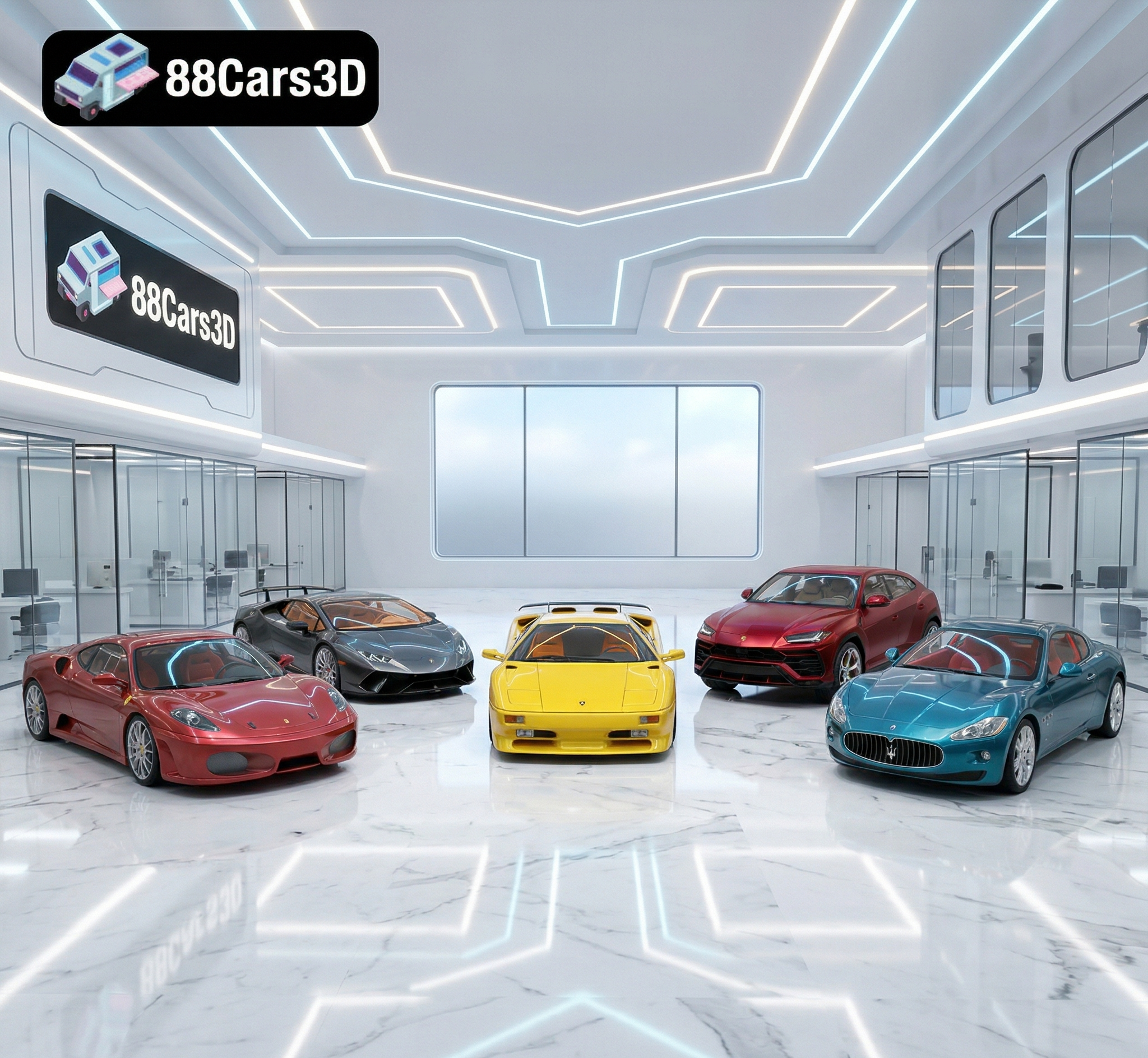
Texture: Yes | Material: Yes | 3D Printable: Yes. Download the Italian Thoroughbreds Bundle featuring 5 iconic 3D models: Lamborghini Huracán Performante, Ferrari 458 Italia, Lamborghini Urus, Diablo SV, and Maserati GT. Optimized for 4K rendering and 3D printing (STL included). Save 50% with this ultimate Italian vehicle collection.
Price: $199.99

Download the Elite Future Mobility Bundle featuring 4 highly optimized 3D models: Tesla Model S, Avatr 11, Li L9, and Zoox Robotaxi. Perfect for ArchViz, Smart City renders, and game dev. Optimized for Unreal Engine and Blender. Includes .fbx, .obj, and .max formats.
Price: $99

🚗 5 Iconic German Cars (BMW M4 G82, M5 CS, X3, 1 Series & Mercedes E-Class). ✅ Optimized for ArchViz: Ready for Corona & V-Ray. 💰 Save €71 with this limited-time collection! 🚀 Instant Download after purchase.
Price: $119
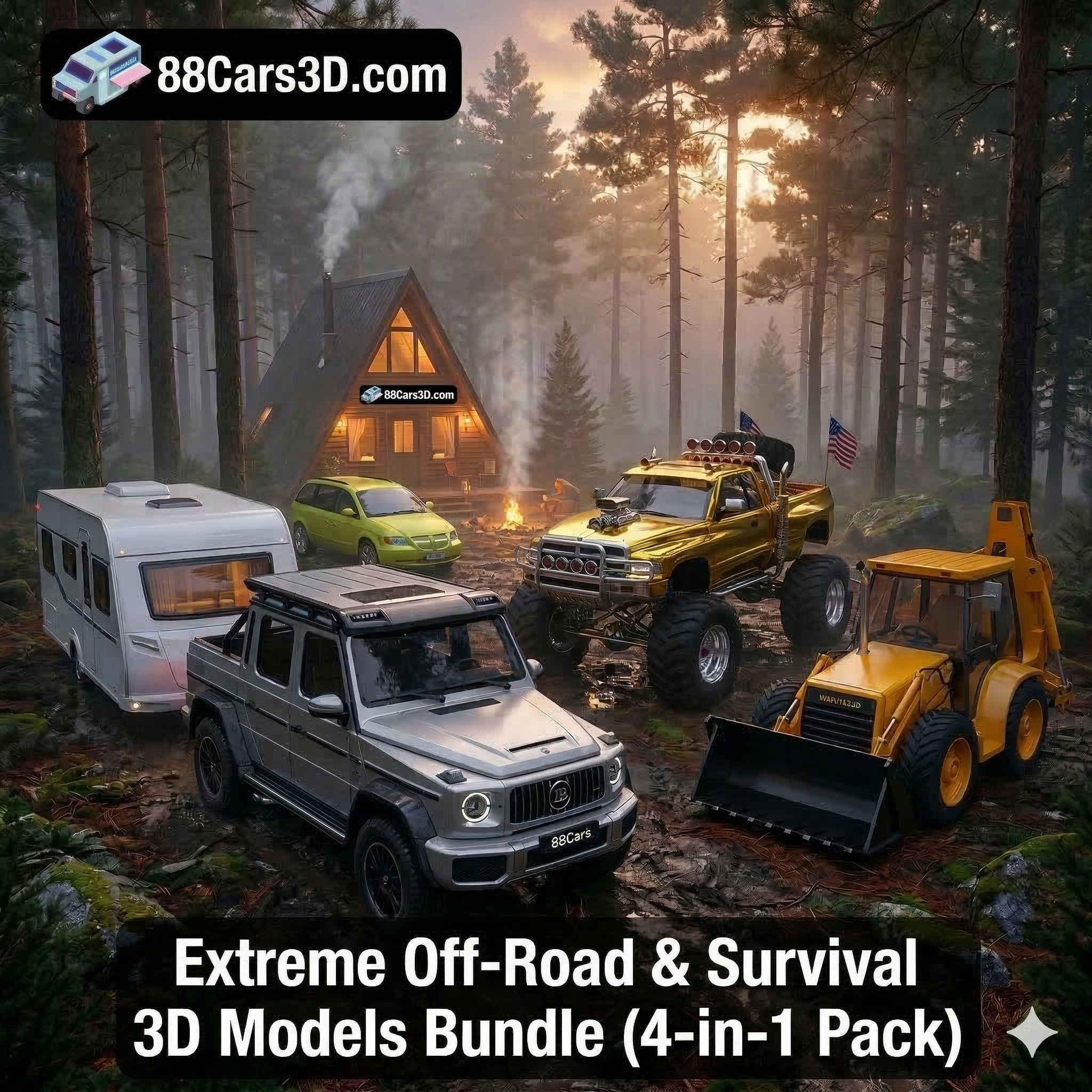
Download the Extreme Off-Road & Survival 3D Models Bundle! Includes the Brabus 800 Adventure, Dodge Ram Bigfoot, Spec Truck, and a Caravan. Save over €210 on this premium 4-in-1 off-grid vehicle pack for ArchViz and game development.
Price: $149.99
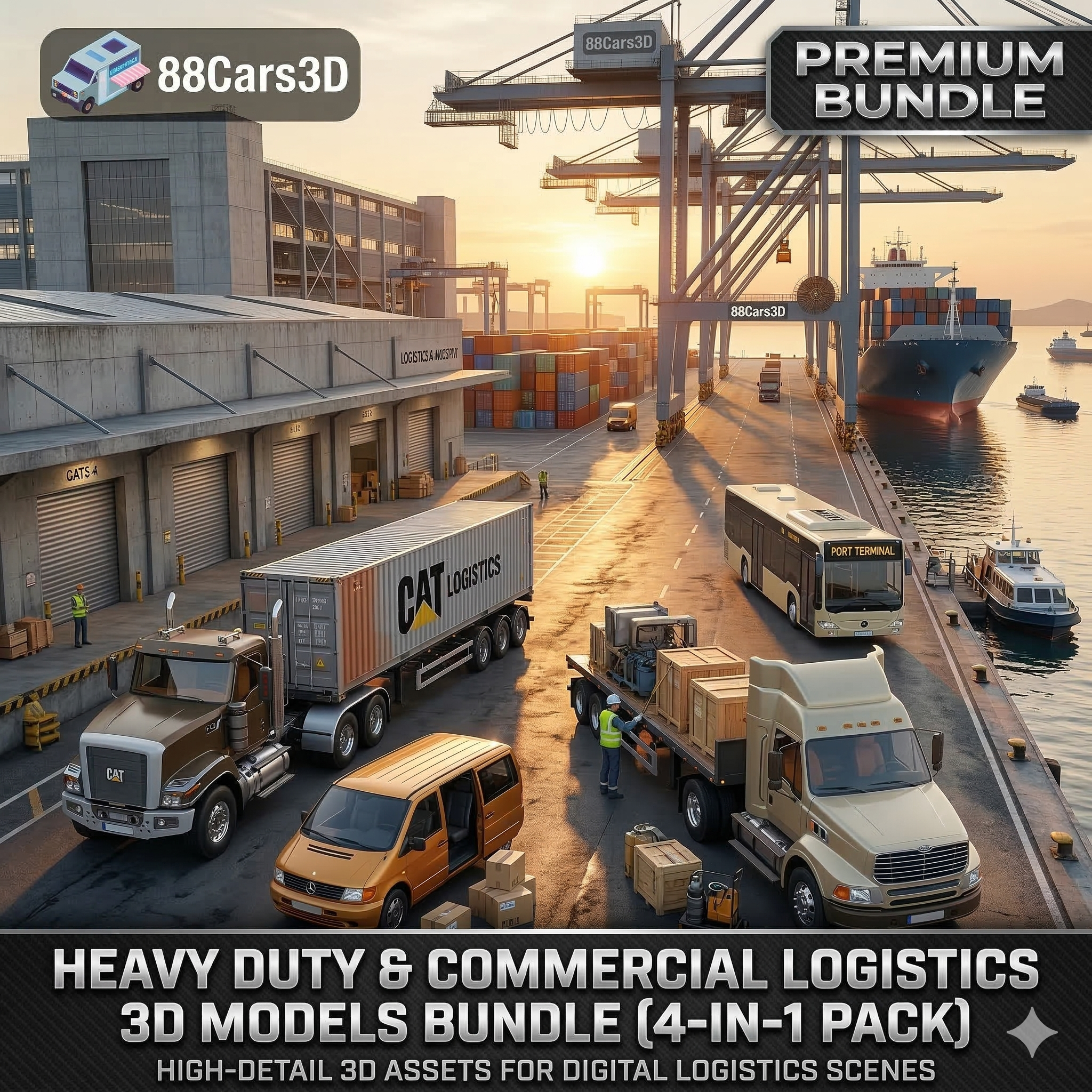
Download the Heavy Duty & Commercial Logistics 3D Models Bundle! Includes the Ford Sterling, Caterpillar CT680, Mercedes Citaro Bus, and Vito Van. Save over €130 on this massive, game-ready 4-in-1 industrial vehicle pack.
Price: $109.99

Download the Ultimate Custom Motorcycles 3D Models Bundle. Includes a Custom Chopper, Ducati 916 Café Fighter, Harley XR1200X, and BMW K100. Perfect premium props for luxury ArchViz garages. Save over €250 today!
Price: $159.99

Download the ultimate JDM Street Racing 3D Models Bundle! Includes the Nissan GT-R, Toyota Supra, Mazda RX-7, Lancer Evo IX, and Honda NSX. Save big on this highly optimized, game-ready 5-in-1 Japanese legend car pack.
Price: $129.99

Download the ultimate American Muscle & Cinematic Classics 3D Models Bundle! Includes the Dodge Charger ’68, Mustang Eleanor GT500, Camaro Z28 ’79, and a custom ’69 Mustang. Save over €240 on this game-ready, premium 4-in-1 pack.
Price: $149.99
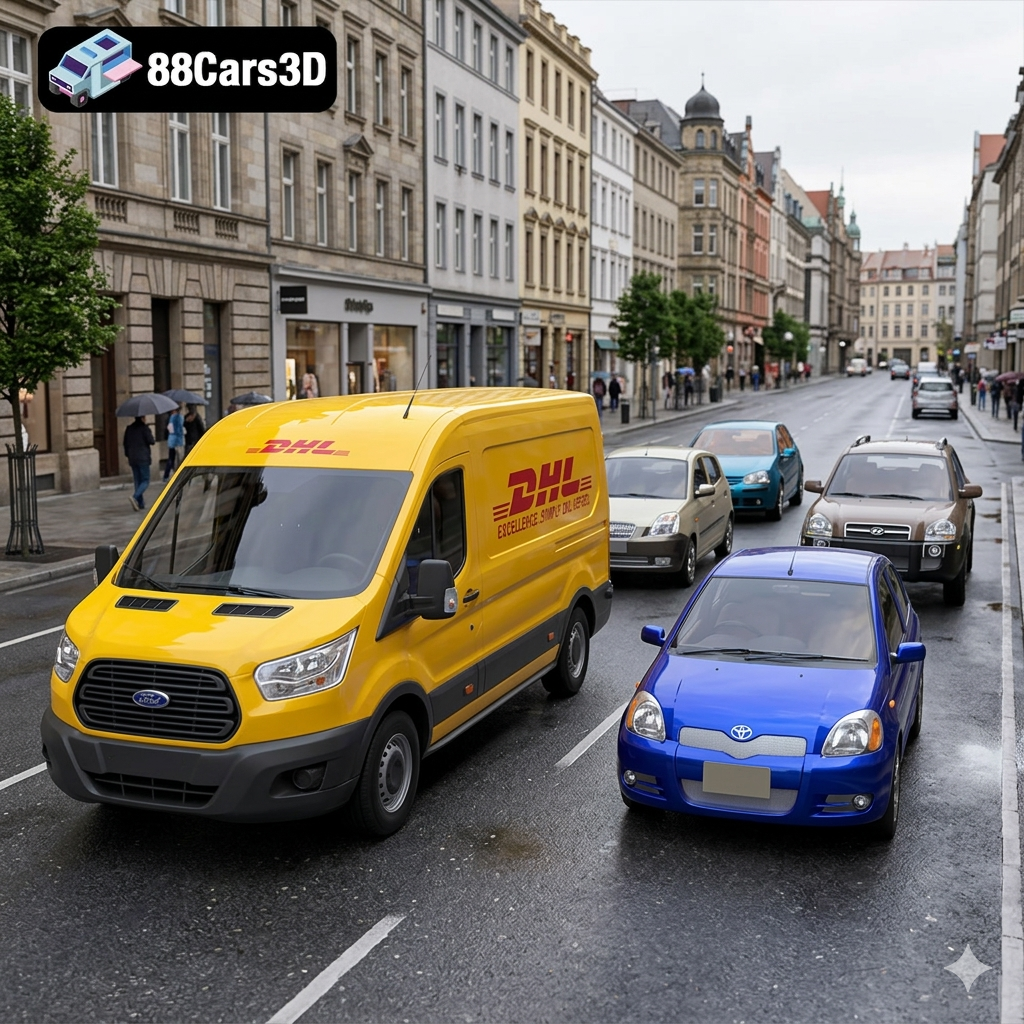
Download the Everyday City Traffic 3D Models Bundle. Includes the VW Golf, Kia Picanto, Hyundai Tucson, Toyota Yaris, and a DHL Ford Transit Van. Save big on this 5-in-1 pack, perfectly optimized for realistic ArchViz streets and game traffic.
Price: $99.99
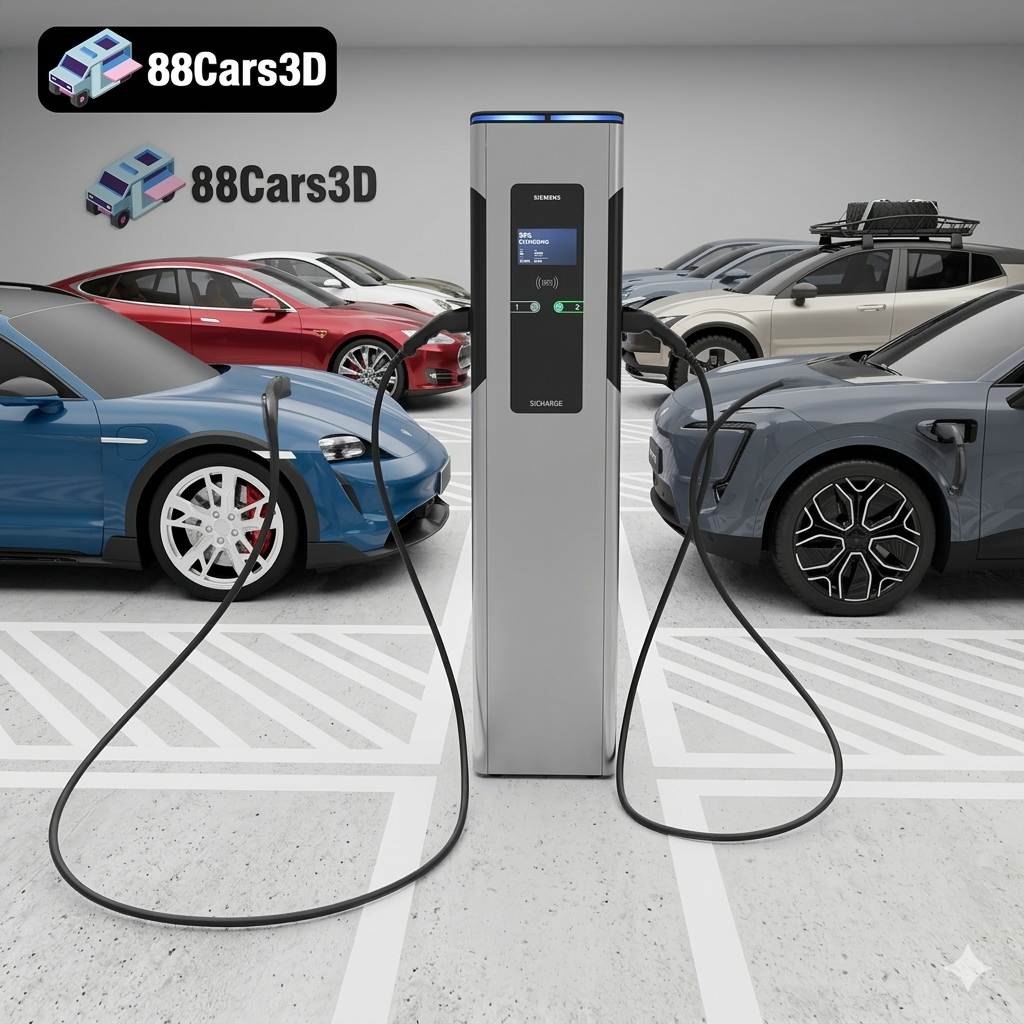
Download the Future of Mobility EV 3D Models Bundle. Includes the Volvo EX30, Tesla Model S, AVATR 11, Porsche Taycan, and a Siemens EV Charger. Save big on this highly optimized 5-in-1 pack for ArchViz and game development!
Price: $89.99

