Get 20% OFF All Premium 3D & STL Models!

In the vibrant world of 3D design and digital content creation, the allure of classic automobiles remains a powerful source of inspiration and utility. From photo-realistic automotive rendering projects to immersive game environments and precise physical prototypes, high-quality 3D car models are indispensable assets. They bridge the gap between historical reverence and cutting-edge technology, allowing creators to bring iconic designs to life in new and exciting ways.
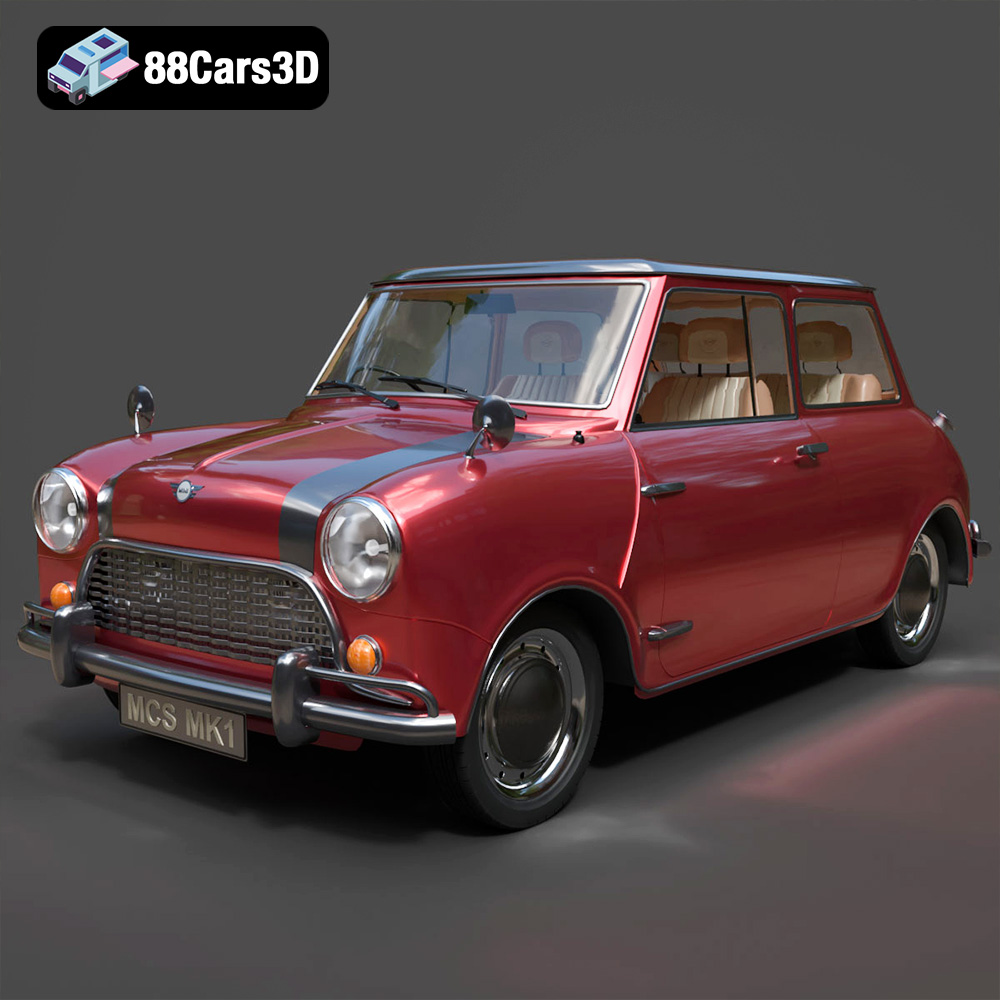
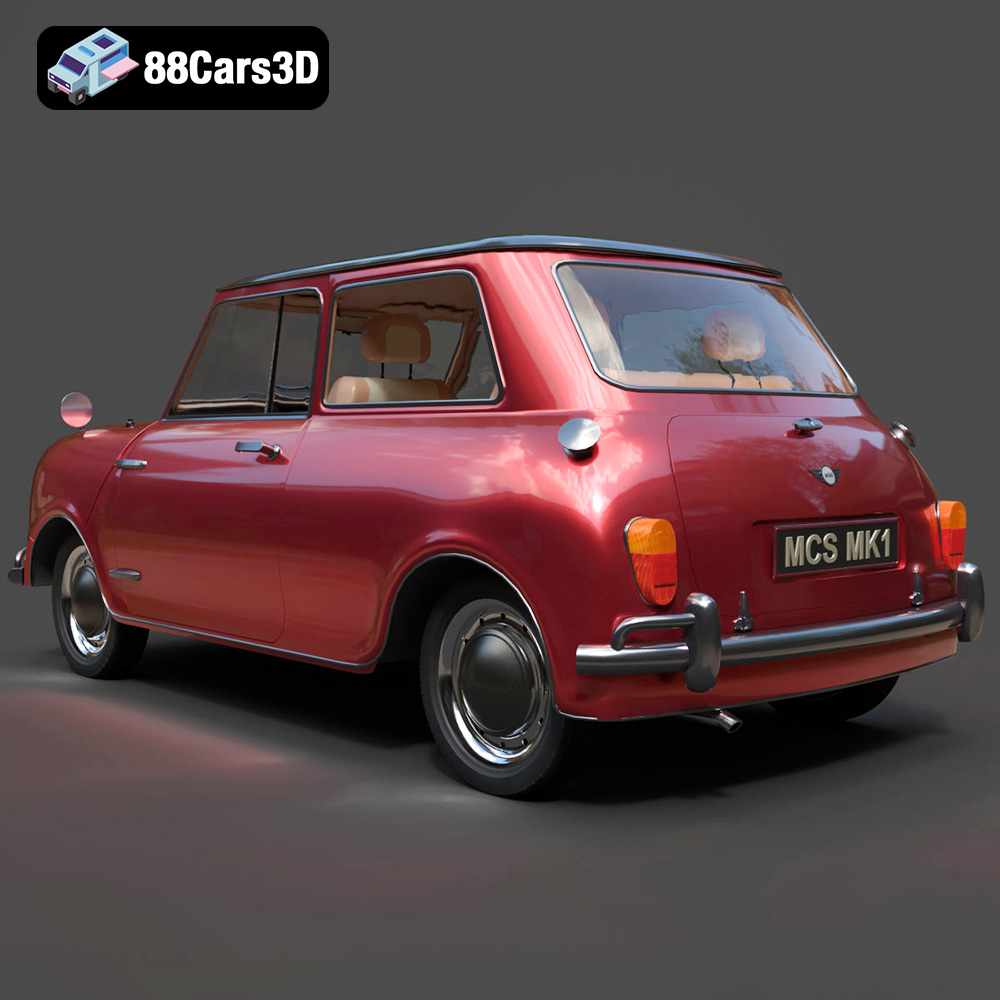
Few vehicles embody this blend of timeless design and cultural impact as profoundly as the Mini Cooper S MK1. A true icon of 1960s British engineering and rally prowess, its distinctive compact form and spirited character have captivated generations. Now, imagine having a meticulously crafted digital twin of this legend, ready to drop into your next project. The Mini Cooper S MK1 3D Model offers just that – a professional-grade asset designed for a multitude of applications, from high-fidelity visualizations to real-time simulations and even 3D printing. It represents an unparalleled opportunity for designers, animators, and developers to integrate a piece of automotive history into their contemporary creations.
When working with complex 3D car models like the Mini Cooper S MK1, understanding the various file formats is paramount. Each format serves a specific purpose, offering unique advantages for different stages of the production pipeline, from initial modeling and texturing to real-time engine integration and physical fabrication. The breadth of formats supported by a model, such as those provided with the Mini Cooper S MK1 3D Model, dictates its versatility and ease of use across professional software ecosystems.
The .blend format is the native file type for Blender, the powerful open-source 3D creation suite. A .blend file typically encapsulates an entire scene, including mesh data, materials, textures, lighting, camera setups, animations, and even rigging. For artists primarily working in Blender, this format offers the most comprehensive and editable starting point. It preserves all the intricate details and organizational structures created within Blender, making it ideal for further refinement, customization, or integration into a larger Blender-based project. With the Mini Cooper S MK1 3D Model in .blend format, users can dive directly into its clean topology, modify materials using Blender’s node-based shading system, or prepare it for Cycles or Eevee rendering.
FBX (Filmbox) stands as one of the most widely adopted proprietary file formats for 3D data exchange across different software applications and game engines. Developed by Autodesk, it excels at storing hierarchical models, animations, materials, and textures in a single, well-structured file. Its strength lies in its ability to maintain scene hierarchy and animation data, making it the go-to format for exporting animated game assets or transferring models between 3ds Max, Maya, Unity, and Unreal Engine. For the Mini Cooper S MK1, the .fbx variant ensures that separate wheels and steering components maintain their proper pivot points and rotational capabilities, crucial for dynamic simulations and interactive experiences.
The .obj (Wavefront Object) format is a universally recognized, geometry-centric file type. It’s lauded for its simplicity and robustness, making it an excellent choice for basic mesh data exchange. An .obj file stores vertex positions, UV coordinates, normals, and face information, often accompanied by an .mtl (material library) file for basic material definitions. While it doesn’t support animations or complex scene data, its widespread compatibility across virtually every 3D application makes it a reliable fallback. The .obj version of the Mini Cooper S MK1 is perfect when you need to import the core geometry into almost any 3D software for fresh texturing or specialized rendering workflows.
GLB (GL Transmission Format Binary) is an increasingly important format, particularly for augmented reality (AR), virtual reality (VR), and efficient web-based 3D content. It’s a binary container for GLTF (GL Transmission Format) data, packaging 3D models, materials, textures, and animation into a single, compact file. Optimized for rapid loading and runtime delivery, .glb files are perfect for interactive viewers, online showrooms, or real-time mobile AR applications. The Mini Cooper S MK1 3D Model in .glb format allows for effortless deployment into webGL experiences or immediate integration into AR/VR development platforms, providing a lightweight yet visually rich asset.
STL (STereoLithography) is the de facto standard format for 3D printing. It represents a 3D model as a collection of unconnected triangular facets, defining only the surface geometry without color, texture, or internal structure. While simplistic, its ubiquity in manufacturing means virtually all 3D printers and slicing software support it. The Mini Cooper S MK1’s availability in .stl format directly enables its transformation from a digital asset into a tangible collectible or a scale model, perfect for desktop display or custom fabrication projects, ensuring manifold geometry for reliable print results.
PLY (Polygon File Format) is another common format for storing 3D data, often used in scientific and engineering applications, as well as for 3D scanning output. It can store a variety of properties beyond just geometry, including color per vertex or per face, normals, and even transparency. While less common for general artistic exchange than FBX or OBJ, its precision and ability to carry detailed attribute data make it valuable for specific niches, especially when working with dense scan data or CAD integration for the Mini Cooper S MK1’s classic design.
The “.unreal” extension denotes assets specifically prepared and packaged for the Unreal Engine. These files are typically optimized for Unreal’s rendering pipeline, often including pre-configured materials, textures, and LODs (Levels of Detail) to ensure optimal performance within real-time environments. Having the Mini Cooper S MK1 3D Model in an Unreal-ready format dramatically accelerates development for games, simulations, or interactive architectural visualizations, eliminating much of the manual setup and import optimization usually required.
Similar to .blend for Blender, the .max format is the native file type for Autodesk 3ds Max, a powerful 3D modeling, animation, and rendering software widely used in architectural visualization, product design, and cinematic production. A .max file contains the complete 3ds Max scene, including geometry, modifiers, materials, lights, cameras, and animations. For professionals rooted in the Autodesk ecosystem, the .max version of the Mini Cooper S MK1 3D Model provides a fully editable, production-ready asset, allowing for intricate adjustments, custom animations, and high-end automotive rendering using engines like V-Ray or Corona.
The journey from a legendary physical vehicle to a meticulously crafted 3D model is a testament to the dedication of digital artists. The Mini Cooper S MK1 is not just a car; it’s a symbol of a bygone era, and its digital recreation demands an acute understanding of its historical significance and design nuances. The Mini Cooper S MK1 3D Model exemplifies this commitment, delivering a product that is both technically robust and artistically authentic.
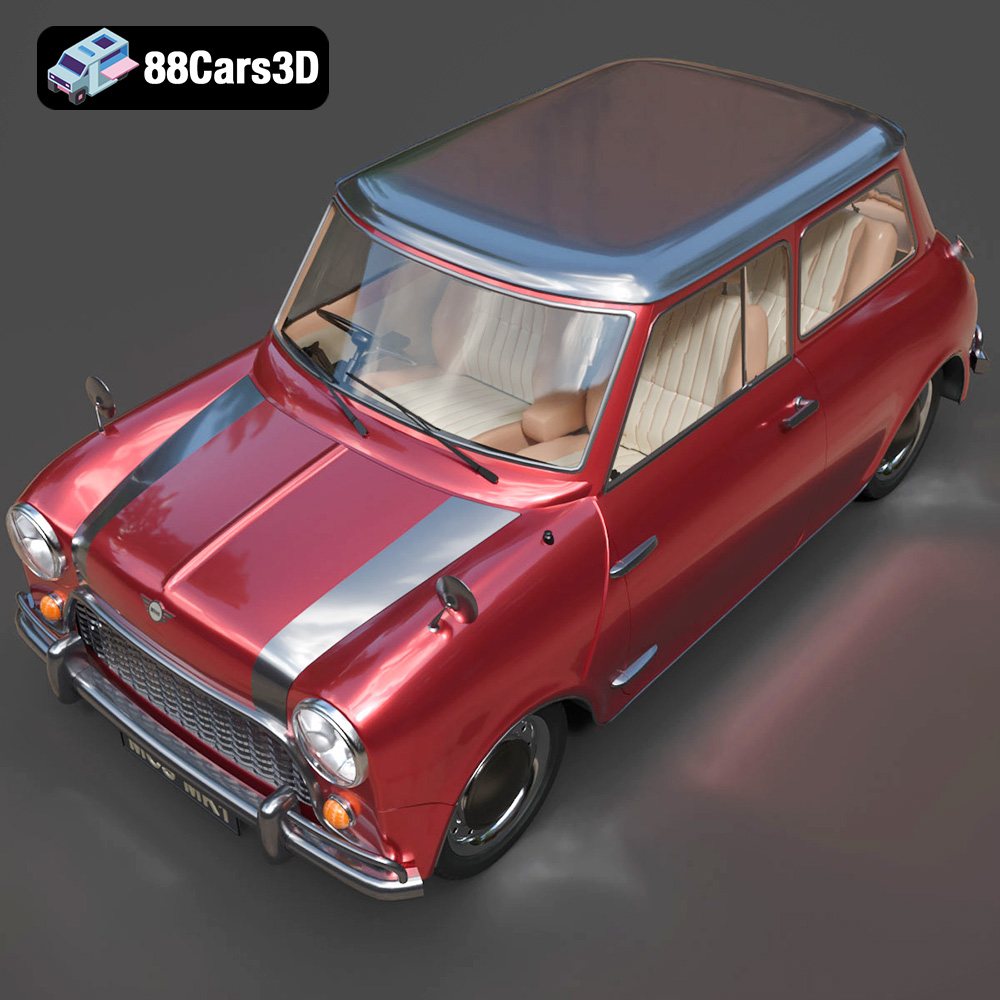
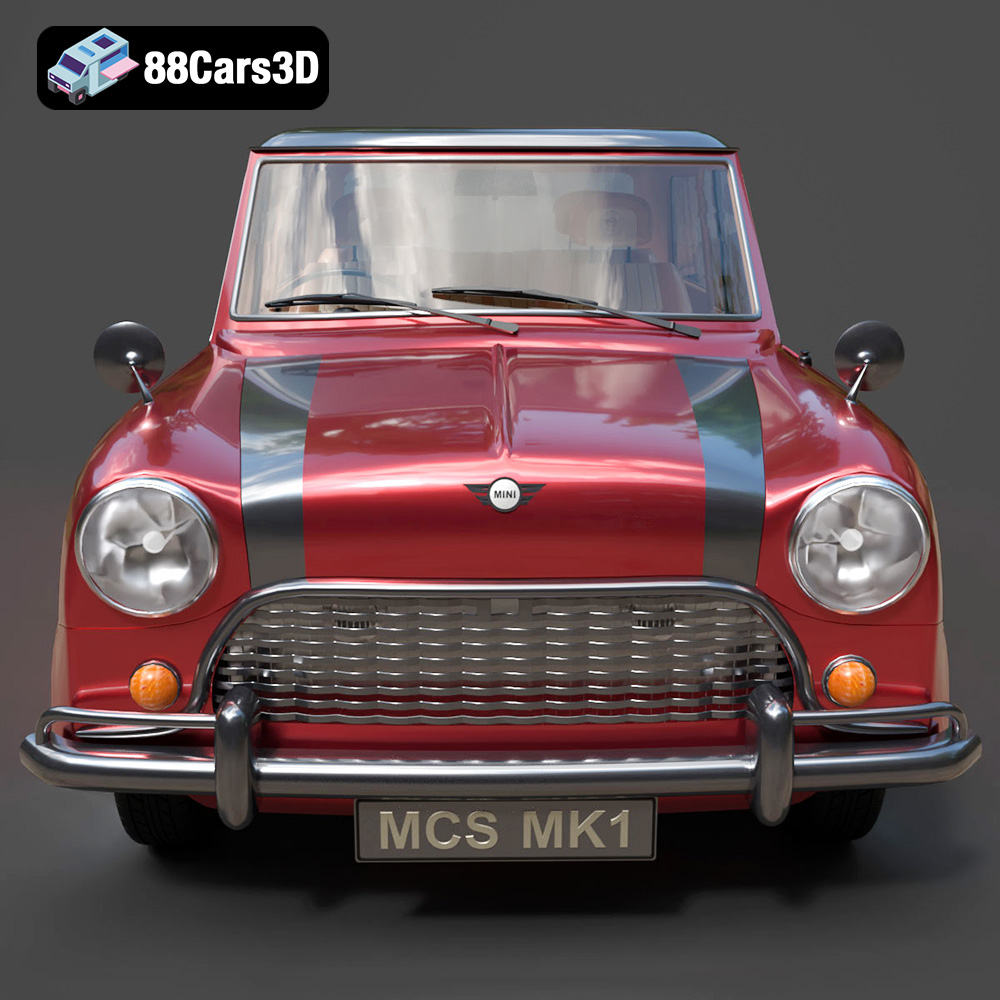
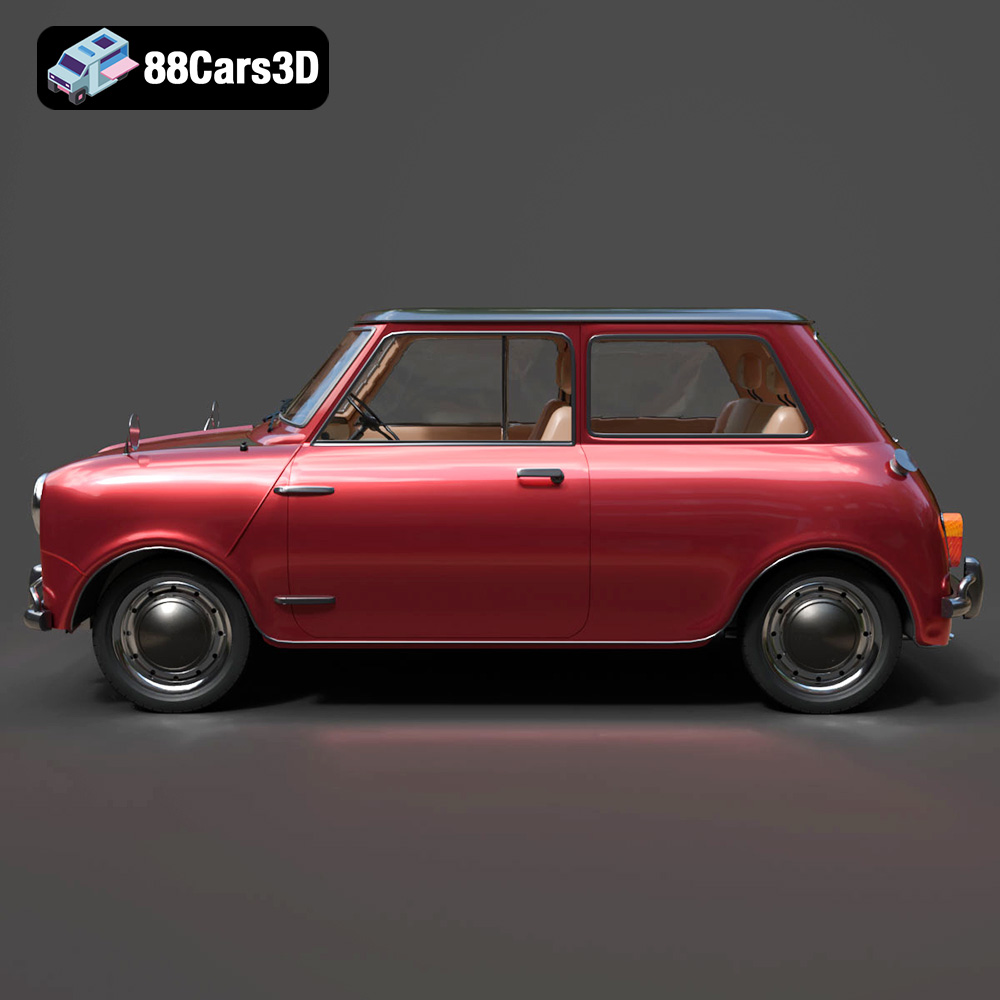
The essence of the MK1 Cooper S lies in its iconic silhouette: the compact, rounded body, the distinctive chrome bumpers, the signature circular headlights, and the aggressive yet charming grille design. This 3D model captures these features with remarkable accuracy. From the subtle curves of the fenders to the precise dimensions of the wheelbase, every aspect has been carefully considered to ensure real-world scale accuracy. Such attention to proportion is critical not only for visual realism but also for seamless integration into real-time environments where spatial integrity is paramount. Optional racing stripe detailing further enhances the model’s authentic vintage appeal, allowing for a personalized touch or faithful recreation of historical rally liveries.
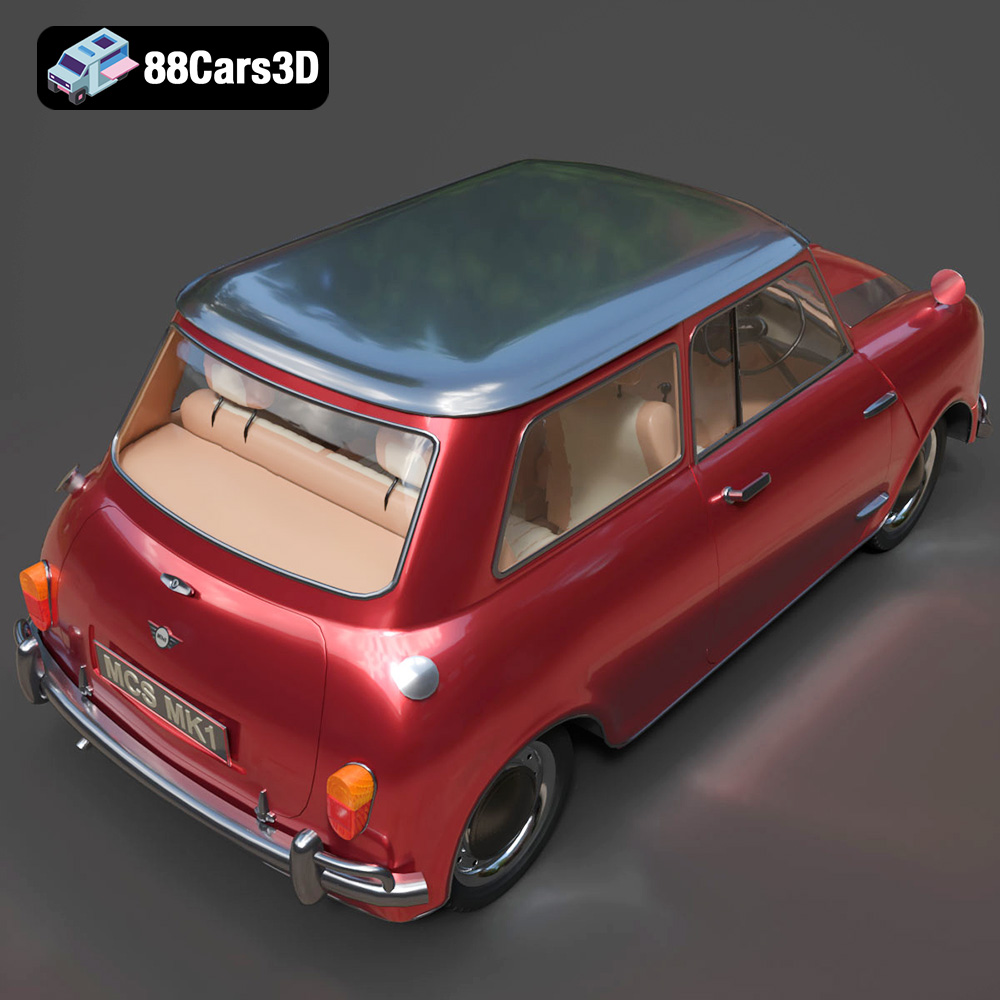
While the exterior grabs immediate attention, the interior is where the true character of a classic car often resides. The Mini Cooper S MK1 3D Model doesn’t disappoint, featuring a meticulously recreated retro dashboard with its central speedometer, a classic steering wheel, and period-accurate bucket seat geometry. Details like the gear shifter and pedal representations, along with door panel and trim elements, contribute to an immersive experience, whether for close-up renders or in-game cockpits. This level of interior detail is especially valuable for AR/VR applications, allowing users to virtually step inside the classic Mini and experience its unique vintage ambiance.
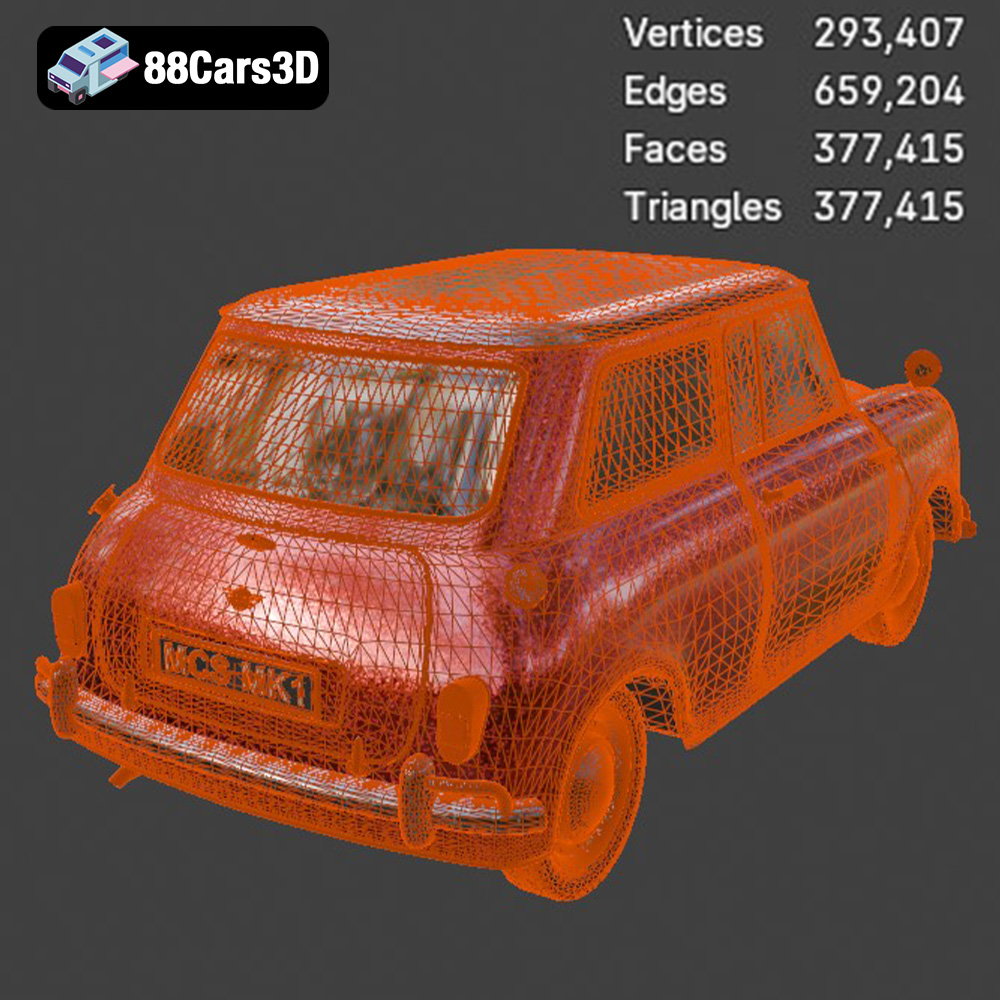
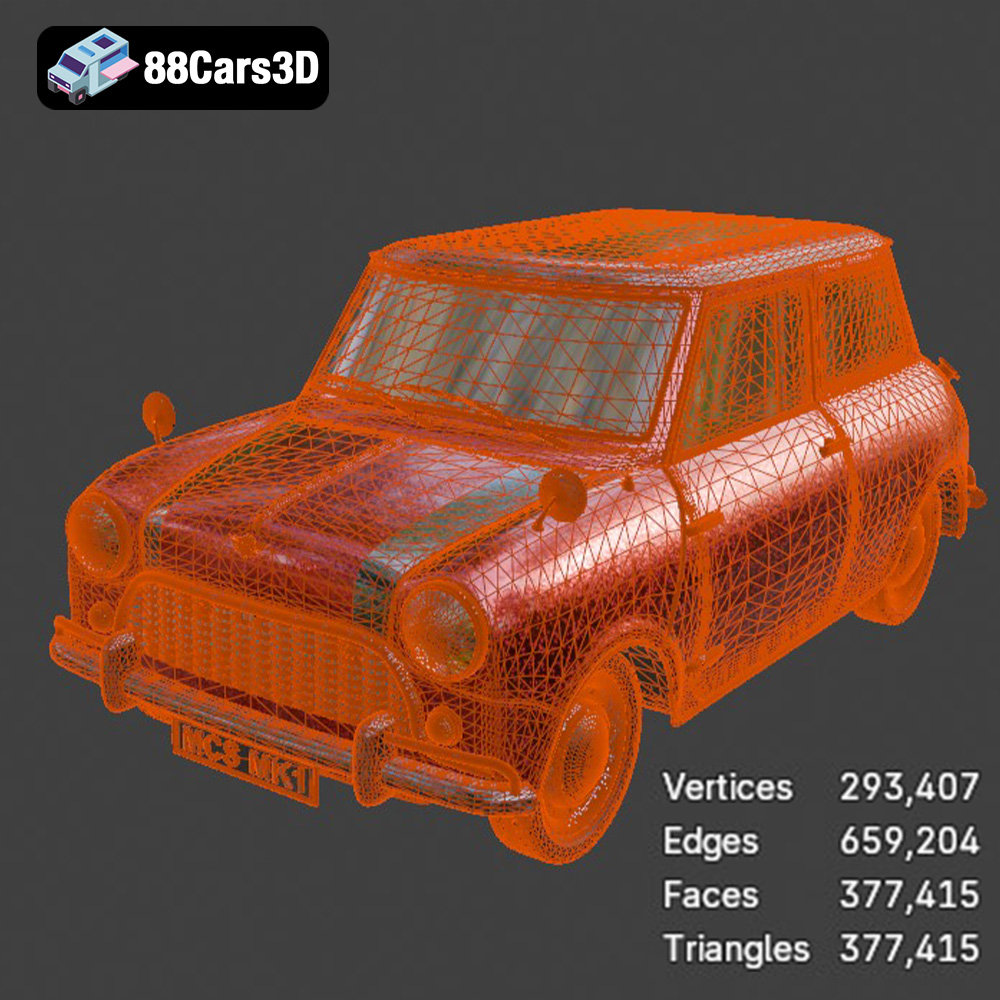
Beyond visual fidelity, a professional-grade 3D model must be engineered for optimal performance across various applications. The Mini Cooper S MK1 3D Model boasts a clean and well-organized mesh structure, ensuring efficient polygon flow. This optimization is crucial for maintaining high frame rates in real-time environments like game engines, while also providing a solid foundation for detailed subdivisions in high-quality renders. Furthermore, the model is built to real-world scale, a fundamental requirement for accurate simulations, architectural visualizations, and seamless integration with other real-world scale assets. Crucially, components like wheels and steering mechanisms are set up with proper pivots, allowing for realistic animation and dynamic interaction, which is a hallmark of truly production-ready 3D car models.
The true value of a versatile 3D asset lies in its adaptability across diverse professional workflows. The Mini Cooper S MK1 3D Model is designed to be a plug-and-play solution, offering comprehensive compatibility with industry-standard software and engines. This flexibility ensures that regardless of your preferred creative suite, this classic car can be seamlessly integrated into your projects, whether for cinematic production, interactive experiences, or precise technical visualizations.
For high-end automotive rendering and visualization, 3ds Max and Blender remain front-runners. The Mini Cooper S MK1 3D Model, available in both .max and .blend formats, provides artists with immediate access to a production-ready asset. In 3ds Max, designers can leverage powerful rendering engines like V-Ray or Corona to achieve hyper-realistic results, meticulously crafting materials for paint, chrome, glass, and rubber. The clean mesh allows for easy application of subdivision modifiers (like Turbosmooth), smoothing out surfaces for flawless reflections. Similarly, in Blender, artists can utilize Cycles for photorealistic path tracing or Eevee for real-time rendering, applying PBR (Physically Based Rendering) materials to accurately simulate how light interacts with the car’s surfaces. The proper pivot setup for wheels and steering also facilitates effortless animation of driving sequences, making it perfect for classic car marketing or heritage automotive visuals.
The demands of game development and real-time environments are distinct, requiring optimized assets that maintain visual fidelity while ensuring performance. The Mini Cooper S MK1 3D Model, with its .fbx and .unreal formats, is perfectly suited for game engines like Unreal. The .fbx file ensures that the model’s hierarchical structure, material assignments, and skeletal setup (if applicable for animation) transfer cleanly. For Unreal Engine specifically, the .unreal format minimizes the import overhead, often arriving with pre-configured materials, textures, and even LODs (Levels of Detail) to manage polygon count dynamically based on camera distance. Developers can quickly integrate this classic car into vintage racing games, rally simulators, or open-world environments, setting up collision meshes and interactive elements to create a truly immersive driving experience. Its optimized geometry ensures smooth frame rates, making it an invaluable game asset.
A key advantage of a well-structured 3D model is the scope for customization. The Mini Cooper S MK1 3D Model offers ample flexibility for artists to personalize the classic car to their project’s specific needs. Customization options include altering the body color and roof color contrast, essential for historical accuracy or modern interpretations. Adding racing stripes or rally numbers can transform the car into a specific rally legend. Modifying wheel styles and tire setups allows for different period looks or performance enhancements. Even adjusting the ride height can shift its aesthetic from a street stance to a rugged rally configuration. This level of control ensures that the digital Mini Cooper S MK1 can fulfill diverse creative visions, from a pristine showroom display to a battle-hardened rally champion, all from a single, high-quality base model available at 88cars3d.com.
The fusion of digital design and physical fabrication has revolutionized industries, enabling artists and engineers to transcend the boundaries of virtual space. For enthusiasts and professionals alike, the ability to transform a high-detail 3D model into a tangible object is an exciting prospect. The Mini Cooper S MK1 3D Model, with its dedicated .stl format and clear printing guidelines, opens up this world of physical manifestation, allowing you to hold a piece of automotive history in your hands.
Imagine having a perfectly scaled replica of the Mini Cooper S MK1 sitting on your desk, or using it as a prop for photography, or even as a unique gift. The inclusion of an .stl file makes this possible. This format, universally accepted by 3D printers, ensures that the Mini Cooper S MK1’s precise geometry can be faithfully translated into a physical object. From detailed body panels to the distinct grille and headlight features, the digital fidelity is preserved in the physical print. This capability is not just for hobbyists; it extends to professional applications such as prototyping for scale models, creating physical assets for film sets, or even producing bespoke automotive memorabilia. The clear, manifold geometry of the model ensures that the 3D printing process is as smooth and successful as possible.
Achieving a high-quality 3D print requires careful consideration of print settings and post-processing. The Mini Cooper S MK1 3D Model comes with recommended settings to guide users through the process. Suggested scales like 1:32, 1:24, 1:18, or 1:12 allow for various display options. Layer height recommendations (0.08–0.16 mm) are critical for capturing fine details and smooth curves, especially on a compact vehicle. Wall thickness (1.2–2.0 mm) ensures structural integrity, while an infill of 15–25% balances strength and material usage. Importantly, the guidelines specify areas requiring supports, such as mirrors, bumpers, and undercarriage details, to prevent warping and ensure fidelity during printing. Recommendations for print orientation, like angling the body for smooth curves and printing wheels separately, are invaluable for achieving optimal results. Post-processing is where the magic truly happens: sanding to remove layer lines, applying primer for an even surface, and finally, a gloss vintage paint finish with optional racing decals can transform a raw 3D print into a stunning, display-worthy classic car model.
The versatility of a high-quality 3D asset like the Mini Cooper S MK1 extends across numerous industries, providing tangible benefits and enabling innovative projects. Its application goes beyond simple rendering, touching on areas that leverage its historical accuracy and robust technical foundation to create compelling experiences and valuable content.
In film, television, and advertising, period-accurate vehicles are essential for creating authentic environments. Sourcing and maintaining physical classic cars can be prohibitively expensive and logistically challenging. This is where 3D car models like the Mini Cooper S MK1 become invaluable. For a commercial aiming to evoke 1960s nostalgia, or a film set in a historical context, the digital Mini can be seamlessly integrated into live-action footage or fully rendered scenes. Its detailed exterior and interior allow for close-up shots and dynamic camera movements, making it a perfect stand-in for a physical vehicle. Directors can virtually “drive” the Mini through period cityscapes or rally environments, achieving shots that would be impossible or impractical with real vehicles, all while maintaining complete creative control over lighting, camera angles, and environmental interaction.
Augmented Reality (AR) and Virtual Reality (VR) are transforming how we interact with digital content, offering immersive experiences that blur the lines between the real and virtual. The Mini Cooper S MK1 3D Model is ideally suited for these cutting-edge applications. Imagine an interactive museum exhibit where visitors can “walk around” and virtually “sit inside” a Mini Cooper S MK1, exploring its interior details and learning about its history through an AR application on their smartphone. Or envision a VR showroom where potential buyers can customize the classic Mini’s paint scheme, racing stripes, and wheel options in real-time. Its optimized geometry and clean mesh make it performant enough for these interactive environments, providing a rich, educational, or promotional experience without the need for physical space or expensive physical models.
Beyond entertainment and marketing, high-fidelity 3D models play a significant role in education and historical preservation. Universities and automotive history enthusiasts can utilize the Mini Cooper S MK1 3D Model for detailed studies of classic automotive design, engineering principles, and cultural impact. Educators can create interactive lessons, demonstrating the unique features of the MK1 or visualizing its rally heritage through animated sequences. For motorsport heritage projects, the model can be integrated into simulations to recreate famous races or serve as a foundational asset for developing virtual archives of historical vehicles. Its real-world scale and accurate proportions ensure that any analysis or visualization derived from the model is both precise and reliable, making it an excellent resource for academic and research purposes.
The digital realm offers unprecedented opportunities to preserve, reinterpret, and interact with the automotive legends of yesteryear. The Mini Cooper S MK1 3D Model stands as a prime example of a meticulously crafted asset that empowers creators across various disciplines. From its accurate recreation of the iconic rounded body and vintage interior to its robust technical advantages and broad file format compatibility, it is a truly versatile tool.
Whether you are an automotive rendering artist aiming for photo-realism, a game developer building an immersive racing simulation, an AR/VR innovator crafting interactive experiences, or a hobbyist looking to 3D print a collectible, this model provides the foundation you need. It exemplifies how professional-grade 3D car models can streamline workflows, inspire creativity, and bring beloved classics into the digital age. Explore the possibilities and elevate your projects by incorporating this legendary vehicle into your asset library today. Discover this and many other high-quality 3D car models at 88cars3d.com, your premier destination for professional automotive assets.
The Mini Cooper S MK1 3D Model is a high-detail digital recreation of the legendary compact performance car that became an icon of 1960s British automotive design. Known for its lightweight construction, racing heritage, and distinctive compact proportions, the MK1 Cooper S gained worldwide recognition through rally victories and motorsport success. This 3D model accurately represents the classic rounded body shape, chrome bumpers, compact grille, circular headlights, racing stripe options, small-diameter wheels, and vintage interior layout. Designed with clean topology and real-world scale accuracy, it is ideal for rendering, animation, automotive visualization, game development, and AR/VR experiences. Perfect for classic city scenes, rally environments, retro-themed projects, cinematic productions, and vintage racing simulations.
$39.99