Get 50% OFF All Premium 3D & STL Models!

The quest for photorealism in real-time rendering has always pushed the boundaries of technology, especially within demanding fields like automotive visualization. For years, the industry standard has been Physically Based Rendering (PBR), a powerful methodology that brought unprecedented consistency and realism to digital assets. However, even PBR had its limitations, particularly when striving to accurately depict the intricate, multi-layered surfaces common in high-end automotive design – clear coats over metallic flake, complex fabrics, or multi-layered glass. Enter Unreal Engine’s Substrate Material System, a revolutionary leap forward in shading technology that promises to redefine how artists and developers approach material creation. For professionals leveraging high-quality 3D car models from platforms like 88cars3d.com for Unreal Engine projects, Substrate isn’t just an improvement; it’s a paradigm shift, unlocking a new era of visual fidelity and artistic freedom. This deep dive will explore Substrate’s capabilities, its technical underpinnings, and how it empowers the creation of truly next-generation automotive experiences.
Whether you’re developing an immersive automotive configurator, producing cinematic marketing renders, or building a cutting-edge racing game, the ability to accurately represent materials is paramount. Substrate addresses the long-standing challenges of traditional PBR, offering a unified, stackable framework that allows for the creation of virtually any real-world material with astounding realism. From the subtle glint of metallic paint under a clear coat to the nuanced translucency of a headlight lens, Substrate provides the tools to replicate these complexities more accurately and efficiently than ever before. Prepare to embark on a journey into the future of real-time rendering, where your 3D car models from 88cars3d.com can truly shine with unparalleled visual authenticity.
For years, Physically Based Rendering (PBR) has been the cornerstone of realistic rendering in game development, architectural visualization, and film. PBR’s strength lies in its ability to simulate how light interacts with surfaces based on real-world physics, using parameters like Albedo, Roughness, Metallic, and Normal maps. This approach ensured consistency and believability across diverse lighting conditions. However, PBR, as typically implemented in real-time engines, often relied on a simplified “single-lobe” BRDF (Bidirectional Reflectance Distribution Function) model. This simplification made it challenging to accurately represent complex, multi-layered materials like car paint (a clear coat over a metallic base with optional flakes), layered fabrics, or intricate skin shaders, which intrinsically involve multiple layers of light interaction.
Artists often resorted to clever workarounds, blending multiple materials, faking effects with complex texture maps, or relying on custom shader code, all of which could be cumbersome, computationally expensive, and difficult to manage. These methods frequently broke the strict physical accuracy that PBR aimed for, leading to subtle visual discrepancies that prevented true photorealism. Moreover, handling translucent and volumetric effects within this single-lobe framework was particularly challenging, often requiring entirely separate shading models that fragmented the material workflow and increased development overhead. The demand for increasingly sophisticated and realistic visuals, especially in high-fidelity automotive visualization and virtual production, highlighted the need for a more robust and unified shading system.
Traditional PBR, while a massive step forward, had inherent architectural limitations. Most real-time PBR implementations focused on a single surface reflection and diffusion model. This meant representing materials like a car’s clear coat, which is a transparent dielectric layer sitting on top of an opaque metallic layer, as a single, homogenous surface. To simulate the appearance of distinct layers, artists would often have to manipulate roughness and metallic values globally, leading to compromises in accuracy. For instance, achieving the distinct specular highlights of a clear coat while maintaining the underlying metallic sheen was a constant struggle. Similarly, advanced materials requiring subsurface scattering, volumetric properties (like fog or smoke), or multiple translucent layers pushed the PBR framework to its breaking point.
The “single-lobe” problem refers to the inability of a standard BRDF to naturally account for multiple distinct reflective or refractive events happening within a single material. Car paint is a prime example: light interacts with the clear coat (first lobe), then with the metallic flakes within the base coat (second lobe), and finally diffuses through the underlying pigment. Simulating these separate interactions accurately and efficiently in real-time was a significant hurdle. This limitation forced artists into a creative tightrope walk, often sacrificing physical accuracy for visual approximation, leading to increased iteration times and a ceiling on visual fidelity. The complexity of managing these approximations grew exponentially with the number of unique, sophisticated materials in a scene, making truly high-end automotive rendering an arduous task.
Substrate fundamentally redefines material creation by moving away from a single, fixed BRDF to a flexible, node-based, and stackable material framework. Instead of defining a material as a single entity, Substrate allows artists to build materials from a series of “slices” or layers, each representing a specific physical property or interaction. These slices can be combined in a physically accurate manner, much like how real-world materials are composed. Want a clear coat? Add a Clear Coat slice. Need metallic flakes? Add a Flake slice. This modularity means that complex materials that previously required custom shaders or intricate material blends can now be constructed intuitively within the Material Editor, maintaining physical accuracy throughout.
This layered approach enables the creation of materials that exhibit true multi-layered scattering and absorption. For instance, a clear-coat automotive paint can now be represented with distinct layers for the clear coat, metallic base, and even a separate layer for microscopic dirt or imperfections on the surface. Each layer contributes to the final shading calculation in a physically plausible way, leading to vastly more realistic reflections, refractions, and diffuse light interactions. This isn’t just about looking better; it’s about making it easier for artists to achieve that fidelity. By simplifying the creation of complex materials, Substrate empowers artists to push visual boundaries without compromising on performance or physical realism, directly benefiting assets from marketplaces such as 88cars3d.com that demand high-fidelity representation.
At its heart, Substrate introduces a new vocabulary and methodology for material construction within Unreal Engine. Instead of working with a fixed set of PBR inputs, artists now interact with a dynamic graph of “Material Expressions” that represent different material layers or behaviors. These expressions, often referred to as “slices,” are the building blocks of any Substrate material. Each slice contributes to the overall material by defining how light interacts with that specific layer – be it a diffuse base, a clear coat, a volumetric fog, or an anisotropic metallic surface. The power comes from how these slices are connected and evaluated, allowing for the simulation of intricate light paths through multiple material layers, which was previously impossible or prohibitively expensive in real-time.
The system also unifies the handling of different material types under a single framework. Whether you need an opaque, metallic surface, a transparent glass pane, or a glowing volumetric effect, Substrate provides a consistent set of tools and principles. This unification streamlines workflows, reduces the learning curve for different material types, and ensures that materials behave consistently across various lighting and rendering scenarios. It represents a shift from defining specific material ‘types’ to defining material ‘properties’ that can be freely combined and stacked, offering unprecedented flexibility for artists. This foundational understanding is crucial for harnessing the full potential of Substrate in your Unreal Engine projects.
In Substrate, a “slice” is essentially a Material Expression node that represents a specific type of material layer or property. These slices include foundational elements like SubstrateBase (for diffuse and metallic properties), SubstrateClearCoat (for transparent layers over other materials), SubstrateVolumetric (for media like fog or smoke), and specialized nodes for features like anisotropic reflections or sub-surface scattering. Each slice has its own set of inputs, such as roughness, IOR (Index of Refraction), absorption, and scattering coefficients, allowing for precise control over its physical characteristics.
The real magic happens when you connect these slices. For example, to create car paint, you would typically start with a SubstrateBase node for the underlying metallic pigment. Then, you would connect a SubstrateClearCoat node to its output, effectively stacking a transparent layer on top. The light calculation then intelligently propagates through these layers. You can even add additional slices, such as a thin dirt layer on top of the clear coat, or a metallic flake layer *within* the base coat. This modularity means artists can experiment with complex material compositions rapidly, iterating on designs in real-time, which is invaluable for automotive design reviews and configurators. The Substrate material graph becomes a visual representation of the physical layers of your material, making it intuitive to understand and modify.
One of Substrate’s most significant achievements is its ability to unify the rendering of opaque, translucent, and volumetric materials under a single, coherent system. Traditionally, these material types required distinct shading models and often separate rendering passes, leading to complexities in performance, visual consistency, and artist workflow. Substrate eliminates this fragmentation by allowing you to incorporate volumetric and translucent properties directly into your material graph using dedicated slices.
For automotive applications, this unification is incredibly powerful. Imagine creating a headlight that combines a transparent glass lens (translucent), an underlying reflector (opaque metallic), and perhaps even a subtle volumetric fog inside the housing. With Substrate, all these elements can be defined within a single material, ensuring that light interacts correctly across these boundaries. Similarly, car windows can accurately refract and reflect, with subtle absorption based on their thickness, while exhaust fumes can be rendered as physically accurate volumetrics, all within the same shading framework. This level of integration simplifies the creation of highly detailed and physically accurate vehicle assets, making the high-quality models available on 88cars3d.com even more versatile and visually stunning when brought to life in Unreal Engine.
Integrating Substrate into your Unreal Engine workflow for automotive projects requires a few setup steps and a foundational understanding of the new material editor paradigm. The payoff, however, is immense. Substrate empowers artists to create vehicle materials that far surpass the realism achievable with traditional PBR, accurately depicting the complex interplay of light on multi-layered paints, intricate interior fabrics, and highly refractive glass. This section will guide you through the process, from enabling Substrate in your project to crafting sophisticated automotive materials. For assets like the impeccably detailed 3D car models found on 88cars3d.com, leveraging Substrate means unlocking their full visual potential, allowing every curve and surface to reflect light with unprecedented accuracy and beauty, essential for top-tier automotive visualization and real-time rendering.
The beauty of Substrate is its intuitive, node-based nature, which, while initially different from standard PBR, quickly becomes second nature. Artists can visually construct materials layer by layer, seeing the immediate results of their changes. This iterative workflow is crucial in automotive design, where subtle variations in material properties can dramatically alter the perception of luxury, performance, or overall aesthetic. By mastering Substrate, you gain the power to not just recreate real-world materials, but to innovate and create visually compelling experiences that resonate with discerning audiences.
Before diving into material creation, you need to enable the Substrate system in your Unreal Engine project. This is a straightforward process, but crucial for accessing the new material editor functionality.
Edit > Plugins. Search for “Substrate” and ensure the “Substrate” plugin is enabled. You will likely need to restart the editor.Edit > Project Settings > Rendering. Under the “Materials” section, find “Active Material System.” Change this from “Standard” to “Substrate.” You may also need to adjust other rendering settings to ensure full compatibility, such as enabling “Virtual Shadow Maps” and “Lumen Global Illumination” for the best results, as Substrate materials truly shine when combined with these modern rendering features.Once enabled, any new Material asset you create will automatically open in the Substrate Material Editor, revealing the new ‘Substrate’ output node and a plethora of new material expressions. For existing materials, you’ll need to manually convert them or rebuild them from scratch to fully leverage Substrate’s capabilities. It’s often recommended to start new projects or specific high-fidelity assets with Substrate enabled from the outset to avoid conversion complexities later.
Creating believable car paint is a perfect showcase for Substrate’s multi-layered capabilities. Here’s a typical workflow for achieving a metallic clear-coat paint:
SubstrateBase node. This will form the core metallic pigment layer.SubstrateAnisotropicFibers or a custom metallic flake material expression to the Base’s input (if available or created). This simulates the directional reflectivity of metallic flakes.SubstrateClearCoat node.SubstrateClearCoat or a custom blend on top of the main clear coat, using a mask texture to apply subtle dust or smudges with higher roughness and lower IOR.This layered construction allows light to accurately reflect off the clear coat, then transmit through it to interact with the metallic flakes below, and finally reflect back out, producing a visually stunning and physically accurate representation of car paint. The precise control over each layer’s properties is what truly elevates the fidelity beyond traditional PBR.
Substrate excels at handling materials that were notoriously difficult to render realistically:
SubstrateAnisotropic or custom anisotropic expressions are perfect for this, combined with a SubstrateClearCoat for the resin layer.SubstrateBase with detailed normal maps for surface texture and potentially a shallow SubstrateVolumetric or a custom SSS (Subsurface Scattering) slice to simulate light scattering just beneath the surface, giving the material a softer, more organic feel. The ability to stack multiple diffuse and specular lobes provides unparalleled control over the “sheen” and “pile” effects seen in textiles.SubstrateTransmissive or SubstrateThinTransmissive node allows for accurate refraction based on IOR, color absorption over distance, and distinct front and back surface reflections. You can also stack multiple transparent layers for complex optical elements, each with its own properties, ensuring that light bends and absorbs correctly as it passes through. For assets from 88cars3d.com, which often feature highly detailed interiors and complex light assemblies, Substrate’s ability to render these materials with precision is transformative for automotive visualization.Substrate isn’t a standalone feature; it’s designed to integrate seamlessly with Unreal Engine’s cutting-edge rendering pipeline. Its true power is unleashed when combined with other modern technologies like Nanite, Lumen, and the Path Tracer. This synergy ensures that the incredibly detailed materials you craft with Substrate are rendered with optimal performance, stunning global illumination, and photo-realistic accuracy. Understanding how these features interact is key to maximizing the visual fidelity and efficiency of your Unreal Engine projects, especially when working with high-quality 3D car models that demand the best in real-time rendering.
The combination of Substrate’s advanced material fidelity with Unreal Engine’s robust rendering features creates an ecosystem where artists and developers can push the boundaries of real-time photorealism. This holistic approach means that every aspect of your scene, from the geometry to the lighting and materials, works in harmony to produce a breathtaking final image. For automotive visualization, where every reflection and subtle material imperfection contributes to the overall realism, this integration is invaluable.
Nanite, Unreal Engine’s virtualized geometry system, revolutionized how high-polygon meshes are handled in real-time. It allows artists to import film-quality assets with millions or even billions of polygons without significant performance bottlenecks. When paired with Substrate, the combination is truly transformative. Imagine importing a highly detailed 3D car model from 88cars3d.com, complete with intricate interior stitching, complex engine components, and smooth body panels, all rendered with Nanite’s efficient geometry streaming.
Substrate then applies incredibly detailed, multi-layered materials to these high-fidelity meshes. The result is a level of visual realism that was previously only attainable in offline renderers. Nanite handles the geometric complexity, efficiently managing the immense polygon counts, while Substrate delivers the material nuance. This pairing means you no longer have to compromise on either geometry detail or material fidelity. You can have both, enabling stunning automotive visualization where every bolt, seam, and painted surface exhibits true-to-life physical properties and intricate detail, all running smoothly in real-time. The performance benefits are significant, as Nanite’s efficient rendering of geometry ensures that the GPU has more resources to dedicate to Substrate’s advanced material calculations.
Substrate materials truly come alive when illuminated by Unreal Engine’s advanced global illumination and ray tracing solutions. Lumen, Unreal Engine’s fully dynamic global illumination and reflections system, accurately simulates how light bounces around an environment, significantly enhancing realism. When a Substrate material interacts with Lumen, the complex multi-layered reflections and refractions are correctly propagated throughout the scene. This means that the clear coat on your car paint will accurately reflect its environment and contribute to the bounced light, leading to incredibly dynamic and realistic lighting scenarios.
For ultimate photorealism, Unreal Engine’s Path Tracer provides an unbiased, physically accurate rendering solution. Substrate materials are designed to be fully compatible with the Path Tracer, ensuring that every ray of light correctly interacts with each layer of your material stack. This is critical for generating marketing-quality renders or virtual production assets where absolute fidelity is required. The combination of Substrate’s physically accurate material definitions with Lumen’s real-time GI or the Path Tracer’s pristine renders means that your automotive models will look their absolute best, accurately depicting how light reflects off a glossy fender or transmits through a tinted window, further enhancing the appeal of 3D car models for visualization.
While Substrate offers unparalleled visual fidelity, it’s essential to consider its performance implications. More complex materials, with a greater number of layers and intricate calculations, will naturally require more GPU resources. However, Substrate is designed with optimization in mind:
By following these best practices, you can leverage Substrate’s power without crippling your project’s performance, achieving stunning visuals for automotive visualization, real-time rendering, and game development.
The advent of Substrate fundamentally redefines what’s possible in real-time rendering, especially for industries that demand the highest levels of visual fidelity. For automotive visualization, game development, and virtual production, its impact is profound. Substrate isn’t just a technical upgrade; it’s an enabler for new creative possibilities, allowing artists to deliver experiences that blur the lines between virtual and reality. This section explores how Substrate is already transforming these fields and provides insights into best practices for harnessing its full potential.
The commitment of Unreal Engine to continuously innovate its rendering core ensures that technologies like Substrate will continue to evolve, offering even more sophisticated tools in the future. For professionals sourcing 3D car models from platforms like 88cars3d.com, embracing Substrate means future-proofing their projects and staying at the forefront of real-time graphics, delivering unparalleled realism and immersive experiences across various applications.
Automotive visualization is a field where material accuracy is paramount. Every gleam of paint, every stitch of leather, and every reflection in chrome contributes to the perception of quality and luxury. Substrate dramatically elevates this by allowing for the creation of physically accurate car paints, intricate interior materials, and realistic glass elements that respond correctly to light in any environment. This is game-changing for:
For high-quality 3D car models, such as those optimized for Unreal Engine and available on 88cars3d.com, Substrate ensures that their inherent detail is matched by equally sophisticated material representation, delivering a truly premium visual experience.
Virtual Production workflows, especially those utilizing LED walls, demand materials that hold up to scrutiny under varying camera angles and real-time lighting. Substrate’s ability to create highly realistic and physically accurate surfaces ensures that digital assets seamlessly integrate with physical environments, eliminating visual discrepancies and enhancing immersion. Whether it’s a digital car on an LED stage or a virtual set, Substrate provides the material backbone for believable visuals.
In game development, Substrate unlocks a new level of environmental and character fidelity. Racing games can feature vehicles with unparalleled paint realism. Open-world games can utilize Substrate for highly believable terrain, vegetation, and architectural materials. While performance optimization is always key for games, Substrate’s modularity allows developers to selectively apply complex materials where they matter most, or to simplify layers for lower-spec targets while retaining the core physical behavior. For example, a hero car in a racing game can leverage the full Substrate stack, while background vehicles might use a simplified version, striking a balance between visual impact and performance.
To get the most out of Substrate, consider these professional tips:
The Substrate Material System represents a monumental leap forward in real-time rendering technology, offering Unreal Engine developers and artists unprecedented control and fidelity in material creation. By moving beyond the limitations of traditional single-lobe PBR, Substrate empowers the construction of complex, multi-layered materials that truly reflect the intricacies of the physical world. For automotive visualization, game development, and virtual production, this means unlocking a new era of photorealism, where every surface, from the glossy sheen of car paint to the intricate texture of carbon fiber, can be rendered with breathtaking accuracy.
For professionals leveraging high-quality 3D car models from marketplaces like 88cars3d.com, Substrate is an indispensable tool. It ensures that the meticulous detail of these assets is translated into visually stunning, physically accurate representations within Unreal Engine, whether for cinematic renders, interactive configurators, or immersive AR/VR experiences. The synergy between Substrate, Nanite, and Lumen creates a powerhouse rendering pipeline, enabling the creation of content that was once confined to offline renderers, now achievable in real-time.
Embracing Substrate requires a shift in mindset and a willingness to explore its modular, node-based workflow. However, the investment of time will undoubtedly pay dividends, enabling you to push the boundaries of visual fidelity and deliver truly next-generation experiences. Dive into the official Unreal Engine documentation to deepen your understanding and begin experimenting. The future of real-time material rendering is here, and with Substrate, your automotive masterpieces in Unreal Engine are set to achieve an unprecedented level of realism.

Texture: Yes | Material: Yes | 3D Printable: Yes. Download the Italian Thoroughbreds Bundle featuring 5 iconic 3D models: Lamborghini Huracán Performante, Ferrari 458 Italia, Lamborghini Urus, Diablo SV, and Maserati GT. Optimized for 4K rendering and 3D printing (STL included). Save 50% with this ultimate Italian vehicle collection.
Price: $199.99

Download the Elite Future Mobility Bundle featuring 4 highly optimized 3D models: Tesla Model S, Avatr 11, Li L9, and Zoox Robotaxi. Perfect for ArchViz, Smart City renders, and game dev. Optimized for Unreal Engine and Blender. Includes .fbx, .obj, and .max formats.
Price: $99

🚗 5 Iconic German Cars (BMW M4 G82, M5 CS, X3, 1 Series & Mercedes E-Class). ✅ Optimized for ArchViz: Ready for Corona & V-Ray. 💰 Save €71 with this limited-time collection! 🚀 Instant Download after purchase.
Price: $119

Download the Extreme Off-Road & Survival 3D Models Bundle! Includes the Brabus 800 Adventure, Dodge Ram Bigfoot, Spec Truck, and a Caravan. Save over €210 on this premium 4-in-1 off-grid vehicle pack for ArchViz and game development.
Price: $149.99

Download the Heavy Duty & Commercial Logistics 3D Models Bundle! Includes the Ford Sterling, Caterpillar CT680, Mercedes Citaro Bus, and Vito Van. Save over €130 on this massive, game-ready 4-in-1 industrial vehicle pack.
Price: $109.99

Download the Ultimate Custom Motorcycles 3D Models Bundle. Includes a Custom Chopper, Ducati 916 Café Fighter, Harley XR1200X, and BMW K100. Perfect premium props for luxury ArchViz garages. Save over €250 today!
Price: $159.99

Download the ultimate JDM Street Racing 3D Models Bundle! Includes the Nissan GT-R, Toyota Supra, Mazda RX-7, Lancer Evo IX, and Honda NSX. Save big on this highly optimized, game-ready 5-in-1 Japanese legend car pack.
Price: $129.99

Download the ultimate American Muscle & Cinematic Classics 3D Models Bundle! Includes the Dodge Charger ’68, Mustang Eleanor GT500, Camaro Z28 ’79, and a custom ’69 Mustang. Save over €240 on this game-ready, premium 4-in-1 pack.
Price: $149.99

Download the Everyday City Traffic 3D Models Bundle. Includes the VW Golf, Kia Picanto, Hyundai Tucson, Toyota Yaris, and a DHL Ford Transit Van. Save big on this 5-in-1 pack, perfectly optimized for realistic ArchViz streets and game traffic.
Price: $99.99
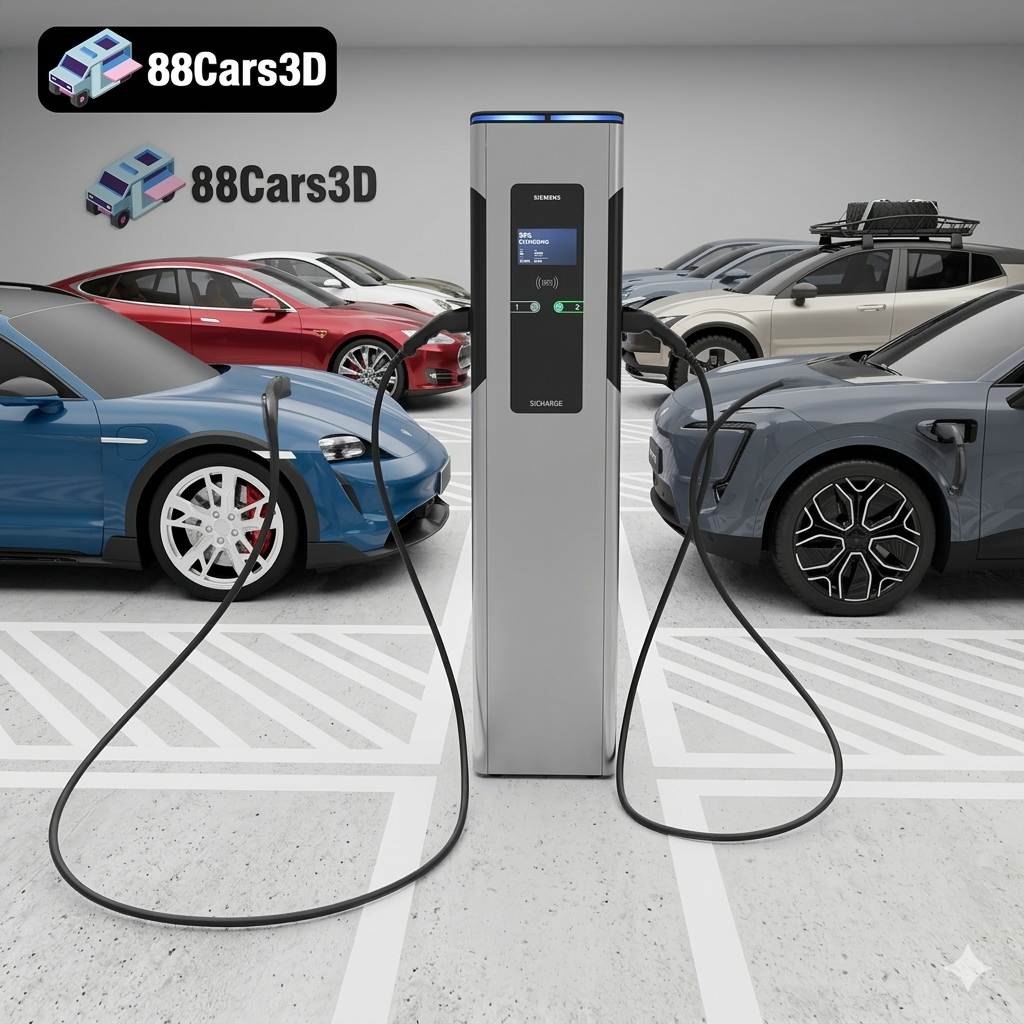
Download the Future of Mobility EV 3D Models Bundle. Includes the Volvo EX30, Tesla Model S, AVATR 11, Porsche Taycan, and a Siemens EV Charger. Save big on this highly optimized 5-in-1 pack for ArchViz and game development!
Price: $89.99

