Get 50% OFF All Premium 3D & STL Models!

In the vibrant realm of digital visualization, high-quality 3D car models stand as indispensable assets, driving innovation across a multitude of industries. From the gleaming showrooms of automotive design to the high-octane tracks of modern video games and the immersive experiences of virtual reality, the demand for meticulously crafted vehicular representations is ever-growing. These digital sculptures are far more than mere eye candy; they are complex technical achievements that serve as the backbone for critical development, marketing, and simulation processes. Understanding the intricacies of creating, optimizing, and deploying these assets is crucial for anyone looking to make a significant impact in these fields. This comprehensive guide delves deep into the technical landscape of 3D car models, exploring their applications, the formats that define them, and the expert workflows that bring them to life.
The journey of any successful automotive project, whether it’s a new vehicle launch or a visually stunning game, begins with a robust and accurate 3D model. The quality of these initial assets dictates the fidelity, performance, and overall impact of the final product. Investing in superior 3D car models is not just about aesthetics; it’s about establishing a solid technical foundation for an entire project pipeline.
For automotive manufacturers, 3D car models are the digital manifestation of their vision. These models often originate from intricate CAD (Computer-Aided Design) data, which captures every dimension and surface with engineering precision. However, raw CAD data often requires significant optimization and re-topology to be suitable for high-fidelity rendering or real-time applications. A high-quality marketing asset, for instance, demands a clean, quad-based mesh that allows for perfect subdivision, ensuring smooth, artifact-free surfaces even under extreme close-ups. This precision is vital for concept design reviews, virtual prototyping, and creating compelling marketing materials long before a physical prototype exists. The ability to iterate on designs rapidly in a virtual environment, visualizing every curve and panel gap, dramatically reduces development time and costs.
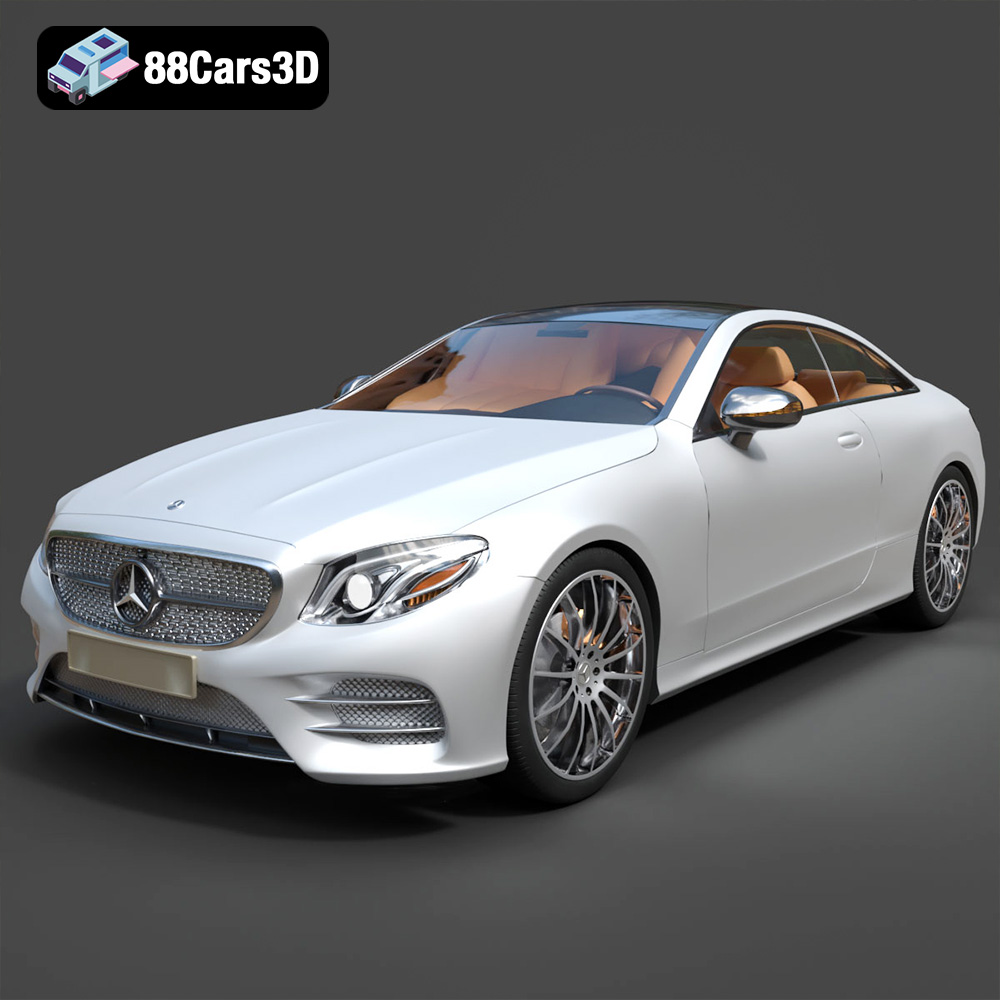
Photorealistic automotive rendering is an art form, heavily reliant on the underlying 3D car model’s quality. A model with accurate topology, detailed paneling, and correctly mapped UVs provides the perfect canvas for Physically Based Rendering (PBR) materials. PBR materials—encompassing properties like albedo, roughness, metallic, normal, and ambient occlusion maps—interact with light in a physically accurate manner, mimicking real-world surfaces. High-resolution textures for paint, rubber, glass, and chrome are layered upon these models, bringing an unparalleled level of realism. Imagine the subtle glint of chrome reflecting the environment, the fine texture of a tire tread, or the intricate details of an interior dashboard—all these elements are made possible by the foundational quality of the 3D model. Without a high-fidelity model, even the most sophisticated rendering engines and lighting setups will fall short of achieving true photorealism.
Choosing the correct file format is a critical technical decision that impacts compatibility, feature retention, and overall workflow efficiency. Each format is designed with specific use cases and technical capabilities in mind, making an informed choice essential for smooth project execution. Whether you are sourcing assets from a marketplace like 88cars3d.com or exchanging models between different software packages, familiarity with these formats is paramount.
Achieving photorealism in automotive rendering goes beyond just having a great 3D model; it involves a sophisticated interplay of materials, lighting, camera work, and post-processing. It’s here that the technical prowess of a 3D artist truly shines, transforming raw polygons into breathtaking visuals.
Physically Based Rendering (PBR) is the cornerstone of modern photorealistic rendering. Understanding PBR involves grasping how different material properties interact with light. Key texture maps include: Albedo (Base Color) for the intrinsic color, Roughness for surface imperfections and light scattering, Metallic for distinguishing between dielectrics and metals, Normal maps for faking surface detail without adding geometry, and Ambient Occlusion (AO) for soft shadows in crevices. For car paint, this means crafting complex shader networks that simulate clear coat layers, flake effects, and metallic sheens. Tire rubber needs intricate normal maps for tread patterns and subtle roughness variations, while glass demands accurate transmission and reflection properties. High-resolution textures (4K, 8K) are essential to prevent pixelation on close-ups, ensuring every detail from the stitching on a leather seat to the micro-scratches on a chrome bumper appears authentic.
Effective lighting is perhaps the most critical element in bringing a render to life. High Dynamic Range Images (HDRIs) are widely used to provide realistic environment lighting, capturing real-world light information that accurately affects reflections and global illumination. Beyond HDRIs, strategic use of studio lighting setups—key lights, fill lights, rim lights—can sculpt the form of the vehicle and highlight its design features. Outdoor scenes require careful consideration of sun position, sky gradients, and ambient light sources. Camera work is equally vital; choosing the right focal length (e.g., 85mm for cinematic shots), understanding depth of field to draw attention, and employing cinematic framing techniques elevate a simple render into a compelling image. Industry-standard renderers like V-Ray, Corona Renderer, Arnold, Blender’s Cycles, and Octane Render offer advanced tools to achieve these sophisticated lighting and material interactions.
Even the most stunning raw render can be significantly enhanced through post-processing and compositing. This stage involves taking the rendered output, often in multiple passes (beauty pass, diffuse, reflections, shadows, Z-depth), and refining it in software like Adobe Photoshop or Foundry Nuke. Techniques include color grading to set the mood, adjusting contrast and exposure, adding lens effects like bloom and glare for photographic realism, and introducing subtle motion blur for dynamic shots. Compositing allows for seamless integration of the car into a background plate or for adding elements like dust, rain, or atmospheric haze, truly bringing the rendered vehicle to life within its environment and achieving that final, polished, magazine-quality look.
While rendering prioritizes visual fidelity above all else, game development and real-time applications introduce a critical constraint: performance. Striking a balance between visual quality and computational efficiency is the art of optimization, ensuring smooth frame rates without sacrificing immersion.
A high-detail 3D car model suitable for cinematic rendering can be prohibitively expensive for a game engine. The number of polygons (poly count) directly impacts performance. Therefore, game-ready models are carefully optimized. A common technique is creating Levels of Detail (LODs). This involves having multiple versions of the same model, each with a progressively lower polygon count. For instance, LOD0 might be a high-detail model for close-up views, LOD1 a medium-detail version for mid-range, and LOD2 a low-detail model for distant views or simplified collision. Game engines automatically swap between these LODs based on the camera’s distance, dramatically reducing the computational load. Techniques like decimation (reducing polygon count while preserving shape) and manual retopology (rebuilding a mesh with cleaner, lower-poly topology) are essential for achieving optimal poly counts for each LOD stage.
Efficient UV mapping is crucial for both visual quality and performance. UVs are the 2D coordinates that tell a 3D model how its textures should be applied. For game assets, UV maps must be clean, non-overlapping, and make efficient use of the texture space to avoid distortion and wasted pixels. Texture atlasing is a common optimization technique where multiple smaller textures (e.g., for different car parts like the dashboard, steering wheel, and seats) are packed into a single, larger texture map. This reduces the number of draw calls an engine needs to make, improving rendering performance, especially for objects with many small components. Proper UV layout is also essential for baked lighting and shadows, ensuring they appear correctly on the model.
Beyond visual representation, game car models require functional elements. Collision meshes are simplified, low-polygon versions of the car’s geometry, used by the game engine for physics calculations (e.g., hitting other cars, walls, or terrain). These are kept separate from the render mesh to prevent complex geometry from bogging down the physics system. For interactivity, cars are often rigged—a digital skeleton is created to control movable parts. This can include basic wheel rotation and suspension compression, to more complex elements like opening doors, hood, trunk, or even driver controls. Animation allows for dynamic visual feedback, from headlights turning on to wipers moving, bringing the vehicle to life in the game world. When sourcing 3D car models from platforms like 88cars3d.com, checking for pre-optimized models with clean topology, LODs, and even basic rigging can save immense development time.
The versatility of high-quality 3D car models extends across a wide spectrum of industries, each leveraging their capabilities for specific goals, from high-stakes marketing to immersive user experiences.
The automotive industry was an early adopter of advanced 3D visualization. Before a new car even hits the production line, its 3D model is at the forefront of marketing. Photorealistic renders are used for promotional images, captivating commercials, and online configurators that allow prospective buyers to customize vehicles in real-time. Virtual showrooms provide immersive experiences, letting customers explore a car’s interior and exterior with unparalleled detail from the comfort of their home. This digital approach not only saves the enormous costs and logistics of photographing physical prototypes but also allows for rapid iteration and global deployment of marketing campaigns, showcasing every variant and option.
Racing games like Forza Motorsport and Gran Turismo owe their stunning realism to meticulously detailed 3D car models. Each vehicle is not just visually accurate but also optimized for the game engine, complete with LODs, collision meshes, and physics properties that mimic real-world driving dynamics. Beyond entertainment, 3D car models are central to professional driving simulators used for training racing drivers, testing vehicle dynamics in various scenarios, and even for developing autonomous driving systems. These simulators require highly accurate models that behave predictably under diverse conditions, serving as crucial tools for research, development, and training.
Augmented Reality (AR) and Virtual Reality (VR) are transforming how we interact with products, and 3D car models are at the heart of this revolution. AR applications allow users to virtually place a car in their driveway, explore its features, and even change colors in real-time through their smartphone camera. VR offers fully immersive test drives, providing a sense of scale and presence that traditional media cannot match. The concept of a “digital twin”—a virtual replica of a physical car—is gaining traction for maintenance, diagnostics, and training. These digital twins, built upon detailed 3D models, can simulate real-world conditions, helping engineers predict potential issues or train technicians in a risk-free virtual environment. Models available on 88cars3d.com are often primed for these innovative AR/VR applications, offering the fidelity required for such immersive experiences.
While some studios might model every asset from scratch, the reality for most projects involves leveraging existing, high-quality 3D assets to save time, reduce costs, and maintain consistency. The strategic acquisition and integration of professional-grade 3D car models can significantly streamline production.
Developing a complex 3D car model from scratch requires highly specialized skills and hundreds of hours of work, from blueprint analysis and primary modeling to UV mapping, texturing, and optimization. For many projects, particularly those with tight deadlines or budget constraints, sourcing pre-made, professional-grade 3D car models is a highly efficient solution. These assets, typically available on reputable marketplaces, come with clean topology, optimized poly counts, correctly set up UVs, and often include PBR textures and even basic rigging. This allows artists and developers to focus their efforts on project-specific customizations, scene setup, and creative direction rather than fundamental asset creation. Platforms like 88cars3d.com specialize in providing such high-quality 3D car models, ensuring that users receive assets that meet industry standards for realism and technical integrity.
Once a 3D car model is acquired, the next step is its seamless integration into your specific production pipeline. This involves importing the model into your preferred 3D software (e.g., 3ds Max, Blender, Maya) or game engine (Unreal Engine, Unity). While professional models are generally well-prepared, some customization is almost always necessary. This might include adjusting materials to match your scene’s lighting, re-texturing to fit a unique brand aesthetic, or modifying components for specific game mechanics. Common integration challenges include dealing with incorrect scaling, flipped normals, or material discrepancies between different software packages. Experienced artists understand how to troubleshoot these issues, often by adjusting import settings, re-assigning materials, or performing minor mesh repairs. For example, a model purchased from 88cars3d.com can be efficiently imported into Unreal Engine, where its materials can be quickly adjusted using Unreal’s powerful material editor, and LODs configured to meet specific performance targets, turning a generic asset into a bespoke element of your project.
The world of 3D car models is a dynamic and technically demanding landscape, underpinning the visual prowess of industries ranging from cutting-edge automotive design to immersive game development and revolutionary AR/VR experiences. From the foundational precision of a well-constructed mesh to the intricate dance of PBR materials and realistic lighting, every technical detail plays a crucial role in bringing digital vehicles to life. Understanding the nuances of file formats, mastering optimization techniques for real-time applications, and appreciating the value of professional-grade assets are essential skills for anyone navigating this space.
As technology continues to advance, the demand for high-quality 3D car models will only intensify. Whether you are a seasoned professional seeking efficiency or an aspiring artist eager to elevate your projects, leveraging expertly crafted assets is a powerful strategy. By focusing on technical excellence and making informed choices about your tools and resources, you can unlock the full potential of 3D car models and create truly captivating digital experiences. Explore the possibilities and discover professional-grade assets that can accelerate your projects today, perhaps starting with the meticulously prepared collections available at 88cars3d.com.

Price: $129.99

Price: $99.99

Price: $89.99