Get 50% OFF All Premium 3D & STL Models!

The sleek, untouched lines of a brand-new 3D car model are undeniably captivating. They represent perfection, precision, and pristine design. Yet, in the realm of immersive storytelling, realistic visualization, and dynamic game environments, it’s often the imperfections that truly bring a model to life. A chipped paint job, a subtly dented fender, or the tell-tale rust of neglect can transform a generic vehicle into a character with a history, adding depth, realism, and a compelling narrative to any scene.
Creating authentic damage and wear effects on 3D car models is a sophisticated art form that blends meticulous technical skill with a keen eye for detail. It’s about more than just slapping on a few textures; it involves a deep understanding of geometry, material science, and the physical processes that lead to wear and tear. Whether you’re aiming for a battle-hardened vehicle in a post-apocalyptic game, a classic car showing its age in an architectural visualization, or a meticulously recreated crash scene for forensic analysis, mastering these techniques is essential.
This comprehensive guide will take you through the intricate processes of transforming your pristine 3D car models into weathered masterpieces. We’ll delve into the foundational principles of topology, explore advanced UV mapping strategies, master the art of PBR material creation for realistic degradation, and tackle the specific challenges of integrating damaged assets into rendering engines and real-time game environments. Prepare to unlock the secrets to adding unparalleled realism and storytelling potential to your automotive 3D assets.
Before diving into the technical execution, it’s crucial to grasp the artistic and scientific principles behind realistic damage. Damage is not random; it’s a consequence of physical interactions and environmental factors, each leaving a unique signature. The goal is not just to make something look “broken,” but to make it look authentically damaged, as if it has genuinely endured the forces of the real world. This balance between realism and aesthetic appeal is paramount, especially when creating 3D car models for various applications.
Every scratch, dent, and speck of rust tells a story. A small chip on the front bumper might indicate a minor collision, while deep gashes and extensive rust patterns could suggest abandonment and years of exposure to harsh elements. Observing real-world vehicles, their imperfections, and how different materials react to stress and time is an invaluable part of the learning process. Pay attention to how paint chips, how metal bends, how glass shatters, and how dirt accumulates in crevices. This observational study forms the bedrock of convincing damage creation.
In game development, film, and architectural visualization, imperfections can dramatically enhance immersion. A damaged vehicle can hint at past events, contribute to a scene’s atmosphere, or even serve as a focal point for environmental storytelling. For instance, a pristine vehicle in a desolate landscape might feel out of place, but one covered in dust and with faded paint immediately evokes a sense of journey and endurance. This narrative power elevates a mere prop into a crucial element of the visual story, making the automotive rendering more impactful.
Consider the context of the damage. Is the car a wreck from a high-speed chase, a forgotten relic in a junkyard, or a well-loved but aged daily driver? Each scenario dictates different types, severity, and distribution of damage. Understanding this context helps guide your artistic decisions, ensuring that the wear and tear align with the intended narrative. This thoughtful approach moves beyond purely technical execution into the realm of digital artistry.
Damage can generally be categorized into two main types: surface imperfections and structural deformation. Surface imperfections include scratches, chipped paint, dirt, grime, faded clear coats, and minor scuffs. These primarily affect the material properties and are often handled through advanced texturing techniques, particularly within a Physically Based Rendering (PBR) workflow.
Structural deformation, on the other hand, involves changes to the underlying geometry of the model. This includes dents, crumpled metal, broken parts, shattered glass, and missing components. These require modifications to the mesh itself and often involve more complex modeling techniques. A comprehensive approach to creating realistic damage will seamlessly integrate both surface imperfections and structural deformations, ensuring a cohesive and believable result for your game assets or visualization projects.
When the damage goes beyond superficial scratches and involves the deformation of the car’s body, advanced 3D modeling techniques become essential. This section focuses on altering the mesh to represent dents, crumples, and broken components while maintaining optimal topology for rendering and performance.
The key challenge is to create convincing deformations without introducing excessive geometry or artifacts that could compromise the model’s integrity or performance. For 3D printing, maintaining a watertight mesh is also crucial. Artists often choose between non-destructive and destructive workflows, depending on the severity and nature of the damage.
Non-destructive modeling allows for flexibility and iteration, making it ideal for subtle to moderate damage. Software like Blender, 3ds Max, and Maya offer powerful tools for this. In Blender 4.4, for instance, sculpting tools and soft selection are invaluable. To create a dent, you can select a region of vertices, enable proportional editing (soft selection), and gently move, rotate, or scale them inwards. The falloff type (e.g., Sphere, Root, Sharp) dramatically influences the shape of the dent, allowing for precise control over its curvature and impact area.
Sculpting is another powerful non-destructive method, especially for organic dents or crumpled areas that require intricate surface detail. Using brushes like “Draw,” “Crease,” or “Grab” with varying strengths and falloffs, artists can push and pull the mesh to simulate impact damage. Masking can be used to protect certain areas, ensuring damage is confined to specific panels. For preserving the underlying mesh structure, tools like the Subdivision Surface Modifier can be applied non-destructively, allowing for high-detail sculpting on a lower-resolution base mesh, which is then smoothed at render time.
For more angular bends or crushed edges, techniques involving carefully placed edge loops and then moving vertex groups can be effective. Tools like “Edge Slide” in Blender or “Slide Edge” in 3ds Max help maintain quad topology while shifting geometry. Utilizing modifiers like ‘Mesh Deform’ or ‘Lattice’ in Blender can also allow for broad, controllable deformations across larger sections of the car body without directly editing the base mesh, providing a highly iterative workflow.
For severe damage, such as torn metal, shattered glass, or completely missing panels, destructive modeling might be necessary. This involves directly altering the mesh in a way that is difficult to revert. Boolean operations, while sometimes challenging to clean up, can be used to simulate impact holes or to ‘cut out’ sections. For example, to create a torn metal fender, you might use a boolean operation to cut a jagged edge, then manually extrude and manipulate the resulting faces to give the impression of bent and twisted metal.
Shattered glass typically involves duplicating the existing glass mesh, then using fracturing tools (like the Cell Fracture addon in Blender or similar plugins in 3ds Max/Maya) to break it into multiple pieces. These pieces can then be slightly separated, rotated, and even given thickness to simulate real broken glass. Careful attention to normal directions on these fractured pieces is essential for realistic rendering.
When creating extreme deformation, managing polygon count is vital, especially for game optimization. Remeshing tools can simplify complex, high-poly sculpted damage while striving to maintain surface detail. After destructive operations, it’s crucial to perform mesh cleanup: merging vertices, dissolving unnecessary edges, and ensuring all faces are properly oriented (normals pointing outwards). For real-time assets, baking high-detail damage onto a lower-poly mesh using normal maps is standard practice to preserve performance.
UV mapping is the bridge between your 3D geometry and the 2D textures that define its appearance. For creating realistic wear and tear, a well-thought-out UV layout is not just important—it’s absolutely critical. It determines how precisely and effectively you can apply dirt, scratches, rust, and other imperfections to specific areas of your 3D car models.
Poor UV mapping can lead to stretched textures, visible seams, and difficulty in targeting specific areas for damage. Conversely, a strategic UV layout allows for highly detailed and localized wear effects, making your car models incredibly convincing. This is particularly relevant when working with PBR workflows where texture resolution and accuracy directly impact realism.
The first step is to consider the overall UV strategy. For high-resolution hero assets, where every detail matters, unique UVs for most major panels are preferred. This means each panel (hood, door, fender, roof) has its own dedicated space on the UV map, preventing texture overlap and allowing for highly specific damage details on each part. For example, a dented door will have its own unique UV space to precisely paint that dent’s texture information.
However, for game assets or models where performance is a concern, shared UV space or texture atlasing might be employed for less critical parts. The key is to prioritize. Areas most likely to show damage (bumpers, lower body panels, door edges) should receive more UV space and potentially unique UV layouts. Areas less prone to specific damage, or those with repetitive patterns (like tire treads or undercarriage components), can share UV space to conserve texture memory.
When unwrapping, aim for minimal stretching and a consistent texel density across the model. Texel density refers to the number of texture pixels per unit of 3D space. Maintaining a consistent texel density ensures that your textures appear equally sharp across the entire model, preventing blurry areas next to sharp ones. Tools like ‘UV Checker’ patterns can help visualize and correct texel density issues during the unwrapping process.
Visible seams are the bane of realistic texturing. While perfectly hiding seams is a challenge, careful UV unwrapping can minimize their impact. When cutting UV seams, try to place them in less visible areas, such as along natural panel lines, under trim pieces, or in crevices. For complex curved surfaces, using methods like ‘Angle Based’ or ‘Conformal’ unwrapping in Blender can help reduce distortion.
For incredibly high-detail automotive rendering projects, such as cinematic car models, UDIM workflows are becoming increasingly common. UDIMs (U-Dimension) allow you to use multiple UV tiles (separate 0-1 UV spaces) within a single material, effectively breaking down a very large texture into smaller, more manageable ones. This enables artists to maintain incredibly high texel density across an entire car model without needing a single, massive 16K or 32K texture. Each car panel, or even sections of a panel, can have its own UDIM tile, allowing for unprecedented detail in damage, rust, and paint chips without visible seams at the intersections of different texture sets.
For example, the hood might be on UDIM 1001, the driver’s side door on 1002, and so on. Software like Substance Painter and Mari fully support UDIMs, streamlining the texture painting process across multiple tiles. When working with platforms like 88cars3d.com, ensure that the models you purchase either come with optimized UVs or are suitable for re-unwrapping and UDIM implementation if your project demands extreme fidelity.
Physically Based Rendering (PBR) has revolutionized the way we create realistic materials in 3D, and it is absolutely essential for depicting convincing wear and tear. PBR materials accurately simulate how light interacts with surfaces, meaning that details like scratches, faded paint, and rust will react realistically to varying lighting conditions, greatly enhancing the fidelity of your visualization projects.
The core of PBR lies in a set of texture maps—Albedo/Base Color, Metallic, Roughness, Normal, and sometimes Height/Displacement, Ambient Occlusion, and Emissive. Each map contributes to defining different aspects of a material’s appearance. To create damaged PBR materials, you’ll be layering and blending these maps, often using masks, to tell the story of degradation.
A successful damaged PBR material is almost always built up in layers, mimicking the real-world construction of a car’s finish. Imagine a scratch: it doesn’t just appear on the surface; it penetrates the clear coat, the paint layer, and potentially exposes the primer or even bare metal. Your material stack should reflect this:
Each layer will have its own set of PBR maps, and masks will be used to control where each layer is visible. These masks are the artistic key to defining the shape and distribution of your damage. Software like Substance Painter excels at this layered workflow, allowing artists to stack materials, use procedural generators, and hand-paint masks with incredible precision.
The choice between procedural and hand-painted textures, or often a hybrid approach, depends on the desired style and efficiency. Hand-painted textures offer ultimate artistic control for unique, bespoke damage patterns. Artists can meticulously paint every chip, scratch, and rust spot, ensuring it aligns perfectly with the model’s geometry and narrative.
Procedural textures, generated through algorithms or node networks (like in Blender’s Shader Editor), are incredibly powerful for creating natural-looking wear patterns efficiently. For instance, using noise textures and curvature maps, you can automatically generate masks that simulate dirt accumulating in crevices or paint chipping along sharp edges. Blender’s Noise Texture node, when combined with color ramps and other math nodes, can create convincing variations in roughness, color, or even drive small-scale displacement for surface bumps. Smart masks and generators in Substance Painter leverage curvature, ambient occlusion, and world-space normal information to quickly add edge wear, dirt accumulation, and procedural rust, saving immense time while maintaining high quality.
Bringing your meticulously damaged 3D car models to life requires careful consideration of rendering pipelines for still images and animations, and robust optimization strategies for real-time game engines. The goal is to ensure that all the artistic and technical effort put into creating wear and tear translates effectively into the final output, whether it’s a photorealistic render or a high-performance interactive experience.
Each environment, from offline renderers like Corona and V-Ray to real-time engines like Unity and Unreal, has its own nuances in how materials are interpreted, lighting is calculated, and assets are optimized. Understanding these differences is key to achieving consistent and high-quality results for your 3D car models.
In offline renderers (3ds Max with Corona/V-Ray, Blender with Cycles, Maya with Arnold), the quality of light is paramount for showcasing damage. HDR (High Dynamic Range) environment maps are excellent for providing realistic global illumination and reflections, which are crucial for metallic car paint and subtle surface imperfections. Augment HDRIs with targeted area lights to highlight specific damaged areas, such as the glint off a scratched surface or the shadow cast by a dent.
Specific material settings within each renderer are important. For instance, correctly setting up metallic flakes and clear coat parameters in V-Ray’s VRayCarPaintMtl or Cycles’ Principled BSDF shader is critical for a believable car finish. When adding damage, ensure the material layers (paint, primer, metal, rust) correctly interact with light. For example, rust should typically be non-metallic and rough, while exposed clean metal should have a high metallic value and varying roughness. Subsurface scattering can be subtly applied to deep, organic rust for added realism.
Post-processing and compositing are the final touches that can significantly enhance the impact of damage. Techniques like vignette (subtly darkening image edges), chromatic aberration (emulating lens imperfections), and careful color grading can deepen the mood and realism. Adding subtle dust motes or film grain can further ground the rendered image in reality. These steps are often done in software like Photoshop, Affinity Photo, or directly within Blender’s compositor.
Integrating damaged game assets into real-time engines like Unity and Unreal Engine demands aggressive optimization to maintain smooth frame rates. The detailed geometry and high-resolution textures used for damage can quickly become performance bottlenecks if not managed carefully.
Levels of Detail (LODs): This is a fundamental optimization technique. Create multiple versions of your damaged car model, each with progressively fewer polygons and lower-resolution textures. The engine automatically switches to a lower LOD when the car is further from the camera. For damaged models, ensure that the significant visual cues of the damage (major dents, missing parts) are preserved in the lower LODs, even if simplified. For example, a severe dent might become a subtle normal map detail or a less pronounced geometric deformation in a distance LOD.
Draw Calls and Texture Atlasing: Each material and texture typically results in a draw call, which can impact performance. Combine multiple small textures into larger texture atlases where possible. Similarly, reduce the number of separate materials on your damaged car. Instead of having separate materials for each type of damage (rust material, dirt material, paint material), blend them within a single complex shader using masks, minimizing draw calls. This is where a well-structured PBR workflow with layered textures truly shines.
Collision Meshes: For realistic physics and player interaction, create simplified collision meshes for your damaged vehicles. These meshes should approximate the overall shape of the damaged car without the high polygon count of the visual mesh. This allows for accurate collision detection without bogging down the physics engine. Ensure that the collision mesh reflects any major structural damage that might affect the car’s physical footprint.
Shader Complexity: While modern game engines are powerful, overly complex PBR shaders with many texture samples and intricate calculations can still be expensive. Profile your shaders to identify bottlenecks. Utilize techniques like texture packing (combining multiple grayscale masks into a single RGB texture) and efficient node setups to reduce instruction counts. For example, Unreal Engine’s Material Editor provides tools to visualize shader complexity, helping artists optimize their damaged car materials for real-time performance, crucial for AR/VR applications where performance is paramount.
The techniques for creating damaged 3D car models extend beyond traditional rendering and game development, finding powerful applications in emerging fields like AR/VR and 3D printing. Each of these applications introduces unique technical challenges and specific requirements that demand tailored workflows and careful optimization for your 3D car models.
Furthermore, understanding file format compatibility and best practices is essential for seamless collaboration and integration of your damaged assets across different software and platforms. Whether you’re supplying models to a client or sourcing them from marketplaces like 88cars3d.com, these considerations ensure your detailed work translates correctly.
Augmented Reality (AR) and Virtual Reality (VR) environments demand extremely high performance due to the need for consistent, low-latency frame rates to prevent motion sickness and ensure immersion. This makes optimizing damaged 3D car models for AR/VR particularly challenging, as realistic damage often implies higher polygon counts and more complex material setups.
These strict limits mean that every decision, from initial modeling to texturing, must be made with performance in mind. Sometimes, stylization over hyper-realism is a more viable approach for AR/VR damaged assets.
If your goal is to 3D print a damaged car model, the technical requirements shift significantly from digital rendering. The primary concern becomes mesh integrity and physical printability. 3D printers require watertight (manifold) meshes, meaning every edge must connect exactly two faces, and there should be no holes or self-intersecting geometry.
The choice of file format is crucial for distributing and integrating your damaged 3D car models. Different formats offer varying levels of support for geometry, materials, and animations.
When exporting damaged models, always ensure that all textures are correctly embedded or linked, UVs are clean, and normals are correctly oriented. Test your exports in target software or viewers to catch any issues early. Providing a selection of optimized file formats, as often found on marketplaces like 88cars3d.com, maximizes the usability of your 3D car models for a diverse audience of 3D artists, game developers, and visualization professionals.
Creating authentic damage and wear effects on 3D car models is a multifaceted discipline that demands a blend of artistic vision, technical mastery, and a keen understanding of real-world physics. From meticulously sculpting structural deformations to crafting layered PBR materials that tell a compelling story of degradation, every step contributes to transforming a pristine digital asset into a character with a rich history.
We’ve journeyed through advanced modeling techniques for dents and tears, delved into the critical role of strategic UV mapping for precise texture application, and explored the power of PBR in rendering everything from subtle scratches to aggressive rust. We also tackled the distinct challenges of integrating these detailed assets into real-time game engines with rigorous optimization, and considered the specific demands of AR/VR and 3D printing workflows.
The key takeaway is that realism in damage comes from observation, iteration, and a deep appreciation for detail. By understanding how materials age and react to environmental forces, you can imbue your 3D car models with unparalleled authenticity and narrative depth. So, take these insights, experiment with different techniques, and don’t be afraid to get your hands “dirty” in the digital realm. Platforms like 88cars3d.com provide an excellent starting point with high-quality base models, allowing you to focus your expertise on adding that captivating layer of wear and tear. Your journey to creating truly believable, storied automotive assets has just begun.

Texture: Yes | Material: Yes | 3D Printable: Yes. Download the Italian Thoroughbreds Bundle featuring 5 iconic 3D models: Lamborghini Huracán Performante, Ferrari 458 Italia, Lamborghini Urus, Diablo SV, and Maserati GT. Optimized for 4K rendering and 3D printing (STL included). Save 50% with this ultimate Italian vehicle collection.
Price: $199.99

Download the Elite Future Mobility Bundle featuring 4 highly optimized 3D models: Tesla Model S, Avatr 11, Li L9, and Zoox Robotaxi. Perfect for ArchViz, Smart City renders, and game dev. Optimized for Unreal Engine and Blender. Includes .fbx, .obj, and .max formats.
Price: $99

🚗 5 Iconic German Cars (BMW M4 G82, M5 CS, X3, 1 Series & Mercedes E-Class). ✅ Optimized for ArchViz: Ready for Corona & V-Ray. 💰 Save €71 with this limited-time collection! 🚀 Instant Download after purchase.
Price: $119

Download the Extreme Off-Road & Survival 3D Models Bundle! Includes the Brabus 800 Adventure, Dodge Ram Bigfoot, Spec Truck, and a Caravan. Save over €210 on this premium 4-in-1 off-grid vehicle pack for ArchViz and game development.
Price: $149.99

Download the Heavy Duty & Commercial Logistics 3D Models Bundle! Includes the Ford Sterling, Caterpillar CT680, Mercedes Citaro Bus, and Vito Van. Save over €130 on this massive, game-ready 4-in-1 industrial vehicle pack.
Price: $109.99

Download the Ultimate Custom Motorcycles 3D Models Bundle. Includes a Custom Chopper, Ducati 916 Café Fighter, Harley XR1200X, and BMW K100. Perfect premium props for luxury ArchViz garages. Save over €250 today!
Price: $159.99

Download the ultimate JDM Street Racing 3D Models Bundle! Includes the Nissan GT-R, Toyota Supra, Mazda RX-7, Lancer Evo IX, and Honda NSX. Save big on this highly optimized, game-ready 5-in-1 Japanese legend car pack.
Price: $129.99

Download the ultimate American Muscle & Cinematic Classics 3D Models Bundle! Includes the Dodge Charger ’68, Mustang Eleanor GT500, Camaro Z28 ’79, and a custom ’69 Mustang. Save over €240 on this game-ready, premium 4-in-1 pack.
Price: $149.99

Download the Everyday City Traffic 3D Models Bundle. Includes the VW Golf, Kia Picanto, Hyundai Tucson, Toyota Yaris, and a DHL Ford Transit Van. Save big on this 5-in-1 pack, perfectly optimized for realistic ArchViz streets and game traffic.
Price: $99.99
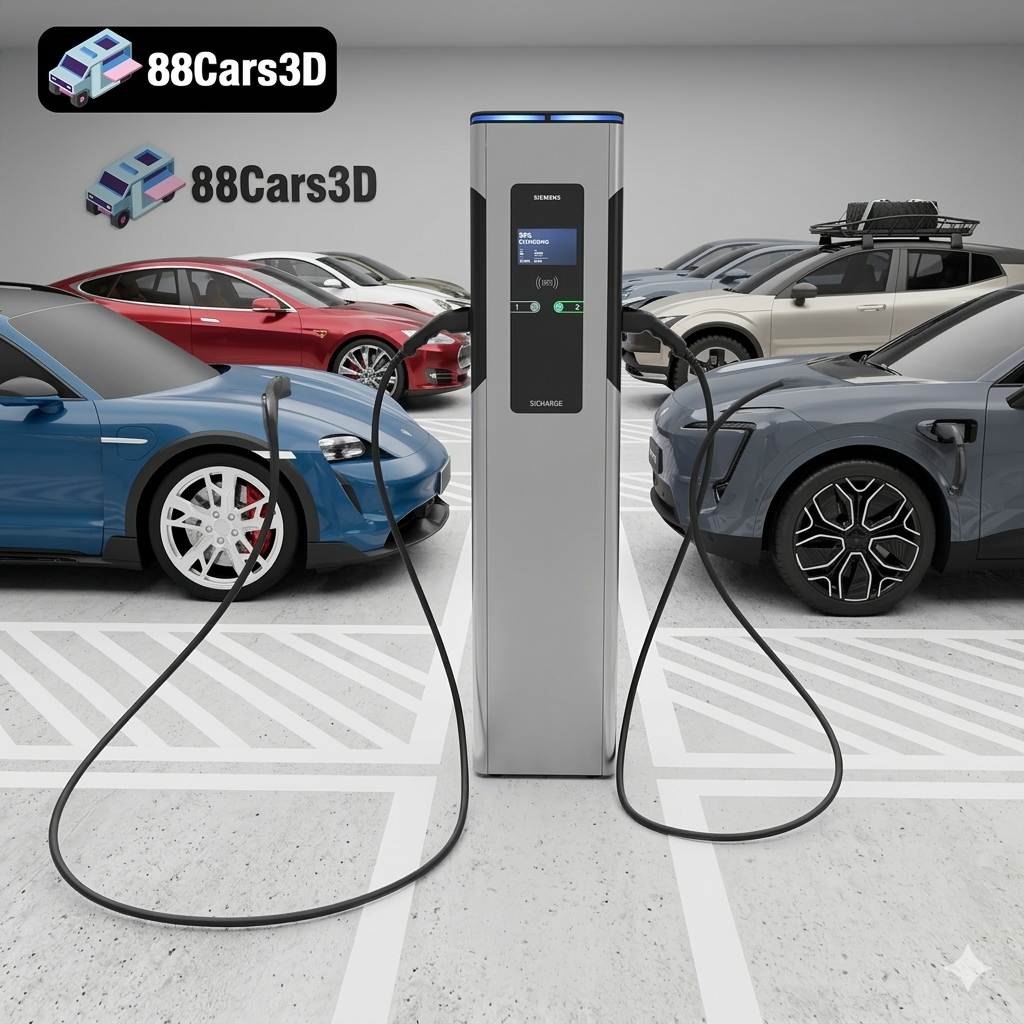
Download the Future of Mobility EV 3D Models Bundle. Includes the Volvo EX30, Tesla Model S, AVATR 11, Porsche Taycan, and a Siemens EV Charger. Save big on this highly optimized 5-in-1 pack for ArchViz and game development!
Price: $89.99

