Get 50% OFF All Premium 3D & STL Models!

In the dynamic world of 3D visualization, having access to high-quality, meticulously crafted 3D car models is paramount for achieving stunning results. Whether you’re an automotive designer, a game developer, an architect, or a marketing professional, the realism and detail of your digital assets directly impact the final output. Today, we’re diving deep into an exceptional example of such an asset: the BMW C 400 X 2018 3D Model. This premium midsize scooter, known for its urban agility and sophisticated design, translates beautifully into the digital realm, offering a versatile foundation for a multitude of creative and technical applications. From breathtaking renders to immersive game environments and even physical prototypes, this model exemplifies the quality available to professionals seeking top-tier 3D assets.
The BMW C 400 X 2018 is more than just a means of transport; it’s a statement of urban efficiency and modern aesthetics. Its 3D counterpart faithfully captures these attributes, making it an invaluable tool for projects that demand authenticity. Throughout this comprehensive guide, we’ll explore the technical advantages of models like the BMW C 400 X 2018, delve into the critical role of file formats, unpack various professional workflows, and showcase how such detailed assets from marketplaces like 88cars3d.com can elevate your projects from concept to compelling reality.
The versatility of a 3D model often hinges on the file formats it supports. Each format is designed with specific use cases and software compatibility in mind, making a broad offering of formats like those for the BMW C 400 X 2018 3D Model incredibly valuable. Understanding these distinctions is crucial for seamless integration into your preferred workflow and ensuring optimal performance and fidelity.
The .blend format is Blender’s native file type, offering a complete and editable scene with all materials, textures, lighting, animations, and modifiers intact. For users deeply integrated into the Blender ecosystem, this is often the most convenient format. It allows for direct manipulation of the mesh, easy adjustment of PBR (Physically Based Rendering) materials, and full access to the model’s clean topology and organized structure. If you intend to modify the model extensively, create custom animations, or render using Blender’s Cycles or Eevee engines, starting with the .blend file provides the maximum flexibility and control.
The .fbx (Filmbox) format is a highly robust and widely adopted proprietary file format for 3D content exchange. Developed by Autodesk, it is the ideal choice for transferring 3D models between different software applications and, crucially, into real-time engines like Unreal Engine and Unity. FBX excels at preserving mesh data, animation, rigging, and even basic material assignments across platforms. Its binary nature ensures efficient file sizes, and its hierarchical structure makes it excellent for models with moving parts, such as the separate wheels and steering components of the BMW C 400 X 2018. When targeting game development or complex animation pipelines, .fbx is often the go-to format due to its comprehensive data retention and broad compatibility.
The .obj (Wavefront Object) format is a universal standard, prized for its simplicity and widespread compatibility across virtually all 3D software. While it primarily stores geometric data (vertices, normals, UVs) and references material files (.mtl), it doesn’t typically preserve advanced features like animation, rigging, or complex material networks. For basic mesh exchange, especially when you need a clean base mesh to import into a different application for texturing or rigging from scratch, .obj is an excellent, reliable choice. Its human-readable text-based structure can also be advantageous for debugging, though this makes it less efficient for very large models.
The .glb (GL Transmission Format Binary) is an increasingly popular format, especially for modern applications like augmented reality (AR), virtual reality (VR), and web-based 3D viewers. It’s an efficient, self-contained binary format that encapsulates 3D models, textures, animations, and PBR materials into a single file. This “all-in-one” approach makes .glb incredibly convenient for sharing and deploying 3D content in real-time browser environments or lightweight AR/VR experiences. For showcasing the BMW C 400 X 2018 3D Model interactively on a website or in an AR app, .glb offers an optimized, high-performance solution.
The .stl (STereoLithography) format is the undisputed king of 3D printing. It represents a 3D model as a collection of unconnected triangular facets, defining only the surface geometry without color, texture, or material information. For transforming the BMW C 400 X 2018 into a tangible, collectible scale model, the .stl format is essential. It’s critical that .stl files intended for printing have “manifold” geometry, meaning they are watertight and free of gaps or overlapping faces, to ensure successful fabrication. The availability of this format directly positions the model for physical prototyping and miniature production.
The .ply (Polygon File Format) is another format for storing 3D data, capable of representing mesh data (vertices, faces, normals), colors, and even data from 3D scanners. While less common for general artistic exchange than .fbx or .obj, it is frequently used in scientific computing, CAD, and applications where precise geometric data, sometimes including point clouds, is critical. For complex analytical tasks or when integrating the scooter model into engineering simulations, .ply can be a suitable choice due to its flexibility in storing various types of geometric and attribute data.
The inclusion of an .unreal file (often a .uasset or an optimized import-ready package) signifies that the asset has been specifically prepared or formatted for direct use within Unreal Engine. This often means optimized meshes, correctly set up materials, LODs (Levels of Detail), and proper pivot points. For the BMW C 400 X 2018, having an engine-ready asset dramatically streamlines the integration process for game developers or virtual production artists, saving valuable time on optimization and setup within the engine.
Finally, the .max format is Autodesk 3ds Max’s native scene file. Like .blend, it contains the complete scene, including geometry, materials, lighting, animation, and scene settings. For professionals working in architectural visualization, broadcast animation, or high-end rendering pipelines that rely on 3ds Max with renderers like V-Ray or Corona, the .max file offers the deepest level of editability and integration. It allows for advanced rigging, complex material shaders, and sophisticated lighting setups, making it ideal for creating photorealistic automotive rendering projects with the BMW C 400 X 2018.
The demand for photorealistic imagery in automotive marketing, product visualization, and cinematic animation continues to grow. A high-detail 3D car model, such as the BMW C 400 X 2018, serves as the cornerstone for achieving these visually stunning results. Its clean topology, real-world scale, and accurate representation are critical for superior rendering and animation.
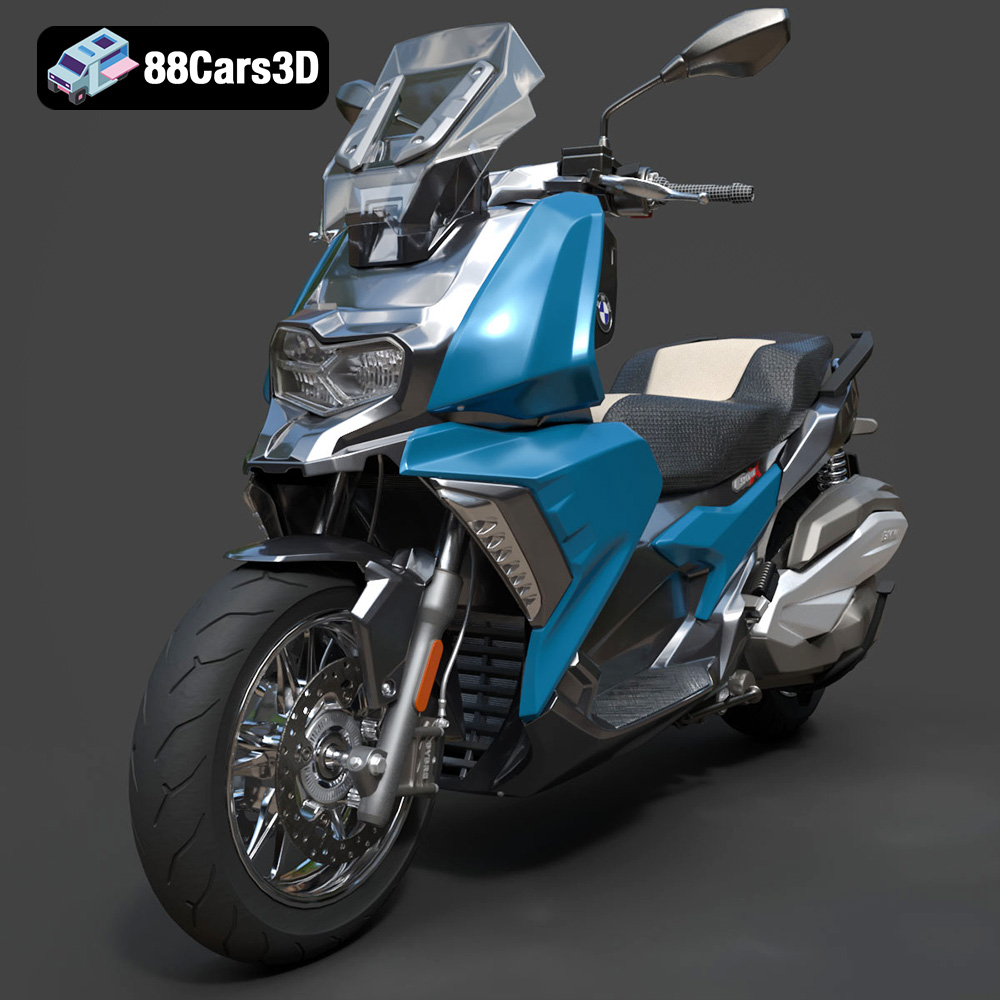
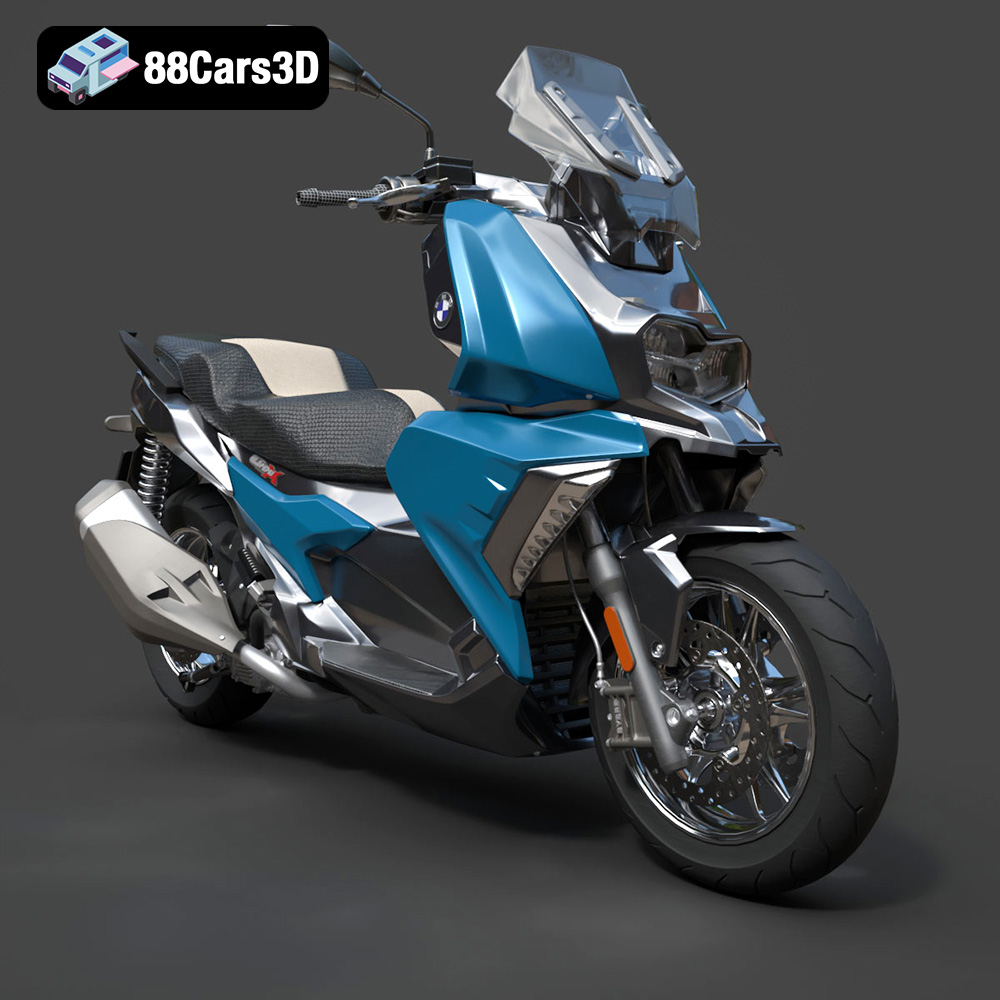
For artists focused on automotive rendering, the journey begins with a solid 3D model. The BMW C 400 X 2018 3D Model, with its sculpted side fairings, distinctive headlight assembly, and detailed exhaust system, provides an excellent foundation. In a typical workflow using software like 3ds Max or Blender, the model is first imported. Next, PBR materials are meticulously applied – everything from the reflective paintwork to the matte finish of the tires and the subtle gleam of chrome accents. These materials are built using maps for albedo, roughness, metallic, and normal details to simulate how light interacts with different surfaces in the real world.
Lighting is the next crucial step. Studio lighting setups, HDRI (High Dynamic Range Image) environments, or physically accurate sun and sky systems are employed to illuminate the scooter, highlighting its forms and textures. Artists will fine-tune camera angles, depth of field, and post-processing effects to create a compelling composition. The proper pivot setup for steering and wheel rotation, as noted in the product description, is invaluable here, allowing for dynamic camera movements around the static model or subtle adjustments for realism even in a still image. This rigorous process ensures that the final rendered images are indistinguishable from professional photography, perfect for urban mobility marketing or dealership visuals.
Beyond static renders, the BMW C 400 X 2018 3D Model is equally adept for animation. Its separate wheels and steering components are a significant advantage for animators. This intelligent segmentation means the model is already prepared for rigging, where virtual “bones” or controls are established to enable realistic movement. An animator can easily define rotations for the wheels, articulate the steering handlebars, and even simulate suspension compression, bringing the scooter to life.
Imagine a promotional video showcasing the C 400 X navigating a bustling city street, smoothly carving through traffic, or simply demonstrating its ergonomic design. Animators can create dynamic camera paths, add motion blur, and integrate the scooter into complex urban street scenes. The optimized polygon flow mentioned in the product details ensures that even with demanding animation and high-resolution textures, the scene remains manageable during playback and rendering, facilitating efficient production of cinematic sequences for commercials or virtual product launches. This level of preparation found in 3D car models from 88cars3d.com significantly reduces setup time and enhances creative possibilities.
The interactive nature of game development, AR, and VR demands a specific approach to 3D asset creation and optimization. While high-polygon models are fantastic for offline rendering, real-time engines require a delicate balance between visual fidelity and performance. The BMW C 400 X 2018 3D Model is explicitly designed with optimized geometry for real-time engines, making it a stellar choice for these interactive applications.
For game developers, the objective is to have detailed assets that run smoothly at high frame rates. When integrating the BMW C 400 X 2018 into game engines like Unreal or Unity, the .fbx and .unreal formats are particularly useful. The model’s clean mesh structure and optimized polygon flow mean fewer triangles for the engine to render, directly contributing to better performance. Developers will typically import the model, set up collision meshes (simple proxy geometry to define physical boundaries), and apply PBR materials. The “proper pivot setup for steering and wheel rotation” is critical for in-game physics and animation, allowing the scooter to be driven realistically.
Further optimization techniques include creating LODs (Levels of Detail). This involves generating progressively lower-polygon versions of the model that the engine swaps in as the player moves further away, drastically reducing the computational load. Texture atlases, which combine multiple textures into one sheet, and material instancing, where variations of a single material are created, also contribute to performance. The BMW C 400 X 2018 is ideal for open-world city games, delivery simulations, or even competitive racing environments where midsize scooters might feature.
Augmented Reality (AR) and Virtual Reality (VR) push the boundaries of real-time rendering, placing users directly within or alongside 3D content. Performance optimization is even more critical here, as maintaining a stable frame rate is essential to prevent motion sickness and ensure a comfortable, immersive experience. The BMW C 400 X 2018 3D Model, with its real-world scale accuracy and optimized geometry, is perfectly suited for these platforms.
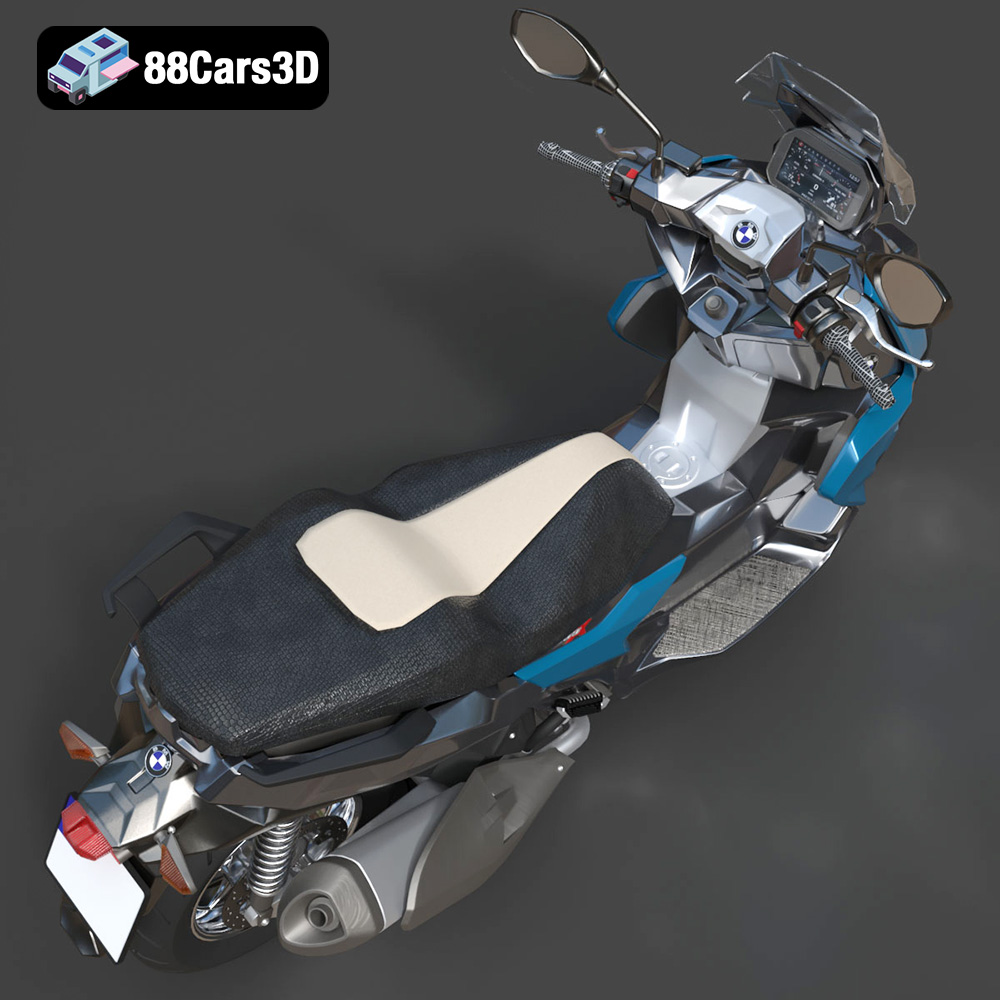
For AR/VR applications, the .glb format becomes highly relevant due to its efficiency and single-file deployment. Developers can create virtual showrooms where users can explore the scooter in 3D, customize its colors, or even place it in their real-world environment via AR on a smartphone or tablet. The detailed cockpit and rider area features – including the digital instrument cluster, handlebar assembly, and contoured seat – allow for a truly immersive inspection experience. From interactive product demonstrations for potential buyers to virtual training simulations for riders, the BMW C 400 X 2018 model offers a high-fidelity asset that performs well in demanding immersive environments.
Beyond digital displays, 3D car models offer the exciting possibility of tangible creation through 3D printing. The BMW C 400 X 2018 3D Model, specifically advertised as 3D printable, opens doors for scale model collectors, educational tools, and rapid prototyping. The inclusion of the .stl and .ply formats directly supports this application.
To transition from a digital asset to a physical object, meticulous preparation is key. The .stl format, being a tessellated representation of the model’s surface, is the standard for 3D printing. Crucially, the model must have “manifold” geometry—meaning it’s a completely watertight mesh without any holes, inverted normals, or self-intersecting polygons—to be successfully sliced and printed. High-quality 3D car models, like those on 88cars3d.com, are typically designed with this in mind, reducing the need for extensive repair work.
The recommended print settings for the BMW C 400 X 2018 provide valuable guidance:
These detailed guidelines are a testament to the model’s thoughtful preparation for physical output, facilitating a smooth 3D printing experience.
Once printed, the physical BMW C 400 X 2018 model moves into the post-processing phase. This often involves carefully removing support structures, sanding to achieve a smooth surface finish, and applying primer to prepare for painting. The customization options mentioned in the product description—changing body color, adding accent trims, or adjusting wheel finish—can then be translated into physical painting and detailing. Hobbyists can achieve stunning results with airbrushing, decals, and clear coats to replicate the original BMW Motorrad factory colors and finishes, transforming a raw 3D print into a display-worthy miniature scooter. This process allows for creation of unique automotive collectibles or prototypes for scale model enthusiasts.
A truly professional 3D asset offers more than just fidelity; it provides flexibility for customization. The BMW C 400 X 2018 3D Model shines in this regard, offering numerous avenues for artists and designers to adapt it to specific project requirements, ensuring maximum value and creative freedom.
The ability to “change body color and accent trims” is fundamental for any automotive visualization project. Using software like Blender or 3ds Max, artists can easily modify the material properties to simulate different paint finishes – from glossy metallic to matte wraps – or apply brand-specific liveries. Imagine showcasing the C 400 X in a vibrant custom color scheme for a marketing campaign or a subtle, corporate grey for a delivery simulation.
Furthermore, the suggestion to “add top case or side storage accessories” opens up possibilities for presenting different configurations of the scooter. This is crucial for product configurators, advertising various accessory packages, or creating specific scenarios (e.g., a delivery scooter vs. a touring scooter). Modifying windshield height or adjusting wheel finish further enhances the model’s adaptability, allowing artists to create multiple variations from a single base asset without needing entirely new models.
The versatility of the BMW C 400 X 2018 extends to environmental integration. “Configure lighting for city night or daytime commuting scenes” highlights how the model is prepared for varied atmospheric conditions. In a daytime render, the model’s clean surfaces will beautifully reflect a bright, sunlit environment, while in a city night scene, careful attention to its headlights and taillights can bring a dramatic and realistic feel. The separate components, especially the lighting elements, allow artists to precisely control emitted light and reflections, making the scooter feel truly part of its digital surroundings.
This level of adaptability means the model can be seamlessly integrated into diverse projects, from static renders for brochures to dynamic animations for television commercials, or interactive AR/VR experiences in virtual showrooms. This robust customizability ensures that the investment in a high-quality 3D car model from 88cars3d.com pays dividends across multiple applications and client needs.
In a world where speed and quality are often at odds, purchasing pre-made, high-quality 3D car models like the BMW C 400 X 2018 offers an unparalleled advantage. Crafting a complex vehicle from scratch is an extremely time-consuming and labor-intensive process, demanding expert knowledge in modeling, UV mapping, texturing, and optimization. By sourcing premium assets, professionals can significantly reduce production timelines, allocate resources more efficiently, and focus on the creative aspects of their projects.
Imagine a scenario where a marketing agency needs to produce a series of stunning visuals for an urban mobility campaign on a tight deadline. Building a photorealistic BMW C 400 X from the ground up could take weeks, if not months, of dedicated artist time. By acquiring a pre-made, production-ready model from 88cars3d.com, the team can immediately jump into rendering, animation, or integration into a real-time environment. This accelerates project delivery, allows for more iterations, and ultimately saves substantial costs in artist hours.
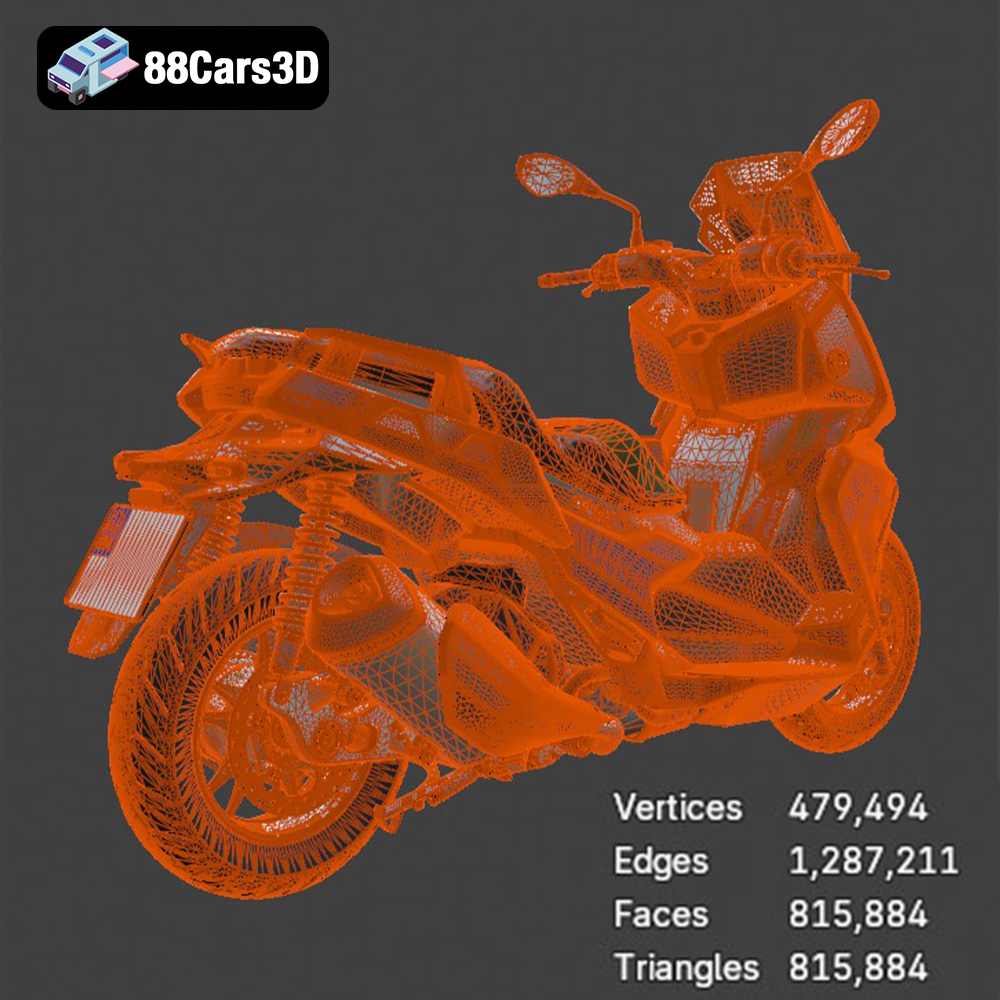
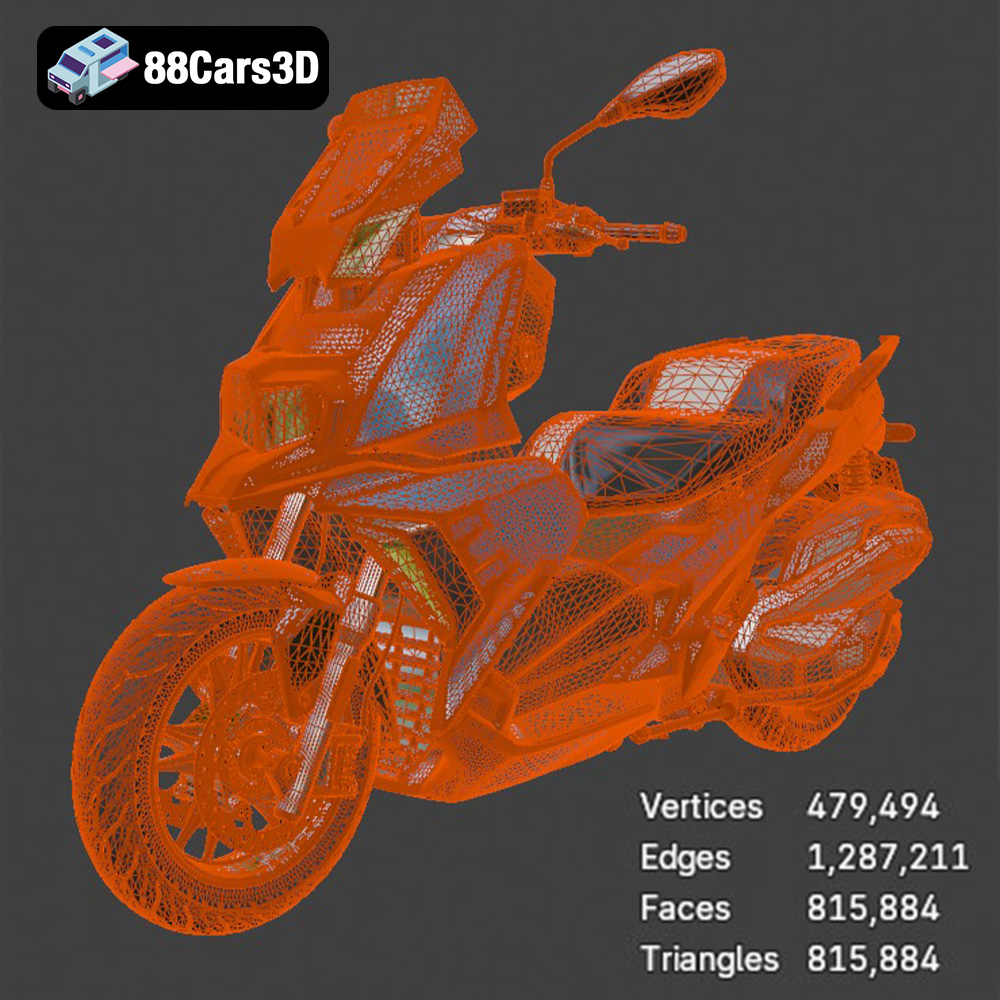
The BMW C 400 X 2018 3D Model, with its “clean and well-organized mesh structure,” “real-world scale accuracy,” and “optimized polygon flow,” exemplifies the hallmarks of a professional-grade asset. Such models are typically created by experienced 3D artists who adhere to industry best practices, ensuring clean topology, proper UV unwrapping, and realistic material setups. This consistency in quality is vital for projects that demand a high standard of visual fidelity and for teams that need reliable assets to build upon.
Furthermore, the comprehensive list of included file formats – .blend, .fbx, .obj, .glb, .stl, .ply, .unreal, and .max – highlights the model’s universal compatibility. This foresight ensures that the asset can be seamlessly integrated into virtually any professional pipeline, regardless of the primary software or engine in use. For anyone needing reliable, high-fidelity 3D car models, exploring the offerings on 88cars3d.com is a smart strategic move.
The digital landscape for automotive visualization is constantly evolving, demanding ever-higher levels of detail, realism, and efficiency. The BMW C 400 X 2018 3D Model stands as a testament to what a high-quality 3D asset can offer: a versatile foundation for everything from photorealistic renders and dynamic animations to immersive game environments, AR/VR experiences, and even tangible 3D prints. Its meticulous detailing, real-world accuracy, and optimized geometry, combined with a comprehensive range of file formats, make it an indispensable tool for professionals across various industries.
By understanding the nuances of different file formats, optimizing for specific pipelines, and leveraging the power of customization, artists and developers can unlock the full potential of such premium 3D car models. Investing in expertly crafted assets like this from marketplaces such as 88cars3d.com not only streamlines workflows and saves valuable time but also ensures that your projects achieve the highest standards of visual excellence. The BMW C 400 X 2018 3D Model isn’t just a digital object; it’s a catalyst for innovation, ready to drive your creative vision forward.
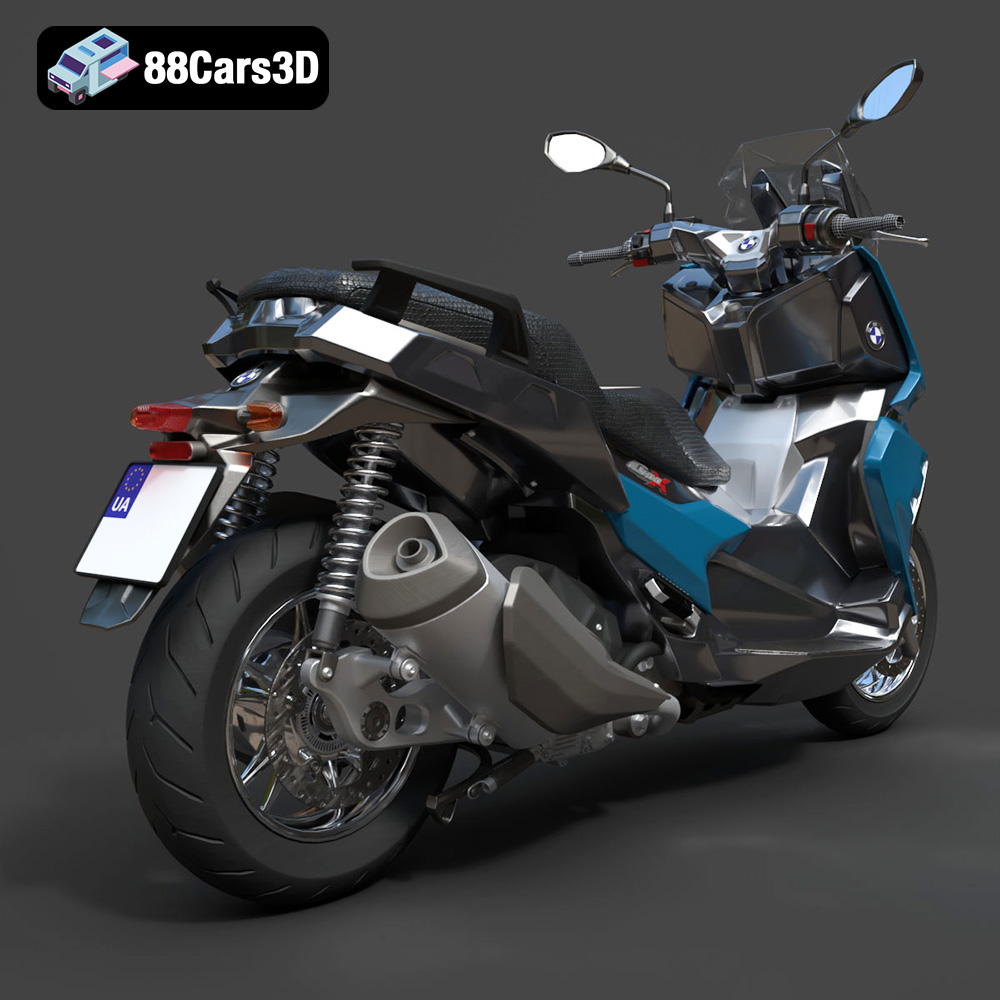
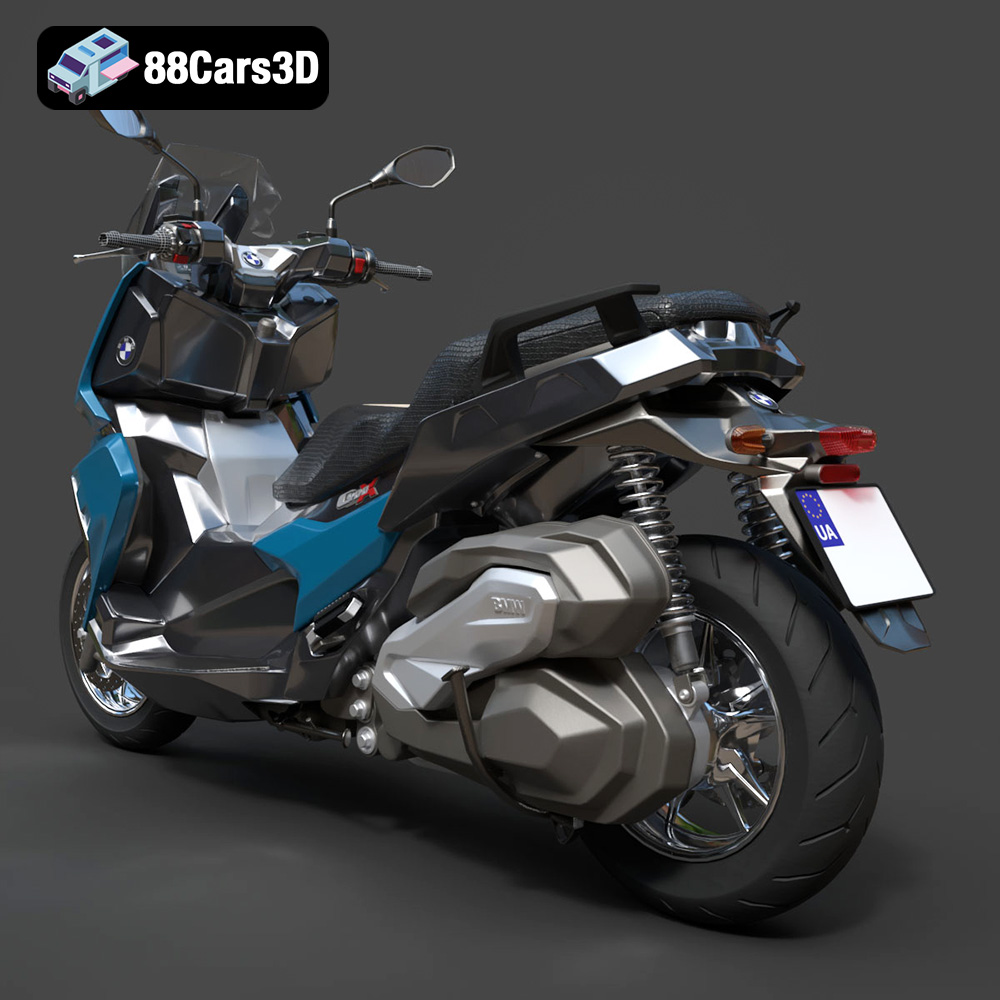
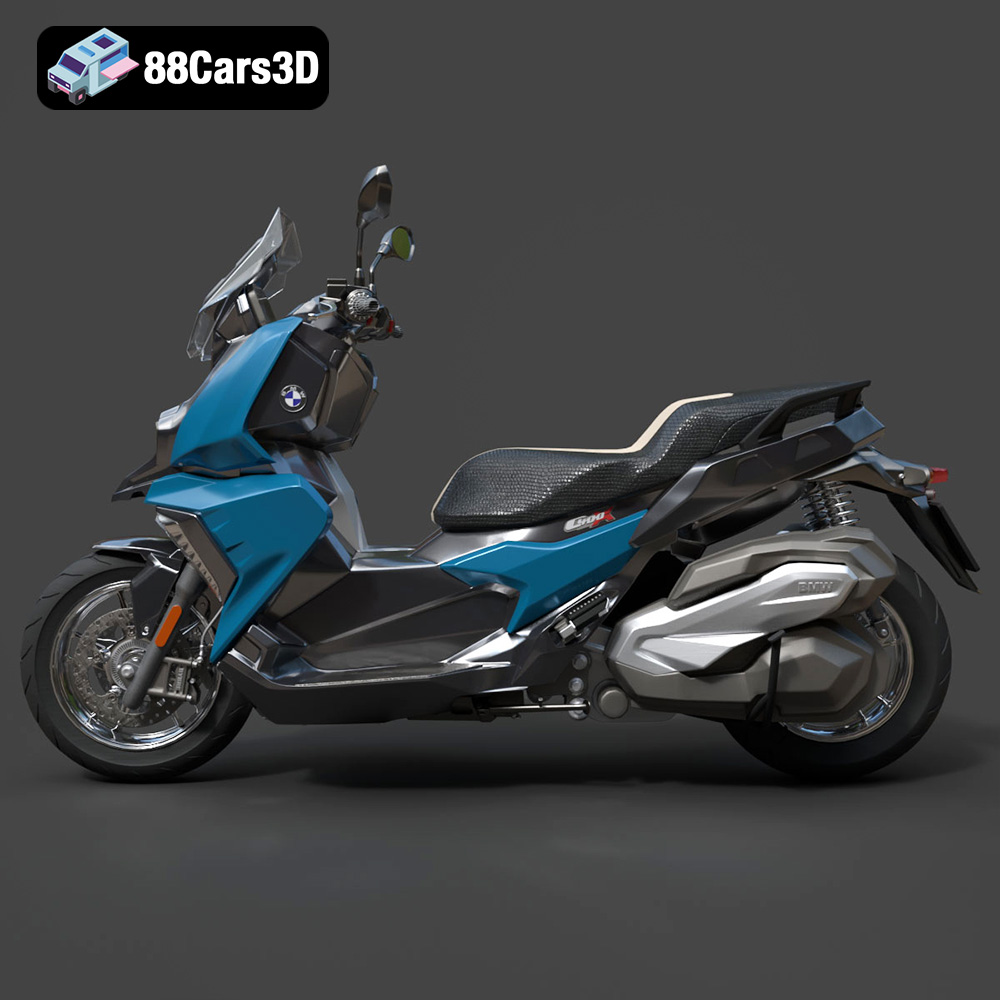
The BMW C 400 X 2018 3D Model is a high-detail digital recreation of the premium midsize scooter designed for urban mobility and everyday practicality. Combining BMW Motorrad’s engineering precision with modern scooter convenience, the C 400 X features sharp styling, compact proportions, and a comfortable riding position ideal for city commuting. This 3D model accurately represents the aggressive front fascia, asymmetrical headlight design, sculpted side panels, step-through frame layout, exposed rear suspension, exhaust system, and compact wheelbase proportions. Built with clean topology and real-world scale accuracy, it is ideal for rendering, animation, product visualization, game development, and AR/VR experiences. Perfect for urban street scenes, delivery simulations, modern city environments, promotional materials, and two-wheeler games.
$19.90
.2018scooter
.arvr
.blend
.bmw
.c400x
.fbx
.gameasset
.glb
.max
.motorcycle
.obj
.ply
.rendering
.scooter3dmodel
.simulation
.stl
.twowheeler
.unreal
.urbanscooter
.vehicle3dmodel