Get 50% OFF All Premium 3D & STL Models!

In the expansive and ever-evolving world of 3D visualization, automotive design holds a uniquely compelling position. From high-fidelity marketing renders that grace billboard campaigns to intricate game assets driving immersive virtual worlds, the demand for exceptionally crafted 3D car models is ceaseless. These digital sculptures are more than just polygonal meshes; they are intricate works of art and engineering, designed to convey the essence of real-world vehicles with stunning accuracy.
For professionals across industries – be it architectural visualization, cinematic production, or interactive media – the quest for precision and versatility in their digital assets is paramount. This pursuit often leads to a crucial decision: building models from scratch, a time-consuming and labor-intensive endeavor, or sourcing pre-made, high-quality assets that accelerate workflows without compromising on detail. Today, we delve into the latter, exploring the profound impact that a meticulously crafted asset, such as the BMW X6 3D Model, can have on various projects, and why platforms like 88cars3d.com are indispensable resources for digital artists and developers.
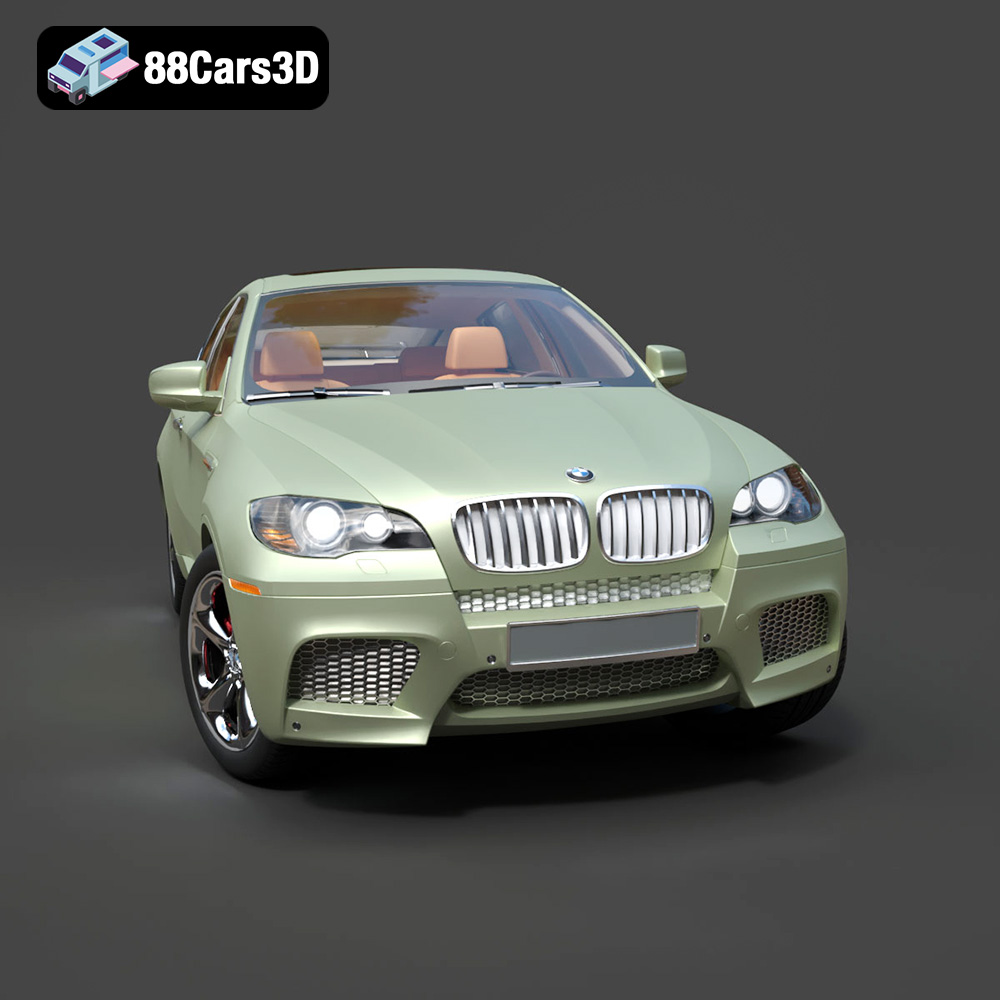
The BMW X6, a vehicle known for its distinctive blend of SUV robustness and coupe-like elegance, presents a significant challenge to digitally recreate. Its aggressive stance, sweeping roofline, and intricate detailing require a 3D model that captures every nuance. A premium 3D model of such a vehicle serves not only as a static representation but as a dynamic tool, ready for customization, animation, and integration into diverse digital environments.
Crafting a compelling 3D car model is a sophisticated process that merges artistic vision with technical precision. It’s about more than just replicating a vehicle’s form; it’s about understanding its underlying design philosophy, material properties, and mechanical components. Every curve, every panel gap, every headlight housing contributes to the overall realism and appeal of the final asset.
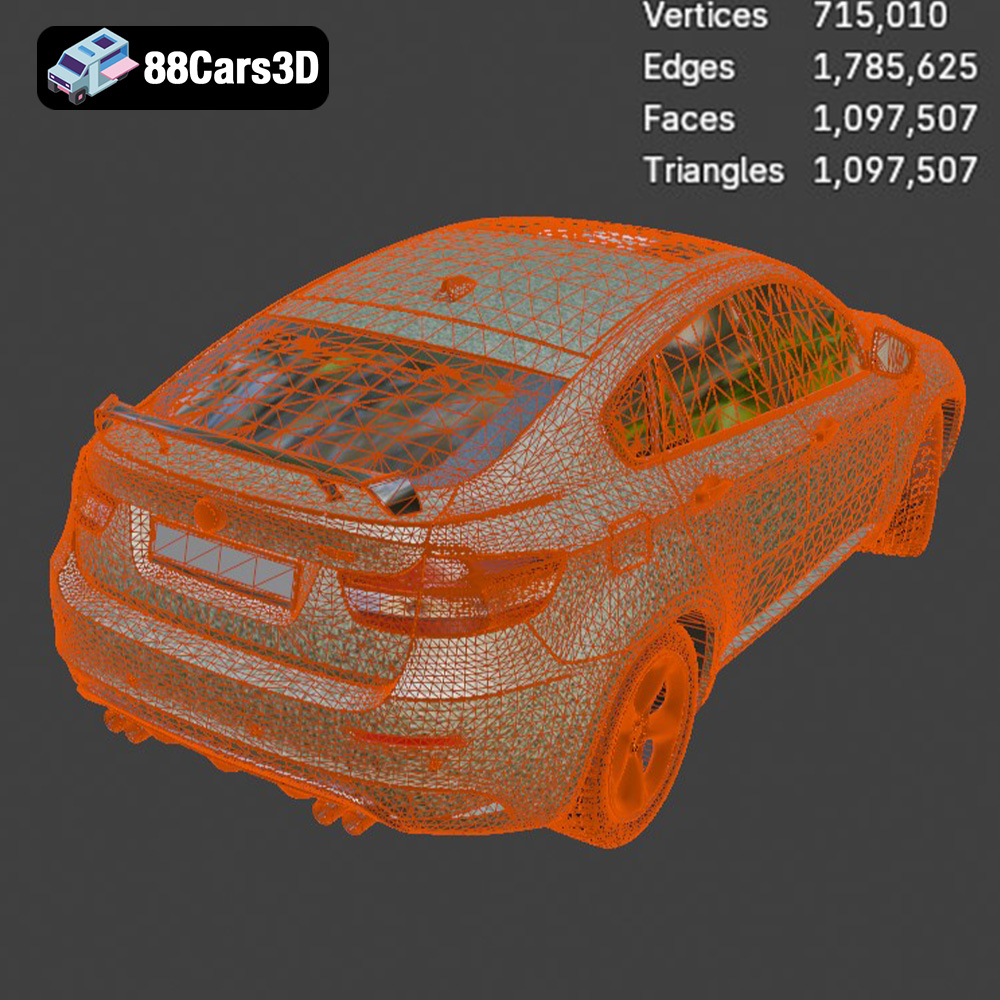
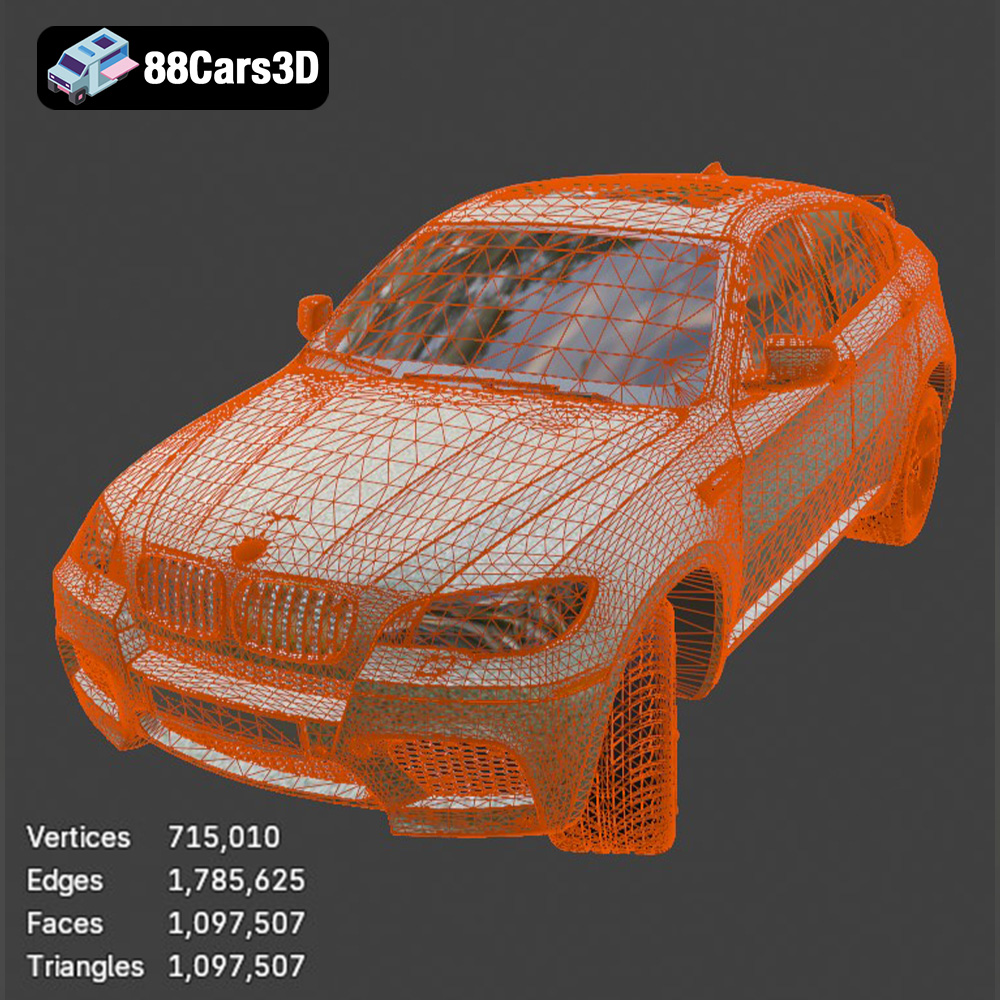
At the heart of any 3D model lies its polygonal mesh. For automotive assets, clean topology is not merely a preference; it’s a necessity. A well-constructed mesh ensures smooth subdivision surfaces, predictable deformation during animation, and efficient UV mapping for texturing. The careful placement of vertices, edges, and faces allows for sharp details where needed and gentle transitions across large surfaces, mimicking the flawless bodywork of a real car. This meticulous approach is what separates a truly professional 3D car model from a hastily assembled one, directly impacting rendering quality and overall project performance.
Beyond the raw geometry, the realism of a 3D car model hinges heavily on its materials and textures. Achieving believable automotive paint, reflective glass, chrome accents, and detailed tire rubber requires sophisticated shader networks. These materials often simulate complex interactions with light, accounting for reflections, refractions, and subtle surface imperfections. The process involves creating diffuse maps, normal maps, roughness maps, and metallic maps, all calibrated to interact correctly within specific rendering engines like V-Ray, Cycles, or Unreal Engine’s physically based renderer. An exceptional model, such as the BMW X6 3D Model, comes with these material setups largely pre-configured, drastically reducing setup time for artists and allowing them to focus on creative direction.
The versatility of a high-quality 3D model is often defined by the range and quality of its included file formats. Each format serves specific purposes and excels in different pipelines, making it crucial for digital artists and developers to understand their strengths and limitations. The BMW X6 3D Model, like many professional assets available on 88cars3d.com, provides a comprehensive suite of formats, ensuring broad compatibility and flexibility.
The .blend format is the native file type for Blender, the powerful open-source 3D creation suite. When you acquire a .blend file, you’re not just getting the model; you’re getting the entire Blender scene. This typically includes the model’s geometry, all materials and textures, lighting setups, cameras, and any animation data. For users working within the Blender ecosystem, this offers unparalleled flexibility. It allows for direct editing of the mesh, tweaking of Cycles or Eevee materials, re-posing components, and rendering directly without any import/export issues or loss of data fidelity. It’s the go-to format for maximum customizability and integration into Blender-centric workflows, ensuring all intricate details like the X6’s interior dashboard layout or LED-style headlights are perfectly preserved and editable.
.fbx (Filmbox) is an Autodesk-developed proprietary file format widely used for exchanging 3D data between various applications. It’s particularly favored in game development (Unreal Engine, Unity) and animation pipelines due to its robust support for mesh geometry, materials, textures, animations, and skeletal data. FBX efficiently handles complex scene hierarchies and instancing, making it excellent for transferring detailed assets like the BMW X6 into a game engine. While it might not retain all software-specific features (like procedural modifiers in Blender or 3ds Max), it’s optimized for efficiency and compatibility across diverse platforms, making it the industry standard for real-time asset integration.
The .obj (Wavefront OBJ) format is one of the oldest and most universally supported 3D file formats. It’s a simple, text-based format primarily used for transferring static mesh geometry, UV data, and material references (via an accompanying .mtl file). While it doesn’t support advanced features like animation, rigging, or scene hierarchies as robustly as FBX, its widespread compatibility makes it an invaluable “lowest common denominator” for moving models between virtually any 3D software. If you need a clean, static mesh of the BMW X6 to import into an application that might not support newer formats, OBJ is a reliable choice.
.glb (GLB format, derived from glTF) is a relatively newer format gaining immense popularity, especially for web-based 3D, augmented reality (AR), and virtual reality (VR) applications. It’s a self-contained binary file that embeds geometry, materials, textures, and even animations, making it highly efficient for transmission and rendering in real-time contexts. GLB files are optimized for fast loading and display, perfect for interactive vehicle configurators or virtual showrooms of the BMW X6 within a browser or on mobile AR devices. Its “transmission-optimized” nature means smaller file sizes and quicker load times without significant quality loss.
The .stl (STereoLithography) format is the standard for 3D printing. It represents 3D surfaces as a series of connected triangles, describing only the surface geometry of a 3D object without color, texture, or other CAD attributes. For manufacturing applications, especially additive manufacturing, STL is king. The BMW X6 3D Model, being advertised as “3D Printable,” is explicitly designed to be convertible to STL, ensuring a manifold (watertight) mesh ready for slicing software. This allows enthusiasts to transform the digital X6 into a physical scale model, complete with accurate body proportions and contours.
.ply (Polygon File Format or Stanford Triangle Format) is another format for storing 3D data, particularly useful for scanned data, CAD, and scientific analysis. Like OBJ and STL, it primarily deals with polygonal meshes but can also store color, transparency, and normal information per vertex or face. While less common for general asset exchange than FBX or OBJ, its precision in representing complex geometric data makes it valuable in specific engineering or heritage preservation workflows. For highly detailed analysis of the X6’s form, PLY can offer an alternative.
The .unreal format, often referring to an asset directly packaged for Unreal Engine, signifies an asset that has been specifically prepared and optimized for this powerful real-time engine. This goes beyond a simple FBX import; it implies proper material setup (often utilizing Unreal’s master material system), collision meshes, LODs (Levels of Detail) for performance, and correct pivot points for interactive elements like doors and wheels. An .unreal asset ensures immediate plug-and-play functionality, making the integration of the BMW X6 3D Model into a high-fidelity virtual environment seamless and efficient for game developers and real-time visualization specialists.
The .max format is the native file format for Autodesk 3ds Max, a leading software for 3D modeling, animation, and rendering. Similar to .blend files for Blender users, a .max file contains the complete 3ds Max scene, including geometry, materials, lighting, animation, and modifiers. For professionals working in architectural visualization, product design, or cinematic rendering with 3ds Max, this format provides full control over every aspect of the BMW X6 model, allowing for deep customization, complex animation setups, and integration with advanced rendering solutions like V-Ray or Corona Renderer.
The BMW X6 3D Model available on 88cars3d.com is a testament to meticulous digital craftsmanship. It’s not just a generic car model; it’s a faithful recreation of a distinctive luxury Sports Activity Coupe, designed to meet the rigorous demands of professional projects. The attention to detail, both externally and internally, ensures that it stands up to close-up renders and demanding real-time applications.
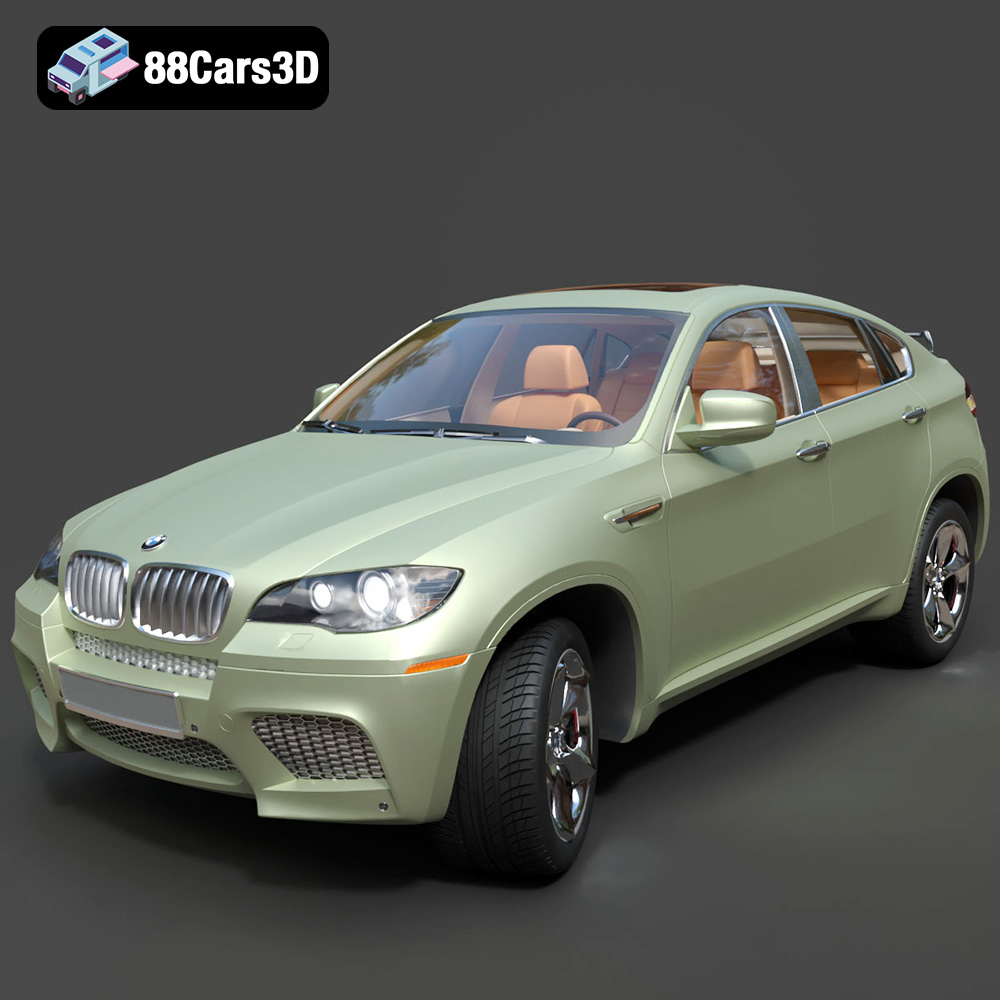
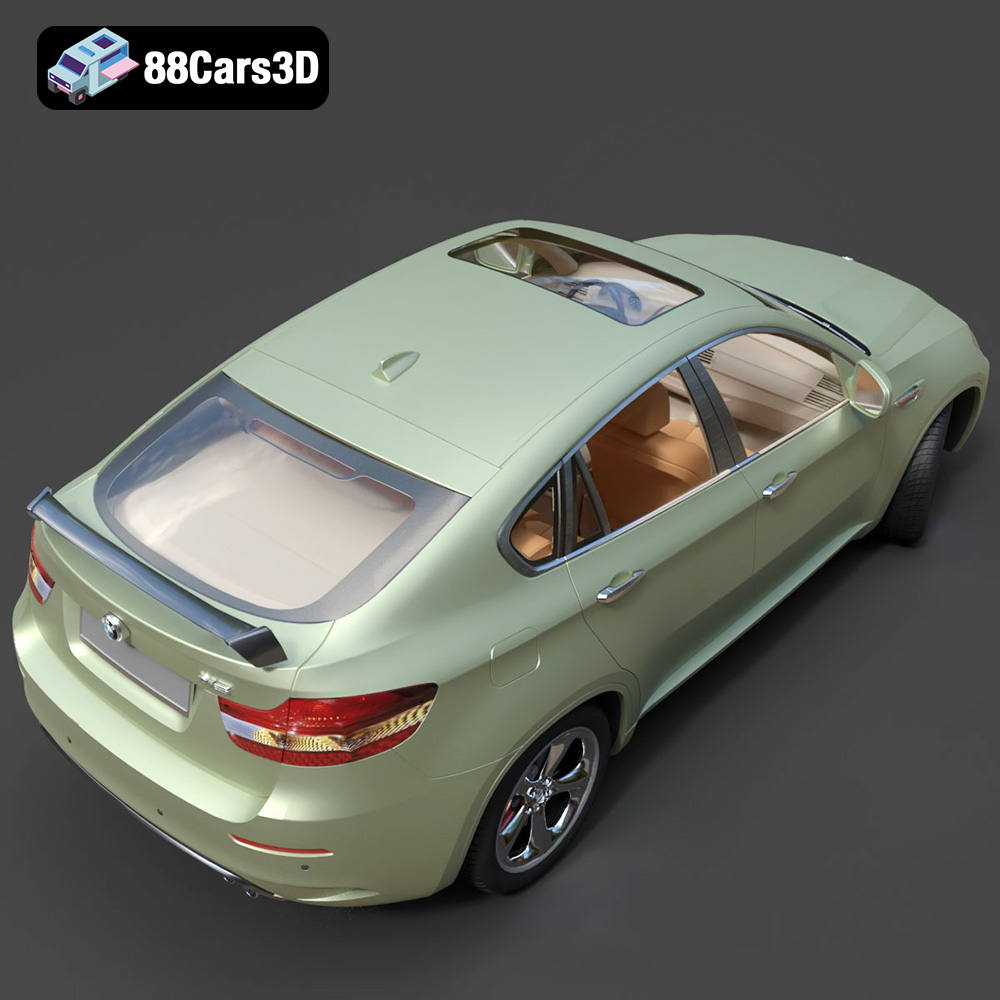
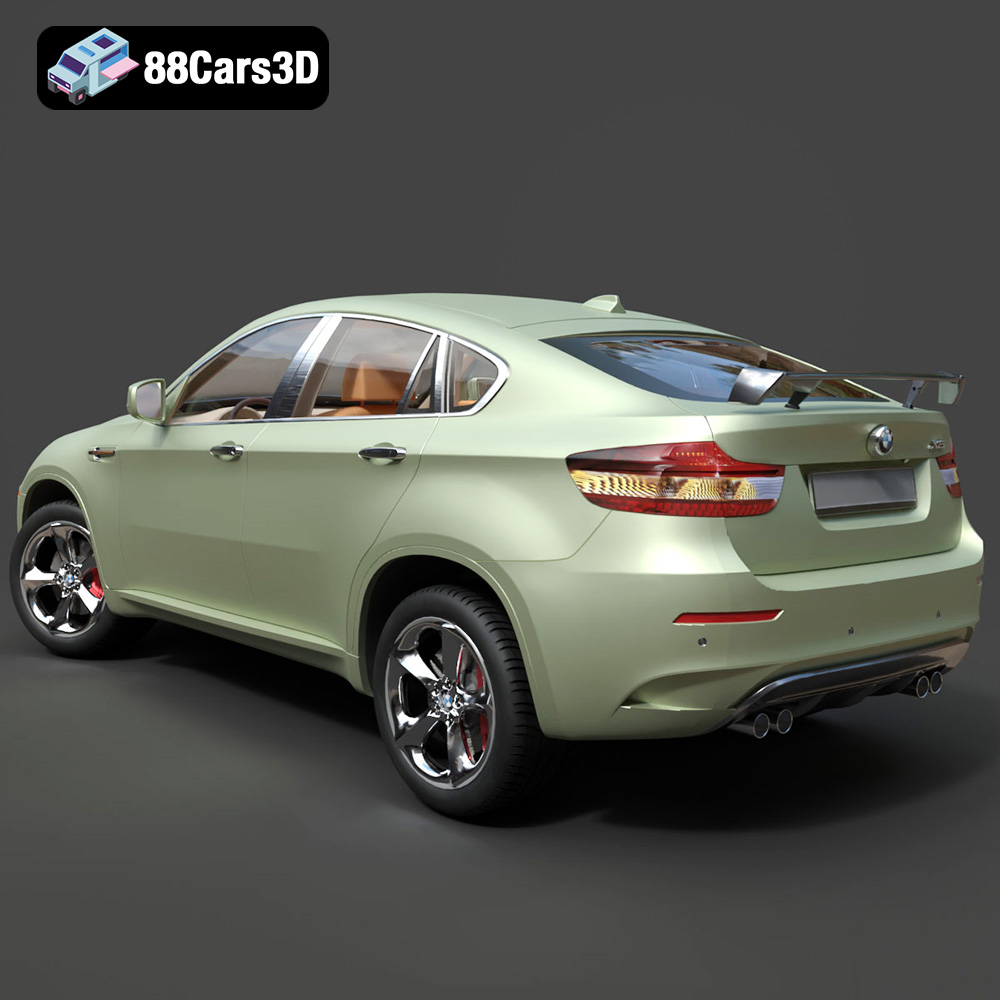
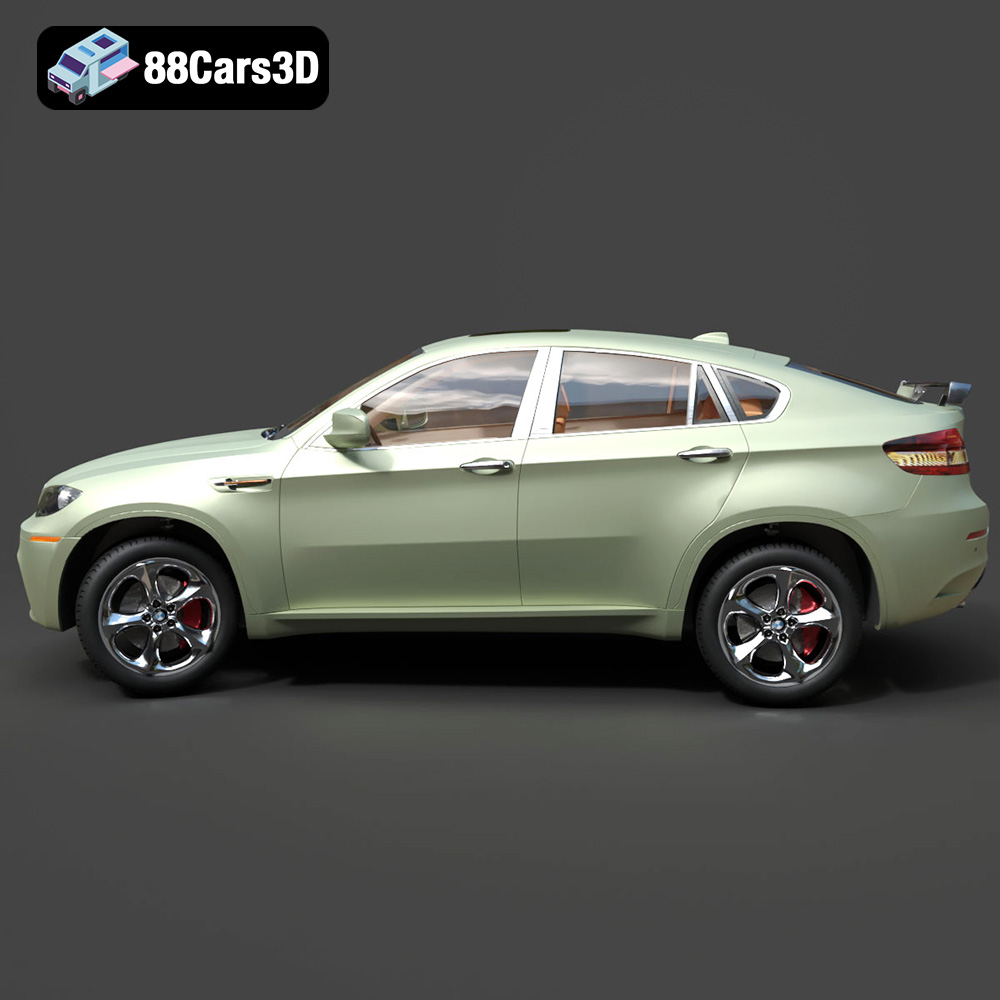
The immediate impression of the BMW X6 comes from its unique exterior, and this 3D model replicates that essence flawlessly. The accurate body proportions and signature coupe-SUV profile are perfectly captured, giving the model its distinctive aggressive stance. Key features like the bold kidney grille, sculpted hood, and aerodynamic lines are precisely modeled, reflecting BMW’s iconic design language. Furthermore, intricate details such as the LED-style headlights and taillights, sculpted bumpers, air intakes, and side skirts are all present, contributing to a high level of visual authenticity. Even the alloy wheels, tires, and brake components are faithfully represented, ensuring that every angle, every reflection, and every shadow contributes to a realistic depiction of the vehicle.
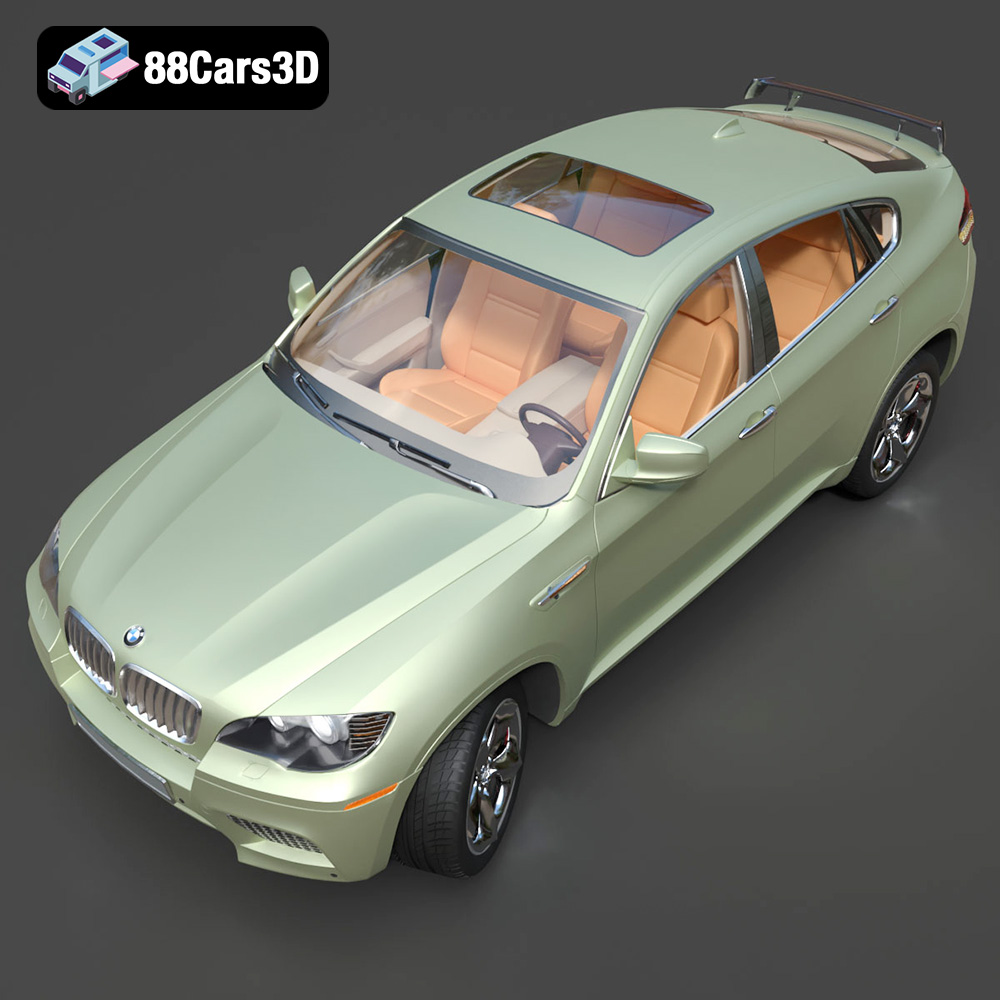
While often overlooked in some 3D car models, the interior of the BMW X6 3D Model receives an equal level of attention. A fully modeled premium dashboard layout provides a realistic cockpit view, complete with a detailed steering wheel and instrument cluster. The center console and infotainment system are accurately represented, adding to the immersive quality for interior shots or interactive experiences. Front and rear seating geometry, along with interior panels and trim detailing, ensure that the model holds up even in scenarios requiring a view of the cabin. This comprehensive interior makes the model suitable for virtual tours, driver’s perspective simulations, and any scenario where the inside of the vehicle is visible, whether in a high-quality render or an optimized real-time engine.
The beauty of a 3D model isn’t just skin deep; its technical foundation is what truly empowers professional workflows. The BMW X6 3D Model boasts a clean, organized mesh structure and real-world scaling, ensuring it integrates seamlessly into any scene without requiring extensive adjustments. Crucially, it features proper hierarchy and pivot placement for animation, meaning doors, hood, trunk, and wheels are separate elements ready to be rigged and animated with ease. Its optimized polygon count strikes a balance between visual fidelity and performance, making it suitable for both demanding cinematic renders and efficient real-time game engines. This technical robustness is why designers and developers can rely on assets from 88cars3d.com for their most critical projects.
The versatility of a well-crafted 3D car model like the BMW X6 is truly remarkable. It serves as a foundational asset across numerous industries, empowering artists and developers to bring their visions to life with unparalleled realism and efficiency. Its design makes it an invaluable resource for diverse applications, from static imagery to dynamic simulations.
For advertising agencies, automotive manufacturers, and visualization studios, high-fidelity renders are critical. The BMW X6 3D Model is tailor-made for luxury automotive presentations, studio renders, and detailed advertising visuals. In workflows utilizing software like 3ds Max with V-Ray or Blender with Cycles, artists can leverage the model’s clean topology and pre-configured materials to create breathtaking photorealistic images. Imagine the X6 gleaming under studio lights or cruising through a meticulously crafted urban environment – the model’s accuracy ensures every reflection and shadow plays its part in delivering compelling visuals.
The game industry constantly pushes the boundaries of graphical fidelity. Game developers working in Unreal Engine or Unity need assets that are both visually stunning and highly optimized for performance. The BMW X6 3D Model fits this requirement perfectly, being suitable for open-world driving games, racing simulations, and even integrating into complex traffic systems. Its optimized polygon count and proper hierarchy allow for efficient integration, ensuring smooth frame rates without sacrificing visual appeal. Whether as a player-controlled vehicle or part of the background scenery, this model provides the necessary quality for immersive real-time experiences.
Augmented Reality (AR) and Virtual Reality (VR) are transforming how we interact with digital content, especially in automotive sectors. The BMW X6 3D Model is an excellent candidate for virtual showrooms, allowing potential buyers to explore the car in a virtual space, or for interactive car configurators where users can customize paint finishes, modify wheel designs, and apply M Sport styling elements in real-time. In simulation and training environments, the model can be used for vehicle dynamics visualization, driver training scenarios, or advanced automotive simulation systems, providing a realistic representation for critical analysis and learning.
Perhaps one of the most exciting aspects of the BMW X6 3D Model is its explicit suitability for 3D printing. This capability bridges the gap between the digital and physical realms, allowing enthusiasts and professionals alike to hold a tangible representation of this iconic vehicle. Transforming a complex 3D car model into a physical object requires specific considerations, and this model is designed with those in mind.
The conversion to an .stl format for 3D printing means that the BMW X6 can be brought to life as a scale SUV coupe miniature or a collector’s build. This is a game-changer for hobbyists, product designers creating prototypes, or even educational institutions exploring manufacturing processes. The model’s inherent detail ensures that when scaled down to 1:24, 1:32, 1:18, or 1:12, the distinctive features like the signature kidney grille, sculpted hood, and detailed wheels remain identifiable and precise. The ability to print allows for physical iteration, detailed display pieces, or even custom modifications that are then realized in plastic or resin.
Successful 3D printing relies on adhering to best practices, many of which are specifically highlighted for this BMW X6 3D Model. Recommended layer heights of 0.12–0.18 mm ensure a fine balance between print speed and surface quality, crucial for maintaining the car’s smooth lines. A wall thickness of 2–3 mm provides structural integrity, while an infill of 15–30% offers a good compromise between strength and material usage. Strategic support placement is critical for overhangs like mirrors, underbody sections, and wheel arches to prevent warping and ensure clean features. Furthermore, the suggestion to print the body upside-down for a smoother roof finish and to print wheels separately for improved detailing demonstrates a thoughtful approach to optimizing the physical output. Post-processing steps like sanding, priming, and applying metallic automotive paint with a clear coat allow for a professional, factory-finish look on your printed masterpiece.
The digital landscape is flooded with 3D models, but discerning professionals understand that quality, accuracy, and versatility are non-negotiable. This is where platforms specializing in premium assets, such as 88cars3d.com, truly shine. Sourcing a meticulously crafted asset like the BMW X6 3D Model from a reputable marketplace offers tangible benefits that directly impact project success and efficiency.
Creating a production-ready 3D car model from scratch is a significant investment of time, skill, and resources. Artists must dedicate hundreds of hours to modeling, UV mapping, texturing, and optimizing the asset for various applications. By choosing a pre-made, high-quality model, project timelines are drastically shortened. The BMW X6 3D Model, with its clean, organized mesh, real-world scaling, proper hierarchy, and optimized polygon count, arrives ready for immediate integration. This means less time spent fixing topology or preparing materials, and more time focused on creative direction, rendering, or game implementation. For studios operating under tight deadlines, this efficiency is invaluable.
88cars3d.com isn’t just about one exceptional model; it’s a curated marketplace offering a diverse range of 3D car models that cater to various needs and preferences. Whether you require modern luxury vehicles, classic automobiles, or utility vehicles, the emphasis remains on quality and technical robustness. Each model is designed to be compatible with major 3D software and game engines, providing a reliable foundation for any project. This commitment to delivering professional-grade 3D car models ensures that artists and developers can find the perfect asset to elevate their visualizations, animations, and interactive experiences, consistently meeting high industry standards.
In the dynamic world of 3D visualization and interactive experiences, the quality of your assets dictates the quality of your output. The journey from a conceptual sketch to a photorealistic render or an interactive game environment is paved with challenges, but the right tools and resources can make all the difference. The BMW X6 3D Model exemplifies what a truly professional 3D car model should be: a blend of artistic fidelity, technical precision, and versatile compatibility.
Whether your project demands cinematic automotive rendering, a high-performance game asset, an interactive AR/VR experience, or even a tangible 3D printed scale model, this BMW X6 asset is engineered to deliver. Its comprehensive detailing, from the iconic kidney grille to the fully modeled interior, combined with its optimized mesh and wide array of file formats, ensures seamless integration into virtually any professional pipeline. By investing in such high-quality 3D car models from trusted sources like 88cars3d.com, artists and developers gain a significant advantage, empowering them to create stunning, immersive, and believable digital worlds with efficiency and confidence.
Elevate your next project with assets that reflect true craftsmanship and technical excellence. The possibilities are endless when you start with a foundation of quality.
The BMW X6 3D Model is a high-quality digital recreation of the luxury Sports Activity Coupe, meticulously capturing its aggressive stance, sloping roofline, and premium detailing. Ideal for rendering, animation, automotive visualization, game development, AR/VR, and simulation, this model also comes with comprehensive 3D print settings. Recommended for scales like 1:24, 1:32, 1:18, or 1:12, with specific layer height, wall thickness, infill, support requirements, and post-processing suggestions to ensure a flawless physical replica.
$24.90
.arvr
.blend
.bmw
.car3dmodel
.coupesuv
.fbx
.gameasset
.glb
.luxurysuv
.max
.obj
.ply
.rendering
.simulation
.stl
.unreal
.vehicleasset
.x6
automotive3d