Get 50% OFF All Premium 3D & STL Models!

In the dynamic realm of 3D visualization, the ability to accurately represent complex objects like hypercars is paramount. From breathtaking cinematic renders to immersive interactive experiences, a high-quality 3D car model serves as the digital backbone, translating real-world engineering and aesthetic brilliance into pixels. Professionals across industries—automotive design, game development, advertising, and even advanced simulation—rely on these digital assets to tell stories, showcase concepts, and bring dreams to life. The challenge lies not just in capturing the outward form, but in replicating the intricate details and technical nuances that define these mechanical masterpieces.
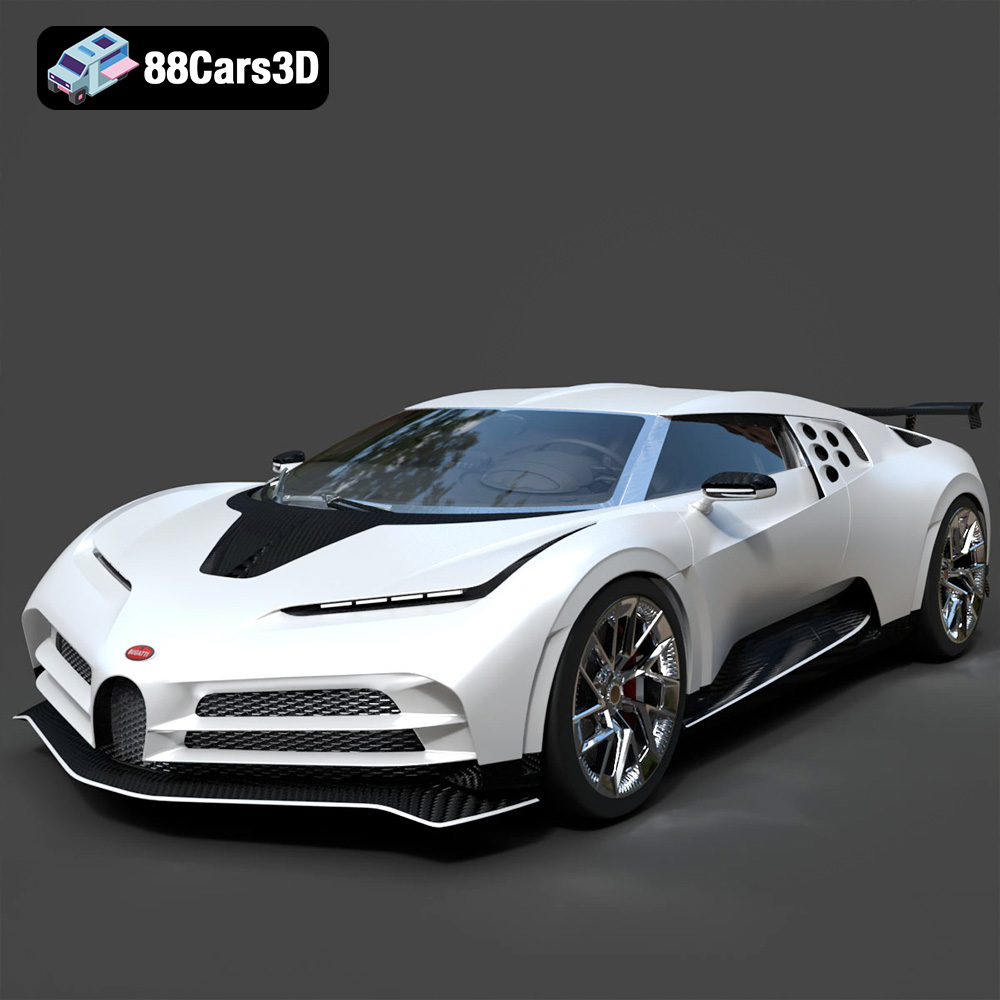
Consider the Bugatti Centodieci, a vehicle that transcends mere transportation to become a sculpture of speed and heritage. Its limited production run and homage to the iconic EB110 make it a prime candidate for digital preservation and artistic exploration. A high-fidelity Bugatti Centodieci 2020 3D Model isn’t just a representation; it’s an opportunity to explore its aggressive aerodynamics, meticulous interior, and distinctive styling in ways that transcend physical limitations. Such a model, like those offered at 88cars3d.com, becomes an invaluable resource for any artist or developer aiming for peak realism and technical precision in their projects.
Digital twins of iconic vehicles like the Bugatti Centodieci provide unprecedented access to design, engineering, and cultural significance. For automotive designers, these models are critical for prototyping, aerodynamic analysis, and virtual concept reviews long before physical manufacturing begins. Advertisers leverage them for stunning automotive rendering campaigns that bypass the logistical complexities and costs of traditional photography. For enthusiasts, they represent a chance to interact with and admire these unattainable machines in a virtual space, bridging the gap between desire and digital ownership.
The journey from a physical concept to a digital twin involves meticulous modeling, texturing, and optimization. Every curve, every vent, every rivet must be recreated with precision. This attention to detail is what separates a generic vehicle asset from a truly exceptional 3D car model. When a model exhibits clean topology, accurate scale, and carefully separated components for animation, it transforms from a static image into a versatile tool, ready for complex scenes, interactive environments, or even accurate 3D printing. This foundational quality ensures the model performs flawlessly across diverse digital platforms.
The choice of file format for a 3D model is not arbitrary; it’s a strategic decision that dictates compatibility, performance, and the scope of a project. For a comprehensive asset like the Bugatti Centodieci 2020 3D Model, offering multiple formats is a testament to its versatility, enabling seamless integration into various professional pipelines. Each format serves a distinct purpose, optimized for specific software, engines, or end-use applications. Understanding these nuances is crucial for any 3D professional.
The .blend format represents a fully editable Blender scene. Blender, being a powerful open-source 3D suite, utilizes this format to encapsulate not just the mesh geometry, but also materials, textures, lighting, cameras, animation data, and even modifiers. For artists who primarily work in Blender, this is the most flexible format, allowing for direct manipulation, retopology, custom rigging, and advanced rendering setups using Cycles or Eevee. It provides the highest degree of control and future-proofing within the Blender ecosystem, making it ideal for comprehensive project development and continuous asset refinement.
Similarly, the .max format is proprietary to Autodesk 3ds Max, a long-standing industry standard for architectural visualization, game development, and high-end rendering. A .max file contains the complete 3ds Max scene, including all modeling data, materials (often V-Ray, Corona, or Arnold specific), lighting setups, animation keyframes, and scene organization layers. For studios or individual artists entrenched in the 3ds Max workflow, this format offers unparalleled fidelity and editability, ensuring that all specific scene elements and optimizations translate directly, making it perfect for complex automotive rendering projects and detailed scene composition.
The .fbx (Filmbox) format, also owned by Autodesk, has become a near-universal standard for exchanging 3D data between different software applications and game engines. It supports not only geometry and UV maps but also animations, skinning, and material properties (though material fidelity can vary between software). For pipelines involving Unreal Engine, Unity, or cross-software collaborations, .fbx is often the go-to, providing a robust, widely supported bridge. Its efficiency and ability to package complex data make it indispensable for real-time applications and game development, including highly detailed game assets.
The .obj (Wavefront OBJ) format is one of the oldest and most widely supported 3D file formats. It primarily stores geometry (vertices, normals, texture coordinates, and faces) and can reference an accompanying .mtl (material) file for basic material properties. While it doesn’t support animation or advanced scene data, its universal compatibility makes it excellent for static mesh exchange between virtually any 3D software. It’s often used as a fallback or for simple mesh imports where complex scene data is not required, offering a clean, lightweight solution for cross-software model sharing.
.glb (GL Transmission Format Binary) is a modern, open-standard format optimized for efficient transmission and loading of 3D scenes and models in web-based and augmented reality (AR/VR) applications. It bundles textures, animations, and PBR (Physically Based Rendering) materials into a single, self-contained file. Its compact nature and real-time rendering capabilities make it ideal for interactive AR/VR luxury automotive projects, online product configurators, and quick previews in browsers, making it a powerful choice for showcasing 3D car models on the web or in mobile AR environments.
The .unreal format, while less of a universal standard and more specific to its ecosystem, signifies an asset specifically prepared or exported for direct use within Unreal Engine. This often implies optimized mesh geometry, proper material setup (e.g., PBR materials using Unreal’s shader graph), correct scale, and sometimes collision meshes or LODs (Levels of Detail). Using an engine-ready .unreal asset streamlines the development process for game developers and real-time visualization artists, minimizing setup time and ensuring optimal performance within the engine.
The .stl (Stereolithography) format is the ubiquitous standard for 3D printing. It represents a 3D model as a series of connected triangles, defining only the surface geometry without color, texture, or animation data. Its simplicity makes it universally compatible with 3D printers and slicing software. For creating physical scale models of vehicles like the Bugatti Centodieci, a well-prepared .stl ensures manifold geometry and printability, making the digital model tangible. The included .stl in this product is specifically geared towards producing high-quality collectible miniatures and display models.
Finally, .ply (Polygon File Format) is a versatile format for storing 3D data, particularly useful for scanned data, CAD, and scientific analysis. It can store various properties for each vertex (such as color, normals, transparency) and face (like color), offering more detail than .obj for specific applications. While less common for general animation or game development, it provides a robust, detailed mesh representation valuable for engineering visualization, quality control, or data archival.
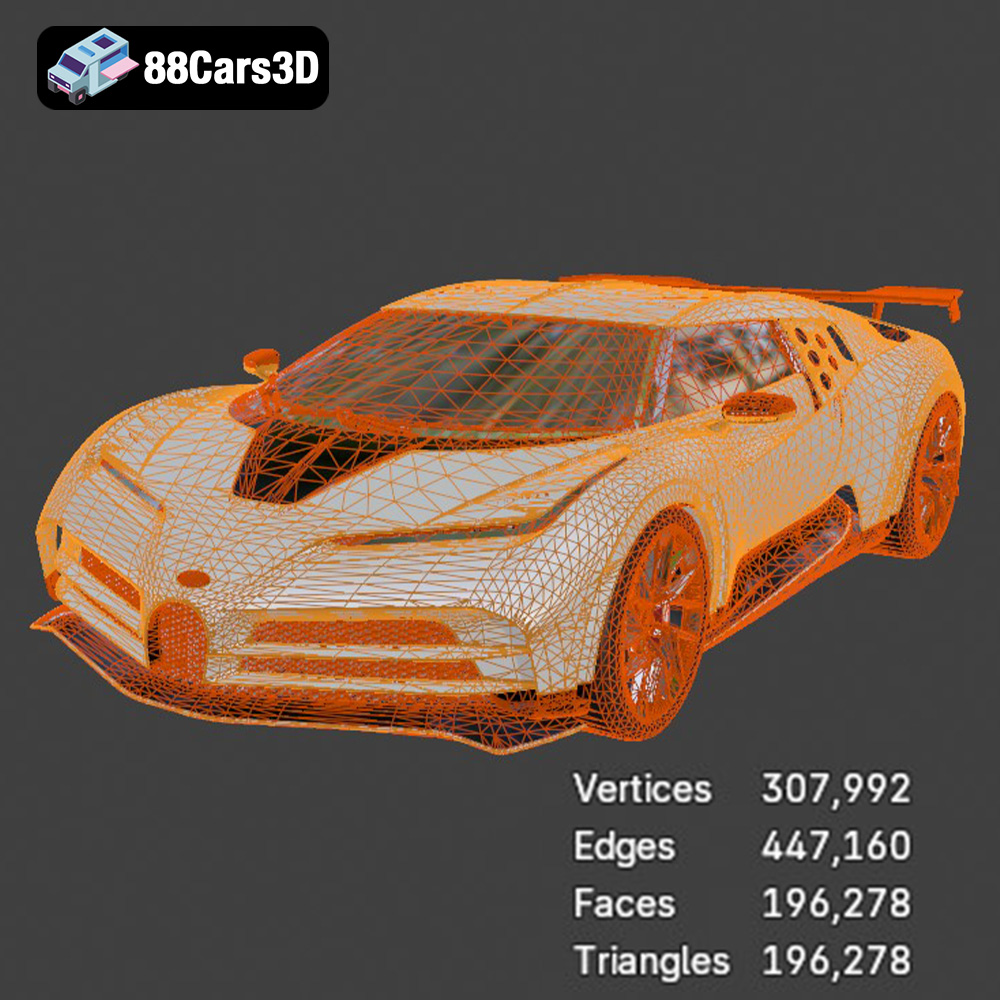
Creating a digital hypercar like the Bugatti Centodieci requires more than just artistic flair; it demands a deep understanding of 3D technical specifications. The quality of a 3D car model is often measured by its underlying structure, not just its visual appeal. For professionals, factors like clean topology, real-world scale, and optimized polygon flow are critical for ensuring versatility and performance across various applications, from high-end automotive rendering to demanding real-time environments.
The included Bugatti Centodieci 2020 3D Model boasts a clean and well-organized mesh structure. This means the polygon faces are evenly distributed, avoiding stretched or pinched geometry, which is crucial for smooth subdivisions and realistic deformations. Good topology facilitates accurate reflections and shadows, essential for photorealistic renders. Furthermore, the model’s adherence to real-world scale accuracy ensures it integrates seamlessly into architectural visualizations, scene compositions, and simulations without requiring tedious resizing or scale adjustments. This meticulous attention to detail ensures that the digital representation is as faithful as possible to its physical counterpart.
For any dynamic visualization, animation capabilities are non-negotiable. This model features proper pivot setup for steering and wheel rotation. This seemingly small detail significantly streamlines the animation process, allowing animators to quickly set up wheel spins, steering maneuvers, and suspension movements without complex rigging. The separate wheels and steering components are invaluable, offering independent control necessary for realistic vehicle physics in game engines or intricate cinematic sequences. Such segmentation extends the utility of the model far beyond static images, enabling full-motion showcases and interactive experiences.
While the exterior captures immediate attention, the interior is where true craftsmanship often shines, both in real cars and their digital twins. This Bugatti Centodieci 2020 3D Model includes a detailed hypercar cockpit layout, complete with sport bucket seats, center console, and digital instrumentation. The geometry is optimized for close-up renders, meaning sufficient polygon density is present in critical areas without over-burdening the model in less visible parts. This allows for stunning interior shots, virtual showroom tours, and immersive first-person perspectives in games or AR/VR applications, showcasing premium trim and carbon fiber elements with compelling realism.
The versatility of a well-crafted 3D car model extends across numerous professional fields, each benefiting from the precision and detail embedded within the asset. From the marketing suites of luxury brands to the development studios of blockbuster games, the Bugatti Centodieci 2020 3D Model exemplifies how a single digital asset can serve a multitude of high-demand applications, proving to be an indispensable tool for creative and technical experts alike.
For luxury automotive marketing, nothing short of perfection will do. The Bugatti Centodieci 2020 3D Model is engineered for high-end showroom renders and premium promotional campaigns. Its optimized polygon flow and detailed surfaces capture the sophisticated finishes and intricate design language of the Centodieci, allowing for photorealistic visualizations that rival professional photography. Whether for print, web, or cinematic advertisements, this model provides the raw fidelity needed to produce breathtaking visuals, creating compelling narratives around hypercar visualization and luxury lifestyle visuals without the expense and logistical challenges of physical photoshoots.
In the realm of interactive entertainment, realism is a key differentiator. This model is perfectly suited for racing games, open-world supercar collections, and high-performance vehicle packs. Its clean topology and optimized geometry ensure smooth performance and visual fidelity in real-time engines. For AR/VR luxury automotive projects, the Centodieci model offers an unparalleled foundation for immersive virtual showrooms and interactive hypercar experiences, allowing users to explore the vehicle’s every detail in 360 degrees or even place it realistically in their own environment. Such assets are fundamental to pushing the boundaries of immersive digital engagement.
Beyond the screen, the digital world can manifest physically through 3D printing. The included .stl format, alongside specific print settings, makes this Bugatti Centodieci 2020 3D Model convertible into physical collectibles and display models. This capability is invaluable for creating scale miniatures for collectors, design prototypes for engineers, or tactile representations for marketing. The provided print recommendations—from scale and layer height to support structures and post-processing—guide users in transforming the digital hypercar into a tangible, high-quality scale model, ideal for enthusiasts and professional model makers.
Integrating a complex 3D car model like the Bugatti Centodieci into a professional workflow requires careful consideration of software compatibility, material setup, and optimization strategies. The variety of formats provided for the Bugatti Centodieci 2020 3D Model ensures broad compatibility, allowing artists and developers to seamlessly incorporate it into their existing tools and pipelines, whether for stunning automotive rendering or efficient game assets.
For artists utilizing Blender, importing the .blend file provides an immediate, fully configured scene. Materials typically follow PBR (Physically Based Rendering) principles, allowing for consistent and realistic material responses under various lighting conditions. Users can further refine the shaders, adjust textures, or integrate the model into a larger environment. In 3ds Max, importing the .max file similarly offers a complete project. Artists can easily switch rendering engines, apply advanced lighting techniques, and utilize 3ds Max’s robust modeling and animation tools for bespoke modifications or complex scene assembly. For both platforms, the clean mesh structure of the Bugatti Centodieci 2020 3D Model minimizes cleanup time, letting artists focus on creative iteration.
When working with Unreal Engine for real-time applications or cinematic sequences, the .fbx or .unreal formats are ideal. Importing the .fbx file allows for straightforward mesh and basic material import, which can then be refined within Unreal’s powerful material editor to leverage advanced shading features like clear coat, metallic flake, and dynamic reflections crucial for realistic vehicle visuals. The engine-ready .unreal asset takes this a step further, often including pre-configured materials, LODs, and potentially even collision meshes, significantly accelerating the setup process for interactive experiences or high-performance game environments. Proper scale and pivot points, as present in this model, are vital for correct physics and animation within the engine.
The journey from a digital 3D car model to a physical collectible involves specific steps, especially when dealing with intricate designs like the Bugatti Centodieci. The included .stl file provides the base, but meticulous preparation is key. Following the recommended print settings (scale, layer height, wall thickness, infill) is crucial. Resin printing is often advised for smaller scales to capture fine details like the slim LED headlights and multi-spoke wheels. Careful print orientation, with the body angled for smooth finishes and wheels printed separately, helps minimize support marks and achieve superior surface quality. Post-processing steps like sanding, priming, and automotive painting are essential for replicating the hypercar’s luxurious finish, transforming the raw print into a display-worthy masterpiece.
One of the most compelling advantages of working with a professional-grade 3D car model from 88cars3d.com is the inherent flexibility it offers for customization. The Bugatti Centodieci 2020 3D Model serves as an exquisite canvas, allowing artists and designers to tailor its appearance to specific project needs, client demands, or personal artistic visions. This adaptability is critical for delivering unique content and standing out in a competitive digital landscape.
The ability to change the body color is perhaps the most immediate and impactful customization. From the iconic Bugatti blue to a stealthy carbon exposed finish or a bespoke custom hue, the model’s clean material setup facilitates rapid color adjustments. Extending this, modifying brake caliper colors, a subtle yet significant detail, can perfectly complement the chosen bodywork. Furthermore, altering the wheel finish—be it polished, matte black, or a carbon look—allows for distinct visual profiles, perfectly matching the aesthetic of the luxury hypercar. These modifications are not just superficial; they allow the model to tell a new story, evoke a different mood, or fit a specific brand identity.
Beyond color, the environment and lighting play a pivotal role in presenting the Centodieci. The model’s compatibility with major 3D software platforms and engines means it can be configured for diverse lighting scenarios. Imagine the dramatic interplay of light and shadow in a night hypercar scene, emphasizing its aggressive contours, or the bright, even illumination of a showroom environment, highlighting its meticulous details. The ability to configure lighting opens up endless possibilities for mood and storytelling, transforming a static model into an active participant in the visual narrative. Artists can experiment with global illumination, HDRI maps, and volumetric effects to create truly captivating renders that showcase the vehicle’s dynamic presence.
For collectors and enthusiasts of digital luxury, the Bugatti Centodieci is a cornerstone. Its quality and versatility make it an ideal addition to any digital hypercar collection. Artists can add custom license plates, personalize interior details, or even integrate it into a larger digital garage scene with other exotic vehicles. The model’s technical advantages ensure it will seamlessly integrate with other high-quality 3D car models, building a cohesive and impressive portfolio of automotive digital assets for rendering, game development, and high-end visualization projects.
The journey of a 3D car model, from its conceptualization to its integration into diverse digital pipelines, underscores the intricate blend of art and engineering required for digital excellence. A premium asset like the Bugatti Centodieci 2020 3D Model stands as a testament to this commitment, offering unparalleled detail, technical precision, and versatility. Whether your goal is to produce stunning automotive rendering for a marketing campaign, develop engaging game assets for a new title, create immersive AR/VR luxury automotive projects, or even bring a physical model to life through 3D printing, the foundational quality of this model is indispensable.
Its comprehensive set of file formats—including .blend, .fbx, .obj, .glb, .stl, .ply, .unreal, and .max—ensures seamless integration into virtually any professional workflow. From meticulous topology and real-world scale to animation-ready components and a highly detailed interior, every aspect of this digital hypercar has been crafted for peak performance and visual fidelity. For those seeking to elevate their digital automotive projects, the Bugatti Centodieci 2020 3D Model from 88cars3d.com represents not just an asset, but an investment in quality and creative potential. Explore this magnificent digital recreation and unlock new possibilities for your next project.
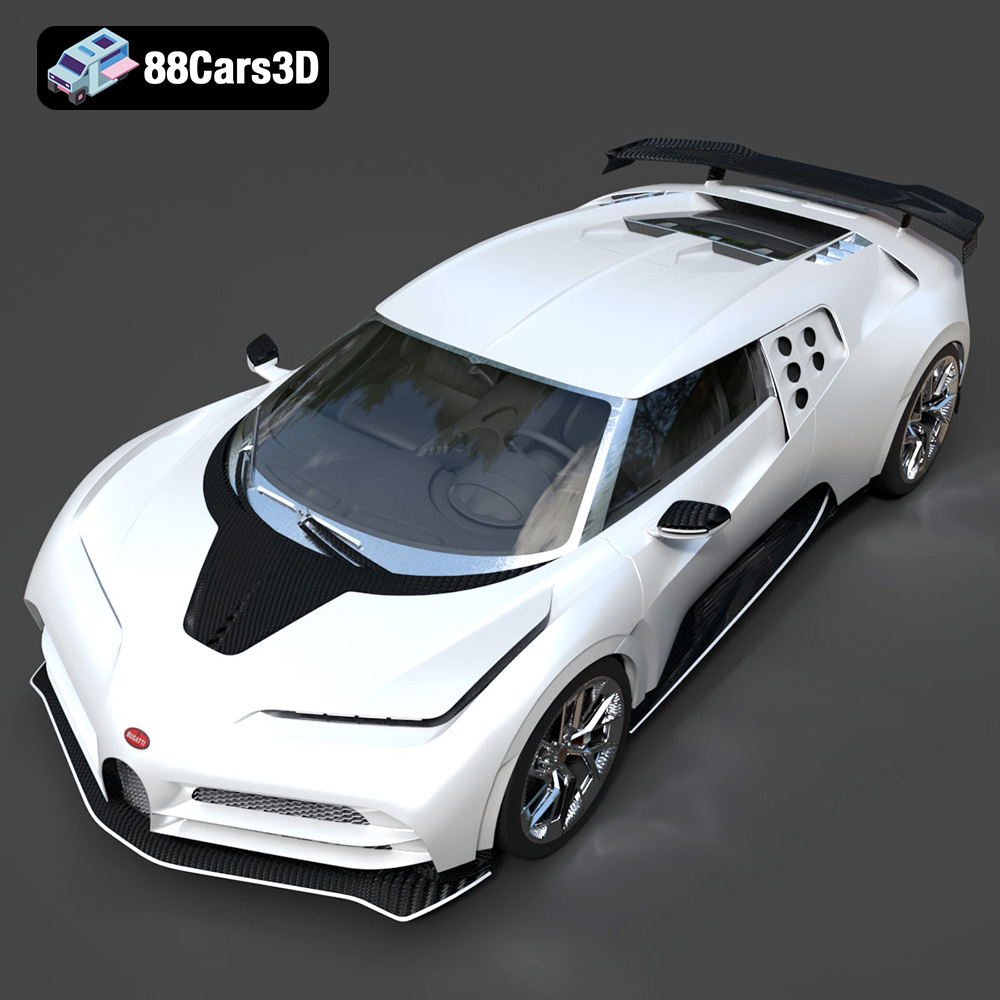
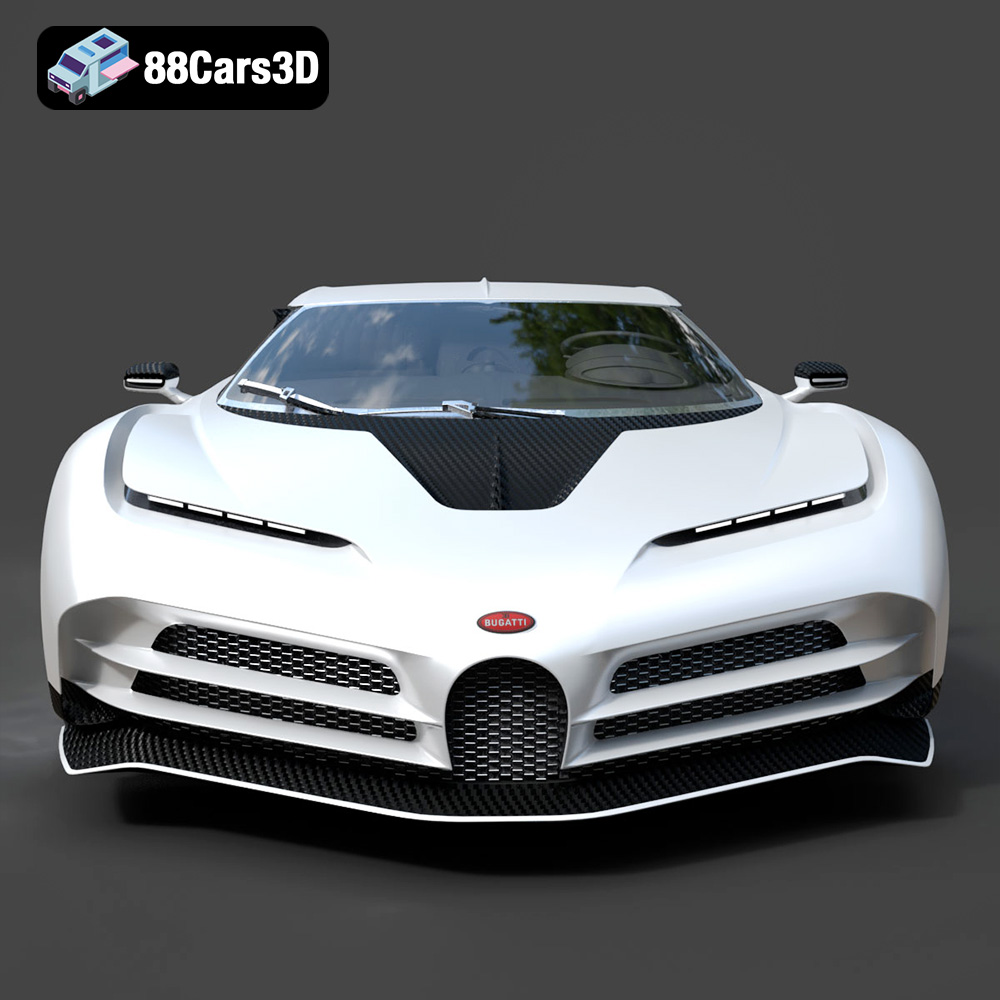
The Bugatti Centodieci 2020 3D Model is a high-detail digital recreation of the ultra-exclusive hypercar inspired by the legendary EB110. Limited to only a handful of units worldwide, the Centodieci combines modern Bugatti engineering with 1990s design heritage, delivering extreme performance and rare collector prestige. This 3D model accurately represents the aggressive aerodynamic bodywork, sharp front fascia with ultra-slim LED headlights, large side air intakes, sculpted rear with stacked exhaust outlets, fixed rear wing, and distinctive multi-spoke wheel design. Built with clean topology and real-world scale accuracy, it is ideal for rendering, animation, hypercar visualization, game development, and AR/VR luxury automotive projects. Perfect for high-end showroom renders, luxury lifestyle visuals, hypercar collections, cinematic productions, and racing game environments. Convertible to .stl format for collectible hypercar miniatures and display models.
$39.99
.2020hypercar
.arvr
.automotive
.blend
.bugatti
.car3dmodel
.centodieci
.exoticcar
.fbx
.gameasset
.glb
.luxurycar
.max
.obj
.ply
.rendering
.simulation
.stl
.supercar
.unreal