Get 50% OFF All Premium 3D & STL Models!

In the dynamic world of 3D visualization, from cinematic blockbusters to immersive game experiences and critical military simulations, the demand for highly detailed and technically robust assets is unwavering. Creating compelling digital environments often hinges on the quality of its key components. For scenes depicting conflict, strategy, or historical accuracy, a meticulously crafted combat vehicle can serve as the cornerstone of visual authenticity.
Building a truly convincing digital warzone requires more than just generic models. Artists and developers need assets that not only look the part but are also engineered for performance across various platforms. This means precise geometry, optimized topology, and a flexible structure that allows for seamless integration into diverse pipelines, whether it’s for a high-poly render, an interactive game, or a physical 3D print. The challenges range from accurately replicating complex mechanisms like tank tracks to ensuring scalable detail for both close-up shots and distant battlefields. This pursuit of realism and technical excellence is precisely where specialized assets prove their worth.
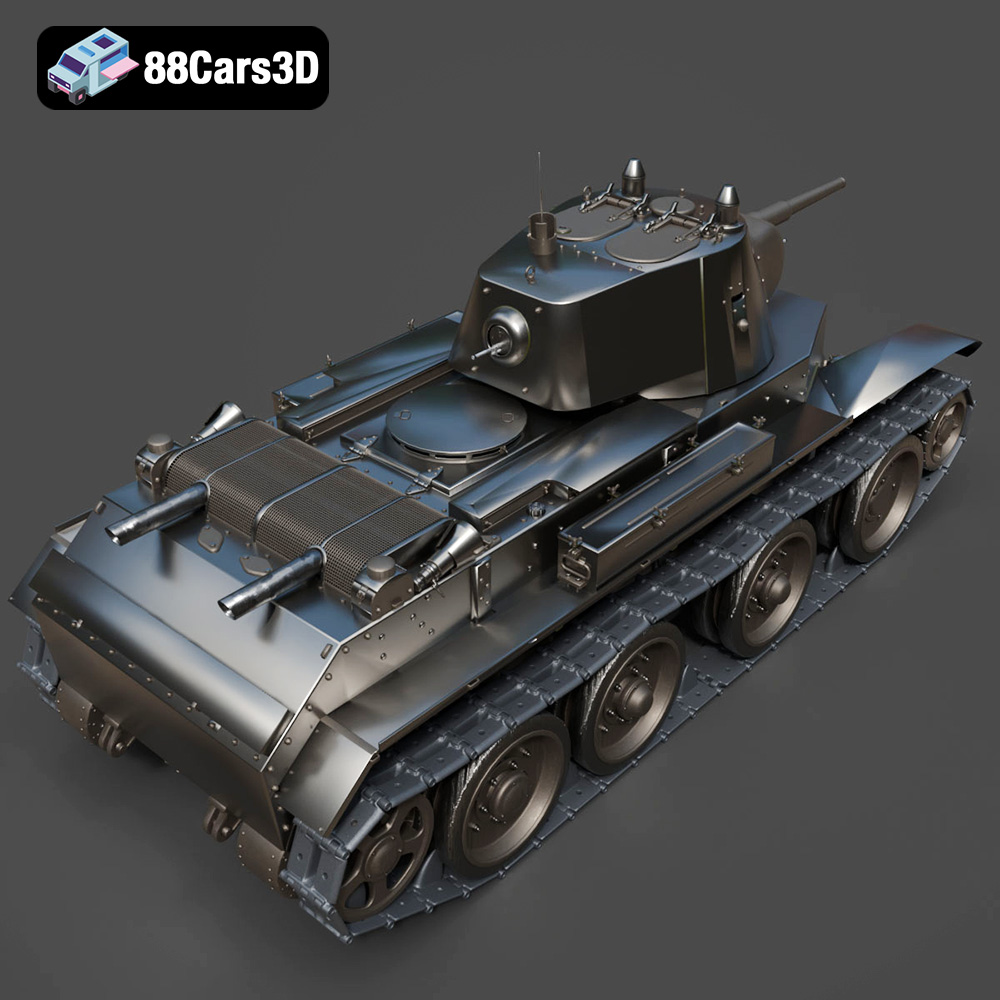
Today, we’re putting a spotlight on a prime example of such an asset: the Heavy Armored Tank 3D Model. This formidable creation from 88cars3d.com stands as a testament to detailed design and technical craftsmanship, engineered to bring unparalleled realism to any project. With its robust hull geometry, fully articulated turret, and intricate continuous track system, it captures the essence of a modern or classic main battle tank (MBT). It’s not just a model; it’s a versatile foundation for creators aiming for impactful visuals in military-themed projects, from intense battlefield cinematics to high-stakes combat simulators.
When working with 3D assets, particularly complex ones like the Heavy Armored Tank 3D Model, understanding the various file formats is paramount. Each format serves a specific purpose, offering different levels of compatibility, data retention, and optimization for particular workflows. The Heavy Armored Tank 3D Model is generously provided in a comprehensive suite of formats, ensuring maximum flexibility for any professional pipeline. This robust selection allows users to integrate the tank seamlessly into their preferred software and end-use applications.
The .blend format is native to Blender, the popular open-source 3D creation suite. When you download the Heavy Armored Tank 3D Model in .blend format, you gain access to a fully editable Blender scene. This includes all scene data, such as lights, cameras, modifiers, animations, and, critically, the full material setup. For artists deeply entrenched in the Blender ecosystem, this means immediate access to the model’s underlying structure, enabling them to make extensive modifications, re-topology, add simulations, or adjust materials without losing any information. It’s the ideal starting point for those who wish to customize the tank’s appearance or integrate it into complex Blender projects, offering unparalleled freedom and control.
.fbx (Filmbox) is arguably the most widely adopted interchange format in the 3D industry, especially crucial for game development and animation pipelines. It’s an excellent choice for transferring 3D models, animation, and various scene elements between different software applications like 3ds Max, Maya, Unity, and Unreal Engine. The Heavy Armored Tank 3D Model as an .fbx file will typically include mesh data, materials, textures, and pivot information (which is critical for the tank’s articulated parts like the turret and tracks). Its robust support for skeletal animation and precise transformations makes it the go-to format for bringing this tank to life in a real-time environment or a complex animated sequence.
The .obj (Wavefront OBJ) format is a universal standard, prized for its simplicity and broad compatibility. Almost every 3D software application can import and export .obj files. While it may not retain advanced scene information like animations or complex material nodes, it reliably stores mesh data (vertices, normals, UV coordinates) and references to external material files (.mtl) and textures. For the Heavy Armored Tank 3D Model, the .obj version is perfect for users who need a clean mesh for basic rendering, re-texturing, or as a base for further sculpting in programs like ZBrush. It acts as a dependable fallback format for cross-software projects where maximum compatibility is key.
.glb (GL Transmission Format Binary) is increasingly becoming the standard for 3D models optimized for web-based applications, AR (Augmented Reality), and VR (Virtual Reality). It’s a binary format that bundles the 3D model, textures, and animations into a single file, making it incredibly efficient for streaming and displaying 3D content in browsers and lightweight viewers. The Heavy Armored Tank 3D Model in .glb format is ideal for showcasing the asset directly on websites, integrating it into interactive product configurators, or deploying it in mobile AR applications, where performance and quick loading times are paramount.
.stl (STereoLithography) is the de facto standard format for 3D printing. It represents a 3D model as a series of connected triangles, defining only the surface geometry of an object without color, texture, or other CAD attributes. For hobbyists and professionals looking to create physical scale models of the Heavy Armored Tank, the .stl file is indispensable. The product description explicitly highlights its suitability for 3D printing at scales like 1:35 or 1:72, emphasizing the potential for tangible military dioramas and tabletop wargaming figures. It’s the critical link between the digital model and its physical manifestation.
.ply (Polygon File Format or Stanford Triangle Format) is a file format for storing 3D data from 3D scanners, CAD applications, or other mesh-generating software. It supports properties such as color, transparency, normals, texture coordinates, and scalar values. While less common for everyday artistic interchange than .fbx or .obj, it’s highly valued in applications requiring precise mesh data, such as reverse engineering, scientific visualization, or detailed analysis. For advanced users or specific engineering workflows involving the tank, the .ply format offers a robust and accurate representation of the model’s geometry.
The inclusion of a dedicated .unreal asset signifies direct compatibility with Unreal Engine, one of the leading real-time 3D creation tools for photorealistic visuals and immersive experiences. An .unreal asset typically means the model has been specifically prepared or exported with Unreal Engine’s conventions in mind, potentially including optimized meshes, collision volumes, and material setups that leverage Unreal’s powerful rendering capabilities. For game developers and simulation engineers, this means a streamlined workflow, reducing the effort required to import, set up, and optimize the Heavy Armored Tank for a high-performance real-time environment. This “engine-ready” state is a significant advantage for rapid prototyping and production in Unreal Engine.
Finally, the .max format is the proprietary file type for Autodesk 3ds Max, a long-standing industry standard for 3D modeling, animation, and rendering. Providing the Heavy Armored Tank 3D Model in .max format means users with 3ds Max can open the original project file, complete with its native scene structure, materials, modifiers, and animation rigs. This offers the ultimate level of control for professionals working in 3ds Max, allowing for deep customization, complex animation setups, and high-end rendering workflows using renderers like V-Ray or Corona. It ensures that the model can be fully leveraged within a powerful and widely adopted professional environment, making it ideal for cinematic production and advanced visualization projects.
Beyond its striking visual appearance, the Heavy Armored Tank 3D Model is a marvel of technical execution. Its design principles prioritize both visual fidelity and practical performance, a crucial balance for any professional 3D asset. This attention to detail in its construction ensures that it’s not merely a static display piece but a functional component ready for rigorous applications.
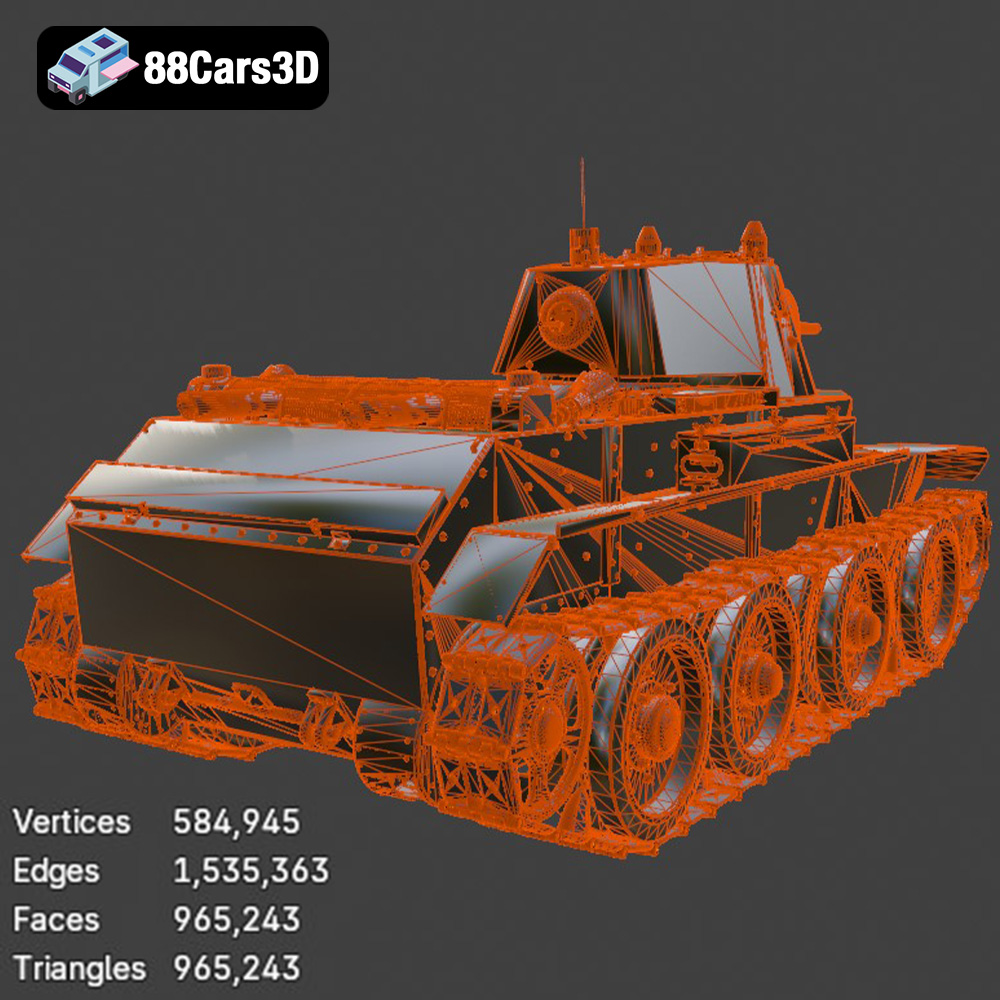
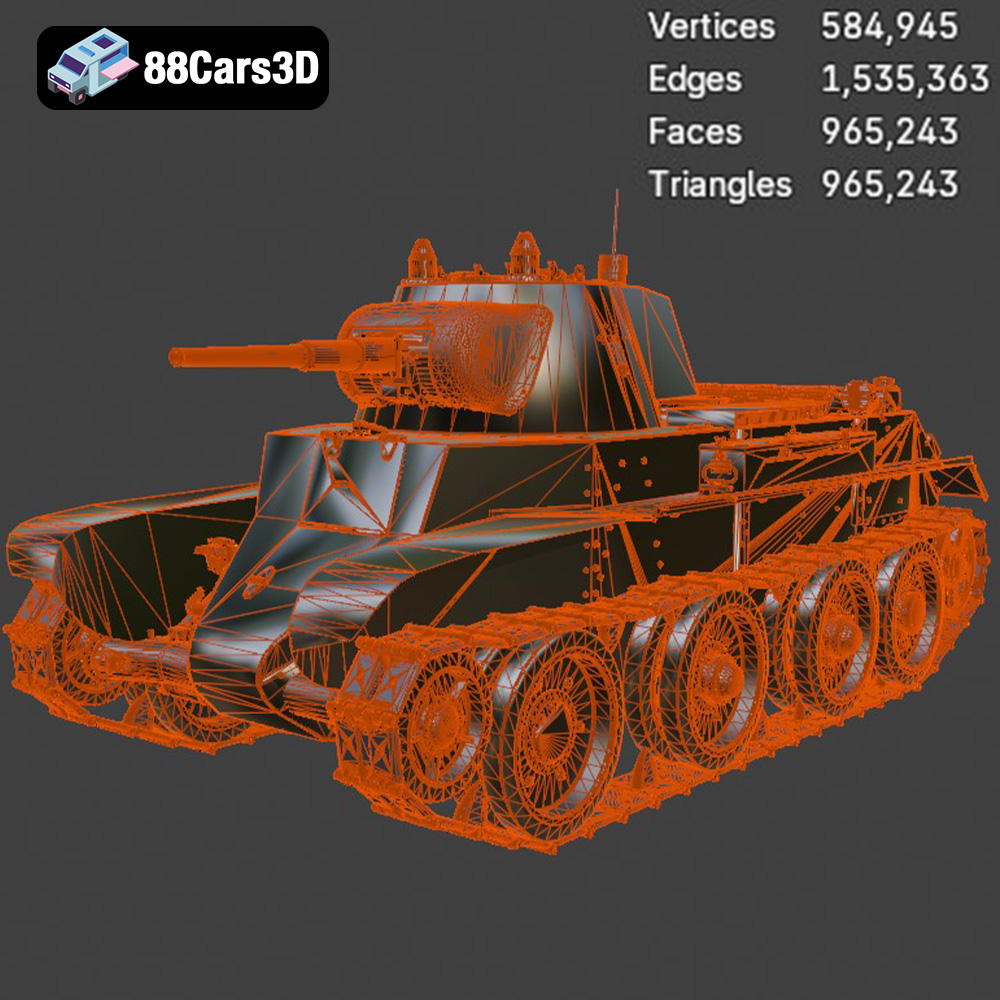
One of the standout technical specifications of this model is its perfectly balanced topology. With approximately 965,243 triangles and 584,945 vertices, the model strikes an optimal equilibrium between intricate mechanical detail and efficient performance. This “mid-poly” approach means that crucial features like the continuous track system, exhaust grilles, and reactive armor plating are rendered with exceptional fidelity, suitable for close-up shots and high-resolution renders. Yet, it remains efficient enough to be deployed as a “hero” asset in modern game engines without causing significant performance bottlenecks. This careful balance is a hallmark of professional-grade 3D car models and vehicle assets, ensuring versatility across different project requirements.
The Heavy Armored Tank 3D Model is not a monolithic object. It features a modular design with separate components for the turret, main gun, wheels, and tracks. This architectural choice is invaluable for artists and animators. It allows for realistic animation and physics rigging, enabling the turret to rotate independently, the main gun to elevate, and the complex track system to articulate convincingly. For game developers, this modularity facilitates the creation of interactive and drivable vehicles. Furthermore, it simplifies customization, allowing users to easily swap out elements, apply damage states, or modify specific parts without affecting the entire model, enhancing its utility across various scenarios.
Accuracy is paramount in military visualization, and the Heavy Armored Tank 3D Model delivers on this front. It is built to real-world scale based on standard Main Battle Tank (MBT) dimensions. This meticulous attention to scale and proportion ensures that the tank will integrate seamlessly into existing scenes, environments, and simulations without requiring tedious resizing or adjustments. For tactical simulators, military training applications, or historical recreations, this level of accuracy is not just a cosmetic feature but a critical functional requirement, contributing to the model’s professional viability.
The true measure of a 3D asset’s quality lies in its usability within professional production pipelines. The Heavy Armored Tank 3D Model from 88cars3d.com is designed with this in mind, offering broad compatibility and features that cater to diverse workflows, from high-end rendering to real-time interactive experiences.
For artists focused on stunning visual output, this tank model is an excellent foundation for high-fidelity rendering. In environments like 3ds Max (using the .max format) or Blender (with the .blend file), professionals can leverage advanced rendering engines like V-Ray, Corona, Cycles, or Octane. The model’s detailed geometry and balanced topology allow for the application of complex material shaders – simulating weathered metal, grime, mud, and dust – to achieve photorealistic results. The separate components facilitate dynamic lighting setups, enabling dramatic shadow play and reflections that accentuate its rugged features. Imagine the impact of a cinematic shot, with the tank positioned under a dramatic sky, its armor reflecting ambient light, or a close-up revealing every rivet and weld mark. This capability makes it perfect for military history documentaries, cinematic cutscenes, or even elaborate digital dioramas.
The game industry places unique demands on 3D assets: high visual quality, optimized performance, and ease of integration. The Heavy Armored Tank 3D Model meets these requirements head-on, particularly with its .fbx and .unreal formats. For developers working with Unreal Engine or Unity, the model’s balanced poly count ensures it can serve as a “hero” drivable vehicle for current-gen PC and console titles, strategy games, or tank simulators. The pre-separated parts for the turret, gun, and tracks simplify the rigging process for animation and physics, allowing developers to quickly implement realistic movement, aiming mechanics, and collision detection. This efficiency means less time spent on asset preparation and more time on gameplay development, making it a valuable asset for creating compelling game environments.
Beyond entertainment, accurate 3D models are indispensable for serious applications like military simulation and training. The Heavy Armored Tank 3D Model, with its real-world scale and meticulous detail, is highly useful for tactical military training software. It can be integrated into virtual battlefields to train personnel in vehicle identification, tactical maneuvers, or even maintenance procedures in a safe, repeatable digital environment. Its optimized geometry is suitable for immersive first-person “commander view” scenarios in VR, offering trainees a realistic perspective from inside the tank’s cupola. This application highlights the model’s versatility, extending its utility into critical educational and operational contexts where precision and realism are paramount.
A truly exceptional 3D model is defined by its attention to detail, and the Heavy Armored Tank 3D Model excels in this regard. Every element, from its imposing armor to its intricate mechanical components, has been crafted to evoke authenticity and immersion.
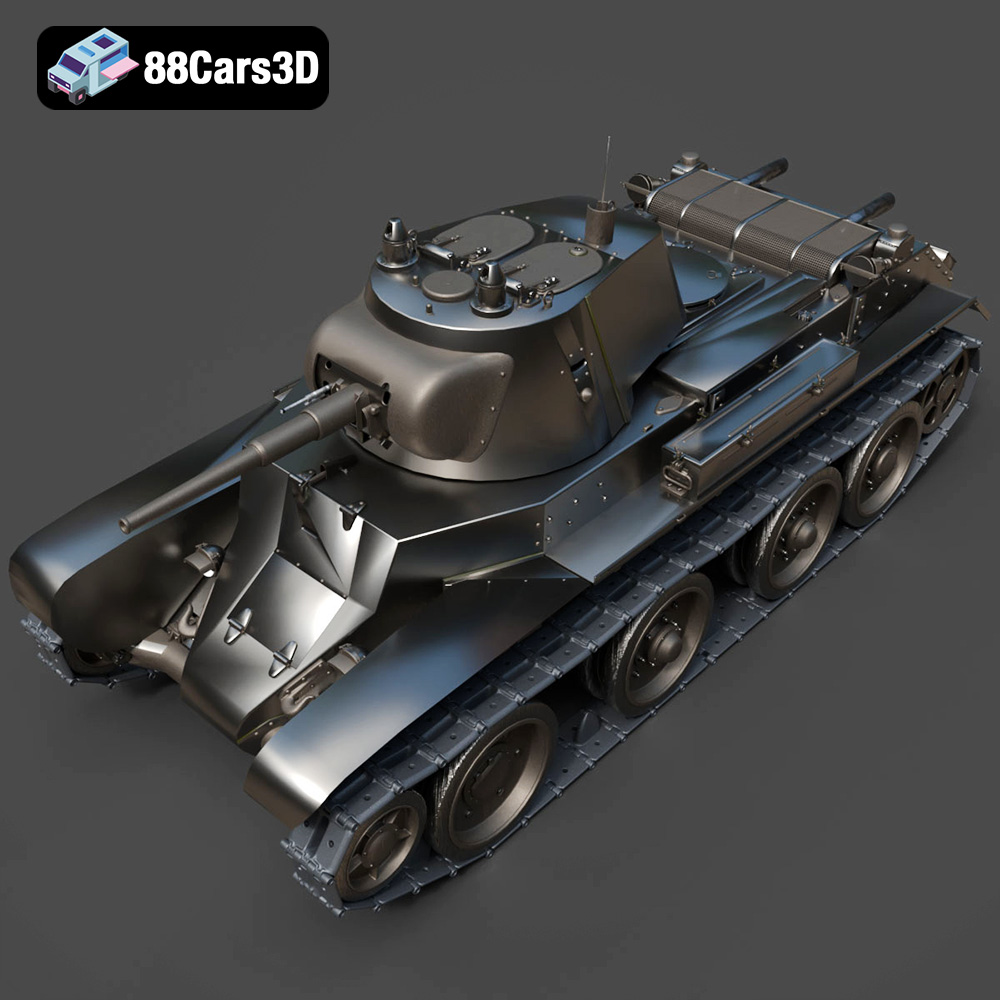
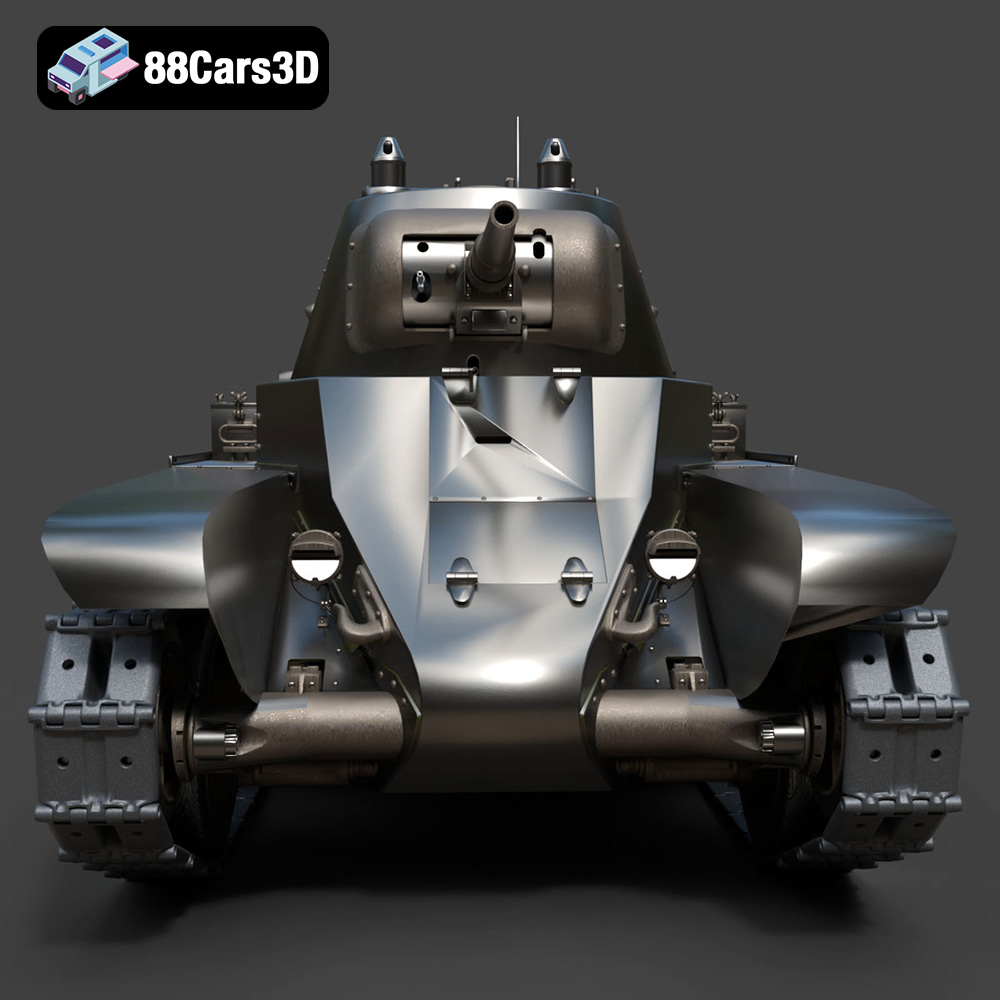
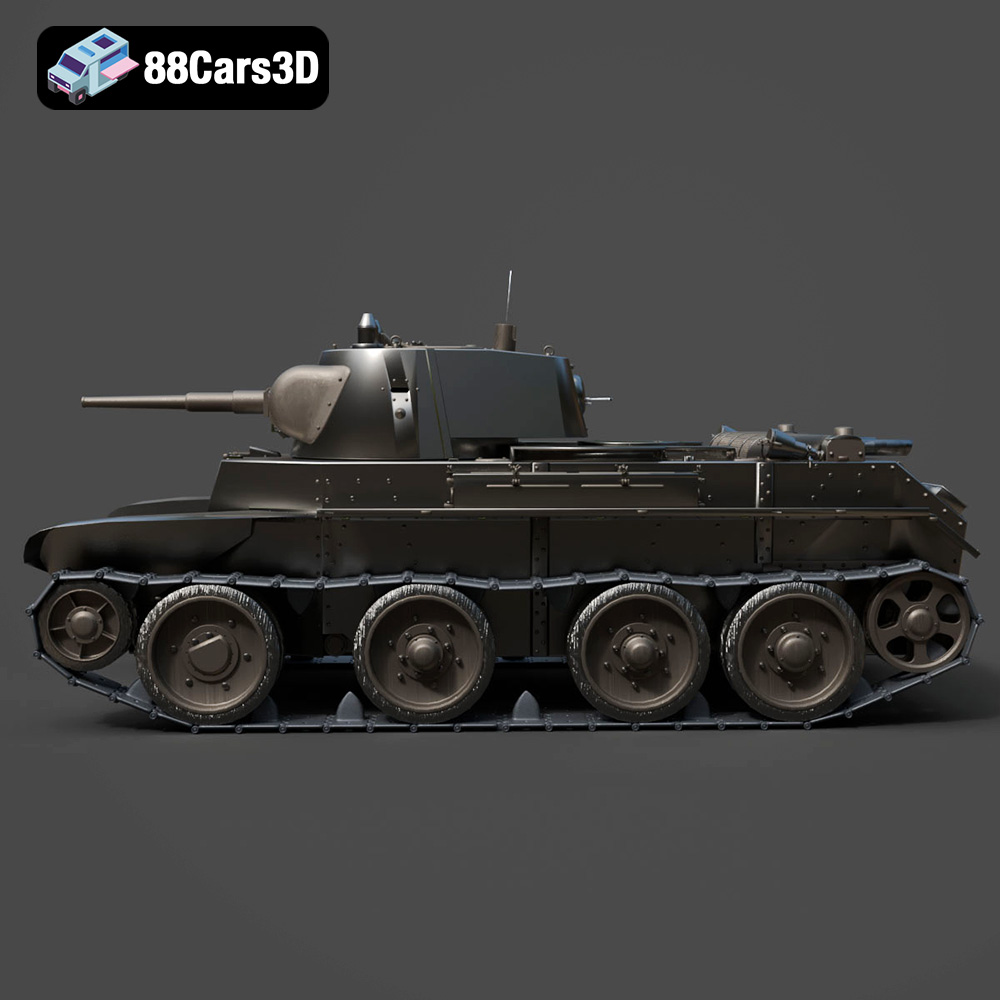
The exterior of the Heavy Armored Tank is a masterclass in detail. It showcases accurate armored vehicle proportions and heavy hull geometry that convey formidable defensive capabilities. The continuous track system, often a significant challenge in 3D modeling, is meticulously detailed with individual links and drive sprockets, allowing for highly realistic animation and visual fidelity. The fully rotating turret assembly, complete with an elevating main gun barrel, provides dynamic posing and interaction. Further enriching the model are specific details such as commander and gunner hatches, optical viewports, heavy machine gun mounts, detailed engine exhaust grilles, and even tow cables and reactive armor plating. These elements collectively paint a picture of a robust, battle-hardened machine, ready for any engagement. The sheer volume of these smaller details significantly contributes to its realism in automotive rendering and general vehicle visualization.
While the primary focus is on external viewing, the Heavy Armored Tank 3D Model intelligently addresses interior considerations. The exterior hatch geometry is detailed, hinting at the complexity within. More importantly, the commander’s cupola features periscope and optics detailing, providing a believable visual experience even when viewed from a close, first-person perspective. The geometry for the interior cabin is optimized specifically for external viewing or immersive “commander view” in gaming or VR. This means that while a full, highly detailed interior might not be present (which would drastically increase poly count and rendering demands unnecessarily), enough visual information is provided to maintain immersion without compromising performance. External communication antennas and sensor mounts further enhance the model’s tactical realism, making it suitable for scenarios where a sense of operational readiness is key.
One of the most exciting applications of this digital asset is its potential for physical manifestation through 3D printing. The Heavy Armored Tank 3D Model is explicitly designed to be convertible to .stl format, opening up a world of possibilities for modelers, collectors, and tabletop wargaming enthusiasts who appreciate tangible creations.
To achieve the best results when 3D printing this detailed model, specific settings are recommended. For scale, standard military modeling scales like 1:35, 1:48, or 1:72 are suggested, allowing for integration into existing collections or dioramas. The choice of printing technology is crucial: resin printing is highly recommended over FDM for its ability to capture the intricate track links, delicate machine gun barrels, and other fine details that define the tank’s realism. A layer height of 0.04–0.08 mm is ideal for resin printers to ensure smooth surfaces and sharp edges. Optimal wall thickness (1.5–2.5 mm) and infill (20–40%) ensure structural integrity, preventing warping and providing a solid base, which is especially important for larger prints. Properly implemented supports are required for overhanging features like the main gun barrel, external fuel tanks, and various turret components.
Printing is only the first step; the true artistry comes in the post-processing. The product description provides excellent guidance for finishing this 3D printable asset. Print orientation suggestions, such as printing the hull flat for structural integrity and the turret and barrel separately, ensure optimal print quality and ease of assembly. After printing, typical post-processing steps include sanding, priming, and then the application of a base coat in classic military colors like Olive Drab, Desert Sand, or Woodland Camo. The real magic happens with weathering: applying techniques to simulate mud-caked tracks, scorch marks on the barrel, rusted exhaust ports, and general dust accumulation. These techniques transform a plastic print into a battle-worn, historically accurate miniature, making the Heavy Armored Tank 3D Model a fantastic starting point for award-winning scale models or engaging tabletop wargaming pieces.
The Heavy Armored Tank 3D Model is not a rigid, unchangeable asset; it’s a versatile canvas for creative expression. Its inherent design and included file formats empower artists and developers to customize it extensively, adapting it to a myriad of scenarios and visual styles.
The customization possibilities begin with surface aesthetics. Users can apply a wide array of camouflage liveries, ranging from historical patterns like Desert Storm or Classic Olive to modern schemes such as Winter Splinter or Urban Digital. This transformation can be achieved through advanced texturing workflows, leveraging the model’s clean UV mapping and robust material setup in software like Substance Painter, Photoshop, or directly within Blender or 3ds Max. Beyond camouflage, implementing intense weathering textures is key to realism. Imagine mud-caked tracks, scorch marks on the barrel from sustained firing, rusted exhaust grilles, or layers of dust coating the armor from prolonged desert engagements. These details breathe life into the model, telling a story of its battles and journeys.
The Heavy Armored Tank 3D Model truly shines when integrated into compelling scene compositions with dynamic lighting. Artists can adapt the lighting to create dramatic nighttime firefights, casting long shadows and muzzle flashes across the battlefield, or depict bright, dusty desert engagements with harsh sunlight glinting off the armor. The model’s detailed geometry and material properties will react authentically to various light sources, from volumetric spotlights simulating searchlights to ambient environmental lighting for a specific time of day. This flexibility allows for the creation of visually stunning renders for marketing materials, cinematic sequences, or dynamic in-game environments. Whether it’s the centerpiece of a diorama or part of a vast battlefield, the tank model integrates seamlessly into any narrative.
The Heavy Armored Tank 3D Model represents a pinnacle of detailed 3D asset creation, offering unparalleled versatility and technical robustness for a broad spectrum of professional applications. From its meticulously balanced topology and modular design to its comprehensive suite of file formats, including .blend, .fbx, .obj, .glb, .stl, .ply, .unreal, and .max, this model is engineered for seamless integration into virtually any 3D workflow. Whether you are a cinematic artist striving for photorealistic renders, a game developer building an immersive combat experience, a simulation engineer creating tactical training environments, or a hobbyist bringing digital designs to life through 3D printing, this asset provides the foundation for exceptional results.
Its accurate scale, intricate exterior features, and thoughtful optimization for performance make it a powerful tool for military rendering, game asset development, and comprehensive visualization projects. The ability to customize camouflage, weathering, and integrate it into dynamic scenes further extends its value, allowing creators to craft unique and compelling narratives. The availability of such high-quality 3D models on platforms like 88cars3d.com significantly empowers artists and studios, enabling them to focus on creativity and innovation rather than starting from scratch. Investing in a professionally crafted asset like the Heavy Armored Tank 3D Model is an investment in quality, efficiency, and the undeniable impact of superior visual fidelity in any project.
The Heavy Armored Tank 3D Model is a high-detail digital recreation of a formidable tracked combat vehicle. Designed to represent the raw power and tactical dominance of armored warfare, this model features heavy plating, a commanding main gun barrel, a fully articulated turret, and intricate continuous track (caterpillar) systems. Built with an optimized, highly balanced topology (just under 1 million triangles), it provides fantastic visual fidelity for close-up rendering while remaining efficient enough to serve as a high-end hero asset in modern game engines or military simulators. Perfect for intense battlefield cinematic scenes, military strategy games, historical or modern combat simulations, and highly detailed diorama renders. It also includes 3D print settings for physical models.
$29
.blend
.fbx
.mbt
.military
.obj
.rendering
.stl
.tank
3d printing
armored-vehicle
combat
game asset
main-battle-tank
mid-poly
military-3d-model
tracks
turret
war