Get 50% OFF All Premium 3D & STL Models!

In the dynamic worlds of game development, cinematic rendering, military simulation, and even advanced 3D printing, the demand for exceptionally detailed and versatile 3D assets is constant. Professionals across these sectors seek models that not only look authentic but are also technically sound and easily integrated into complex pipelines. It’s a pursuit of digital realism that drives innovation, pushing the boundaries of what’s possible in virtual environments and physical reproductions.
Today, we delve into an asset that exemplifies this pursuit: the Heavy Armored Tank 3D Model. This formidable creation is more than just a static object; it’s a meticulously engineered digital representation designed to bring unparalleled realism to any project. Whether you’re envisioning dramatic battlefield cinematics, crafting the next-generation military strategy game, building an immersive training simulator, or preparing a stunning physical display model, this tank stands ready. Available on reputable marketplaces like 88cars3d.com, it offers a robust solution for artists and developers looking to elevate their work with a truly professional-grade asset.
This comprehensive guide will explore the technical intricacies, diverse applications, and workflow integrations of such a sophisticated 3D model, ensuring you understand how to harness its full potential across various creative and professional endeavors.
The flexibility and utility of a 3D model often hinge on the file formats it supports. Each format is designed with specific use cases in mind, offering unique advantages for different stages of a project, from initial modeling to final rendering, game integration, or 3D printing. The Heavy Armored Tank 3D Model, recognizing this need for adaptability, comes bundled with an impressive array of formats, ensuring seamless compatibility across virtually all professional software and pipelines. Let’s break down these essential formats:
The .blend file is Blender’s native format, containing a complete scene including the mesh geometry, materials, textures, lighting, cameras, animations, and even physics setups. For artists working primarily in Blender, this is invaluable. It offers full editability, allowing for direct manipulation of every aspect of the tank model, from its intricate track system to its heavy armor plating. Professionals can easily modify the topology, adjust UV maps, tweak shader networks, or even re-rig components, making it perfect for custom projects requiring deep integration and alteration within the Blender ecosystem.
.fbx (Filmbox) is arguably the most widely used 3D interchange format in the entertainment industry. Developed by Autodesk, it’s designed to transfer 3D model data between different applications while preserving crucial information like geometry, materials, textures, animations, and bone rigging. For assets like our Heavy Armored Tank 3D Model, .fbx is ideal for bringing it into game engines like Unreal Engine and Unity, or other 3D software like 3ds Max, Maya, and Cinema 4D. Its robust support for animations makes it perfect for game development where the tank’s turret rotation, barrel elevation, and track movement need to be animated and controlled in real-time.
The .obj (Wavefront OBJ) format is a simple, universally compatible format primarily used for transferring geometry data. It stores vertices, normals, UV coordinates, and face information, often accompanied by a separate .mtl (material) file for basic material properties. While it doesn’t support animation or complex scene data, its widespread adoption ensures that virtually any 3D software can open and work with .obj files. This makes it an excellent choice for basic model import when you need clean geometry that can then be textured and rigged in your preferred application, offering a solid foundation for cross-software compatibility for the tank model.
.glb (GL Transmission Format Binary) is the binary version of glTF, a modern, open-standard format designed for efficient transmission and loading of 3D scenes and models in web and real-time applications. It packages geometry, materials, textures, and animations into a single file, making it incredibly streamlined for use in augmented reality (AR), virtual reality (VR), and browser-based 3D viewers. For showcasing the Heavy Armored Tank 3D Model in interactive web experiences or lightweight AR/VR applications, .glb provides optimal performance and visual fidelity.
The .stl (Stereolithography) format is the de facto standard for 3D printing. It represents a 3D model as a collection of unconnected triangles, defining only the surface geometry of an object without color, texture, or other CAD data. While simple, its ubiquity in 3D printing ensures that our Heavy Armored Tank 3D Model can be easily prepared for physical manufacturing, allowing enthusiasts and professionals to print highly detailed scale models for display or tabletop wargaming. The tank’s intricate details, such as individual track links and delicate antennae, are precisely captured for physical output.
.ply (Polygon File Format) is another format for storing 3D data, particularly useful for scanned data, point clouds, and polygon meshes. It supports properties such as color, transparency, surface normals, and various types of data associated with the mesh or individual vertices/faces. While less common for everyday artistic interchange, .ply is often used in scientific, engineering, and reverse-engineering contexts due to its precision and extensibility, making it suitable if the tank model needs to be integrated into CAD or detailed analytical software.
The inclusion of a dedicated .unreal asset signifies that the Heavy Armored Tank 3D Model has been specifically prepared and optimized for direct integration into Unreal Engine. This often means pre-configured assets with proper material setups, collision meshes, LODs (Levels of Detail), and sometimes even basic skeletal rigging or pivot points aligned for engine functionality. For game developers and simulation creators using Unreal Engine, this format significantly streamlines the import and setup process, saving valuable development time.
Similar to .blend for Blender, the .max file is the native format for Autodesk 3ds Max, a powerful 3D modeling, animation, and rendering software widely used in architectural visualization, product design, and cinematic production. A .max file contains the entire scene, including geometry, lights, cameras, materials, textures, and animation data. Providing the tank model in .max allows 3ds Max users to leverage its full capabilities for advanced rendering with V-Ray or Corona, complex animation sequences, or detailed environmental setups, making it a professional-grade starting point for high-end visualizations.
This comprehensive suite of file formats ensures that the Heavy Armored Tank 3D Model is not just a stunning visual but also a highly adaptable asset, ready to integrate into almost any professional 3D workflow you can imagine.
The true value of a premium 3D asset lies in its meticulous design and technical specifications. The Heavy Armored Tank 3D Model is a prime example, showcasing a commitment to both visual authenticity and operational efficiency. Every component has been crafted to evoke the raw power and tactical dominance of armored warfare, making it an ideal choice for discerning artists and developers.
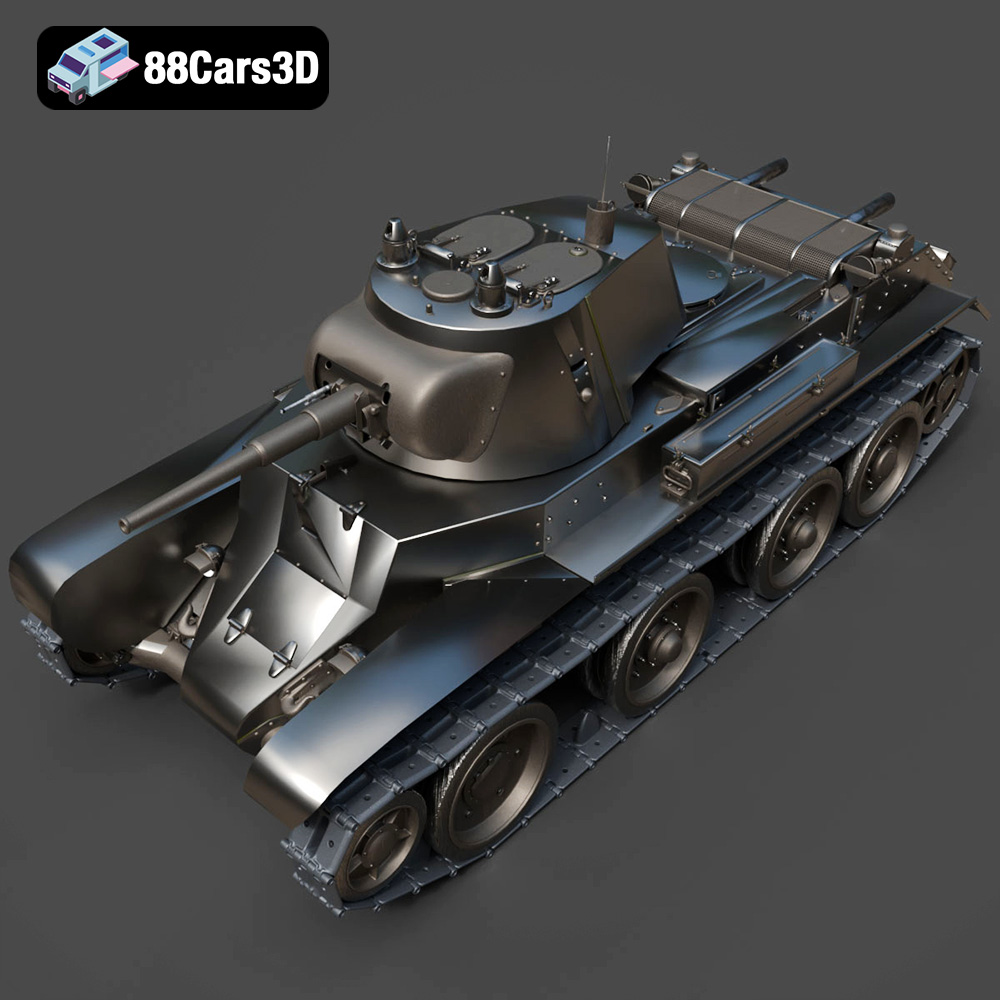
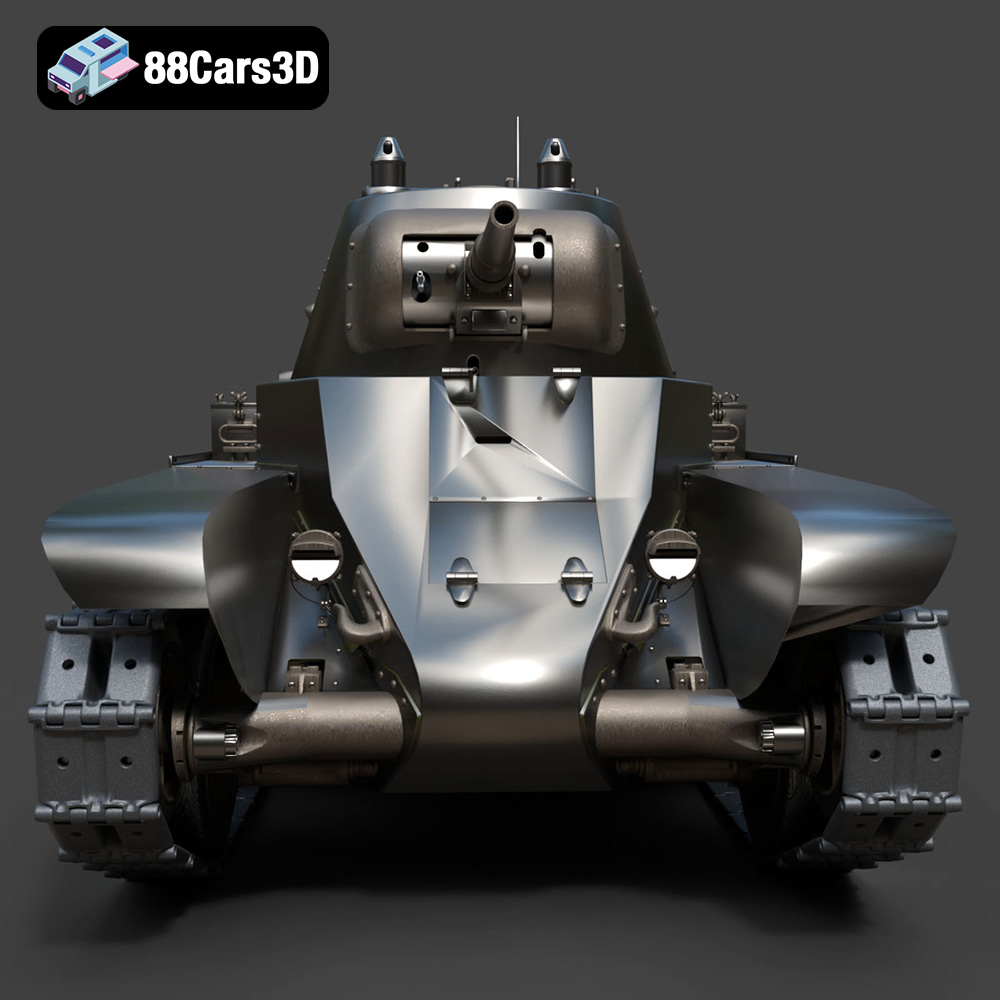
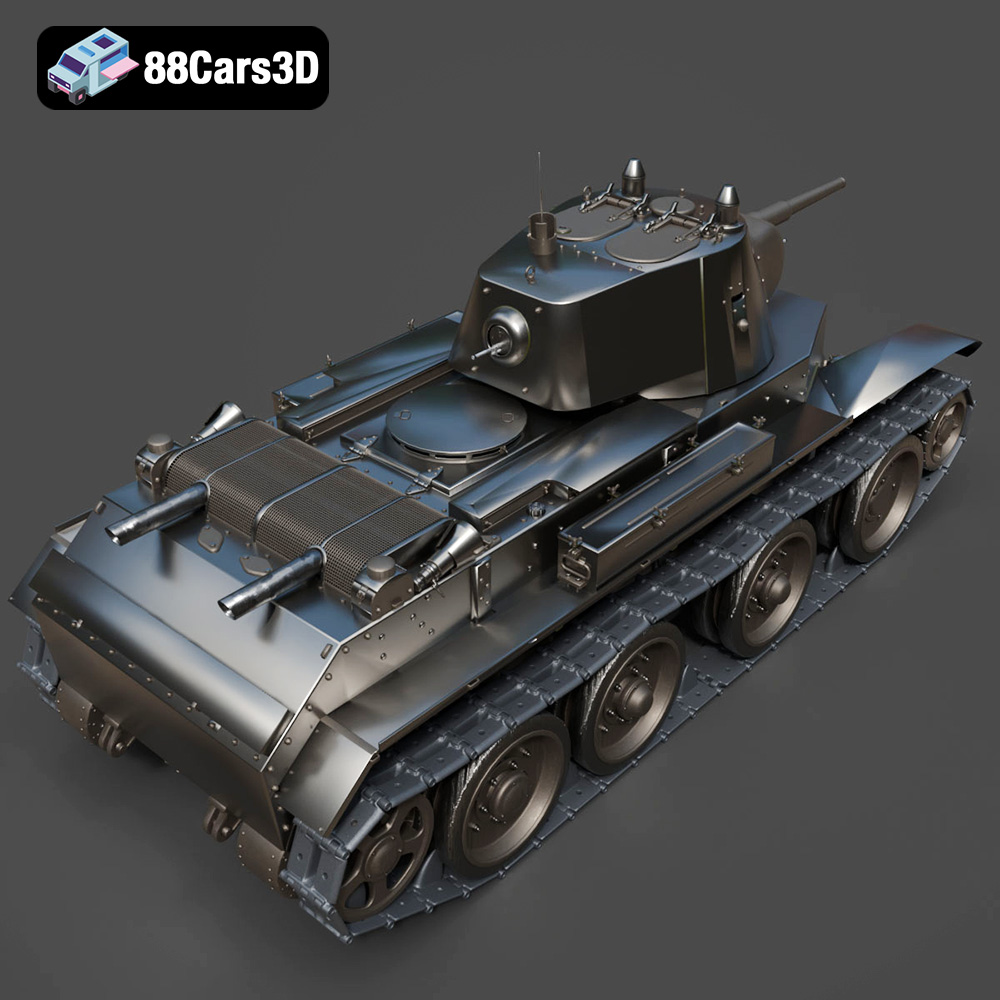
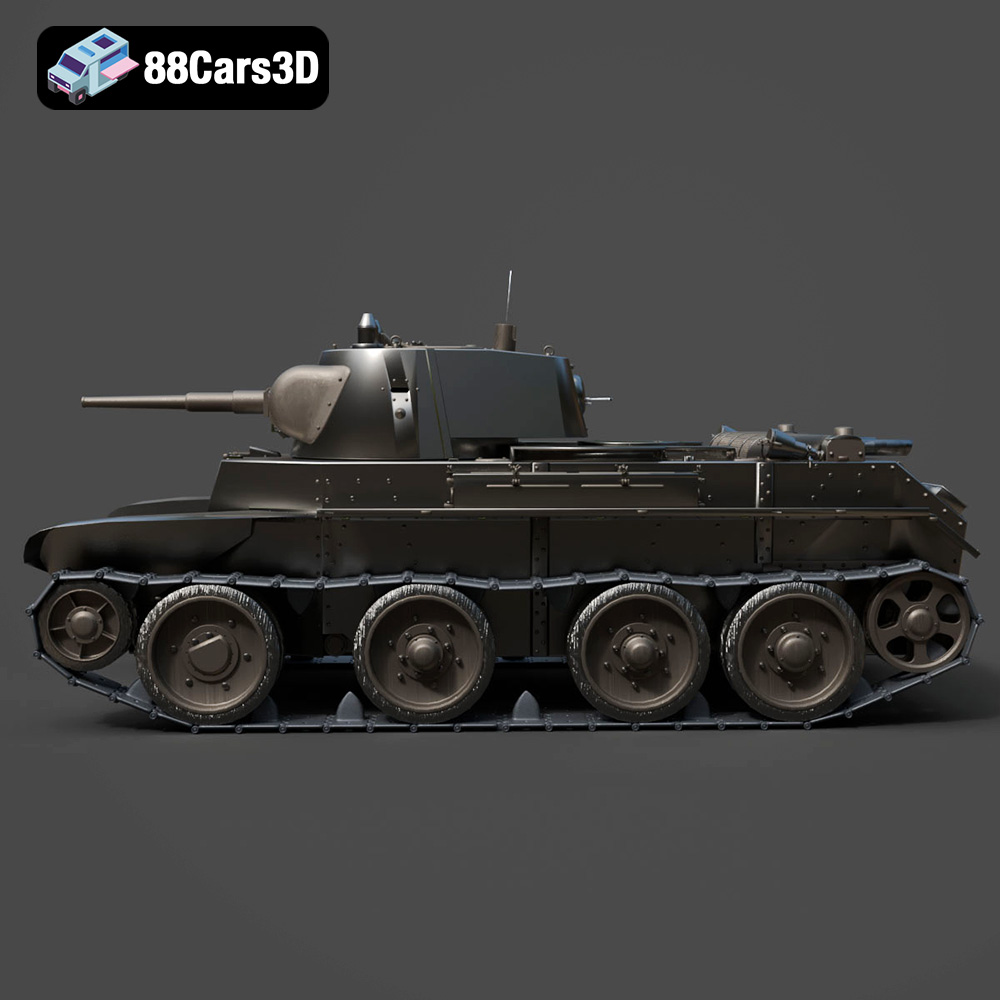
From the moment you inspect this model, its robust exterior features stand out. The accurate armored vehicle proportions and heavy hull geometry immediately convey a sense of formidable strength. The main gun barrel, a commanding presence, is fully integrated into a fully rotating turret assembly that also allows for realistic elevation, crucial for dynamic combat scenarios. Perhaps one of the most complex elements, the highly detailed continuous track system (caterpillar tracks), is built with individual links and drive sprockets, ensuring believable motion and ground interaction. Further enhancing its realism are detailed road wheels, exhaust grilles, tow cables, and reactive armor plating, all contributing to a battle-ready aesthetic. Elements like commander and gunner hatches, optical viewports, and heavy machine gun mounts add layers of functional detail, allowing for immersive close-up renders and in-game exploration.
While often optimized for external viewing, the Heavy Armored Tank 3D Model doesn’t neglect critical interior aspects visible from the outside. It features detailed exterior hatch geometry and a commander’s cupola complete with periscope and optics detailing. This attention to visible internal elements makes the model suitable for immersive first-person “commander view” in gaming or VR applications, where the player might peer out of a viewport. External communication antennas and sensor mounts further underscore its functionality, providing opportunities for rich environmental storytelling and enhanced simulation fidelity.
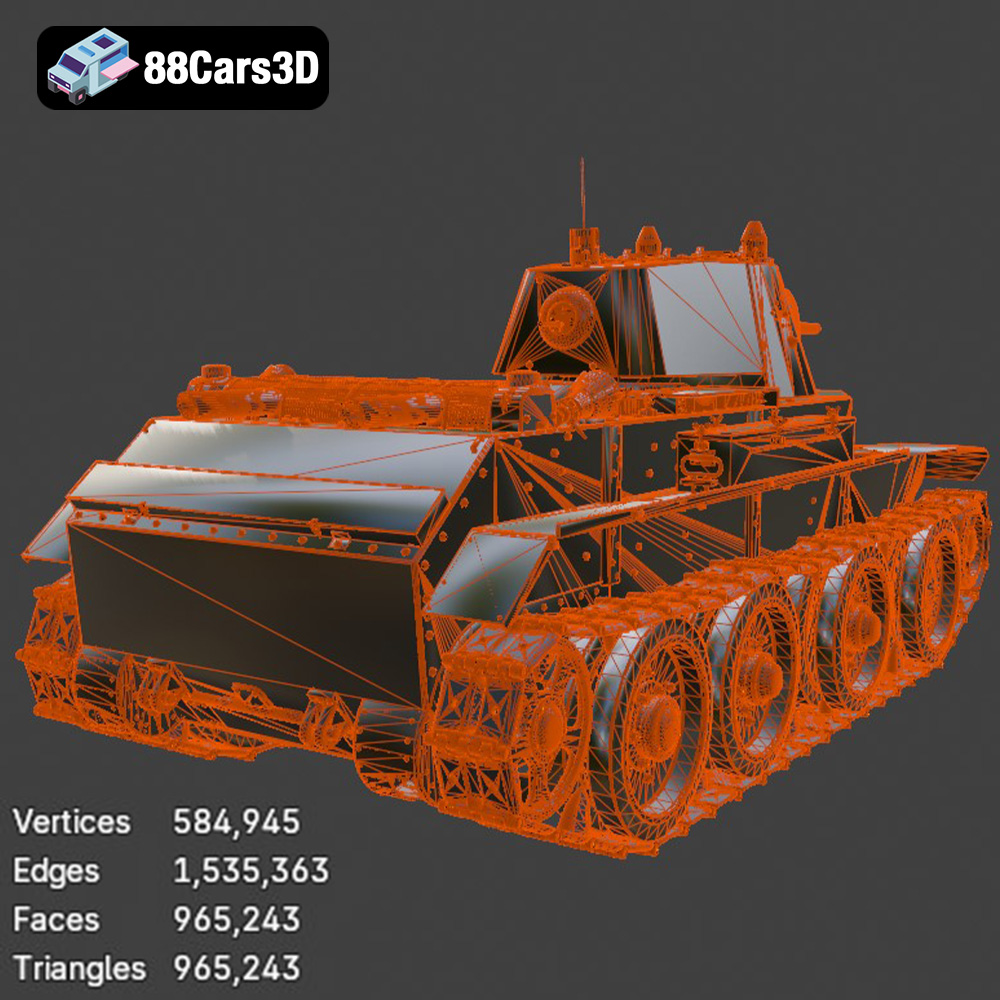
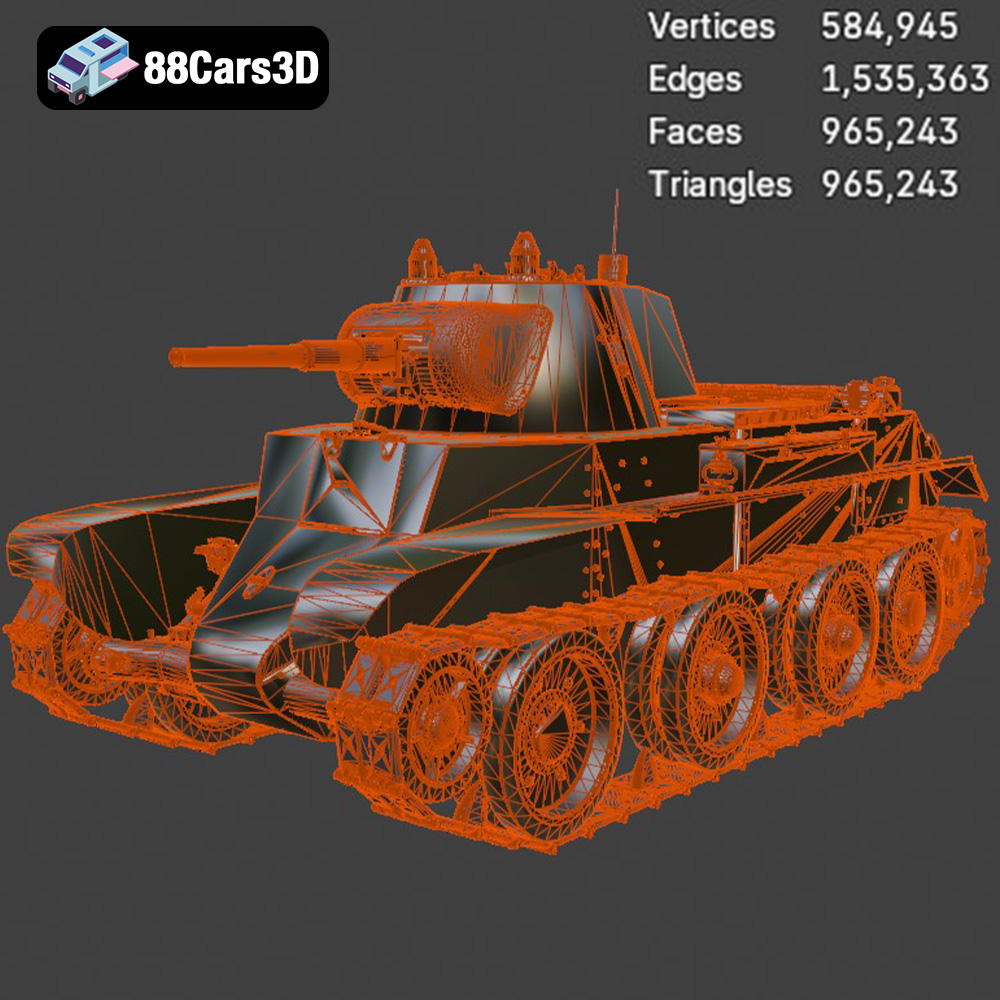
Beyond aesthetics, the model’s technical specifications are crucial for professional integration. With 584,945 vertices, 1,535,363 edges, and 965,243 faces/polygons (totaling 965,243 triangles), this model achieves a perfectly balanced topology. This nearly one million triangle count strikes an excellent balance: it’s high enough to deliver incredible mechanical detail, particularly for the intricate tracks and armor plating, without being overly burdensome for modern rendering software or current-generation game engines. The model adheres to real-world scale accuracy based on standard Main Battle Tank (MBT) dimensions, ensuring it fits realistically into any virtual environment. Critically, it features proper pivot setup for turret rotation, barrel elevation, and track/wheel movement, which is foundational for realistic animation and physics rigging in game development and simulations. This technical robustness ensures that the Heavy Armored Tank 3D Model is not just visually appealing but also a highly functional asset.
A versatile 3D asset proves its worth not just by its individual quality but by how effectively it can be integrated into diverse professional pipelines. The Heavy Armored Tank 3D Model is engineered to be a seamless addition to high-stakes projects, from interactive entertainment to critical training applications.
For game developers, this model is an excellent “hero” drivable vehicle for current-gen PC/console shooters, strategy games, and tank simulators. Its optimized, balanced topology (just under 1 million triangles) means it can maintain fantastic visual fidelity while running efficiently in engines like Unreal Engine and Unity. When integrating into Unreal Engine, developers can leverage the provided .unreal format for a streamlined import process. The model’s separate turret, main gun, wheels, and tracks, coupled with its proper pivot setup, are crucial for robust rigging. This allows for complex animation blueprints controlling track rotation based on speed, realistic turret traversing, and accurate barrel elevation. Collision meshes can be generated automatically or custom-built to ensure precise physics interactions. For a title on 88cars3d.com, such a tank asset enhances the visual impact and player immersion, offering a tangible sense of power and scale. Developers can also implement Level of Detail (LOD) systems, though the base mesh is already well-optimized for high-end cinematic moments or close-up gameplay.
In the realm of cinematic rendering and high-fidelity visualization, the Heavy Armored Tank 3D Model truly shines. Artists using 3ds Max (with the .max file) or Blender (with the .blend file) have complete control over the asset. This allows for the creation of dramatic warzone lighting setups, military history documentaries, and gritty battlefield dioramas. The model’s high detail allows for extreme close-ups without loss of fidelity, perfect for feature film quality renders. Artists can apply advanced PBR (Physically Based Rendering) materials, layering textures for dirt, grime, scorch marks, and realistic wear and tear. Global illumination, volumetric fog, and particle effects (like dust kicked up by tracks or muzzle flash from the main gun) can transform a static scene into a dynamic, narrative-rich visualization. Imagine a render showcasing the tank silhouetted against a fiery sunset, or entrenched in a snowy landscape – the model provides the perfect canvas for such artistic visions.
Beyond entertainment, the accuracy and detail of this tank model make it highly useful for tactical military training software and combat vehicle identification. In a simulation environment, realism is paramount for effective training. The Heavy Armored Tank 3D Model, with its real-world scale accuracy and detailed exterior features, provides a reliable and recognizable representation for trainees. Its segmented parts (turret, gun, tracks) allow for realistic physics and interaction, crucial for simulating vehicle movement, weapon aiming, and damage models. Developers building military simulators can integrate this model to teach vehicle operation, tactical deployment, and threat identification, offering a cost-effective and safe training platform. The optimized geometry also ensures that these demanding simulations can run smoothly on a variety of hardware configurations, from desktop workstations to dedicated simulation cockpits.
The versatility of the Heavy Armored Tank 3D Model extends beyond the digital realm. Its design ensures it is perfectly suited for 3D printing, transforming a virtual asset into a tangible, collectible item. This opens up avenues for military modelers, tabletop wargaming enthusiasts, and creators of bespoke physical displays.
The provision of the .stl file format is key here. While the initial model is designed for digital rendering and real-time engines, the .stl conversion provides a clean, manifold mesh ideal for slicing software. However, merely having an .stl file isn’t enough; successful 3D printing requires an understanding of the model’s geometry in the physical context. The Heavy Armored Tank’s individual links, delicate antennas, and heavy machine gun barrels, while impressive digitally, require careful consideration for printing. Resin printing (SLA/DLP) is highly recommended for these intricate details due to its ability to produce finer layers and sharper features compared to FDM (Fused Deposition Modeling), especially at smaller scales.
To achieve the best results, specific print settings are advised. The recommended scales of 1:35, 1:48, or 1:72 align with standard military modeling sizes, allowing for integration with existing model collections or wargaming setups. A fine layer height of 0.04–0.08 mm is crucial for capturing the model’s small details. For structural integrity and to prevent warping, a wall thickness of 1.5–2.5 mm and an infill of 20–40% are suggested. Supports are essential, particularly for the main gun barrel, external fuel tanks, and any overhanging turret features, to prevent sagging during printing. The ideal print orientation involves printing the hull flat for maximum structural integrity, while the turret and barrel are printed separately to minimize support marks and optimize detail. Post-processing is where the physical model truly comes to life. This includes careful support removal, sanding for smooth surfaces, applying primer, and then a base coat in classic military colors like Olive Drab, Desert Sand, or Woodland Camo. The real artistry comes with weathering: applying techniques for mud-caked tracks, scorch marks on the barrel, rust effects on exhausts, and dust accumulation to create a truly battle-hardened appearance. This makes the Heavy Armored Tank 3D Model not just a digital asset but a starting point for a captivating physical masterpiece.
The foundation of a high-quality 3D model is its flexibility. The Heavy Armored Tank 3D Model, with its modular design and clean topology, offers an expansive canvas for customization, allowing artists and developers to tailor it to specific narratives, environments, and artistic visions.
One of the most impactful ways to customize the tank is through its surface textures and camouflage. The model’s excellent UV mapping allows for the application of various camouflage liveries with precision. Imagine the tank in a desert environment, sporting a “Desert Storm” sand-colored pattern, or camouflaged with a “Winter Splinter” scheme for an arctic battleground. An “Urban Digital” pattern would make it suitable for city combat, while a “Classic Olive” drab would evoke historical scenarios. Beyond just patterns, artists can add intense weathering textures: mud-caked tracks for a realistic swamp crossing, scorch marks on the main gun barrel from intense firing, rusted exhaust pipes indicating prolonged exposure to the elements, and subtle dust accumulation to suggest its journey through a arid landscape. These layers of detail go beyond mere aesthetics, adding a rich sense of history and realism to the asset.
The modularity of the Heavy Armored Tank 3D Model allows for further physical customization in a scene. Artists can swap or add external payloads, such as extra fuel drums for extended missions, sandbags strategically placed for improvised reactive armor, or additional reactive armor blocks to enhance its defensive profile. These additions not only change the tank’s appearance but also contribute to environmental storytelling, hinting at its operational context. Furthermore, adapting the lighting can dramatically alter the mood and intensity of a scene. Imagine a dramatic nighttime firefight, where the tank’s silhouette is illuminated by distant explosions and tracer fire, contrasting with a bright, dusty desert engagement under a harsh midday sun. Integrating environmental elements like smoke plumes, rubble, and even other 3D car models or military vehicles from 88cars3d.com can transform a simple tank model into a living, breathing tableau, elevating the overall visual narrative to cinematic heights.
The journey through the technical specifications, diverse applications, and profound customization potential of the Heavy Armored Tank 3D Model reveals the immense value a high-quality 3D asset brings to any creative or professional project. From its meticulously crafted exterior details and optimized topology to its readiness for both digital rendering in 3ds Max or Blender and real-time game development in Unreal Engine, this model stands as a testament to expert 3D artistry and technical precision.
Its versatility extends into critical areas like military simulation and the exciting realm of 3D printing, offering tangible outputs for enthusiasts and professionals alike. Whether you’re a game developer building an immersive combat experience, a cinematic artist crafting a compelling narrative, or a hobbyist bringing a virtual tank to life on your desk, this model provides the robust foundation you need. It exemplifies how thoughtful design and technical prowess converge to create a resource that not only meets but exceeds industry demands.
For those seeking to elevate their projects with such formidable and adaptable assets, look no further than 88cars3d.com. Discover the Heavy Armored Tank 3D Model and a vast array of other professional-grade 3D car models and vehicle assets designed to fuel your creative vision and bring your digital worlds to life with unparalleled realism.
The Heavy Armored Tank 3D Model is a high-detail digital recreation of a formidable tracked combat vehicle. Designed to represent the raw power and tactical dominance of armored warfare, this model features heavy plating, a commanding main gun barrel, a fully articulated turret, and intricate continuous track (caterpillar) systems. This 3D model accurately captures the rugged, battle-ready aesthetic of modern or classic armored cavalry. It features detailed road wheels, drive sprockets, exhaust grilles, external storage compartments, and commander hatches. Built with an optimized, highly balanced topology (just under 1 million triangles), it provides fantastic visual fidelity for close-up rendering while remaining efficient enough to serve as a high-end hero asset in modern game engines or military simulators. Perfect for intense battlefield cinematic scenes, military strategy games, historical or modern combat simulations, and highly detailed diorama renders.
$29
.blend
.fbx
.mbt
.military
.obj
.rendering
.stl
.tank
3d printing
armored-vehicle
combat
game asset
main-battle-tank
mid-poly
military-3d-model
tracks
turret
war