Get 50% OFF All Premium 3D & STL Models!

The world of 3D printing is constantly pushing boundaries, allowing enthusiasts and professionals alike to bring intricate designs to life. Among the most sought-after creations are detailed 3D printable car models. However, printing a full-scale, highly detailed vehicle can present a significant challenge. Many of these impressive models, especially those found on marketplaces like 88cars3d.com, are designed with incredible detail, often resulting in models that are too large to fit on standard 3D printer build plates or are simply too complex to print as a single piece without significant risk of failure. This is where the art and science of splitting large 3D car models into manageable parts come into play. This comprehensive guide will walk you through the essential techniques, software workflows, and critical considerations for successfully dissecting and preparing these magnificent models for printing, ensuring high-quality results every time.
Whether you’re using FDM or resin printing technology, understanding how to properly split a model is a fundamental skill. We’ll delve into the intricacies of mesh topology, slicing strategies, support generation, and post-processing, providing you with the knowledge to tackle even the most ambitious car printing projects. By the end of this article, you’ll be equipped with the expertise to transform a single, dauntingly large STL file into a series of printable components, ready for assembly into a stunning replica.
The desire to print a large, detailed 3D car model is understandable. These models can represent iconic vehicles with breathtaking accuracy, making them perfect for display, custom builds, or even as functional prototypes. However, the practicalities of 3D printing often dictate that a single, monolithic print is not feasible or even desirable. The primary reasons for splitting a model revolve around physical limitations, print success rates, material efficiency, and post-processing convenience.
Firstly, build volume limitations are the most obvious constraint. Most consumer-grade 3D printers have a maximum build area measured in cubic centimeters (e.g., 220x220x250mm for many FDM printers). A fully detailed 1:18 scale car model can easily exceed these dimensions. Splitting the model into smaller sections – such as the body, chassis, wheels, and interior components – allows each piece to fit within the printer’s confines.
When a model is too large, attempting to print it in one piece will result in the slicing software either automatically scaling it down to fit (losing intended detail and scale) or generating an error, preventing printing altogether. By dividing a large model, you ensure that each part can be oriented optimally on the build plate to maximize its chances of a successful print. This involves strategic placement to avoid overhangs where possible and to ensure good bed adhesion.
Large, single-piece prints are inherently riskier. A single failure, such as a layer shift, nozzle clog, or bed adhesion issue, can ruin the entire project, forcing you to restart from scratch. Splitting a model into smaller, more manageable parts significantly reduces this risk. If one small component fails, it’s a minor setback, easily reprinted. This modular approach is crucial for complex prints, especially those with thin walls, delicate features, or extensive overhangs commonly found in detailed automotive models.
Printing large objects can consume a significant amount of filament or resin. By splitting a model, you gain more control over infill settings for each component. For instance, internal structural parts might require higher infill density for strength, while exterior body panels could use a lower infill percentage to save material and reduce print time, without compromising visual quality. This optimization is particularly beneficial when printing multiple copies or using expensive materials.
Even if you could physically print a massive model in one piece, the subsequent post-processing steps like support removal, sanding, and painting would be incredibly difficult and time-consuming. Separating the model into logical components makes these tasks much more manageable. You can sand individual parts more easily, apply paint with greater precision, and then assemble the finished pieces using adhesives, pins, or specialized connectors. This approach also allows for easier integration of electronics or other functional components if desired.
Successfully splitting complex 3D car models requires specialized software that can manipulate mesh geometry. While basic slicers offer rudimentary cutting tools, professional-grade mesh editing software provides the precision and control needed for intricate splits. These tools allow you to cut, split, and repair meshes, ensuring they remain manifold (watertight) and print-ready after division.
The choice of software often depends on user preference, budget, and the complexity of the task. However, certain programs are industry standards for mesh manipulation and repair, offering robust features for splitting models. Understanding the strengths of each tool can help you select the best workflow for your specific needs.
Autodesk Meshmixer is a free, powerful tool renowned for its intuitive interface and excellent mesh editing capabilities. It excels at boolean operations, plane cuts, and smoothing, making it ideal for splitting models. Its “Inspector” tool is invaluable for repairing mesh errors that might arise during the splitting process.
Blender, another free and open-source option, is a professional 3D modeling suite that offers advanced mesh editing tools. While it has a steeper learning curve than Meshmixer, its capabilities are far more extensive. For splitting, you can use its boolean modifiers or the Knife tool for precise cuts. Blender’s mesh analysis tools can also help identify potential issues before printing.
Autodesk Netfabb is a commercial software suite specifically designed for additive manufacturing preparation. It offers advanced tools for model repair, lattice generation, slicing, and crucially, sophisticated model splitting and assembly. While often overkill for simple splits, its power and accuracy make it a top choice for professional workflows and extremely complex projects.
Most modern slicer programs, such as Ultimaker Cura, PrusaSlicer, and Simplify3D, include basic cutting functionalities. These often involve a simple plane cut, where you define a plane, and the software slices the model along it. While convenient for quick divisions, these tools typically lack the precision and mesh repair capabilities of dedicated mesh editors.
They are best used for simple splits or after the main dissection has been performed in a more capable program. For instance, you might split a car body into front and rear halves in Meshmixer, then use your slicer’s cutting tool to further divide those halves if they still exceed your build volume. It’s important to note that slicing operations can sometimes introduce non-manifold geometry, so always check the resulting STL files in a mesh editor or your slicer’s preview.
The primary file format you’ll encounter for 3D printable models is STL (STereoLithography). STL files represent a 3D surface geometry as a collection of triangular facets. While ubiquitous, STL is a relatively simple format and doesn’t contain information about color, texture, or material properties. When splitting models, you’ll typically export the individual parts as new STL files.
Other common formats like OBJ (Wavefront Object) and FBX (Filmbox) are more versatile and can store additional data. While not strictly necessary for the splitting process itself, understanding these formats can be helpful if you’re working with models downloaded from various sources or if you plan to perform more advanced modifications in software like Blender.
The process of splitting a large 3D car model can be broken down into several key stages, from initial assessment and preparation to the actual cutting and refinement of the resulting parts. A methodical approach ensures that the final components are not only printable but also assemble cleanly, preserving the integrity and detail of the original design. This workflow is applicable whether you’re working with a highly detailed supercar from 88cars3d.com or any other large-scale model.
Before diving into the software, it’s crucial to plan your cuts. Consider the intended scale, the limitations of your 3D printer, and how the parts will be assembled. Visualizing the final assembly can help determine the best locations for cuts, ensuring that joining surfaces are accessible and provide good adhesion points.
Begin by importing the full car model into your chosen mesh editing software (e.g., Meshmixer). Examine the model’s scale and overall dimensions. Identify natural breaking points that align with the car’s design, such as panel lines, door seams, or structural elements. Avoid cutting through highly detailed areas or delicate features if possible. Consider how you will re-join parts later – ideally, cuts should create flat surfaces or interlocking features for easier gluing.
Mentally or digitally sketch out where you intend to make your cuts. For a typical car model, common splits include:
Think about the print orientation for each part. Some parts might be best printed flat on the bed, while others might require standing upright. This planning will influence where you make cuts to create suitable joining surfaces.
Plane Cut Method: In Meshmixer, the “Plane Cut” tool is highly effective. Select the tool, position the cutting plane where you want to split the model (e.g., along the natural body line between the front fender and the door). You can adjust the plane’s orientation and position precisely. Crucially, ensure the “Cut” option is selected (rather than “Slice”) to separate the mesh into two distinct objects. You may need to select “Discard the other side” if you only want one of the resulting parts.
Boolean Operations: For more complex splits, such as creating interlocking features (tabs and slots), you might model a cutting tool (e.g., a cylinder or a custom shape) and use boolean difference operations. This involves subtracting the shape of your cutting tool from the main model, leaving a void that can be mirrored on the mating part.
After each cut, the resulting parts may have non-manifold geometry, holes, or rough edges. Use Meshmixer’s “Inspector” tool to automatically detect and often repair these issues. You can also use the “Smooth” brush to refine cut surfaces, making them flatter and cleaner for assembly. If you’ve created joining surfaces, you might add small chamfers or fillets to aid in alignment and gluing.
Once a part is cut, repaired, and refined, export it as a separate STL file. Give each file a descriptive name (e.g., `car_body_front.stl`, `car_body_rear.stl`). Repeat this process for all necessary splits. After exporting, it’s good practice to re-import each individual STL file into your slicer to verify its integrity and check for any remaining issues before proceeding to slicing.
Once your large 3D car model has been successfully split into multiple, printable parts, the next critical phase is optimizing the slicing process for each component. This involves carefully selecting the right slicing parameters in your software (like Cura or PrusaSlicer) to ensure the best possible print quality, dimensional accuracy, and structural integrity for each individual piece. The goal is to leverage the advantages of splitting, such as targeted infill and support strategies, while ensuring seamless integration during assembly.
It’s important to remember that different parts of the car model may have different printing requirements. For instance, a structural chassis component might need higher strength and rigidity than a thin exterior panel. Tailoring your slicing settings accordingly will lead to superior results and a more professional finish.
Layer Height: This setting dictates the thickness of each deposited layer of material. Smaller layer heights (e.g., 0.08mm – 0.12mm for resin, 0.1mm – 0.15mm for FDM) result in finer detail, smoother surfaces, and better resolution of curves and small features, which are crucial for car models. However, they also significantly increase print time. Larger layer heights (e.g., 0.2mm – 0.3mm for FDM) print much faster but produce more visible layer lines.
Strategic Layer Height Selection: For critical exterior body panels where surface finish is paramount, consider using a finer layer height. For internal structural components or parts that will be hidden, you can often use a coarser layer height to save considerable print time without sacrificing visible quality. For example, printing the main body shell at 0.1mm layer height will yield a beautiful finish, while printing the chassis frame at 0.2mm might be perfectly acceptable.
Infill Density: This percentage determines how much material is used to fill the internal volume of a print. For display models, low infill densities (5-15%) are often sufficient, especially for parts that don’t require mechanical strength. This saves material, reduces print time, and minimizes weight.
Infill Patterns: Different infill patterns offer varying levels of strength and flexibility. Common patterns include grid, cubic, gyroid, and honeycomb. For car models, a gyroid or honeycomb pattern can offer good strength in multiple directions while being relatively material-efficient. For purely decorative parts, a simple grid or even 0% infill (if the model is designed to be hollow and watertight) can be used.
Targeted Infill: You can use slicer features like “Variable Layer Height” or “Per Model Settings” to apply different infill densities or patterns to specific parts or even sections within a part. For example, reinforce mounting points for assembly or areas prone to stress with higher infill density.
Optimal Orientation: The way a part is oriented on the build plate is critical. It affects the amount of support material needed, the surface finish, and the part’s strength. Generally, you want to orient parts to minimize overhangs and ensure the most critical surfaces face upwards or outwards without requiring extensive supports. For car bodies, printing them split horizontally (e.g., upper and lower halves) or vertically (e.g., front clip, rear clip) allows for flatter surfaces against the build plate, improving adhesion and reducing the need for complex supports on visible areas.
Bed Adhesion Aids: For FDM printing, ensuring good bed adhesion is paramount, especially for larger parts that are more susceptible to warping. Depending on your printer and material, use rafts, brims, or skirts. A brim is often recommended for parts with small footprints or sharp corners that might lift. For resin printing, ensuring the build plate is clean and properly leveled is crucial.
Support structures are indispensable for 3D printing complex geometries, especially intricate car models with overhangs, bridges, and undercuts. However, supports can also be challenging to place correctly and even more difficult to remove cleanly, potentially damaging delicate details. Successfully splitting your car model not only makes supports easier to manage but also allows for more strategic placement and removal.
The goal with support structures is to provide just enough material to hold up problematic overhangs during printing, without causing excessive scarring or being impossible to remove. This requires a deep understanding of how supports work and how to fine-tune their generation in your slicer.
Standard/Grid Supports: These are the most common type, creating a dense grid or tree-like structure beneath overhangs. They are generally strong and reliable.
Tree/Organic Supports: Many modern slicers (like Cura) offer tree or organic supports. These branch out from contact points and typically use less material, are easier to remove, and leave fewer marks on the model. They are excellent for detailed models like cars where preserving surface finish is important.
Support Placement: The key is to place supports only where absolutely necessary. Avoid supporting flat surfaces or areas that are already self-supporting. When splitting a model, you can often orient parts such that previously unsupported overhangs become flat surfaces against the build plate or mating part. For example, if you split a fender from the car body, the inside surface of the fender that would have been an overhang might now be printable flat.
Support Density: Controls how dense the support structure is. Lower density saves material and time but may not provide enough support. Higher density is more stable but harder to remove.
Support Overhang Angle: This threshold determines at what angle an overhang will require support. A common starting point is 45-60 degrees. Adjusting this can significantly reduce the amount of support needed.
Support Interface Layers: This setting creates a denser, flatter layer at the top of the support structure where it contacts the model. This “interface” makes supports easier to peel away and leaves a cleaner surface on the model itself.
Support Wall Thickness and Pattern: For FDM, thicker support walls are stronger but harder to break. For resin, this is less of a concern. Experiment with different patterns for the interface if standard ones are leaving marks.
Build Plate vs. Everywhere: Choose “Support on Build Plate Only” if possible to avoid supports intruding into internal cavities or complex overhangs within the model itself. This often works well for split car parts.
Tools: Have a set of appropriate tools ready. For FDM, this includes flush cutters, needle-nose pliers, hobby knives (X-Acto), and potentially small files or sandpaper. For resin, isopropyl alcohol (IPA) for cleaning uncured resin, and dental picks or fine tools for support removal are essential.
Patience is Key: Never rush support removal. Work slowly and deliberately. For FDM, try to break away larger sections of support first, then use cutters and pliers for smaller, stubborn pieces. Score lines where supports meet the model with a hobby knife to create a cleaner break.
Post-Print Treatments: For resin prints, ensure parts are fully cured after washing. Some users find gentle heating (e.g., with a hairdryer on a low setting) can make supports slightly more pliable and easier to snap off cleanly.
Sanding and Finishing: Even with careful removal, some marks may remain. Sanding is crucial for achieving a smooth finish, especially on car bodies. Start with coarser grit sandpaper (e.g., 220-400) to remove obvious marks and transition to finer grits (e.g., 1000-2000+) for a smooth surface ready for priming and painting.
The journey doesn’t end once your individual car model parts are printed and supports are removed. The post-processing and assembly stages are where the true magic happens, transforming a collection of raw 3D prints into a cohesive and visually stunning replica. This phase requires patience, precision, and the right techniques to ensure a professional-looking finish. Successfully splitting models makes this stage significantly more manageable, allowing for detailed attention to each component before final assembly.
For any 3D printed car model, especially those downloaded from sources like 88cars3d.com, the goal is often a smooth, paint-ready surface. This necessitates thorough post-processing, including sanding, filling, and priming. The assembly method chosen will also impact the final look and durability.
Sanding: This is perhaps the most crucial step for achieving a smooth surface. Start with a coarser grit sandpaper (e.g., 220-400 grit) to remove layer lines and any remnants of supports. Progress gradually through finer grits (600, 1000, 2000, and even higher for polishing). Wet sanding (using sandpaper with water or a lubricant) can help reduce dust and provide a smoother finish, especially with finer grits.
Filling: For FDM prints, small gaps or imperfections between printed layers might require filler. Model putty, Bondo, or even specialized 3D print fillers can be used. Apply the filler thinly, let it cure, and then sand it smooth. Repeat as necessary until the surface is uniform.
Priming: A good quality primer acts as a unifying layer, revealing any remaining imperfections that require further sanding or filling. It also provides an excellent base for paint adhesion. Apply multiple thin coats of primer, allowing adequate drying time between each. Lightly sand with a very fine grit (e.g., 400-800) after priming to ensure a perfectly smooth canvas.
The choice of adhesive depends on the 3D printing material and the desired strength of the bond. For PLA and PETG (common FDM materials), cyanoacrylate (super glue) or a two-part epoxy adhesive works well. For ABS, a solvent-based cement like MEK or specific ABS glues can create a very strong bond by slightly melting the surfaces together.
For resin prints, cyanoacrylate or epoxy are generally suitable. Always ensure surfaces to be bonded are clean and free of dust or residue. If you’ve incorporated features like tabs and slots during the splitting process, alignment becomes much easier, and the bond is often stronger.
Once primed and smooth, the model is ready for paint. For automotive models, acrylic paints or specialized model paints are often used. Airbrushing can provide a very smooth, even finish, especially for base coats. Hand-brushing can be used for smaller details.
Consider using clear coats (gloss or matte) to protect the paint job and achieve the desired final look. Decals and transfers can add a high level of realism, replicating badges, racing stripes, or other livery. Weathering techniques can also be employed to add realism, such as applying washes to simulate dirt or using dry brushing to highlight panel lines.
The modular nature of split prints opens up possibilities for customization and adding functional elements. You can design cavities within the printed parts to house small LEDs for headlights and taillights, sound modules, or even small motors for moving parts. The splitting process allows you to plan these integrations from the outset, ensuring sufficient space and accessibility for wiring and components during assembly.
The ability to successfully split large, complex 3D car models is a game-changer for any enthusiast looking to tackle ambitious printing projects. By understanding the limitations of your 3D printer and employing the right software tools and techniques, you can transform a single, unmanageable file into a series of perfectly printable components. This process not only makes printing feasible but also significantly enhances the quality of the final result, from print success rates to the ease of post-processing and assembly.
Remember that planning is paramount. Visualize your cuts, consider how parts will join, and always prioritize mesh integrity. Whether you’re using free software like Meshmixer or Blender, or leveraging advanced tools, the principles remain the same: cut cleanly, repair meticulously, and optimize your slicing settings for each individual part. From selecting the ideal layer height and infill density to mastering support generation and removal, each step contributes to a superior final product. The detailed car models available on platforms like 88cars3d.com are a testament to the passion within the automotive and 3D printing communities, and mastering model splitting is your key to bringing these masterpieces to life at any scale you desire.
So, embrace the challenge! With patience and practice, you’ll soon be confidently splitting, printing, and assembling intricate 3D car models, showcasing your skills and passion for automotive design and additive manufacturing. The next time you download a stunningly detailed model, don’t be intimidated by its size – see it as an opportunity to practice and perfect the art of model splitting. Happy printing!

Texture: Yes | Material: Yes | 3D Printable: Yes. Download the Italian Thoroughbreds Bundle featuring 5 iconic 3D models: Lamborghini Huracán Performante, Ferrari 458 Italia, Lamborghini Urus, Diablo SV, and Maserati GT. Optimized for 4K rendering and 3D printing (STL included). Save 50% with this ultimate Italian vehicle collection.
Price: $199.99

Download the Elite Future Mobility Bundle featuring 4 highly optimized 3D models: Tesla Model S, Avatr 11, Li L9, and Zoox Robotaxi. Perfect for ArchViz, Smart City renders, and game dev. Optimized for Unreal Engine and Blender. Includes .fbx, .obj, and .max formats.
Price: $99

🚗 5 Iconic German Cars (BMW M4 G82, M5 CS, X3, 1 Series & Mercedes E-Class). ✅ Optimized for ArchViz: Ready for Corona & V-Ray. 💰 Save €71 with this limited-time collection! 🚀 Instant Download after purchase.
Price: $119

Download the Extreme Off-Road & Survival 3D Models Bundle! Includes the Brabus 800 Adventure, Dodge Ram Bigfoot, Spec Truck, and a Caravan. Save over €210 on this premium 4-in-1 off-grid vehicle pack for ArchViz and game development.
Price: $149.99

Download the Heavy Duty & Commercial Logistics 3D Models Bundle! Includes the Ford Sterling, Caterpillar CT680, Mercedes Citaro Bus, and Vito Van. Save over €130 on this massive, game-ready 4-in-1 industrial vehicle pack.
Price: $109.99

Download the Ultimate Custom Motorcycles 3D Models Bundle. Includes a Custom Chopper, Ducati 916 Café Fighter, Harley XR1200X, and BMW K100. Perfect premium props for luxury ArchViz garages. Save over €250 today!
Price: $159.99

Download the ultimate JDM Street Racing 3D Models Bundle! Includes the Nissan GT-R, Toyota Supra, Mazda RX-7, Lancer Evo IX, and Honda NSX. Save big on this highly optimized, game-ready 5-in-1 Japanese legend car pack.
Price: $129.99

Download the ultimate American Muscle & Cinematic Classics 3D Models Bundle! Includes the Dodge Charger ’68, Mustang Eleanor GT500, Camaro Z28 ’79, and a custom ’69 Mustang. Save over €240 on this game-ready, premium 4-in-1 pack.
Price: $149.99

Download the Everyday City Traffic 3D Models Bundle. Includes the VW Golf, Kia Picanto, Hyundai Tucson, Toyota Yaris, and a DHL Ford Transit Van. Save big on this 5-in-1 pack, perfectly optimized for realistic ArchViz streets and game traffic.
Price: $99.99
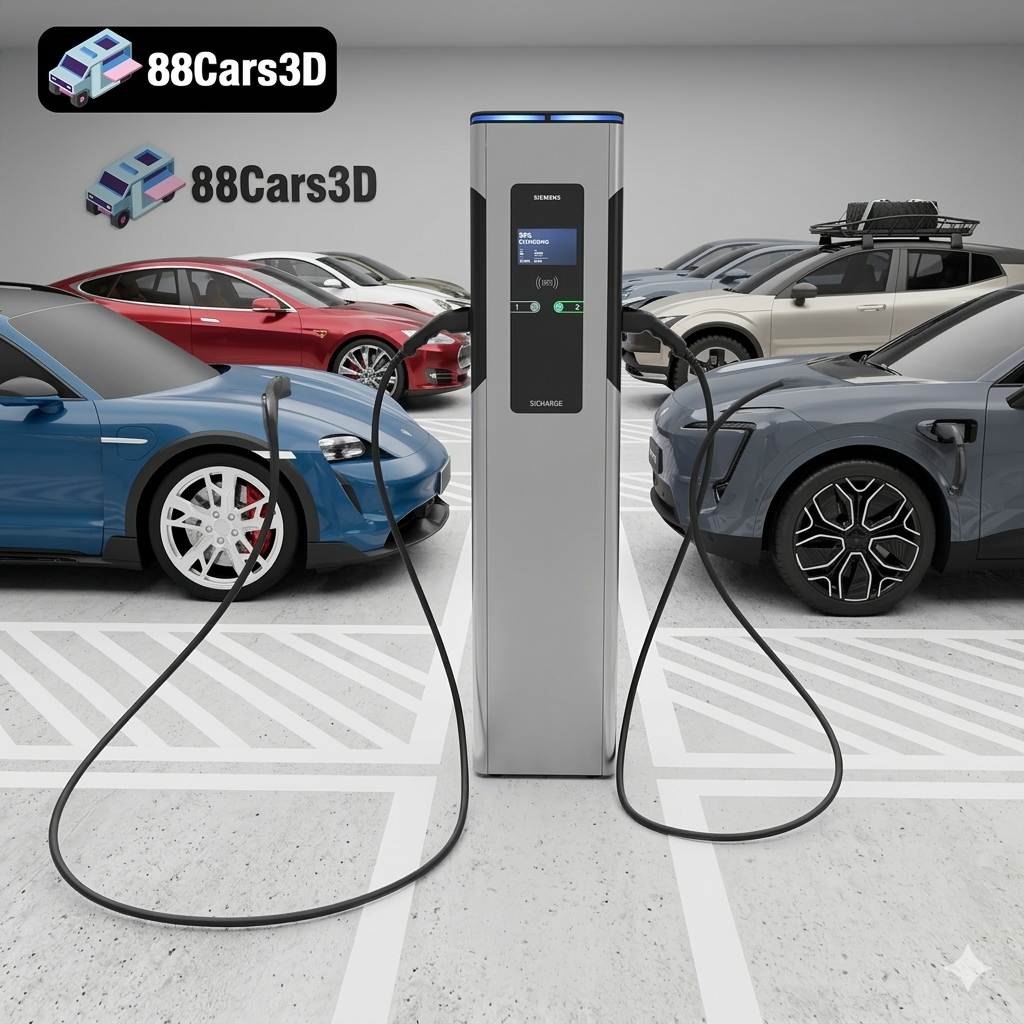
Download the Future of Mobility EV 3D Models Bundle. Includes the Volvo EX30, Tesla Model S, AVATR 11, Porsche Taycan, and a Siemens EV Charger. Save big on this highly optimized 5-in-1 pack for ArchViz and game development!
Price: $89.99

