Get 50% OFF All Premium 3D & STL Models!

“`html
Welcome to the exciting world of 3D printable car models! At 88cars3d.com, we’re passionate about bringing iconic vehicles into your workshop as high-quality STL files, ready for your printer. But even the best-designed models can sometimes encounter issues during the slicing or printing process. This can be due to various factors, including the inherent limitations of the STL file format or minor imperfections in the mesh. Fear not! This comprehensive guide will walk you through the essential steps of cleaning up and optimizing your STL files specifically using Blender, a powerful and free 3D modeling software. We’ll cover everything from understanding common STL issues to performing detailed mesh repairs, ensuring your next print from 88cars3d.com is a resounding success. By the end of this article, you’ll be equipped with the knowledge to tackle common STL problems and achieve professional-quality prints every time.
The STL (STereoLithography) file format, while ubiquitous in 3D printing, is fundamentally a surface representation. It describes the 3D object as a collection of triangular facets, not solid geometry. This simplicity is its strength for rapid prototyping but also its Achilles’ heel, leading to several common issues that can plague your 3D prints. Understanding these imperfections is the first step towards a successful print. When you download models from marketplaces such as 88cars3d.com, you can be confident in the quality, but occasionally, even the most meticulous models might benefit from a little polish, especially after conversion from other formats or for specific printer requirements.
One of the most prevalent problems with STL files is non-manifold geometry. This essentially means the mesh isn’t “watertight” or solid. Common examples include:
These issues directly impact how a slicer interprets the model. A non-manifold mesh can result in missing layers, strange infill patterns, or the entire print failing because the software cannot determine how to fill or support the object.
Each triangle in an STL file has a “normal” – a vector that points perpendicularly outwards from its surface. This normal dictates which side of the triangle is considered “outside” the object. Inverted normals occur when these vectors point inwards instead of outwards. While a human eye might not notice this on a single face, a slicer relies on consistent outward-pointing normals to define the model’s surface. Inverted normals can lead to:
Identifying and correcting inverted normals is crucial for ensuring the slicer can properly generate toolpaths and infill.
Sometimes, an STL file can contain redundant data. Duplicate vertices (points in 3D space that are identical) or duplicate edges (edges that connect the same two vertices) add no value to the mesh and can actually cause problems.
Cleaning up these redundancies streamlines the mesh and ensures smoother processing by your slicing software.
Blender is a free, open-source, and incredibly powerful 3D creation suite. While it’s often associated with animation and rendering, its robust mesh editing capabilities make it an excellent choice for STL file preparation and repair. The learning curve can seem steep initially, but focusing on specific tools for mesh cleaning can make the process manageable, even for beginners. We’ll guide you through the essential setup and navigation for tackling STL issues.
Before diving into repairs, it’s helpful to configure Blender for optimal viewing and manipulation of technical meshes.
These initial settings will provide a cleaner and more accurate workspace for your STL repair tasks.
The core of mesh editing happens in ‘Edit Mode’. Select your imported STL object in Object Mode and press ‘Tab’ to enter Edit Mode. Here, you can manipulate vertices, edges, and faces.
Familiarizing yourself with these fundamental navigation and selection tools will make the subsequent repair processes much more intuitive.
Now, let’s get hands-on with the repair process. This workflow focuses on using Blender’s built-in tools to address the common STL issues we discussed. For complex repairs or when dealing with very large, intricate models, dedicated mesh repair software like Meshmixer or Netfabb might also be considered, but Blender can handle a surprising amount of repair work effectively. Platforms like 88cars3d.com provide models that are generally clean, but this process is invaluable for troubleshooting or adapting models.
First, import your STL file. Go to File > Import > Stl (.stl). Navigate to your file and import it. Once imported, it’s crucial to get a sense of the model’s scale and potential issues.
This initial inspection is vital for identifying problem areas before attempting any repairs.
Blender has excellent tools for finding and fixing non-manifold geometry.
These steps are crucial for ensuring your model is a solid, printable object.
Correcting inverted normals is straightforward once identified.
Consistent normals are fundamental for slicer interpretation.
Beyond basic repairs, several techniques can further optimize your STL files for better printability and quality. These often involve understanding the interplay between the model’s geometry and the slicing process. Whether you’re printing a small car model from 88cars3d.com or a larger prototype, these tips will enhance your results.
The way you orient your model on the print bed significantly impacts print quality, strength, and the need for support structures.
Experimenting with different orientations in your slicer can dramatically improve print outcomes.
Support structures are temporary scaffolding printed to hold up overhanging parts of your model during printing. Proper generation and removal are key to a clean final product.
The goal is to use supports only where absolutely necessary and in a way that facilitates clean removal.
High-polygon models can sometimes overwhelm slicing software or result in excessively large STL files. Mesh decimation reduces the number of triangles while trying to preserve the overall shape.
This technique is useful for managing very complex meshes or when file size is a significant constraint.
Once you’ve cleaned and optimized your STL file in Blender, the final step is exporting it correctly and performing a last check. This ensures maximum compatibility with your slicing software and reduces the chance of surprises when you hit the print button.
Exporting is as crucial as importing. Incorrect settings can reintroduce issues.
These settings ensure that the cleaned and optimized mesh is exported accurately.
Before committing to a long print, always perform a final validation in your slicing software (e.g., Cura, PrusaSlicer, Simplify3D).
This final check acts as your safety net, catching any remaining issues before they waste filament and time.
By following these steps, you can transform potentially problematic STL files into perfectly printable models. The ability to clean and optimize your own files is an invaluable skill for any 3D printing enthusiast, ensuring you get the most out of the amazing printable car models available on platforms like 88cars3d.com. Happy printing!
“`

Texture: Yes | Material: Yes | 3D Printable: Yes. Download the Italian Thoroughbreds Bundle featuring 5 iconic 3D models: Lamborghini Huracán Performante, Ferrari 458 Italia, Lamborghini Urus, Diablo SV, and Maserati GT. Optimized for 4K rendering and 3D printing (STL included). Save 50% with this ultimate Italian vehicle collection.
Price: $199.99

Download the Elite Future Mobility Bundle featuring 4 highly optimized 3D models: Tesla Model S, Avatr 11, Li L9, and Zoox Robotaxi. Perfect for ArchViz, Smart City renders, and game dev. Optimized for Unreal Engine and Blender. Includes .fbx, .obj, and .max formats.
Price: $99

🚗 5 Iconic German Cars (BMW M4 G82, M5 CS, X3, 1 Series & Mercedes E-Class). ✅ Optimized for ArchViz: Ready for Corona & V-Ray. 💰 Save €71 with this limited-time collection! 🚀 Instant Download after purchase.
Price: $119
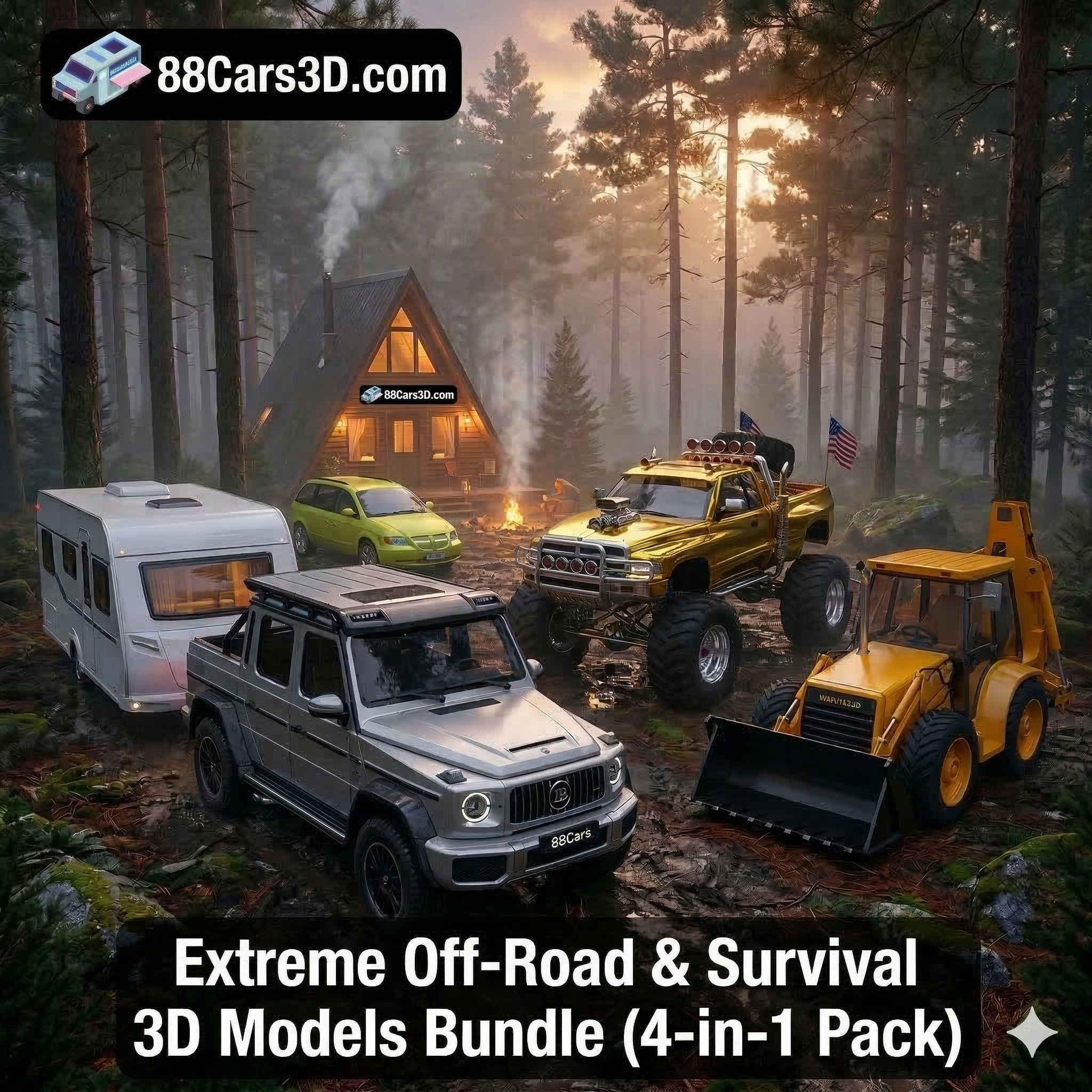
Download the Extreme Off-Road & Survival 3D Models Bundle! Includes the Brabus 800 Adventure, Dodge Ram Bigfoot, Spec Truck, and a Caravan. Save over €210 on this premium 4-in-1 off-grid vehicle pack for ArchViz and game development.
Price: $149.99
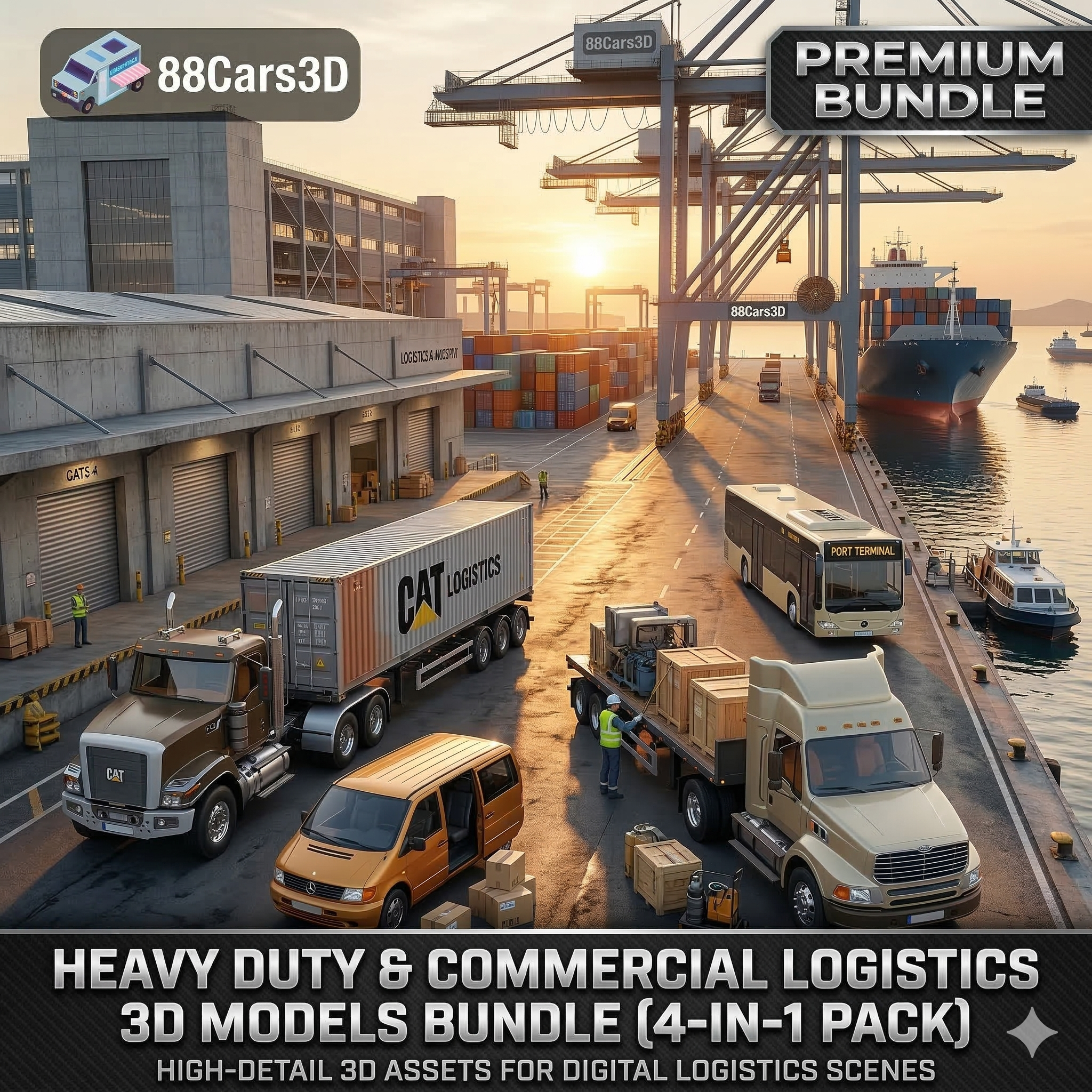
Download the Heavy Duty & Commercial Logistics 3D Models Bundle! Includes the Ford Sterling, Caterpillar CT680, Mercedes Citaro Bus, and Vito Van. Save over €130 on this massive, game-ready 4-in-1 industrial vehicle pack.
Price: $109.99

Download the Ultimate Custom Motorcycles 3D Models Bundle. Includes a Custom Chopper, Ducati 916 Café Fighter, Harley XR1200X, and BMW K100. Perfect premium props for luxury ArchViz garages. Save over €250 today!
Price: $159.99

Download the ultimate JDM Street Racing 3D Models Bundle! Includes the Nissan GT-R, Toyota Supra, Mazda RX-7, Lancer Evo IX, and Honda NSX. Save big on this highly optimized, game-ready 5-in-1 Japanese legend car pack.
Price: $129.99

Download the ultimate American Muscle & Cinematic Classics 3D Models Bundle! Includes the Dodge Charger ’68, Mustang Eleanor GT500, Camaro Z28 ’79, and a custom ’69 Mustang. Save over €240 on this game-ready, premium 4-in-1 pack.
Price: $149.99
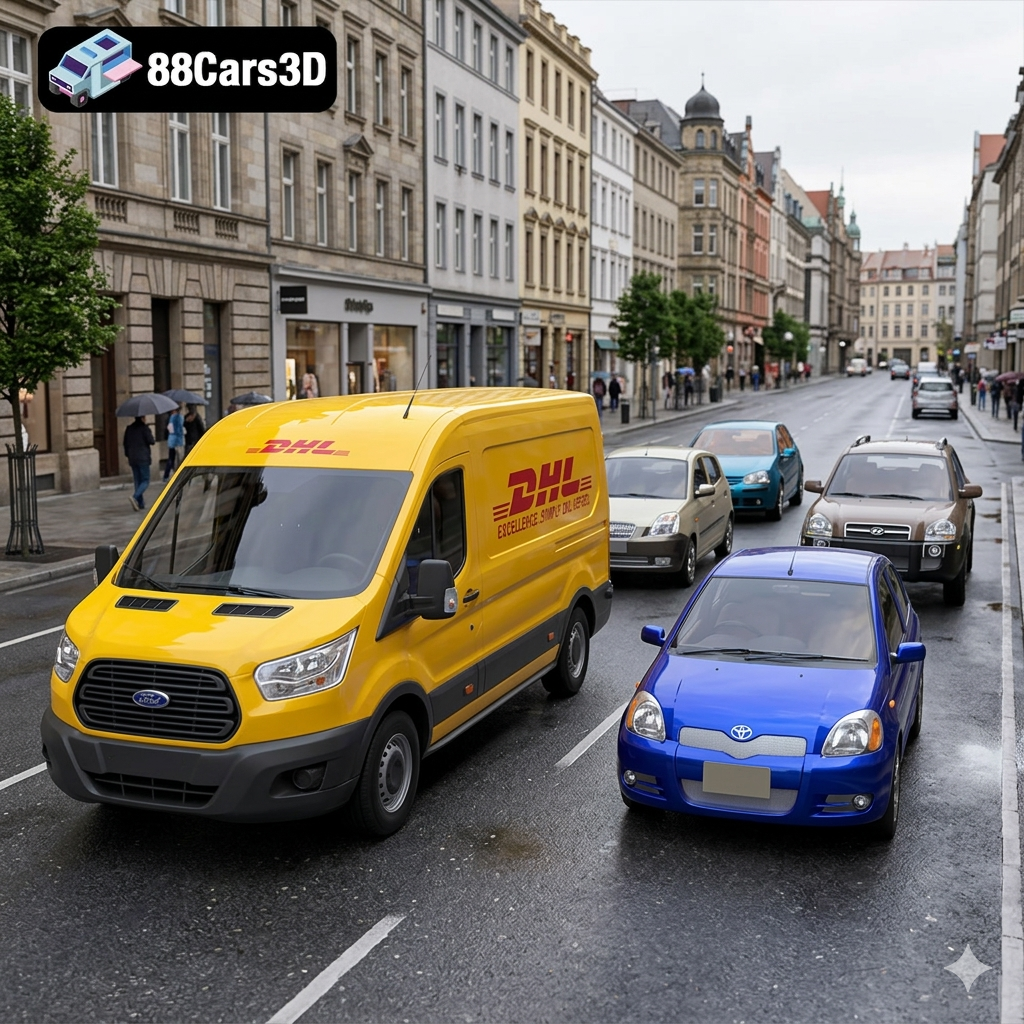
Download the Everyday City Traffic 3D Models Bundle. Includes the VW Golf, Kia Picanto, Hyundai Tucson, Toyota Yaris, and a DHL Ford Transit Van. Save big on this 5-in-1 pack, perfectly optimized for realistic ArchViz streets and game traffic.
Price: $99.99

Download the Future of Mobility EV 3D Models Bundle. Includes the Volvo EX30, Tesla Model S, AVATR 11, Porsche Taycan, and a Siemens EV Charger. Save big on this highly optimized 5-in-1 pack for ArchViz and game development!
Price: $89.99

