Get 50% OFF All Premium 3D & STL Models!

The allure of classic cars transcends generations, captivating enthusiasts with their timeless design, rich history, and the unmistakable roar of a well-tuned engine. From the sweeping lines of a vintage grand tourer to the nimble charm of a compact rally legend, these vehicles represent pinnacles of automotive design and engineering. In the digital age, bringing these icons to life takes on a new dimension through high-fidelity 3D models, allowing designers, developers, and artists to integrate automotive heritage into a vast array of projects.
Few cars embody this spirit of compact performance and iconic design as profoundly as the Mini Cooper S MK1. A true titan of the 1960s, its distinctive silhouette, rally victories, and a personality larger than its diminutive size cemented its place in history. For professionals seeking to evoke nostalgia, create dynamic racing simulations, or produce stunning visualizations, a meticulously crafted digital representation is indispensable. This is precisely where the Mini Cooper S MK1 3D Model from 88cars3d.com becomes an invaluable asset, offering unparalleled detail and versatility for a wide spectrum of creative and technical applications, from cinematic rendering to game development and even 3D printing.
The choice of file format is a critical decision in any 3D workflow, directly impacting compatibility, feature retention, and ease of use across different software and platforms. The Mini Cooper S MK1 3D Model is provided in a comprehensive suite of formats, ensuring maximum flexibility for any project. Understanding the nuances of each is essential for optimizing your pipeline.
The .blend format is Blender’s native file type, offering a complete and fully editable scene. When you download the Mini Cooper S MK1 3D Model in .blend, you receive not just the raw geometry but also materials, textures, lighting setups, camera positions, and any scene-specific configurations (e.g., modifiers, animation data). This format is ideal for users deeply integrated into the Blender ecosystem, providing the most direct access to all aspects of the model for extensive customization, rigging, or animation without any data loss from conversion. It’s the perfect starting point for artists who want to delve into the model’s construction and modify it to their exact specifications for high-fidelity renders or complex scene compositions.
.fbx (Filmbox) stands as one of the most widely adopted proprietary file formats for 3D content exchange, particularly in game development, film production, and real-time visualization. It excels at preserving not only geometry but also materials, textures, rigging, skinning, and animation data across various software applications like Autodesk Maya, 3ds Max, Blender, Unity, and Unreal Engine. For the Mini Cooper S MK1, the .fbx variant ensures that aspects like separate wheels and steering components, crucial for animation, are seamlessly transferred. It’s the go-to format for robust asset pipelines, offering a balance of compatibility and feature richness.
The .obj (Wavefront OBJ) format is a venerable and widely supported option, primarily known for its excellent portability of geometry data. It stores vertex positions, UV coordinates, normals, and material group information. While it doesn’t typically embed animation or advanced scene data, its simplicity makes it a universal choice for basic mesh transfer between virtually any 3D software. For the Mini Cooper S MK1 3D Model, the .obj version is perfect for scenarios where you need clean geometry for sculpting, retopology, or importing into applications that might not support more complex formats, serving as a reliable backbone for cross-software compatibility.
.glb (GLB, the binary version of glTF) is a relatively newer format specifically designed for efficient transmission and loading of 3D scenes and models in web, augmented reality (AR), and virtual reality (VR) environments. It packages geometry, materials, textures, and animations into a single, compact file, making it ideal for rapid deployment in browser-based viewers, mobile AR apps, and immersive VR experiences. The Mini Cooper S MK1 in .glb format is perfect for interactive product showcases, virtual showrooms, or any application requiring lightweight, fast-loading 3D content without sacrificing visual quality, a crucial asset for AR/VR visualization projects.
The .stl (Stereolithography) format is the undisputed industry standard for 3D printing. It represents 3D objects as a collection of unconnected triangular facets, defining only the surface geometry without color, texture, or other properties. While seemingly simplistic, this format is universally understood by 3D slicers and printers. The Mini Cooper S MK1 provided as an .stl ensures manifold geometry and a watertight mesh, which are essential prerequisites for successful physical production, allowing users to transform the digital model into a tangible collectible or prototype.
The .ply (Polygon File Format) is another format that describes a 3D object as a polygonal mesh. Unlike .stl, .ply can also store color, transparency, texture coordinates, and even reliability information for each polygon. It’s often used in academic, engineering, and CAD applications for scan data, scientific visualization, and precise mesh analysis. While less common in general artistic workflows, its inclusion for the Mini Cooper S MK1 caters to specialized projects requiring robust, precision-focused mesh data, potentially for reverse engineering or detailed technical analysis.
The .unreal format signifies an asset optimized and prepared specifically for Unreal Engine. This could involve pre-configured material instances, collision meshes, LODs (Levels of Detail), and potentially even basic blueprints for interactive elements. This format is a significant time-saver for game developers and real-time visualizers working within the Unreal ecosystem, as it minimizes the setup time required after import, ensuring the Mini Cooper S MK1 is ready to be dropped into a game level or cinematic sequence with minimal fuss, maximizing performance and visual fidelity.
Similar to .blend for Blender, the .max format is the native file type for Autodesk 3ds Max, a powerful 3D modeling, animation, and rendering software. This file contains the complete scene, including geometry, materials, textures, lights, cameras, and any applied modifiers or animation data within the 3ds Max environment. For professionals utilizing 3ds Max for architectural visualization, product design, or high-end automotive rendering, the .max version of the Mini Cooper S MK1 3D Model provides the most direct and uncompromised access to the model, allowing for comprehensive scene creation and complex animation setups.
Achieving realism in 3D automotive models requires meticulous attention to detail, not just in aesthetics but also in underlying technical construction. The Mini Cooper S MK1 3D Model stands out due to its adherence to these principles, offering a foundation that is both visually authentic and technically robust.
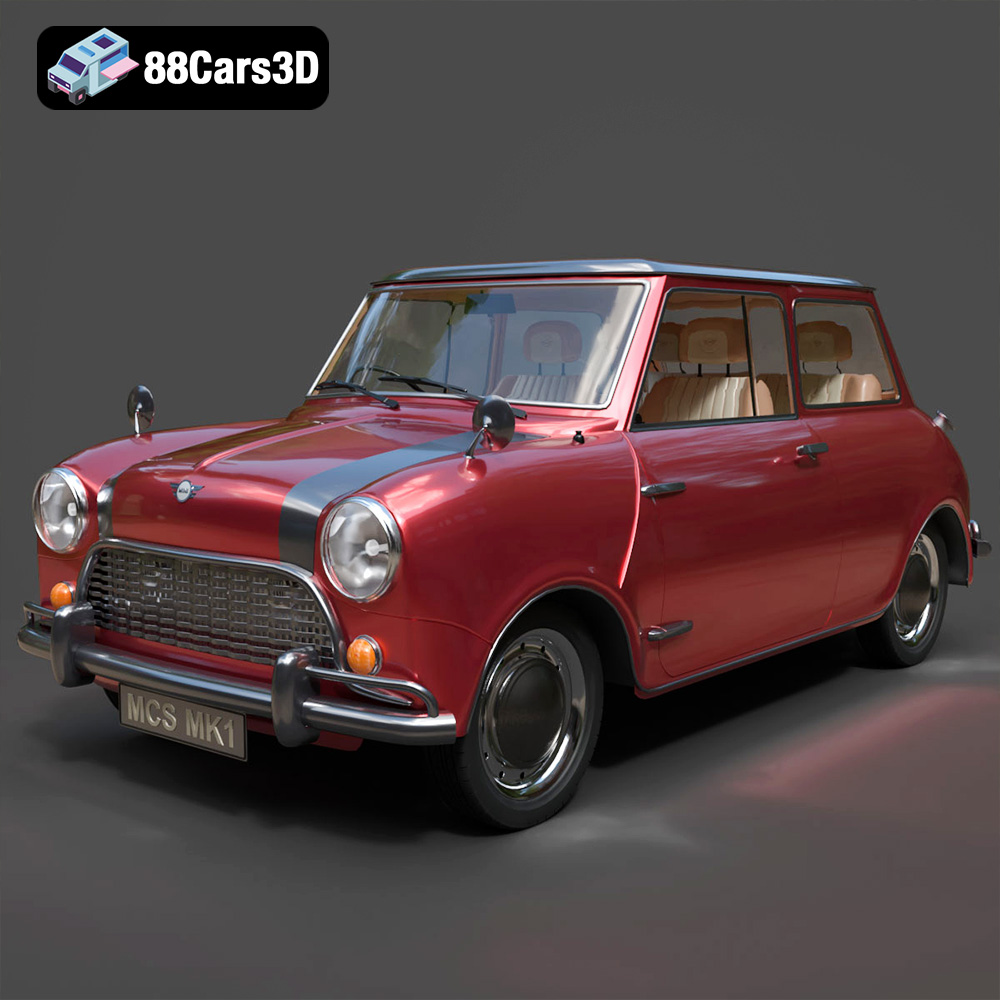
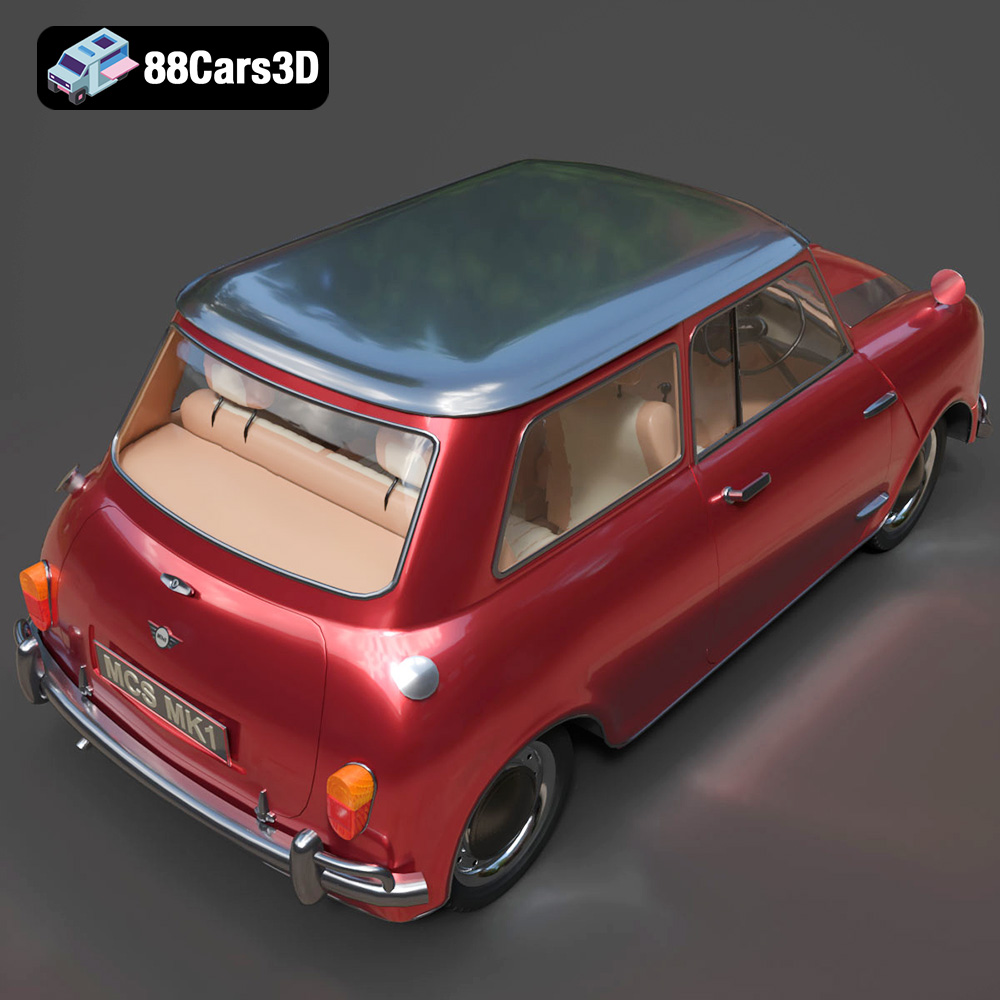
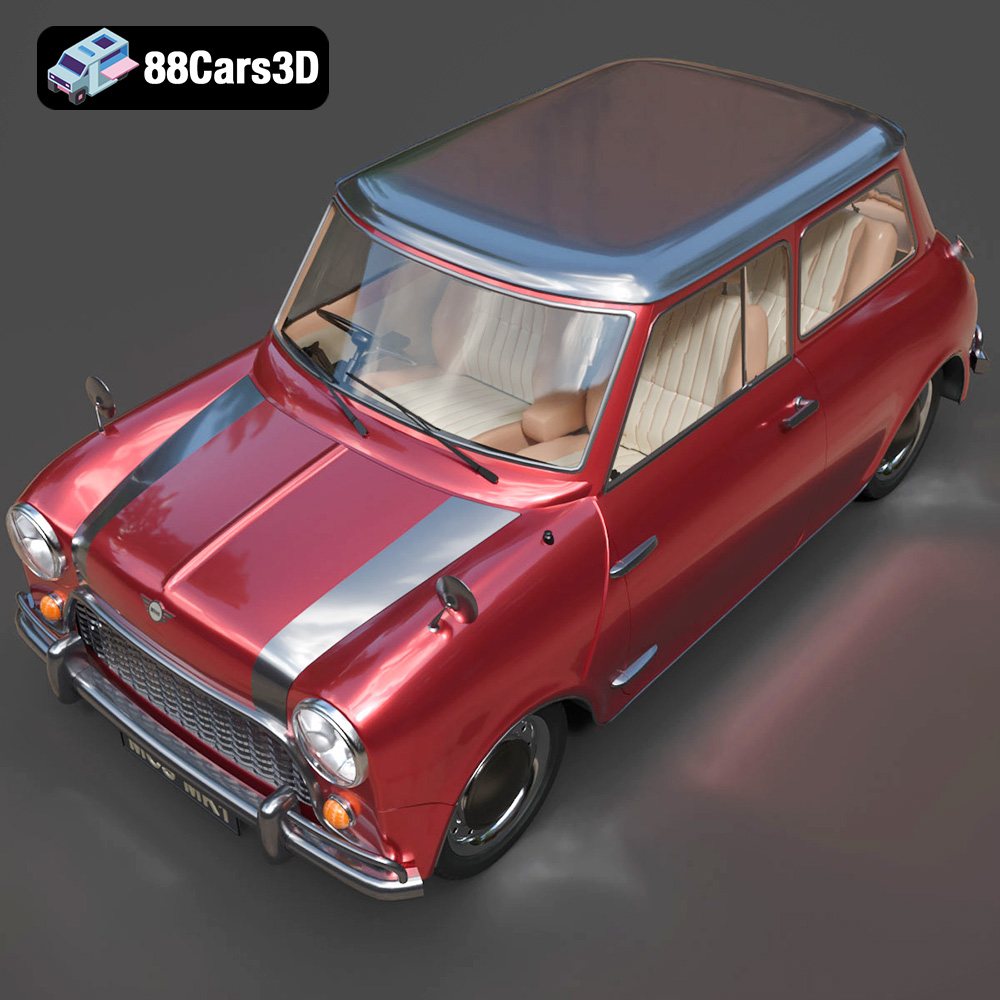
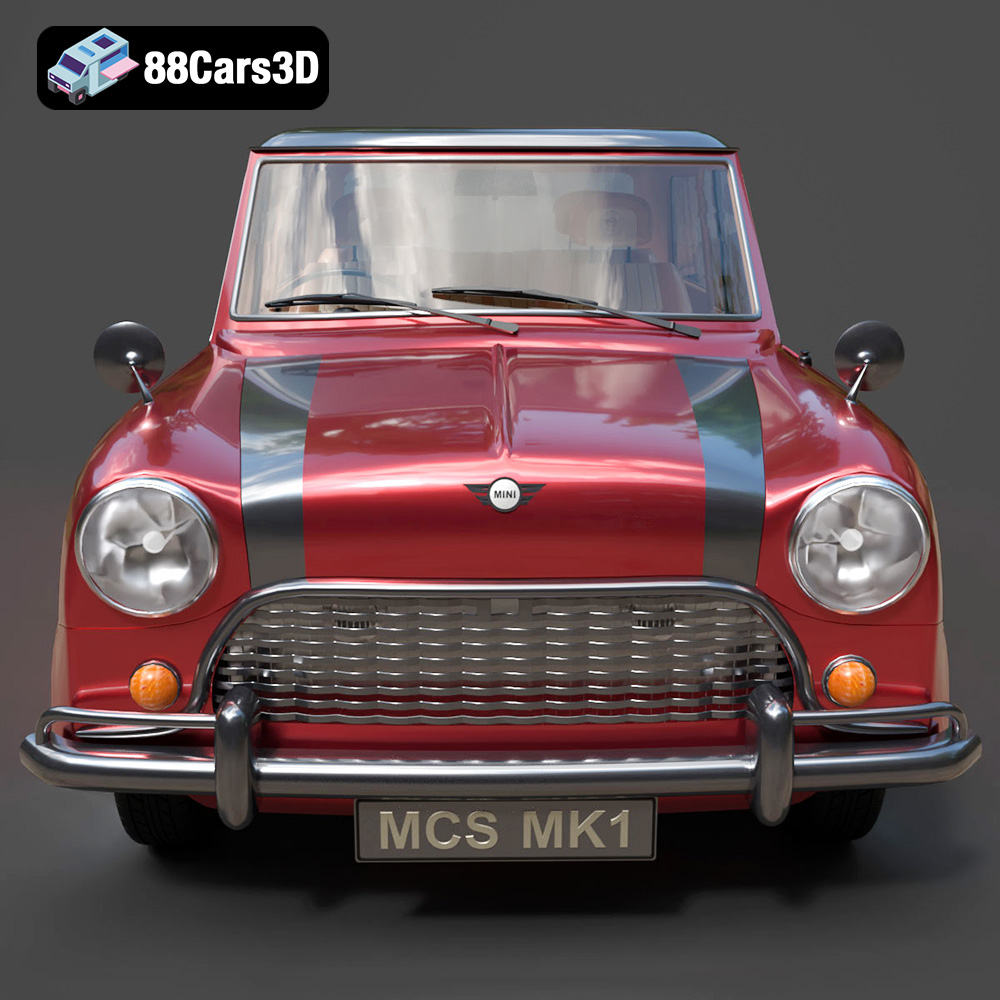
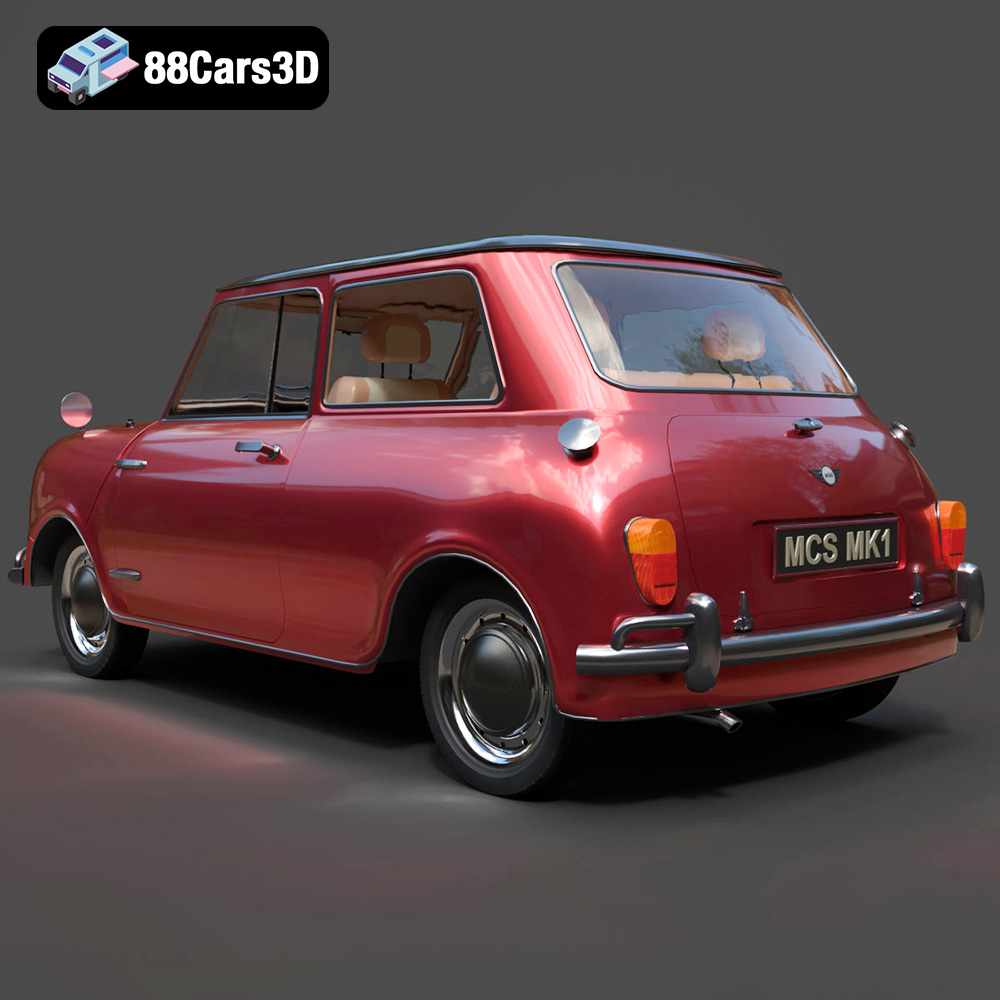
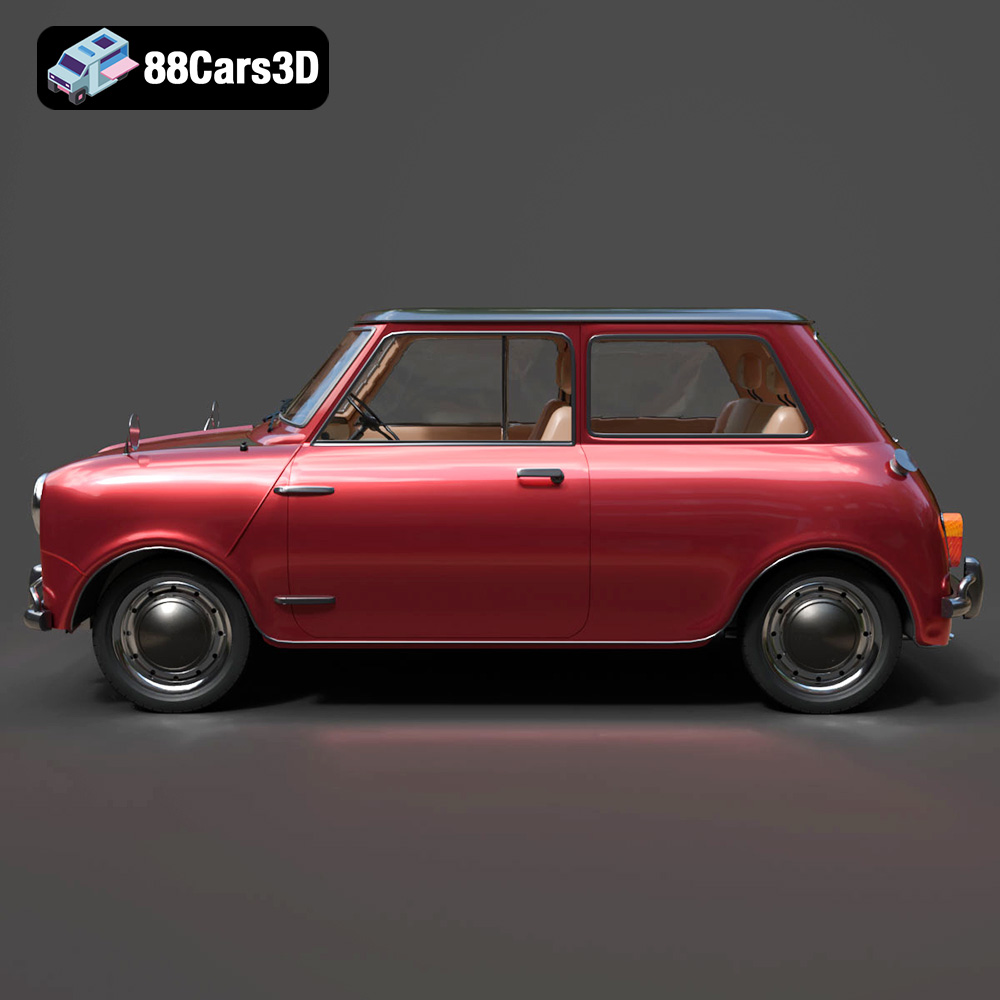
The Mini Cooper S MK1 is defined by its unmistakable exterior, and this 3D model captures every nuance with striking accuracy. From the characteristic rounded compact silhouette that made it a design icon to the precise MK1 Cooper S body proportions, the model faithfully recreates the vehicle’s historical presence. Key details such as the distinctive chrome front and rear bumpers, the signature circular headlights, and the compact grille design are all rendered with high fidelity. Furthermore, optional racing stripe detailing is included, allowing for quick customization to evoke its storied motorsport heritage. The vintage-style small alloy wheels are modeled with precision, and transparent glass materials and mirror detailing enhance the realism, ensuring that reflections and light interplay correctly in rendered scenes. Crucially, components like the wheels and steering are separated, providing essential control for animators to create realistic driving sequences.
The interior of the Mini Cooper S MK1 was as much a part of its charm as its exterior, and this 3D model meticulously recreates that period authenticity. The retro dashboard with its iconic central speedometer is faithfully reproduced, immediately transporting viewers back to the 1960s. The classic steering wheel design, complete with its thin rim and characteristic spokes, adds to the vintage feel. Furthermore, the model includes detailed bucket seat geometry with period styling, along with accurate representations of the gear shifter and pedal detailing. Door panels and trim are also represented, providing a comprehensive interior for close-up renders or immersive first-person experiences. The geometry for these interior elements is optimized, striking a perfect balance between visual realism for high-quality renders and efficiency for real-time engine performance.
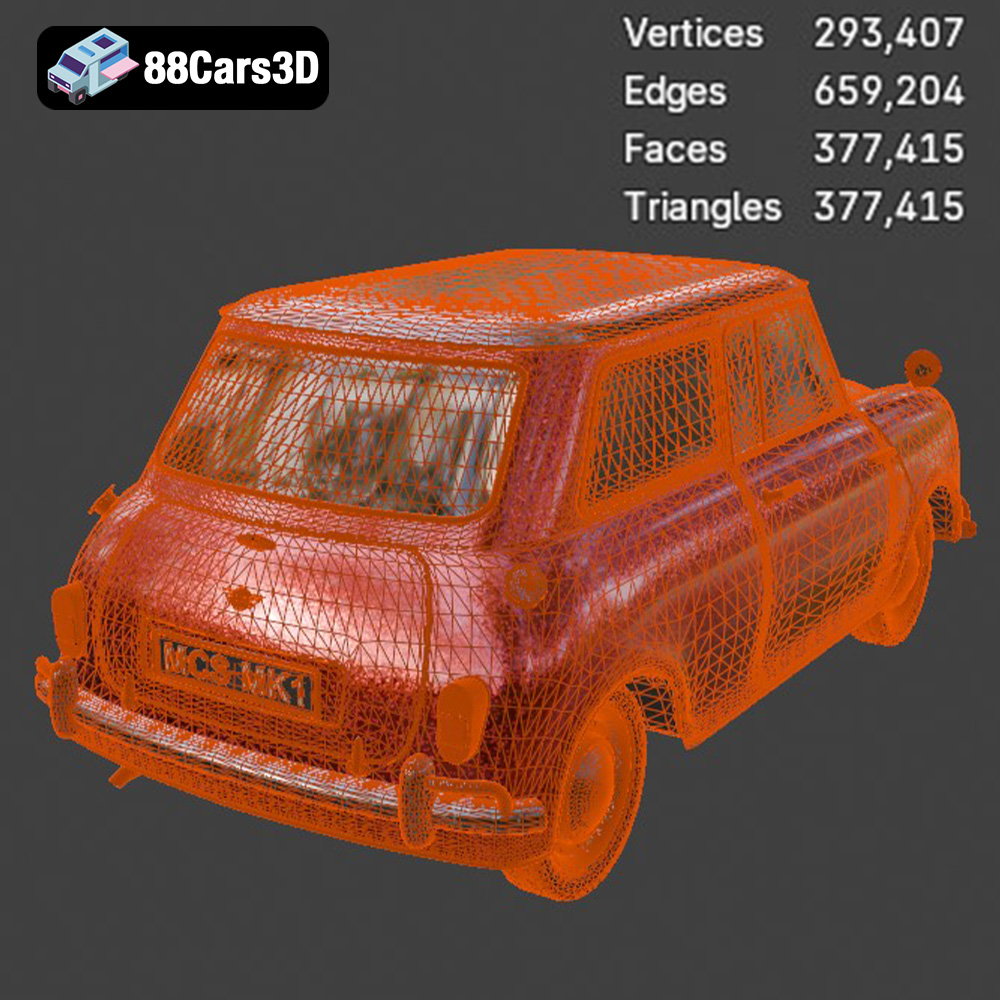
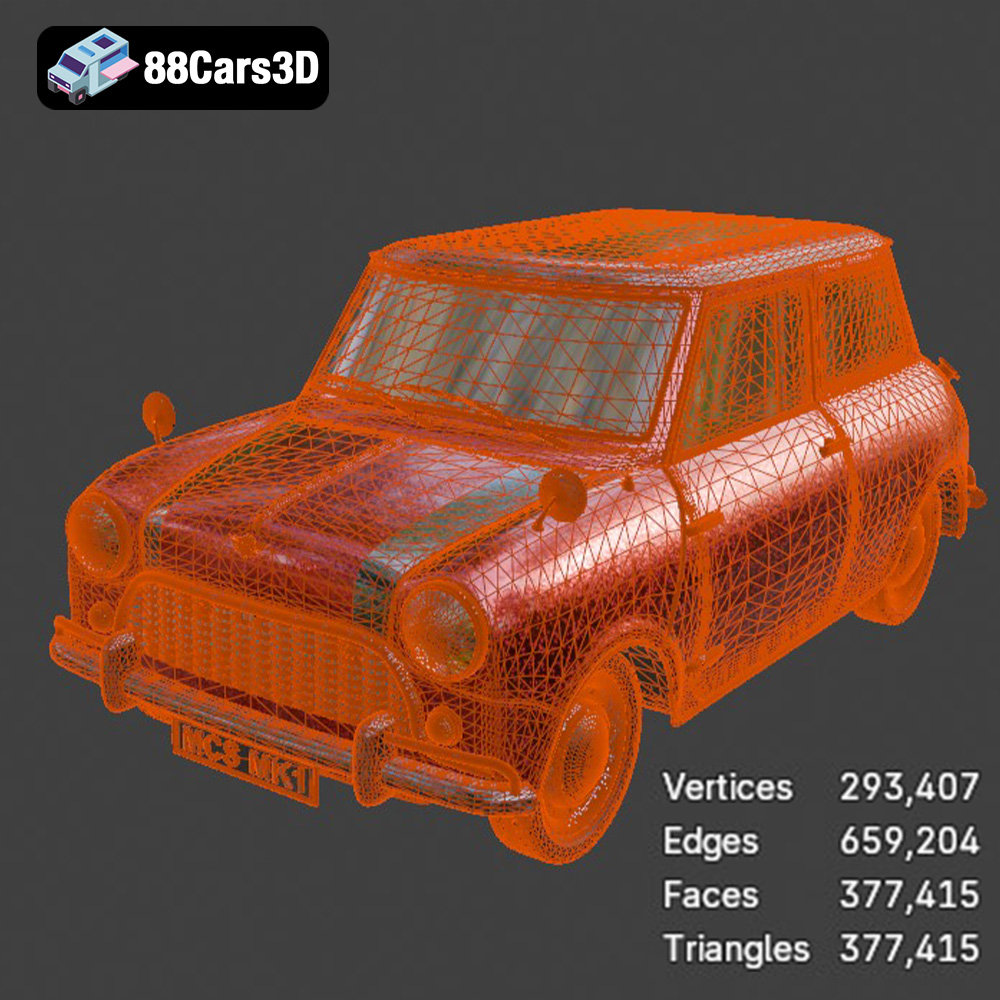
Beyond visual appeal, the technical underpinnings of a 3D model dictate its performance and flexibility. The Mini Cooper S MK1 3D Model boasts a clean and well-organized mesh structure, which is paramount for smooth subdivision, easy texturing, and trouble-free integration into various pipelines. Real-world scale accuracy ensures that the model fits seamlessly into architectural visualizations, game environments, or simulation projects without requiring manual resizing. Proper pivot setup for steering and wheel rotation is a critical technical advantage, directly enabling realistic animation with minimal effort. The optimized polygon flow is a testament to careful craftsmanship, ensuring that the model maintains realism without being overly dense, making it suitable for both high-end cinematic rendering and performance-sensitive game engine deployments. This dedication to technical excellence ensures the model is not just beautiful, but also highly functional.
The versatility of a well-crafted 3D model is its greatest asset. The Mini Cooper S MK1 3D Model from 88cars3d.com is engineered to serve a broad spectrum of professional applications, enabling creators to integrate this classic icon into diverse digital experiences.
For artists and marketing professionals, the Mini Cooper S MK1 3D Model is an unparalleled tool for creating stunning visual content. Its high level of detail makes it ideal for classic car marketing campaigns, heritage automotive visuals, and retro promotional media. Imagine a cinematic render showcasing the car gleaming under a streetlamp in a rain-slicked London alley, or a series of promotional images highlighting its iconic features for a classic car show. Using software like 3ds Max, Blender, or Maya with advanced renderers such as V-Ray, Corona, or Cycles, artists can achieve photorealistic results, breathing life into the digital asset. This model serves as the perfect foundation for generating high-resolution images and animations that captivate and inform.
The demand for realistic and engaging vehicles in game development is constant. The Mini Cooper S MK1 3D Model, with its optimized geometry and proper pivot setups, is perfectly suited for vintage racing games, rally simulators, and open-world classic car environments. Its availability in formats like .fbx and .unreal ensures seamless integration into popular game engines like Unreal Engine and Unity. Game developers can leverage its accurate proportions and separate components for dynamic physics simulations, allowing players to experience the nimble handling and distinctive character of the original car. Whether it’s a nostalgic arcade racer or a highly detailed rally simulation, this model provides an authentic and performant game asset.
Augmented Reality (AR) and Virtual Reality (VR) are transforming how we interact with digital content. The Mini Cooper S MK1 3D Model is an excellent candidate for creating immersive classic car showroom experiences and interactive exhibitions. Using formats like .glb, optimized for web and real-time deployment, developers can build AR applications that place the virtual Mini Cooper in real-world environments or VR experiences that allow users to virtually step inside the car, explore its detailed interior, and even customize its appearance. This offers a powerful tool for educational purposes, museum exhibits, or even virtual sales environments, providing an unparalleled level of engagement with automotive history.
Beyond entertainment, the accurate representation of the Mini Cooper S MK1 makes it useful for various simulation and training scenarios. It can be integrated into automotive history visualization projects, allowing students or enthusiasts to explore the vehicle’s design evolution and impact. For motorsport heritage projects, the model can serve as a key component in recreating historical races or understanding the engineering principles behind its rally success. Its real-world scale and detailed components provide a solid basis for technical demonstrations or conceptual simulations, aiding in both education and research.
One of the most exciting capabilities of the Mini Cooper S MK1 3D Model is its readiness for 3D printing. This transforms a digital asset into a physical collectible, merging the virtual and tangible realms.
The inclusion of an .stl format for the Mini Cooper S MK1 3D Model means it’s designed to be physically manufactured. The .stl format ensures a manifold, watertight mesh, which is a fundamental requirement for successful 3D printing. Users can take this digital file and, with the aid of a 3D printer and slicing software, bring a scaled-down version of this iconic vehicle into existence. Recommended scales such as 1:32, 1:24, 1:18, or 1:12 allow for the creation of miniature classic car models perfect for display, diorama building, or even as unique gifts. The ability to produce a tangible representation of a classic vehicle adds immense value, bridging the gap between digital design and physical craftsmanship.
To achieve the best results when 3D printing the Mini Cooper S MK1, specific settings and careful post-processing are crucial. Recommended layer heights, such as 0.08–0.16 mm, ensure a smooth surface finish, especially important for the car’s iconic curves. A wall thickness of 1.2–2.0 mm provides structural integrity, while an infill of 15–25% offers a good balance between material usage and model strength. Supports are typically required for intricate details like mirrors, bumpers, and undercarriage components to prevent warping and ensure fidelity during the printing process. Proper print orientation, with the body angled for smooth curves and wheels printed separately, further enhances print quality. After printing, post-processing is key to a professional finish: sanding to remove layer lines, applying primer for an even surface, followed by a gloss vintage paint finish. Enthusiasts can even add optional racing decals to fully personalize their miniature rally legend, creating a truly bespoke collectible piece.
A high-quality 3D model is only truly valuable if it can be efficiently integrated into existing professional pipelines. The Mini Cooper S MK1 3D Model is designed with this principle in mind, offering flexibility for various software environments and production needs.
For artists focusing on high-end automotive rendering, the .max or .blend files provide an excellent starting point. In a 3ds Max workflow, the model can be imported directly, preserving all its scene data. The first step typically involves setting up a realistic lighting environment, often utilizing an HDRI (High Dynamic Range Image) for natural illumination and reflections, complemented by studio lights for emphasis. Applying PBR (Physically Based Rendering) materials is crucial for achieving photorealism – meticulously crafting the car paint with metallic flakes, chrome reflections, and transparent glass refractions. Artists can then define camera angles, depth of field, and even animate elements like wheel rotation or steering with the pre-set pivots to create compelling static renders or dynamic cinematic sequences using renderers like V-Ray or Corona. Similarly, Blender users can leverage Cycles or Eevee, utilizing the native .blend file to immediately begin rendering and animating within their familiar environment.
Game developers utilizing Unreal Engine will find the .fbx or .unreal formats incredibly beneficial. Upon import, the model can be quickly assessed for performance optimization. This might involve generating automatic or custom collision meshes for realistic in-game physics, and creating multiple LODs (Levels of Detail) to ensure optimal performance across different viewing distances without sacrificing visual quality up close. Materials can be configured within Unreal Engine, often by creating material instances from a master material, allowing for easy customization of body color, metallic properties, and other visual attributes directly within the engine. Furthermore, basic blueprints can be set up to enable interactive elements such as opening doors, working headlights, or even rudimentary driving mechanics, making the Mini Cooper S MK1 a truly engine-ready game asset that streamlines the development process for any real-time project.
The Mini Cooper S MK1 3D Model provides an ideal foundation, but its true power lies in the creative freedom it offers. Users are empowered to change the body color and roof color contrast, experimenting with classic two-tone schemes or modern interpretations. The option to add racing stripes or rally numbers allows for immediate transformation into a legendary motorsport vehicle. Modifying wheel styles and tire setups can drastically alter the car’s character, from period-correct street performance to rugged rally readiness. Adjusting ride height for a low street stance or a lifted rally look further enhances customization. Even configuring lighting for retro city scenes or dramatic rally stages provides endless creative possibilities. This level of customizability ensures that the model can be adapted to fit virtually any creative vision, making it an incredibly versatile asset for any designer or developer.
The Mini Cooper S MK1 is more than just a car; it’s a cultural icon, a symbol of compact performance and timeless design. The Mini Cooper S MK1 3D Model from 88cars3d.com captures this essence with exceptional technical fidelity and artistic precision. Whether you are an automotive renderer striving for photorealism, a game developer building an immersive racing experience, an AR/VR creator crafting interactive historical showcases, or a hobbyist bringing digital designs to life through 3D printing, this model offers the quality and versatility you need.
With its meticulously detailed exterior and interior, optimized mesh structure, and availability in a comprehensive range of file formats including .blend, .fbx, .obj, .glb, .stl, .ply, .unreal, and .max, it is truly an indispensable asset. It streamlines complex workflows, opens doors to creative customization, and empowers professionals to integrate a piece of automotive history into their contemporary projects. Explore the possibilities and elevate your creations with this exceptional 3D car model, available now at 88cars3d.com.
The Mini Cooper S MK1 3D Model is a high-detail digital recreation of the legendary compact performance car that became an icon of 1960s British automotive design. Known for its lightweight construction, racing heritage, and distinctive compact proportions, the MK1 Cooper S gained worldwide recognition through rally victories and motorsport success. This 3D model accurately represents the classic rounded body shape, chrome bumpers, compact grille, circular headlights, racing stripe options, small-diameter wheels, and vintage interior layout. Designed with clean topology and real-world scale accuracy, it is ideal for rendering, animation, automotive visualization, game development, and AR/VR experiences. Perfect for classic city scenes, rally environments, retro-themed projects, cinematic productions, and vintage racing simulations.
$39.99