Get 50% OFF All Premium 3D & STL Models!

The roar of a radial engine, the unmistakable silhouette of a biplane against a dawn sky, and the echoes of history – these are the powerful evocations that historical aircraft models bring to life. For 3D artists, game developers, simulation creators, and aviation enthusiasts, the ability to accurately recreate iconic machines of the past is invaluable. It’s not just about building a mesh; it’s about capturing the essence of an era, the engineering marvel, and the stories embedded within its very structure.
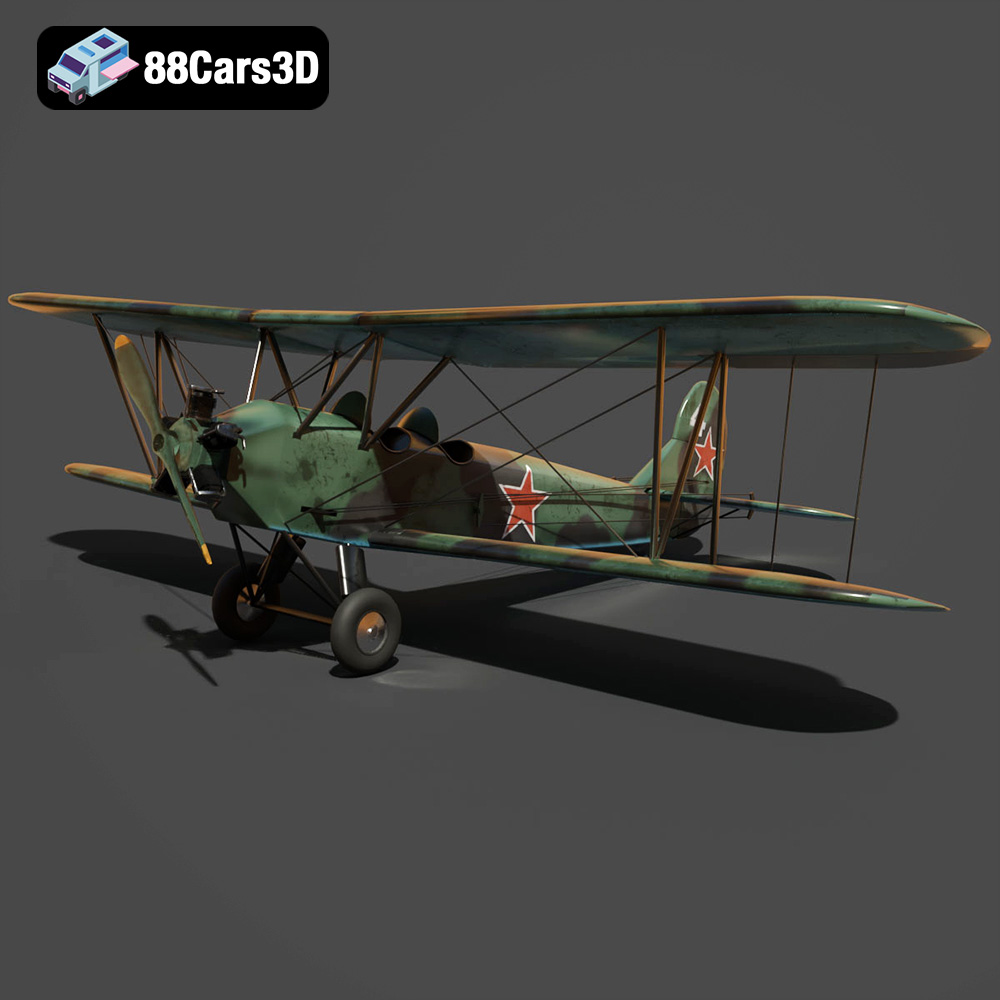
Among the countless legendary aircraft, the Polikarpov Po-2 stands out. Known affectionately as the “Kukuruznik” (corn-duster), this versatile Soviet biplane played a pivotal role in training, reconnaissance, and light combat during the mid-20th century. Its simple yet robust design made it one of the most produced biplanes in history, leaving an indelible mark on aviation. Now, this storied aircraft is meticulously brought into the digital realm as the Polikarpov Po-2 3D Model, a high-detail asset perfect for a multitude of professional applications, from stunning cinematic renders to immersive game environments and even precise 3D prints.
This comprehensive model offers unparalleled accuracy and technical advantages, serving as a cornerstone for projects requiring authentic historical representation. Whether you’re crafting a historically accurate flight simulator, designing a captivating museum exhibit, or simply admiring the intricate details of aviation history, this 3D model provides the fidelity and flexibility needed to achieve your vision. Let’s delve into the technical aspects that make such an asset indispensable in today’s demanding creative landscape.
In the world of 3D modeling, the choice of file format is as critical as the model itself. Each format is designed with specific use cases, compatibility, and technical advantages in mind. The Polikarpov Po-2 3D Model, available on 88cars3d.com, comes equipped with a comprehensive suite of formats, ensuring seamless integration into virtually any professional pipeline.
The .blend format is the native file type for Blender, a powerful open-source 3D creation suite. When you acquire a .blend file, you gain access to a fully editable Blender scene, complete with materials, textures, lighting setups, and any associated rigging or animation. This is ideal for artists who primarily work in Blender, offering maximum flexibility for customization, material adjustments, scene composition, and rendering with Cycles or Eevee. It preserves all the scene data, modifiers, and intricate node setups, allowing for deep dives into the model’s construction and optimization.
.fbx (Filmbox) is a proprietary file format owned by Autodesk, widely recognized as an industry standard for 3D data exchange. It is particularly well-suited for transferring models between different 3D software applications and, crucially, into real-time game engines like Unreal Engine and Unity. FBX supports not only mesh data but also materials, textures, animations, rigging, and camera information. Its robustness makes it the go-to choice for complex animated 3D car models and aircraft assets, ensuring that all components of the Polikarpov Po-2, including its separate propeller and control surfaces, retain their animation capabilities when imported into your engine of choice.
The .obj (Wavefront OBJ) format is one of the most universally compatible 3D file formats, primarily storing geometry data—vertices, normals, texture coordinates, and faces. While it typically requires accompanying .mtl (material) and texture files, its simplicity ensures that almost any 3D software can import and interpret its mesh data. OBJ is excellent for cross-software compatibility when the primary concern is the raw geometric structure of the model, making it a reliable fallback for artists working with diverse toolsets or needing a clean mesh for sculpting or retopology.
.glb (GLB-file) is the binary representation of glTF (GL Transmission Format), an open-standard 3D file format optimized for efficient transmission and loading of 3D scenes and models by applications. GLB files encapsulate textures and other assets directly within the single file, making them incredibly convenient for AR, VR, and browser-based 3D applications. For interactive historical visualizations or showcasing the Polikarpov Po-2 in a web gallery, the .glb format offers excellent performance and ease of deployment.
The .stl (Stereolithography) format is the undisputed standard for 3D printing. It represents a 3D model as a series of connected triangles (a triangular mesh), defining only the surface geometry without color, texture, or other CAD attributes. Its simplicity makes it universally accepted by 3D printers and slicing software. For those wishing to bring the Polikarpov Po-2 into the physical world as a collectible scale model, the .stl format is essential, ensuring the manifold geometry necessary for a successful print.
.ply (Polygon File Format or Stanford Triangle Format) is another common format for storing 3D data from 3D scanners. It supports properties such as color, transparency, surface normals, and texture coordinates, often used for precision mesh capture and analysis, particularly in CAD or scientific visualization contexts. While less common for direct rendering than FBX or OBJ, it offers a robust alternative for specific geometric processing needs.
While not a universal file extension in the same vein as .fbx or .obj, the inclusion of an .unreal asset typically signifies a pre-configured and optimized package specifically tailored for Unreal Engine. This often means the model has already been imported, set up with appropriate materials, textures, and possibly LODs (Levels of Detail), and is ready for drag-and-drop integration into an Unreal project. This dramatically streamlines the workflow for game developers and real-time visualization specialists using the engine.
Finally, the .max format is the native file type for Autodesk 3ds Max, a powerful 3D modeling, animation, and rendering software widely used in architectural visualization, game development, and film. Like .blend, a .max file provides access to the full project scene, allowing for complete editing, material manipulation, animation setup, and high-fidelity rendering using engines like V-Ray or Corona. It ensures that 3ds Max users can fully leverage the model’s detailed construction and technical advantages.
Understanding these formats empowers artists and developers to choose the right tool for the job, ensuring that the Polikarpov Po-2 3D Model can be integrated into any workflow with maximum efficiency and fidelity.
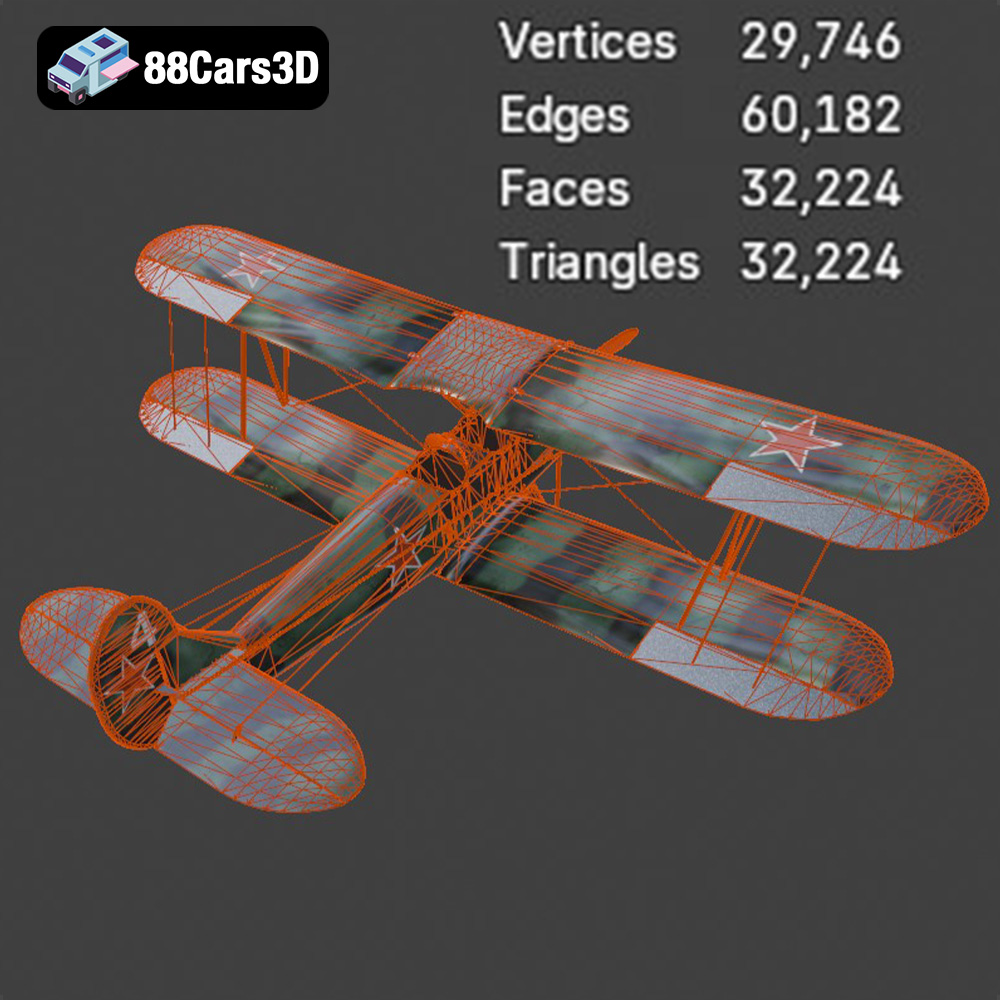
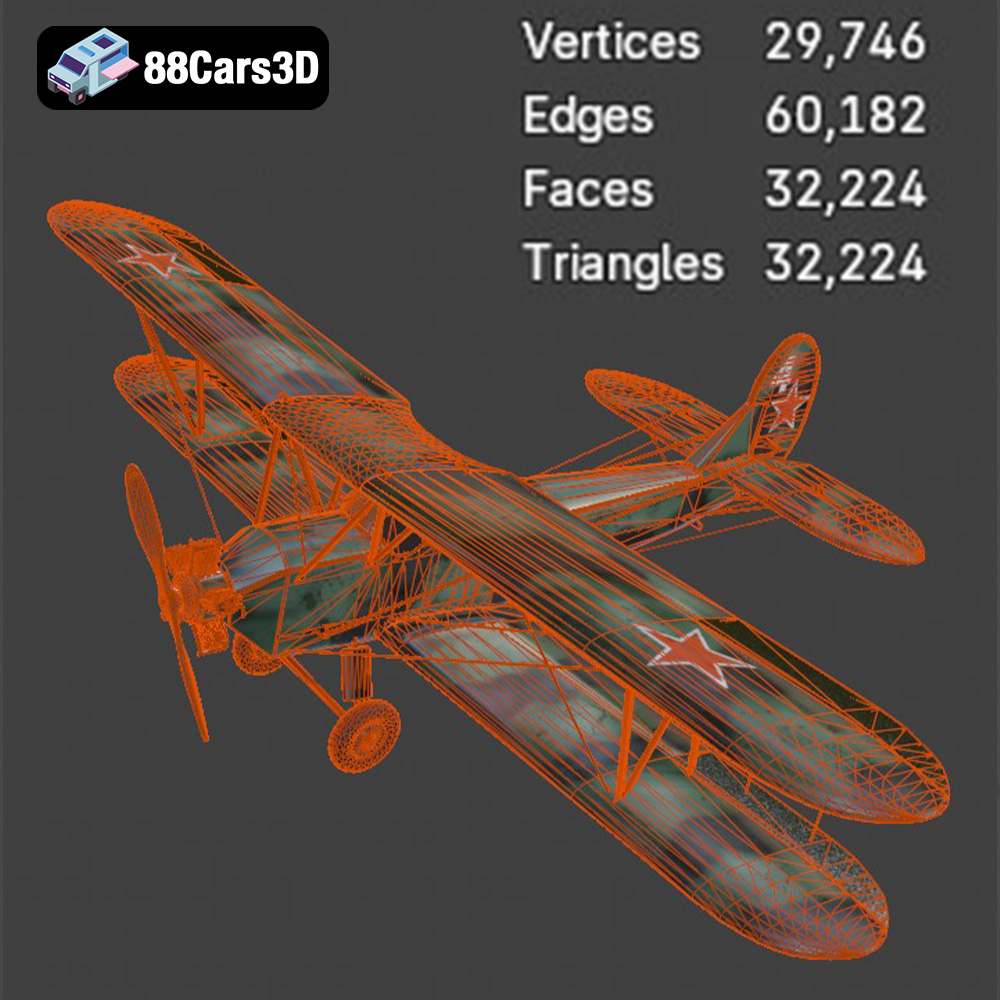
Creating a truly accurate historical 3D aircraft model like the Polikarpov Po-2 goes beyond simply replicating its visible form. It involves meticulous research, a deep understanding of aerodynamics, and the application of advanced 3D modeling techniques to ensure both visual fidelity and technical usability. The challenge lies in translating complex real-world engineering into an optimized digital asset that performs flawlessly across diverse applications.
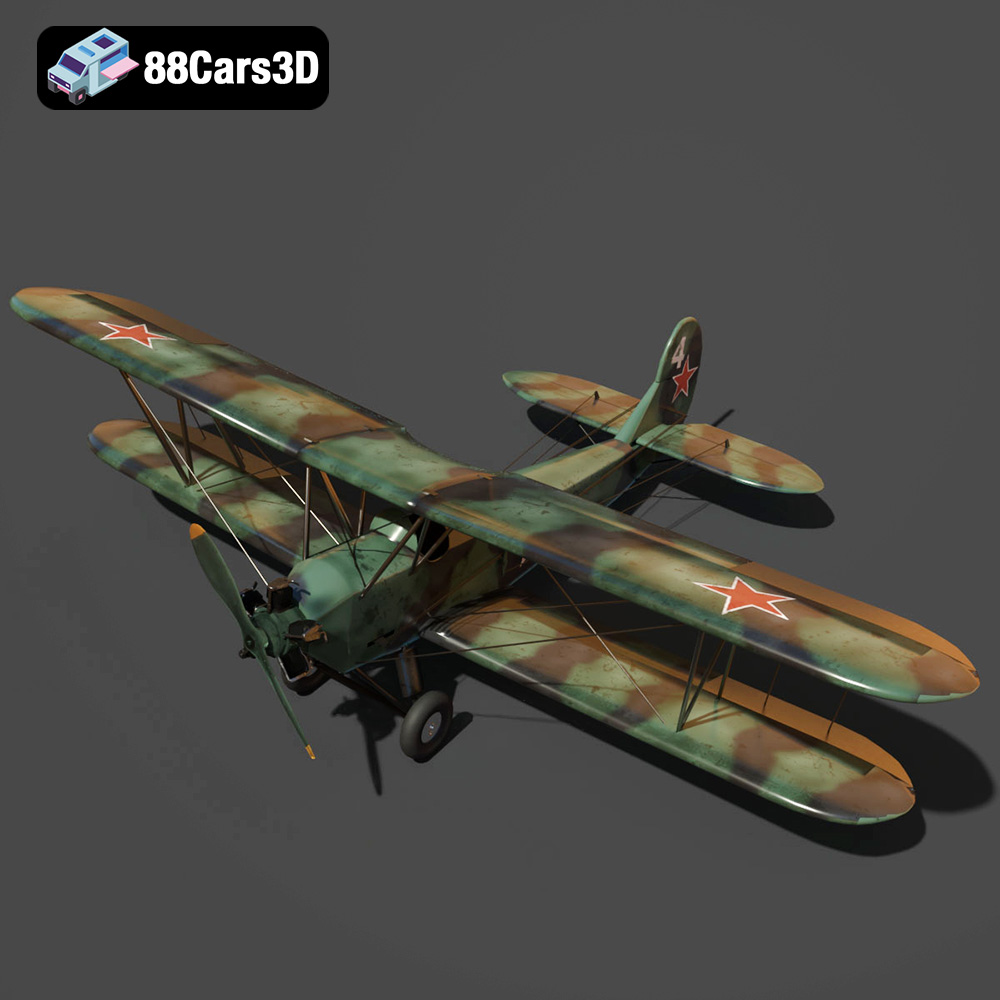
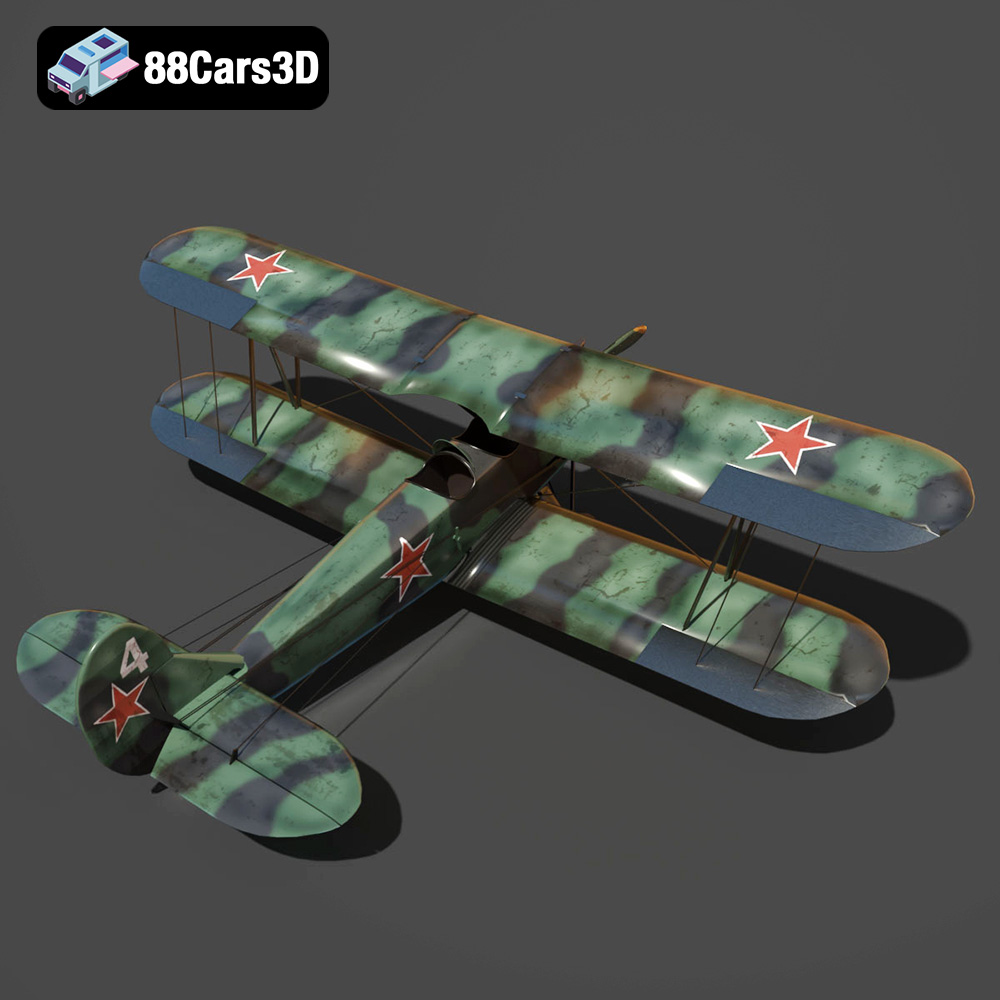
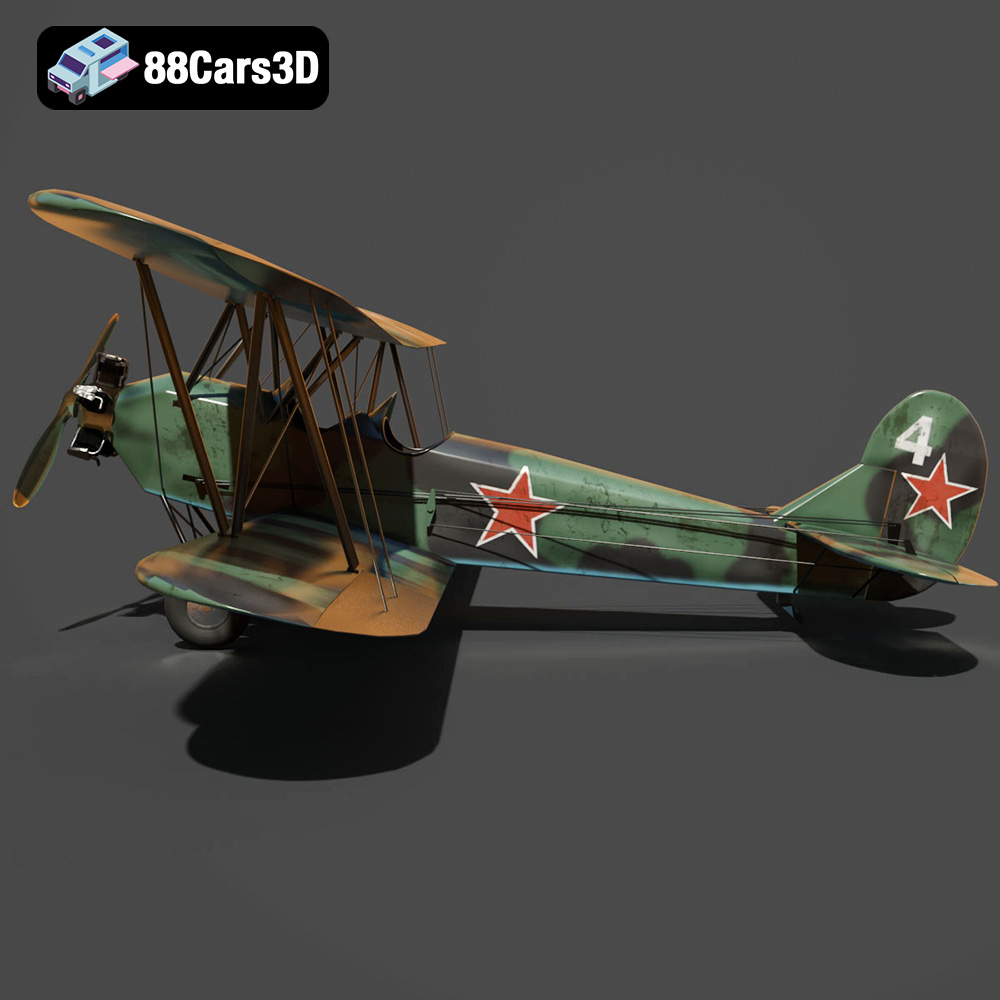
The exterior of any historical aircraft is its most recognizable feature, and for the Polikarpov Po-2, this means capturing the unique characteristics of a biplane. The model showcases an accurate biplane wing structure with support struts, which are not merely decorative but integral to the aircraft’s stability and flight mechanics. Every strut, wire, and panel line contributes to the authentic representation. The detailed radial engine cowling is another highlight, accurately enclosing the engine while reflecting its historical design. Furthermore, the realistic propeller assembly and its individual blades are modeled for dynamic rotation, crucial for animation or interactive simulations. The fabric-style control surfaces (ailerons, rudder, elevators) capture the lightweight construction of the original, with subtle surface irregularities that enhance realism, while the fixed landing gear with tailwheel and period-correct fuselage proportions complete the exterior, ready for any historical scene.
While often less visible in exterior shots, a detailed interior is vital for immersion, especially in simulation and AR/VR applications. The Polikarpov Po-2 3D Model features a modeled dual-seat cockpit layout, reflecting its role as a trainer and observation aircraft. The instrument panel detailing, though optimized for performance, provides enough visual information to be convincing, complete with basic gauges and switches. The inclusion of a control stick and rudder pedals, along with a basic seat and harness structure, allows for interactive experiences or close-up renders that truly place the viewer inside this historic machine. This attention to both exterior and interior detail, built with clean topology and optimized geometry, ensures that the model maintains performance while delivering high-quality visuals.
The true value of a high-quality 3D asset like the Polikarpov Po-2 lies in its adaptability across various professional workflows. From high-end cinematic sequences to interactive real-time environments, the model’s robust construction and format versatility make it an indispensable tool for creators. 88cars3d.com understands that professionals need assets that don’t just look good but are also technically sound and production-ready.
For artists working in feature film, documentary production, or historical reconstruction, the Polikarpov Po-2 3D Model is a perfect fit. Using software like 3ds Max or Blender, artists can leverage the model’s clean mesh and optimized polygon flow to create breathtaking renders. Imagine recreating a WWII airfield scene: the Polikarpov Po-2 sits on a dusty runway, volumetric fog filters the early morning light, and textures showcasing subtle wear and tear are meticulously applied. With engines like V-Ray, Corona Renderer, or Cycles, the realistic fabric textures, metallic sheen of the engine, and nuanced material properties can be pushed to photorealistic levels. The separate propeller and control surfaces, set up with proper pivots, allow for dynamic animations, whether it’s a static display with subtle wind effects or a full take-off sequence. This level of detail makes it ideal for aviation marketing visuals or museum displays that demand historical accuracy.
The demands of game development and real-time simulation are unique, requiring a delicate balance between visual fidelity and performance. The Polikarpov Po-2 3D Model excels here, thanks to its optimized geometry for real-time engines. When imported into engines like Unreal Engine (using the .fbx or .unreal formats) or Unity, the model is prepared for efficient rendering. Game developers can implement various Levels of Detail (LODs) to ensure smooth performance at different distances, while the clean UV mapping allows for efficient texture atlases. The model’s real-world scale accuracy is crucial for flight simulators, providing a believable sense of spatial awareness and physics. Imagine players piloting this iconic biplane in a historical open-world game, engaging in reconnaissance missions, or training new pilots – the detailed cockpit layout and animated controls contribute directly to an immersive experience. For studios seeking high-quality game assets without the extensive modeling overhead, this asset is a significant time-saver.
AR/VR platforms are transforming how we interact with digital content, offering immersive experiences that bring history to life. The Polikarpov Po-2 model, especially in its .glb format, is perfectly suited for these applications. Developers can create interactive museum exhibits where visitors can walk around a virtual Po-2, inspect its components, or even sit in the cockpit. In training simulations, AR/VR can place the aircraft in a real-world environment, allowing for virtual maintenance walkthroughs or flight procedure rehearsals. The model’s optimized geometry ensures smooth frame rates in these demanding interactive environments, making it a powerful tool for educational aviation projects and cutting-edge historical simulations.
Beyond the digital realm, the Polikarpov Po-2 3D Model offers exciting possibilities for physical creation. Its design, optimized for clean topology and real-world scale, makes it an excellent candidate for 3D printing, transforming a virtual asset into a tangible collectible or display piece.
The inclusion of the .stl format is paramount for 3D printing enthusiasts and professionals. This format ensures that the model’s geometry is manifold and ready for slicing software. Whether using FDM (Fused Deposition Modeling) for larger, more robust models or SLA/DLP resin printing for incredibly fine details, the Polikarpov Po-2 can be scaled and printed to various sizes. The product’s recommended scales (1:72, 1:48, 1:32, 1:24) offer flexibility, allowing creators to produce anything from intricate desktop miniatures to impressive large-scale models. Crucially, specific 3D print settings are provided: a recommended layer height of 0.08–0.16 mm, wall thickness of 1.2–2 mm, and infill of 15–25%. The advice on supports (required for wing struts, landing gear, and propeller) and print orientation (fuselage horizontally, wings separately) is invaluable, guiding users to achieve optimal results and minimize post-processing.
The journey from a raw 3D print to a finished scale model is where true artistry shines. The Polikarpov Po-2 model provides an excellent foundation for customization. After printing, processes like sanding and priming prepare the surface for painting. Artists can apply matte military paint finishes, meticulously recreating historical camouflage patterns or training liveries. The ability to add optional historical decals, squadron markings, or even subtle weathering effects for operational realism allows each printed model to tell its unique story. This blend of digital precision and hands-on craftsmanship makes the Polikarpov Po-2 a highly rewarding project for modelers, creating unique automotive collectibles and historical pieces.
In a dynamic digital landscape, static models are no longer enough. The Polikarpov Po-2 3D Model goes further by offering inherent features that facilitate interaction and customization, making it a valuable asset for engaging audiences across various platforms. This thoughtful design approach enhances its utility far beyond basic rendering.
The model’s technical advantages directly support dynamic applications. With proper pivot setup for propeller rotation and control surface animation, developers can effortlessly rig and animate the aircraft. This is crucial for realistic flight simulations where the visual feedback of moving ailerons, rudder, and elevators enhances the pilot’s experience. Furthermore, the capacity to change camouflage or training livery allows for the representation of different historical periods or units, adding significant depth to any simulation. Adding historical insignia or squadron markings further enriches the narrative, enabling instructors to demonstrate different configurations or historical contexts for training purposes. This flexibility makes the Polikarpov Po-2 an invaluable tool for educational aviation projects, allowing for adaptable scenarios that reflect real-world operational variations.
The ability to customize and interact with a 3D model offers powerful avenues for marketing and education. Imagine an interactive website for an aviation museum where users can explore the Polikarpov Po-2, change its livery, or even configure realistic lighting for sunrise airfield or in-flight scenes. Such interactive presentations are far more engaging than static images, drawing viewers deeper into the history and mechanics of the aircraft. For educational content, the model can be configured to highlight specific components, demonstrating the aircraft’s construction or function. Businesses developing aviation-related software or hardware can use this model for product demonstrations, showcasing their technology in a compelling, visually rich context. The 88cars3d.com Polikarpov Po-2 3D Model is not just an asset; it’s a versatile platform for storytelling and interactive learning.
The Polikarpov Po-2 stands as a testament to practical engineering and historical significance, and its 3D model brings that legacy into the modern digital age with exceptional detail and technical precision. From its meticulously recreated exterior, featuring accurate biplane structures and a detailed radial engine, to its modeled dual-seat cockpit, every element has been crafted to deliver authenticity and versatility. The robust selection of included file formats—ranging from .blend and .max for native editing, to .fbx for seamless game engine integration, .glb for AR/VR, and .stl for high-fidelity 3D printing—ensures that this model is production-ready for virtually any professional workflow.
Whether you are a cinematic artist aiming for photorealistic historical renders, a game developer building an immersive flight simulator, or a hobbyist eager to 3D print a tangible piece of aviation history, the Polikarpov Po-2 3D Model provides the foundation for success. Its clean topology, real-world scale accuracy, and thoughtful pivot setups for animation offer unparalleled flexibility and performance. This isn’t just a digital replica; it’s a versatile tool that empowers creators to tell compelling stories, build engaging experiences, and preserve history in stunning detail. Explore the full potential of this exceptional asset and many other high-quality 3D car models and specialized vehicles at 88cars3d.com, where precision meets passion.
A high-detail 3D model of the legendary Polikarpov Po-2 biplane, faithfully recreating its iconic dual-wing structure, radial engine, and open cockpit. Perfect for rendering, game development, historical visualization, and 3D printing, with clean topology and real-world scale accuracy across multiple file formats.
$15.9
.aircraft3dmodel
.arvr
.aviation
.biplane
.blend
.fbx
.flightsimulator
.gameasset
.glb
.historicalaircraft
.max
.obj
.ply
.po2
.polikarpov
.rendering
.simulation
.stl
.unreal
.wwiiaircraft