Get 50% OFF All Premium 3D & STL Models!

In the expansive and meticulously detailed world of 3D modeling, few subjects command as much reverence and require as much precision as classic automobiles. These aren’t merely vehicles; they are rolling sculptures, testaments to design philosophy, engineering prowess, and a bygone era of unparalleled craftsmanship. Among these automotive legends, the Rolls-Royce Phantom V stands as an icon – a vehicle synonymous with ultimate luxury, regal presence, and historical significance. Capturing its essence in a digital format presents a fascinating challenge and offers immense creative potential for artists, developers, and designers.
For professionals in automotive rendering, game development, AR/VR experiences, and even advanced 3D printing, having access to an accurate and versatile 3D model of such a prestigious vehicle is invaluable. This is where a meticulously crafted asset, like the Rolls-Royce Phantom V 3D Model available on 88cars3d.com, truly shines. It provides a foundation for projects demanding historical accuracy, visual fidelity, and robust performance across a multitude of digital applications. Let’s delve into the technical considerations, artistic opportunities, and practical applications this exceptional 3D car model unlocks.
The versatility of any premium 3D model, especially one as intricate as the Rolls-Royce Phantom V, lies significantly in the range and quality of its included file formats. Each format serves a distinct purpose, catering to different software ecosystems, project requirements, and desired outputs. Understanding these distinctions is paramount for any professional integrating 3D assets into their workflow. The Rolls-Royce Phantom V 3D Model from 88cars3d.com thoughtfully includes a comprehensive suite of these formats, ensuring maximum compatibility and utility.
The .blend format is the native file type for Blender, an incredibly powerful and popular open-source 3D creation suite. When a model is provided in .blend format, it means you’re getting a fully editable Blender scene. This typically includes not just the mesh geometry but also materials, textures, lighting setups, camera angles, and even animation data if present. For artists deeply integrated into the Blender ecosystem, this format offers the most flexibility for customization, material tweaks, scene integration, and rigging. It’s the ideal starting point for fine-tuning the Rolls-Royce Phantom V’s digital representation to perfectly match a specific visual style or animation requirement within Blender.
.fbx (Filmbox) is a proprietary file format developed by Autodesk, widely adopted as the de facto standard for exchanging 3D data between various applications. Its strength lies in its ability to encapsulate a wide range of 3D data, including geometry, materials, textures, animations, and skeletal structures, while maintaining relatively good compatibility. It is particularly ideal for game engines like Unreal Engine and Unity, where efficiency and robust data transfer are critical. When working with the Rolls-Royce Phantom V 3D Model in .fbx, developers can expect a streamlined import process into game development pipelines, minimizing conversion issues and ensuring that critical data like pivot points for wheels and steering are preserved.
The .obj (Wavefront OBJ) format is one of the oldest and most universally supported file types for 3D geometry. It’s a simple, text-based format primarily used to store geometric data (vertices, normals, texture coordinates) and references to external material files (.mtl). While it doesn’t support animations or rigging, its widespread compatibility makes it an excellent choice for cross-software transfers when you primarily need the mesh itself. The .obj version of the Rolls-Royce Phantom V is perfect for import into virtually any 3D software for modeling, sculpting, or rendering where animation isn’t the primary concern, ensuring a stable foundation across diverse platforms.
.glb (GL Transmission Format Binary) is the binary version of glTF, a royalty-free specification for the efficient transmission and loading of 3D scenes and models by applications. It’s designed specifically for real-time environments, AR, VR, and web-based 3D viewers. A single .glb file can contain models, textures, animations, and PBR (Physically Based Rendering) materials, all optimized for fast loading and rendering. For projects involving interactive showrooms, web configurators, or augmented reality experiences featuring the Phantom V, the .glb format offers unparalleled performance and ease of integration, ensuring a smooth, responsive user experience.
.stl (STereoLithography) is the standard file format for 3D printing. It represents a 3D model as a collection of triangular facets, defining the surface geometry of an object. The .stl format is robust and widely supported by 3D printers and slicing software. The inclusion of an .stl file for the Rolls-Royce Phantom V 3D Model signifies its readiness for physical manifestation, allowing designers to create tangible scale models for display, prototyping, or collectible purposes. Its manifold geometry ensures a clean, print-ready output, crucial for successful additive manufacturing.
.ply (Polygon File Format, or Stanford Triangle Format) is another format for storing 3D data, particularly useful for scanned data, CAD applications, and scientific visualization. It can store not only geometry but also color, transparency, and other properties per vertex or face. While less common for general 3D asset exchange than .fbx or .obj, its ability to store detailed mesh information makes it valuable for applications requiring high precision or analysis, such as reverse engineering or detailed surface studies of the Phantom V’s iconic body lines.
The .unreal format signifies an asset specifically packaged and optimized for direct import and use within Unreal Engine. This often implies pre-configured materials, collision meshes, LODs (Levels of Detail), and appropriate pivot points for skeletal meshes, all designed to perform optimally within Unreal’s real-time rendering environment. For game developers and cinematic artists leveraging Unreal Engine, the .unreal version of the Rolls-Royce Phantom V 3D Model offers a significant head start, reducing setup time and ensuring engine-native compatibility and performance.
Finally, the .max format is the native scene file for Autodesk 3ds Max, a leading software in architectural visualization, broadcast animation, and product design. Like .blend, a .max file provides a fully editable project, complete with sophisticated material setups (e.g., V-Ray, Corona), lighting, animation tracks, and modifiers. For professionals who rely on 3ds Max for high-end automotive rendering or detailed animation sequences, the .max version of the Rolls-Royce Phantom V offers the ultimate level of control and customization, allowing for intricate adjustments to achieve photorealistic results or complex cinematic sequences.
The availability of such a diverse array of formats for the Rolls-Royce Phantom V 3D Model underscores its professional-grade quality and adaptability, making it an indispensable asset for virtually any 3D project.
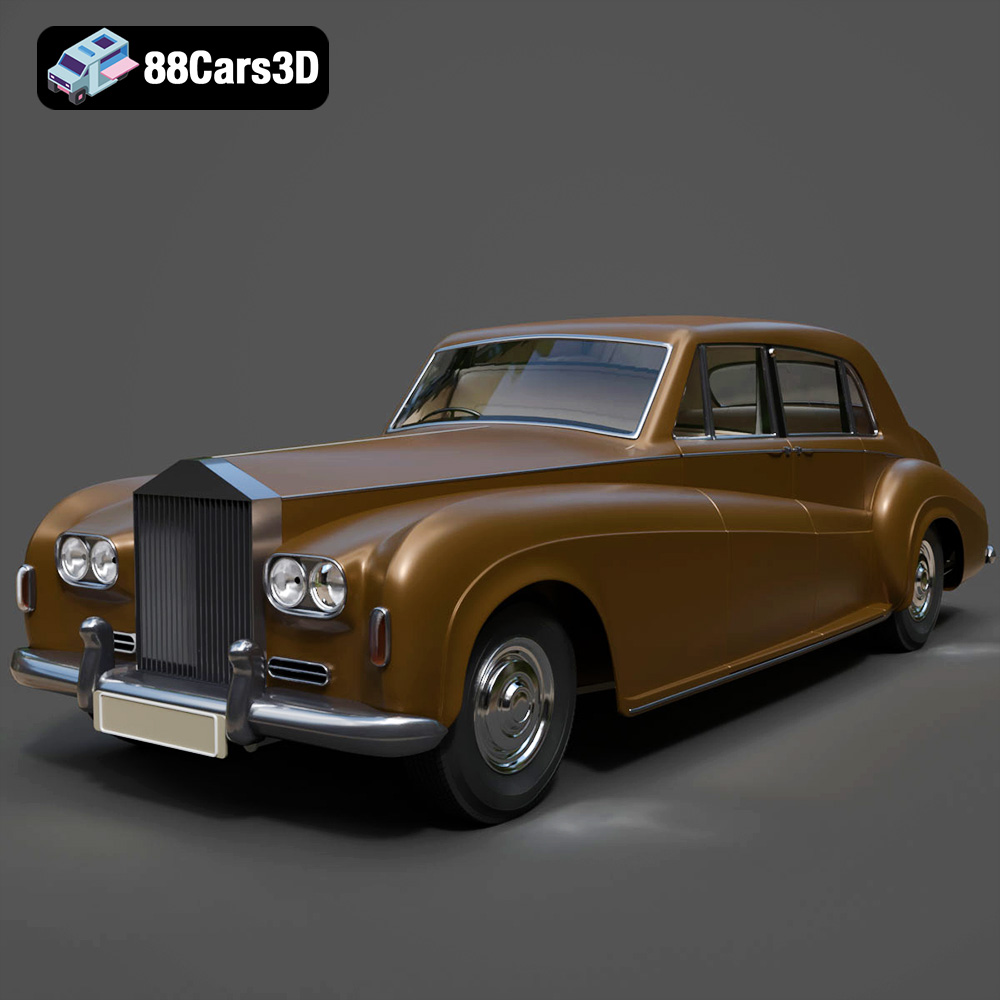
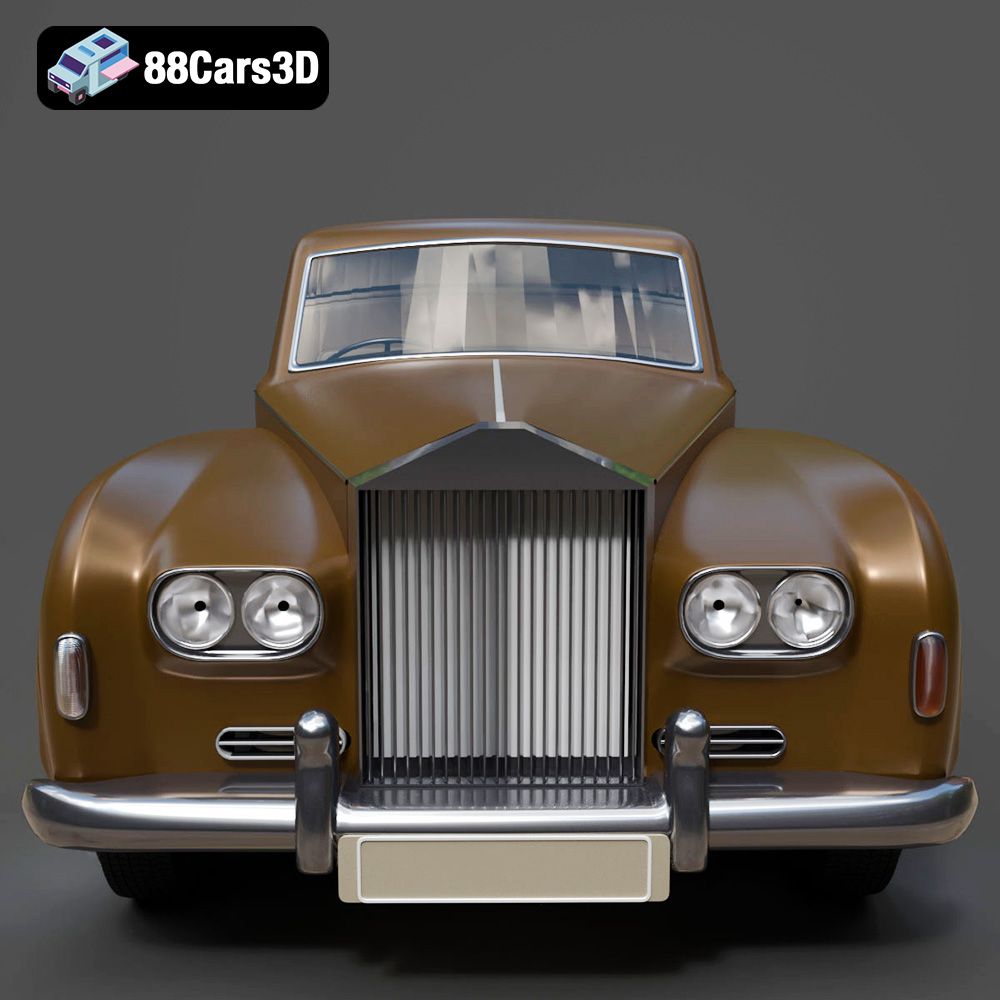
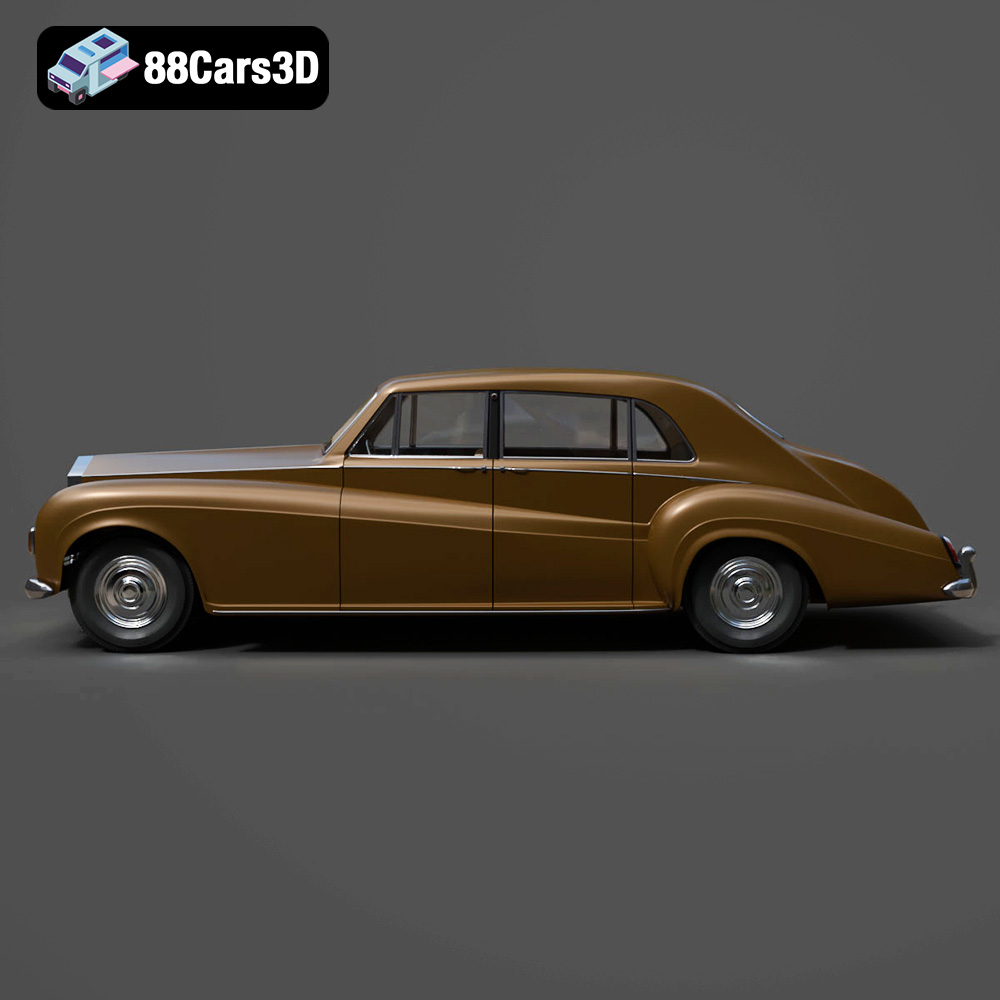
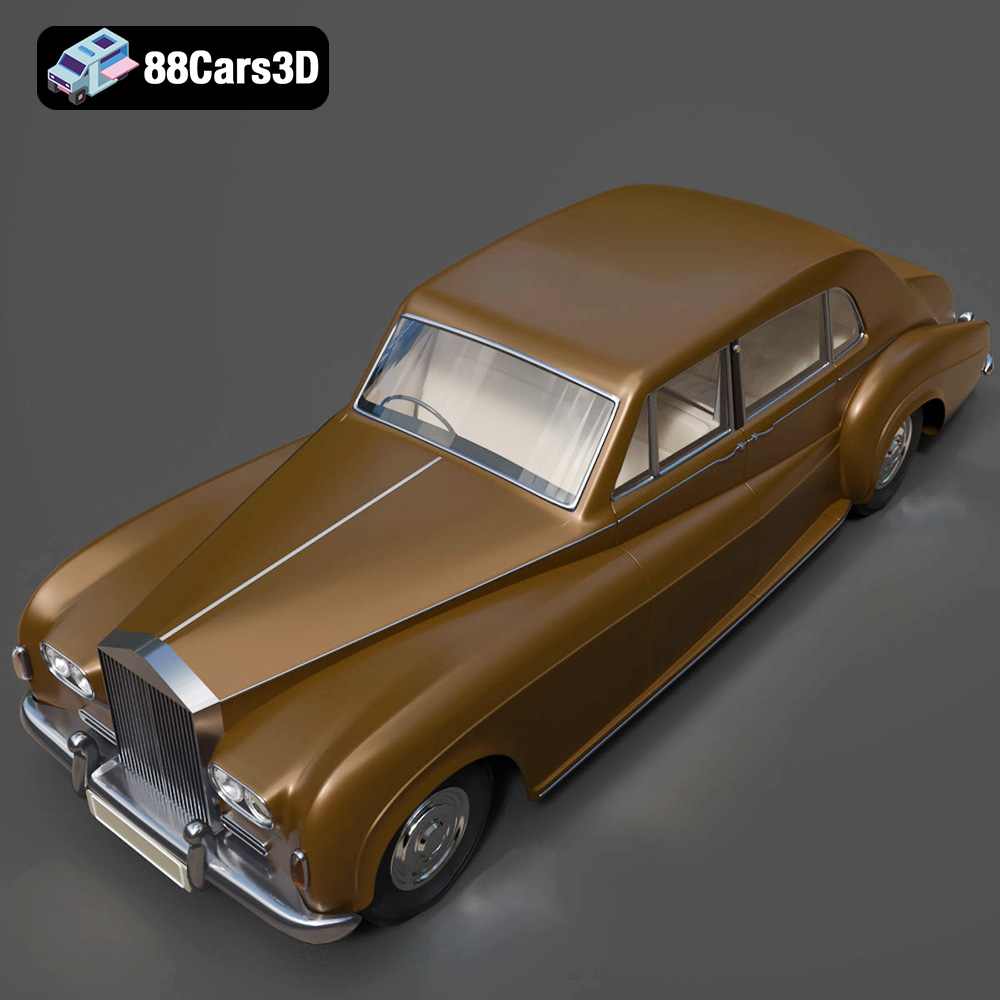
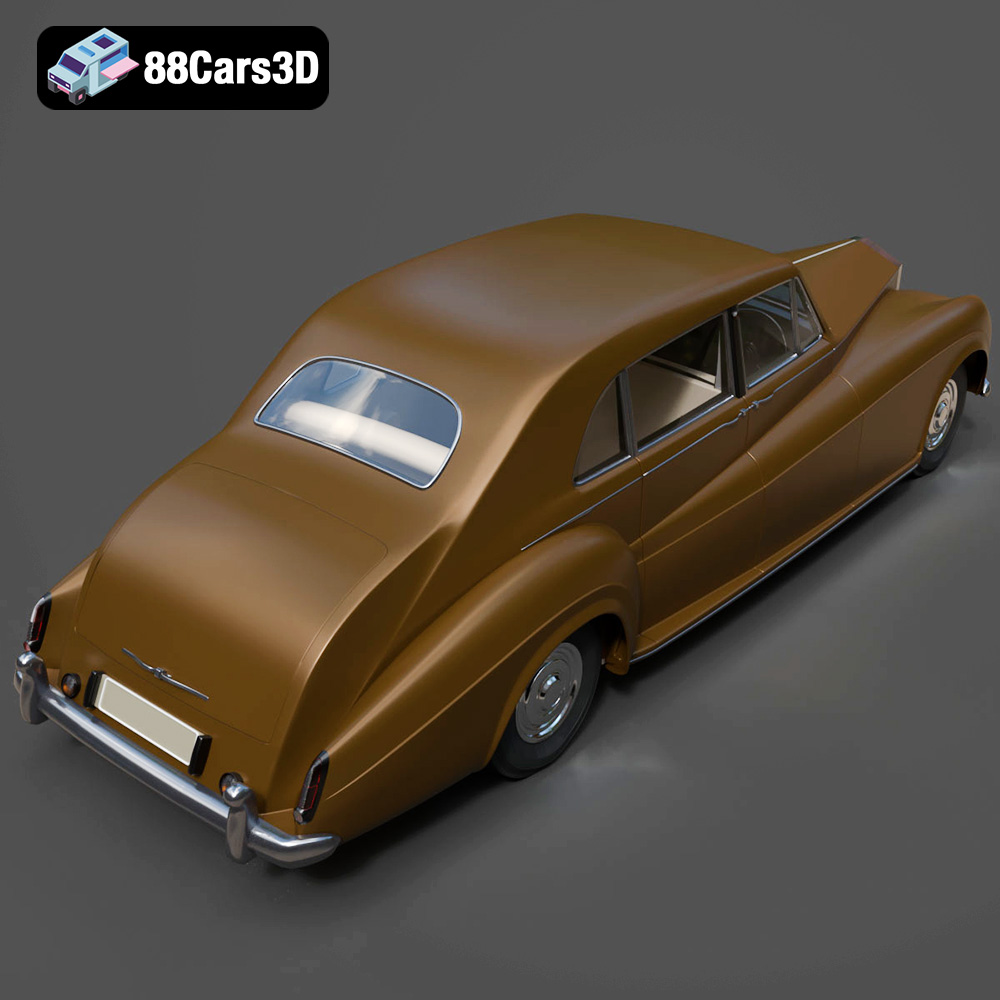
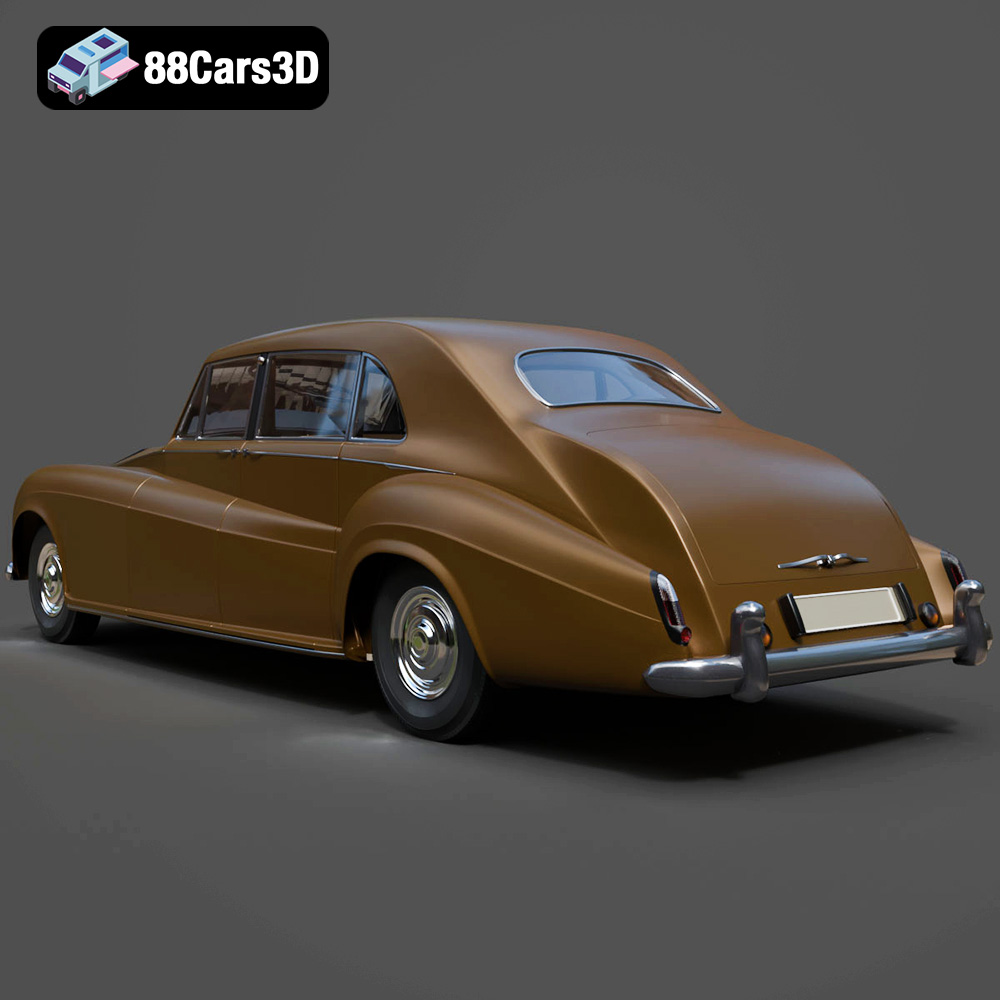
The Rolls-Royce Phantom V, produced between 1959 and 1968, is more than just a car; it’s a piece of living history. Favored by royalty, heads of state, and global celebrities, its presence evokes an era of unparalleled elegance and stately grandeur. Digitally recreating such a vehicle requires a deep respect for its heritage and an obsessive attention to detail. This particular Rolls-Royce Phantom V 3D Model meticulously captures the long-wheelbase limousine’s iconic upright chrome grille, the revered Spirit of Ecstasy hood ornament, and the distinctive rear-hinged coach doors.
Beyond the exterior, the interior of a Phantom V was a sanctuary of bespoke luxury. This 3D model extends that attention to detail inside, featuring a vintage luxury dashboard layout, a large classic steering wheel, and the crucial rear passenger limousine seating configuration. Wood veneer trim detailing and chrome accents on the door panels further enhance the authenticity. For projects that require not just exterior shots but also immersive interior views, this level of detail is critical for conveying the Phantom V’s unique character and historical context.
Creating a high-quality 3D car model, especially one as recognizable as the Rolls-Royce Phantom V, demands a blend of artistic skill and technical precision. The underlying structure of the digital asset is what determines its usability and performance across different platforms and engines. A truly professional model adheres to stringent technical standards.
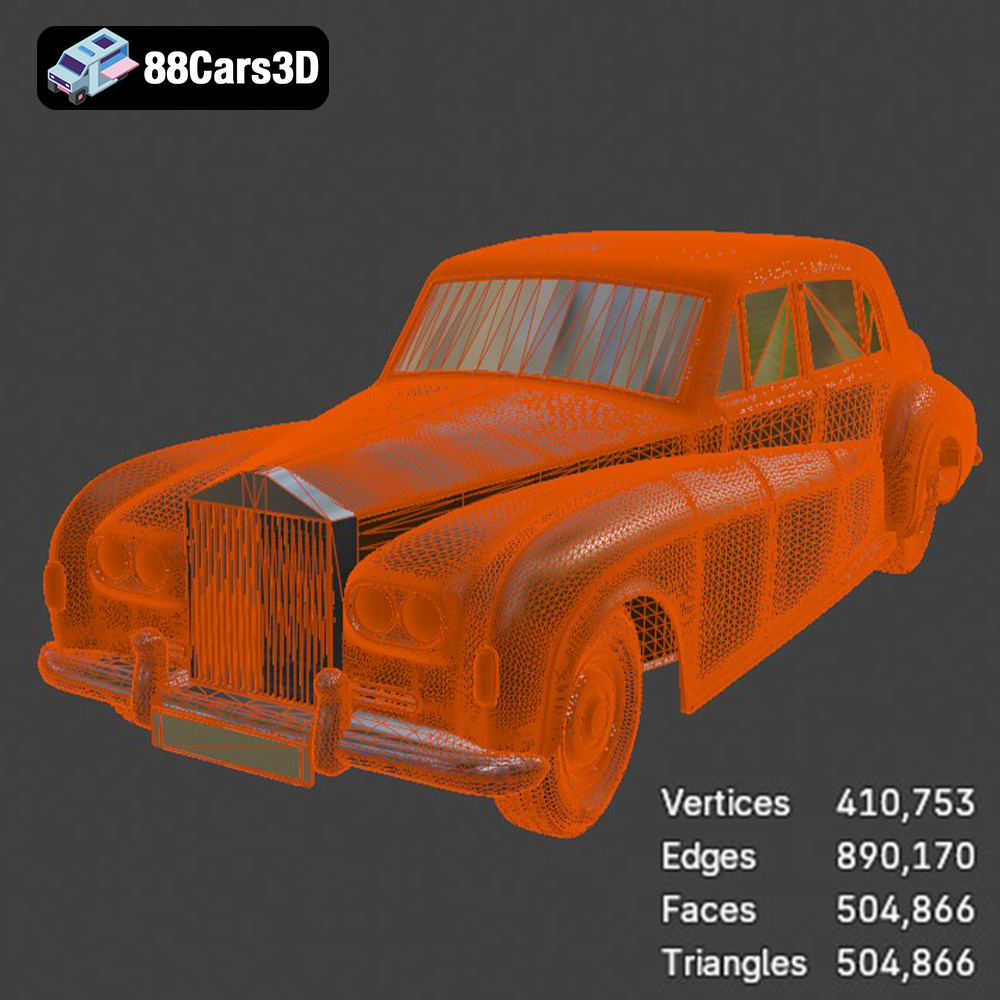
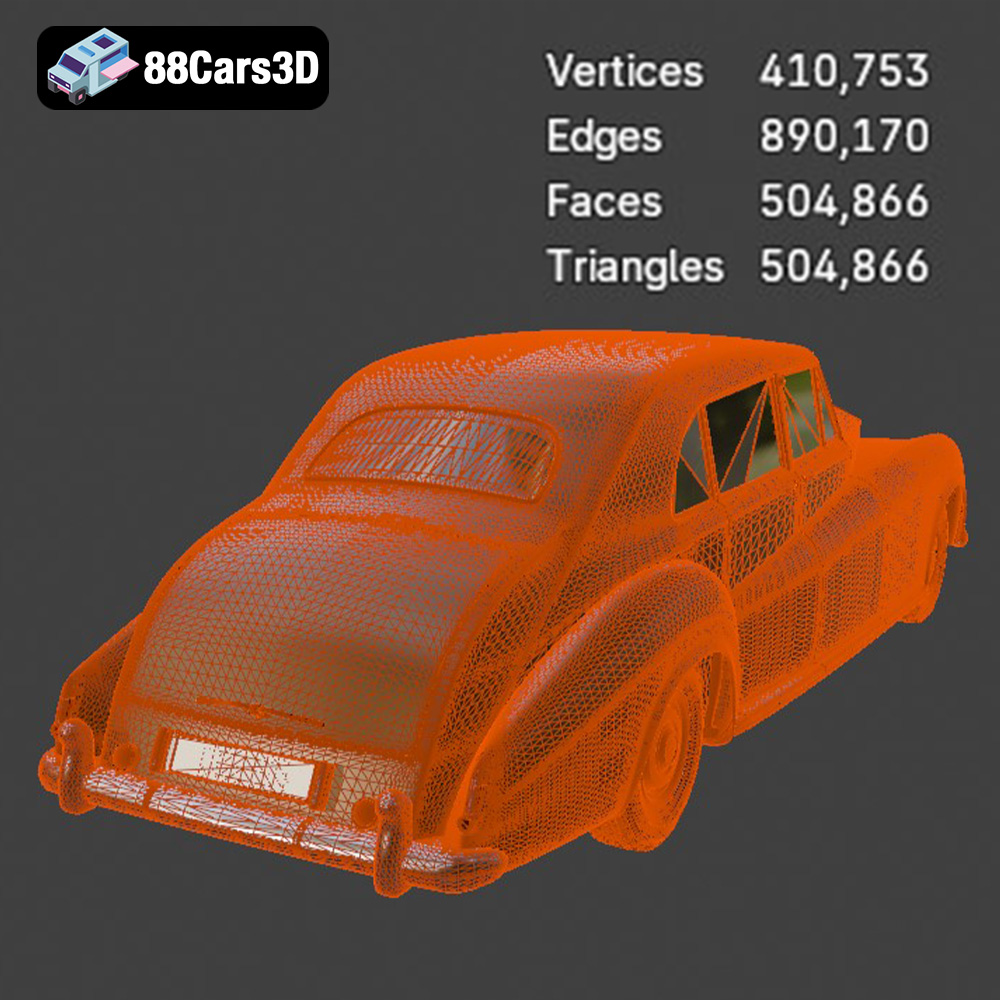
The Rolls-Royce Phantom V 3D Model boasts a clean and well-organized mesh structure, which is fundamental for seamless integration into various 3D software and for efficient rendering. Clean topology ensures that the model deforms predictably during animation and allows for easy UV unwrapping and texturing without distortion. Furthermore, its adherence to real-world scale accuracy is paramount for architectural visualizations, simulations, and game environments where realistic proportions are non-negotiable. An incorrectly scaled model can disrupt scene composition and require tedious adjustments.
For real-time applications like game development or AR/VR, optimized polygon flow is crucial for maintaining performance without sacrificing visual fidelity. While the Phantom V is a high-detail model, its geometry is designed to balance realism with efficiency. Critical for animation are properly set up pivot points for steering and wheel rotation. This seemingly small detail saves countless hours in animation pipelines, allowing animators to quickly rig and animate the vehicle without manual adjustments, making the Rolls-Royce Phantom V 3D Model production-ready right out of the box.
The true value of a versatile 3D asset like the Rolls-Royce Phantom V lies in its adaptability across diverse professional workflows. From generating breathtaking visuals to populating interactive digital worlds, this model serves as a robust foundation.
For high-end automotive rendering, artists often turn to powerful software like Autodesk 3ds Max, paired with rendering engines such as V-Ray or Corona, or Blender with Cycles or Eevee. The .max and .blend formats provided ensure native compatibility and full editability. Imagine a luxurious scene: the Phantom V, bathed in soft, volumetric lighting, its polished chrome gleaming, reflecting a stately manor in the background. Artists can utilize the model’s clean mesh and accurate proportions to set up intricate studio lighting, craft bespoke material shaders (e.g., custom paint flakes, authentic leather textures for the interior), and render cinematic-quality images or animations for heritage automotive marketing, ceremonial visuals, or classic car promotions. The separate wheels and steering components are invaluable for creating dynamic turntable renders or drive-by animations.
In game development, particularly for open-world city games or historical environments, the Rolls-Royce Phantom V 3D Model serves as an ideal game asset. Its optimized geometry and inclusion of .fbx and .unreal formats make it ready for integration into Unreal Engine or Unity. Developers can easily set up collision meshes, integrate it into physics systems, and populate virtual worlds with this iconic vehicle. For AR/VR, the .glb format is a game-changer. Envision an immersive virtual showroom where users can walk around, inspect the Phantom V up close, or even sit inside using a VR headset. This model facilitates the creation of interactive historical exhibitions or luxury brand experiences, allowing users to appreciate the car’s details in a truly engaging way.
Beyond entertainment, accurate 3D models like this are crucial for simulation and training. Whether it’s for historical automotive studies, design visualization projects, or even virtual museum exhibits, the Phantom V provides a high-fidelity digital twin. Researchers and educators can use it to explore design evolution, teach about automotive history, or simulate scenarios involving vintage vehicles, benefiting from its real-world scale and authentic detailing.
The ability to transform a digital model into a physical object is one of the most exciting aspects of modern 3D technology. The inclusion of the .stl format, alongside detailed 3D print settings, highlights the physical collectibility of the Rolls-Royce Phantom V 3D Model.
3D printing a car model like the Phantom V requires careful attention to detail to ensure structural integrity and visual quality. The recommended scales (1:32, 1:24, 1:18, 1:12) offer flexibility for different display sizes. Layer height (0.08–0.16 mm) is crucial for capturing fine details without excessive print time, while wall thickness (1.5–2.5 mm) ensures durability. Infill settings (15–25%) provide a good balance between material usage and strength. For intricate elements like mirrors, the Spirit of Ecstasy, and bumper overhangs, supports are indeed required, as explicitly stated in the product description. Printing the body angled for a smooth surface finish and the wheels separately are professional tips for achieving optimal results, reducing visible layer lines, and simplifying post-processing.
Achieving a collector-quality physical model involves more than just printing. Post-processing is key. Sanding helps smooth out layer lines, primer creates an even base, and a gloss black or classic two-tone finish, combined with chrome detailing, can truly bring the miniature Phantom V to life. This physical manifestation of the digital asset opens up avenues for limited-edition collectibles, bespoke gifts, or educational aids, all stemming from the high-fidelity 3D model.
When sourcing 3D assets for professional projects, quality, accuracy, and versatility are paramount. The Rolls-Royce Phantom V 3D Model is a prime example of the caliber of 3D car models available at 88cars3d.com.
88cars3d.com prides itself on offering models that are not just visually appealing but also technically sound. The precise recreation of the Phantom V’s proportions, the intricate detailing of its exterior and interior features, and the clean mesh structure all speak to a commitment to quality. This attention to detail saves artists and developers valuable time that would otherwise be spent fixing topology, adjusting scale, or rebuilding missing features.
Whether your project demands vintage classics, modern supercars, or everyday vehicles, 88cars3d.com serves as a reliable source for professional-grade 3D car models. The extensive range of included file formats for the Phantom V underscores the marketplace’s understanding of diverse industry needs, ensuring compatibility across major 3D software and real-time engines. This makes it a go-to platform for anyone seeking high-quality automotive assets for rendering, game development, or simulation.
In today’s fast-paced digital production environment, leveraging high-quality pre-made assets is not just a convenience; it’s often a necessity for maintaining efficiency and achieving superior results. The Rolls-Royce Phantom V 3D Model exemplifies how a premium asset can elevate a project across various domains.
From the initial concept to final delivery, the meticulous creation of a highly detailed 3D vehicle can consume hundreds of hours. By utilizing a professionally built model, artists and studios can drastically reduce development time, allowing them to focus on creative direction, scene composition, and optimization rather than foundational modeling. This is particularly critical for tight deadlines in advertising, film, or game production.
A reputable source like 88cars3d.com provides models that adhere to industry best practices, ensuring consistent quality in terms of mesh cleanliness, material setup, and technical specifications. This consistency is vital for large-scale projects where multiple assets need to integrate seamlessly and perform predictably across various platforms. The Phantom V model, with its optimized geometry and proper pivot setups, is a testament to this consistent quality.
The Rolls-Royce Phantom V stands as a monumental testament to automotive luxury and design. Its digital recreation, offered as a robust and versatile 3D model, bridges the gap between historical grandeur and cutting-edge technology. From its meticulously captured exterior and vintage interior to its clean topology and diverse file format compatibility, this model is an indispensable asset for a wide array of professional applications.
Whether you are an automotive renderer striving for photorealism, a game developer crafting immersive worlds, an AR/VR designer building interactive experiences, or an enthusiast keen on 3D printing a piece of history, the Rolls-Royce Phantom V 3D Model empowers your creative vision. It exemplifies the dedication to quality found at 88cars3d.com, providing a foundation that is both technically sound and artistically inspiring. Investing in such a high-caliber 3D car model not only streamlines your workflow but also elevates the final quality of your projects, allowing the timeless elegance of the Phantom V to shine through in every digital and physical manifestation.
The Rolls-Royce Phantom V 3D Model is a high-detail digital recreation of the ultra-luxury limousine produced between 1959 and 1968. Renowned for its stately proportions, hand-crafted refinement, and association with royalty and world leaders, the Phantom V represents one of the most prestigious classic luxury vehicles ever built. This 3D model accurately captures the long-wheelbase limousine body, upright chrome grille, Spirit of Ecstasy hood ornament, round headlamps, chrome bumpers, rear-hinged coach doors, and elegant body lines. Designed with clean topology and real-world scale accuracy, it is ideal for rendering, animation, automotive visualization, game development, and AR/VR experiences. Perfect for heritage automotive showcases, ceremonial scenes, luxury-themed projects, cinematic productions, and classic car simulations.
$39.99
.arvr
.automotive
.blend
.britishluxury
.car3dmodel
.classiclimousine
.fbx
.gameasset
.glb
.luxurycar
.max
.obj
.phantomv
.ply
.rendering
.rollsroyce
.simulation
.stl
.unreal
.vintagecar