Get 50% OFF All Premium 3D & STL Models!

The pursuit of photorealism in real-time rendering has always been a demanding endeavor, particularly within the automotive sector. Achieving true visual fidelity for vehicles – from the intricate reflections on multi-layered paintwork to the subtle textures of interior materials – often pushed traditional shading models to their limits. Enter Unreal Engine’s Substrate Material System, a revolutionary leap forward designed to empower artists and developers with unprecedented control and accuracy over material creation. This advanced framework redefines how we approach complex surfaces, making previously impossible material interactions a tangible reality within real-time environments. For anyone working with high-quality 3D car models for visualization, game development, or virtual production, understanding Substrate isn’t just an advantage—it’s essential.
In this comprehensive guide, we’ll dive deep into Substrate, exploring its core principles, demonstrating how to leverage its power for breathtaking automotive visualizations, and integrating it seamlessly into your Unreal Engine workflows. We’ll cover everything from building intricate multi-layered car paints to optimizing performance, ensuring your 3D car models, like those found on 88cars3d.com, truly shine. Prepare to unlock a new era of visual fidelity and realism for your automotive projects.
For years, the industry standard for realistic material rendering has been Physically Based Rendering (PBR). PBR materials, with their Metallic/Roughness or Specular/Glossiness workflows, brought a significant improvement over legacy diffuse/specular models by ensuring energy conservation and more consistent lighting responses across different environments. However, even with PBR, certain complex materials—especially those prevalent in automotive design—presented persistent challenges. The fundamental limitation lay in their fixed BRDF (Bidirectional Reflectance Distribution Function) and the inherent assumption of a single, monolithic surface.
Standard PBR excels at representing simple opaque or transparent surfaces. A painted metal, a rough plastic, or a clear glass pane can be rendered with remarkable accuracy. But what happens when you need a material that is *more* than the sum of its parts? Car paint, for instance, is not merely a “metallic” surface. It’s a complex stack of layers: a primer, a base coat (often metallic or pearlescent), and multiple layers of clear coat, sometimes with additional scratch-resistant or hydrophobic coatings on top. Each layer has distinct optical properties and interacts with light differently. Trying to simulate this with a single PBR material often involved complex shader hacks, blurring the lines between physically accurate and artistically faked results. These workarounds were often costly in terms of performance and difficult to maintain, leading to a “shading explosion” where a single object required dozens of unique, intricate materials just to approximate reality.
Automotive design is a masterclass in material engineering. From high-gloss, multi-stage paints to intricate leathers, brushed metals, carbon fiber, and optical plastics, vehicles are a symphony of diverse and often layered surfaces. Traditional PBR struggled to accurately represent:
* **Multi-layered paints:** Simulating the distinct reflection and refraction of clear coats over a metallic flake base, with depth-dependent scattering and absorption, was nearly impossible. The visual cues of depth, subtle refractions, and the interplay between layers were often lost.
* **Complex clear coats:** Beyond simple reflectivity, clear coats exhibit properties like Fresnel effects, subtle absorption, and even microscopic imperfections that influence their appearance. Simulating these realistically required approximations that broke physical accuracy.
* **Iridescent and anisotropic materials:** Certain car finishes, as well as materials like brushed aluminum or carbon fiber weaves, exhibit direction-dependent reflections (anisotropy) or color shifts based on viewing angle (iridescence). While PBR had some anisotropic capabilities, integrating these into a layered stack was problematic.
* **Advanced glass and optical components:** Headlights, taillights, and dashboards contain intricate lens systems and varying refractive indices that standard PBR couldn’t handle without significant compromises.
These limitations meant that achieving true photorealism for 3D car models often required offline rendering engines or extensive post-processing, making real-time interactive experiences less visually convincing. The demand for a more flexible, physically accurate, and performance-friendly material system became paramount.
Substrate represents a fundamental re-architecture of Unreal Engine’s material system, moving beyond the fixed BRDFs of traditional PBR to an open, modular framework. Developed from the ground up to handle the next generation of visual fidelity, it empowers artists to construct materials with unprecedented physical accuracy and complexity. Instead of selecting a predefined shading model, Substrate allows you to build materials from a library of fundamental building blocks, or “nodes,” that describe physical properties like absorption, scattering, and reflection.
At its core, Substrate operates on a layered approach, allowing artists to stack different material properties and behaviors on top of each other, much like real-world materials are composed. This is a departure from the “single surface” assumption of traditional PBR. The key principles driving Substrate include:
* **Modular Node-Based System:** Instead of rigid shading models, Substrate provides a diverse set of nodes—such as `SubstrateClearCoat`, `SubstrateAnisotropy`, `SubstrateScattering`, `SubstrateVolumetric`, and `SubstrateStandardSurface`—that can be combined and layered. Each node represents a specific physical interaction of light with matter.
* **Unified Physical Framework:** Substrate is built on a physically accurate foundation, ensuring energy conservation across all layers and interactions. This means materials will respond correctly to light regardless of the lighting environment, leading to consistent and believable results.
* **Layered Material Composition:** The ability to stack multiple layers of material properties is Substrate’s most transformative feature. You can define a base layer (e.g., metallic flakes), add a clear coat layer on top, and even incorporate scattering volumes or translucent elements, all within a single material graph.
* **Performance at Scale:** While offering incredible complexity, Substrate is designed with real-time performance in mind. It leverages advanced rendering techniques to efficiently evaluate complex material stacks, ensuring that high visual fidelity doesn’t come at the cost of interactivity.
The most significant impact of Substrate for automotive visualization is its unparalleled ability to define truly layered materials. Imagine a car paint material:
1. **Base Layer:** This could be a `SubstrateStandardSurface` representing the underlying paint color, possibly with metallic flakes and an anisotropic effect.
2. **Clear Coat Layer:** Stacked on top, a `SubstrateClearCoat` node defines the transparent, highly reflective layer that gives car paint its characteristic gloss. This layer can have its own roughness, index of refraction (IOR), and even slight absorption.
3. **Optional Top Layers:** You could further add subtle dust, grime, or hydrophobic water-beading effects as additional thin layers, each with its own properties and blending mask.
This modularity allows for the creation of incredibly nuanced and realistic surfaces that were previously impossible or extremely difficult to achieve in real-time. For assets like the detailed 3D car models available on 88cars3d.com, this means their inherent geometric fidelity can now be matched with equally sophisticated and physically accurate material representations. The unified framework ensures that light interacts correctly with each layer, from reflection off the clear coat to refraction through it and reflection off the base coat below, resulting in truly stunning and believable automotive surfaces.
With Substrate, the complex optical properties of automotive finishes are no longer a compromise but a direct design choice. This section explores how to construct some of the most challenging automotive materials, demonstrating Substrate’s power.
Creating a convincing car paint material is arguably one of the best showcases for Substrate. Let’s break down a typical workflow:
1. **Base Metal Flake Layer:** Start with a `SubstrateStandardSurface` node.
* **Base Color:** This will be the primary color of your car.
* **Metallic:** Set to 1 for a metallic paint.
* **Roughness:** A low value for the base coat’s inherent smoothness, but you might introduce a slight texture map for subtle variations.
* **Anisotropy:** Connect a texture or a scalar parameter to the Anisotropy slot to simulate the directional reflections of metallic flakes. This is crucial for capturing the “sparkle” effect.
* **Normal:** Apply a normal map for very fine-scale surface detail if desired.
* **SubstrateOverrideColor:** You can use this to drive the tinting of the base coat for specific effects.
2. **Clear Coat Layer:** Overlay the base layer with a `SubstrateClearCoat` node. This is where the magic happens.
* **Coat Roughness:** This determines the glossiness of the clear coat. A very low value (e.g., 0.02-0.05) is typical for pristine car paint.
* **Coat Normal:** Add a very subtle normal map here for orange peel effect or fine scratches, if desired.
* **Coat Strength:** Controls the opacity and influence of the clear coat.
* **Coat IOR (Index of Refraction):** Set to a physically accurate value for clear coats, typically around 1.4-1.5. This controls how light refracts and reflects off the top surface.
* **Connect to Base:** Crucially, the `TopLayer` pin of the `SubstrateClearCoat` node is connected to the `Output` of your `SubstrateStandardSurface` (the base metal flake layer). The `Output` of the `SubstrateClearCoat` then becomes the final `Output` of your material.
3. **Additional Effects (Optional):**
* **Dust/Grime:** For an even more realistic look, you could add another `SubstrateStandardSurface` node for dust, set its roughness high, and use a mask (e.g., a grunge texture) to blend it on top of the clear coat using a `SubstrateMix` node.
* **Orange Peel:** While a normal map can simulate this, Substrate’s ability to layer allows for more complex, scale-dependent effects that integrate with light scattering.
This layered approach ensures that the clear coat correctly refracts light *before* it hits the metallic flakes, and then reflects a portion of the light back, creating a far more convincing and dynamic appearance than any single PBR shader could achieve.
Beyond the basic clear coat, Substrate allows for highly detailed imperfections. Minor scratches, swirl marks, and even hydrophobic effects can be integrated directly into the material graph.
* **Micro-Scratches:** Use a subtle normal map with high-frequency noise and a slightly higher roughness value for specific areas of the clear coat (driven by a mask) to simulate micro-scratches.
* **Hydrophobic Layers:** For advanced effects, you could even layer a very thin, perfectly smooth clear coat (representing water) on top, blended with a mask, to simulate water beading on the surface. This level of detail elevates visual quality significantly, adding depth and narrative to the vehicle’s appearance.
Substrate isn’t just for car paint. It revolutionizes other common automotive materials:
* **Plastics:** From soft-touch dashboards to hard exterior trims, plastics often have subtle subsurface scattering (SSS) and varying levels of roughness. Use `SubstrateStandardSurface` with controlled `Roughness` and `Specular` values. For translucent plastics, combine `SubstrateStandardSurface` with `SubstrateScattering` for depth.
* **Leathers:** Leathers require detailed normal maps for grain, but also subtle SSS for softness and realism. A `SubstrateStandardSurface` combined with a `SubstrateScattering` node (using a very short scatter distance and appropriate tint) can accurately capture the way light penetrates and diffuses within leather fibers.
* **Glass and Lenses:** For windshields, windows, and intricate headlight lenses, `SubstrateVolumetric` combined with `SubstrateClearCoat` or `SubstrateStandardSurface` allows for precise control over absorption, refraction, and chromatic aberration. You can define multiple internal layers within a piece of glass to simulate complex optical elements found in modern car headlights, an impossible task with traditional PBR.
These capabilities mean that the highly detailed interior and exterior assets from 88cars3d.com can be brought to life with an unprecedented level of material accuracy, enhancing the overall immersive experience for any automotive project.
Substrate doesn’t operate in a vacuum; it’s designed to integrate seamlessly with Unreal Engine’s powerful rendering features, creating a symbiotic relationship that pushes visual boundaries. The synergy between Substrate, Nanite, and Lumen is particularly transformative for automotive visualization.
Nanite, Unreal Engine’s virtualized geometry system, handles incredibly high-polygon meshes with ease, making it perfect for the detailed 3D car models often found on platforms like 88cars3d.com. These models frequently contain millions of polygons to capture every curve, seam, and emblem. Before Nanite, optimizing such models for real-time involved laborious manual retopology and LOD (Level of Detail) generation. Nanite virtually eliminates this bottleneck, allowing artists to import production-quality meshes directly.
The integration with Substrate is crucial:
* **Geometry Meets Material:** Nanite ensures that the intricate geometric details of a car model – like the sharp edges of body panels or the fine details of interior stitching – are perfectly preserved at any distance. Substrate then applies materials that are equally capable of rendering those details with physical accuracy. A high-resolution normal map applied via a Substrate material will resolve perfectly on a Nanite mesh, enhancing the perception of detail without performance degradation due to polygon count.
* **Pixel-Perfect Shading:** Nanite’s micro-polygon rendering allows Substrate to evaluate material properties at an extremely fine grain. This means that subtle variations in roughness, anisotropy, or even layered absorption will be rendered accurately on every visible pixel, regardless of the underlying mesh complexity. This is particularly beneficial for clear coats, where micro-scratches or orange peel effects are critical for realism.
Lumen, Unreal Engine’s fully dynamic global illumination and reflections system, works hand-in-hand with Substrate to deliver stunningly realistic lighting. Lumen calculates indirect light bounces and reflections in real time, adapting to changes in lighting or geometry.
* **Accurate Light Interaction:** Because Substrate materials are physically accurate and energy-conserving, they interact with Lumen’s global illumination in a highly realistic manner. Light bouncing off a Substrate car paint will correctly pick up the paint’s color and contribute to the ambient lighting of the scene. Similarly, complex reflections on clear coat layers will be accurately captured and rendered by Lumen, providing dynamic and believable environmental interaction.
* **Dynamic Lighting Scenarios:** For automotive configurators or virtual showrooms where lighting conditions change instantly, the combination of Substrate’s material fidelity and Lumen’s dynamic GI is invaluable. A car’s appearance will correctly adapt to different times of day, interior studio lighting, or outdoor environments, without needing to pre-bake lighting. This allows for unparalleled flexibility and visual consistency in interactive applications.
* **Reflections and Refractions:** Substrate’s layered design ensures that reflections and refractions through clear coats and glass are handled with extreme precision. Lumen captures these complex light paths dynamically, meaning the reflections visible in a car’s paintwork or windows will accurately show the surrounding environment in real time, complete with subtle distortions and color shifts.
While Substrate offers immense power, it’s also more complex to evaluate than a simple PBR material. Performance optimization is key, especially for high-end automotive visualization and real-time applications.
* **Material Instance Usage:** Always use Material Instances. Create a master Substrate material with parameters for colors, textures, roughness values, and layer strengths. Then, create instances for each variation (e.g., different car paint colors, interior trims). This reduces shader compilation time and allows for efficient changes without re-compiling the entire material.
* **Layer Count Management:** While Substrate supports many layers, each layer adds computational cost. Evaluate if every layer is truly necessary for the visual impact. Sometimes, a simpler `SubstrateStandardSurface` with good textures can achieve a similar effect to a multi-layered stack for less critical parts of the model.
* **Texture Resolution and Complexity:** Use appropriate texture resolutions. While 4K or 8K textures are common for hero assets, ensure they are necessary. Utilize texture compression settings effectively. Complex procedural textures in the material graph can be more expensive than pre-baked texture maps.
* **Profile Your Materials:** Use Unreal Engine’s Shader Complexity view mode (accessible via the `show` command or viewport options) to analyze the cost of your materials. Optimize nodes that show up as particularly expensive.
* **LODs for Materials:** For distant objects, you might consider creating simpler Material Instances with fewer Substrate layers or even standard PBR materials for lower LODs of your Nanite meshes. While Nanite handles geometry LODs automatically, material complexity often needs manual consideration for maximum performance at a distance.
By carefully managing these aspects, you can harness the full power of Substrate without sacrificing real-time performance, allowing your detailed 3D car models to shine in even the most demanding interactive experiences. For further details on performance best practices, consult the official Unreal Engine documentation at https://dev.epicgames.com/community/unreal-engine/learning.
Bringing a high-quality 3D car model from a marketplace like 88cars3d.com into Unreal Engine and applying Substrate materials requires a systematic approach. This section outlines a practical workflow for achieving stunning automotive visualization.
1. **Project Setup:**
* Create a new Unreal Engine project, ideally using the “Automotive Product Design” template, which comes with useful settings and content. Ensure your project is set to use the “Path Tracing” renderer for high-quality offline renders and has Lumen and Nanite enabled (Edit > Project Settings > Rendering).
* Crucially, enable Substrate: Go to Edit > Project Settings > Rendering > Materials, and check “Enable Substrate Materials.” Restart the editor.
2. **Importing Your 3D Car Model:**
* Source your desired 3D car model from 88cars3d.com. These models are often provided in formats like FBX or USD (Universal Scene Description), optimized for Unreal Engine.
* In Unreal Engine, click “Import” in the Content Browser. Select your FBX or USD file.
* **Import Settings:**
* **Skeletal Mesh:** Uncheck if it’s a static car model.
* **Convert Scene Unit:** Ensure this aligns with your modeling software (e.g., centimeters).
* **Combine Meshes:** Often beneficial to keep parts separate for material assignments (e.g., body, wheels, interior).
* **Build Nanite:** **Crucially, enable “Build Nanite”** for all high-poly static meshes. This optimizes the geometry for real-time performance.
* **Generate Missing Collision:** Enable if you need simple collision.
* **Materials:** Choose “Do Not Create Material” if you plan to create all Substrate materials from scratch. Otherwise, import existing PBR materials as a starting point.
* Once imported, drag your car model into your level. Ensure its scale and orientation are correct.
Let’s create that multi-layered car paint using Substrate:
1. **Create a New Substrate Material:**
* In the Content Browser, right-click > Material > `M_CarPaint_Substrate` (or a similar naming convention).
* Open the Material Editor. In the Details panel, ensure “Material Domain” is set to `Surface` and “Blend Mode” is `Opaque`. Under “Shading Model,” select `Substrate`. The material graph will now show a Substrate Output node.
2. **Base Layer (Metallic Flakes):**
* Add a `SubstrateStandardSurface` node.
* **Base Color:** Add a `Vector3` parameter (e.g., `PaintColor`) for the main car color.
* **Metallic:** Add a scalar parameter (e.g., `MetallicStrength`) and set its default to 1.
* **Roughness:** Add a scalar parameter (e.g., `BaseRoughness`) with a low default (e.g., 0.15).
* **Anisotropy:** Add a `TextureSample` node for an anisotropy map (e.g., a simple noise or directional brush pattern) and connect it. You might also add a scalar parameter for `AnisotropyStrength`.
* Connect the `Output` of this `SubstrateStandardSurface` to the `TopLayer` input of your next node.
3. **Clear Coat Layer:**
* Add a `SubstrateClearCoat` node.
* **Coat Roughness:** Add a scalar parameter (e.g., `ClearCoatRoughness`) with a very low default (e.g., 0.03).
* **Coat IOR:** Add a scalar parameter (e.g., `ClearCoatIOR`) with a default of 1.45.
* **Coat Normal:** Add a `TextureSample` node for a very subtle normal map (e.g., a fine noise or orange peel texture).
* Connect the `Output` of the `SubstrateClearCoat` node to the `Substrate` input of the `Substrate Output` node.
4. **Connect to Mesh:**
* Save your material.
* In the Content Browser, right-click on `M_CarPaint_Substrate` and select “Create Material Instance.” Rename it (e.g., `MI_CarPaint_Red`).
* Open the Material Instance and adjust the parameters (e.g., `PaintColor` to red, `ClearCoatRoughness` slightly higher for a used look).
* Drag this Material Instance onto the car body mesh in your level or assign it in the Static Mesh Editor.
The initial setup is just the beginning. Photorealism comes from iterative refinement:
* **Real-time Preview:** Utilize Unreal Engine’s real-time viewport to immediately see the effects of your material changes. Rotate the car, change lighting (using the `Sky Atmosphere` and `Directional Light`), and observe how the light interacts with your Substrate layers.
* **Reference Images:** Always work with high-quality reference images of real car paints and materials. Pay attention to subtle details like how highlights behave, the falloff of reflections, and the specific color shifts under different lighting.
* **Adding Complexity:**
* **Dirt/Dust Layer:** Add another `SubstrateStandardSurface` for dirt (high roughness, desaturated color) and use a `SubstrateMix` node to blend it on top of the clear coat, controlled by a grunge texture as the `Weight` input.
* **Edge Wear:** Use curvature maps generated in your 3D modeling software or Substance Painter, or Unreal Engine’s built-in `VertexNormalWS` or `WorldPosition` nodes, to drive masks for edge wear. Apply slightly different material properties (e.g., exposed primer or bare metal) to these edges.
* **Decals:** Integrate decals (stickers, logos) as separate, semi-transparent layered materials using `SubstrateMix` or `SubstrateBlend` nodes.
* **Shader Complexity:** Periodically check your shader complexity in the viewport to ensure you’re not over-optimizing. Balance visual fidelity with performance targets.
* **Testing with Different Environments:** Export your car model with its Substrate materials into various lighting and environmental scenarios within Unreal Engine to ensure consistency and realism across different contexts.
By following this iterative process and leveraging the robust features of Substrate, you can elevate the visual quality of your 3D car models from 88cars3d.com to unprecedented levels of photorealism, creating truly immersive and believable automotive experiences.
The true power of Substrate extends far beyond static, pre-rendered images. Its real-time nature and physical accuracy make it an indispensable tool for interactive automotive experiences and advanced virtual production workflows.
Interactive automotive configurators are a prime application for Unreal Engine, allowing potential buyers to customize vehicles in real-time. Substrate elevates these configurators from merely functional to visually stunning.
* **Dynamic Car Paint Changes:** With a master Substrate car paint material and multiple Material Instances, you can change the vehicle’s paint color instantly via Blueprint scripting. Expose parameters like `PaintColor`, `MetallicStrength`, or even `ClearCoatRoughness` as dynamic material parameters. A simple Blueprint script connected to UI buttons can then update these parameters on the fly, showcasing different finishes with physical accuracy. This allows users to not just pick a color, but to truly visualize how the specific metallic flake, pearlescent effect, or clear coat quality will look in real-time.
* **Interior Trim and Upholstery:** Substrate’s ability to create realistic leathers, fabrics, and plastics means that changing interior trim options (e.g., from cloth to premium leather, or different wood veneers) can be rendered with full fidelity. Each material change will correctly react to the ambient light from Lumen, ensuring a consistent and believable visual experience.
* **Conditional Material States:** Imagine a configurator where a “sport mode” toggle not only changes suspension settings but also dynamically switches body parts to carbon fiber materials, or adds a special high-gloss racing stripe. Substrate makes these dynamic visual changes seamless and performant, enhancing the configurator’s immersive quality.
Blueprint scripting provides the bridge between user input and Substrate’s material parameters. Simple nodes like `Set Scalar Parameter Value` and `Set Vector Parameter Value` on a `Dynamic Material Instance` can control virtually every aspect of your Substrate material, offering limitless customization possibilities.
Unreal Engine’s Sequencer is a powerful non-linear editor for creating cinematic sequences. When combined with Substrate materials, it allows for the production of incredibly realistic automotive advertisements, trailers, and product showcases directly within the engine.
* **Photorealistic Visuals:** Substrate ensures that the vehicles in your cinematic sequences exhibit the highest level of material realism. Imagine a close-up shot of a car’s badge, where the subtle reflections off the chrome, the clear coat over the paint, and the fine texture of the plastic housing are all rendered with physical accuracy. This level of detail is crucial for high-end cinematic content.
* **Dynamic Lighting and Environments:** Use Sequencer to animate light sources, environmental changes (e.g., time of day), and camera movements. Substrate materials, reacting in real-time with Lumen’s global illumination, ensure that the vehicle’s appearance remains consistent and stunning throughout the animation, adapting perfectly to changing conditions.
* **Virtual Production and LED Walls:** For virtual production workflows using LED walls, Substrate materials are critical. When a real car is placed in front of an LED wall displaying a virtual environment, the virtual background needs to reflect accurately onto the car’s bodywork. Substrate’s physically accurate clear coats and reflective surfaces ensure that these reflections are indistinguishable from reality, seamlessly blending the physical and virtual worlds. This is revolutionizing how automotive commercials and presentations are shot, offering unprecedented flexibility and visual quality.
Augmented Reality (AR) and Virtual Reality (VR) experiences for automotive visualization demand both high visual fidelity and extreme performance. Substrate, coupled with Unreal Engine’s optimization features, helps strike this balance.
* **High Visual Fidelity on Mobile/VR:** While Substrate materials can be more computationally intensive, their modular nature allows for smart optimization. For AR on mobile devices or lower-end VR headsets, artists can create simplified Material Instances or even use less complex Substrate stacks where performance is critical, while still maintaining the overall look and feel of the master material.
* **Immersive Detail:** For high-end VR experiences (e.g., design reviews with powerful workstations), Substrate’s full capabilities can be leveraged. Imagine walking around and inside a car, seeing the exquisite detail of the clear coat, the subtle sheen of the leather, and the way light plays across the dashboard—all rendered in stereoscopic 3D with minimal latency. This level of immersion is invaluable for designers and engineers.
* **Consistent Lighting Across Platforms:** Substrate’s physically accurate foundation, combined with Lumen (for high-end VR) or well-baked lightmaps (for mobile AR), ensures that the car models appear consistent and realistic across various AR/VR platforms, maintaining brand fidelity and visual impact.
By enabling robust dynamic material changes, stunning cinematic realism, and scalable performance for AR/VR, Substrate solidifies its position as a cornerstone technology for the future of interactive automotive visualization and virtual production within Unreal Engine.
The advent of Unreal Engine’s Substrate Material System marks a pivotal moment for anyone passionate about achieving unparalleled realism in real-time rendering, especially within the demanding world of automotive visualization. We’ve journeyed from understanding the inherent limitations of traditional PBR to exploring Substrate’s revolutionary layered approach, demonstrating its capacity to bring previously unattainable material complexity to life. From the glistening, multi-layered clear coats of a pristine car paint to the subtle subsurface scattering of interior leathers and the intricate refractions within headlight lenses, Substrate provides the tools to craft physically accurate and breathtaking surfaces.
The synergy between Substrate and Unreal Engine’s wider ecosystem—Nanite’s geometric fidelity, Lumen’s dynamic global illumination, and Blueprint’s interactive capabilities—creates a powerful pipeline for the next generation of automotive experiences. Whether you’re building a high-fidelity game, an immersive automotive configurator, a cinematic product showcase, or pushing the boundaries of virtual production, Substrate empowers you to achieve a level of visual integrity that truly blurs the line between reality and real-time.
Embracing Substrate is not just about adopting a new feature; it’s about unlocking a new paradigm for creative expression and technical excellence. For developers and artists utilizing high-quality 3D car models, such as those optimized for Unreal Engine on 88cars3d.com, Substrate represents the missing piece in the puzzle of true photorealism. Start experimenting with Substrate today, apply these techniques to your next project, and prepare to witness your automotive visualizations transform into stunning, lifelike masterpieces. The future of rendering is here, and it’s built on layers.
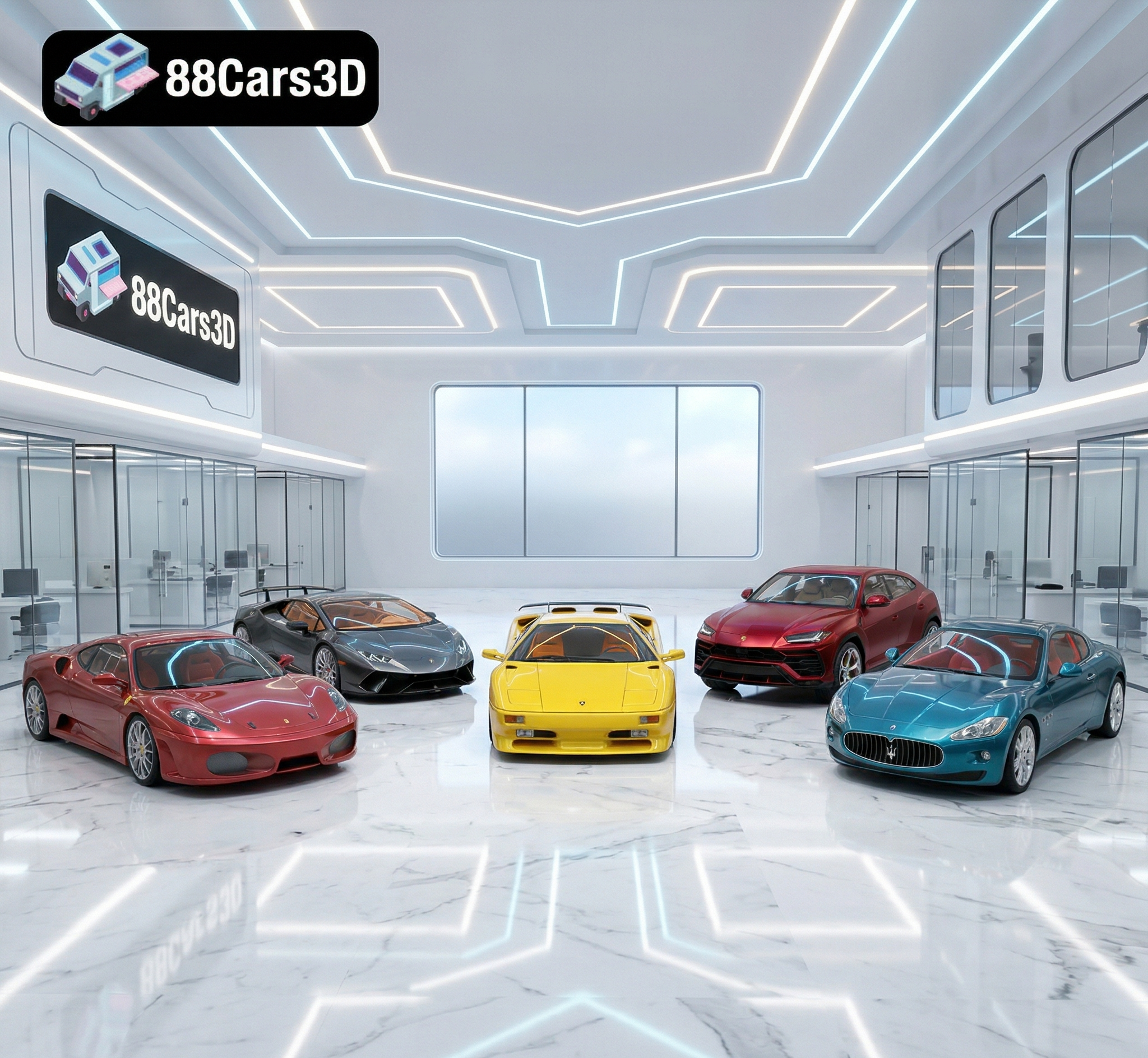
Texture: Yes | Material: Yes | 3D Printable: Yes. Download the Italian Thoroughbreds Bundle featuring 5 iconic 3D models: Lamborghini Huracán Performante, Ferrari 458 Italia, Lamborghini Urus, Diablo SV, and Maserati GT. Optimized for 4K rendering and 3D printing (STL included). Save 50% with this ultimate Italian vehicle collection.
Price: $199.99

Download the Elite Future Mobility Bundle featuring 4 highly optimized 3D models: Tesla Model S, Avatr 11, Li L9, and Zoox Robotaxi. Perfect for ArchViz, Smart City renders, and game dev. Optimized for Unreal Engine and Blender. Includes .fbx, .obj, and .max formats.
Price: $99

🚗 5 Iconic German Cars (BMW M4 G82, M5 CS, X3, 1 Series & Mercedes E-Class). ✅ Optimized for ArchViz: Ready for Corona & V-Ray. 💰 Save €71 with this limited-time collection! 🚀 Instant Download after purchase.
Price: $119
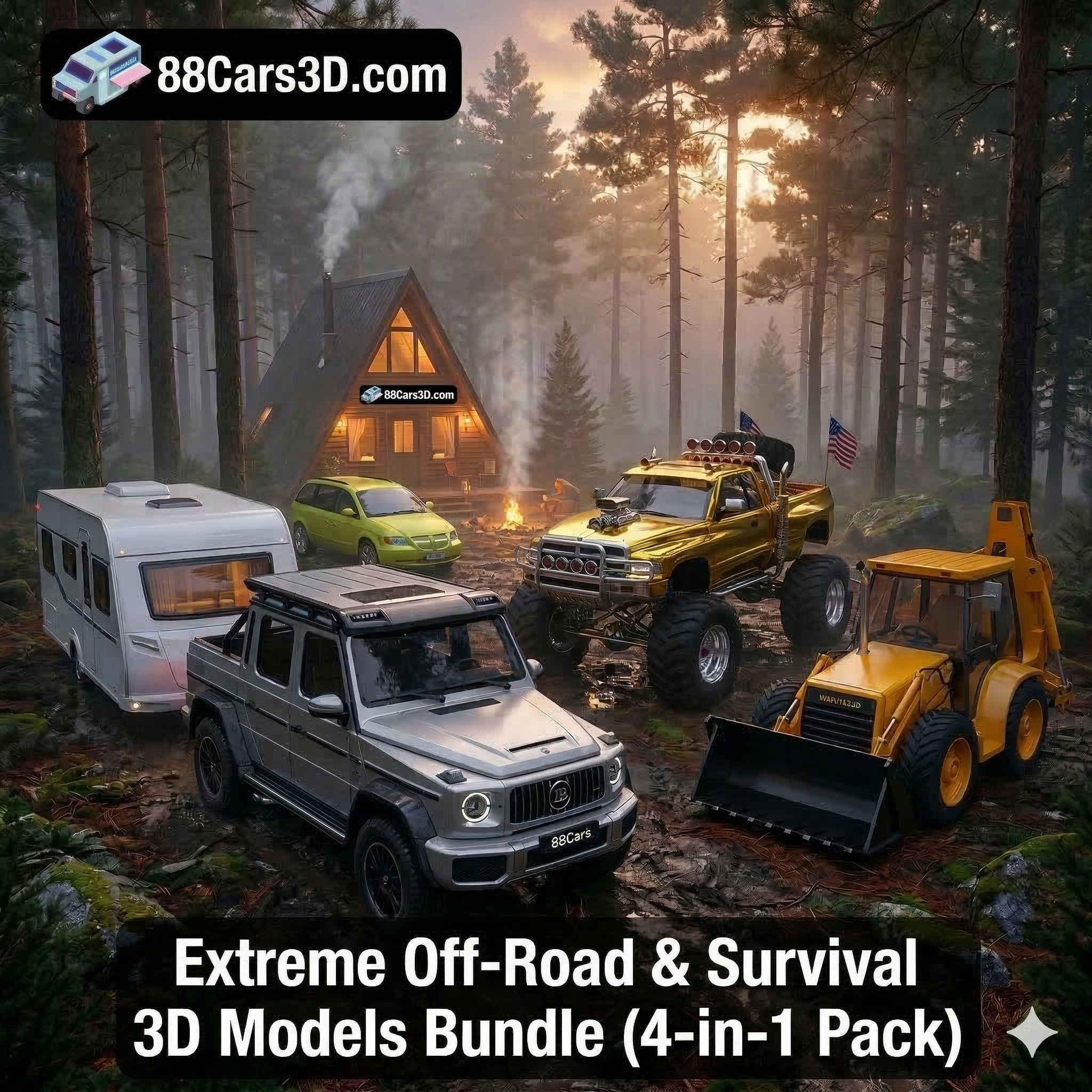
Download the Extreme Off-Road & Survival 3D Models Bundle! Includes the Brabus 800 Adventure, Dodge Ram Bigfoot, Spec Truck, and a Caravan. Save over €210 on this premium 4-in-1 off-grid vehicle pack for ArchViz and game development.
Price: $149.99
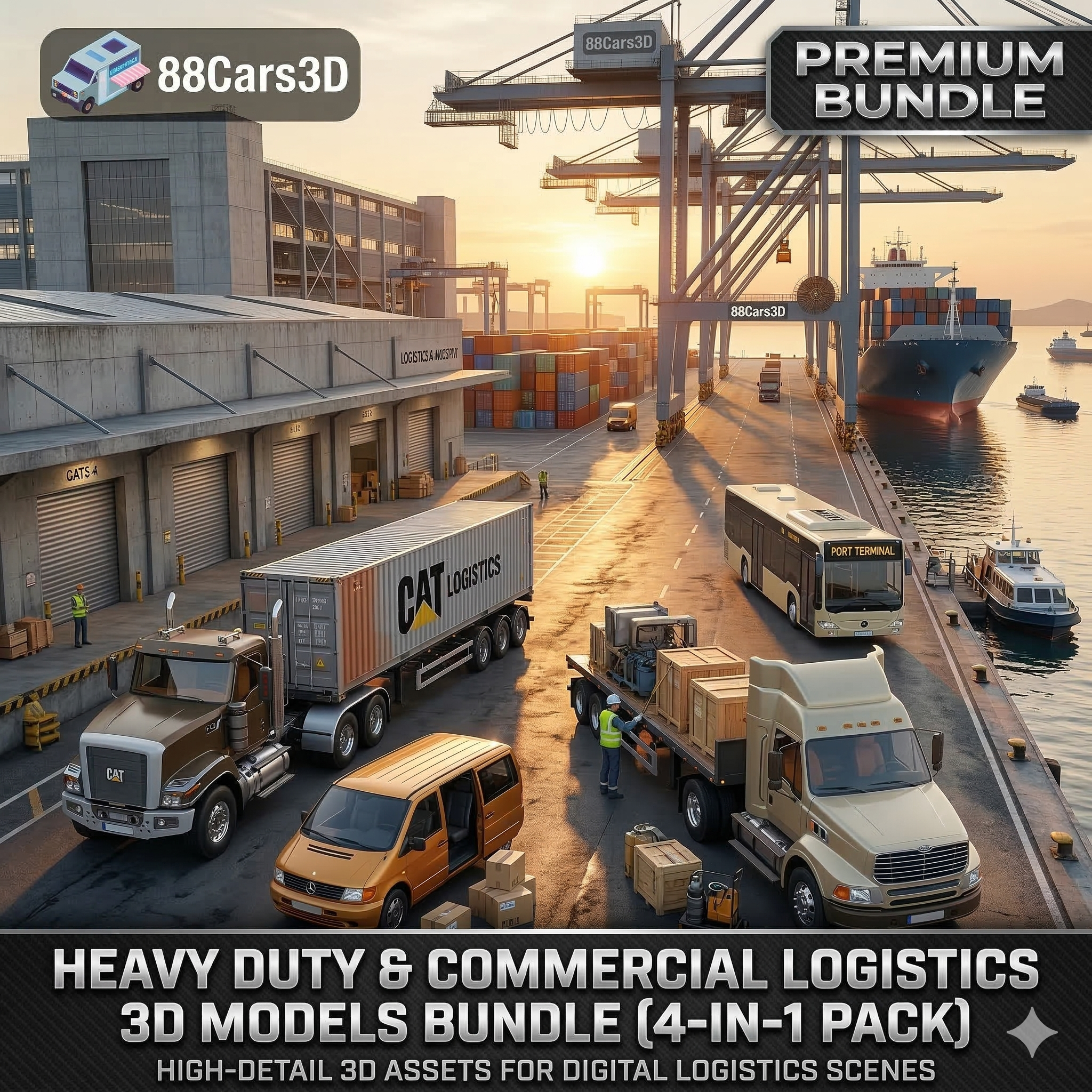
Download the Heavy Duty & Commercial Logistics 3D Models Bundle! Includes the Ford Sterling, Caterpillar CT680, Mercedes Citaro Bus, and Vito Van. Save over €130 on this massive, game-ready 4-in-1 industrial vehicle pack.
Price: $109.99

Download the Ultimate Custom Motorcycles 3D Models Bundle. Includes a Custom Chopper, Ducati 916 Café Fighter, Harley XR1200X, and BMW K100. Perfect premium props for luxury ArchViz garages. Save over €250 today!
Price: $159.99

Download the ultimate JDM Street Racing 3D Models Bundle! Includes the Nissan GT-R, Toyota Supra, Mazda RX-7, Lancer Evo IX, and Honda NSX. Save big on this highly optimized, game-ready 5-in-1 Japanese legend car pack.
Price: $129.99

Download the ultimate American Muscle & Cinematic Classics 3D Models Bundle! Includes the Dodge Charger ’68, Mustang Eleanor GT500, Camaro Z28 ’79, and a custom ’69 Mustang. Save over €240 on this game-ready, premium 4-in-1 pack.
Price: $149.99
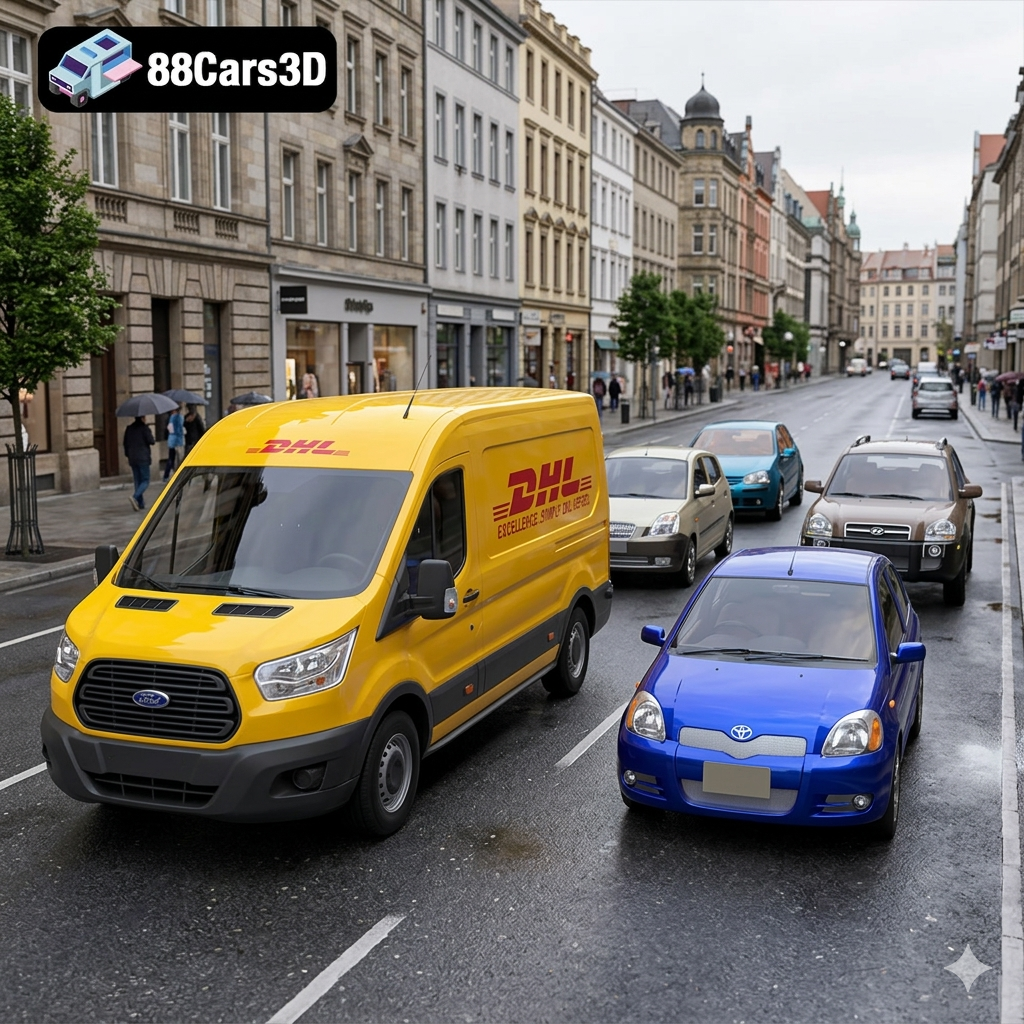
Download the Everyday City Traffic 3D Models Bundle. Includes the VW Golf, Kia Picanto, Hyundai Tucson, Toyota Yaris, and a DHL Ford Transit Van. Save big on this 5-in-1 pack, perfectly optimized for realistic ArchViz streets and game traffic.
Price: $99.99
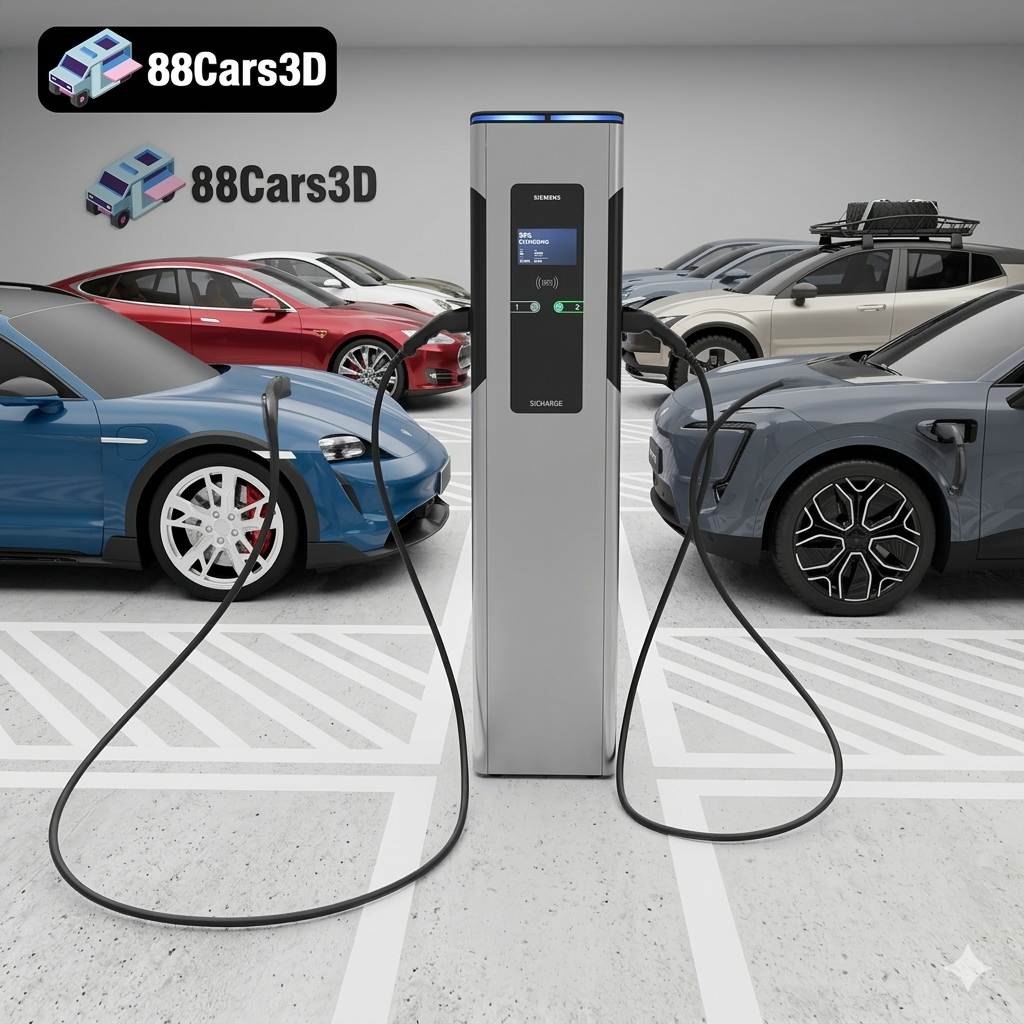
Download the Future of Mobility EV 3D Models Bundle. Includes the Volvo EX30, Tesla Model S, AVATR 11, Porsche Taycan, and a Siemens EV Charger. Save big on this highly optimized 5-in-1 pack for ArchViz and game development!
Price: $89.99

