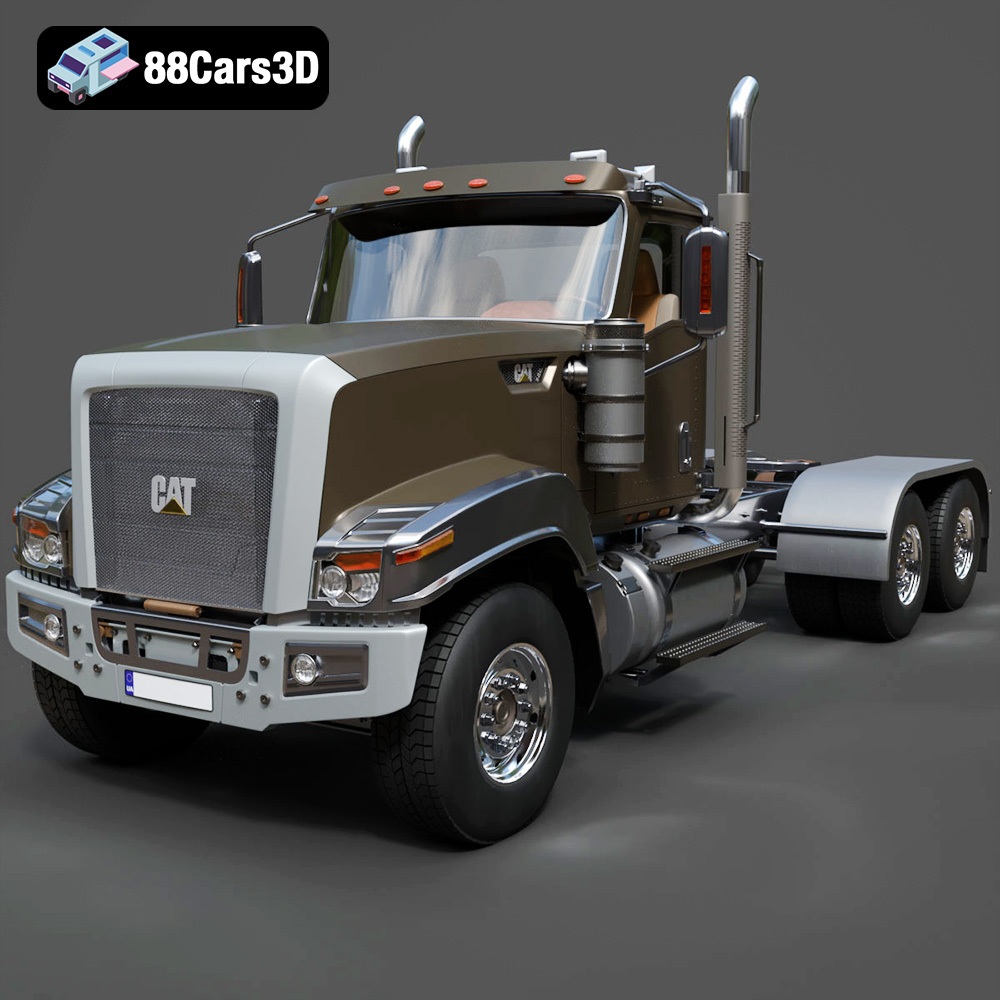
Why CAD Designers Still Prefer STEP Files Over STL for Automotive 3D Models
In the high-stakes world of automotive design and manufacturing, precision isn’t just a preference; it’s a fundamental requirement. Every curve, every tolerance, and every material specification contributes to a vehicle’s performance, safety, and aesthetic appeal. While STL files have become ubiquitous in the realm of 3D printing and rapid prototyping, professional CAD designers and engineers in the automotive sector continue to overwhelmingly prefer STEP files for their core design and engineering workflows. This isn’t merely a matter of tradition but a deeply rooted technical necessity driven by the inherent differences in how these two file formats represent 3D models.
This comprehensive guide will delve into the technical disparities between STEP and STL, explaining why STEP remains the gold standard for automotive design, CAE (Computer-Aided Engineering), CAM (Computer-Aided Manufacturing), and collaborative product lifecycle management (PLM). We’ll explore the critical aspects of geometric representation, data fidelity, and workflow implications that solidify STEP’s indispensable role.
Understanding the Core Difference: Parametric vs. Tessellated Geometry
At the heart of the preference lies a fundamental distinction in how STEP and STL files describe a 3D object.
The Precision of STEP: NURBS and Parametric Data
STEP, which stands for “Standard for the Exchange of Product model data,” is an ISO standard (ISO 10303) designed to provide a comprehensive, unambiguous, and computer-interpretable representation of product information throughout its lifecycle. For CAD designers, its primary strength lies in its ability to store exact geometric representation.
- NURBS Surfaces: STEP files predominantly use NURBS (Non-Uniform Rational B-Splines) surfaces to define complex curves and surfaces. NURBS are mathematical equations that precisely describe the geometry, allowing for infinite resolution and perfectly smooth transitions. This is crucial for Class-A surfacing, where aesthetic perfection and aerodynamic performance demand G2 (curvature) and even G3 (torsion) continuity. Automotive examples include car body panels, interior surfaces, and aerodynamic components, where even microscopic imperfections are unacceptable.
- Parametric Features and Design Intent: STEP files also retain parametric data, meaning they store the “design intent” behind the model. This includes features like sketches, extrudes, revolves, fillets, chamfers, and hole patterns, along with their associated dimensions and relationships. If a design needs modification—say, changing the radius of a fillet or the diameter of a bolt hole—a CAD designer can directly edit these parameters. The model intelligently updates, preserving the original design intent and avoiding costly rework. This is invaluable for the iterative design process common in automotive development, where prototypes are constantly refined.
The Approximation of STL: Triangles and Tessellation
STL, short for “Stereolithography,” is a much simpler file format that defines a 3D model as a collection of unconnected triangular facets. Each triangle is defined by the XYZ coordinates of its three vertices and the direction of its normal vector (indicating which side of the triangle is “out”).
- Tessellated Nature: Unlike STEP’s mathematical precision, STL approximates curved surfaces by breaking them down into many small, flat triangles—a process called tessellation. The more triangles used, the finer the approximation, but never truly exact.
- Faceting and Accuracy Trade-offs: This approximation leads to “faceting,” where curved surfaces appear segmented or jagged, especially at lower resolutions. Increasing the number of triangles can improve the visual smoothness and accuracy, but it also drastically increases file size, making models cumbersome to handle. For professional automotive design where tolerances are often measured in microns, the inherent inaccuracy of a tessellated model is simply unacceptable for the master design.
- Limitations for Modification: An STL file is essentially “dumb geometry.” It contains no information about how the object was created, no parameters, and no design intent. To modify an STL model, a designer would have to attempt reverse engineering, manually identifying surfaces and recreating them parametrically, which is an arduous and often imprecise task.
Data Fidelity and Integrity: Critical for Automotive Design
Beyond pure geometry, the amount and type of data embedded within a file format are paramount for complex engineering projects like automotive development.
STEP’s Rich Data Ecosystem
STEP files are not just about shapes; they are comprehensive data containers:
- Beyond Geometry: A STEP file can encapsulate a wealth of engineering data, including material properties, GD&T (Geometric Dimensioning and Tolerancing), assembly information (how parts fit together), and PMI (Product Manufacturing Information) such as surface finish requirements, weld specifications, and heat treatment instructions.
- Importance for Downstream Processes: This rich metadata is critical for seamless integration with downstream processes:
- CAE (Simulation & Analysis): For FEA (Finite Element Analysis), a precise, mathematically defined surface is essential for generating an accurate mesh and obtaining reliable simulation results for structural integrity, crashworthiness, or fluid dynamics.
- CAM (Manufacturing): CNC machining and other manufacturing processes rely on exact surface definitions to generate precise toolpaths. Using a faceted model can lead to inaccuracies, poor surface finishes, and increased machining time.
- Quality Control: Precise measurement against the original STEP CAD data ensures that manufactured parts meet design specifications and tight tolerances.
- Interoperability: STEP is designed for robust data exchange between different CAD software platforms (e.g., Catia, SolidWorks, NX, Inventor), ensuring that design intent and engineering data are preserved when transferring models between suppliers and partners across the globe.
STL’s Geometric Simplification
In stark contrast, STL files are notoriously “data-poor”:
- “Dumb” Geometry: An STL file contains only the XYZ coordinates of the triangle vertices and their normal vectors. There is no information about arcs, circles, cylinders, spheres, or other high-level geometric entities. It’s merely a collection of points and planes.
- Lack of Metadata: Crucially, STL files strip away all engineering intelligence—no material properties, no tolerances, no assembly structure, and no manufacturing annotations. This makes them unsuitable for any engineering analysis or direct manufacturing process that requires more than just the basic form.
- Insufficient for Professional Workflow: While perfect for instructing a 3D printer on where to lay down material, this geometric simplification renders STL inadequate for the comprehensive, data-rich workflows demanded by the automotive industry’s professional design, engineering, and manufacturing phases.
Workflow Implications: Design, Analysis, and Manufacturing
The choice of file format profoundly impacts efficiency, accuracy, and collaboration throughout the automotive product development cycle.
Iterative Design and Collaboration with STEP
Automotive design is a highly iterative process, involving numerous design cycles and continuous refinement:
- Ease of Modification: With STEP, designers can easily revisit any stage of the design history, modify parameters, and see the changes propagate through the model. This flexibility is essential for optimizing designs based on simulation results, manufacturing feedback, or styling adjustments.
- Version Control and Global Collaboration: STEP files, especially when managed within a PDM (Product Data Management) or PLM system, allow for robust version control and seamless collaboration among distributed teams and supply chain partners. Everyone works from the latest, most accurate master model.
- Multi-CAD Environments: In an industry where different OEMs and suppliers use various CAD systems, STEP acts as the universal language for exchanging precise, editable models, minimizing data translation errors and ensuring design integrity across the ecosystem.
STL’s Role in Rapid Prototyping (and its Limitations for Design)
While limited for core design, STL plays a vital role in specific phases:
- Perfect for 3D Printing: STL’s simple, tessellated structure is precisely what 3D printers understand. It’s the most widely supported format for additive manufacturing, ideal for quickly creating physical prototypes to check form, fit, and aesthetic appeal.
- Quick Visualization: For non-engineering stakeholders, an STL model can be quickly rendered for visualization, providing a tangible representation of the design.
- The “Point of No Return”: However, using STL for anything beyond final output for printing marks a significant hurdle. If a design needs modification after being converted to STL, the designer almost always has to return to the original parametric CAD model (STEP or native CAD format) to make changes and then re-export a new STL. Attempting to edit an STL directly is akin to trying to edit a JPEG image of a document instead of the original Word file.
Automotive-Specific Requirements and Use Cases
The unique demands of the automotive industry underscore STEP’s critical advantage.
Precision Engineering and Class-A Surfacing
Automotive components, especially exterior body panels and interior surfaces, demand extreme precision:
- Aerodynamics and Aesthetics: Exact surface geometry is vital for optimizing aerodynamics, minimizing drag, and ensuring consistent panel gaps that speak to quality and craftsmanship. Faceting from an STL would introduce inconsistencies that are both visually unappealing and functionally detrimental.
- Curvature Continuity: Class-A surfacing requires specific levels of curvature continuity (G0, G1, G2) to ensure reflections are smooth and undistorted. STEP’s NURBS representation inherently supports and maintains this mathematical precision, which is impossible with a faceted, approximate STL model.
Simulation, Analysis, and Manufacturing Integration
Every step from design validation to production hinges on accurate data:
- FEA (Finite Element Analysis): High-fidelity CAD models from STEP are used to generate robust meshes for FEA, allowing engineers to predict how parts will behave under stress, heat, or vibration. A faceted STL model would yield inaccurate mesh generation and unreliable simulation results.
- CAM (Computer-Aided Manufacturing): Whether for stamping dies, injection molds, or direct machining, CAM software relies on the exact mathematical definitions provided by STEP files to generate precise toolpaths. This ensures parts are manufactured to exact specifications, minimizing material waste and post-processing.
- Metrology and Quality Control: Modern quality control involves scanning manufactured parts and comparing them against the original CAD model. For this, the mathematically perfect STEP model serves as the true master, against which any deviation is precisely measured.
When to Use Which: A Decision Framework
Choosing between STEP and STL isn’t about one being “better” overall, but about selecting the right tool for the right job within the automotive workflow.
Comparison Table: STEP vs. STL for Automotive Applications
| Feature/Aspect |
STEP (Standard for the Exchange of Product model data) |
STL (Stereolithography) |
| Geometric Representation |
Exact (NURBS, B-splines, mathematical curves/surfaces) |
Approximate (Triangles/Facets) |
| Design Intent |
Preserved (Parametric features, editable history) |
Lost (Dumb geometry, no feature history) |
| Modifiability |
High (Direct editing of parameters/features) |
Very Low (Editing facets is complex, requires reverse engineering) |
| Data Richness |
High (Material properties, tolerances, assembly info, PMI) |
Low (Only geometry, no metadata) |
| Precision |
Highest (Engineering-grade, infinite resolution) |
Variable (Resolution-dependent, always an approximation) |
| File Size |
Can be large but efficient for complex parametric models |
Can be very large for high detail, inefficient for complexity |
| Primary Use Case (Automotive) |
Design, Engineering, Analysis (FEA), Manufacturing (CAM), Collaboration, Archiving |
3D Printing, Rapid Prototyping, Basic Visualization |
| Automotive Fit |
Essential for the entire product lifecycle |
Useful for specific prototyping/visual steps after design finalization |
Actionable Guidance for Automotive CAD Professionals:
- Always Use STEP for:
- Any design phase requiring precision, modification, or collaboration with engineering teams.
- Transferring models between different CAD systems or to suppliers for further design work.
- Inputs for CAE (simulation, FEA) and CAM (toolpath generation) processes.
- Archiving master model data for future revisions or intellectual property protection.
- Reserve STL for:
- Exporting *finalized* designs or specific components solely for 3D printing.
- Quick visual checks or non-critical physical prototypes where exact dimensions are less crucial.
- Creating lightweight models for web-based 3D viewers where file size and tessellation are acceptable compromises.
Conclusion
The persistent preference of CAD designers for STEP files over STL in the automotive industry is not an arbitrary choice but a testament to the rigorous demands of modern vehicle development. STEP’s ability to provide exact geometric representation, retain parametric design intent, and encapsulate a rich array of engineering data makes it indispensable for every stage from concept to manufacturing. While STL remains a vital tool for the rapid prototyping afforded by additive manufacturing, its inherent limitations as a tessellated, data-poor format render it unsuitable for the precision engineering, analysis, and collaborative workflows that define automotive excellence.
Understanding these distinctions is crucial for optimizing workflows, ensuring data integrity, and ultimately, delivering the high-quality, high-performance vehicles that the world demands. The right file format at the right stage means the difference between a seamless journey from design to production and a road fraught with costly errors and rework.
Ready to Optimize Your Automotive Design Workflows?
Whether you’re struggling with data interoperability, looking to enhance your 3D modeling precision, or seeking expert guidance on integrating advanced CAD and manufacturing processes, our team of specialists can help. Explore our resources on advanced CAD modeling techniques, PLM strategies, and 3D printing applications tailored for the automotive sector.
Contact Us for Expert Consultation
Or Browse Our Extensive Resource Library to deepen your understanding of automotive engineering best practices.