Get 50% OFF All Premium 3D & STL Models!

The automotive industry is at the forefront of digital transformation, continuously seeking innovative ways to visualize, market, and develop vehicles. From concept design and engineering reviews to marketing campaigns and interactive customer experiences, the demand for stunning, real-time representations of automobiles has never been higher. Unreal Engine stands as a powerhouse in this evolution, offering unparalleled photorealism, dynamic interactivity, and rapid iteration capabilities that are revolutionizing how we perceive and interact with cars.
This comprehensive guide will explore the essential workflows and advanced techniques for leveraging Unreal Engine in automotive visualization. We’ll delve into everything from setting up your project and importing high-quality 3D car models—such as those found on platforms like 88cars3d.com—to crafting realistic materials, mastering lighting, optimizing performance, and building interactive experiences. Whether you’re a seasoned 3D artist, a game developer, or an automotive designer, this article will equip you with the knowledge to push the boundaries of real-time automotive rendering and create breathtaking virtual automotive experiences. Prepare to unlock the full potential of Unreal Engine for your next automotive project.
Embarking on an automotive visualization project in Unreal Engine begins with a solid foundation: proper project setup and the efficient import of your 3D car models. A well-configured project ensures optimal performance and access to the necessary tools, while a streamlined import process guarantees your assets are ready for high-fidelity rendering. Unreal Engine provides robust tools for handling complex 3D data, making it the ideal environment for showcasing intricate car designs.
When creating a new Unreal Engine project for automotive visualization, selecting the right template and enabling key plugins is crucial. While a “Blank” project offers maximum flexibility, the “Virtual Production” template can be a great starting point for advanced cinematic or LED wall workflows, as it pre-enables many relevant plugins.
For automotive visualization, ensure the following core plugins are enabled via Edit > Plugins:
Beyond plugins, check your Project Settings (Edit > Project Settings). Under Engine > Rendering, consider:
Proper project configuration sets the stage for a smooth and efficient development process, preventing headaches down the line.
Sourcing high-quality 3D car models is paramount for achieving photorealistic results. Platforms like 88cars3d.com offer pre-optimized, meticulously crafted models that save significant production time. These models typically come in formats like FBX or USD, which are ideal for Unreal Engine.
FBX Workflow:
The FBX format is a long-standing industry standard. When importing an FBX file:
Click Import All.
USD Workflow:
USD is gaining traction for its ability to handle complex scene graphs, layering, and non-destructive editing. To import USD:
Models from 88cars3d.com are typically clean and well-structured, minimizing post-import cleanup. However, always check the imported assets:
For more detailed information on importing assets, consult the official Unreal Engine documentation on importing 3D assets: https://dev.epicgames.com/community/unreal-engine/learning.
The visual fidelity of an automotive visualization hinges significantly on the quality of its materials. Unreal Engine’s Physically Based Rendering (PBR) system allows artists to create incredibly realistic surfaces that react to light in a physically accurate manner. Understanding PBR principles and how to implement them effectively in the Material Editor is key to making your 3D cars indistinguishable from their real-world counterparts.
PBR is a collection of rendering techniques designed to simulate how light interacts with surfaces in the real world. Unlike older, artistic material workflows, PBR materials adhere to physical laws, ensuring consistent and predictable results under various lighting conditions. The core properties of a PBR material include:
A crucial PBR concept is energy conservation: a surface cannot reflect more light than it receives. What isn’t reflected specularly is typically reflected diffusely (for non-metals), ensuring realistic light distribution.
Creating compelling automotive materials involves a deep understanding of how different surfaces behave. The Unreal Engine Material Editor is a node-based interface that allows for complex material networks.
Car Paint:
This is often the most challenging material. A realistic car paint material typically involves:
Glass Materials:
Car windows require realism in both transparency and reflection.
Tire Rubber:
Tires need to look robust and slightly worn.
Interior Materials (Leather, Fabric, Plastics):
These materials often rely on detailed texture maps for Base Color, Normal, and Roughness. For leather, consider subtle SSS for a more organic feel. For plastics, variations in roughness (e.g., glossy piano black vs. matte dashboard) are crucial.
Utilize Material Instances to create variations of your master materials (e.g., different car colors, tire wear levels) without duplicating complex node networks, promoting efficiency and flexibility.
Lighting is the art of revealing form and texture. In automotive visualization, it’s not just about making the car visible, but about making it shine, highlighting its design language, and evoking a desired mood. Unreal Engine’s advanced lighting systems, particularly Lumen, offer unprecedented control and realism for real-time environments.
Lumen is Unreal Engine’s fully dynamic global illumination and reflections system, providing highly realistic indirect lighting and reflections without needing to bake lightmaps. This is a game-changer for automotive visualization, enabling rapid iteration on lighting setups and dynamic scenarios (e.g., time-of-day changes, moving cars).
How Lumen Works:
Lumen uses a combination of techniques, primarily:
Lumen dynamically updates indirect lighting as objects move or lights change, making it perfect for interactive configurators or cinematic sequences with moving vehicles.
Lumen Setup and Best Practices:
To enable Lumen, go to Project Settings > Engine > Rendering > Global Illumination and Reflections, then set them to “Lumen.”
In your Post-Process Volume:
For automotive scenes, ensure your environment meshes (ground plane, studio backdrop) have correct two-sided geometry or thick enough walls to prevent light leaks, as Lumen relies on geometry for light bouncing.
Beyond Lumen, the strategic placement and configuration of individual light sources are critical for a professional automotive presentation.
Finally, the Post-Process Volume is your final touch. Use it to:
By combining dynamic global illumination with strategically placed direct lights and careful post-processing, you can elevate your automotive visualizations to cinematic levels. For further learning on lighting, refer to the Unreal Engine documentation on lighting concepts: https://dev.epicgames.com/community/unreal-engine/learning.
Achieving stunning visual fidelity in Unreal Engine is only half the battle; maintaining smooth, interactive performance in real-time is equally crucial, especially for demanding applications like AR/VR or high-frame-rate configurators. High-polygon car models, complex materials, and intricate environments can quickly strain hardware, making optimization a continuous process.
Nanite, Unreal Engine’s virtualized geometry system, is a revolutionary technology for handling extremely high-polygon meshes with incredible efficiency. For automotive visualization, where car models can easily feature millions of polygons, Nanite is a game-changer.
How Nanite Works:
Nanite intelligently streams and renders only the necessary detail for pixels on screen. Instead of loading and processing the entire mesh, it works with a highly optimized mesh format that allows it to:
This means you can import incredibly detailed 3D car models from marketplaces like 88cars3d.com, which are often high-fidelity, and benefit from Nanite’s performance gains without extensive manual optimization.
Enabling and Using Nanite:
To enable Nanite for a Static Mesh:
Once enabled, Nanite will automatically manage the mesh’s complexity at runtime. You can visualize Nanite statistics using the command `stat nanite` and debug modes (e.g., “Nanite Triangles” in the Viewport’s Lit dropdown) to understand its performance impact.
Considerations for Nanite:
While Nanite handles geometry brilliantly, other aspects still require traditional optimization. For meshes not supported by Nanite or for projects targeting lower-end hardware, LODs remain vital.
Level of Detail (LODs):
LODs are simplified versions of a mesh that are swapped in when an object is further away from the camera, reducing polygon count and improving performance.
Additional Optimization Strategies:
Use Unreal Engine’s profiling tools (stat unit, stat gpu, stat rhi, Profiler) to identify performance bottlenecks and guide your optimization efforts. For comprehensive guides on performance, refer to the Unreal Engine documentation on performance and optimization: https://dev.epicgames.com/community/unreal-engine/learning.
Unreal Engine extends beyond static renders, empowering creators to build immersive, interactive automotive experiences and integrate vehicles into cutting-edge virtual production pipelines. From dynamic configurators that allow customers to personalize a vehicle in real-time to cinematic sequences that rival Hollywood productions, the possibilities are vast.
Blueprint Visual Scripting is Unreal Engine’s powerful node-based scripting system, enabling non-programmers to create complex interactive functionalities without writing a single line of code. This makes it ideal for building automotive configurators, interactive showrooms, and dynamic demos.
Basic Blueprint Setup for Car Customization:
To create a simple car color changer:
User Interface (UI/UMG) Integration:
To make your configurator user-friendly, you’ll need a UI. Unreal Motion Graphics (UMG) is the integrated UI editor.
Blueprint allows for sophisticated interactions, such as opening doors, turning on lights, or even creating simple driving mechanics, all driven by visual logic.
Unreal Engine’s Sequencer is a multi-track editor for creating cinematic sequences, animations, and camera moves. It’s an indispensable tool for marketing materials, virtual showcases, and pre-visualization.
Sequencer Basics:
Sequencer is incredibly powerful for orchestrating complex scenes, from a car driving gracefully through a dynamic environment to showcasing intricate interior details with elegant camera pans.
Virtual Production and LED Wall Workflows:
Unreal Engine is at the heart of modern virtual production, particularly for LED wall stages. Automotive companies are using this to shoot commercials or marketing content in real-time, placing a physical car in front of an LED wall displaying an Unreal Engine-rendered environment.
For detailed instructions on using Sequencer, refer to the official Unreal Engine documentation on Sequencer workflows: https://dev.epicgames.com/community/unreal-engine/learning.
Beyond traditional visualization, Unreal Engine empowers automotive companies to explore cutting-edge applications like Augmented and Virtual Reality, realistic physics simulations, and stay ahead of future technological trends. These applications push the boundaries of immersion and interaction, offering novel ways for consumers and professionals to engage with vehicles.
AR (Augmented Reality) and VR (Virtual Reality) offer unparalleled immersion, allowing users to experience a car virtually, whether placing it in their driveway (AR) or exploring it in a fully digital environment (VR). However, achieving a smooth, comfortable experience in AR/VR demands stringent optimization.
Specific Performance Considerations for AR/VR:
Optimization Strategies for AR/VR Automotive:
For driving simulators, realistic marketing experiences, or even in-game vehicle dynamics, Unreal Engine’s Chaos Vehicles plugin provides a robust framework.
Setting Up Chaos Vehicles:
This setup allows for convincing real-time driving experiences, crucial for virtual test drives or interactive game environments. With careful tuning, you can achieve highly realistic vehicle handling that responds accurately to user input and environmental factors. Chaos Vehicles offers a foundation for sophisticated automotive simulations, making virtual driving experiences more engaging and authentic.
Unreal Engine has firmly established itself as the premier platform for automotive visualization, offering an unparalleled suite of tools for creating photorealistic renders, immersive interactive experiences, and cutting-edge virtual productions. We’ve journeyed through the critical stages of building an automotive project, from meticulous project setup and the efficient import of high-quality 3D car models—such as those readily available from 88cars3d.com—to mastering physically based materials, illuminating scenes with dynamic global illumination, and optimizing performance for smooth real-time delivery.
We also explored the power of Blueprint for crafting interactive configurators, the cinematic capabilities of Sequencer, and Unreal Engine’s pivotal role in virtual production workflows with LED walls. Finally, we touched upon advanced applications like AR/VR optimization and realistic vehicle physics, showcasing the engine’s versatility in meeting diverse industry demands.
The journey into real-time automotive visualization with Unreal Engine is one of continuous learning and innovation. By embracing these workflows and best practices, you can unlock incredible creative potential, streamline your production pipeline, and deliver breathtaking automotive experiences that captivate and inform. The future of automotive design, marketing, and interaction is real-time, and Unreal Engine is the engine driving that future. Start building your next automotive masterpiece today.
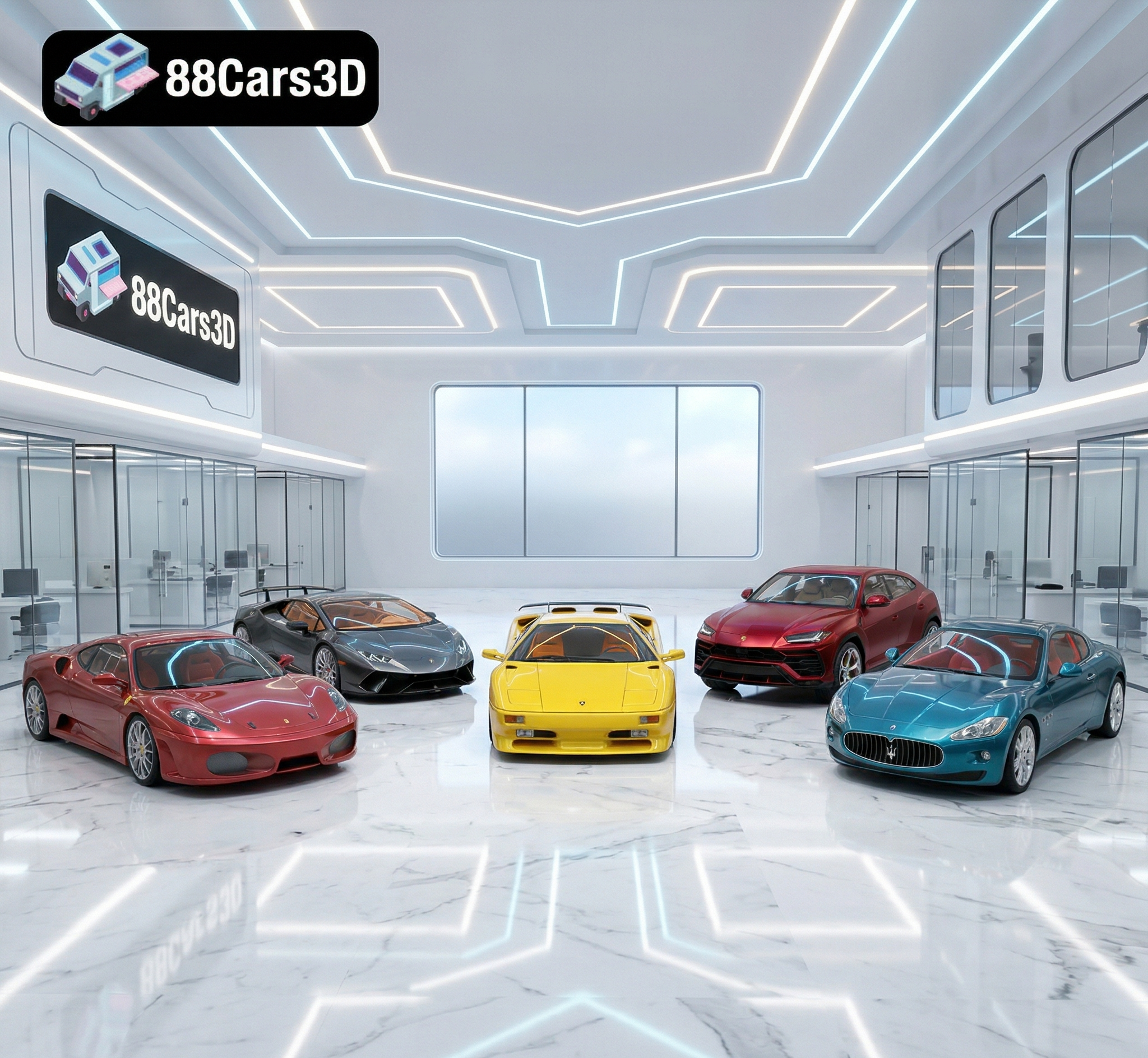
Texture: Yes | Material: Yes | 3D Printable: Yes. Download the Italian Thoroughbreds Bundle featuring 5 iconic 3D models: Lamborghini Huracán Performante, Ferrari 458 Italia, Lamborghini Urus, Diablo SV, and Maserati GT. Optimized for 4K rendering and 3D printing (STL included). Save 50% with this ultimate Italian vehicle collection.
Price: $199.99

Download the Elite Future Mobility Bundle featuring 4 highly optimized 3D models: Tesla Model S, Avatr 11, Li L9, and Zoox Robotaxi. Perfect for ArchViz, Smart City renders, and game dev. Optimized for Unreal Engine and Blender. Includes .fbx, .obj, and .max formats.
Price: $99
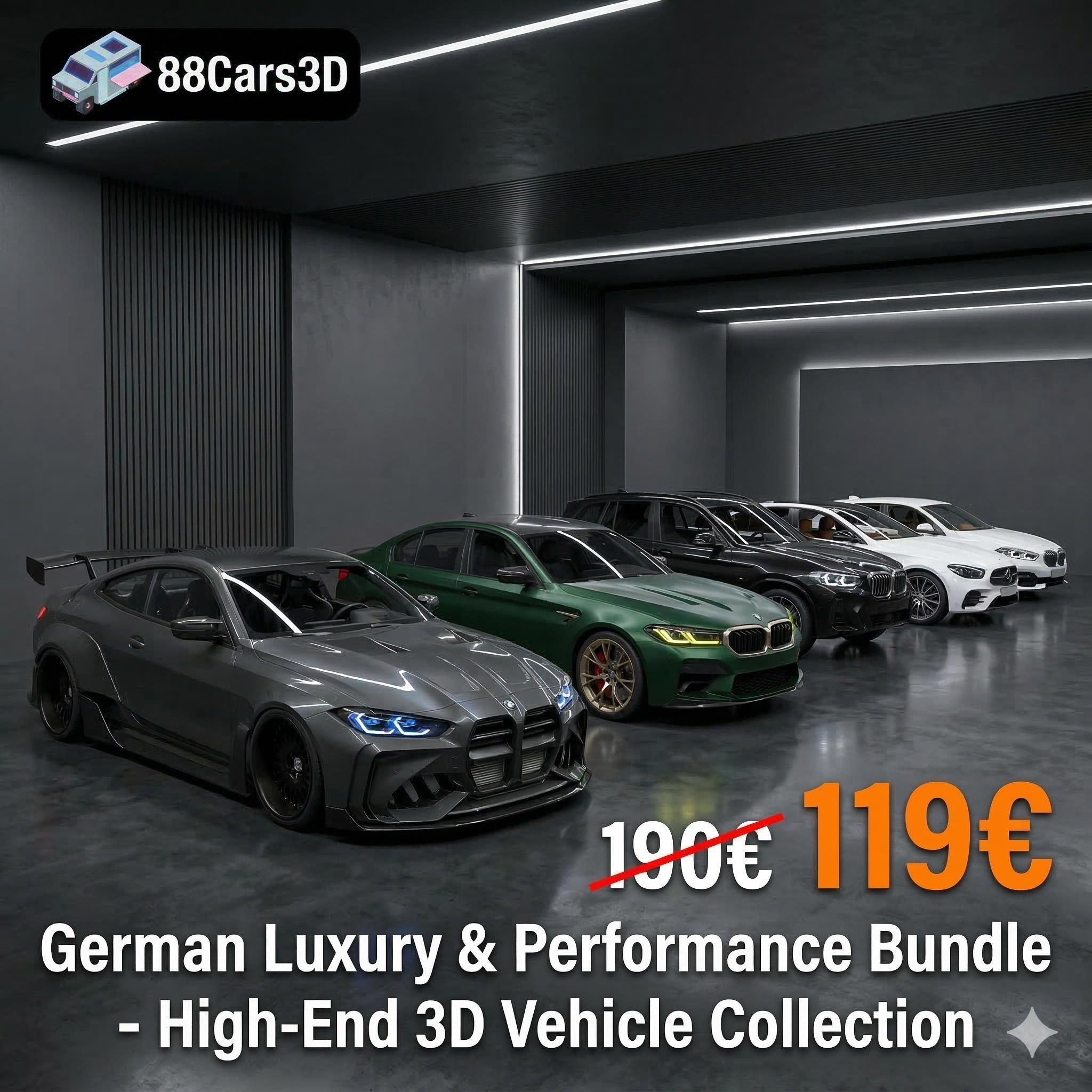
🚗 5 Iconic German Cars (BMW M4 G82, M5 CS, X3, 1 Series & Mercedes E-Class). ✅ Optimized for ArchViz: Ready for Corona & V-Ray. 💰 Save €71 with this limited-time collection! 🚀 Instant Download after purchase.
Price: $119
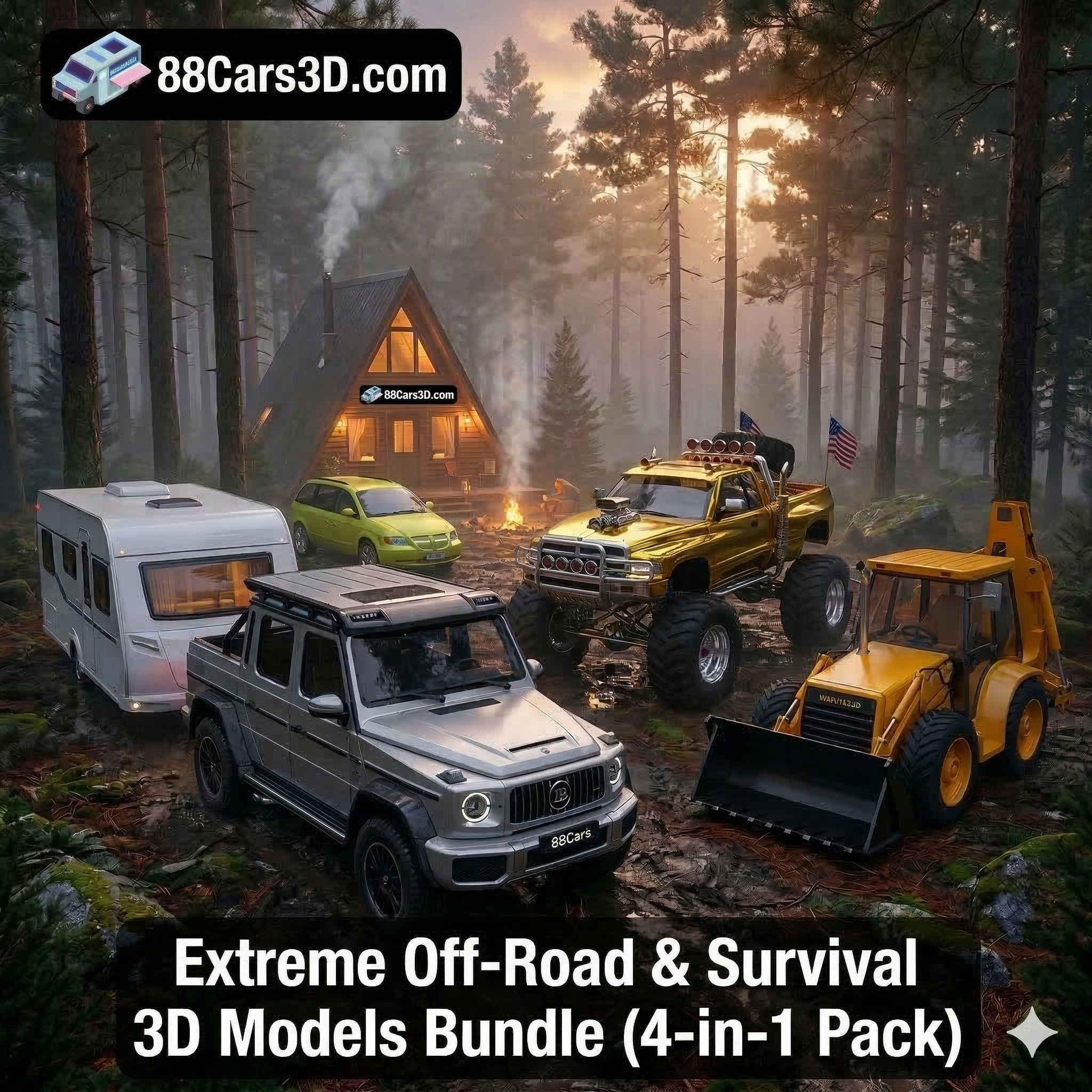
Download the Extreme Off-Road & Survival 3D Models Bundle! Includes the Brabus 800 Adventure, Dodge Ram Bigfoot, Spec Truck, and a Caravan. Save over €210 on this premium 4-in-1 off-grid vehicle pack for ArchViz and game development.
Price: $149.99
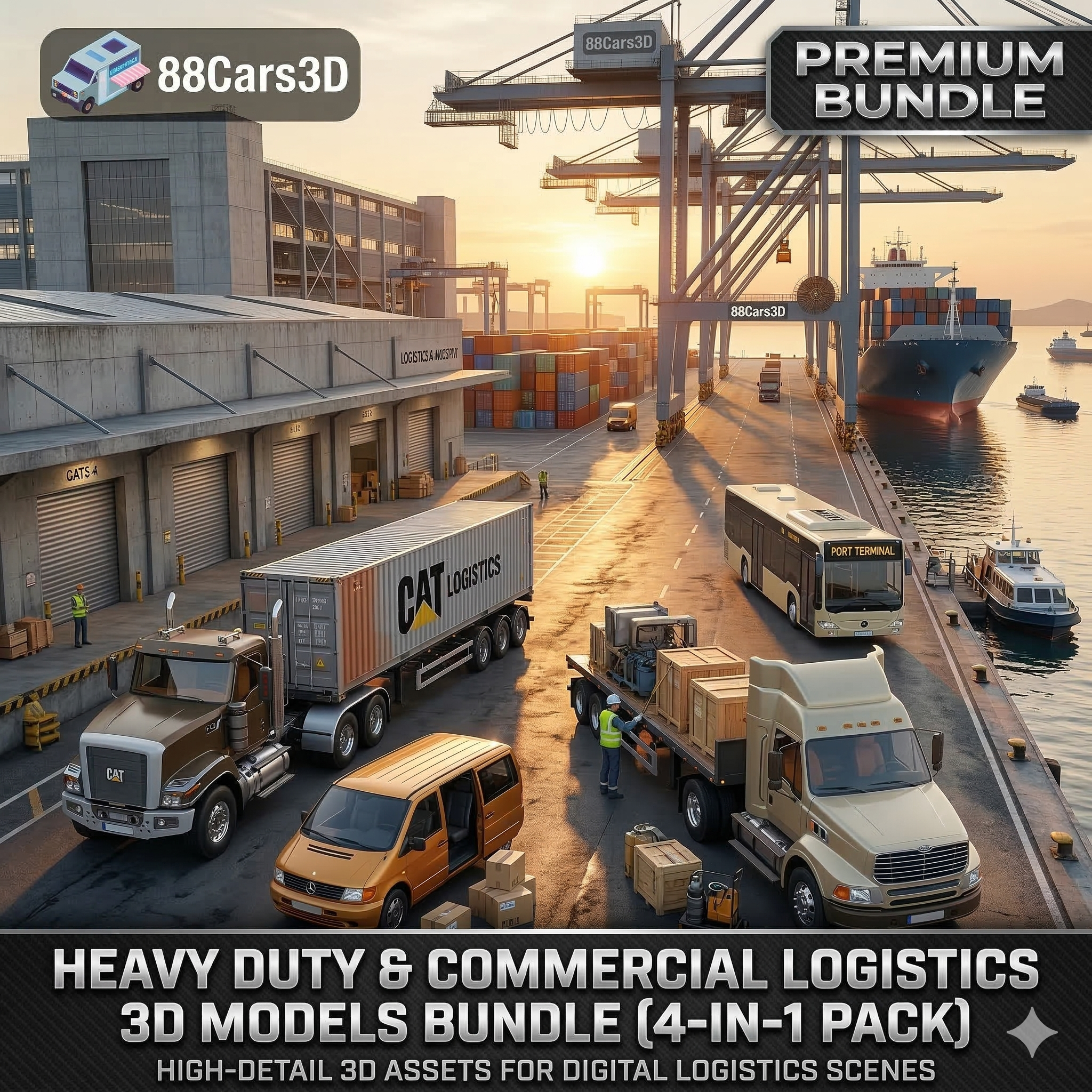
Download the Heavy Duty & Commercial Logistics 3D Models Bundle! Includes the Ford Sterling, Caterpillar CT680, Mercedes Citaro Bus, and Vito Van. Save over €130 on this massive, game-ready 4-in-1 industrial vehicle pack.
Price: $109.99

Download the Ultimate Custom Motorcycles 3D Models Bundle. Includes a Custom Chopper, Ducati 916 Café Fighter, Harley XR1200X, and BMW K100. Perfect premium props for luxury ArchViz garages. Save over €250 today!
Price: $159.99

Download the ultimate JDM Street Racing 3D Models Bundle! Includes the Nissan GT-R, Toyota Supra, Mazda RX-7, Lancer Evo IX, and Honda NSX. Save big on this highly optimized, game-ready 5-in-1 Japanese legend car pack.
Price: $129.99

Download the ultimate American Muscle & Cinematic Classics 3D Models Bundle! Includes the Dodge Charger ’68, Mustang Eleanor GT500, Camaro Z28 ’79, and a custom ’69 Mustang. Save over €240 on this game-ready, premium 4-in-1 pack.
Price: $149.99
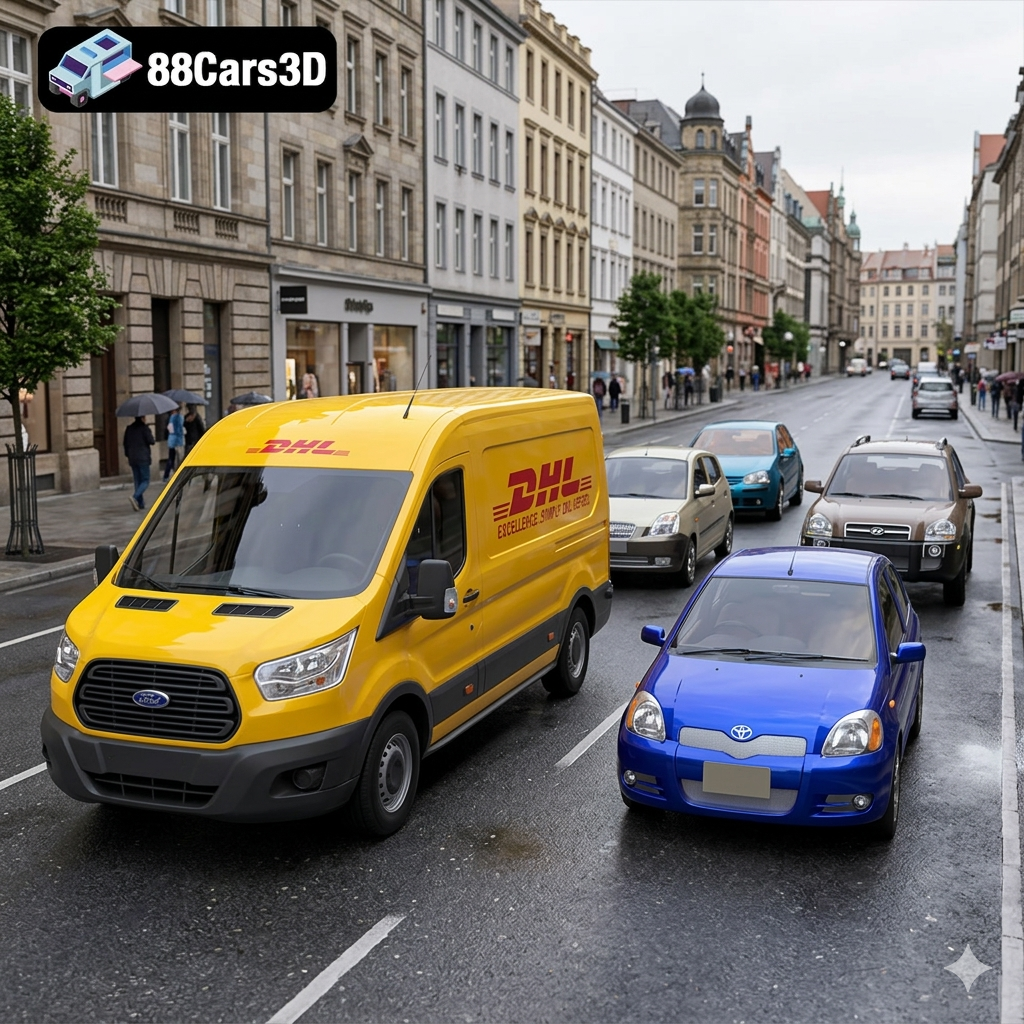
Download the Everyday City Traffic 3D Models Bundle. Includes the VW Golf, Kia Picanto, Hyundai Tucson, Toyota Yaris, and a DHL Ford Transit Van. Save big on this 5-in-1 pack, perfectly optimized for realistic ArchViz streets and game traffic.
Price: $99.99
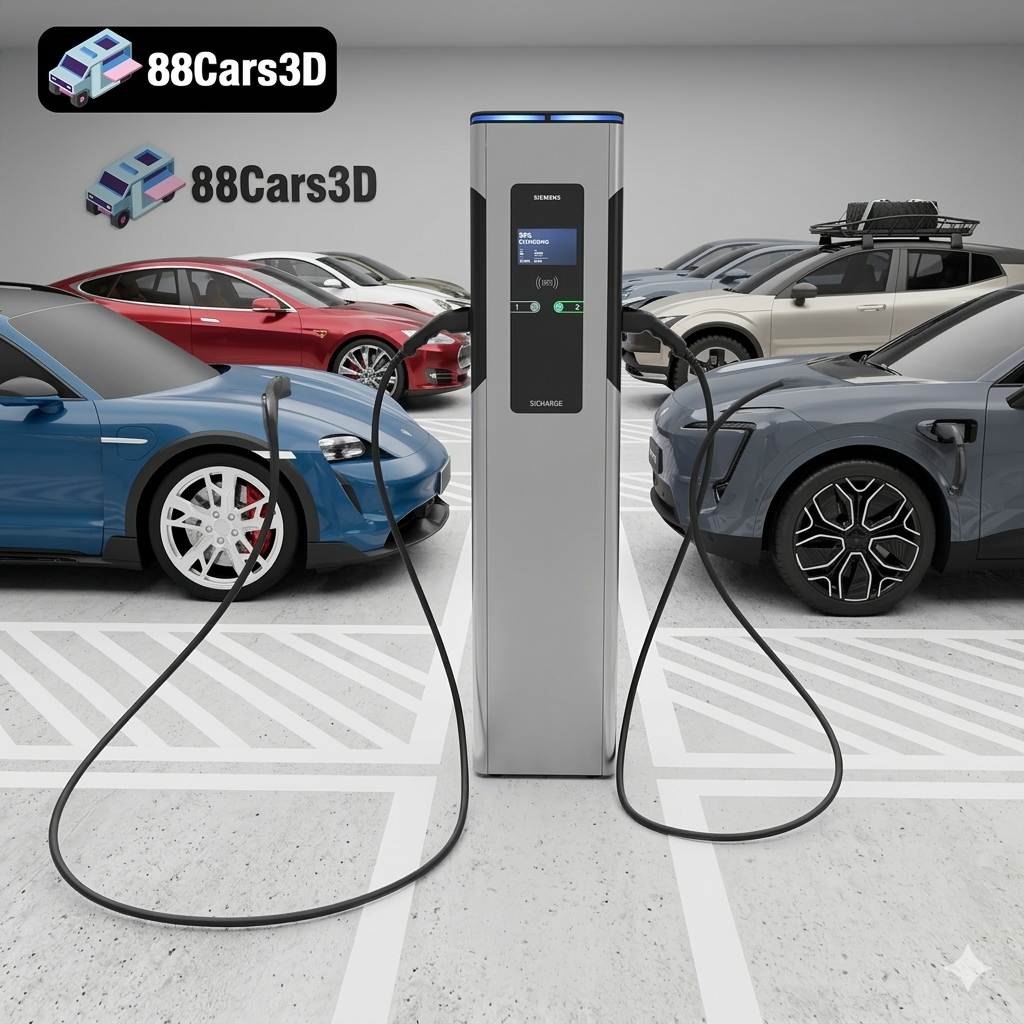
Download the Future of Mobility EV 3D Models Bundle. Includes the Volvo EX30, Tesla Model S, AVATR 11, Porsche Taycan, and a Siemens EV Charger. Save big on this highly optimized 5-in-1 pack for ArchViz and game development!
Price: $89.99

