Get 50% OFF All Premium 3D & STL Models!

In the fast-evolving landscape of digital content creation, the demand for hyper-realistic and functionally versatile 3D models has never been higher. From breathtaking cinematic sequences and immersive game worlds to cutting-edge automotive visualization and interactive AR/VR experiences, a meticulously crafted 3D model forms the bedrock of success. It’s not just about aesthetics; it’s about precision, adaptability, and the ability to integrate seamlessly into diverse professional workflows.
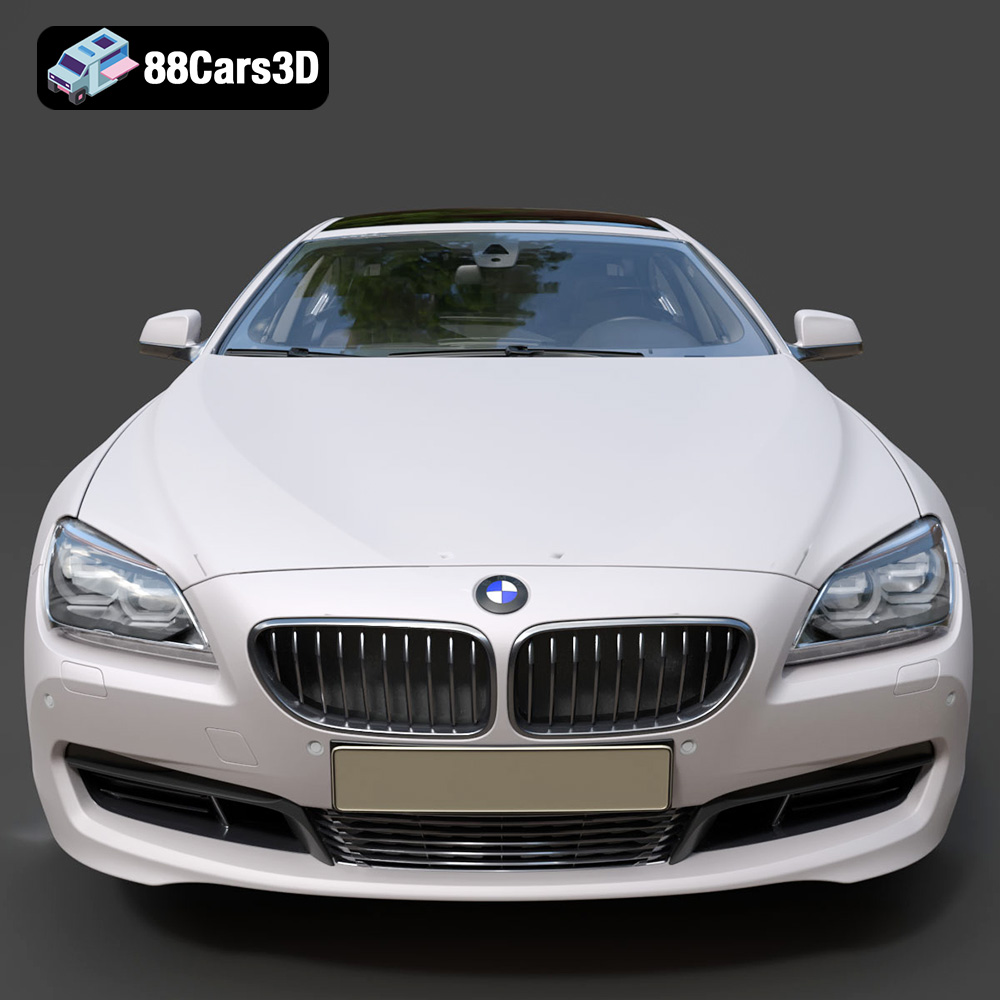
Today, we delve deep into the technical intricacies and creative possibilities offered by premium 3D car models, spotlighting a magnificent example: the BMW 6 Series Gran Coupe (F06) 2015 3D Model. This particular asset, available on 88cars3d.com, encapsulates the essence of high-fidelity digital craftsmanship, offering a robust foundation for a myriad of projects. Whether you’re an automotive designer, game developer, architect, or a visualization specialist, understanding the nuances of such models is paramount.
One of the most critical aspects of working with 3D models is understanding the various file formats available. Each format serves a specific purpose, offering unique advantages in terms of compatibility, data preservation, and workflow optimization. The BMW 6 Series Gran Coupe (F06) 2015 3D Model exemplifies this versatility by providing a comprehensive suite of industry-standard formats, ensuring maximum usability across different platforms and applications. Selecting the correct format can significantly streamline your project, prevent compatibility issues, and enhance overall efficiency.
The .blend format is the native file type for Blender, a powerful open-source 3D creation suite. When you receive a .blend file, you’re getting a fully editable Blender scene, complete with materials, textures, lighting setups, cameras, animations, and even physics simulations. This format is ideal for users deeply integrated into the Blender ecosystem, allowing for immediate modification, retopology, UV editing, and custom rigging without any loss of data. For the BMW 6 Series Gran Coupe model, having it in .blend means full access to its construction, making it highly flexible for artists who wish to dissect and re-engineer elements, or simply to render it within Blender’s Eevee or Cycles renderers.
.fbx (Filmbox) is arguably the most widely used proprietary 3D file format for exchanging models between different software applications. Developed by Autodesk, it excels at preserving complex scene data including geometry, materials, animations, cameras, and even skeletal rigs. Its robust support for animation curves and hierarchical structures makes it the go-to format for game development, particularly for export to engines like Unreal Engine and Unity. When working with the BMW 6 Series Gran Coupe, the .fbx version is your best bet for importing into game engines or for character animation within Maya or 3ds Max, ensuring that separate wheels and steering components retain their pivot points for easy animation.
The .obj (Wavefront OBJ) format is a universal standard renowned for its simplicity and broad compatibility. It primarily stores geometry (vertices, normals, texture coordinates, and faces) and can reference external material files (.mtl). While it doesn’t typically store advanced scene data like animation or rigging, its widespread support makes it an excellent choice for cross-software compatibility when transferring static meshes. If you need to import the BMW 6 Series Gran Coupe into a niche renderer or a CAD package, .obj is a reliable option for preserving the mesh structure accurately, albeit requiring manual material setup in the target software.
.glb (GLB format for glTF) is a relatively newer, but rapidly adopted, 3D file format designed for efficient transmission and loading of 3D scenes and models in web and real-time applications. It’s a binary container format that embeds all assets (geometry, materials, textures, animations) into a single file, making it incredibly convenient for AR/VR experiences, online 3D viewers, and browser-based displays. The .glb version of the BMW 6 Series Gran Coupe is perfect for developing interactive virtual showrooms or integrating into augmented reality apps, delivering optimal performance and minimal loading times.
.stl (STereoLithography) is the de facto standard file format for 3D printing. It represents a 3D object as a series of connected triangular facets, defining the surface geometry without color or texture information. While simple, its ubiquity ensures compatibility with virtually all 3D printers and slicing software. The availability of the BMW 6 Series Gran Coupe in .stl format directly addresses the growing demand for physical prototypes, scale models, and collectibles. Designers can directly convert or utilize this format for manufacturing miniature versions of the luxury coupe, moving from screen to tangible object.
.ply (Polygon File Format, or Stanford Triangle Format) is primarily used for storing 3D data from 3D scanners, scientific visualization, and CAD/CAM applications. Like .obj, it represents geometry, but it can also store more complex properties such as color, transparency, and even normal vectors per vertex or face. It’s often preferred in scientific and engineering fields for its precision in representing complex mesh data. For the BMW 6 Series Gran Coupe, a .ply file might be useful for detailed mesh analysis, reverse engineering workflows, or integration into specialized CAD environments where precise geometric data is paramount.
The .unreal format signifies an asset specifically optimized and packaged for direct use within Unreal Engine. This often implies proper asset hierarchies, optimized LODs (Levels of Detail), collision meshes, material instances, and even blueprint configurations, all pre-configured for Unreal’s rendering pipeline. This “engine-ready” designation for the BMW 6 Series Gran Coupe 3D model means significant time savings for game developers or virtual production artists using Unreal Engine, allowing them to drag-and-drop the car into their scene with minimal setup required, immediately benefiting from its high-quality textures and optimized geometry.
The .max format is the native file type for Autodesk 3ds Max, a leading software for 3D modeling, animation, and rendering. Similar to .blend, a .max file contains the complete scene data, including geometry, modifiers, materials, lights, cameras, animations, and render settings. This provides maximum flexibility for 3ds Max users, allowing them to leverage all of Max’s powerful tools for further refinement, complex animation, or integration into existing architectural visualization projects. The BMW 6 Series Gran Coupe’s .max file is invaluable for studios standardized on 3ds Max, enabling seamless integration into their production pipelines for high-end automotive rendering and animation.
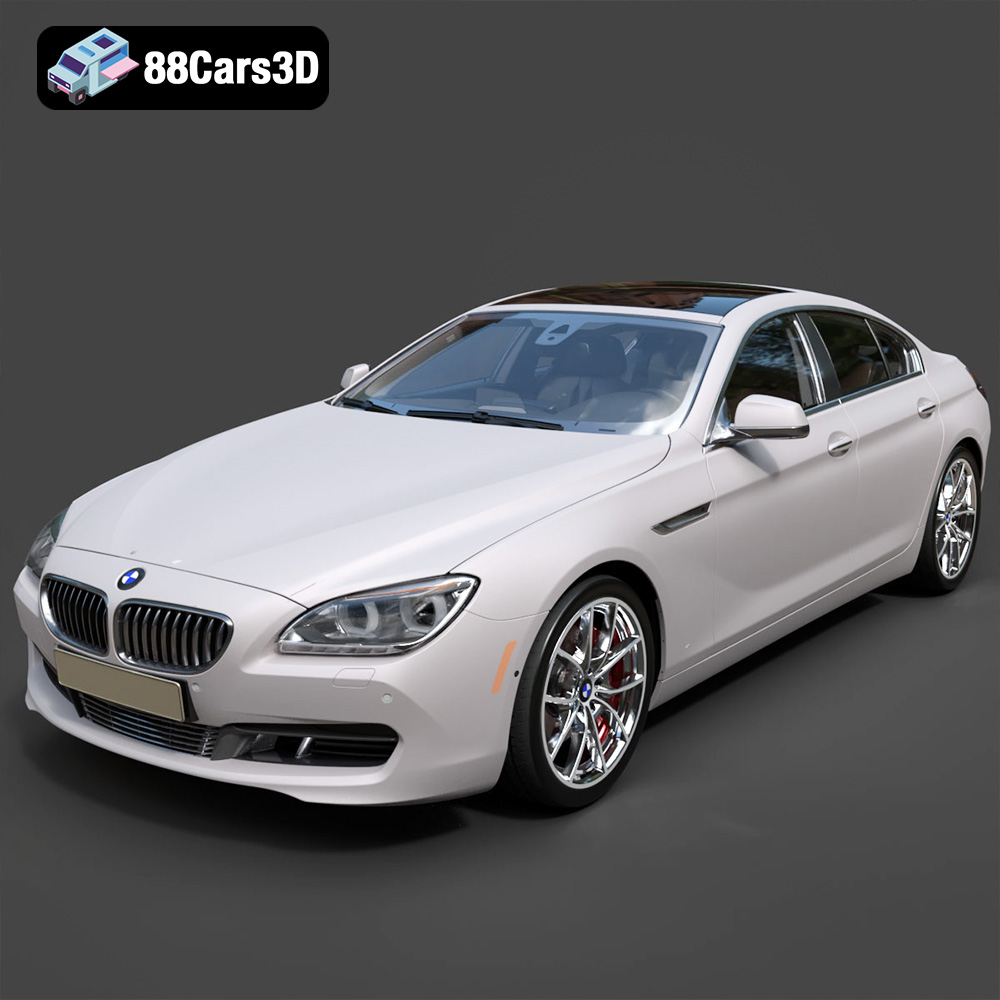
High-quality 3D car models like the BMW 6 Series Gran Coupe (F06) 2015 are the cornerstone of breathtaking automotive rendering and visualization. This field demands not only technical proficiency but also an artistic eye to capture the essence of luxury, speed, and design. The model’s detailed exterior features, from the signature kidney grille to the adaptive LED headlights and multi-spoke alloy wheels, are all designed to shine under the renderer’s spotlight.
For artists utilizing 3ds Max, the provided .max file offers a fantastic starting point. Importing the BMW 6 Series Gran Coupe into 3ds Max allows immediate integration with powerful renderers like V-Ray or Corona Renderer. The clean and well-organized mesh structure facilitates the application of sophisticated materials – car paint shaders with metallic flakes, realistic glass, chrome accents, and detailed tire rubber. Leveraging 3ds Max’s robust lighting tools, such as HDRI environments and carefully placed studio lights, can transform the digital asset into a photorealistic image indistinguishable from a real photograph. Similarly, in Blender, the .blend file provides a complete scene. Artists can dive straight into Cycles or Eevee, tweaking physically based rendering (PBR) materials, experimenting with advanced light paths, and utilizing Blender’s extensive node-based shader system to achieve stunning visual fidelity. The model’s real-world scale accuracy ensures that lighting and reflections behave realistically, contributing significantly to the final image’s believability.
Automotive visualization often extends beyond static images to dynamic animations. The BMW 6 Series Gran Coupe (F06) 2015 3D Model is built with animation in mind, featuring separate wheels and steering components with proper pivot setups. This is crucial for creating realistic driving sequences, turntable renders, or detailed breakdown animations showcasing specific features. In 3ds Max or Blender, animators can easily keyframe wheel rotations and steering input, synchronize them with camera movements, and choreograph complex scenes. Imagine a smooth camera sweep across the Gran Coupe’s sleek coupe-inspired roofline, revealing the sculpted side character lines, or a dynamic shot of the multi-spoke alloy wheels in motion – all made possible by the model’s intelligent setup. The optimized polygon flow ensures smooth deformations during animation, preventing undesirable artifacts.
The F06 Gran Coupe model is perfect for “urban luxury scenes, executive environments, and cinematic productions.” This means integrating it flawlessly into virtual architectural visualizations, high-end product showcases, or promotional campaigns. Its accurate proportions and refined interior craftsmanship, including the premium dashboard and luxury seat geometry, mean it can stand up to close-up shots. Combining the car with photorealistic environments – perhaps a modern cityscape rendered in V-Ray, or a stylized showroom floor with dramatic lighting in Cycles – elevates the entire presentation. Such detailed 3D car models are invaluable for marketing agencies producing visuals for luxury brands, where every detail contributes to the brand’s perception.
For game developers, 3D car models are not just about looks; they are about performance, optimization, and seamless integration into real-time engines. The BMW 6 Series Gran Coupe (F06) 2015 3D Model is specifically designed with these requirements in mind, making it an excellent game asset for titles demanding both visual fidelity and smooth gameplay.
The inclusion of an .unreal file directly points to its readiness for Unreal Engine, a leading platform for game development and virtual production. When imported into Unreal, the BMW 6 Series Gran Coupe benefits from the engine’s advanced rendering capabilities, including physically based rendering (PBR), real-time global illumination (Lumen), and dynamic reflections. Developers can leverage Unreal’s material editor to create complex car paint shaders, adjust metallic properties, and add realistic dirt or wear effects. The optimized geometry ensures that the model runs efficiently even in demanding open-world driving games or detailed city environments. Furthermore, Unreal’s Blueprint system allows for quick implementation of interactive elements, such as working doors, controllable steering, and dynamic lighting for headlights and taillights.
While the model is high-detail, its “optimized polygon flow” is crucial for game development. This means that while visually rich, the mesh has been structured to minimize unnecessary polygon counts where possible, often employing techniques like LODs (Levels of Detail) that automatically swap lower-resolution versions of the model at a distance to maintain high frame rates. Game developers can further optimize the asset by creating custom collision meshes, baking ambient occlusion maps, and streamlining material channels to ensure that the BMW 6 Series Gran Coupe performs smoothly across various hardware configurations. This balance between visual quality and performance is a hallmark of truly professional game assets.
Beyond static placement, the BMW 6 Series Gran Coupe is poised for interactive game mechanics. With its proper pivot setup for steering and wheel rotation, developers can easily integrate it with vehicle physics systems common in game engines. This allows for realistic driving simulations, responsive handling, and dynamic interactions within the game world. Whether it’s a premium car simulation, a competitive racing title, or a backdrop vehicle in an open-world sandbox, the model provides a solid foundation for engaging gameplay. The interior features, including the premium dashboard and multifunction sport steering wheel, are also optimized for real-time engines, allowing for immersive first-person cockpit views.
The immersive capabilities of Augmented Reality (AR) and Virtual Reality (VR) are transforming how we interact with digital content. High-fidelity 3D car models are essential for creating believable and engaging experiences in these emerging technologies. The BMW 6 Series Gran Coupe (F06) 2015 3D Model, with its detailed craftsmanship and varied file formats, is ideally suited for these cutting-edge applications.
Imagine walking around a virtual showroom, examining the BMW 6 Series Gran Coupe in full 3D, changing its color, opening its doors, and even sitting inside. This is precisely what models like this enable. The .glb format, optimized for AR/VR and web-based displays, makes it easy to deploy the car into platforms like WebXR or dedicated VR applications. For AR, the model can be projected into a real-world environment via a smartphone or tablet, allowing potential buyers to visualize the car in their driveway or office space. Its real-world scale accuracy is critical here, ensuring the augmented model appears correctly proportioned relative to the physical environment. Such immersive experiences offer a powerful marketing tool for luxury automotive brands.
Beyond marketing, detailed 3D car models are invaluable for simulation and training. The BMW 6 Series Gran Coupe (F06) 2015 3D Model can be integrated into advanced driving simulators for professional training, hazard perception exercises, or even autonomous vehicle research. The accuracy of its external proportions and internal layout provides a realistic training environment. Furthermore, its clean mesh structure and optimized geometry make it suitable for various simulation platforms, allowing for precise physics calculations and realistic visual feedback. This is particularly useful for automotive visualization in scenarios where accurate representation of vehicle dynamics and interaction with environments is crucial.
The customization options offered by the model, such as changing body color, modifying wheel design, and configuring lighting, are highly beneficial in AR/VR. Users can interactively personalize the vehicle, experiencing different configurations in real-time. This level of interactivity enhances engagement and allows for a truly personalized exploration of the car’s features. Developers can build interfaces that let users cycle through different M Sport styling package elements or adjust ride height, offering a rich, configurable experience that goes beyond static images or videos.
One of the most exciting aspects of modern 3D modeling is the ability to transform digital assets into tangible objects through 3D printing. The BMW 6 Series Gran Coupe (F06) 2015 3D Model includes a crucial feature: its suitability for 3D printing, specifically mentioning the .stl format and detailed print settings. This opens up an entirely new dimension of use for the model.
The provided .stl format means the BMW 6 Series Gran Coupe is ready to be loaded into a 3D printer’s slicing software. The recommended scales (1:32, 1:24, 1:18, 1:12) offer flexibility for different display needs, from miniature collectibles to larger, more detailed scale models. Understanding print settings like layer height (0.08–0.16 mm), wall thickness (1.2–2.0 mm), and infill (15–25%) is paramount for a successful print. For complex geometries, especially overhangs and intricate details like mirrors and bumper overhangs, supports are essential. The recommendation to print the body angled for a smooth surface finish and wheels separately highlights best practices for achieving high-quality results on FDM (Fused Deposition Modeling) or SLA (Stereolithography) printers.
Raw 3D prints often require post-processing to achieve a finished, professional look. For the BMW 6 Series Gran Coupe model, this includes sanding to smooth layer lines, applying primer for an even base, and then a final paint job. The suggestion of a gloss metallic paint finish and optional chrome detailing aims to replicate the luxury vehicle’s real-world appearance. For resin prints (SLA), even finer details can be captured, leading to exceptionally smooth surfaces that require less post-processing. This transformative process from digital mesh to physical object adds immense value, allowing enthusiasts, designers, or marketers to have a tangible representation of the luxury coupe.
The 3D printable aspect of this model caters directly to the market for collectible scale luxury coupe models and display miniatures. Hobbyists and automotive enthusiasts can print and assemble their own versions of the F06 Gran Coupe, customizing them with unique paint schemes or detailing. Furthermore, in an industrial context, this capability is invaluable for rapid prototyping. Designers can quickly iterate on physical models, examining proportions, aerodynamics, or specific design elements before committing to more expensive manufacturing processes. The manifold geometry ensured in a good .stl file makes it reliable for physical production.
A truly valuable 3D asset is not static; it’s a flexible foundation for creative exploration. The BMW 6 Series Gran Coupe (F06) 2015 3D Model offers extensive customization options, allowing professionals to tailor it to specific project requirements and artistic visions.
The ability to “change body color and trim finishes” is fundamental for any automotive visualization project. Whether it’s matching a client’s brand guidelines or simply exploring different aesthetic options, this flexibility is key. Furthermore, the option to “modify wheel design and brake caliper color” adds another layer of personalization that significantly impacts the car’s overall character. These adjustments can be made directly within the 3D software (Blender, 3ds Max) using the provided formats, or through material instances in game engines like Unreal. This ensures that the single asset can serve multiple purposes without requiring entirely new models.
The mention of adding “M Sport styling package elements” highlights the potential for customization beyond basic colors. Artists can model or integrate additional body kits, aerodynamic enhancements, or distinctive badging to transform the standard Gran Coupe into a sportier variant. Similarly, the ability to “adjust ride height or stance” allows for dynamic visual storytelling – showcasing a sleek, low-slung performance car or a more comfortable grand tourer. These modifications demonstrate the model’s robust topological foundation, designed to handle such alterations gracefully without breaking the mesh or requiring extensive reworks. This kind of adaptability is what truly makes 3D car models from resources like 88cars3d.com so valuable.
Configuring lighting for “showroom, city night, or highway scenes” is a crucial aspect of automotive rendering. The detailed headlights and taillights of the BMW 6 Series Gran Coupe can be animated or controlled to simulate real-world lighting conditions, enhancing realism and mood. In a showroom, soft, even lighting might highlight its luxury lines. For a city night scene, sharp, focused beams from the LED headlights would cut through the darkness, creating dramatic reflections on wet asphalt. On a highway, the subtle glow of the taillights contributes to a sense of motion and speed. These lighting configurations are fully controllable within the 3D software, allowing artists to create compelling narratives around the vehicle.
The creation of high-quality 3D car models like the BMW 6 Series Gran Coupe (F06) 2015 is a testament to the blend of technical expertise and artistic vision that defines modern digital design. From the intricate detailing suitable for photorealistic rendering and cinematic animation, to the optimized geometry crucial for game development and immersive AR/VR experiences, and even the robust preparation for 3D printing, this model serves as a versatile cornerstone for countless creative endeavors.
Understanding the nuances of various file formats, optimizing assets for performance, and leveraging customization options are all key to unlocking the full potential of such a sophisticated digital asset. For professionals and enthusiasts alike, resources like 88cars3d.com provide access to a wealth of meticulously crafted 3D car models, empowering them to push the boundaries of automotive visualization, interactive experiences, and physical creation. The BMW 6 Series Gran Coupe (F06) 2015 3D Model is not just a digital representation; it’s a gateway to innovation across the entire spectrum of 3D content creation.
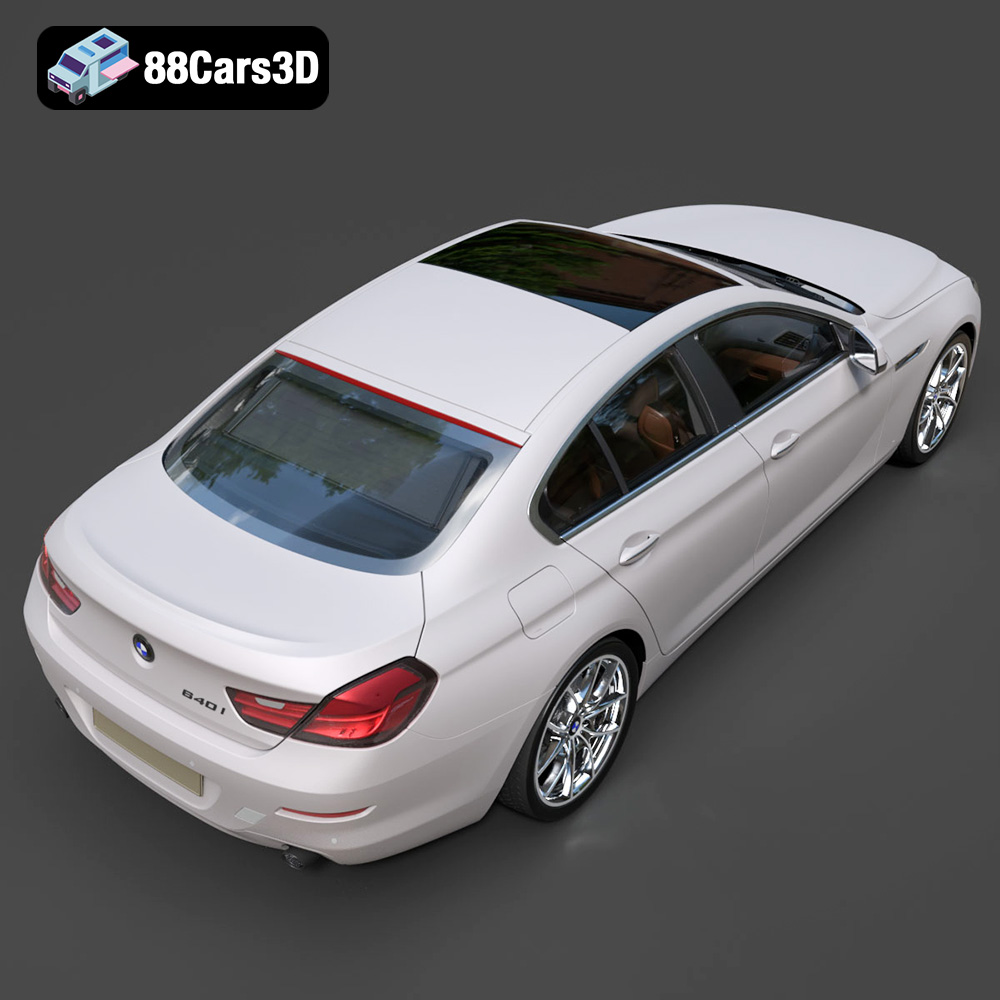
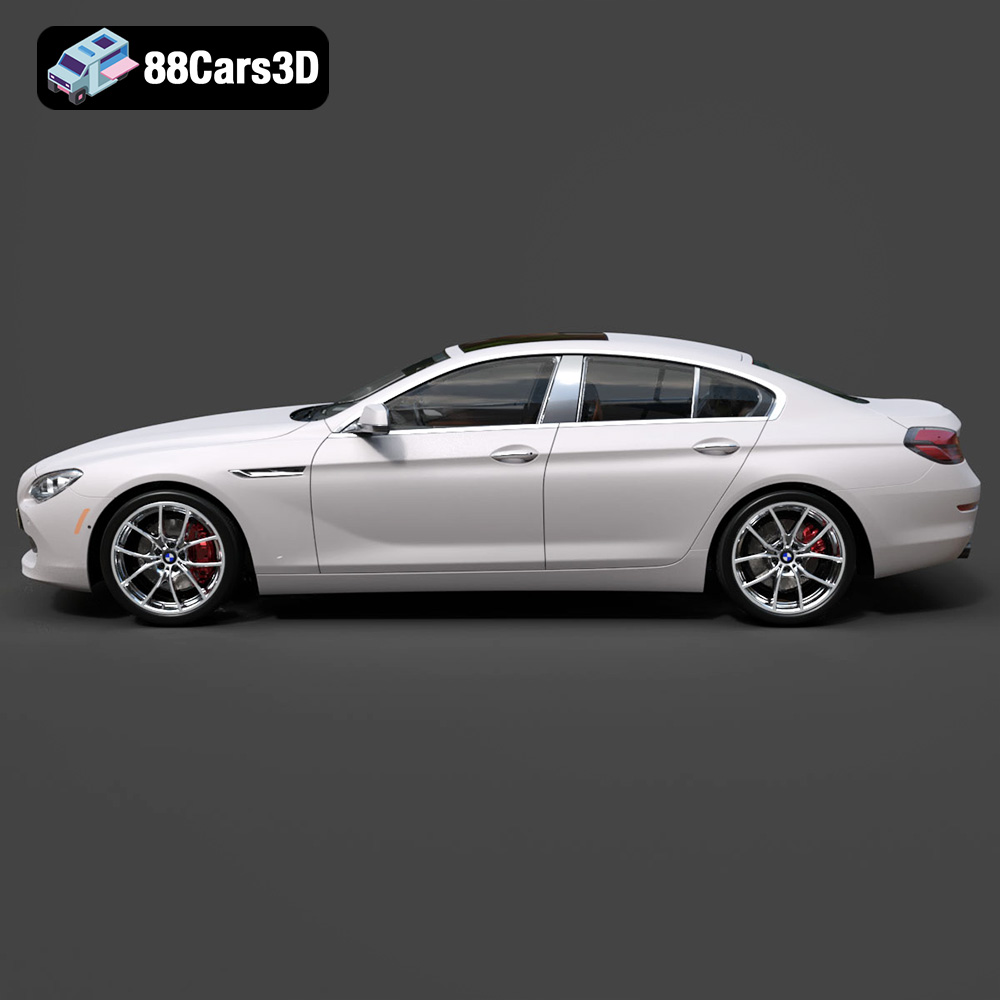
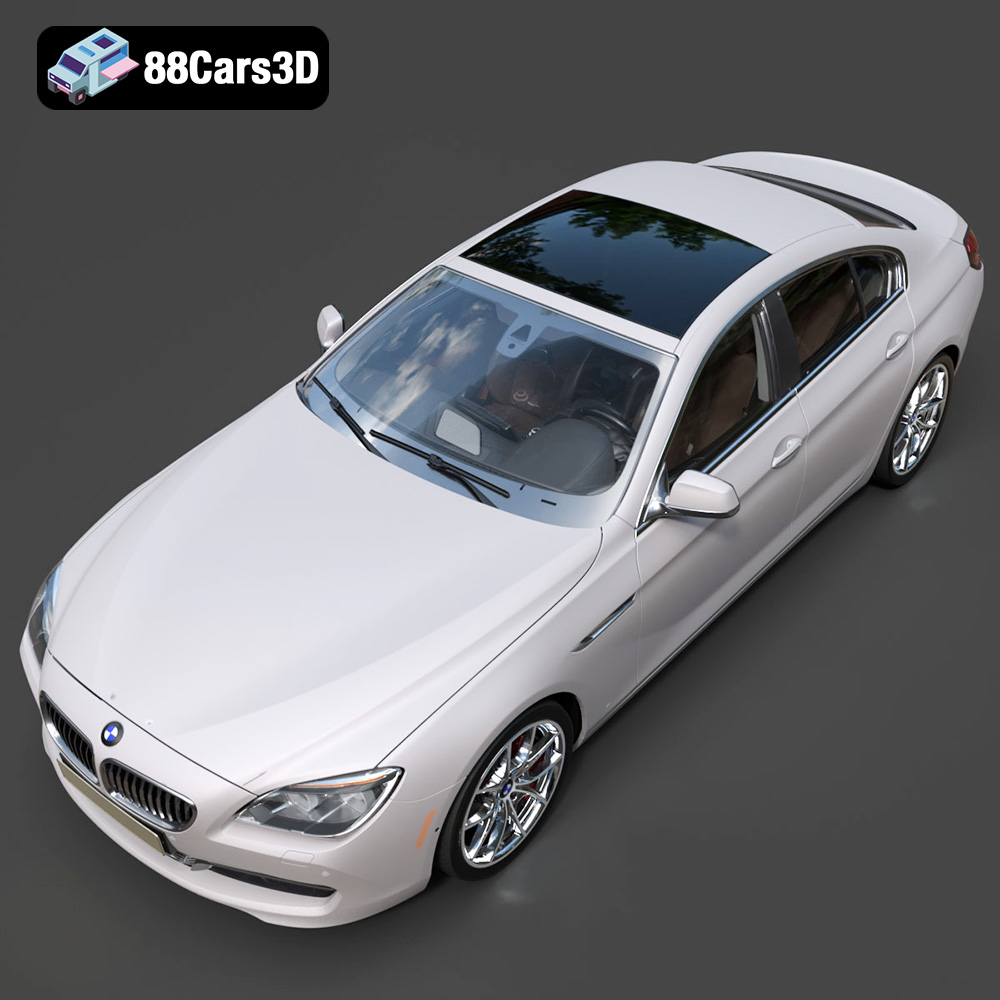
The BMW 6 Series Gran Coupe (F06) 2015 3D Model is a high-detail digital recreation of the luxury four-door coupe that blends executive comfort with sporty performance. The F06 generation is known for its sleek coupe-inspired roofline, aggressive front fascia, and refined interior craftsmanship, making it a standout in the premium grand touring segment. This 3D model accurately represents the elongated body proportions, signature BMW kidney grille, adaptive LED headlight design, sculpted hood lines, frameless windows, aerodynamic side profile, and elegant rear styling. Built with clean topology and real-world scale accuracy, it is ideal for rendering, animation, automotive visualization, game development, and AR/VR experiences. Perfect for urban luxury scenes, executive environments, cinematic productions, promotional campaigns, and driving simulations.
$199.99
.2015bmw
.6series
.arvr
.automotive
.blend
.bmw
.car3dmodel
.f06
.fbx
.gameasset
.glb
.grancoupe
.luxurycoupe
.max
.obj
.ply
.rendering
.simulation
.stl
.unreal