Get 50% OFF All Premium 3D & STL Models!

In the fast-evolving landscape of digital content creation, the demand for high-fidelity 3D assets is insatiable. From photorealistic advertising campaigns to immersive virtual experiences and cutting-edge game environments, professional-grade 3D models form the bedrock of compelling visuals. Automotive design, in particular, thrives on this digital precision, requiring models that capture every curve, every reflection, and every engineering detail with meticulous accuracy.
For studios, designers, and developers, the challenge often lies not just in creating these intricate models, but in sourcing them with the right blend of quality, optimization, and versatility. This is where platforms like 88cars3d.com become indispensable, offering a curated selection of premium assets designed to elevate any project. Today, we delve into the technical prowess and multifaceted utility of one such exceptional asset: the BMW C 400 X 2018 3D Model.
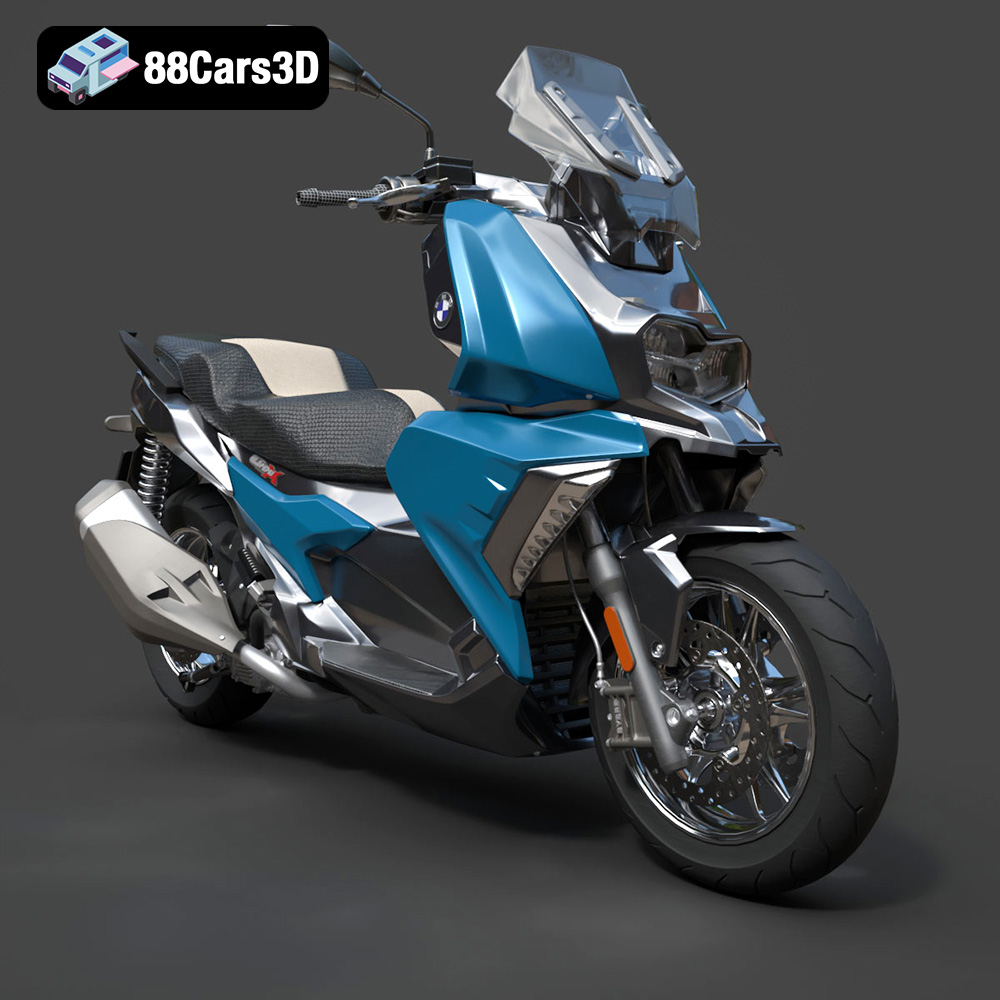
This digital recreation of BMW Motorrad’s premium midsize scooter embodies the perfect balance of aesthetic appeal and technical robustness. Designed for urban mobility, the C 400 X is a modern marvel, and its 3D counterpart offers a compelling foundation for a myriad of digital applications, from lifelike visualizations to dynamic game scenarios and even physical replicas through 3D printing. Join us as we explore the intricate world of 3D car models and discover how this particular asset can revolutionize your creative workflows.
Before diving into the specifics of any 3D model, it’s crucial to grasp the ecosystem of file formats. Each format serves a distinct purpose, offering varying levels of compatibility, data retention, and optimization for specific applications. Understanding these differences is paramount for any professional integrating 3D car models or other assets into their pipeline.
The .blend format is the native file type for Blender, the powerful open-source 3D creation suite. A .blend file typically contains a complete scene, including mesh data, materials (Blender’s Cycles or Eevee shaders), textures, lighting, camera setups, animation data, and even physics simulations. This makes it incredibly versatile for artists who want full control over the asset. If you need to make significant modifications, tweak materials, or re-rig components, starting with the .blend file provides the most editable foundation. It’s ideal for artists who primarily work within Blender or need to extract specific components with all their original properties intact.
Autodesk’s .fbx (Filmbox) format is arguably the most widely adopted interchange format in the 3D industry. It’s designed for compatibility across a vast array of 3D software and game engines, including Unreal Engine and Unity. FBX supports not just mesh data but also materials, textures, animations, skinning, and even camera and light data. While it’s excellent for transferring assets, some proprietary features or complex material setups might not translate perfectly across different software. It’s the go-to choice for game development, real-time visualization, and robust asset exchange between different platforms due to its widespread support and ability to carry animation data efficiently.
The .obj (Wavefront Object) format is a venerable and universally compatible format, primarily for storing 3D geometry (vertices, normals, texture coordinates, and faces). It’s a text-based format, making it human-readable in a pinch, and it’s supported by virtually every 3D application. While .obj files can reference external .mtl (material) files for basic color and texture assignments, they don’t support advanced material properties, rigging, or animation. It’s an excellent choice for straightforward mesh transfer, archival, or when you need a clean geometric base without complex scene data, making it a reliable workhorse for cross-software compatibility.
.glb (GLB format, an extension of glTF – Graphics Language Transmission Format) is an increasingly popular format, particularly optimized for web-based 3D applications, augmented reality (AR), and virtual reality (VR) experiences. It packages 3D model data (geometry, materials, textures, animations) into a single, self-contained binary file, making it efficient for transmission and loading. Its compact size and robust support for physically based rendering (PBR) materials make it the preferred format for platforms like Google’s Poly, Sketchfab, and various AR/VR viewers. When deploying 3D assets on the web or for interactive, lightweight applications, .glb is often the best choice.
The .stl (Stereolithography) format is the de facto standard for 3D printing. It represents a 3D model as a collection of unconnected triangular facets, defining only the surface geometry without color, texture, or material information. While simple, its ubiquity in desktop 3D printing and industrial additive manufacturing makes it essential for physical prototyping or creating collectibles. For the BMW C 400 X 2018 3D Model, its availability in .stl means it’s ready to be sent to a slicer for physical production, requiring careful preparation to ensure manifold geometry and printability.
The .ply (Polygon File Format) is another format for storing 3D data, often used in scientific and engineering applications, particularly for scanned data or meshes derived from point clouds. It can store a wide range of properties, including color, transparency, surface normals, and even data from 3D scanners. While less common for general 3D asset exchange than FBX or OBJ, its ability to handle dense, precise mesh data makes it valuable for applications requiring high geometric accuracy, such as reverse engineering, CAD integration, or detailed mesh analysis.
The .unreal format, or more accurately, assets that are “Unreal Engine-ready,” refers to models specifically prepared and optimized for seamless integration into Unreal Engine projects. While it might often involve an .fbx import, the .unreal designation implies that the asset has been properly scaled, has clean UVs for lightmaps, uses Unreal’s material system, and potentially includes Level of Detail (LOD) meshes. This format indicates that the BMW C 400 X 2018 3D Model has been tested and configured to leverage Unreal Engine’s powerful rendering capabilities directly, saving significant development time for game developers and real-time visualization artists.
Similar to .blend for Blender, the .max format is the proprietary native file type for Autodesk 3ds Max. A .max file encapsulates a complete 3ds Max scene, including all geometry, materials, textures, lighting, cameras, animation, modifiers, and plugin-specific data. It offers the highest degree of editability and preservation of intricate scene details for users working within 3ds Max. This format is ideal for high-end architectural visualization, product rendering, and animation studios that rely on 3ds Max’s robust toolset and rendering engines like V-Ray or Corona. The inclusion of the .max file ensures that professionals can fully leverage the model within a professional 3ds Max environment.
The availability of the BMW C 400 X 2018 3D Model in this diverse range of formats on 88cars3d.com significantly enhances its utility, allowing artists and developers to pick the best format for their specific project needs and software ecosystem.
The essence of a truly valuable 3D model lies in its meticulous attention to detail and robust technical execution. The BMW C 400 X 2018 3D Model from 88cars3d.com exemplifies these qualities, offering a highly accurate and versatile digital asset.
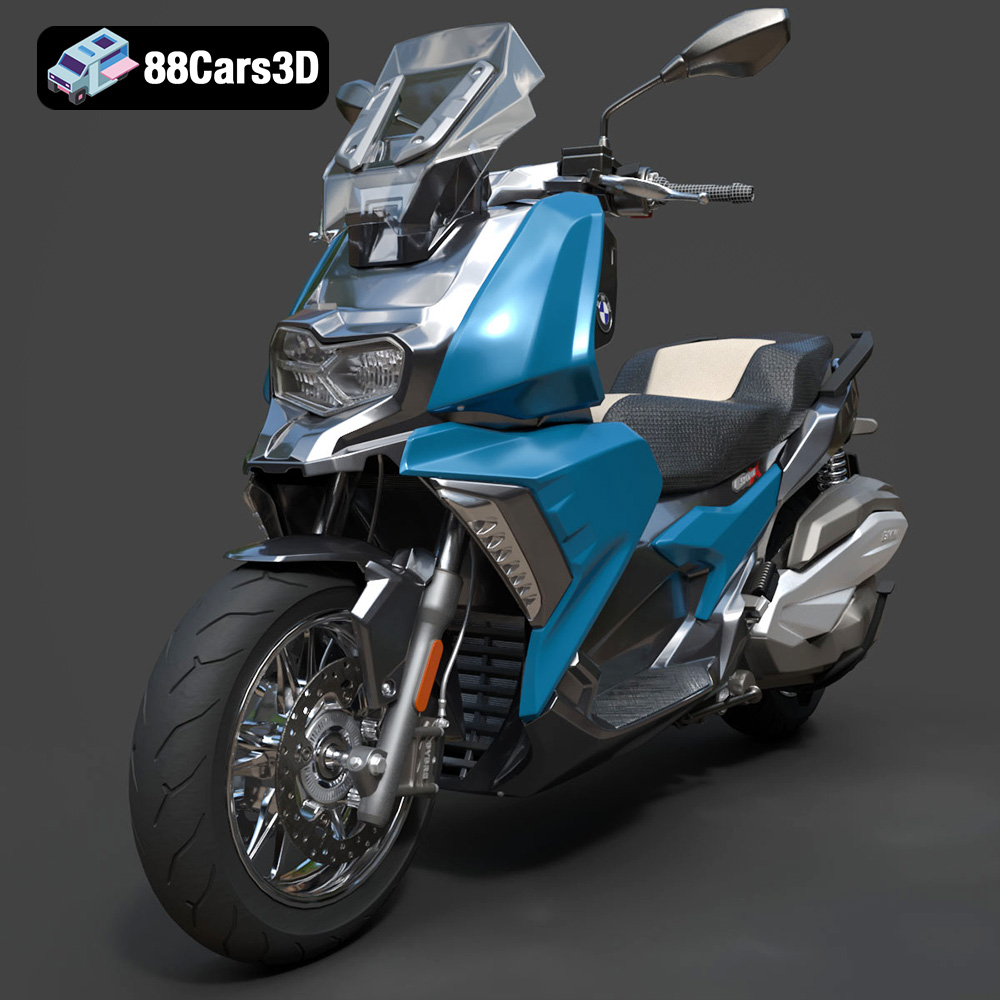
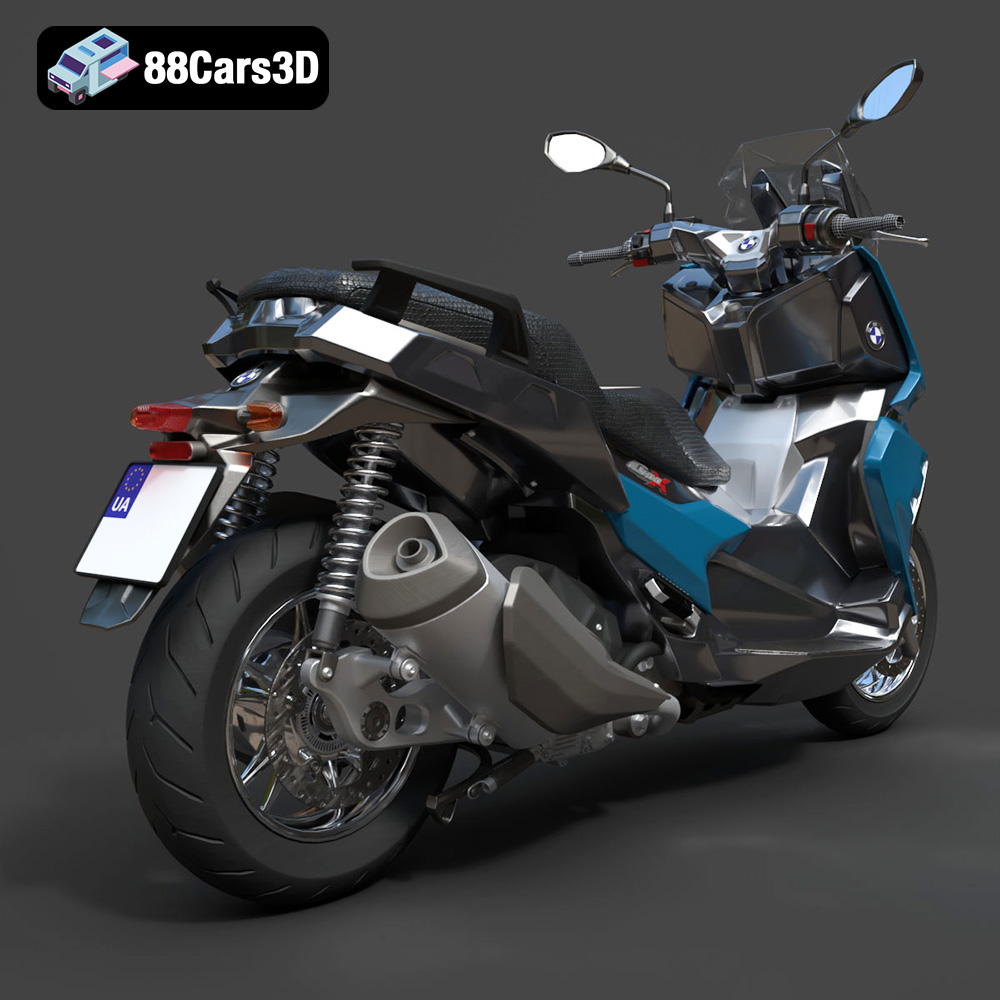
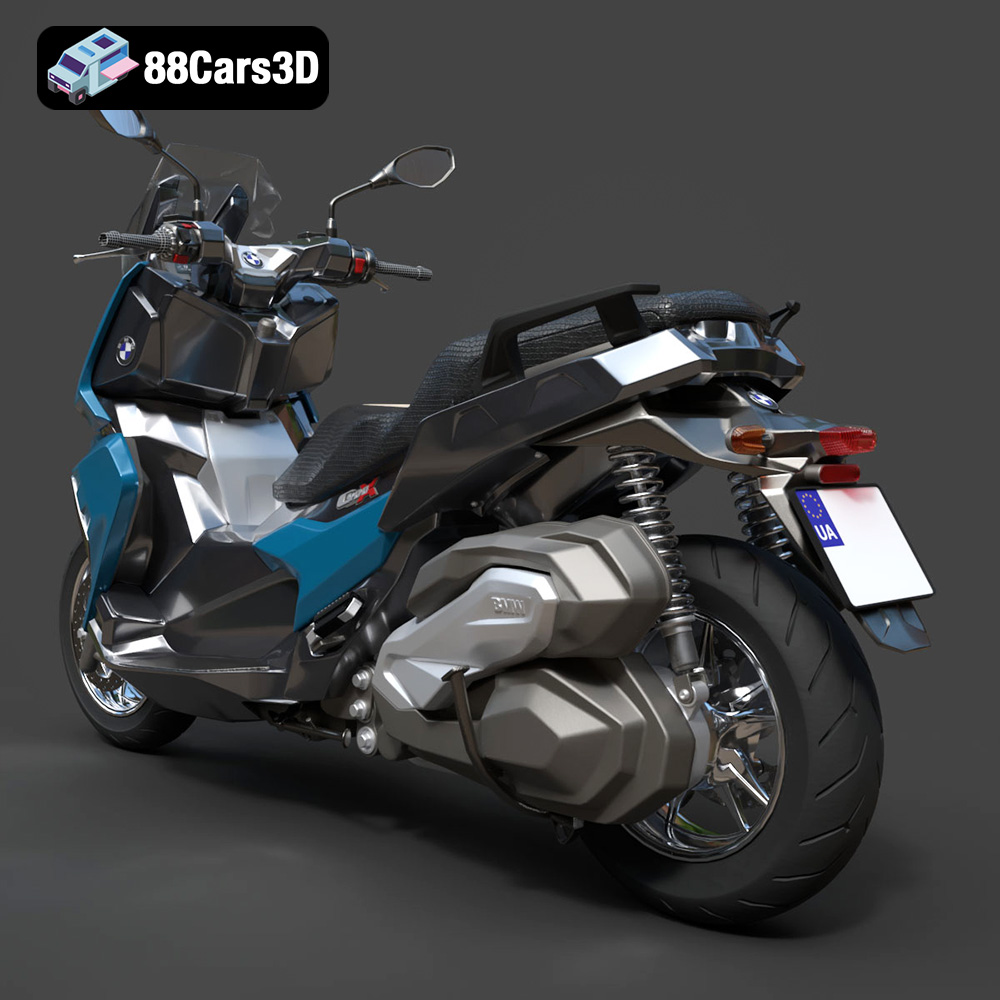
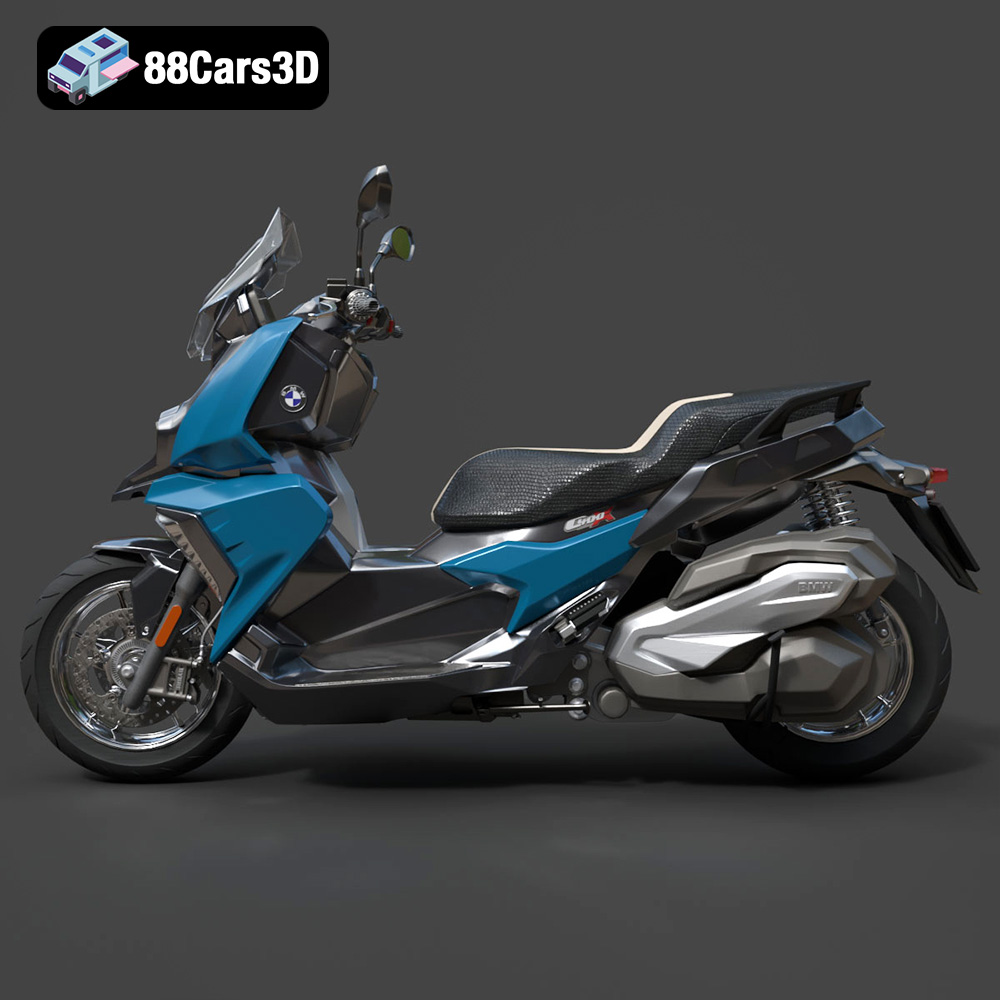
BMW Motorrad’s C 400 X is characterized by its sharp, dynamic styling, and this 3D model captures its distinctive form language with remarkable fidelity. The aggressive front fascia, complete with its asymmetrical headlight design, is perfectly replicated. Every sculpted side fairing, aerodynamic panel, and the unique step-through scooter frame design is represented with precision. This level of accuracy is critical for any project aiming for photorealism or brand-specific representation. From the detailed exhaust system and rear swingarm to the front and rear disc brake geometry, the model provides an authentic representation of the 2018 C 400 X, making it suitable for even the most discerning automotive rendering tasks.
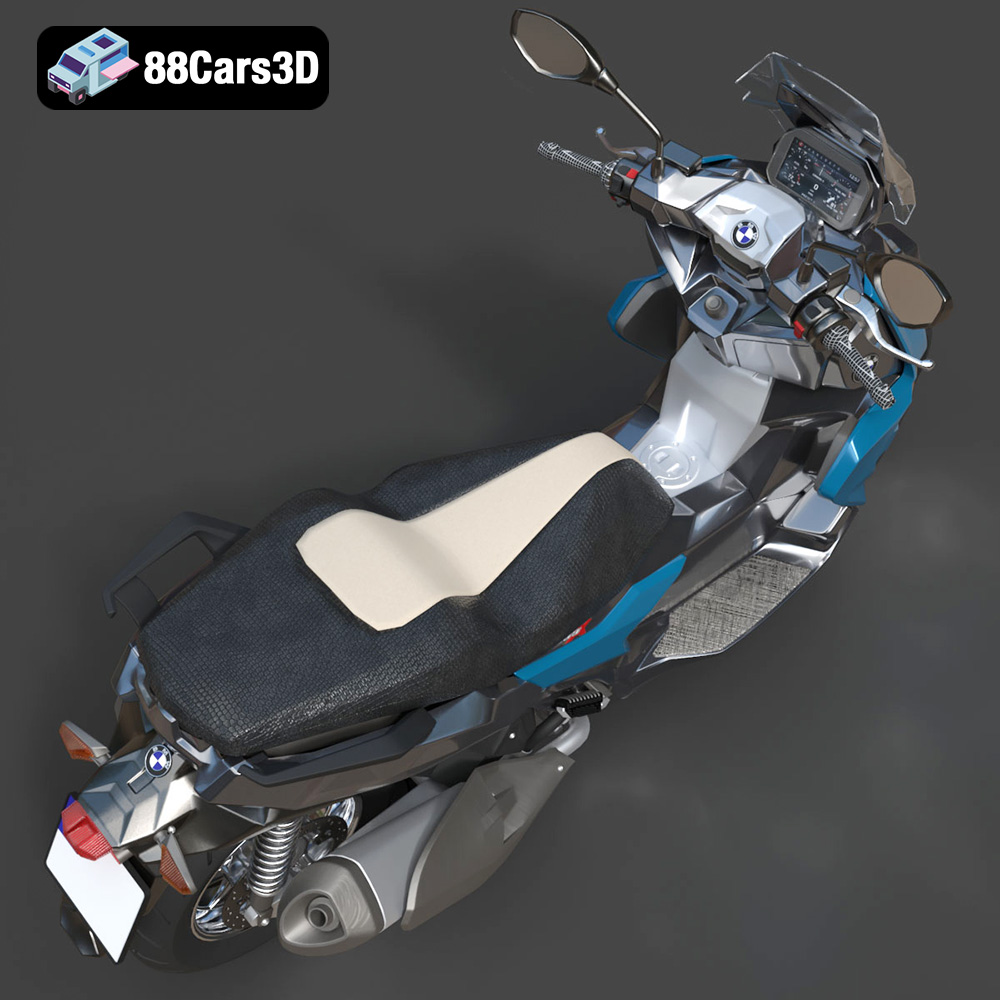
Beyond the exterior, the model extends its detail to the rider area, creating a sense of immersion. The digital instrument cluster layout is accurately represented, alongside the handlebar assembly with its control switches, brake levers, and throttle detailing. The contoured seat geometry and the foot platform, including the storage compartment area, contribute to a comprehensive and believable interior. Crucially, the model is designed with animation in mind: separate wheels and steering components are properly pivoted, allowing for realistic rotation and steering motions. This “animation-ready” state saves animators countless hours of setup, enabling fluid and dynamic simulations or cinematic sequences straight out of the box.
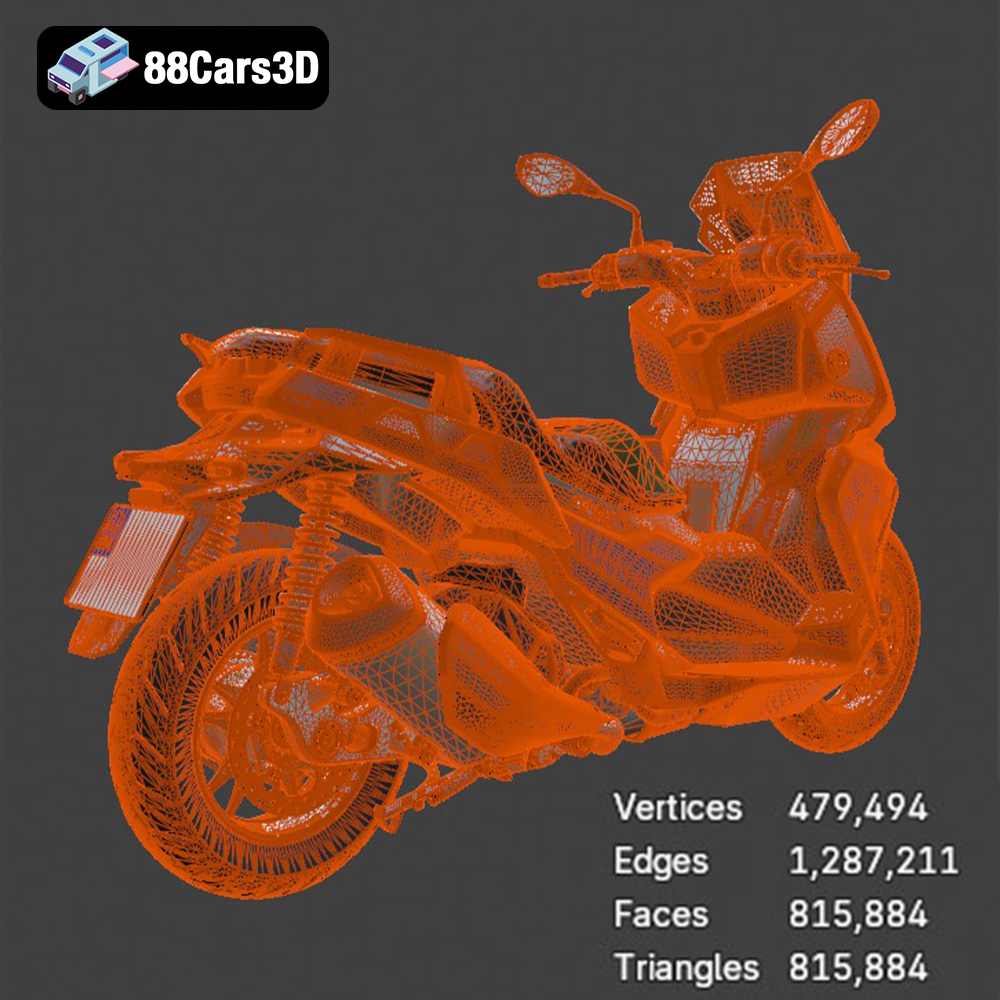
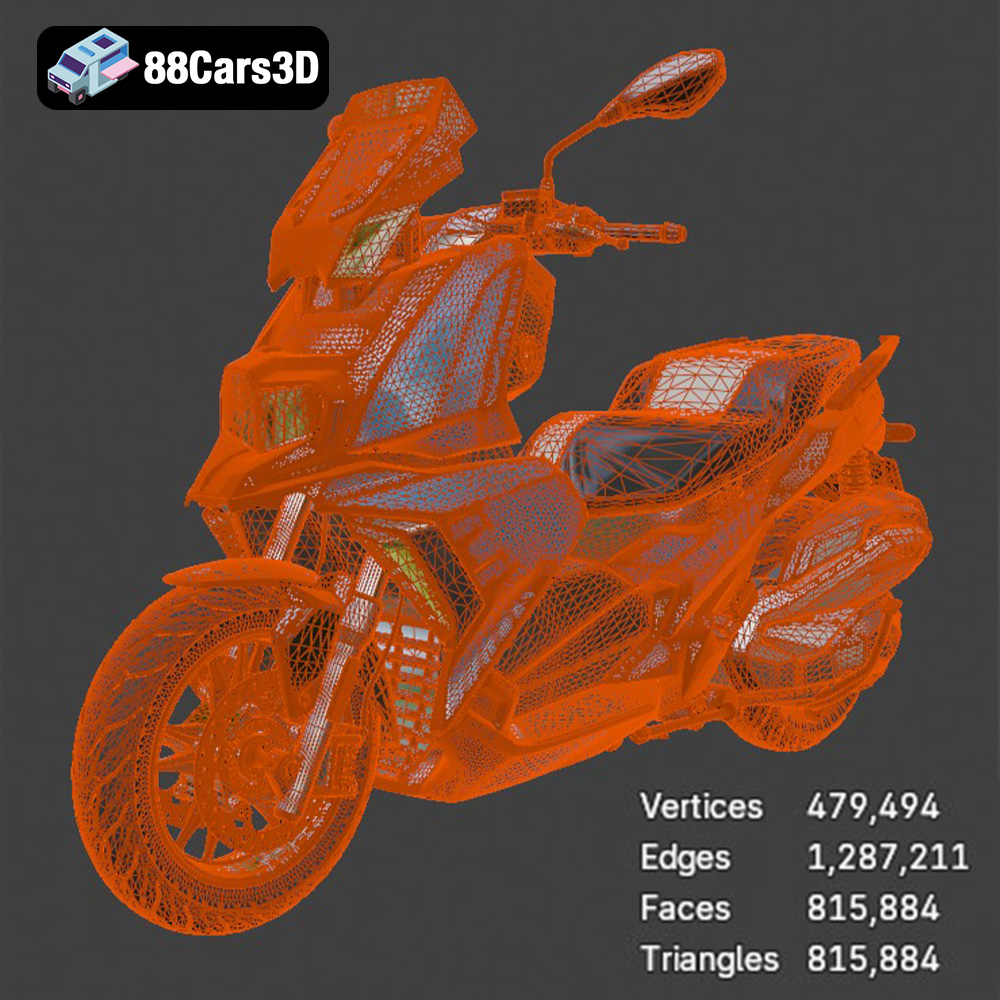
The technical underpinnings of this model are equally impressive. It boasts a clean and well-organized mesh structure, which is vital for smooth deformations, efficient UV unwrapping, and easy modification. The real-world scale accuracy ensures that the model integrates seamlessly into larger scenes without requiring manual resizing, maintaining environmental consistency. Optimized polygon flow strikes a perfect balance between visual realism and performance efficiency, making it suitable for both high-quality offline renders and demanding real-time engines. This optimization, combined with its compatibility across major 3D software and engines, makes the BMW C 400 X 2018 3D Model a truly robust and professional-grade asset.
The true value of a high-quality 3D model like the BMW C 400 X 2018 lies in its seamless integration into diverse professional workflows. For automotive rendering and product visualization, this model is an invaluable asset.
For artists leveraging powerful rendering suites like 3ds Max with V-Ray or Corona Renderer, or Blender with Cycles, the BMW C 400 X model provides an exceptional starting point. Its clean topology and optimized geometry mean fewer artifacts and smoother surfaces, even under extreme close-up. Artists can load the .max or .blend file, which often comes with basic material setups, and then refine them using advanced shaders to achieve hyper-realistic reflections, metallic sheens, and nuanced surface textures. Imagine the C 400 X gleaming under the neon lights of a digital city street, or parked elegantly in a high-end virtual showroom – the model’s inherent detail allows for such creative freedom without compromising visual integrity. This capability is ideal for urban mobility marketing campaigns, dealership visuals, and sophisticated scooter promotional content.
Product visualization demands flexibility, and the BMW C 400 X 3D Model offers ample customization options. Artists can easily change body colors and accent trims to match different brand palettes or client specifications. The ability to add accessories like top cases or side storage attachments allows for personalized configurations, perfect for showcasing optional extras in a virtual environment. Modifying windshield height or adjusting wheel finishes are simple tasks with a well-structured model. Furthermore, configuring lighting for specific scenes—whether it’s the warm glow of a city night or the sharp clarity of daytime commuting—enhances the storytelling aspect of any visualization, creating dynamic and engaging marketing assets. This level of adaptability ensures that the model can be repeatedly deployed for varied campaigns, providing excellent return on investment.
The demands of real-time applications, such as game development and AR/VR, are distinct, emphasizing performance and optimization without sacrificing visual quality. The BMW C 400 X 2018 3D Model is engineered to excel in these demanding environments.
For game developers, the inclusion of .fbx and Unreal Engine-ready formats (.unreal) is a significant advantage. The model’s optimized geometry and polygon flow ensure it performs efficiently within game engines, maintaining high frame rates even in complex scenes. Developers can import the .fbx into Unreal Engine or Unity, utilizing their robust material editors to create PBR (Physically Based Rendering) materials that react realistically to dynamic lighting. The clean UVs are essential for generating efficient lightmaps and preventing visual artifacts in baked lighting scenarios. The accurately set pivots for steering and wheel rotation drastically simplify the rigging process, allowing for quick integration into vehicle physics systems. This makes the BMW C 400 X an ideal game asset for open-world city games, delivery simulations, or any motorcycle-centric virtual environment where performance and visual fidelity are key.
Augmented Reality (AR) and Virtual Reality (VR) applications benefit immensely from optimized 3D assets that load quickly and render smoothly. The .glb format, included with the BMW C 400 X model, is specifically tailored for these platforms, offering a compact and self-contained asset. Imagine a virtual showroom where prospective buyers can interact with the C 400 X, changing its color, inspecting details up close, or even taking it for a virtual test ride. For AR, the model can be placed in a real-world environment via a smartphone or tablet, providing an interactive product demonstration. The model’s real-world scale accuracy is particularly crucial here, ensuring a believable sense of presence whether viewed virtually or overlaid onto reality. This makes the C 400 X 3D model perfect for immersive virtual showrooms, interactive scooter demonstrations, or even rider training simulations where realism is paramount.
The versatility of a well-crafted 3D model extends beyond digital displays into the tangible world through 3D printing. The BMW C 400 X 2018 3D Model offers the unique advantage of being 3D printable, opening up possibilities for physical collectibles and prototypes.
The inclusion of the .stl and .ply formats directly supports 3D printing workflows. While the .stl format is the industry standard for sending models to 3D printers, it often requires careful preparation for optimal results. The BMW C 400 X model, being designed with clean topology, provides an excellent foundation for this. For smaller scale details, especially for collectible models, resin printing (SLA/DLP) is highly recommended due to its ability to capture fine features that FDM printers might struggle with. This means intricate elements like the asymmetrical headlights, handlebars, and exhaust details will retain their sharpness in the physical print.
For those venturing into 3D printing this model, the suggested settings are invaluable. Recommended scales of 1:18, 1:12, 1:10, or 1:8 offer flexibility depending on desired detail and size. Smaller scales, such as 1:24 or 1:32, would highly benefit from resin printing to capture minute details like control switches and brake levers. Layer heights between 0.08–0.16 mm (or even 0.04-0.12mm for resin) ensure smooth surfaces and high detail. A wall thickness of 1.2–2.0 mm provides structural integrity, while 15–25% infill offers a good balance of strength and material efficiency. Supports will be necessary for complex overhangs such as mirrors, the exhaust system, and suspension components. Printing the frame at an angle can help preserve detail, and separating wheels for individual printing often yields better results. Post-processing, including sanding, priming, and finishing with gloss or matte paints, can transform a raw print into a museum-quality display piece. Optional accent decals can further enhance the realism, creating a truly unique automotive collectible.
In any design or development pipeline, time is a critical resource. Sourcing pre-made, high-quality 3D car models significantly streamlines production, allowing artists and developers to focus on creativity rather than foundational asset creation. The BMW C 400 X 2018 3D Model is a prime example of an asset that accelerates workflows, ensuring consistent quality across diverse projects.
Creating a detailed automotive 3D model from scratch is a labor-intensive process, demanding hundreds of hours of a skilled artist’s time. By leveraging professionally crafted models from marketplaces like 88cars3d.com, studios can dramatically reduce production costs and timelines. The models are pre-optimized, come with clean topology, and are often available in multiple formats, meaning less time spent on technical corrections and more time dedicated to final polishing and integration.
Working with assets from a reputable source ensures a level of consistency and reliability that is hard to achieve with ad-hoc solutions. Each model, like the BMW C 400 X, undergoes rigorous quality checks to meet professional standards, guaranteeing real-world scale accuracy, proper pivot setups, and compatibility with leading software. This consistency is vital for large-scale projects or ongoing series, where maintaining a uniform level of detail and technical integrity across all assets is paramount.
Having a library of readily available, high-fidelity 3D car models empowers artists and designers to experiment more freely. Instead of being constrained by the availability of custom assets, they can quickly prototype ideas, visualize concepts, and bring their creative visions to life with unparalleled speed. Whether it’s crafting a hyper-realistic automotive advertisement, populating an open-world game, or designing an interactive AR experience, the right 3D model is a catalyst for innovation.
The journey through the technical intricacies and versatile applications of the BMW C 400 X 2018 3D Model reveals the profound impact that high-quality 3D assets have on modern digital content creation. From its meticulously recreated exterior and cockpit details to its robust technical advantages and broad file format compatibility, this model stands as a testament to the power of precision in 3D modeling.
Whether your goal is to produce stunning photorealistic renders in 3ds Max or Blender, integrate a dynamic vehicle into a cutting-edge game in Unreal Engine, or even bring a digital design into the physical realm through 3D printing, this BMW scooter model offers a solid and adaptable foundation. Its readiness for diverse applications—from urban mobility marketing to immersive AR/VR experiences—underscores its value as a professional-grade asset.
For designers, animators, game developers, and visualization artists seeking to elevate their projects, investing in meticulously crafted 3D car models like the BMW C 400 X 2018 is a strategic decision. Explore the full range of high-quality 3D models available at 88cars3d.com to find the perfect assets that will drive your next creative endeavor to new heights.
The BMW C 400 X 2018 3D Model is a high-detail digital recreation of the premium midsize scooter designed for urban mobility and everyday practicality. Combining BMW Motorrad’s engineering precision with modern scooter convenience, the C 400 X features sharp styling, compact proportions, and a comfortable riding position ideal for city commuting. This 3D model accurately represents the aggressive front fascia, asymmetrical headlight design, sculpted side panels, step-through frame layout, exposed rear suspension, exhaust system, and compact wheelbase proportions. Built with clean topology and real-world scale accuracy, it is ideal for rendering, animation, product visualization, game development, and AR/VR experiences. Includes .blend, .fbx, .obj, .glb, .stl, .ply, .unreal, and .max formats for a wide range of applications, including 3D printing.
$19.90
.2018scooter
.arvr
.blend
.bmw
.c400x
.fbx
.gameasset
.glb
.max
.motorcycle
.obj
.ply
.rendering
.scooter3dmodel
.simulation
.stl
.twowheeler
.unreal
.urbanscooter
.vehicle3dmodel