Get 50% OFF All Premium 3D & STL Models!

In the fast-evolving worlds of automotive design, game development, cinematic visualization, and even 3D printing, the demand for hyper-realistic and technically robust 3D models is at an all-time high. A truly exceptional 3D model isn’t just a static representation; it’s a dynamic asset capable of transforming concepts into vivid realities, pushing the boundaries of realism, and streamlining professional workflows. Whether you’re an architect integrating vehicles into a scene, a game developer crafting immersive open worlds, or an advertising agency creating compelling visual campaigns, the quality of your 3D assets directly impacts the final output.
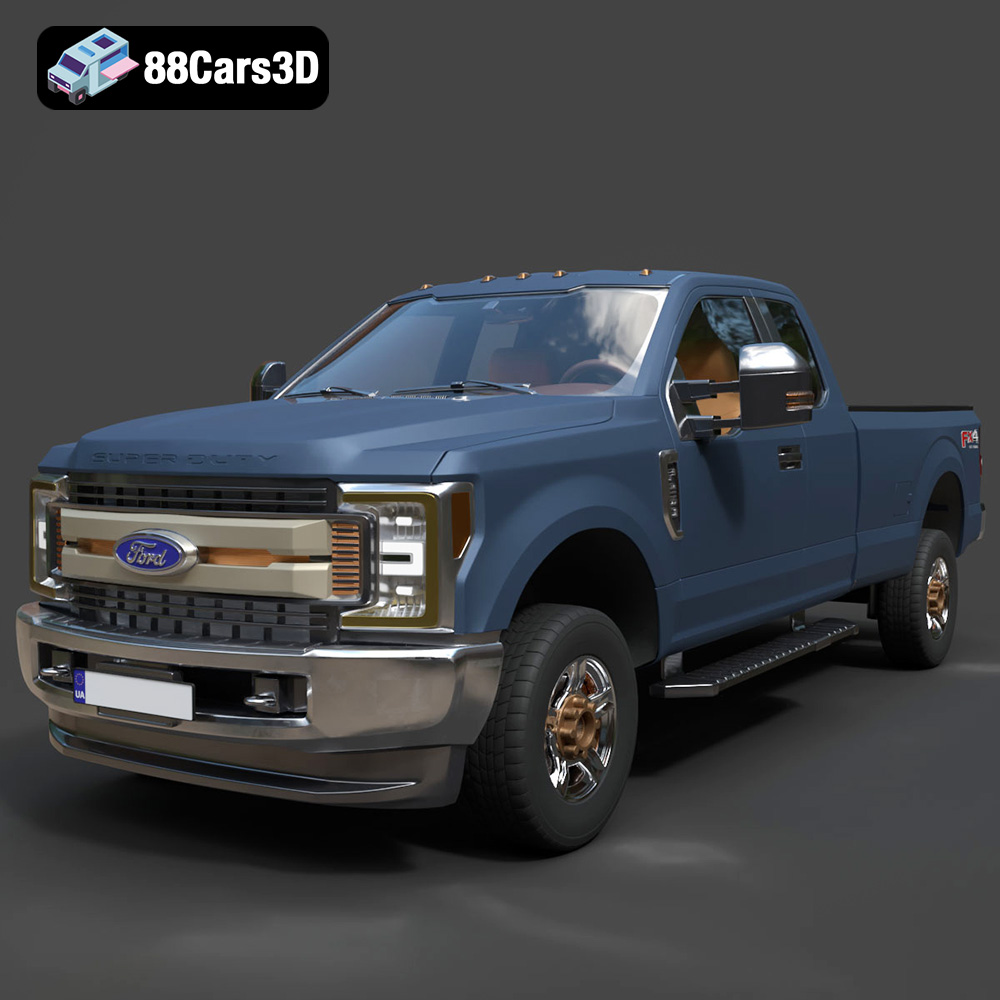
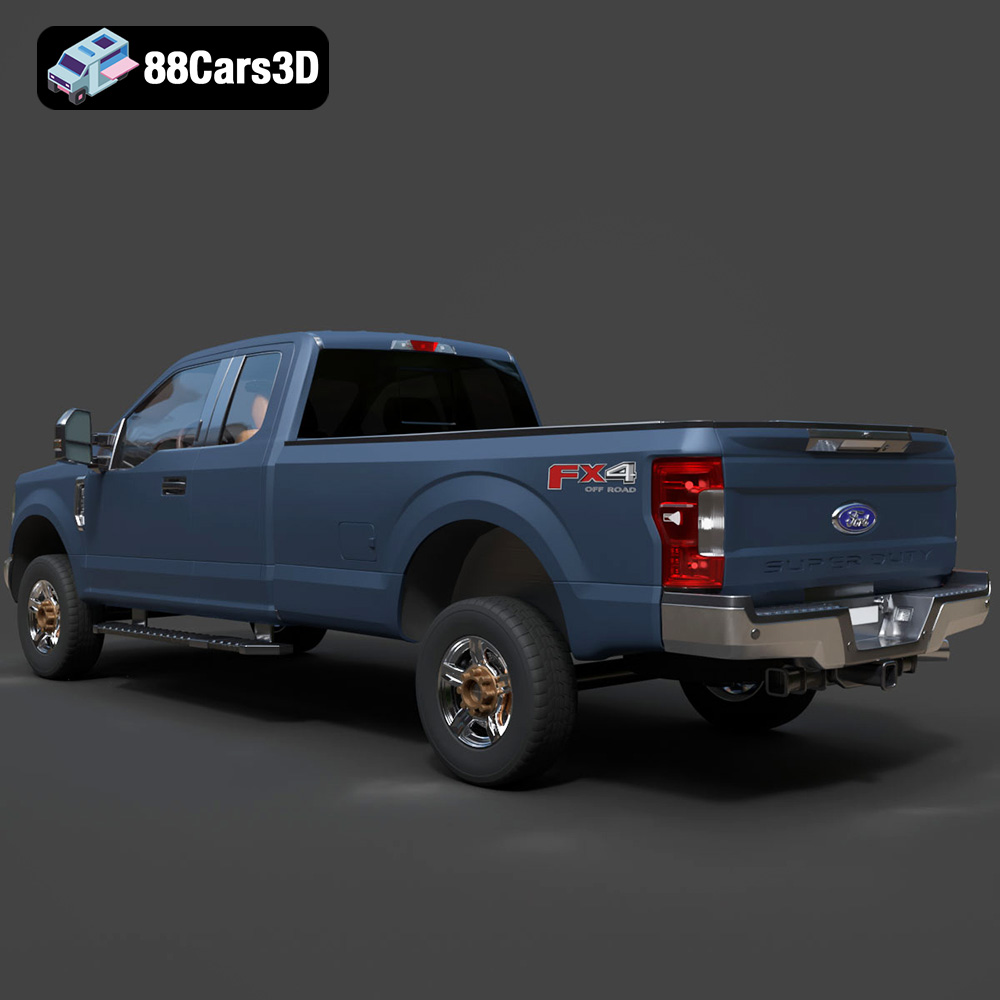
Today, we’re diving deep into what makes a 3D car model truly outstanding, using the formidable Ford F-250 Super Duty Super Cab XLT 2015 3D Model as our prime example. This particular model, available on 88cars3d.com, encapsulates the essence of a high-fidelity asset, designed to meet the rigorous demands of various professional applications. Its dense topology and meticulous detail offer a powerful foundation for projects ranging from exquisite renders to robust physical prototypes.
The versatility and utility of a 3D model are often defined by the file formats it supports. Each format is designed with specific use cases in mind, offering different advantages in terms of data preservation, compatibility, and optimization for various pipelines. Understanding these formats is crucial for any professional working with 3D assets. The Ford F-250 Super Duty Super Cab XLT 2015 3D Model comes packed with a comprehensive array of formats, ensuring maximum flexibility.
The `.blend` file is Blender’s native format, preserving an entire scene with all its elements. This includes not just the mesh geometry, but also materials, textures, lighting setups, cameras, animation data, physics simulations, and even custom scripts. For users working within the Blender ecosystem, a `.blend` file offers the most complete and editable version of the model. It’s ideal for artists who want to dive deep into the model’s construction, make significant modifications, or leverage Blender’s powerful rendering engine, Cycles or Eevee, directly. The F-250 model in `.blend` format provides a fully set up environment, ready for immediate customization and rendering.
`.fbx` (Filmbox) is arguably the most widely adopted proprietary file format for 3D content exchange, developed by Autodesk. It’s an excellent choice for transferring 3D data between different software applications like Maya, 3ds Max, Unity, and Unreal Engine. FBX supports not only geometry but also materials, textures, animation, skeletal rigs, and even camera data. Its strength lies in its ability to maintain a good balance between data fidelity and broad compatibility, making it indispensable for real-time pipelines, game development, and cinematic production. When you need to bring the F-250 into Unreal for a simulation or Unity for a mobile game (after retopology, given its high poly count), `.fbx` is your go-to.
The `.obj` (Wavefront OBJ) format is a simple, universal geometry definition file. It stores 3D geometry data including vertices, normals, UV coordinates, and faces. While it doesn’t inherently support advanced features like animation or complex material setups, its simplicity makes it incredibly robust and compatible with virtually every 3D software package. Materials are typically defined in a separate `.mtl` (Material Template Library) file. `.obj` is perfect for raw geometry transfer or when you need a clean mesh to start a new project in an unfamiliar application. For the F-250, the `.obj` ensures cross-software compatibility, allowing artists to import the raw, detailed mesh into any preferred environment.
`.glb` (GL Transmission Format Binary) is the binary version of the `glTF` (Graphics Library Transmission Format) format. It’s designed for efficient transmission and loading of 3D scenes and models by engines and applications. GLB packs geometry, materials, textures, and animation into a single compact file, making it highly optimized for web-based 3D viewers, AR (Augmented Reality), and VR (Virtual Reality) applications. It’s a modern format that prioritizes performance and ease of deployment, especially crucial for interactive 3D experiences. The F-250 as a `.glb` file could be quickly loaded into a browser-based configurator or an AR app for a compelling product showcase.
`.stl` (Stereolithography) is the de facto standard file format for 3D printing. It represents 3D surfaces as a series of connected triangles (a triangular mesh). STL files contain only the surface geometry of a 3D object without color, texture, or other CAD attributes. Its simplicity ensures widespread compatibility with slicing software used in 3D printers. The F-250 Super Duty Super Cab XLT 2015 3D Model is provided in `.stl` format, meticulously prepared for additive manufacturing. This makes it an excellent base for creating scale models, RC truck bodies, or detailed prototypes, as outlined in its dedicated 3D printing settings.
`.ply` (Polygon File Format or Stanford Triangle Format) is a versatile format for storing 3D data, particularly known for its ability to handle data from 3D scanners. It can store not only geometry (vertices, faces) but also additional properties like color, transparency, normals, and texture coordinates per vertex or face. This makes it a good choice for applications requiring precise mesh data, such as scientific visualization, reverse engineering, or CAD analysis. While less common for general 3D model distribution than FBX or OBJ, its inclusion for the F-250 model ensures options for specialized analysis or data archival.
The `.unreal` format implies an asset specifically packaged and optimized for direct import or use within Unreal Engine. This often means the asset has already undergone certain optimizations, material setups, and potentially collision mesh generation tailored for the engine. While the high-poly nature of the F-250 means it will likely require retopology for a drivable in-game asset, providing it in an Unreal-ready format streamlines the initial import process and retains any specific engine-related material setups or pivots, getting you closer to integration into your real-time project.
Similar to `.blend` for Blender, the `.max` file is the native format for Autodesk 3ds Max. It stores the complete 3ds Max scene, including all geometry, modifiers, materials, textures, lights, cameras, animation, and rendering settings. For professionals operating within the 3ds Max ecosystem, the `.max` file offers the most comprehensive and editable version of the model. It’s ideal for detailed automotive rendering, architectural visualization, and intricate animation sequences, allowing full control over every aspect of the F-250 model within its original creation environment.
The availability of these diverse formats for the Ford F-250 model significantly enhances its value, enabling seamless integration across various professional pipelines and ensuring that designers, artists, and engineers have the right tools for their specific needs.
Automotive rendering is an exacting discipline that demands unparalleled detail and realism. Whether for advertising, design reviews, or cinematic sequences, the visual fidelity of the vehicle is paramount. This is where high-polygon 3D car models like the Ford F-250 Super Duty Super Cab XLT 2015 truly shine.
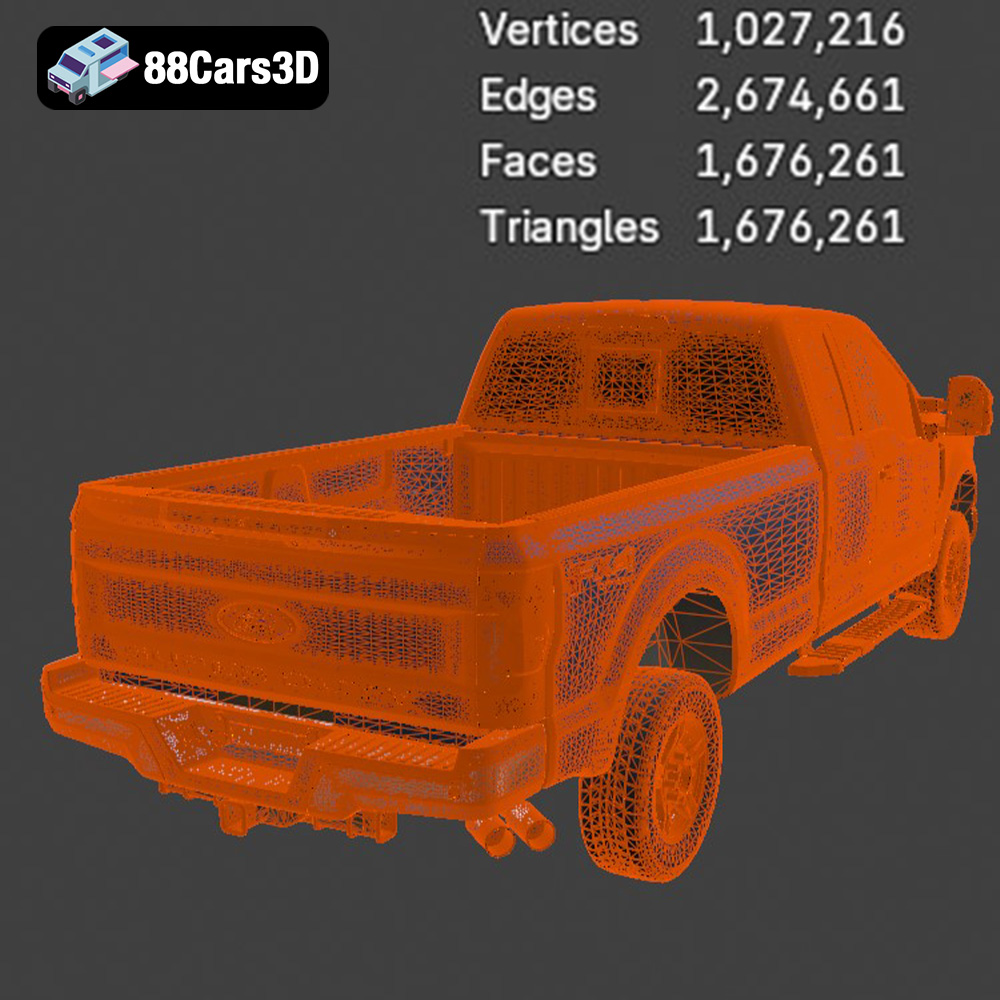
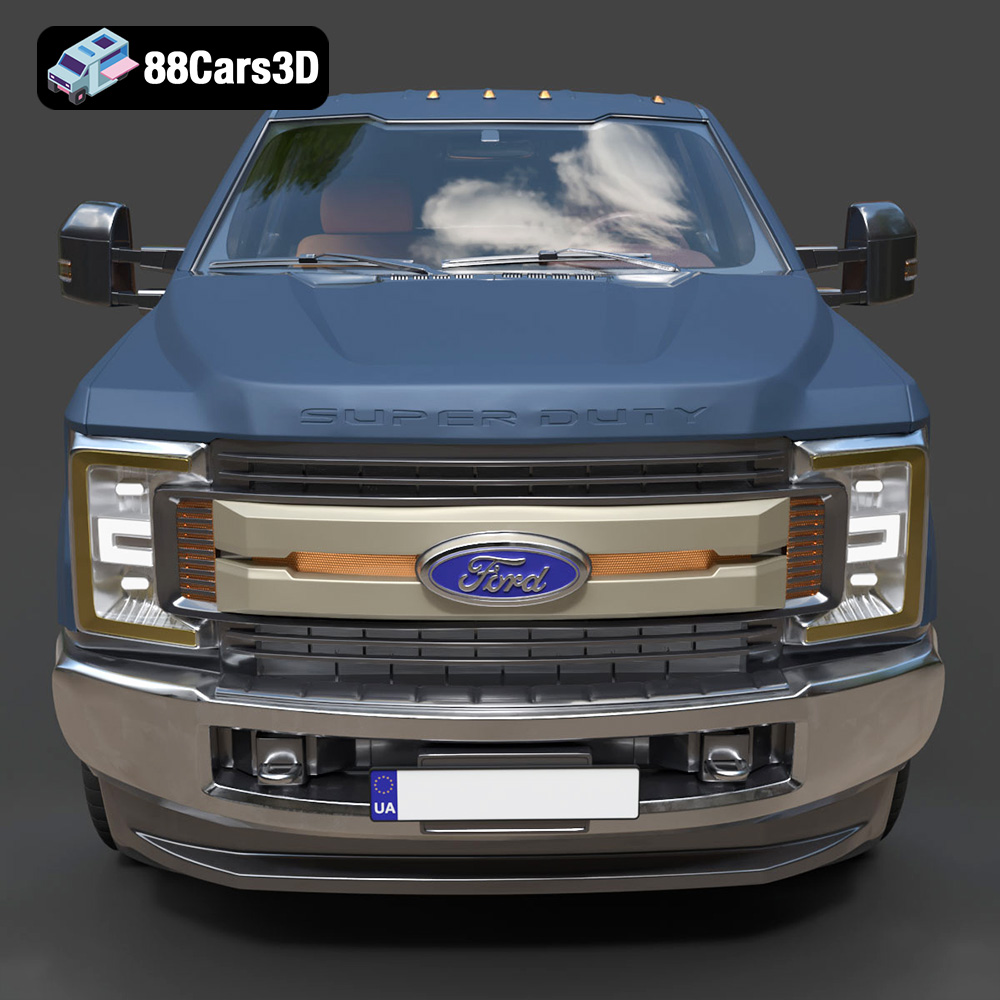
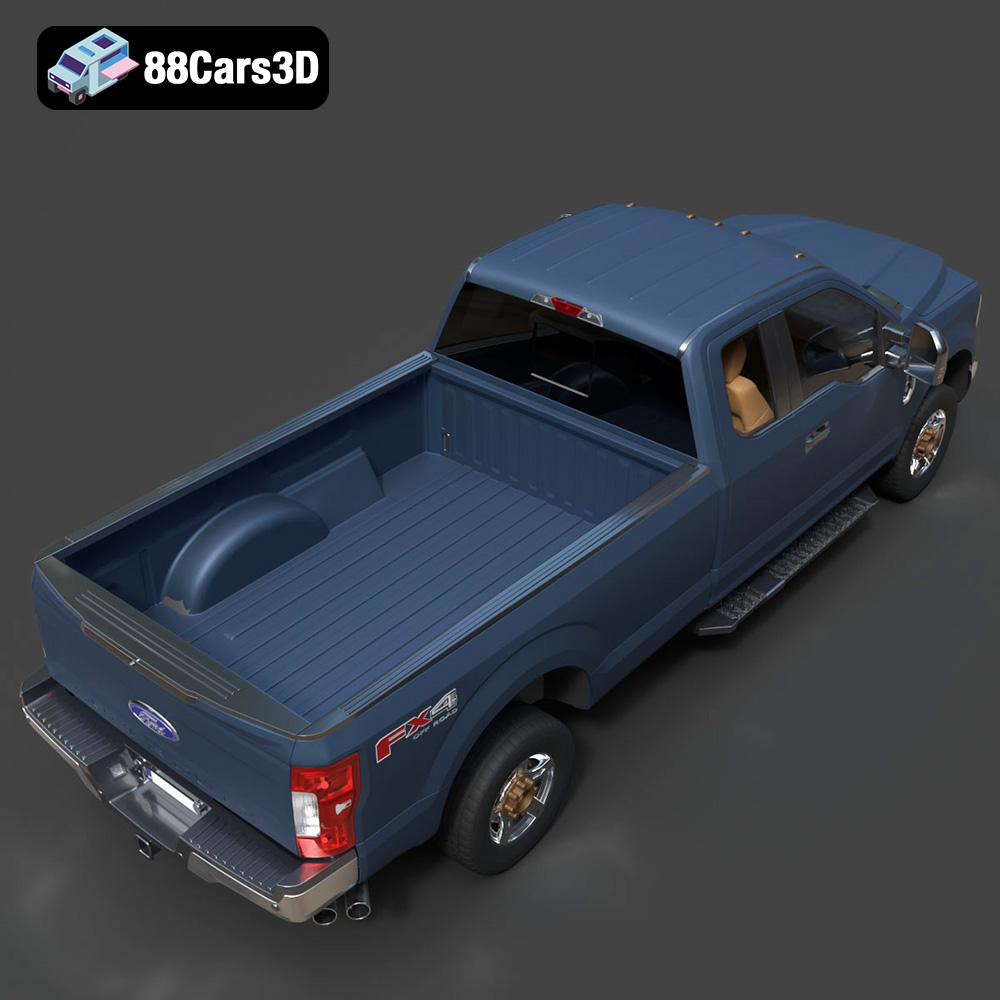
The Ford F-250 Super Duty 3D Model boasts over 1.6 million polygons (1,676,261 triangles, to be precise). This dense mesh structure is not merely a number; it translates directly into smooth curves, sharp edges, and intricate details that accurately reflect the real-world vehicle. From the distinctive XLT-spec chrome front grille and massive stacked headlight clusters to the subtle contours of the Super Cab extended cabin and the precise panel gaps, every element is meticulously sculpted. For rendering artists, this means less time spent on tweaking and more time on lighting, materials, and composition, knowing the underlying geometry is flawless. The model’s real-world scale accuracy further contributes to believable scene integration, whether it’s battling muddy trails or parked majestically on a construction site.
Beyond geometry, high-quality rendering relies on sophisticated materials and textures. While the immediate product description highlights detailed geometry, a premium model typically comes with well-organized UVs and often PBR (Physically Based Rendering) materials. This allows for realistic paint finishes, accurate reflections on chrome bumpers and mirrors, and convincing tire rubber textures. Imagine the Ford F-250 rendered with a deep metallic blue paint job, reflecting the crisp morning light, or showcasing a weathered, dust-laden appearance after a tough day on the job. The robust mesh of this model provides an excellent canvas for applying such complex material definitions, allowing artists to tell a compelling visual story. For cinematic production, where every frame counts, such fidelity is indispensable, making the F-250 model a hero asset capable of holding up to extreme close-ups.
Game development and real-time simulations present unique challenges for 3D assets, primarily concerning polygon count and optimization. While high-poly models are perfect for offline rendering, integrating them directly into real-time engines like Unreal or Unity requires careful consideration.
The Ford F-250 Super Duty Super Cab XLT 2015, with its 1.67 million triangles, is classified as a “hero” asset – a term indicating maximum visual fidelity, suitable for cutscenes or static displays rather than directly drivable in a typical game environment. Real-time engines demand optimized meshes to maintain high frame rates. This often necessitates a process called “retopology” or “decimation.” Retopology involves creating a new, low-polygon mesh that carefully follows the contours of the high-poly model, preserving its visual form while drastically reducing the poly count. Decimation, on the other hand, automatically reduces polygon count but can sometimes compromise mesh quality.
For game developers looking to feature this iconic truck, the included formats like `.fbx` and `.unreal` provide a fantastic starting point. After retopology, which might bring the poly count down to a few hundred thousand or even tens of thousands for a highly optimized game vehicle, the separate components like wheels, steering components, doors, and tailgate (mentioned in the product description) become invaluable. These pre-separated elements are crucial for rigging and animation, allowing for realistic wheel rotation, responsive steering, and interactive door functionality within a game engine. Imagine this F-250 as a core vehicle in a construction simulator, an off-road racing title, or an open-world RPG, where its realistic mechanics would greatly enhance player immersion.
The utility of a 3D model extends far beyond digital screens. With the advent of accessible 3D printing technology, these digital assets can be transformed into tangible objects, opening up new avenues for prototyping, scale modeling, and collectibles. The Ford F-250 Super Duty model is explicitly designed with 3D printing in mind, providing specific settings and recommendations.
The `.stl` format inclusion is key for 3D printing. The F-250’s high-poly nature translates into an incredibly detailed physical model. The recommended scales (1:24 / 1:18 / 1:10) are perfect for custom RC crawler bodies, allowing hobbyists to build robust and highly realistic remote-control trucks. The detailed specifications for layer height (0.08–0.16 mm), wall thickness (1.5–2.5 mm), and infill (15–25%) provide clear guidance for achieving a structurally sound and visually accurate print. Thicker walls are particularly important for a large truck body, ensuring durability.
Successful 3D printing often involves meticulous post-processing. The product description guides users through crucial steps:
For professionals, efficiency is as important as quality. A well-prepared 3D model integrates seamlessly into existing workflows, saving valuable time and resources. The Ford F-250 Super Duty model exemplifies this by offering multiple formats and clear technical specifications.
Imagine an architectural visualization studio tasked with creating a realistic urban scene. Instead of spending hours modeling a pickup truck from scratch, they can instantly download the F-250 model from 88cars3d.com. With the `.max` or `.blend` file, they can open it directly in their preferred software, apply their studio’s standard material library, and integrate it into the scene. The real-world scale accuracy ensures it fits perfectly alongside buildings and other vehicles. This rapid deployment of high-quality assets dramatically accelerates project timelines.
Consider an advertising agency creating a commercial for a heavy-duty truck accessory. Instead of scheduling an expensive photoshoot with a physical F-250, they can utilize the 3D model. The high-poly mesh allows for cinematic-quality renders, showcasing the accessory in various rugged environments – from a snowy mountain pass to a muddy construction site. The customizable options, such as changing exterior paint colors or modifying wheel and tire setups, enable them to generate diverse visual assets for different marketing materials without additional physical production costs. The separate, animatable components (doors, tailgate, wheels) also facilitate creating dynamic shots, such as the truck driving over challenging terrain or the tailgate opening to reveal a product. This level of flexibility is a game-changer for digital content creation.
A truly valuable 3D model offers more than just fidelity; it provides a robust foundation for customization, adapting to the unique demands of various projects. The Ford F-250 Super Duty Super Cab XLT 2015 3D Model delivers on this promise, enabling artists to tailor the asset to their specific creative vision.
The product description highlights several customization options that empower users:
These customization options transform a single 3D model into a highly adaptable asset, capable of serving a multitude of creative and commercial purposes, further cementing its value as a professional resource.
The journey through the world of high-quality 3D car models reveals a landscape of incredible detail, technical sophistication, and boundless creative potential. The Ford F-250 Super Duty Super Cab XLT 2015 3D Model stands as a testament to the power of precision engineering in the digital realm. Its dense, uncompromising topology, meticulous recreation of both exterior and interior features, and thoughtful preparation for diverse applications — from cinematic rendering and game development to tangible 3D prints — make it an indispensable asset for professionals.
Whether you are crafting a hyper-realistic automotive advertisement, building an immersive virtual world, or bringing a detailed scale model to life through 3D printing, the quality of your foundational assets is paramount. This F-250 model, with its comprehensive file formats and robust technical specifications, provides that solid foundation. It saves valuable development time, unlocks creative possibilities, and ensures that your final output achieves the highest standards of visual excellence.
For those seeking premium 3D car models that deliver on every front, explore the extensive collection at 88cars3d.com. Discover assets like the Ford F-250 Super Duty that are ready to elevate your next project to professional heights.
The Ford F-250 Super Duty Super Cab XLT 2015 3D Model is a premium, high-detail digital recreation of America’s iconic heavy-duty work truck. Representing the final iteration of the legendary steel-body generation, this 2015 model captures the imposing, muscular stance that makes the F-250 a favorite for towing, off-roading, and commercial fleets. Built with dense, uncompromising topology (over 1.6 million polygons), it provides maximum visual fidelity for extreme close-up rendering, cinematic automotive visualization, commercial fleet mockups, and high-end 3D printing.
$69.99
.automotive
.blend
.fbx
.ford
.obj
.rendering
.stl
.xlt
2015-ford
3d printing
car-3d-model
f-250
heavy-duty
high poly
pickup-truck
super-cab
super-duty