Get 50% OFF All Premium 3D & STL Models!

In the world of automotive design and digital content creation, the allure of hypercars like the Gumpert Apollo Intensa Emozione 2019 is undeniable. Its aggressive lines, pure aerodynamic purpose, and raw V12 power make it a masterpiece of engineering. For 3D artists, game developers, visualization specialists, and even hobbyists, bringing such a vehicle into the digital realm with impeccable accuracy is paramount. This isn’t just about creating a pretty picture; it’s about crafting a digital twin that serves a multitude of professional applications, from high-fidelity cinematic renders to immersive virtual experiences and even physical 3D prints.
The journey from a real-world marvel to a functional 3D asset demands a deep understanding of technical specifications, software workflows, and an unwavering commitment to detail. Whether you’re aiming for a photorealistic advertising campaign or a responsive in-game asset, the foundational quality of your 3D car models is the ultimate differentiator. This article delves into the intricate process of utilizing a premium asset like the Gumpert Apollo Intensa Emozione 2019 3D Model to elevate your projects, exploring the technical nuances that empower creative professionals across various industries. From understanding file formats to optimizing for performance and even venturing into 3D printing, we’ll uncover how a meticulously crafted model can transform your digital automotive endeavors, readily available from marketplaces like 88cars3d.com.
The versatility of a high-quality 3D model is largely defined by the array of file formats it supports. Each format is designed with specific applications in mind, offering unique advantages for different stages of the 3D pipeline. The Gumpert Apollo Intensa Emozione 2019 3D Model, for instance, provides a comprehensive suite of formats, ensuring maximum compatibility and utility across diverse professional workflows. Understanding these formats is crucial for optimizing your projects, whether you’re focusing on automotive rendering, game assets, or physical production.
The .blend file format is Blender’s native project file. When you acquire a .blend file, you’re not just getting the mesh; you’re often getting a fully editable Blender scene. This includes all the materials, textures, lighting setups, camera positions, and sometimes even animation data and modifiers. For artists deeply integrated into the Blender ecosystem, this format offers unparalleled flexibility. You can dissect the model, understand its construction, modify materials, adjust UVs, and immediately begin rendering with Cycles or Eevee without extensive setup. It’s ideal for in-depth customization, learning from expert topology, and direct scene integration.
Autodesk’s .fbx format stands as one of the most widely adopted interchange formats in the 3D industry. Its strength lies in its ability to encapsulate a broad range of 3D data, including geometry, materials, textures, animation, and rigging, into a single file. This makes it an ideal choice for transferring models between different 3D software applications like 3ds Max, Maya, and Blender, and crucially, into real-time game engines such as Unreal Engine and Unity. For game assets, an .fbx file ensures that your Gumpert Apollo IE model retains its UVs, material assignments (often converted to PBR in-engine), and hierarchical structure, allowing for efficient setup of skeletal meshes, physics assets, and LODs.
The .obj (Wavefront Object) format is a classic and highly compatible choice, serving as a universal standard for raw 3D geometry. While it supports vertex positions, normals, UV coordinates, and material group assignments, it typically stores material properties and textures in separate .mtl (Material Template Library) and image files. Its simplicity makes it incredibly robust and compatible with virtually every 3D software package, making it excellent for archiving or for scenarios where you need to import the pure mesh into an application that might have limited .fbx support. It’s a reliable fallback for cross-software compatibility, though it might require manual texture re-linking in some cases.
The .glb (GL Transmission Format Binary) is the binary version of glTF, a royalty-free specification for the efficient transmission and loading of 3D scenes and models by applications. Optimized for web-based 3D, AR, and VR, .glb files bundle all necessary assets – models, textures, animations – into a single, compact file. This “asset delivery format” is perfect for showcasing your Gumpert Apollo IE in browser-based configurators, interactive virtual showrooms, or augmented reality apps on mobile devices. Its focus on efficient runtime delivery means faster loading times and smoother performance in real-time web environments.
The .stl (Stereolithography) format is the undisputed king of 3D printing. It represents a 3D model as a series of connected triangles, defining only the surface geometry without color, texture, or other properties. While it simplifies the model, this format is universally accepted by 3D printers and slicing software. For creating a physical replica of the Gumpert Apollo IE, converting the high-detail model to .stl is the crucial step. It ensures manifold geometry – a watertight, solid mesh essential for successful additive manufacturing. Careful consideration of mesh density and clean geometry is vital when generating .stl files for precise prints.
The .ply (Polygon File Format) is another popular format for storing 3D data, particularly from 3D scanners or for CAD applications. Unlike .stl, .ply can store a wider range of properties, including color, transparency, surface normals, and even texture coordinates for each vertex. This makes it suitable for precise engineering analysis, scientific visualization, or scenarios where vertex-level attribute data is important. For a highly detailed model like the Apollo IE, .ply can be useful for specific reverse engineering workflows or for transferring highly accurate mesh data to specialized analysis software.
While not a traditional standalone file format in the same way as .fbx or .obj, the .unreal designation typically refers to assets that are pre-configured or specifically optimized for direct import and use within Unreal Engine. This often means the model has appropriate material setups, UV channels for lightmapping, collision meshes, and possibly even LOD (Level of Detail) variations tailored for Unreal’s rendering pipeline. An Unreal-ready Gumpert Apollo IE model significantly accelerates development time for racing simulators, cinematic sequences, or virtual production projects within the engine, minimizing the need for manual setup and optimization.
The .max file is the native scene file for Autodesk 3ds Max. Like .blend, it contains the complete scene, including geometry, materials, textures, lighting, cameras, animation, and any modifiers or scripts used. For professionals working primarily in 3ds Max, this format offers the most direct access to the original model’s construction, allowing for full editability, re-rigging, animation, and rendering with powerful renderers like V-Ray or Corona. It’s the ultimate format for in-depth scene integration and modification for high-end automotive rendering and visualization projects.
Creating a high-fidelity 3D car model is an intricate blend of artistic vision and precise technical execution. It requires more than just capturing the shape; it’s about translating the vehicle’s essence into a digital form that performs flawlessly across various applications. The Gumpert Apollo Intensa Emozione 2019 3D Model exemplifies this synthesis, offering a foundation built on accuracy and optimization.
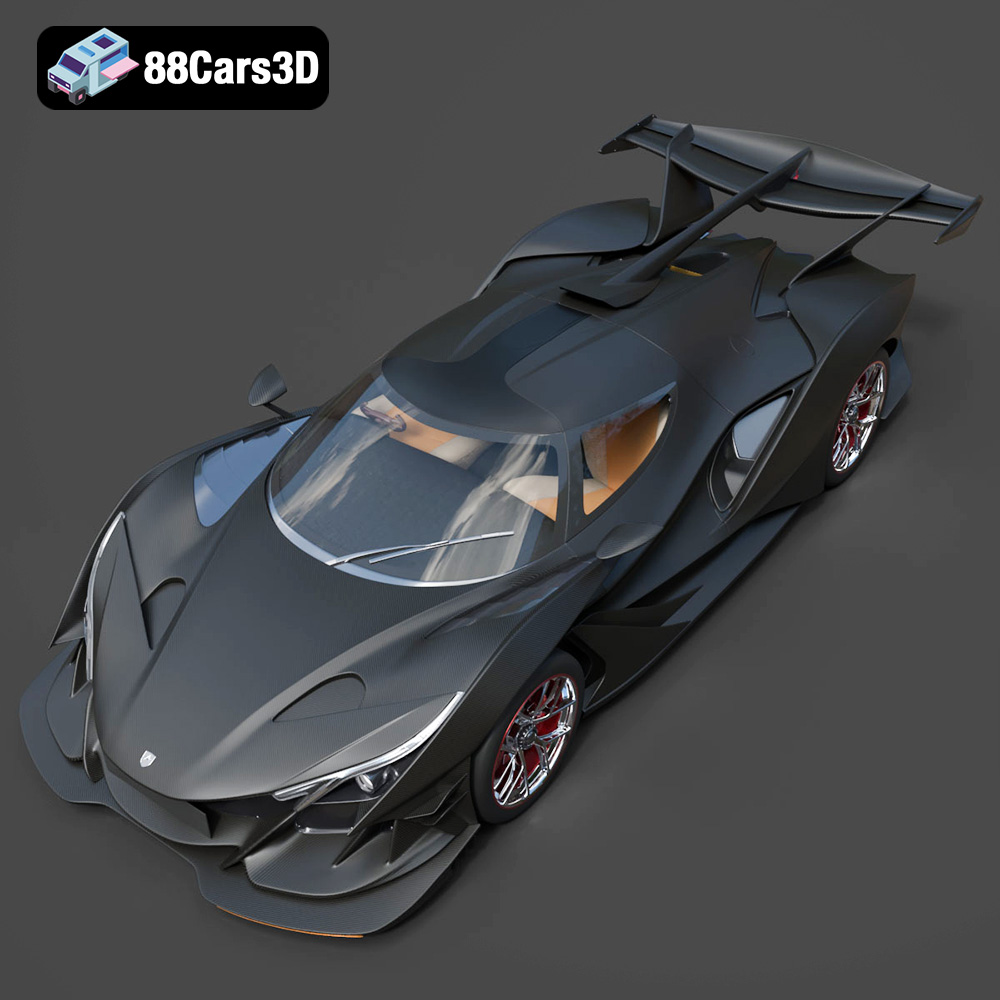
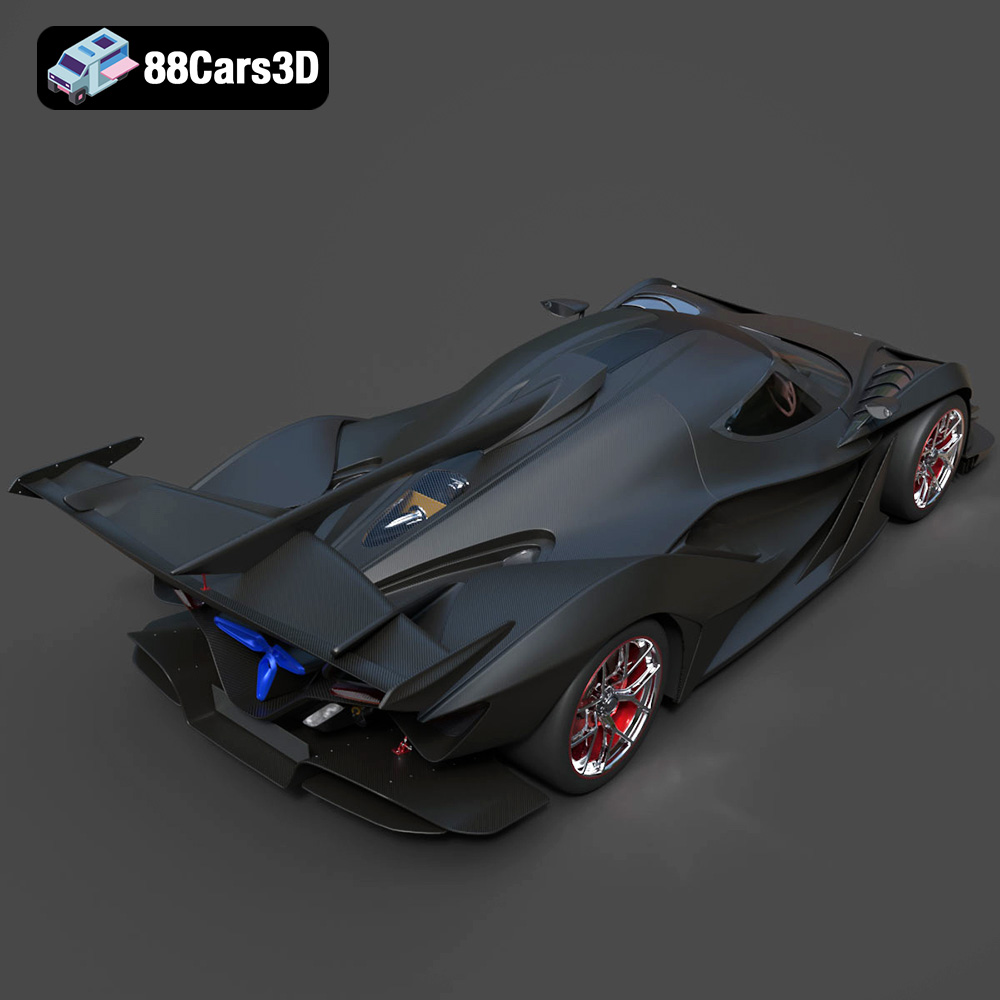
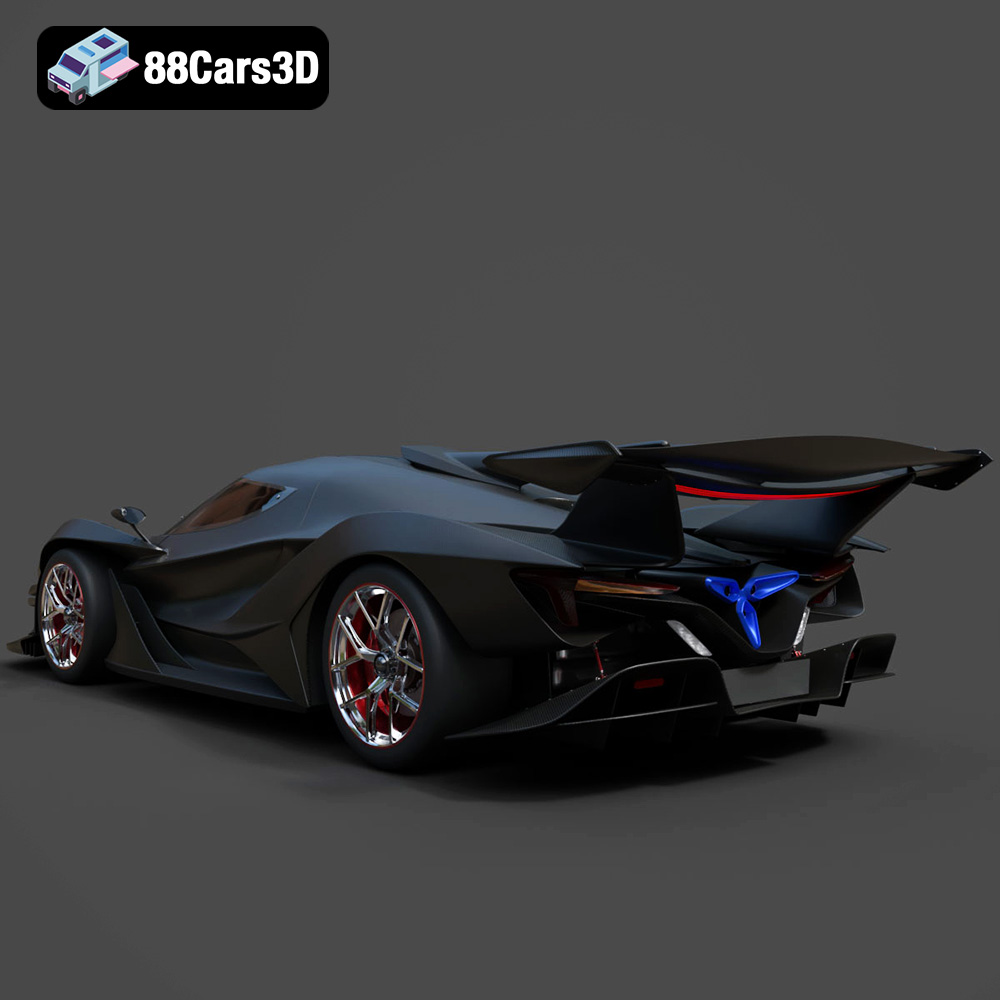
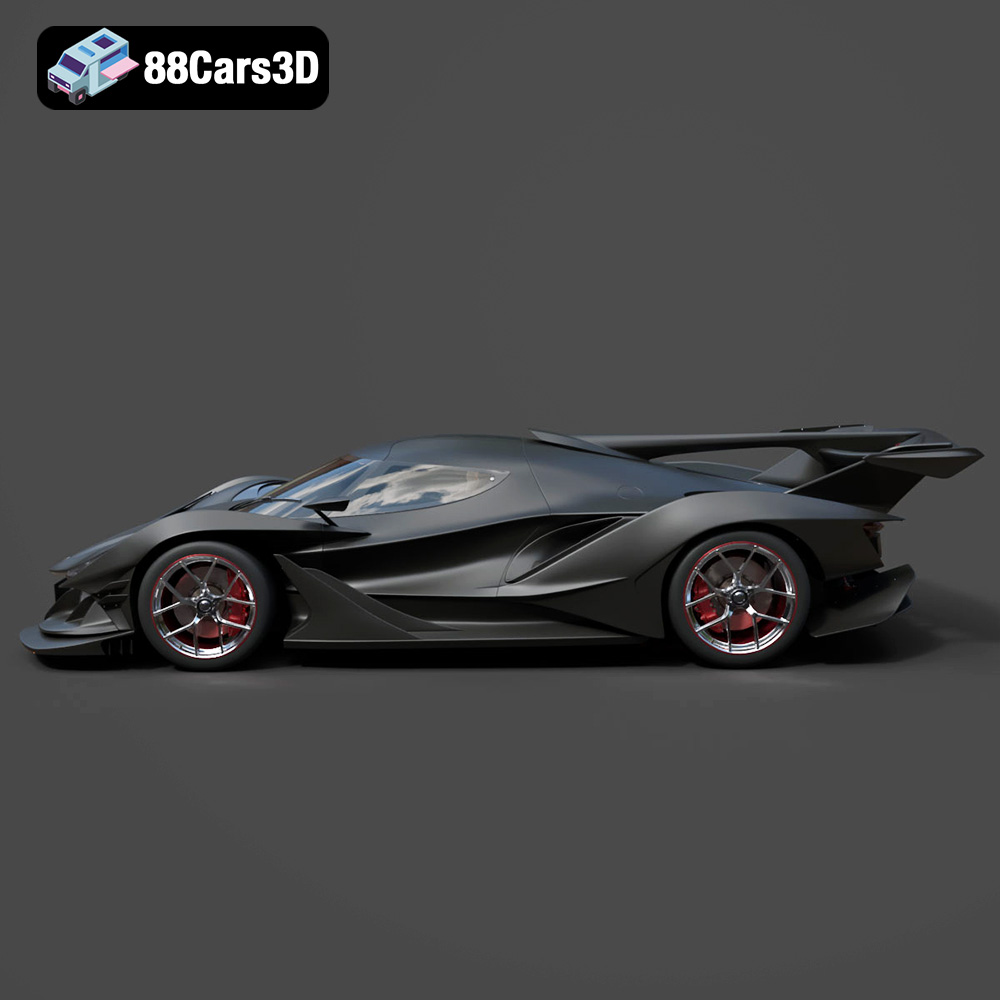
The first pillar of a premium 3D car model is its fidelity to the real-world counterpart. The Gumpert Apollo Intensa Emozione is a marvel of aggressive styling and aerodynamic prowess. A high-quality 3D model must meticulously replicate its unique characteristics:
This level of detail isn’t merely for show; it’s what makes the model credible for luxury automotive marketing, cinematic projects, and hypercar simulations, ensuring that the digital representation holds up under close scrutiny.
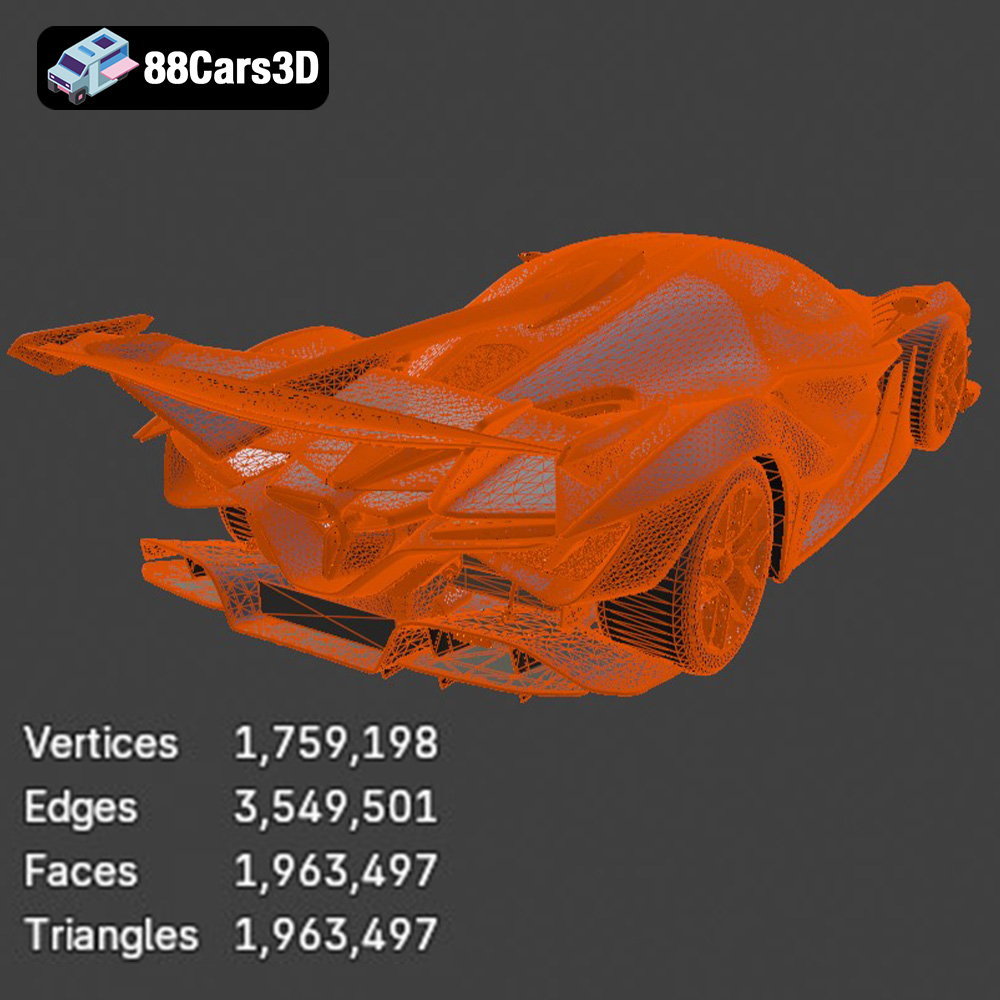
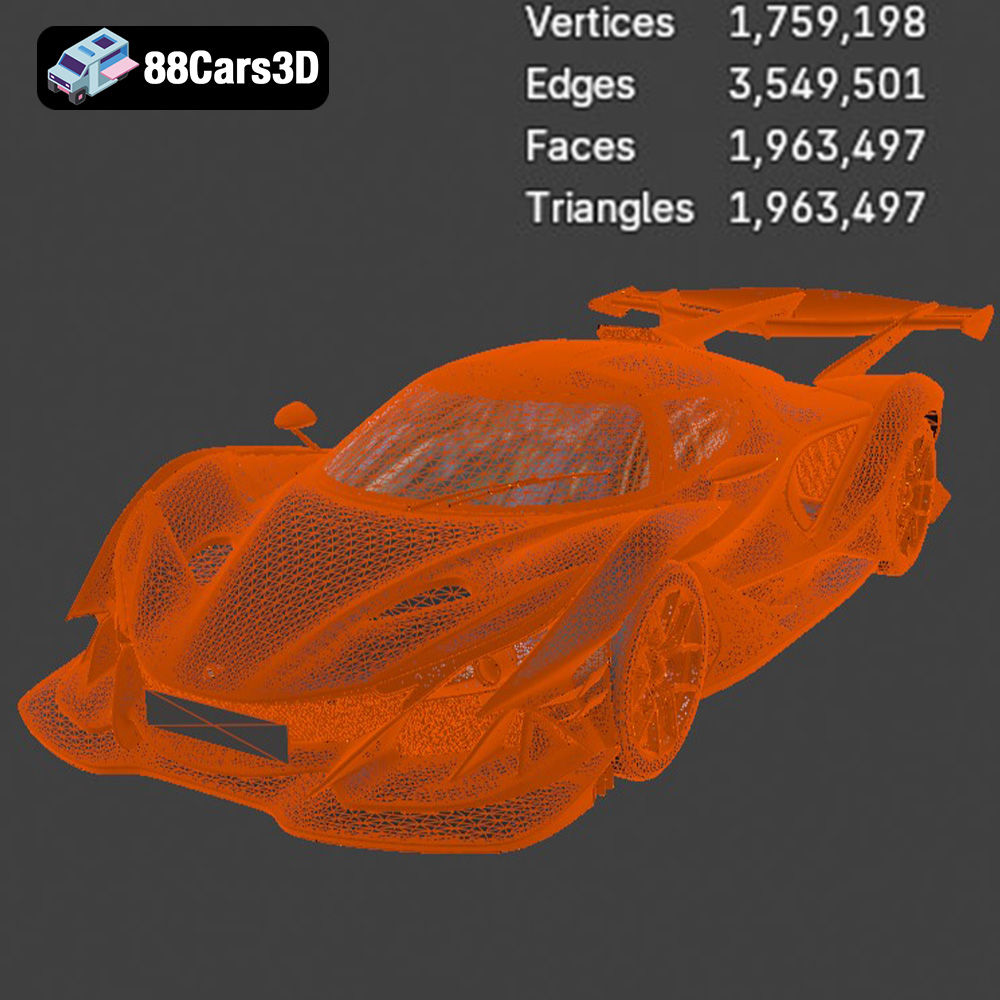
Beneath the surface fidelity lies the technical excellence of the mesh. A high-quality 3D model distinguishes itself through its underlying structure:
These technical advantages ensure that the model is not only visually stunning but also practical and efficient to work with, minimizing headaches for artists and developers.
A high-quality 3D car model is a versatile asset that seamlessly integrates into diverse professional pipelines. The Gumpert Apollo Intensa Emozione 2019 3D Model, with its comprehensive file format support and technical advantages, is designed to empower artists and developers across various specialized workflows.
For high-end automotive rendering and visualization, software like Autodesk 3ds Max and Blender are industry staples. The inclusion of native .max and .blend files with the Apollo IE model is a huge advantage.
Whether in 3ds Max or Blender, the model’s “optimized polygon flow for performance and realism” ensures that even with complex rendering engines, artists can achieve photorealistic results without excessive computational overhead.
For game development, AR/VR, and real-time visualization, performance and optimization are paramount. The Gumpert Apollo IE 3D Model is ideally suited for modern game engines.
The model’s adaptability means it can serve as a hero asset for a game’s main vehicle or as a background detail in a sprawling automotive showroom simulation.
Beyond traditional rendering and gaming, the Gumpert Apollo IE model is perfectly positioned for emerging technologies.
This wide range of applications underscores the value of investing in high-quality 3D car models that offer both aesthetic brilliance and technical robustness, much like those found at 88cars3d.com.
The versatility of a premium 3D model extends far beyond digital screens. The Gumpert Apollo Intensa Emozione 2019 3D Model, notably, is presented as a “3D Printable STL,” opening up a fascinating avenue for creating tangible, real-world collectibles and prototypes. This transition from pixels to plastic, or resin, involves specific technical considerations and artistic post-processing.
Converting a digital 3D model into a physical object via 3D printing requires careful preparation, primarily revolving around the .stl format, though .ply can also be utilized for specific printing needs.
The direct support for 3D printing makes the Gumpert Apollo Intensa Emozione 2019 3D Model a fantastic asset for creating physical collectibles, custom display miniatures, or even detailed prototypes for physical design studies.
Once printed, the real artistry begins with post-processing to bring the hypercar to life:
The ability to physically manifest the Gumpert Apollo IE as a scale model adds another layer of value to this versatile 3D asset, appealing to collectors, hobbyists, and professional model makers alike, all starting with a precision model from 88cars3d.com.
A truly exceptional 3D car model is more than just a detailed mesh; it’s a flexible asset that delivers ongoing value through its adaptability and extensive customization options. The Gumpert Apollo Intensa Emozione 2019 3D Model stands out as a prime example of such a versatile digital product.
The investment in a high-fidelity 3D car model pays dividends across a wide spectrum of professional applications:
This broad applicability means that a single purchase of this Gumpert Apollo IE 3D model can serve multiple departments or projects within a company, maximizing efficiency and creative output.
Beyond its inherent quality, the true power of a professional 3D model lies in its customization potential. The Gumpert Apollo IE model provides a solid foundation for endless creative exploration:
These customization options not only allow artists to tailor the model to specific project requirements but also extend the model’s lifespan, ensuring it remains relevant and adaptable for future creative endeavors. Investing in such a flexible and high-quality 3D car model from 88cars3d.com is a strategic move for any serious digital content creator.
The journey through the intricate world of high-fidelity 3D car models reveals a profound blend of artistic precision and technical mastery. From the initial modeling phase to the final render or 3D print, every detail contributes to the overall authenticity and utility of the digital asset. The Gumpert Apollo Intensa Emozione 2019 3D Model stands as a testament to this commitment, offering a meticulously crafted digital recreation of a legendary hypercar that is ready for deployment across a vast array of professional applications.
We’ve explored how a robust understanding of file formats – from the editable flexibility of .blend and .max to the universal compatibility of .fbx and .obj, and the specialized applications of .glb, .stl, .ply, and .unreal – empowers creators to select the perfect tool for their specific workflow. We delved into the critical aspects of design accuracy, clean topology, and mesh optimization, highlighting how these technical advantages ensure seamless integration into automotive rendering pipelines, real-time game engines, and immersive AR/VR experiences. Furthermore, the model’s readiness for 3D printing opens exciting new avenues for physical collectibles and prototypes, bridging the gap between digital and tangible.
Ultimately, a premium 3D car model like the Gumpert Apollo Intensa Emozione 2019 3D Model is more than just a static object; it’s a dynamic foundation for creative expression and a powerful tool for visual storytelling. Its versatility, technical integrity, and customization potential make it an invaluable asset for anyone looking to produce stunning visuals, develop engaging interactive content, or bring iconic vehicles to life in the physical world. For professionals seeking top-tier 3D car models that meet the highest standards of quality and performance, platforms like 88cars3d.com offer an excellent resource.
Elevate your next project by harnessing the power of precision-engineered digital assets. The raw emotion and aggressive styling of the Gumpert Apollo Intensa Emozione are now at your fingertips, ready to be unleashed in your digital domain.
The Gumpert Apollo Intensa Emozione 2019 3D Model is a high-detail digital recreation of the extreme track-focused hypercar engineered for maximum aerodynamic performance and raw driving emotion. Known for its aggressive styling, exposed carbon fiber construction, and naturally aspirated V12 power, the Apollo IE represents cutting-edge automotive engineering. This 3D model accurately captures the sharp aerodynamic bodywork, massive rear wing, aggressive front splitter, sculpted air intakes, race-inspired cockpit, and carbon fiber detailing. Designed with clean topology and real-world scale accuracy, it is ideal for rendering, animation, automotive visualization, game development, and AR/VR experiences.
$99.99
.2019car
.apolloie
.arvr
.automotive
.blend
.car3dmodel
.fbx
.gameasset
.glb
.gumpert
.hypercar
.intensaemozione
.max
.obj
.ply
.racingcar
.rendering
.simulation
.stl
.supercar
.unreal