Get 50% OFF All Premium 3D & STL Models!

In the realm of automotive design and digital visualization, capturing the essence of a machine is paramount. It’s not just about replicating shapes; it’s about translating the spirit, the raw power, and the engineering marvel into a virtual canvas. Few motorcycles embody this spirit quite like the Harley-Davidson FXDR 114, a drag-inspired power cruiser designed to dominate the asphalt with unapologetic muscle. For 3D artists, game developers, and visualization specialists, having access to a meticulously crafted digital twin of such an icon can be a game-changer.
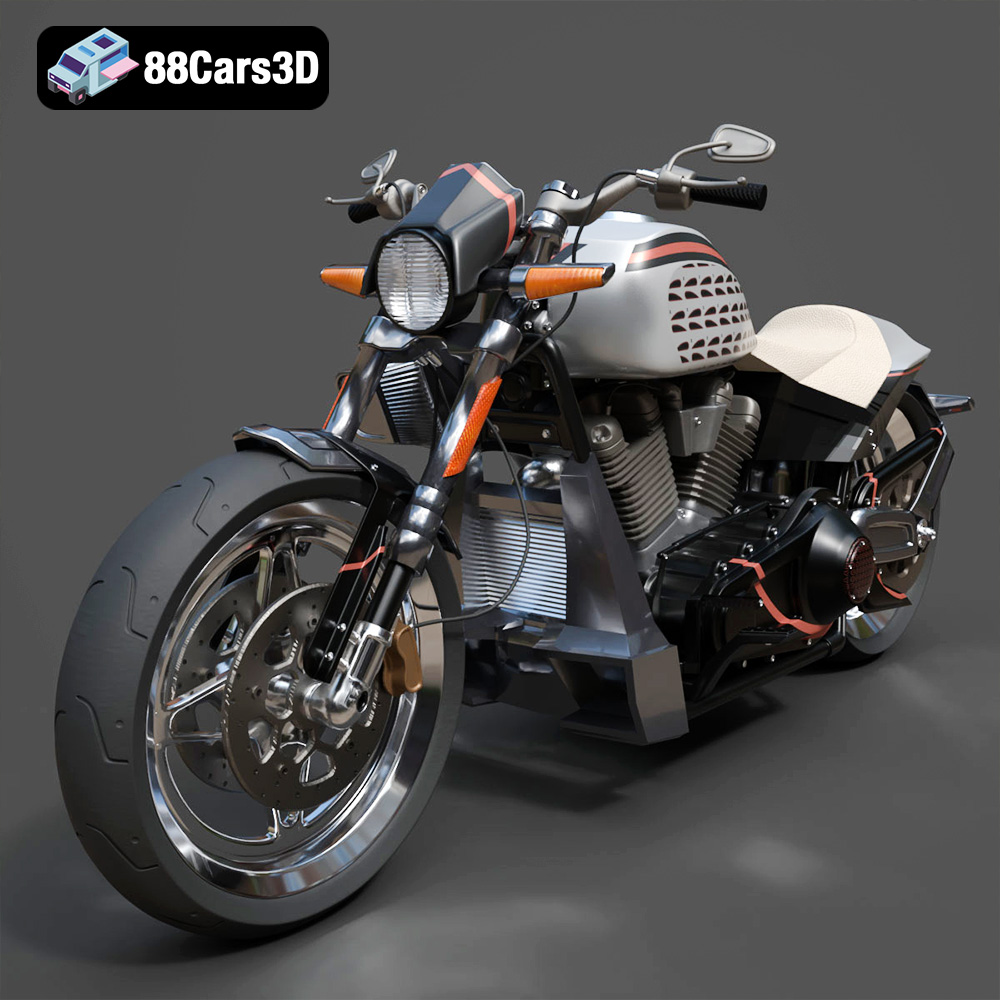
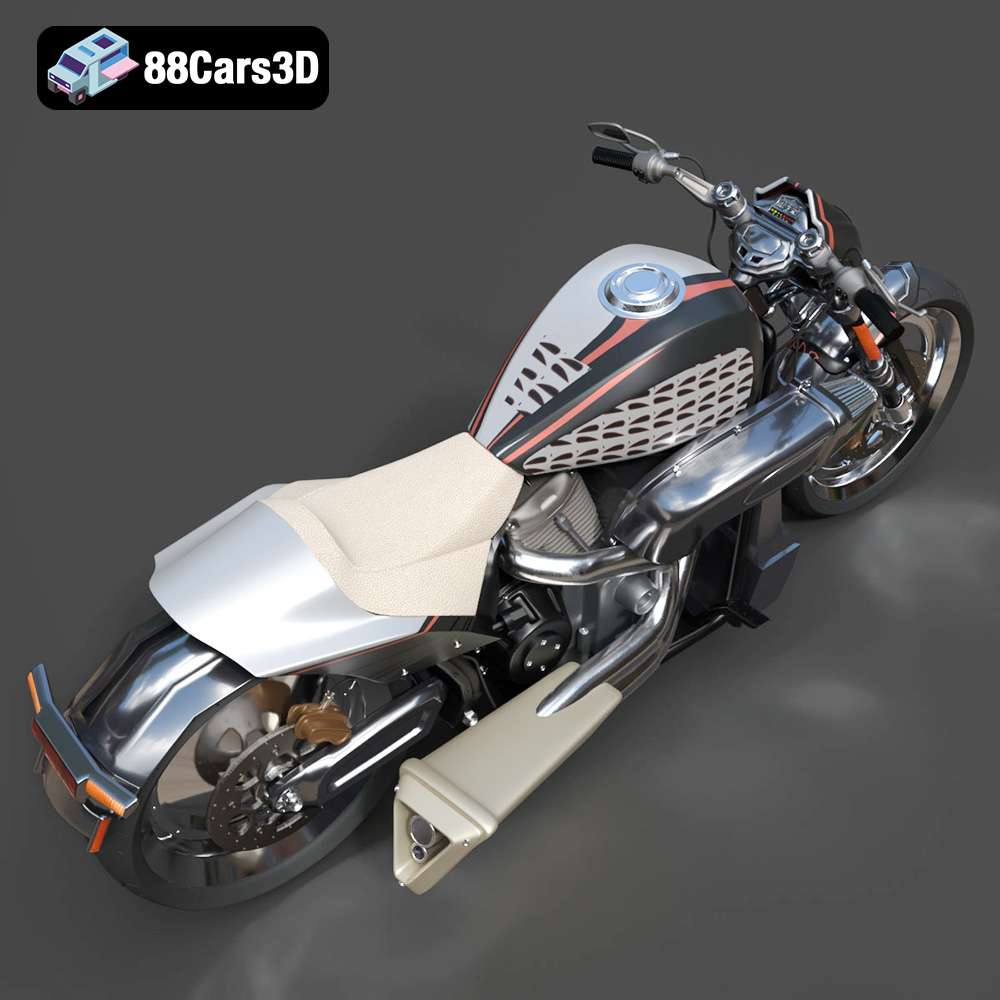
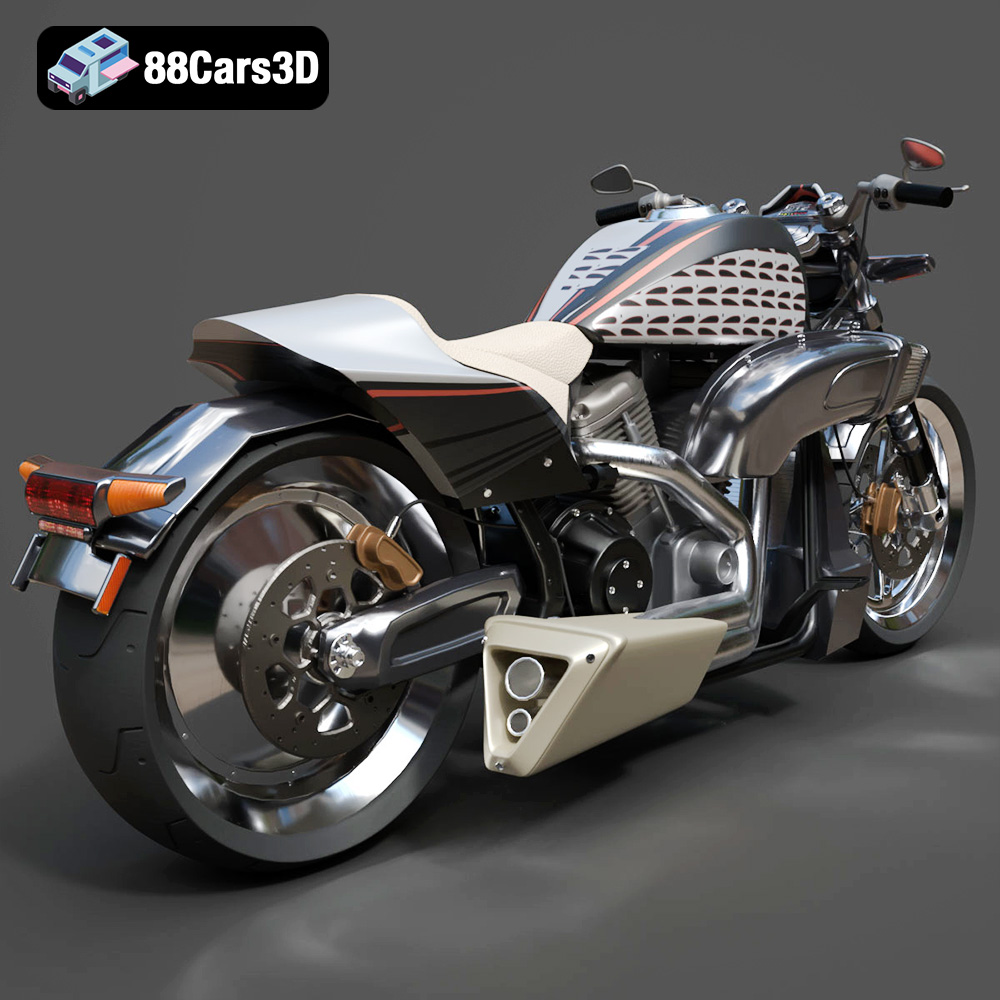
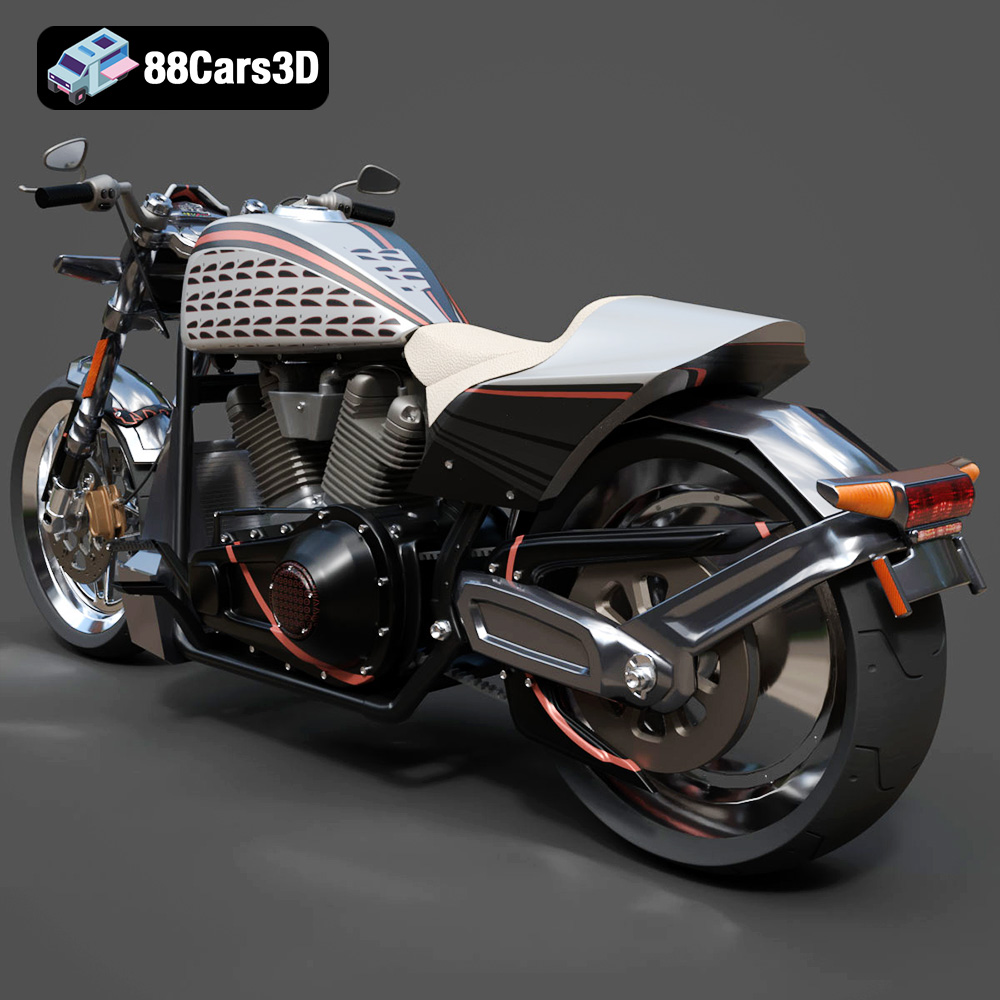
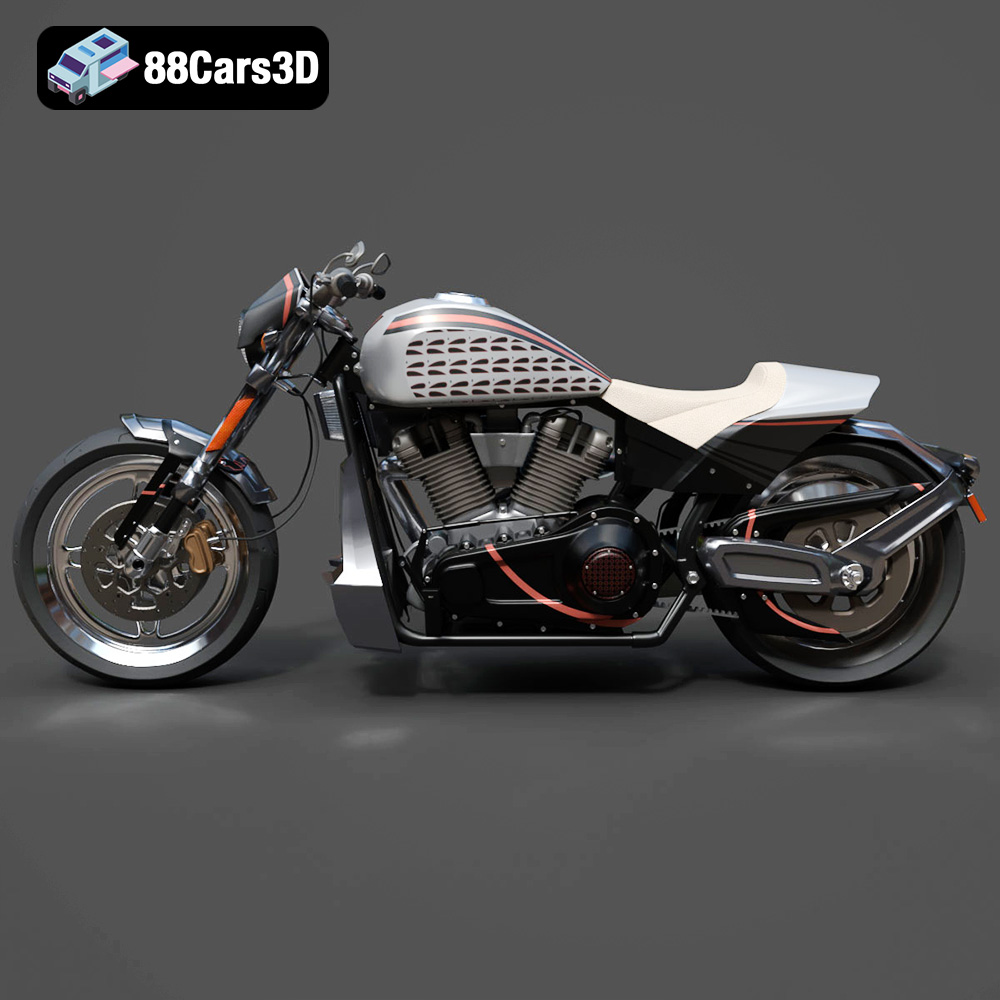
The Harley-Davidson FXDR 114 3D Model stands as a testament to precision and passion, a digital recreation that brings this aggressive beast to life in stunning detail. From its massive Milwaukee-Eight 114 V-Twin engine to its clipped drag-style tail, every curve and component has been faithfully rendered. This exceptional model, available at 88cars3d.com, is engineered for versatility, offering a superb balance of visual fidelity and optimized performance, making it suitable for everything from cinematic automotive rendering to exhilarating real-time game environments and even tangible 3D prints. Join us as we delve into the technical depths and creative possibilities this remarkable 3D asset unlocks.
The flexibility and utility of any 3D asset are largely determined by the file formats it supports. A high-quality model, like the Harley-Davidson FXDR 114 3D Model, is often provided in multiple formats to ensure maximum compatibility and workflow integration across various software and platforms. Understanding each format’s strengths and typical use cases is crucial for any professional working with 3D car models or game assets.
The `.blend` format is native to Blender, the incredibly popular open-source 3D creation suite. When you receive a `.blend` file, you’re not just getting a mesh; you’re getting a fully editable Blender scene. This includes all materials, textures (often packed within the file or referenced externally), lighting setups, cameras, animation data, and even modifiers. For artists who primarily work in Blender, this format offers the most flexibility for customization, rigging, animation, and rendering using Cycles or Eevee. It allows for direct manipulation of the model’s components, retexturing, or integrating it into complex Blender projects without any conversion losses.
FBX (Filmbox) is a proprietary file format owned by Autodesk, widely regarded as the industry standard for exchanging 3D data between different software applications. Its strength lies in its ability to store not just mesh data, but also materials, textures, animations, camera settings, and even skeletal rigs. This makes `.fbx` ideal for pipelines involving Unreal Engine, Unity, and other real-time game engines, as well as digital content creation (DCC) tools like 3ds Max, Maya, and Cinema 4D. When importing the Harley-Davidson FXDR 114 as an `.fbx`, you can expect robust support for its separate components for animation, ensuring a smooth transition into your interactive projects.
OBJ (or .obj) is one of the oldest and most widely supported 3D file formats, making it a truly universal choice for cross-software compatibility. It primarily stores geometric data (vertices, normals, texture coordinates, and faces) and can reference external material files (.mtl) for basic shading information. While it doesn’t typically support animation or rigging, its simplicity and widespread acceptance mean that nearly every 3D software can open and work with an `.obj` file. It’s an excellent fallback format for static mesh exchange and ensures the raw geometric data of the FXDR 114 is accessible in virtually any environment.
GLB (GL Transmission Format Binary) is a modern, compact, and efficient file format designed specifically for the transmission and loading of 3D models in web applications, augmented reality (AR), and virtual reality (VR) environments. It’s essentially a self-contained package that embeds all necessary data – geometry, materials, textures, and even animations – into a single binary file. This makes it incredibly fast to load and ideal for showcasing 3D car models directly in web browsers, creating interactive AR experiences, or developing lightweight VR scenes without complex external dependencies. The FXDR 114 model in `.glb` format is perfect for virtual showrooms or interactive product viewers.
STL (STereoLithography) is the de facto standard file format for 3D printing. Unlike other formats that describe surfaces using polygons, `.stl` represents a 3D model as a collection of unconnected triangulated facets, describing only the surface geometry of a 3D object without any color, texture, or material information. This simplicity makes it universally compatible with 3D printers and slicing software. When preparing the Harley-Davidson FXDR 114 for 3D printing, the `.stl` file provides the manifold geometry necessary for physical realization, ensuring a watertight and printable mesh.
PLY (Polygon File Format or Stanford Triangle Format) is another format used to store 3D data, particularly useful for high-resolution scanned data, CAD applications, and scientific analysis. It can store a wider range of properties than .obj or .stl, including color, transparency, normals, texture coordinates, and even scalar properties at each vertex. While less common for general game assets, `.ply` offers precision for scenarios where detailed mesh properties are crucial, such as reverse engineering or advanced manufacturing workflows, providing an alternative for highly detailed geometric analysis of the FXDR 114.
The `.unreal` format, often referring to native Unreal Engine assets or projects, signifies content specifically optimized and packaged for direct integration into Unreal Engine. While typically derived from `.fbx` imports, having an asset pre-configured for Unreal Engine means it might come with specific material setups (PBR, master materials), collision meshes, LODs (Levels of Detail), and blueprint configurations already applied. This dramatically streamlines the workflow for game developers and real-time visualization artists, allowing them to drop the Harley-Davidson FXDR 114 directly into their virtual worlds with minimal setup time.
The `.max` file format is the native scene file for Autodesk 3ds Max, one of the leading DCC applications for 3D modeling, animation, and rendering in professional visualization and game development. A `.max` file contains an entire 3ds Max scene, including all models, materials, textures, lights, cameras, animations, modifiers, and scene settings. For users of 3ds Max, the FXDR 114 in this format offers the highest level of editability and control, allowing for advanced rendering with V-Ray or Corona, complex animation sequences, or detailed architectural visualization integrations, providing the ultimate starting point for a high-end rendering project.
Recreating an iconic vehicle like the Harley-Davidson FXDR 114 in a digital environment requires an intimate understanding of its design philosophy and technical specifications. The goal is not just a visual match, but a faithful representation that conveys the “feel” of the original machine, whether it’s for a high-octane racing game or a sophisticated automotive configurator.
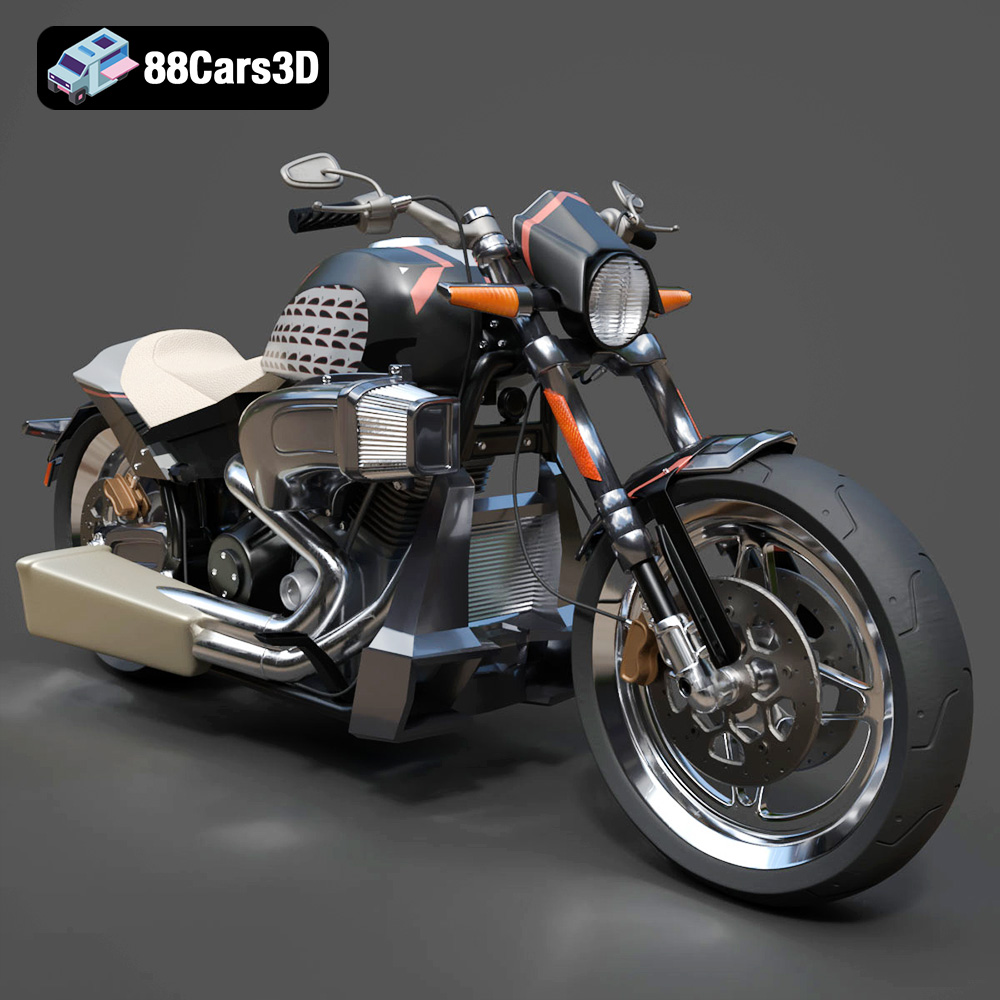
The real Harley-Davidson FXDR 114 is defined by its aggressive, drag-strip stance and performance-oriented design. The 3D model meticulously reproduces these characteristics. This means precise attention to the Softail chassis geometry, which dictates the bike’s overall silhouette, and the distinctive forward-reaching air intake that feeds the Milwaukee-Eight 114 engine. The massive 240mm rear tire, a hallmark of its drag-bike proportions, is accurately scaled and modeled, emphasizing the bike’s powerful rear-wheel drive. The lightweight cast aluminum swingarm geometry, the sleek LED Daymaker headlight assembly, and the chopped, drag-style tail section are all replicated with keen accuracy, ensuring that the digital model is instantly recognizable as the FXDR 114.
The Milwaukee-Eight 114 V-Twin engine is the soul of the FXDR 114, and its accurate representation in 3D is critical. This model doesn’t shy away from detail, showcasing the engine block, primary drive, and the forward-facing air intake with high fidelity. For rendering, this level of detail allows for close-up shots that highlight the raw mechanical beauty, while in game engines, well-modeled engine components contribute significantly to the overall realism, even if only glimpsed. Texturing can further enhance these details, simulating the metallic sheen, cast iron textures, and subtle weathering that define a powerful V-twin. Proper material assignments for chrome, matte finishes, and engine cooling fins contribute to photographic realism.
Beyond the exterior, the rider’s perspective is crucial, especially for interactive applications like gaming and VR. The FXDR 114 3D model includes a highly detailed cockpit and rider interface. The deep, drag-style solo saddle geometry, the forward-reaching aluminum clip-on style handlebars, and the minimalist digital riser gauge cluster are all accurately modeled. Authentic forward foot control and peg placements complete the rider’s ergonomic setup. This attention to internal detail ensures that whether the player is in first-person view in a game or exploring a virtual showroom, the experience remains immersive and true to the real bike.
Creating a 3D model that looks fantastic is one thing; ensuring it performs flawlessly across diverse applications is another. The Harley-Davidson FXDR 114 3D Model strikes an impressive balance, meticulously engineered for both premium visual fidelity and practical performance.
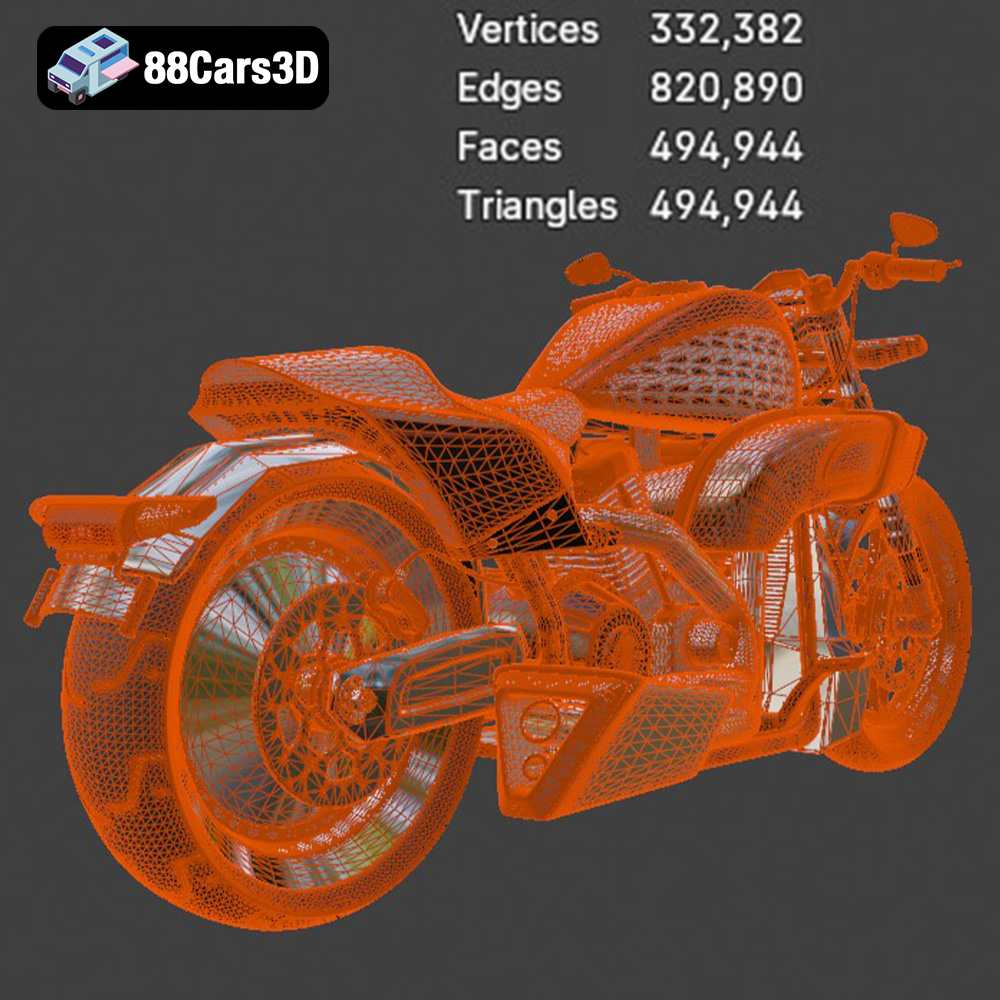
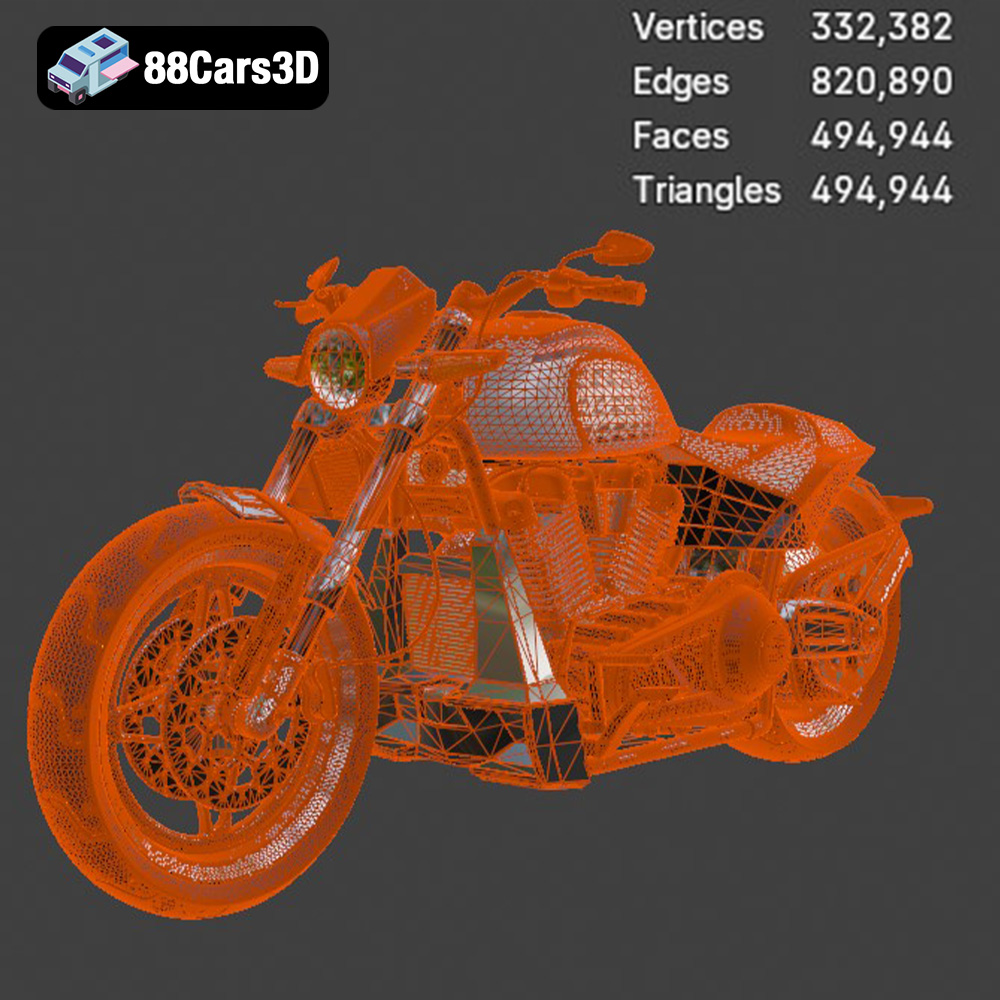
The technical specifications of this model highlight its optimized geometry:
At just under 500,000 triangles, this model falls into the “mid-to-high polygon” category, a sweet spot for modern 3D production. This density is sufficient to capture intricate details like the engine cooling fins, spoke patterns on the wheels, and subtle contours of the frame, making it ideal for extreme close-up rendering without appearing blocky. Crucially, it avoids the crushing computational load of multi-million polygon assets, which can bring game engines or real-time visualization tools to a crawl. This “perfectly balanced topology” means it can serve as a “hero” asset – a central, highly detailed object – in current-gen console and PC games, while remaining performant enough for complex scenes.
Accuracy extends beyond visual replication to true-to-life scale. The Harley-Davidson FXDR 114 3D Model is built with real-world scale accuracy, based on the dimensions of the actual FXDR Softail chassis. This is vital for:
Furthermore, proper pivot setup for steering, wheel rotation, and kickstand articulation is included. This foresight in asset preparation saves countless hours for animators and developers, allowing for immediate integration into rigging and animation pipelines without tedious re-adjustment.
While the product description emphasizes geometry, the meta description confirms the inclusion of textures and materials. A high-quality 3D asset should come with PBR (Physically Based Rendering) ready materials. This typically means a set of textures (Albedo/Base Color, Normal, Roughness, Metallic, Ambient Occlusion) that accurately describe how light interacts with the model’s surfaces. For the FXDR 114, this would translate to:
These PBR materials ensure that the model looks consistent and realistic under various lighting conditions, whether rendered in V-Ray, Corona, Cycles, or real-time engines like Unreal Engine 5 and Unity HDRP.
The true value of a versatile 3D asset like the Harley-Davidson FXDR 114 3D Model lies in its adaptability across various professional pipelines. Thanks to the comprehensive file format support from 88cars3d.com, artists and developers can integrate this model seamlessly into their preferred software and engines.
For cinematic-quality renders or high-end product visualizations, 3ds Max and Blender are go-to choices. Using the `.max` or `.blend` files, artists can:
Modern game engines demand optimized assets that maintain visual quality while ensuring smooth gameplay. The FXDR 114’s balanced topology and multiple file formats (especially `.fbx` and `.unreal`) make it an excellent candidate for:
The immersive nature of AR/VR presents unique opportunities for showcasing complex 3D car models. The `.glb` format, in particular, is perfectly suited for:
The model’s optimized geometry ensures smooth performance even on mobile AR devices or standalone VR headsets, providing a seamless and engaging experience.
The versatility of the Harley-Davidson FXDR 114 3D Model extends beyond digital environments to the tangible world through 3D printing. The inclusion of the `.stl` format, along with detailed printing recommendations, opens up a realm of possibilities for hobbyists and professionals alike.
Converting a high-detail digital model into a successful physical print requires careful planning. The provided `.stl` format is the first step, ensuring the geometry is manifold (watertight) and ready for slicing software. The recommended scales (1:12, 1:10, 1:8) offer a good balance between retaining detail and printability on common desktop printers. For intricate details like the engine cooling fins and wheel spokes, resin printing (SLA/DLP) is highly recommended, as it offers superior resolution compared to FDM (Fused Deposition Modeling).
Successful 3D printing often hinges on thoughtful preparation:
These guidelines transform the digital asset into a practical, print-ready file, making the Harley-Davidson FXDR 114 3D Model a fantastic base for custom motorcycle model collectors or unique display pieces.
Once printed, the physical model offers new avenues for customization. Post-processing can elevate the printed bike to a professional-grade collectible:
This journey from a digital file to a tangible, hand-finished model showcases the incredible versatility and value of a well-prepared 3D asset.
A truly professional 3D asset provides a solid foundation, but also invites customization and adaptation. The Harley-Davidson FXDR 114 3D Model is designed with this flexibility in mind, allowing artists and developers to tailor it to their specific creative visions.
The editable nature of the model, particularly in `.blend` and `.max` formats, allows for extensive digital modifications:
The range of applications for this high-quality 3D car model is vast, touching several key industries:
The Harley-Davidson FXDR 114 3D Model is not just an asset; it’s a foundation for creative expression and professional deployment across the digital and physical realms, catering to the exacting standards of automotive rendering and game asset development.
The Harley-Davidson FXDR 114 represents a powerful blend of classic American muscle and modern performance. Bringing such an iconic machine into the digital domain with the fidelity and versatility of the Harley-Davidson FXDR 114 3D Model is a significant achievement. We’ve explored how its perfectly balanced topology, meticulous detailing, and comprehensive file format support make it an indispensable asset for a wide array of professional applications.
From delivering breathtaking automotive rendering in 3ds Max or Blender, to becoming a high-performance game asset in Unreal Engine, to facilitating immersive AR/VR experiences, and even bridging the gap to physical reality through 3D printing, this model truly stands out. It embodies the technical excellence and creative potential that artists and developers demand.
For those seeking to infuse their projects with the raw, unapologetic spirit of a drag-inspired power cruiser, this model provides the ideal starting point. Discover this exceptional Harley-Davidson FXDR 114 3D Model and many other high-quality 3D car models at 88cars3d.com, where precision meets passion in every digital creation. Unleash its power in your next project.
The Harley-Davidson FXDR 114 3D Model is a high-detail digital recreation of the aggressive, drag-inspired power cruiser. Built to represent raw, unapologetic muscle, the FXDR 114 combines the massive torque of the Milwaukee-Eight 114 V-Twin engine with weight-saving aluminum components, a clipped tail, and a massive 240mm rear tire. This 3D model accurately captures the drag-strip attitude of the original bike, featuring the signature forward-reaching air intake, 2-into-1 tuned exhaust, lightweight cast aluminum swingarm, and the sleek LED Daymaker headlamp surround. Built with an optimized mid-to-high polygon topology (just under 500k triangles), it strikes a fantastic balance between premium visual fidelity for close-up rendering and manageable performance for modern current-gen game engines as a hero asset. Perfect for gritty urban street-racing scenes, biker lifestyle campaigns, modern open-world video games, and automotive visualization.
$44.99
.blend
.fbx
.obj
.rendering
.stl
car-3d-model
drag-bike
fxdr
fxdr-114
game asset
harley-davidson
mid-poly
milwaukee-eight
motorcycle-3d-model
power-cruiser
softail
VR/AR