Get 50% OFF All Premium 3D & STL Models!

In the dynamic world of 3D visualization, automotive design, and game development, the demand for exceptionally detailed and technically robust 3D car models is ever-present. From crafting photorealistic marketing campaigns to populating expansive virtual worlds, the quality of your digital assets directly dictates the impact and authenticity of your final output. Professionals in these fields understand that a truly great 3D model isn’t just about aesthetics; it’s a meticulously engineered digital object designed for performance, versatility, and seamless integration into complex pipelines.
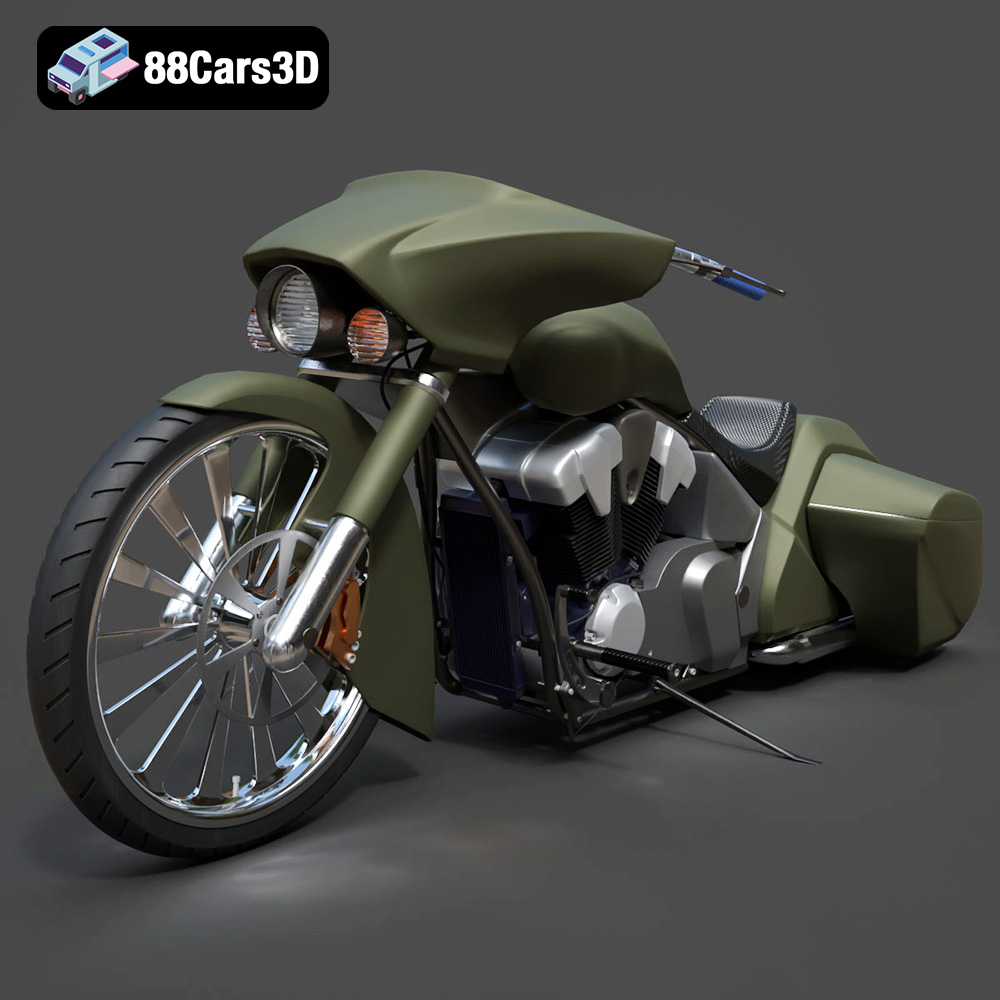
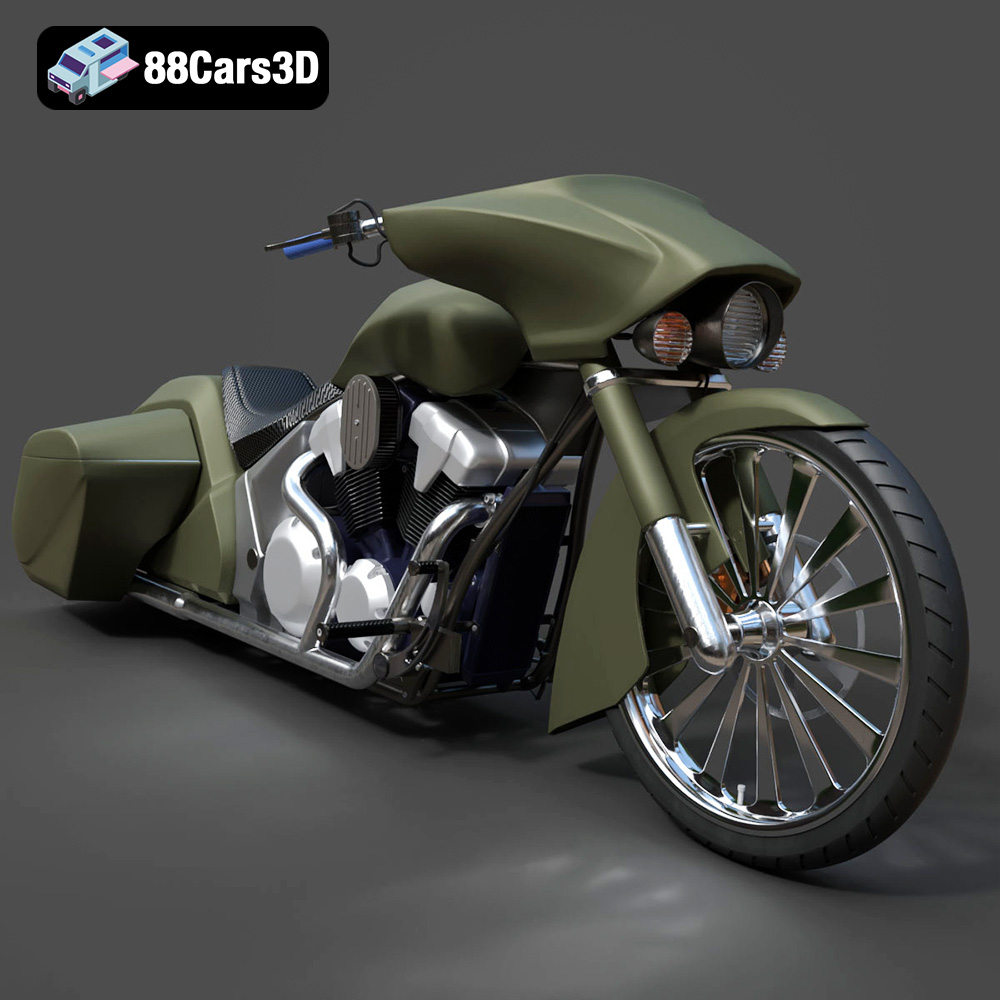
Today, we delve deep into the technical intricacies that elevate a 3D model from good to outstanding, using a prime example from the vast selection of high-quality assets available: the Honda Stateline Bagger Slammer 3D Model. This particular model, a custom low-slung cruiser motorcycle inspired by the iconic Honda Stateline platform, exemplifies the blend of artistic detail and technical precision that professionals seek. Its aggressive bagger stance, slammed suspension profile, extended fenders, and detailed V-twin character make it a compelling subject for exploration into what makes a 3D asset truly valuable for rendering, animation, simulation, game development, and AR/VR visualization.
Creating a 3D model that stands up to the scrutiny of professional rendering engines and real-time environments requires a profound understanding of both artistic vision and technical execution. It’s a delicate balance between capturing the soul of a design and ensuring its digital integrity.
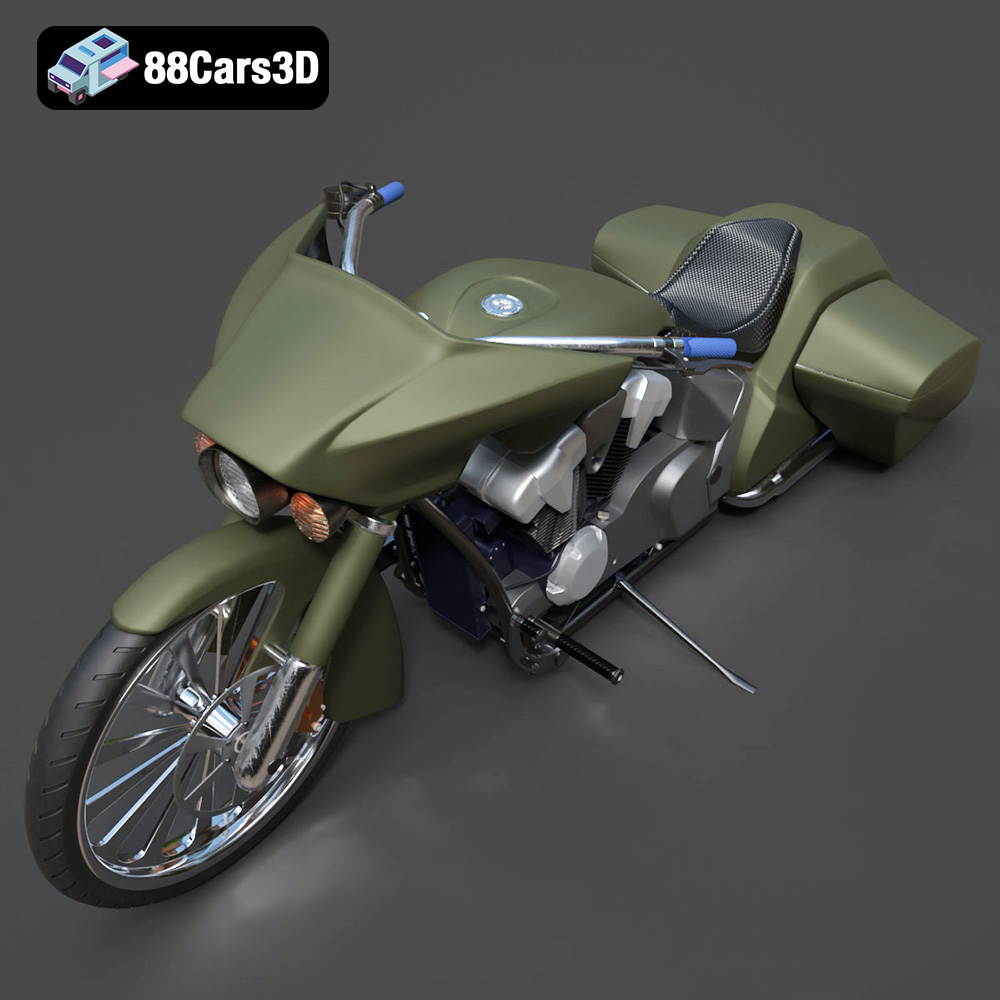
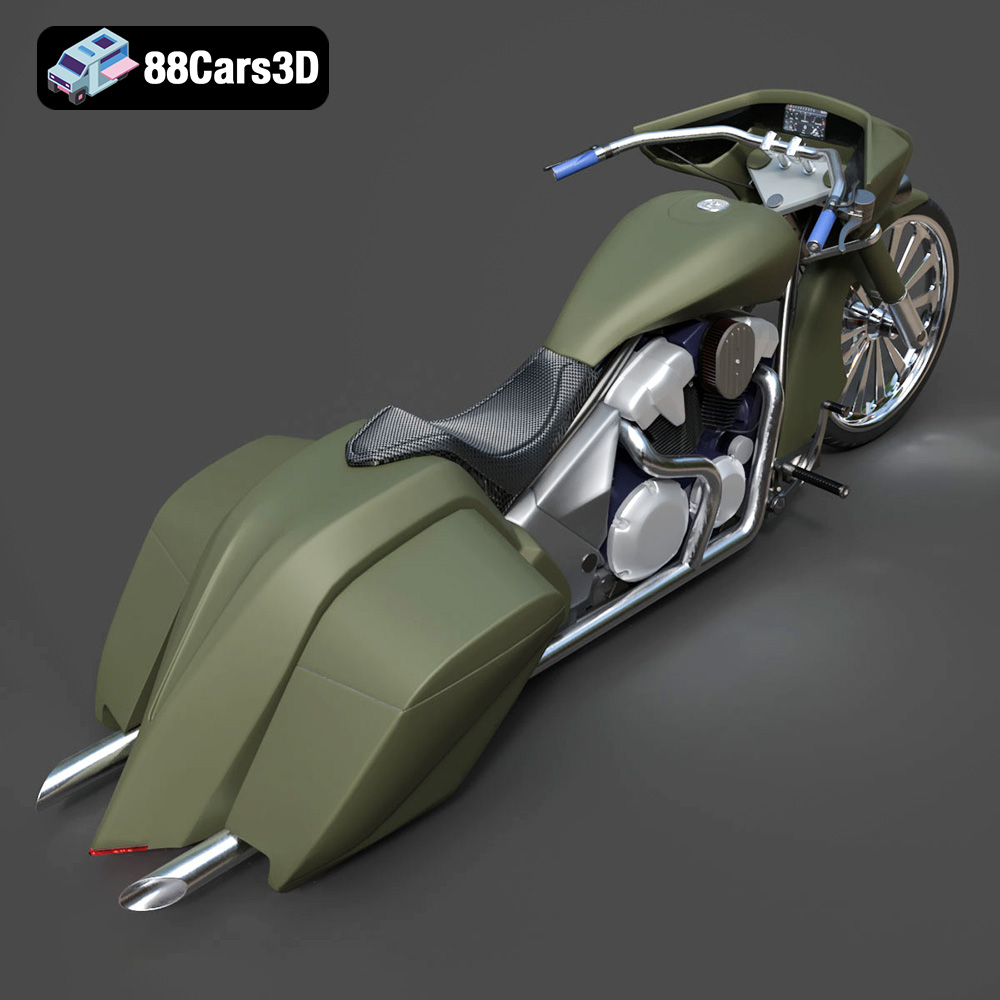
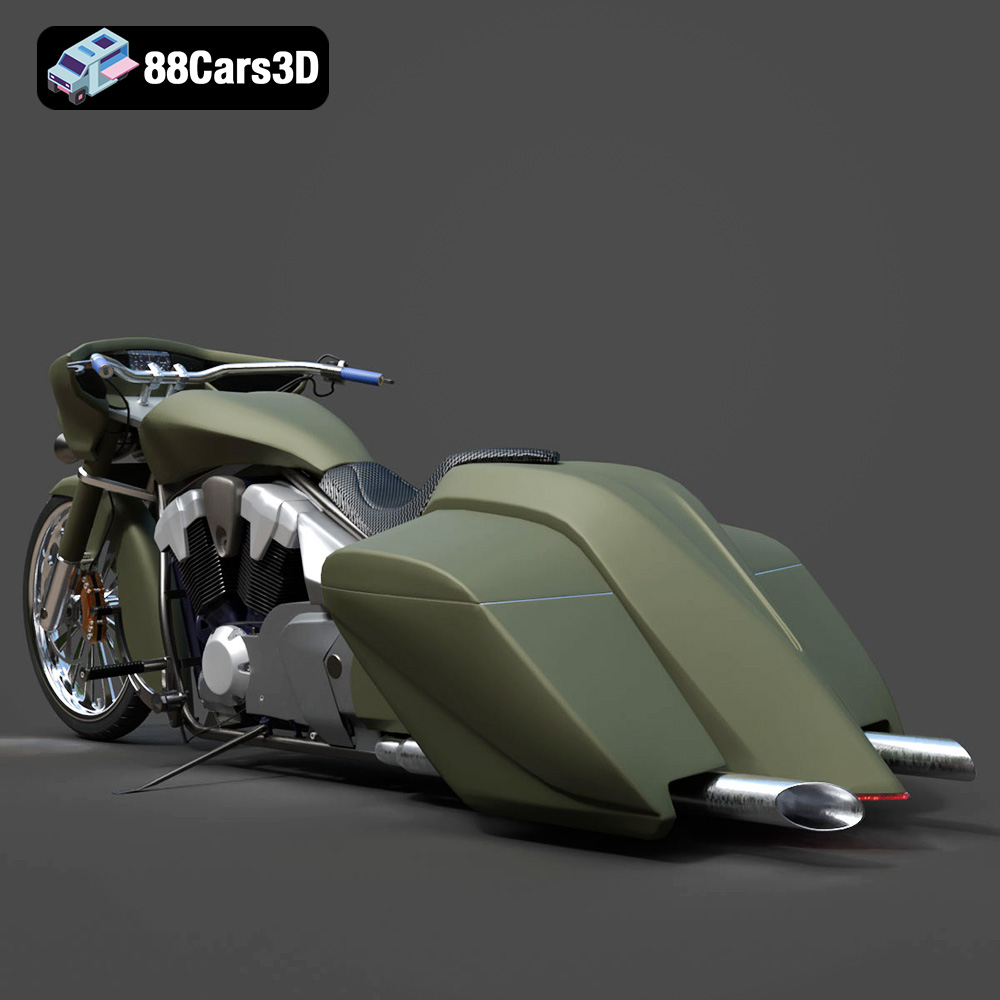
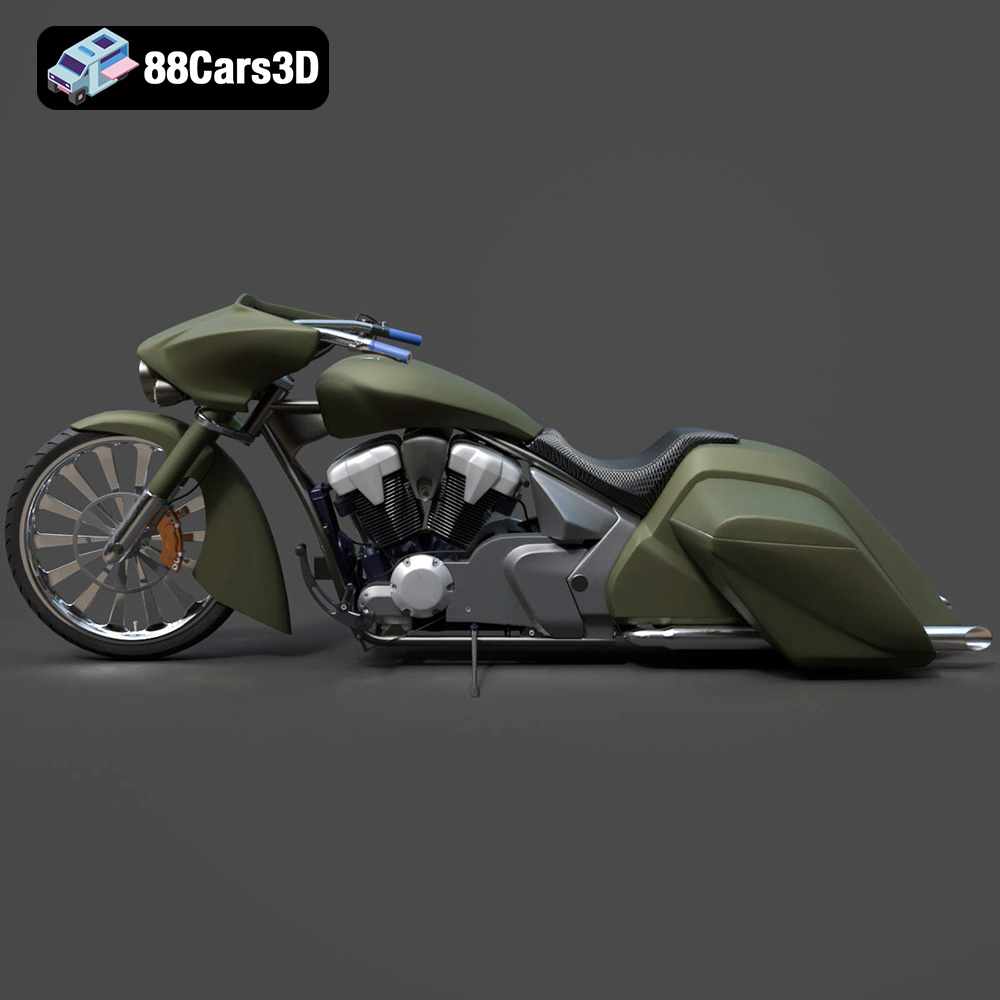
Authenticity in a 3D model begins with painstaking attention to detail and real-world proportions. For the Honda Stateline Bagger Slammer 3D Model, this translates into accurately representing every curve, seam, and component. From the elongated fuel tank and low ride height to the wide handlebars and intricate engine components, every element is meticulously sculpted. The cooling fins on the V-twin engine, the contours of the dual exhaust system, the detailed brake discs and calipers, and the custom touring saddlebags are not merely suggested but fully realized.
This level of detail is crucial for projects demanding photorealism. Imagine a showroom render where the Honda Stateline Bagger Slammer is showcased under studio lighting; any inaccuracies would instantly break the illusion. A professional-grade model ensures that reflections behave correctly across surfaces, shadows fall naturally, and the vehicle holds up to extreme close-ups without revealing crude geometry or texture stretching. Such precision is a hallmark of the 3D car models you’ll find at 88cars3d.com.
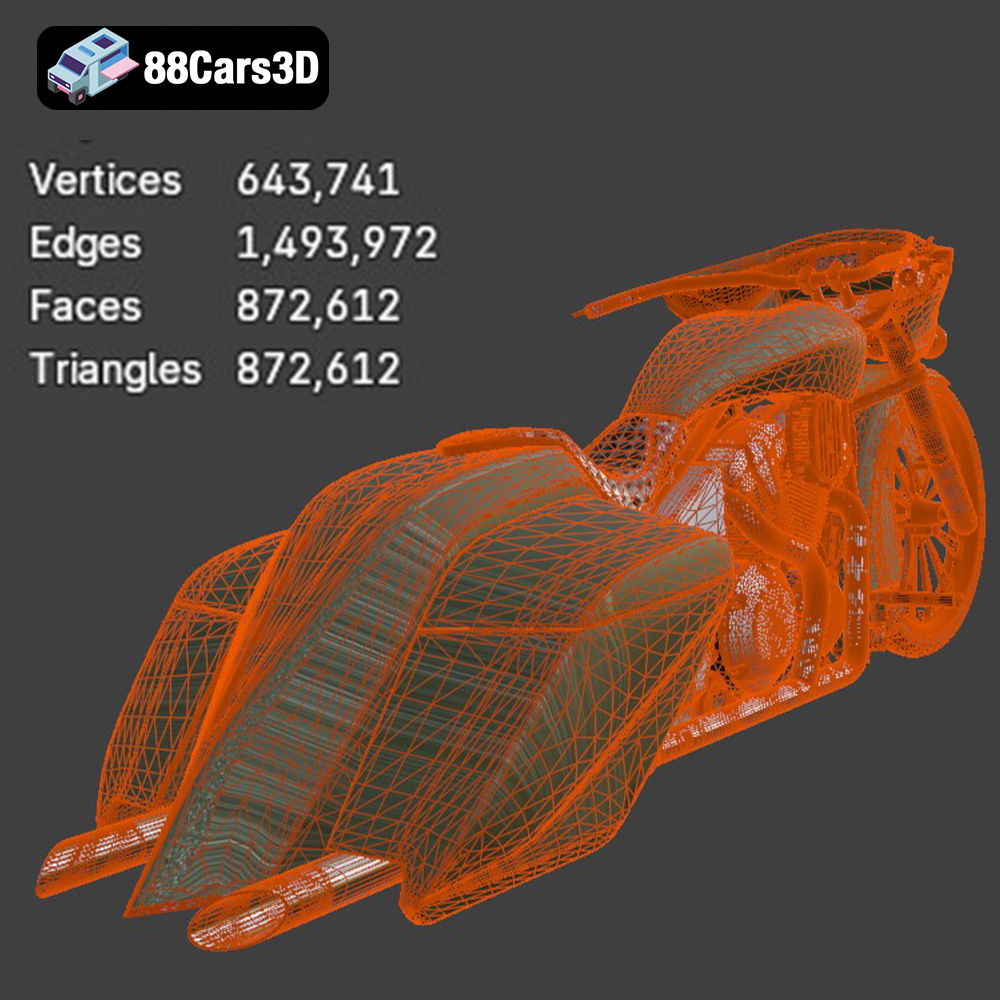
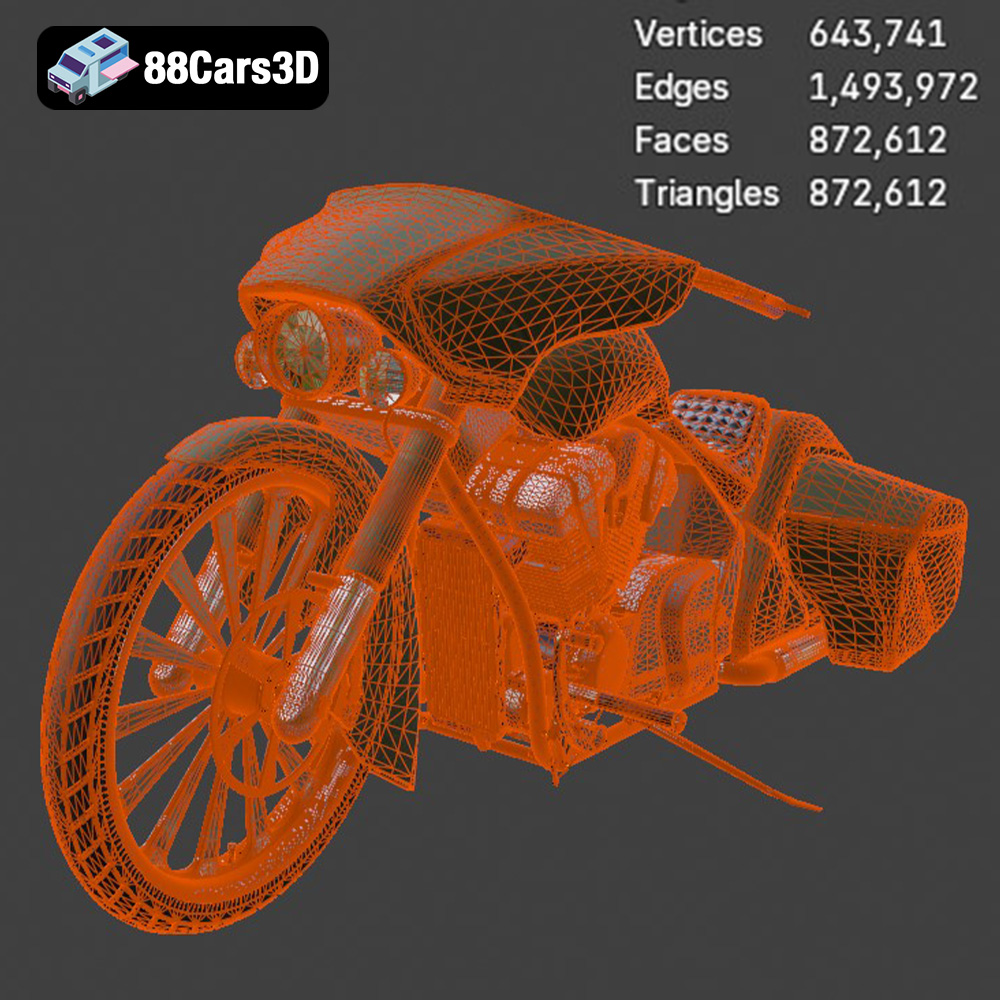
Beneath the surface of stunning visuals lies the often-unseen foundation of good topology and efficient UV unwrapping. Clean, well-organized mesh structure, primarily composed of quads, is paramount. This not only makes the model easier to subdivide for higher detail in rendering but also ensures smooth deformation during animation. For a motorcycle like the Honda Stateline Bagger Slammer, with its separate wheels and steering setup, proper pivot points and a logical mesh flow are essential for dynamic movement.
Equally important are the UV maps. These 2D representations of the 3D model’s surface dictate how textures are applied. Well-executed UVs minimize seams, prevent texture stretching, and allow for efficient use of texture space. This is critical for optimizing performance in game engines where texture memory is a significant consideration, and for achieving crisp, high-resolution details in rendering. The Honda Stateline Bagger Slammer 3D Model boasts optimized polygon flow and proper pivot setup, making it a reliable asset for both high-end renders and real-time applications.
The versatility of a 3D model is often defined by the range of file formats it supports. Each format serves specific purposes, catering to different software, engines, and end-use applications. Understanding these formats is crucial for any professional working with 3D assets, as it dictates compatibility, fidelity, and workflow efficiency. The Honda Stateline Bagger Slammer 3D Model, for instance, comes in a comprehensive suite of formats to ensure maximum utility.
The .blend format is native to Blender, a powerful open-source 3D creation suite. When you acquire a .blend file, you’re not just getting the mesh; you’re getting a complete Blender scene, often including materials, lighting, cameras, and even animation rigs. This offers unparalleled flexibility for artists who use Blender, allowing them to directly manipulate the model, modify its topology, adjust materials, or integrate it into existing Blender projects with minimal effort. For the Honda Stateline Bagger Slammer, the .blend file would provide direct access to the model’s clean geometry and setup, making customization straightforward.
.fbx (Filmbox) is a proprietary file format owned by Autodesk, widely regarded as the industry standard for interoperability between 3D software applications and game engines. It supports geometry, animation, materials, cameras, and lights, making it excellent for transferring complex scenes. Its robust support for skeletal animation, blend shapes, and LODs (Levels of Detail) makes it the go-to choice for real-time applications like Unreal Engine and Unity. When the Honda Stateline Bagger Slammer 3D Model is provided in .fbx, it ensures a smooth import into game development pipelines, retaining crucial data like pivots for wheels and steering.
The .obj (Wavefront OBJ) format is one of the oldest and most universally supported 3D file formats. It’s a simple, text-based format primarily used for transferring geometry data (vertices, normals, texture coordinates, and faces). While it lacks support for animations or complex scene data, its widespread compatibility makes it an excellent choice for basic mesh transfer between virtually any 3D software. For simple static renders or for importing the Honda Stateline Bagger Slammer into a software without extensive .fbx support, .obj is a reliable fallback.
.glb (GL Transmission Format Binary) is the binary version of glTF, a royalty-free specification for the efficient transmission and loading of 3D scenes and models by applications. glTF and .glb are increasingly becoming the “JPEG of 3D,” especially for web-based AR/VR experiences, e-commerce product viewers, and interactive 3D applications. A .glb file packages all necessary assets (geometry, materials, textures, animations) into a single, compact file, making it ideal for the Honda Stateline Bagger Slammer to be showcased interactively in a web browser or an AR/VR app.
The .stl (Stereolithography) format is the industry standard for 3D printing. It represents a 3D model as a collection of unconnected triangular facets, defining only the surface geometry without color, texture, or other attributes. For anyone looking to physically manifest the Honda Stateline Bagger Slammer 3D Model into a collectible scale model, the .stl format is essential. It requires ensuring the model has “manifold” geometry (a completely closed, watertight surface) to print successfully.
.ply (Polygon File Format) is a file format for storing 3D data, particularly from 3D scanners. It can store a wide range of properties, including color, transparency, surface normals, and texture coordinates, per vertex or per face. While less common in general 3D art workflows than .fbx or .obj, it’s highly valued in scientific and engineering fields for precise mesh data, often used in CAD or for analytical purposes where exact geometric representation is paramount.
The .unreal designation implies an asset specifically packaged or optimized for direct import and use within Unreal Engine. This could mean a uasset file, or an .fbx pre-configured with Unreal-specific settings, materials, and potentially even blueprinted functionalities. For a complex asset like the Honda Stateline Bagger Slammer, an .unreal asset would save significant setup time for game developers, offering a ready-to-integrate model with optimized materials and collision meshes, designed for high performance within the engine.
Similar to .blend for Blender, the .max format is native to Autodesk 3ds Max, another industry-leading 3D modeling, animation, and rendering software. A .max file contains the complete scene data, including geometry, materials (often V-Ray or Corona specific), lighting, cameras, and animation keyframes. For professionals working in architectural visualization, product design, or cinematic rendering who rely on 3ds Max, this format provides the highest level of control and editability over the Honda Stateline Bagger Slammer model.
The availability of the Honda Stateline Bagger Slammer 3D Model in such a comprehensive array of formats underscores its value as a professional asset, ready for any project, any pipeline, and any platform.
The ultimate goal for many high-quality 3D car models is to produce stunning, photorealistic images or animations. This demands a sophisticated rendering workflow, leveraging powerful software and rendering engines to bring the digital asset to life.
Autodesk 3ds Max, paired with rendering engines like V-Ray or Corona Renderer, is a powerhouse for automotive visualization. These tools allow artists to create intricate lighting setups, simulate global illumination, and apply physically based materials that accurately react to light. For the Honda Stateline Bagger Slammer 3D Model, this means crafting chrome with realistic reflections, paint with subtle metallic flakes, and tires with believable rubber textures. The .max file format provides direct access to the model within this environment, often pre-configured with materials ready for these high-end renderers.
A typical workflow might involve importing the Honda model, placing it within a studio environment or an urban street scene, and then meticulously setting up HDRI (High Dynamic Range Image) lighting combined with targeted spotlights to highlight its custom bagger features. Experimenting with different camera angles, depths of field, and post-processing effects in a compositing tool like Adobe Photoshop or Nuke can elevate a raw render into a magazine-quality image, perfect for custom bike showcases or promotional visuals.
Blender, with its integrated Cycles and Eevee renderers, offers another excellent pathway to photorealistic results and real-time visualization. Cycles, Blender’s path-tracing renderer, is capable of producing stunningly realistic images, akin to V-Ray or Corona. Eevee, on the other hand, is a real-time renderer, perfect for rapid prototyping, quick previews, and interactive presentations. The .blend file of the Honda Stateline Bagger Slammer is invaluable here, allowing Blender artists to dive straight into refining materials, setting up complex node-based shaders, and animating camera movements.
A Blender workflow might involve leveraging procedural textures for subtle wear and tear, using realistic PBR (Physically Based Rendering) material setups, and utilizing Blender’s powerful animation tools to create a dynamic turntable render or a fly-through sequence. Eevee could then be used to generate quick, visually rich iterations, saving immense time during the creative process for projects like urban street scenes or showroom renders.
Imagine a marketing agency tasked with launching a new custom motorcycle line inspired by the Honda Stateline Bagger Slammer. They need a series of high-resolution images and a short animated sequence for social media. Using the 88cars3d.com asset, their 3D artists import the Honda Stateline Bagger Slammer 3D Model into 3ds Max, ensuring accurate real-world scale. They create a moody, industrial garage environment, applying grunge textures to the concrete floor and metallic wear to structural elements. Softbox lighting rigs are set up to mimic professional photography, emphasizing the bike’s slammed suspension and custom saddlebags. For the animation, a camera smoothly pans around the bike, highlighting the detailed V-twin engine and custom exhaust. Finally, a dramatic render in V-Ray captures the raw power and aesthetic appeal, ready for a global campaign. This seamless integration of a high-quality asset significantly reduces production time and costs while delivering unparalleled visual fidelity.
The shift towards interactive experiences demands 3D models that are not only visually appealing but also highly optimized for performance in real-time environments. Game engines like Unreal and Unity are at the forefront of this revolution, and the Honda Stateline Bagger Slammer 3D Model is engineered to excel within them.
Integrating a detailed 3D motorcycle model into a game engine requires careful optimization. This includes creating multiple Levels of Detail (LODs) – progressively simpler versions of the model that are swapped in as the camera moves further away, saving rendering resources. Collision meshes, simplified geometric representations, are also essential for accurate physics interactions. The .fbx and .unreal formats of the Honda Stateline Bagger Slammer are specifically tailored for these pipelines.
In Unreal Engine, developers would import the .fbx file, create PBR materials using textures provided or generated, and set up material instances for easy customization of paint schemes or finishes. Blueprinting the model allows for interactive elements, such as working lights, customizable parts, or realistic suspension articulation. For the Honda Stateline Bagger Slammer, this means it can become a fully drivable vehicle in an open-world motorcycle game or a configurable display model in an AR/VR showroom experience.
Augmented Reality (AR) and Virtual Reality (VR) are transforming how we interact with digital content. High-fidelity 3D car models are the cornerstone of these immersive experiences. Imagine a virtual showroom where potential buyers can walk around the Honda Stateline Bagger Slammer, change its paint color in real-time, or even sit on it to get a feel for its ergonomics. The .glb format, optimized for web-based AR/VR, makes this easily achievable.
Developing an AR configurator for the Honda Stateline Bagger Slammer could involve deploying it to a mobile app, allowing users to project the virtual motorcycle into their garage or driveway. They could then customize various aspects, from saddlebag styles to exhaust finishes. The model’s optimized geometry and clean UVs ensure smooth frame rates and realistic rendering on mobile devices, providing a seamless and convincing interactive experience.
Beyond visual fidelity, professional 3D car models are increasingly used in simulations for training, analysis, and realistic gameplay. A motorcycle simulation, for instance, requires accurate weight distribution, suspension kinematics, and tire physics. The Honda Stateline Bagger Slammer 3D Model, with its real-world scale and properly separated components (wheels, steering, swingarm), is an excellent foundation for such applications.
Developers can integrate the model into a physics engine, defining mass properties for each component and rigging the suspension and steering mechanisms. This allows for realistic ride dynamics, responsive handling, and accurate collision responses, making it useful for motorcycle visualization projects, mechanical study demonstrations, or even professional rider training simulators. The model’s clean hierarchy and pivot setup are vital for connecting it to complex physics systems.
While digital visualization is powerful, the ability to bring a 3D model into the physical world through 3D printing opens up new avenues for collectibles, prototypes, and tangible displays. The Honda Stateline Bagger Slammer 3D Model, being 3D printable, exemplifies this versatility.
Converting a 3D model designed for rendering or gaming into a print-ready file requires specific considerations. The most crucial is ensuring “manifold” geometry, meaning the model must be a completely watertight, solid object with no gaps, overlapping faces, or inverted normals. The clean and well-organized mesh structure of the Honda Stateline Bagger Slammer makes this conversion significantly easier.
Before printing, the model often needs to be scaled appropriately and checked for any thin-wall issues that might cause parts to break during printing or post-processing. Specialized software can analyze the model for printability, identifying areas that might require additional support or thickening. The .stl and .ply formats are particularly relevant for this stage.
As the standard for 3D printing, the .stl file of the Honda Stateline Bagger Slammer is what directly communicates with a 3D printer. The product description provides excellent guidance for 3D print settings, including recommended scales (1:18, 1:12, 1:10, 1:8), layer height, wall thickness, and infill. These parameters are critical for achieving a robust and detailed physical model.
For a complex model like a motorcycle, supports are almost always required for overhangs and intricate details like handlebars, exhaust pipes, and fender edges. Print orientation is also key: printing the frame angled for a smooth surface finish and the wheels separately allows for optimal detail and minimizes support material. Post-processing, including sanding, priming, and a custom paint finish (gloss or matte, with chrome detailing), transforms the raw print into a stunning miniature.
The transformation of a digital asset into a physical collectible miniature is a rewarding process. For enthusiasts of custom bikes, having a tangible model of the Honda Stateline Bagger Slammer, printed to scale, offers a unique connection to the design. These miniatures can be used for display, as desk ornaments, or even as components in larger dioramas. The ability to produce multiple copies for a collection or to offer bespoke physical models based on digital designs adds significant value to the original 3D asset. 88cars3d.com offers 3D models that bridge this gap between the virtual and the physical, providing assets ready for both screen and print.
A truly professional 3D model is not a static object; it’s a flexible foundation for creative exploration and project-specific adaptation. The Honda Stateline Bagger Slammer 3D Model is designed with customization in mind, ensuring it can evolve to meet diverse project requirements.
The ability to easily change colors, apply custom decals, or add pinstriping is vital for branding and artistic expression. For the Honda Stateline Bagger Slammer, this means effortlessly modifying the body paint, saddlebag colors, or engine casing finishes to match a specific brand identity or a client’s vision. The clean UV mapping and organized material IDs facilitate quick texture and shader adjustments without complex re-modeling.
Imagine a scenario where the model needs to feature a specific company logo on its fuel tank or saddlebags. With a well-structured UV map, applying this graphic becomes a simple texture overlay, ensuring consistent and professional results across all renders and applications. This adaptability is a significant time-saver in fast-paced production environments.
Beyond aesthetics, a versatile 3D model allows for technical modifications. The product description mentions the option to adjust the ride height for a standard or extreme slammed stance, or to modify the handlebar style or exhaust type. This modularity means the Honda Stateline Bagger Slammer isn’t just one bike, but a platform for numerous custom variations. This is particularly valuable in game development, where different motorcycle types or upgrade options can be derived from a single base model, or in visualization for illustrating different design configurations to clients.
For animation, the separate wheels and steering setup, coupled with proper pivot points, enables realistic movement. This allows animators to accurately simulate turns, leaning, and suspension compression, enhancing the realism of any cinematic or interactive sequence.
Ultimately, the value of a high-quality 3D model lies in its reusability and adaptability. Investing in an asset like the Honda Stateline Bagger Slammer 3D Model from 88cars3d.com means acquiring a tool that can serve multiple purposes across various projects. It can be a hero asset in a promotional video, a background detail in a game, an interactive element in an AR experience, or a physical collectible. This versatility translates directly into cost savings and increased efficiency for creative professionals, making it a strategic acquisition for any 3D asset library.
The realm of 3D modeling, particularly for complex subjects like automotive assets, is a testament to the intricate balance between artistic vision and technical mastery. High-quality 3D car models are more than just digital representations; they are meticulously crafted tools designed to meet the rigorous demands of professional workflows in rendering, game development, AR/VR, simulation, and even 3D printing. The comprehensive detail, optimized topology, and multi-format compatibility define an asset’s true value.
The Honda Stateline Bagger Slammer 3D Model stands as an exemplary representation of these principles. Its accurate cruiser-style frame, detailed V-twin engine, custom bagger features, and thoughtful optimization across various formats (.blend, .fbx, .obj, .glb, .stl, .ply, .unreal, .max) make it an incredibly versatile and powerful asset. Whether you are aiming for photorealistic renders in 3ds Max, building an immersive virtual world in Unreal Engine, or producing a tangible collectible through 3D printing, this model provides the precision, flexibility, and quality required for professional-grade output.
For creators seeking to elevate their projects with top-tier 3D assets, understanding these technical nuances is paramount. Assets like the Honda Stateline Bagger Slammer 3D Model are an investment in quality and efficiency, allowing artists and developers to focus on creativity while resting assured their foundational models are robust and ready for any challenge. Explore the extensive range of high-quality 3D car models and motorcycle assets, including this exceptional Honda Stateline Bagger Slammer, at 88cars3d.com to unlock new possibilities for your next project.
The Honda Stateline Bagger Slammer 3D Model is a high-detail digital recreation of the custom low-slung cruiser motorcycle inspired by the Honda Stateline platform. Designed with an aggressive bagger stance and slammed suspension profile, this model captures the bold styling, extended fenders, stretched saddlebags, and powerful V-twin character that define the bagger culture. This 3D model accurately represents the elongated fuel tank, low ride height, wide handlebars, detailed engine components, dual exhaust system, front and rear disc brakes, and custom touring saddlebags. Built with clean topology and real-world proportions, it is ideal for rendering, animation, simulation, game development, and AR/VR motorcycle visualization.
$29.9
.arvr
.bagger
.blend
.cruisermotorcycle
.custombike
.fbx
.gameasset
.glb
.honda
.max
.motorcycle3dmodel
.obj
.ply
.rendering
.simulation
.stateline
.stl
.touringbike
.unreal
.v-twin