Get 50% OFF All Premium 3D & STL Models!

In the dynamic world of 3D visualization, automotive design, and game development, the pursuit of photorealism and efficient performance is a constant driving force. Whether crafting breathtaking commercial renders, engineering immersive virtual experiences, or building the next generation of racing simulators, the quality of your 3D assets is paramount. It’s where art meets engineering, and where a meticulously detailed model can truly elevate a project from good to exceptional. This commitment to excellence is precisely what we see in the digital recreation of automotive legends.
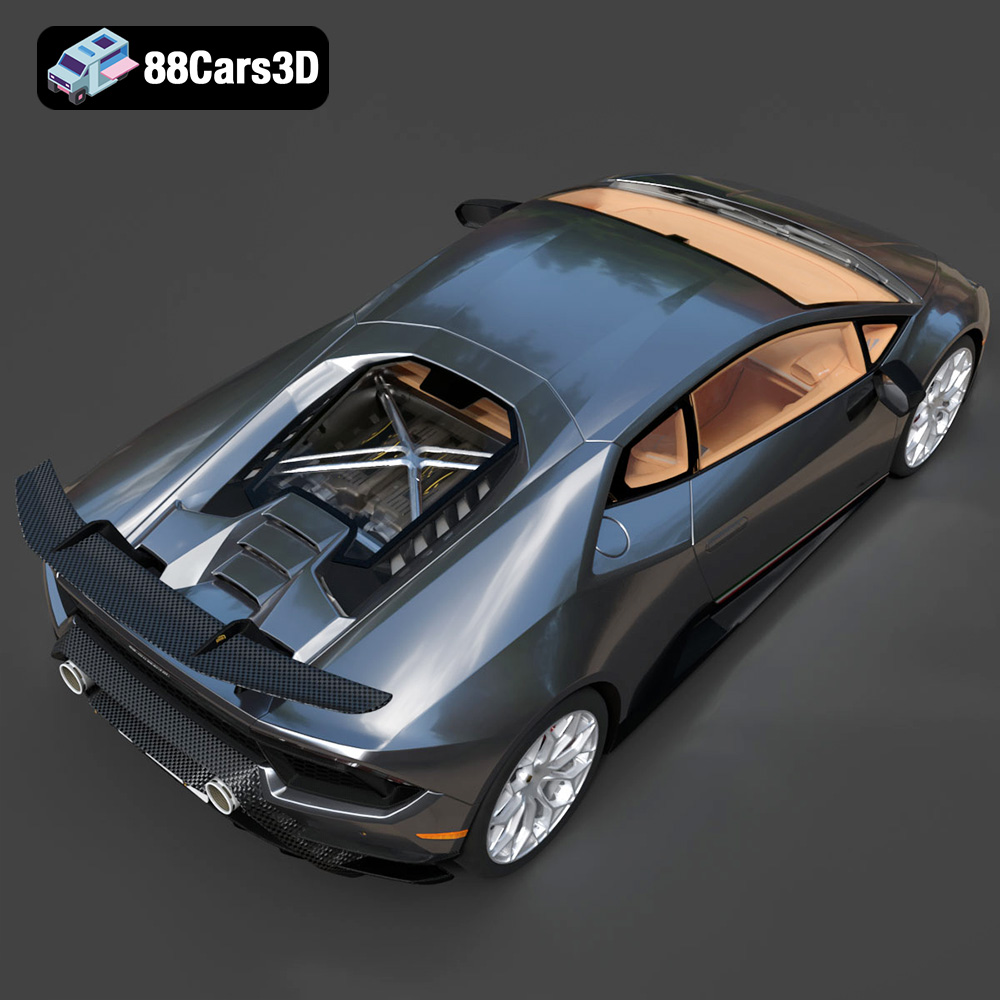
Today, we’re taking a closer look at what makes an outstanding 3D car model, specifically using the Lamborghini Huracán Performante LP 640-4 2017 3D Model as our prime example. This isn’t just a generic supercar model; it’s a testament to precision and optimization, designed to meet the rigorous demands of professional 3D artists and developers across various industries. From its aggressive aerodynamic geometry to its track-focused interior, every detail has been considered to deliver unparalleled visual fidelity and technical versatility.
Creating a truly high-quality 3D car model is a complex endeavor that goes far beyond simply replicating shapes. It involves a deep understanding of automotive design principles, meticulous attention to detail, and a mastery of 3D modeling techniques. The goal is always to achieve a perfect balance between visual accuracy and technical efficiency, ensuring the model performs flawlessly in its intended application.
The first step in any successful automotive 3D model project is ensuring real-world scale accuracy and precise replication of proportions. A vehicle’s character is defined by its silhouette and the subtle interplay of its curves and angles. For a car as iconic as the Lamborghini Huracán Performante, these details are critical. The model must accurately reflect the aggressive aerodynamic geometry, including the distinctive ALA (Aerodinamica Lamborghini Attiva) rear wing, the active aero front splitter, and the high-mounted dual exhaust system that define its track-focused persona.
Furthermore, smaller, yet significant, elements like the signature Y-shaped LED daytime running lights, sharp taillight clusters, and even the unique “Forged Composite” carbon fiber textures are essential for authenticity. These aren’t merely decorative; they are integral to the vehicle’s identity. The Lamborghini Huracán Performante LP 640-4 2017 3D Model exemplifies this by featuring accurately modeled lightweight forged alloy wheels with massive carbon-ceramic brake calipers, and even separate components for realistic animation, such as doors, wheels, and steering.
One of the most crucial technical aspects of a professional 3D car model is its topology and polygon count. A common misconception is that higher polygon counts always equate to better quality. While more polygons can provide finer detail, they also increase computational load, which can severely impact performance in real-time applications like games or AR/VR. The true mark of an expert modeler lies in achieving exceptional visual fidelity with an optimized, clean topology.
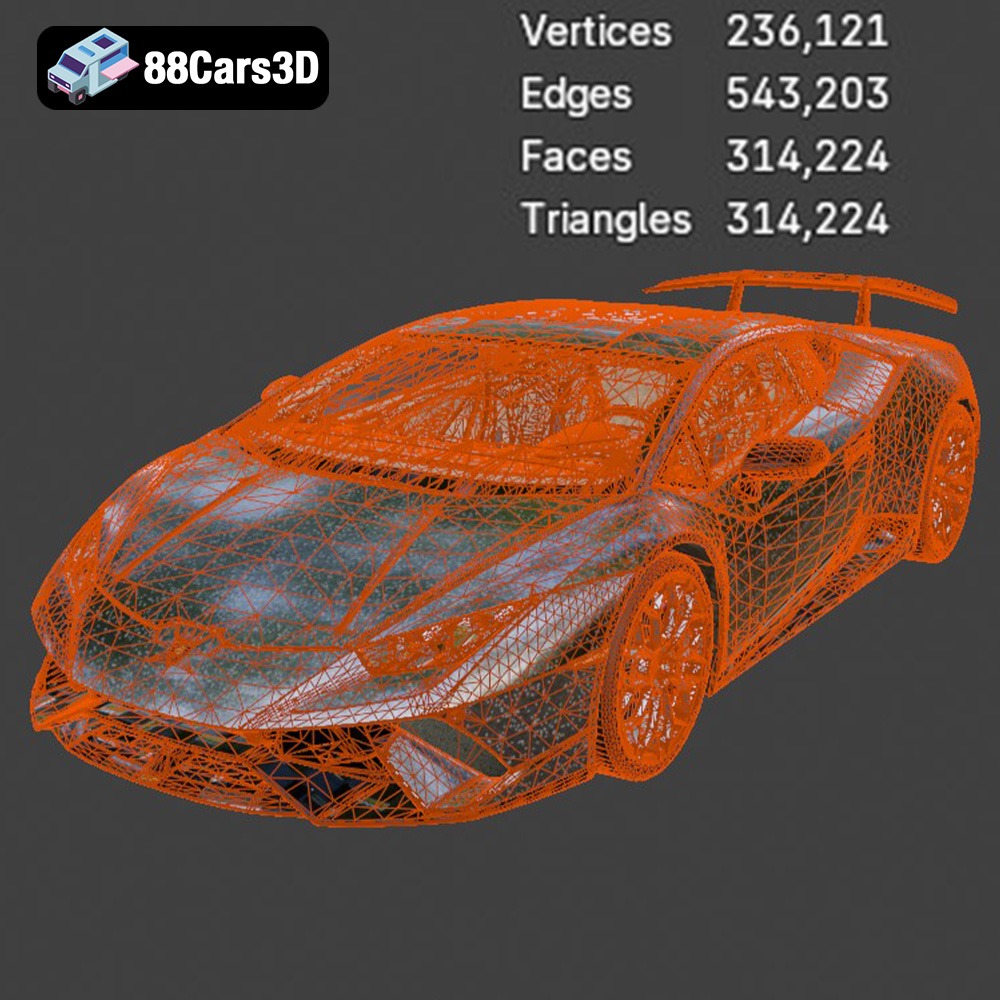
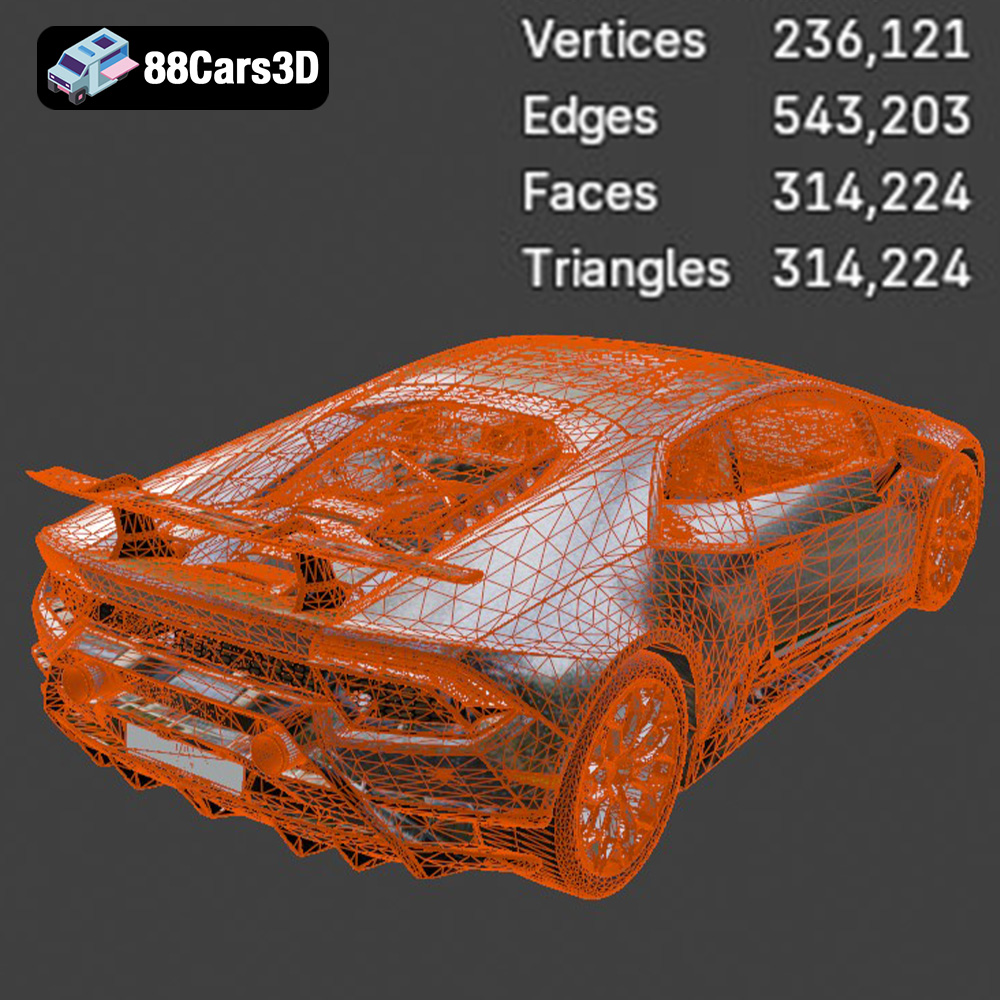
The Lamborghini Huracán Performante LP 640-4 2017 3D Model showcases this balance perfectly. With a mid-polygon count of just over 314,000 triangles (314,224 faces/polygons and 236,121 vertices), it strikes an ideal sweet spot. This figure is low enough to be incredibly efficient for game development, allowing it to function as a “hero” drivable vehicle running smoothly at 60+ FPS in modern engines like Unreal Engine or Unity. Yet, it’s sufficiently detailed to hold up to stunning close-up automotive renders and high-end commercial visualizations. The remarkably clean, quad-based structure ensures smooth deformations and easy texture mapping, a dream for any artist or developer.
The versatility of a 3D model is often defined by the range of file formats it supports. Each format is designed with specific use cases and software environments in mind, offering unique advantages for different stages of a project or different end applications. Choosing the right format is crucial for maintaining data integrity, ensuring compatibility, and optimizing performance. The Lamborghini Huracán Performante LP 640-4 2017 3D Model comes bundled with a comprehensive array of formats, making it incredibly adaptable.
This extensive selection of formats ensures that the Lamborghini Huracán Performante LP 640-4 2017 3D Model from 88cars3d.com is a truly future-proof and versatile asset for any professional workflow.
For game developers, the quality and optimization of vehicle assets can make or break the player experience. A realistic and performant 3D car model is fundamental to creating compelling racing games, open-world environments, or simulation titles. The Lamborghini Huracán Performante LP 640-4 2017 3D Model is expressly designed to be a “hero” drivable supercar, perfectly suited for the demands of modern game engines.
The key to a successful game asset lies in its balance of visual fidelity and computational efficiency. As discussed, the Performante model’s optimized topology, with its clean quad-based structure and a total of just over 314k triangles, is precisely what makes it game-ready. This poly count is high enough to capture the razor-sharp aesthetics and intricate details of the Huracán Performante, ensuring it looks stunning even in close-up camera angles or detailed cinematics within the game engine. At the same time, it’s light enough to be rendered efficiently, preventing frame rate drops and ensuring a smooth, responsive driving experience.
Proper pivot setup for steering and wheel rotation is also critical for believable in-game physics and animation. The separate components for wheels, steering, and doors, as included in this model, are essential for realistic rigging and complex interactions, allowing game designers to animate driving mechanics, door openings, or damage states with ease. These seemingly small details save countless hours for development teams.
Modern game engines like Unreal Engine and Unity thrive on optimized assets. The inclusion of .fbx and .unreal formats with this model significantly streamlines the integration process. Developers can import the .fbx file, which intelligently carries mesh, basic materials, and UV information, into either engine. From there, they can leverage the engines’ powerful Physically Based Rendering (PBR) systems to create photorealistic materials, applying textures for the forged composite, Alcantara interior, and vibrant paint finishes.
For Unreal Engine users, the .unreal format implies an even more direct path, often meaning the asset is already set up with proper material instances, collision meshes, and possibly even LODs, reducing the setup time to a minimum. This ensures the Performante model can be dropped directly into a project, ready to be rigged, coded, and driven, making it an invaluable asset for studios looking to accelerate their production pipelines without compromising on visual quality.
While game development focuses on real-time interaction, automotive rendering and visualization often demand the absolute pinnacle of photorealism. This is where high-fidelity 3D car models like the Lamborghini Huracán Performante truly shine, transforming into star attractions for commercials, marketing campaigns, and architectural visualization projects.
The journey to photorealism begins with impeccable material work. The Performante model’s design, with elements mapped for Lamborghini’s unique “Forged Composite” carbon fiber textures and premium sport bucket seat geometry designed for Alcantara texture mapping, provides the perfect canvas. Artists can apply sophisticated PBR materials to accurately simulate the subtle sheen of the paint, the intricate weave of carbon fiber, the soft texture of Alcantara, and the metallic glint of the forged alloy wheels.
Combined with advanced lighting techniques, the model can be brought to life. Imagine dramatic studio lighting setups highlighting every curve and vent, or high-octane action shots on a virtual race track, all achievable thanks to the model’s clean geometry and detailed mapping. Customization options, such as changing exterior paint colors to match factory Ad Personam options (matte, pearl, or metallic), or adapting lighting for dramatic nighttime scenes, further enhance its utility for diverse rendering scenarios.
The applications for such a high-quality model extend across various commercial sectors. For automotive advertising, the Lamborghini Huracán Performante LP 640-4 2017 3D Model can be integrated into dazzling virtual commercials, showcasing the vehicle without the logistical costs of physical production. In architectural visualization, it can serve as a luxury accent, parked outside a modern villa to add prestige and lifestyle appeal to a render. Furthermore, its optimized poly count makes it excellent for AR/VR experiences, allowing for interactive digital showrooms and supercar configurators where potential buyers can explore the vehicle in stunning detail from any angle, even changing colors and options in real-time.
The versatility of a well-constructed 3D model isn’t limited to digital screens. For enthusiasts, collectors, and designers, the ability to translate a digital asset into a physical object through 3D printing offers a unique form of appreciation. The Lamborghini Huracán Performante LP 640-4 2017 3D Model is fully convertible to .stl format, opening up avenues for display-scale replicas.
Converting a model designed for rendering or game engines into a 3D printable format like .stl requires careful consideration. While the model itself is manifold (watertight), optimal results depend on understanding printing specifics. For scales like 1:24 or 1:18, resin printing is highly recommended. This method excels at capturing the incredibly sharp aero edges, delicate wing pylons, and intricate wheel spokes of the Performante, which might be lost with filament (FDM) printing.
Recommended print settings, such as a layer height of 0.04–0.12 mm, ensure fine detail, while wall thickness of 1.2–2.0 mm provides structural integrity. Supports will be necessary for complex overhangs like the side mirrors, the aggressive front splitter, and the iconic ALA rear wing. Printing the body angled and the wheels separately is a common practice to achieve the smoothest surface finishes and best detail resolution.
The journey from a raw 3D print to a showroom-quality miniature involves a skilled post-processing workflow. This typically includes careful support removal, sanding to smooth any imperfections, and applying a primer. The real magic happens with paint. Replicating striking Lamborghini factory colors such as Verde Mantis, Arancio Anthais, or Giallo Inti, paired with matte black or forged carbon details, brings the model to life. This process allows hobbyists to create personalized, high-fidelity physical representations of this automotive masterpiece.
In a crowded marketplace, the decision to invest in a premium 3D asset comes down to quality, versatility, and the tangible advantages it offers to a professional workflow. 88cars3d.com prides itself on providing meticulously crafted 3D car models that stand out from the competition, and the Lamborghini Huracán Performante LP 640-4 2017 3D Model is a prime example of this commitment.
For busy studios and freelance artists, time is money. Starting a project with a ready-to-use, highly optimized 3D model like the Performante significantly streamlines production. Instead of dedicating valuable time to modeling a complex vehicle from scratch, artists can immediately jump into texturing, lighting, animation, or engine integration. The inclusion of multiple industry-standard file formats (.blend, .fbx, .obj, .glb, .stl, .ply, .unreal, .max) ensures seamless compatibility with almost any pipeline, eliminating compatibility headaches and allowing teams to focus on creative execution rather than technical troubleshooting.
The value of a model isn’t just in its visual appeal but also its underlying technical integrity. The Performante model’s clean, quad-based topology, real-world scale accuracy, and proper pivot setup demonstrate a professional understanding of what artists and developers truly need. This attention to detail translates into fewer issues down the line, easier modifications, and ultimately, a more robust and reliable asset for any project, be it a high-speed racing simulator, a luxury automotive gallery, or an interactive AR experience. Choosing assets from 88cars3d.com means investing in quality and efficiency that pays dividends throughout a project’s lifecycle.
The world of 3D modeling continues to evolve, pushing the boundaries of realism and interactive experiences. At the heart of this evolution are meticulously crafted assets that serve as the foundation for stunning visualizations and immersive digital environments. The Lamborghini Huracán Performante LP 640-4 2017 3D Model exemplifies the pinnacle of professional 3D car models, offering an exceptional blend of visual fidelity, technical optimization, and versatile applicability.
From its optimized mid-polygon topology making it a perfect “hero” car for game developers, to its stunning detail for high-end automotive rendering, and its adaptability for AR/VR experiences and even 3D printing, this model is a testament to expert craftsmanship. It significantly streamlines professional workflows by providing a ready-to-use, high-quality asset that is compatible with virtually any major 3D software and real-time engine. For anyone seeking to elevate their automotive projects, whether in gaming, visualization, or interactive media, this Performante model from 88cars3d.com offers an unparalleled foundation for success.
The Lamborghini Huracán Performante LP 640-4 (2017) 3D Model is a meticulously optimized digital recreation of the track-focused Italian supercar. Born to dominate the Nürburgring, the Performante takes the dramatic styling of the standard Huracán and injects it with aggressive, motorsport-derived aerodynamics, most notably the revolutionary ALA (Aerodinamica Lamborghini Attiva) system and widespread use of forged carbon fiber. This 3D model accurately captures the razor-sharp aesthetic of the Performante, featuring the signature high-mounted dual exhausts, the massive forged composite rear wing, a deep front splitter, and the unmistakable wedge-shaped profile. Built with an incredibly efficient and clean mid-polygon topology (just over 314k triangles), it strikes a flawless balance. It provides exceptional visual fidelity for stunning close-up automotive renders while remaining perfectly lightweight for use as a hero vehicle in modern real-time game engines.
$45
.automotive
.blend
.fbx
.huracan
.lamborghini
.rendering
.sports car
.stl
.supercar
.v10
3D Print Model
3D Printable
and modern Volvo factory colors (like Sage Green
Automotive Collectible
Car Prototype
car-3d-model
Digital Manufacture
FDM Ready
game-ready
Glacier Silver
lp640-4
Manifold Geometry.
mid-poly
Miniature Car
or Crystal White) paired with a gloss black roof.3D Printing
performante
Physical Asset
primer
Resin Print
Scale Model
SLA
Tabletop Display
track-car
VR/AR
wheel arches