Get 50% OFF All Premium 3D & STL Models!

The pursuit of photorealism in real-time rendering for automotive visualization is a perpetual challenge. As visual fidelity demands escalate, so does the strain on system resources. High-resolution textures, critical for showcasing the intricate details of a meticulously crafted 3D car model – from the subtle metallic flake in the paint to the fine stitching on an interior leather seat – can quickly become a performance bottleneck. Without intelligent management, these massive texture assets can exhaust VRAM, reduce frame rates, and lead to frustrating loading times, severely impacting the user experience in interactive configurators, games, or virtual production scenes.
Unreal Engine provides two powerful, complementary technologies to tackle this challenge head-on: Texture Streaming and Virtual Texturing. These advanced systems are designed to deliver stunning visual quality without compromising real-time performance, allowing artists and developers to push the boundaries of detail. This comprehensive guide will deep dive into both Texture Streaming and Virtual Texturing, explaining their mechanisms, configuration, and best practices within an Unreal Engine workflow. We’ll explore how to leverage these features to optimize your 3D car models and automotive visualization projects, ensuring your high-quality assets, like those found on 88cars3d.com, truly shine with unparalleled realism and efficiency. Get ready to unlock new levels of visual excellence and performance in your Unreal Engine projects.
In the world of automotive visualization and game development, realism is paramount. This often translates into the need for extremely high-resolution textures to capture every nuanced detail of a vehicle. From the complex shaders of multi-layered car paint to the minute imperfections on tire sidewalls and the intricate patterns of interior fabrics, 4K, 8K, and even 16K textures are becoming commonplace. While these resolutions are crucial for achieving photorealistic results, they pose significant challenges for real-time applications. The sheer volume of data associated with such textures can quickly overwhelm a system’s memory and bandwidth, leading to performance degradation.
Each texture channel – albedo, normal, roughness, metallic, ambient occlusion – at 8K resolution occupies a substantial chunk of video RAM (VRAM). A single 3D car model, featuring a dozen or more unique material sets (body, wheels, tires, interior plastics, leather, glass, engine components), can easily demand hundreds of megabytes, if not gigabytes, of texture memory. Multiply this by multiple vehicles in a scene, and the total memory footprint becomes staggering. This memory overhead directly impacts loading times, contributes to shader compilation complexity, and, most critically, can cause a performance hit on the GPU by exceeding the available VRAM or saturating the memory bus, resulting in lower frame rates and an overall choppy experience.
Consider a highly detailed 3D car model, such as those optimized for Unreal Engine available on platforms like 88cars3d.com. Its body might use a single 8K texture set for color, normal, roughness, and metallic maps. This alone could be upwards of 120MB uncompressed, or around 30-40MB compressed. Add separate 4K textures for wheels, 2K for tires, multiple 4K sets for various interior components (dashboard, seats, steering wheel, infotainment screen), and smaller textures for badges, lights, and undercarriage details. Cumulatively, a single hero vehicle can easily exceed 500MB of active texture memory. If your project features a showroom floor with several unique car models or a large open-world environment, this memory consumption scales exponentially, making intelligent texture management an absolute necessity.
When the GPU attempts to render a scene, it needs rapid access to all the necessary texture data. If this data doesn’t fit into VRAM or cannot be fetched quickly enough from system RAM, the GPU has to wait, leading to “stalls” and a drop in frame rate. This is particularly problematic in interactive experiences like automotive configurators, where users can freely move the camera or change vehicle properties. Furthermore, loading all these high-resolution textures upfront during scene initialization can drastically increase application load times, frustrating users and detracting from the overall professional polish of the experience. Without optimized texture delivery, even powerful hardware can struggle to maintain a smooth, responsive, and visually stunning real-time presentation.
Texture Streaming is Unreal Engine’s primary mechanism for efficiently managing texture memory and optimizing performance, especially with high-resolution assets. At its core, Texture Streaming works by only loading the necessary mipmap levels (mip levels) of a texture into memory based on its perceived size on screen and distance from the camera. Instead of loading an entire 8K texture into VRAM, only the mip levels relevant to the current view are loaded, saving substantial memory. As the camera moves closer or further away, or as the object occupies more or less screen space, Unreal Engine dynamically loads or unloads higher or lower resolution mip levels, ensuring optimal visual quality without excessive memory usage.
This dynamic process is managed by the texture streamer, which operates within a defined memory “pool.” The engine continuously monitors which textures are required and which can be evicted from memory, making intelligent decisions about what needs to be readily accessible. This significantly reduces the overall VRAM footprint, allowing for scenes with more high-detail assets and smoother performance. Most textures in Unreal Engine are set to stream by default, making this a foundational optimization that works largely automatically, but understanding its configuration is key to truly mastering its capabilities.
While Texture Streaming operates largely in the background, developers have several ways to fine-tune its behavior. The global Texture Streaming Pool size is a critical setting, controlling the total amount of VRAM dedicated to streamed textures. You can adjust this via the console variable `r.Streaming.PoolSize`. For instance, `r.Streaming.PoolSize 4000` sets the pool to 4GB. It’s crucial to find a balance; too small, and textures might appear blurry due to lower mip levels being loaded; too large, and you risk exceeding available VRAM and causing performance issues.
Beyond the global pool, individual texture assets offer specific streaming settings. In the Texture Editor, under the “Level of Detail” section, you can control the `Minimum Mipmap Level` and `Maximum Mipmap Level` (directly controlling `Never Stream` or `Stream From Disk` behavior, respectively). For hero assets like a car body, you might set the `Minimum Mipmap Level` to -2 or -3 to force higher resolution mipmaps to load earlier. Conversely, for distant background elements or decals that don’t require extreme detail, you might increase the `Minimum Mipmap Level` to save memory. For assets like those found on 88cars3d.com, which are often prepared with clean UVs and appropriate mipmaps, these settings become a straightforward way to fine-tune their memory footprint.
Unreal Engine provides powerful tools to debug and optimize Texture Streaming. The console command `stat streaming` offers real-time statistics on the streaming pool’s usage, showing allocated memory, current usage, and potential overshoots. This is invaluable for identifying textures that might be consuming too much memory or when the pool size needs adjustment.
For visual debugging, you can use the “Texture Streaming Accuracy” visualization mode (accessible via the `Show > Visualize` menu in the viewport). This mode overlays colors onto objects, indicating how accurately their textures are being streamed. Green typically means optimal streaming, while red indicates textures are either too low-res for their screen size or exceeding the streaming budget. You can also temporarily override texture LODs for specific `TextureGroup` settings (e.g., `World`, `Vehicles`, `UI`) in the Project Settings to force higher or lower quality for all textures within that group, which is useful for testing. For a deeper dive into these and other profiling tools, refer to the official Unreal Engine documentation at https://dev.epicgames.com/community/unreal-engine/learning. Mastering these tools ensures your high-fidelity 3D car models maintain their visual integrity without bogging down performance.
While Texture Streaming efficiently manages individual texture assets, Virtual Texturing (VT) represents a more fundamental paradigm shift, particularly for scenarios demanding incredibly large, unique texture spaces or complex layered materials. Instead of managing individual textures and their mip chains, Virtual Texturing treats an entire scene’s texture data as a single, massive, sparse texture. It works on a demand-paged system, where only the tiny “pages” of texture data currently visible to the camera are streamed into a small, fixed-size cache on the GPU. This eliminates the traditional per-texture VRAM overhead and allows for truly massive textures – often gigapixels in size – without the associated performance hit.
The primary advantage of VT is its ability to handle immense detail across vast surfaces or to simplify complex layered material workflows. For automotive visualization, this translates into unprecedented detail for ground surfaces, road networks, or even dynamic dirt and wear effects on a car’s body, where a traditional texture approach would be memory-prohibitive. It removes the need for careful UV unwrapping and tiling across large areas, as the virtual texture space can be vast and non-repeating. Unreal Engine offers two main flavors of Virtual Texturing: Runtime Virtual Textures (RVT) and Page-Table Virtual Textures (P-VT).
Runtime Virtual Textures (RVT) are particularly powerful for blending materials and projecting details onto large, complex surfaces in real-time. Imagine a scenario where you want to seamlessly blend a road material with a dirt path, and then dynamically add tire tracks or puddles. RVT makes this significantly easier. Instead of complex, per-object material setups, RVT captures the output of specific material attributes (albedo, normal, roughness, world position offset) from objects within its volume into a virtual texture. Other objects or materials can then sample this RVT to integrate with the environment.
Setting up RVT involves creating an RVT Asset, placing an RVT Volume in your scene to define its projection space, and then configuring your materials. For an object to contribute to the RVT, its material needs an “RV T Output” node, sending its material attributes into the virtual texture. To sample from the RVT (e.g., a car tire material needing to know the ground texture beneath it for accurate deformation or dust effects), you use a “Virtual Texture Sampler” node. RVT is superb for projecting dynamic elements like dirt, mud, or snow accumulation onto surfaces, effectively blending your 3D car models into their environment with unprecedented realism. While powerful, be mindful of shader complexity when sampling and writing to RVTs, as complex material graphs can impact performance.
Page-Table Virtual Textures (P-VT), often referred to simply as “Virtual Textures” in the context of individual texture assets (formerly known as sparse virtual textures or MegaTextures in other engines), are designed for single, extremely high-resolution textures. Unlike RVT which captures material outputs, P-VT is applied directly to a single texture asset, enabling resolutions far beyond traditional limits – think 16K, 32K, or even 64K textures for a single asset. This is incredibly valuable for hero assets, such as a highly detailed car body where every scratch, dent, or metallic flake needs to be uniquely defined across a vast surface without tiling.
When importing a texture into Unreal Engine, you can enable “Virtual Texture” in its properties under the “Virtual Texture” section. This tells Unreal Engine to treat it as a P-VT, generating the necessary page tables. This allows for incredibly high-detail textures on a car body or large environment meshes without having to worry about VRAM limitations for that specific texture. Platforms like 88cars3d.com often provide their premium 3D car models with optimized UVs, making them ideal candidates for P-VT when even greater textural fidelity is required. While P-VT offers unparalleled detail, ensure your texture assets are truly unique and benefit from such extreme resolutions, as conversion and sampling still incur some overhead compared to traditional textures.
The integration of Virtual Texturing into automotive visualization workflows unlocks new levels of realism and interactivity for 3D car models. With assets sourced from marketplaces like 88cars3d.com, which prioritize clean topology and well-prepared materials, applying VT techniques becomes a streamlined process. One of the most significant benefits is the simplification of layered materials and the dynamic projection of details, which are often complex challenges in traditional rendering pipelines.
Imagine a sophisticated car paint material: a base color layer, a metallic flake layer, a clear coat, and then potentially dynamic elements like dirt, dust, water droplets, or even temporary decals. With traditional textures, managing all these layers and their unique UVs can be cumbersome. RVT, however, can capture the complex interaction of the environment on the car surface, projecting elements like road grime or ambient dust onto the vehicle seamlessly. This approach allows for a far more dynamic and convincing visual representation of a vehicle interacting with its environment, crucial for immersive configurators and virtual production.
RVT truly shines when it comes to implementing dynamic decals, wear, and tear effects on 3D car models. Instead of pre-baking these effects or using many individual decal actors (which can be costly), RVT enables a more performant and versatile approach. You can create a master material for your car body that not only renders its base paint but also samples an RVT that holds information about projected dirt, scratches, or even custom user-applied stickers.
For example, a Blueprint script could detect collisions with environmental objects and procedurally “paint” damage onto a specific channel of the RVT. A dynamic dirt system could use the world position and normal of the car to accumulate dust in upward-facing crevices, writing this information to an RVT. Your car material then samples this RVT texture to blend in dirt or scuff marks. This method provides real-time, non-destructive wear and tear, allowing users in an interactive configurator to personalize their vehicle with custom graphics or simulate years of driving without re-baking textures. For developers seeking to enhance realism, integrating such dynamic effects offers a compelling visual upgrade.
Beyond individual car models, Virtual Texturing is transformative for creating expansive and detailed automotive environments. For large open-world scenes or even smaller showroom floors, ground textures often require extreme detail without visible tiling. P-VT can be used for colossal ground texture maps, providing unique gravel, asphalt, or terrain details across kilometers of virtual space.
RVT, on the other hand, excels at blending different ground materials and allowing objects to leave their mark. Imagine a detailed asphalt road (RVT contributor) that seamlessly transitions into a grassy verge (another RVT contributor). A car driving across this surface can have its tires write dynamic tracks into the RVT (e.g., leaving muddy tire prints or scuff marks on the asphalt), which are then sampled by the ground materials. This creates a highly coherent and interactive environment where the 3D car models from 88cars3d.com feel truly grounded and integrated. This level of environmental fidelity is crucial for high-end automotive visualization, virtual production, and realistic driving simulations.
While Texture Streaming and Virtual Texturing are powerful tools for managing high-fidelity assets, they are not magic bullets. Effective utilization requires a comprehensive optimization strategy that considers both their strengths and limitations. The goal is always to strike the perfect balance between visual quality and real-time performance, ensuring your Unreal Engine project runs smoothly across target hardware.
A common pitfall is to enable these technologies without careful consideration, which can sometimes lead to unexpected performance costs. For instance, creating overly complex RVT materials or using P-VT for textures that don’t truly benefit from extreme resolutions can lead to increased shader complexity or memory overhead in other areas. The most efficient approach often involves a judicious combination of traditional Texture Streaming for the majority of assets, complemented by Virtual Texturing where its unique benefits for extreme detail or dynamic layering are most impactful.
One of the foundational optimization principles is to use appropriate texture resolutions. While 8K textures are tempting for every asset, they are often overkill for objects that will rarely be viewed up close. Reserve 4K or 8K for hero elements like the car body, wheels, and primary interior surfaces. Use 2K or 1K for secondary details, and smaller resolutions for background elements or purely decorative parts. When sourcing assets from 88cars3d.com, assess their intended use case and adjust texture resolutions accordingly. Ensure your UV maps are efficient, minimizing wasted space and avoiding stretching, as this directly impacts the quality and efficiency of texture sampling.
Texture compression is another critical factor. Unreal Engine offers various compression settings (e.g., `TC_Default` for color, `TC_Normalmap` for normal maps, `TC_VectorDisplacement` for displacement maps). Choosing the correct compression type significantly reduces memory footprint without noticeable visual degradation. For example, normal maps benefit greatly from specialized normal map compression, which preserves vector directionality better than generic compression. While Nanite virtualized geometry handles the geometric complexity of high-poly models, texture streaming and virtual texturing manage the surface detail, working in tandem to deliver high-fidelity visuals efficiently.
Unreal Engine’s profiling tools are indispensable for identifying and resolving texture-related performance issues. Start with general performance commands like `stat unit` (for overall frame times), `stat GPU` (for GPU frame times), and `stat RHI` (for render hardware interface stats). For a deep dive into GPU performance, `profilegpu` (followed by a frame capture) can pinpoint exactly where GPU time is being spent, including texture sampling and VRAM access.
Specifically for Texture Streaming, the `stat streaming` command is your best friend, as mentioned earlier. It provides a real-time overview of your streaming pool usage, current memory, and any budget overshoots. If you see the pool constantly overshooting, it indicates that either the pool size is too small, or your textures are configured to demand too much data for their screen size. The “Texture Streaming Accuracy” visualization mode is also excellent for quickly spotting visually blurry textures due to poor streaming. For managing Virtual Textures, keep an eye on shader complexity and VRAM usage from the virtual texture pages. Using the Texture Viewer (Ctrl+Shift+T) allows you to inspect individual texture assets, their mipmaps, and their streaming settings. Regularly checking these tools, as outlined in the official Unreal Engine learning resources at https://dev.epicgames.com/community/unreal-engine/learning, ensures your texture pipeline is optimized.
The advancements in Unreal Engine’s texture management systems, particularly Virtual Texturing, are not just about rendering beautiful stills; they are foundational to pushing the boundaries of real-time interactivity and visual fidelity across various advanced applications. For automotive visualization, these technologies enable experiences that were once confined to offline rendering, bringing them to the immediate, interactive realm.
Whether it’s creating fully interactive vehicle configurators, immersive augmented and virtual reality experiences, or contributing to cutting-edge virtual production pipelines with LED walls, the efficient handling of high-resolution textures is paramount. The meticulous detail in 3D car models, such as those provided by 88cars3d.com, forms the bedrock of these applications, and Texture Streaming and Virtual Texturing ensure that this detail is presented optimally without compromising performance.
One of the most compelling applications for Virtual Texturing in automotive visualization is the creation of sophisticated, real-time vehicle configurators. Imagine a user seamlessly customizing every aspect of a car: changing paint colors, applying different material finishes to the interior, adding bespoke decals, or even altering the wear and tear on the tires. With traditional methods, such extensive real-time customization would require a vast library of pre-rendered textures or complex material instancing, which can still incur significant memory overhead and loading times.
RVT simplifies this dramatically. Paint finishes, interior fabric choices, or even custom user-uploaded graphics can be dynamically rendered into an RVT. Blueprint scripting can then be used to drive these material parameter changes, updating the RVT in real-time. This means a single, flexible material on the car can derive its final appearance from various dynamic RVT inputs, allowing for virtually limitless customization options without requiring unique texture sets for every permutation. The ability to swap PBR materials, add logos, or apply dynamic dirt and scratches in real-time, all powered by efficient texture management, significantly enhances the configurator experience, making it more fluid and visually impressive.
The evolution of texture technology is continuous, with Unreal Engine consistently leading the charge. Beyond the current implementations of Texture Streaming and Virtual Texturing, future iterations are likely to further refine demand-paged systems, potentially integrating more deeply with hardware-level features to achieve even greater efficiency and detail. We may see more seamless integration of procedural texture generation with virtual texturing, allowing for infinite detail at runtime without the need for massive pre-authored texture maps.
The convergence of technologies like Nanite (for geometry), Lumen (for global illumination), and advanced texture systems (for surface detail) is paving the way for truly photorealistic real-time environments. Ray tracing, while initially compute-intensive, also opens new possibilities for texture sampling and detail, potentially reducing the reliance on baked normal maps for micro-detail and allowing for more physically accurate material interactions. As these technologies mature, the goal remains the same: to deliver unparalleled visual fidelity for 3D car models and automotive experiences, making virtual indistinguishable from reality, while maintaining robust real-time performance. This continuous innovation ensures that platforms like 88cars3d.com will continue to provide assets ready for the cutting edge of rendering technology.
The journey to achieve stunning visual fidelity in real-time automotive visualization within Unreal Engine is deeply intertwined with efficient texture management. High-resolution 3D car models, with their complex materials and intricate details, demand intelligent solutions to prevent performance bottlenecks. Texture Streaming and Virtual Texturing stand as two pillars of Unreal Engine’s advanced rendering pipeline, empowering artists and developers to meet these escalating visual demands without compromising on crucial real-time performance.
By understanding and expertly configuring Texture Streaming, you can ensure that your projects, whether they feature assets from 88cars3d.com or custom creations, efficiently manage VRAM by dynamically loading only the necessary mipmap levels. Furthermore, embracing Virtual Texturing unlocks the potential for gigapixel-scale details and complex layered materials, simplifying dynamic effects like dirt, wear, and interactive decals, pushing realism to unprecedented levels. Whether you’re building an interactive automotive configurator, a cutting-edge virtual production scene, or an immersive AR/VR experience, mastering these techniques is not merely an optimization; it’s a creative enabler.
Embrace these powerful tools, leverage Unreal Engine’s profiling capabilities, and consistently apply best practices to strike that perfect balance between breathtaking visuals and fluid performance. Your automotive visualization projects will not only look incredible but will also deliver a smooth, responsive, and truly professional user experience, ensuring that every curve and every reflection on your 3D car models captivates your audience. Start experimenting, optimizing, and transforming your visions into reality today.

Texture: Yes | Material: Yes | 3D Printable: Yes. Download the Italian Thoroughbreds Bundle featuring 5 iconic 3D models: Lamborghini Huracán Performante, Ferrari 458 Italia, Lamborghini Urus, Diablo SV, and Maserati GT. Optimized for 4K rendering and 3D printing (STL included). Save 50% with this ultimate Italian vehicle collection.
Price: $199.99

Download the Elite Future Mobility Bundle featuring 4 highly optimized 3D models: Tesla Model S, Avatr 11, Li L9, and Zoox Robotaxi. Perfect for ArchViz, Smart City renders, and game dev. Optimized for Unreal Engine and Blender. Includes .fbx, .obj, and .max formats.
Price: $99

🚗 5 Iconic German Cars (BMW M4 G82, M5 CS, X3, 1 Series & Mercedes E-Class). ✅ Optimized for ArchViz: Ready for Corona & V-Ray. 💰 Save €71 with this limited-time collection! 🚀 Instant Download after purchase.
Price: $119

Download the Extreme Off-Road & Survival 3D Models Bundle! Includes the Brabus 800 Adventure, Dodge Ram Bigfoot, Spec Truck, and a Caravan. Save over €210 on this premium 4-in-1 off-grid vehicle pack for ArchViz and game development.
Price: $149.99

Download the Heavy Duty & Commercial Logistics 3D Models Bundle! Includes the Ford Sterling, Caterpillar CT680, Mercedes Citaro Bus, and Vito Van. Save over €130 on this massive, game-ready 4-in-1 industrial vehicle pack.
Price: $109.99

Download the Ultimate Custom Motorcycles 3D Models Bundle. Includes a Custom Chopper, Ducati 916 Café Fighter, Harley XR1200X, and BMW K100. Perfect premium props for luxury ArchViz garages. Save over €250 today!
Price: $159.99

Download the ultimate JDM Street Racing 3D Models Bundle! Includes the Nissan GT-R, Toyota Supra, Mazda RX-7, Lancer Evo IX, and Honda NSX. Save big on this highly optimized, game-ready 5-in-1 Japanese legend car pack.
Price: $129.99

Download the ultimate American Muscle & Cinematic Classics 3D Models Bundle! Includes the Dodge Charger ’68, Mustang Eleanor GT500, Camaro Z28 ’79, and a custom ’69 Mustang. Save over €240 on this game-ready, premium 4-in-1 pack.
Price: $149.99

Download the Everyday City Traffic 3D Models Bundle. Includes the VW Golf, Kia Picanto, Hyundai Tucson, Toyota Yaris, and a DHL Ford Transit Van. Save big on this 5-in-1 pack, perfectly optimized for realistic ArchViz streets and game traffic.
Price: $99.99
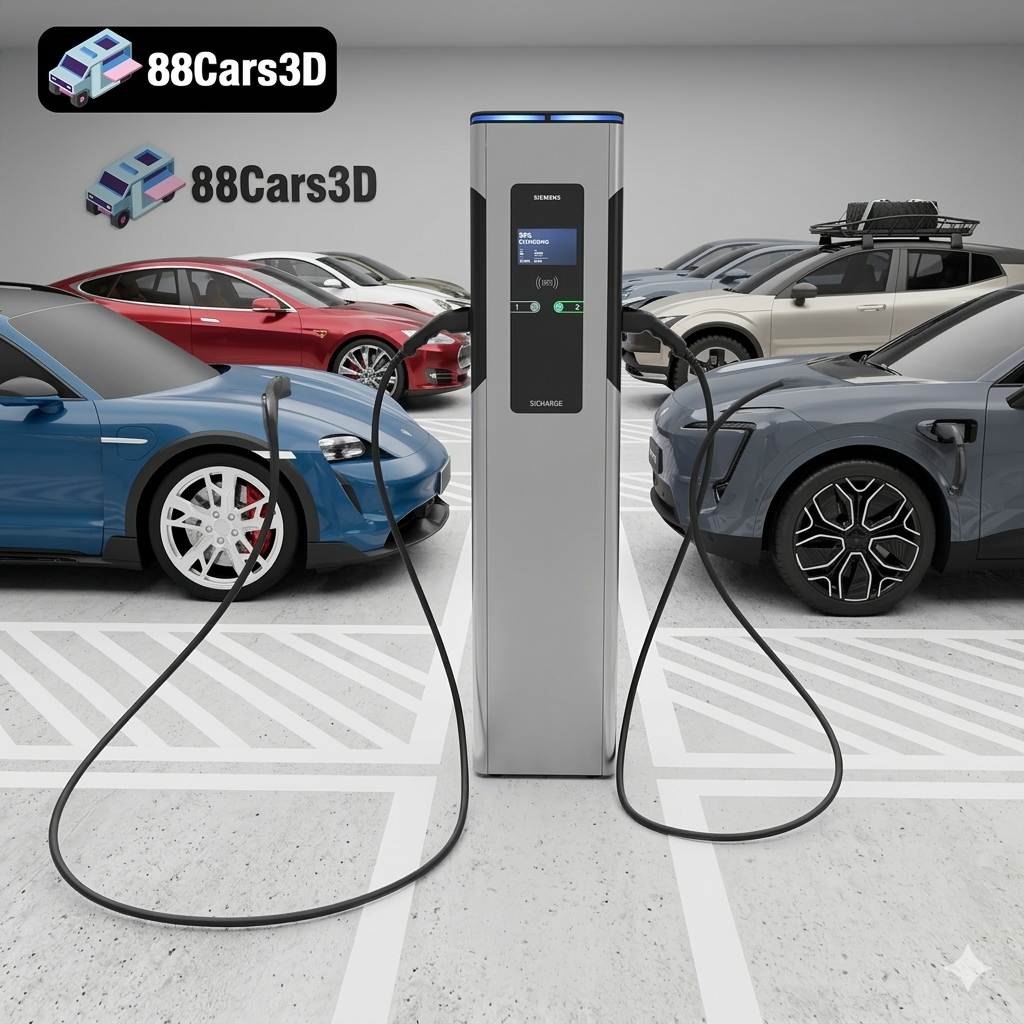
Download the Future of Mobility EV 3D Models Bundle. Includes the Volvo EX30, Tesla Model S, AVATR 11, Porsche Taycan, and a Siemens EV Charger. Save big on this highly optimized 5-in-1 pack for ArchViz and game development!
Price: $89.99

