Get 50% OFF All Premium 3D & STL Models!

The world of 3D design and visualization thrives on precision, realism, and efficiency. Whether you are an automotive designer crafting the next luxury concept, a game developer building an immersive open world, or a visual effects artist producing a cinematic masterpiece, the quality of your base assets dictates the final output. Among the vast array of available 3D car models, a truly exceptional asset can accelerate workflows and elevate projects to new heights. It is in this spirit that we explore the Mercedes-Benz G Class 2013 3D Model, an outstanding example of digital craftsmanship that encapsulates the rugged elegance and timeless appeal of a global automotive icon.
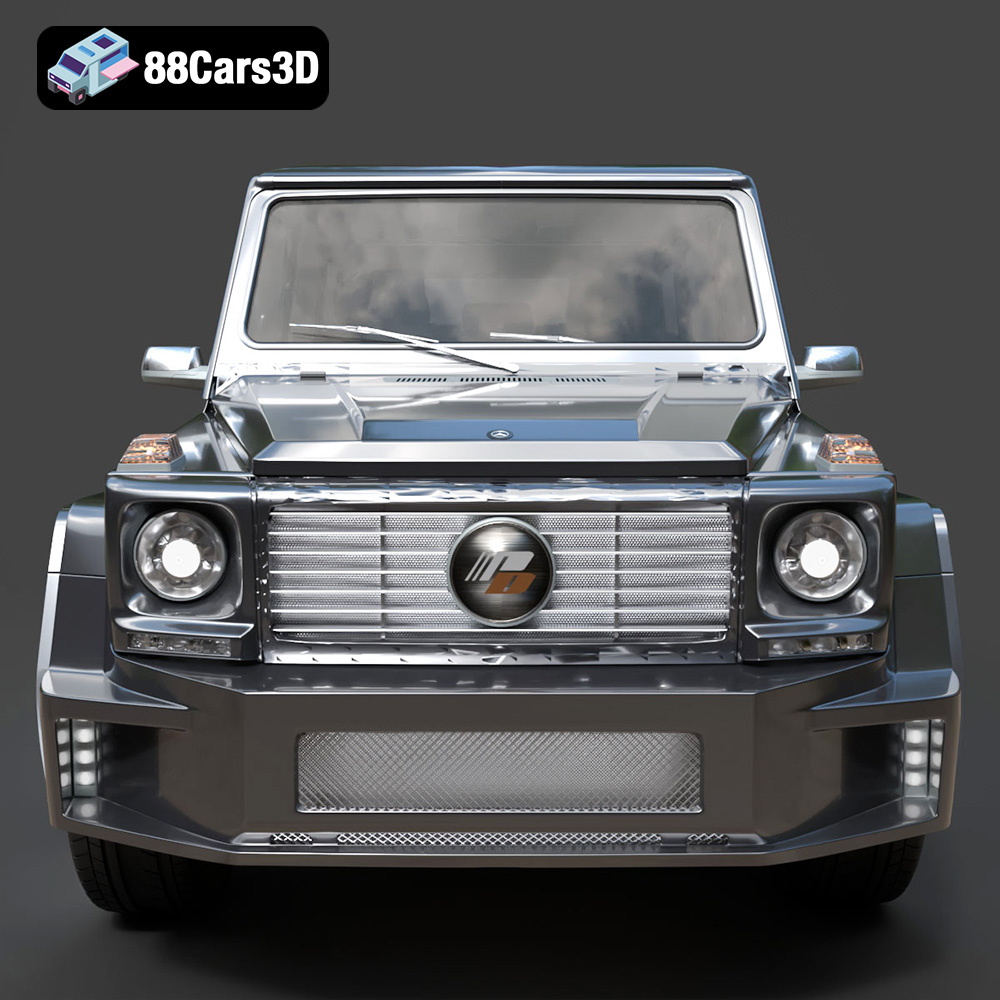
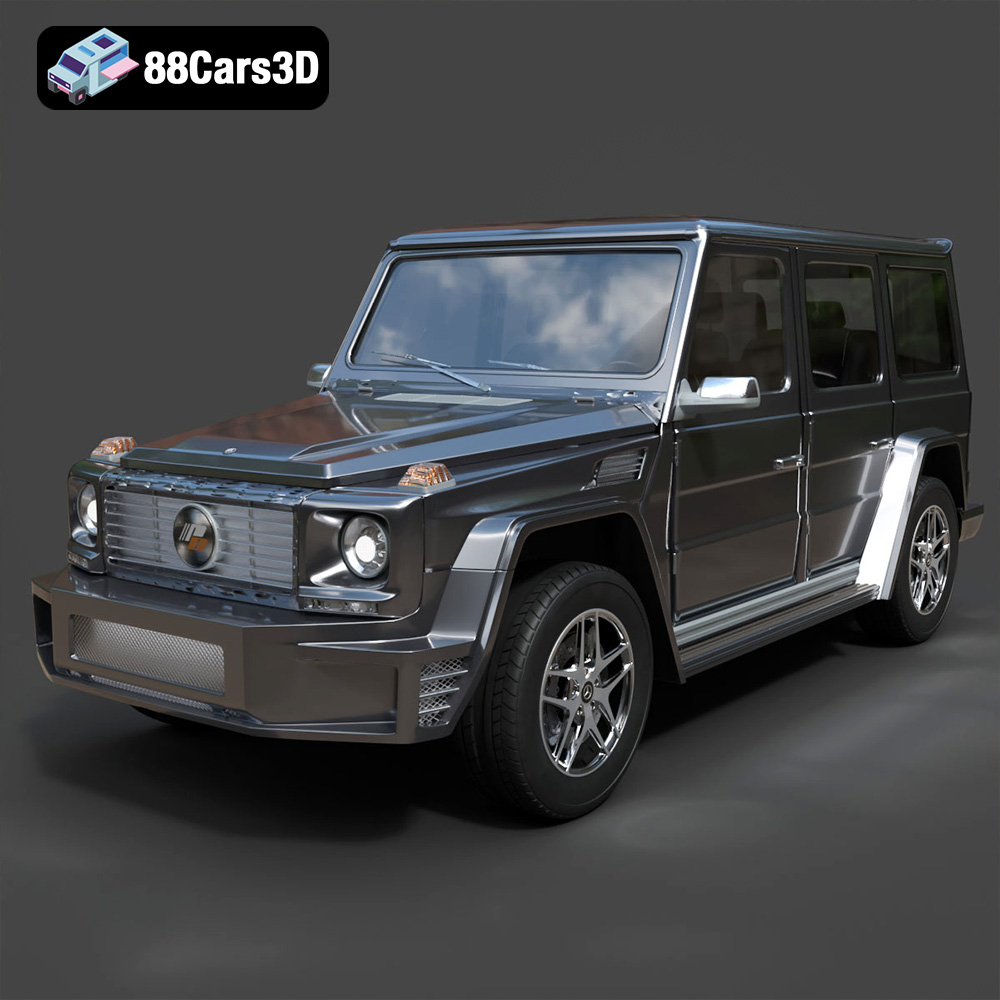
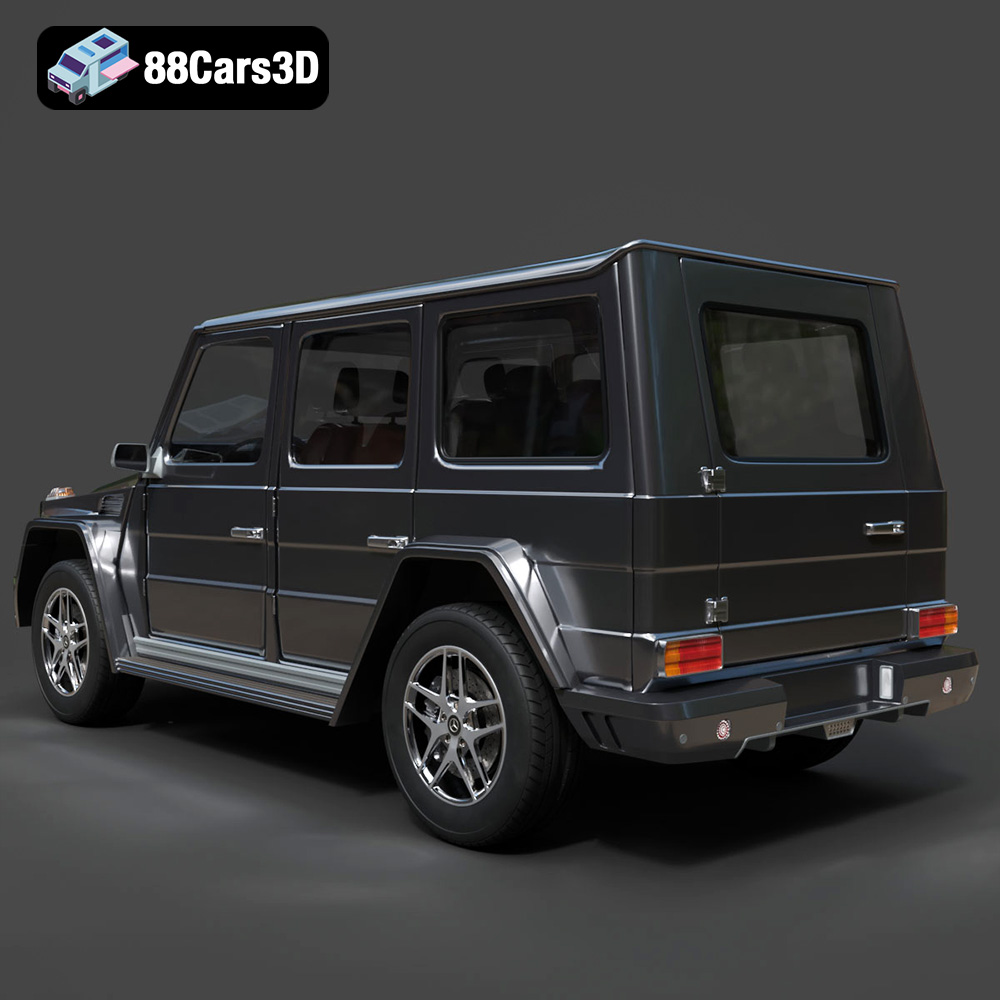
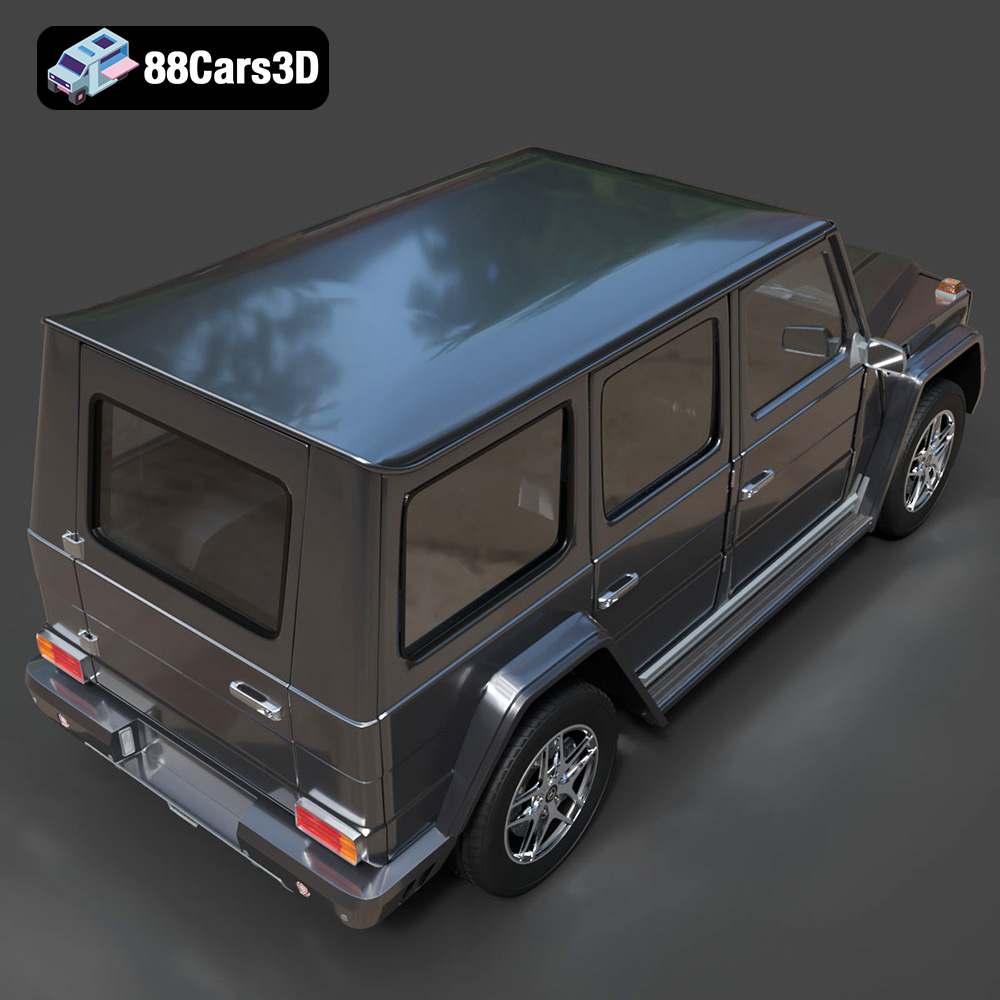
This particular model, available at 88cars3d.com, is not just a digital replica; it’s a meticulously engineered asset designed to meet the rigorous demands of professional production. From its distinctive squared body shape and bold front grille to its finely detailed interior, every aspect of the 2013 G-Class has been faithfully recreated. This level of detail makes it an invaluable addition to any digital arsenal, providing a versatile foundation for everything from photorealistic renders and dynamic animations to interactive AR/VR experiences and even precise 3D prints. As we delve into the technical intricacies and creative possibilities, we will demonstrate how such a high-fidelity 3D model can be a cornerstone for success across various digital disciplines.
The Mercedes-Benz G-Class, or G-Wagen, holds a unique place in automotive history. Its lineage traces back to military utility vehicles, yet it has evolved into a symbol of luxury, capability, and unwavering design principles. The 2013 model year represents a particularly significant iteration, balancing its rugged heritage with contemporary refinements, making it a compelling subject for 3D artists and developers. Capturing this specific year means encapsulating a distinct moment in its evolution, crucial for historical accuracy in simulations or marketing collateral.
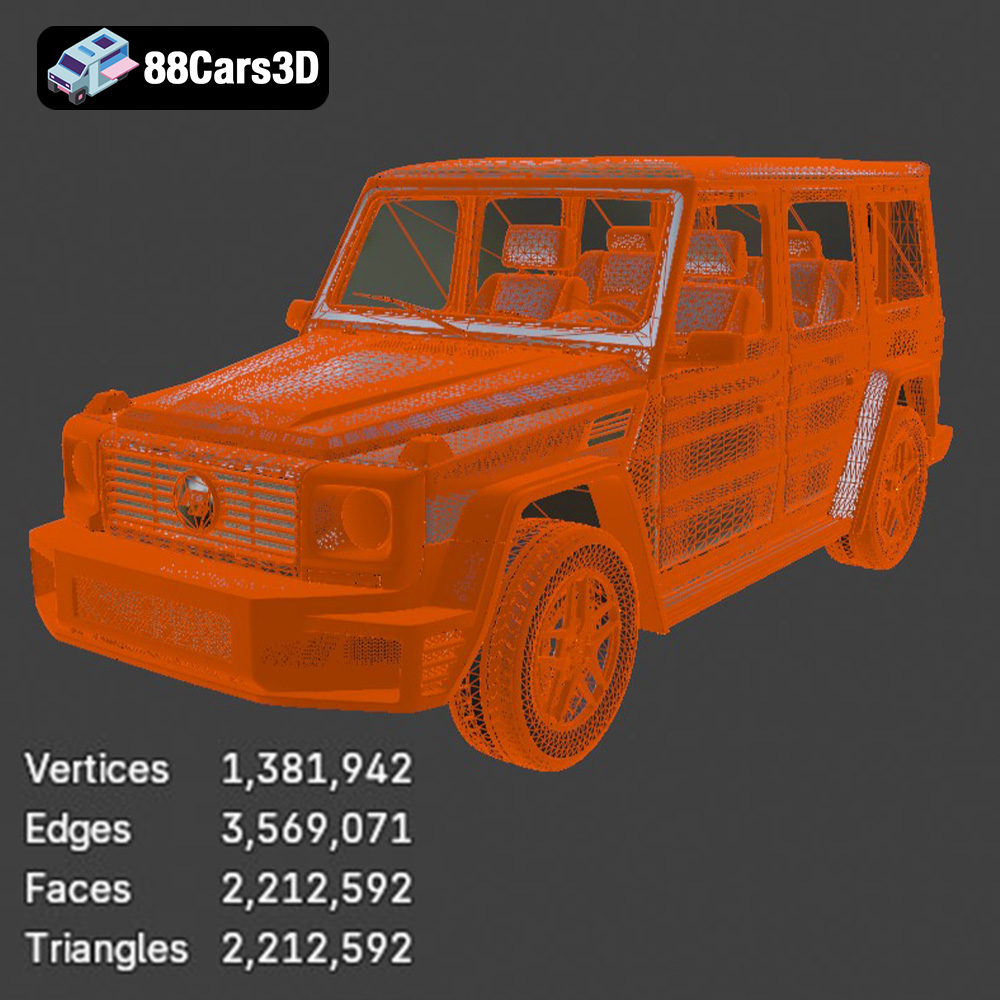
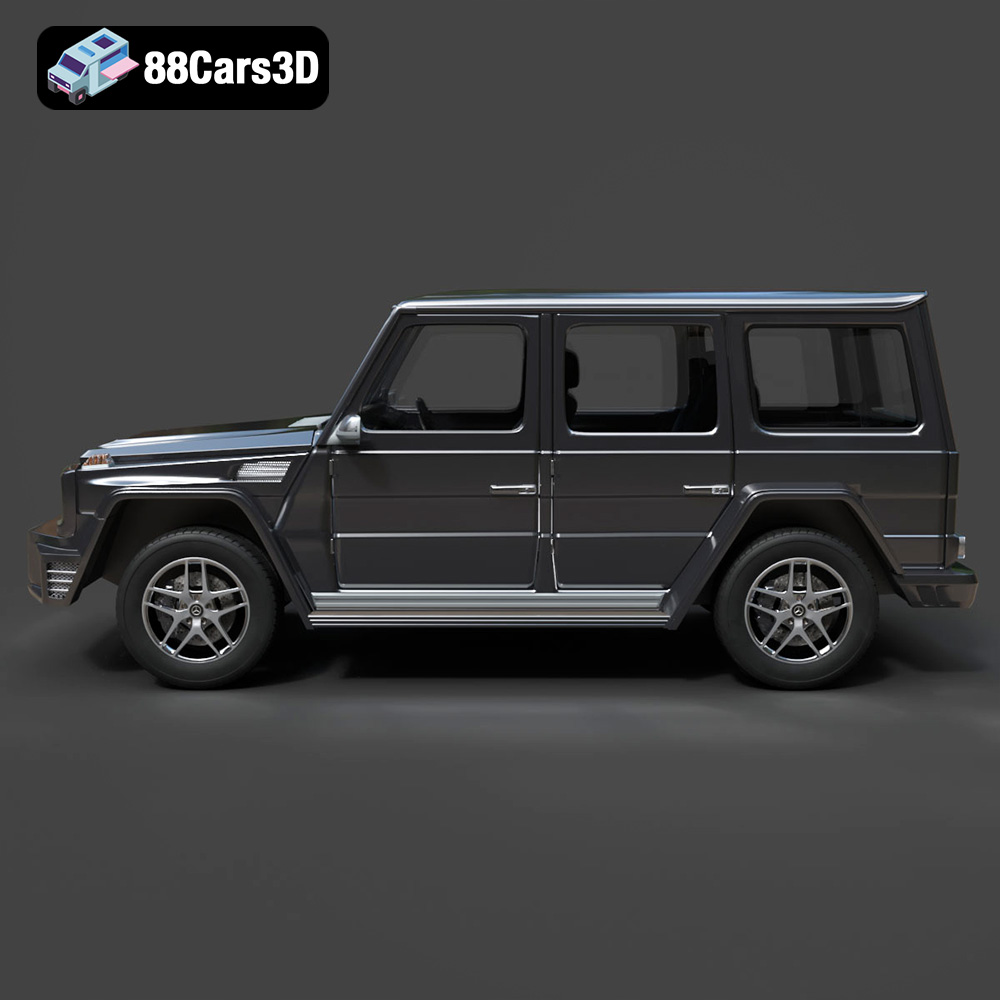
Recreating an iconic vehicle like the G-Class in 3D requires more than just modeling its surface; it demands an understanding of its underlying design philosophy. The Mercedes-Benz G Class 2013 3D Model excels in this regard, faithfully reproducing the vehicle’s signature boxy silhouette, exposed door hinges, and the authoritative stance that define its character. Every exterior feature, from the detailed front grille with its emblem placement to the large alloy wheels with off-road tire geometry, is meticulously crafted. The interior doesn’t lag either, featuring a luxury dashboard, instrument cluster, multifunction steering wheel, and even seat geometry with stitching detail. This attention to both macro and micro details ensures that the model holds up under close scrutiny, whether rendered in high resolution or viewed up close in a virtual environment. The clean topology and real-world scale accuracy are paramount, providing a solid foundation for further customization or integration into complex scenes.
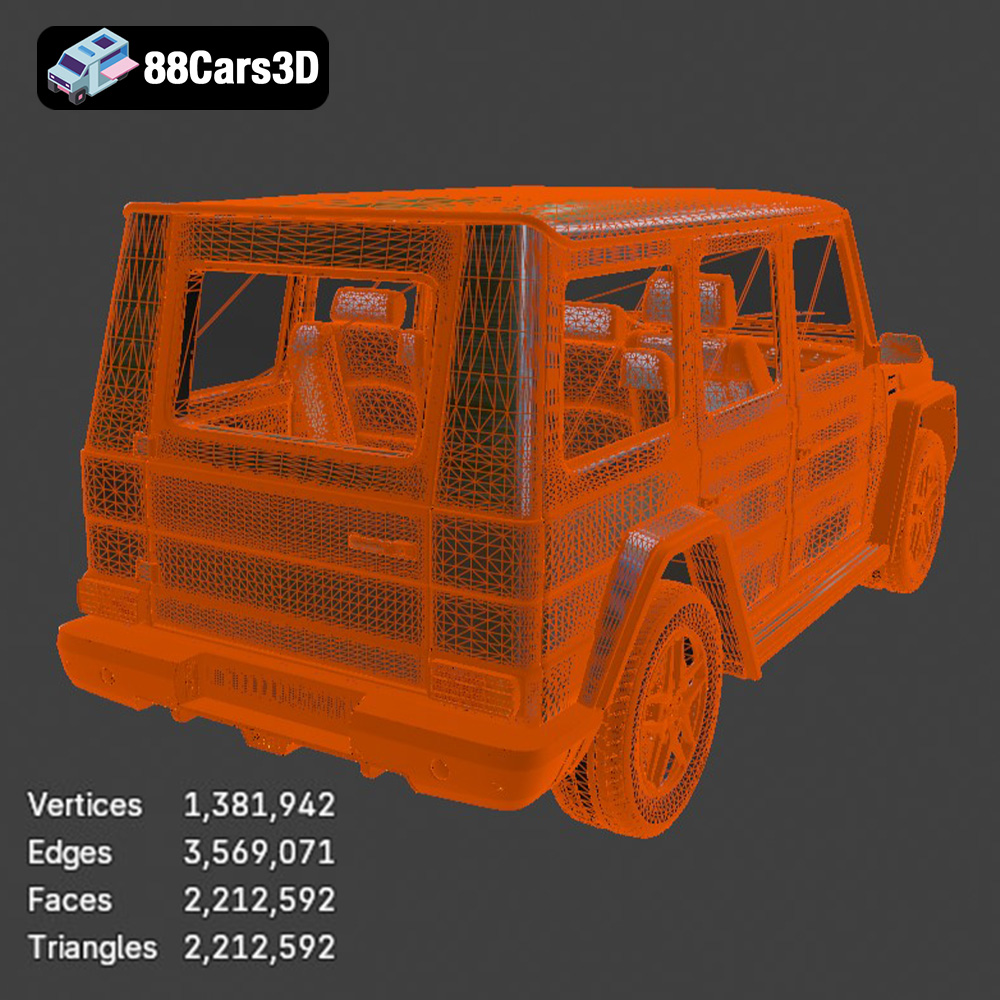
The true value of a premium 3D car model lies not only in its visual fidelity but also in its adaptability. The Mercedes-Benz G Class 2013 3D Model is engineered for versatility. Its optimized geometry and clean mesh structure ensure efficient performance in real-time game engines while maintaining the fidelity required for high-quality cinematic renders. The proper pivot setup for steering and wheel rotation is a critical technical advantage, allowing for realistic animation without extensive rigging. This means animators can quickly set up driving sequences, game developers can integrate the model with their physics engines with minimal fuss, and automotive visualization specialists can showcase every angle of the G-Class with dynamic camera movements. This inherent flexibility makes it a powerful asset for diverse applications, minimizing the time spent on model preparation and maximizing creative output.
Navigating the vast landscape of 3D software and engines often begins with understanding file formats. Each format serves a specific purpose, optimized for different workflows, levels of detail, and software compatibility. For a comprehensive asset like the Mercedes-Benz G Class 2013 3D Model, having access to multiple formats is not just convenient; it’s essential for professional integration across various pipelines. Let’s break down the key formats included with this model and their ideal use cases.
The **.blend** file format is the native format for Blender, a powerful open-source 3D creation suite. When a model is provided in .blend, it signifies a complete Blender scene, often including materials, lighting, cameras, and even animation data directly within the file. For users primarily working in Blender, this is the most convenient format. It allows for full editability of the mesh, access to the original material setup (which can be easily adapted for Cycles or Eevee renders), and the ability to dissect how the model was constructed. Technical details like modifiers, non-destructive workflows, and precise object hierarchies are preserved, offering an unparalleled level of control and flexibility for customization or further development. For instance, a game artist could use the .blend to create various Levels of Detail (LODs) or custom damage states for the G-Class, while a visualization artist could easily re-light the scene for different moods.
** .fbx** (Filmbox) is arguably the most widely used interchange format in the 3D industry, especially prevalent in game development, animation, and VFX. Developed by Autodesk, it supports not only mesh data but also materials, textures, animations, skinning, and camera information. Its strength lies in its ability to transfer complex scene data between different software packages like 3ds Max, Maya, Blender, Unreal Engine, and Unity with a high degree of fidelity. For the Mercedes-Benz G Class 2013 3D Model, an .fbx file would typically include the optimized mesh, the PBR (Physically Based Rendering) materials, and potentially the pivot points for wheels and steering, making it ready for immediate import into an engine or another DCC (Digital Content Creation) application. The **.obj** (Wavefront OBJ) format is another universal exchange format, revered for its simplicity and robustness. It primarily stores geometry (vertices, normals, texture coordinates, and faces) and references external material files (.mtl). While it doesn’t support animation or advanced scene data like .fbx, its widespread compatibility makes it an excellent fallback for almost any 3D software. It’s often used when pure geometry transfer is the priority, ensuring that the fundamental shape of the G-Class is preserved across platforms.
The **.glb** (GL Transmission Format Binary) format is a modern, royalty-free specification designed for efficient transmission and loading of 3D scenes and models by applications. It’s particularly optimized for AR, VR, and browser-based display, making it ideal for interactive web experiences, virtual showrooms, or social media filters showcasing the G-Class. A .glb file contains all necessary assets—geometry, materials, textures, and animation—in a single binary file, simplifying asset management and reducing load times. For developers targeting real-time applications, the **.unreal** format signifies an asset specifically packaged for Unreal Engine. This often means the model has been optimized, has its materials properly set up within Unreal’s shader graph, and might include LODs, collision meshes, or other engine-specific configurations. This format dramatically streamlines the import process into Unreal Engine, ensuring the Mercedes-Benz G Class 2013 3D Model is game-ready with minimal additional setup, allowing for quicker iteration in game development or architectural visualization projects.
The **.stl** (Stereolithography) format is the de facto standard for 3D printing. It represents a 3D model as a series of connected triangles (a triangular mesh) without color, texture, or other CAD attributes. Its primary purpose is to define the surface geometry of a 3D object for manufacturing processes like additive manufacturing. For the Mercedes-Benz G Class 2013 3D Printable STL, this format means the model has been checked for manifold geometry (watertight surfaces with no holes or self-intersections), making it suitable for direct slicing and printing. The **.ply** (Polygon File Format or Stanford Triangle Format) is a versatile format that can store a wider range of properties than .stl, including color, transparency, and often more precise geometry, making it suitable for applications requiring high geometric accuracy like 3D scanning or CAD. While less common for direct 3D printing than .stl, .ply offers a robust option for precision mesh transfer, useful for analysis or specialized manufacturing processes of the G-Class model.
Finally, the **.max** format is the native file type for Autodesk 3ds Max, one of the leading software packages for 3D modeling, animation, and rendering in the architecture, visualization, and entertainment industries. A .max file provides a fully editable 3ds Max project, containing all scene data, including geometry, modifiers, materials (often V-Ray or Corona specific), lights, cameras, and animation curves. For users of 3ds Max, having the Mercedes-Benz G Class 2013 3D Model in its native format means they can immediately access the original scene setup, allowing for complete control over modifications, rendering settings, and integration into existing 3ds Max projects. This is particularly valuable for professional studios that rely on 3ds Max for high-end automotive visualization and cinematic rendering.
This comprehensive array of file formats ensures that the Mercedes-Benz G Class 2013 3D Model from 88cars3d.com is a truly versatile asset, ready for virtually any professional workflow.
Automotive rendering is a specialized field that demands an exquisite balance of artistic vision and technical proficiency. The goal is often photorealism, whether for marketing a new vehicle, visualizing a concept, or creating dynamic scenes for film. The Mercedes-Benz G Class 2013 3D Model provides an excellent foundation for achieving stunning results across various rendering platforms.
For many professional visualization studios, 3ds Max paired with renderers like V-Ray or Corona is the gold standard. When working with the Mercedes-Benz G Class 2013 3D Model in .max format, artists gain immediate access to a scene that is likely already optimized for these renderers. This means materials are often set up with PBR (Physically Based Rendering) principles in mind – correct diffuse, specular, roughness, metallic, and normal maps – ensuring accurate light interaction.
The workflow typically involves:
The clean geometry of the G-Class model simplifies this process, ensuring smooth surfaces and accurate reflections without artifacts.
Blender, with its powerful Cycles and real-time Eevee renderers, offers immense artistic freedom. The Mercedes-Benz G Class 2013 3D Model’s .blend file is perfectly suited for Blender artists. Cycles, a physically based path tracer, excels at producing highly realistic images, comparable to V-Ray or Corona, through complex light simulations. Eevee, Blender’s real-time renderer, provides instant feedback and is ideal for quick previews, animations, and stylized renders where speed is prioritized.
Blender workflows might involve:
The model’s optimized polygon flow is beneficial here, allowing for smooth subdivision surfacing if higher detail is desired for extreme close-ups, or efficient rendering without subdivision for broader shots.
Imagine a luxury automotive brand needing promotional visuals for the G-Class. Using the Mercedes-Benz G Class 2013 3D Model, a team could quickly generate a suite of assets:
The consistency and quality provided by a single, robust 3D asset like this ensure brand fidelity across all media, making it an invaluable tool for automotive rendering.
Game development demands a unique blend of visual fidelity and performance optimization. High-quality 3D car models are crucial for creating believable environments and engaging gameplay experiences. The Mercedes-Benz G Class 2013 3D Model is designed with this balance in mind, making it an excellent candidate for integration into leading game engines.
Unreal Engine is renowned for its photorealistic rendering capabilities in real-time, making it a top choice for AAA game titles, architectural visualization, and virtual production. Importing the G-Class model, especially in the provided .fbx or .unreal formats, streamlines the development process.
The workflow within Unreal typically involves:
The clean, well-organized mesh structure of the Mercedes-Benz G Class 2013 3D Model is invaluable for these steps, allowing developers to quickly generate LODs and collision meshes without wrestling with messy geometry.
Unity is another powerhouse in game development, known for its versatility across platforms and its strong community support. The .fbx format is also the preferred method for importing complex models into Unity.
Key integration steps in Unity:
The G-Class model’s design, including separate wheels and steering components, provides game developers with the necessary granular control for animation and interactive elements.
Imagine an open-world driving game or an off-road simulator. The Mercedes-Benz G Class 2013 3D Model from 88cars3d.com can serve as a premium, unlockable vehicle, or a central asset for a vehicle showroom. Its high detail allows for close-up inspection in garage screens, while its optimized nature ensures smooth performance during high-speed chases or challenging terrain navigation. For simulation games, the real-world scale accuracy is paramount for believable physics and player immersion. Furthermore, the customization options—changing body color, adding off-road accessories, or modifying wheel styles—can be directly implemented in-game, offering players a personalized experience and extending the model’s value.
The applications of high-quality 3D assets extend far beyond traditional rendering and game development. Augmented Reality (AR), Virtual Reality (VR), and 3D printing represent emerging frontiers where accurate and optimized 3D models are indispensable. The Mercedes-Benz G Class 2013 3D Model is particularly well-suited for these innovative applications.
AR and VR technologies are transforming how products are showcased, offering immersive and interactive experiences. For the automotive industry, this means virtual showrooms, interactive test drives, and augmented reality overlays that bring vehicles to life in a customer’s real-world environment.
For AR/VR experiences, the Mercedes-Benz G Class 2013 3D Model can be deployed in several ways:
The model’s real-world scale accuracy is particularly important here, ensuring that when the car is placed in an AR environment, it appears at the correct size relative to the physical world, enhancing believability.
Perhaps one of the most exciting capabilities of the Mercedes-Benz G Class 2013 3D Model is its suitability for 3D printing. The provided .stl format confirms its readiness for physical output, allowing designers and enthusiasts to transform the digital model into tangible collectibles, prototypes, or scale models.
The product description highlights this capability, making it clear that the model is designed for successful 3D printing. This opens up possibilities for:
The emphasis on “manifold geometry” in the .stl description ensures that the model is watertight and ready for slicing, preventing common printing errors.
3D printing requires specific technical considerations, and the product information provides valuable guidance:
These detailed guidelines demonstrate that the model has been designed with the entire workflow in mind, from digital creation to physical manifestation.
In the competitive landscape of 3D production, time is often the most valuable commodity. Developing a high-fidelity 3D car model from scratch can take hundreds of hours, demanding expertise in modeling, texturing, rigging, and optimization. This is where a marketplace like 88cars3d.com becomes an invaluable resource, offering production-ready assets that empower creators to focus on their core competencies: design, animation, and storytelling.
The Mercedes-Benz G Class 2013 3D Model exemplifies the benefits of sourcing pre-made assets. It’s not just a collection of polygons; it’s a meticulously crafted digital product. The “clean and well-organized mesh structure” minimizes the effort required for modifications or optimization. “Real-world scale accuracy” means it will seamlessly integrate into any scene without needing tedious resizing. “Proper pivot setup for steering and wheel rotation” saves animators countless hours of rigging. These technical advantages translate directly into faster turnaround times and higher quality output for any project.
Furthermore, the inclusion of multiple file formats—from .blend and .max for comprehensive editing to .fbx and .unreal for real-time engines, and .stl for 3D printing—means that regardless of your preferred software or final application, the model is immediately usable. This multi-format approach eliminates the need for complex conversions or re-topology, ensuring a smooth transition into diverse workflows. By acquiring such a robust asset from 88cars3d.com, artists and developers gain a significant head start, allowing them to allocate more resources to creative refinement rather than foundational asset creation.
Even with a high-quality base model, the ability to customize is paramount. The Mercedes-Benz G Class 2013 3D Model offers excellent flexibility for adaptation. Its clean topology and well-structured components make it easy to:
This adaptability ensures that while the core model provides a consistent foundation, it can be uniquely tailored to fit the specific demands of any project, from bespoke automotive advertisements to diverse environments within a game. The quality assets available at 88cars3d.com are built to be both high-fidelity and highly adaptable, providing maximum value to professionals.
In the dynamic world of 3D modeling, where precision meets creative vision, the quality of foundational assets can make all the difference. The Mercedes-Benz G Class 2013 3D Model stands as a testament to meticulous digital craftsmanship, offering an unparalleled blend of accuracy, detail, and technical readiness. From its faithful reproduction of the iconic G-Class design to its optimized geometry and comprehensive file format support, this model is engineered to elevate professional projects across multiple industries.
Whether your goal is to produce photorealistic automotive rendering for a high-stakes marketing campaign in 3ds Max, integrate a premium vehicle into an immersive game environment using Unreal Engine, or even bring the digital design into the physical realm through 3D printing, this model delivers. Its clean topology, real-world scale, and thoughtful optimization streamline workflows, saving invaluable time and resources while ensuring a superior final product. For those seeking top-tier 3D car models that seamlessly integrate into complex pipelines and empower creative exploration, 88cars3d.com offers a curated selection of assets that meet the most stringent professional standards. The Mercedes-Benz G Class 2013 3D Model is more than just a digital file; it’s an investment in efficiency, quality, and the limitless possibilities of 3D design.
The Mercedes-Benz G Class 2013 3D Model is a high-detail digital recreation of the iconic luxury off-road SUV known for its boxy design, rugged capability, and premium craftsmanship. The 2013 G-Class blends military-inspired durability with refined interior comfort, making it a timeless symbol of performance and prestige. This 3D model accurately represents the distinctive squared body shape, bold front grille, round headlights, exposed door hinges, roof rails, spare wheel rear mount, and elevated ground clearance. Designed with clean topology and real-world scale accuracy, it is ideal for rendering, animation, automotive visualization, game development, and AR/VR experiences. Perfect for urban luxury scenes, off-road environments, desert simulations, cinematic projects, and SUV driving games. Convertible to .stl format for collectible SUV scale models and display miniatures.
$60