Get 50% OFF All Premium 3D & STL Models!

The automotive industry is constantly evolving, pushing the boundaries of design, engineering, and customer engagement. In this high-stakes environment, showcasing vehicles in the most compelling and interactive ways is paramount. Traditional static renders and videos, while still valuable, are increasingly giving way to dynamic, real-time experiences. This is where Unreal Engine shines, transforming how we visualize and interact with 3D car models. With its unparalleled photorealism, powerful tools, and robust real-time capabilities, Unreal Engine empowers artists and developers to create breathtakingly interactive product demos, configurators, and virtual showrooms that captivate audiences and drive engagement.
From exploring intricate interior details to customizing paint finishes in real-time, interactive demos built with Unreal Engine provide an immersive experience that goes far beyond passive observation. This comprehensive guide will walk you through the essential steps and advanced techniques for leveraging Unreal Engine to create stunning, high-fidelity interactive automotive experiences. We’ll delve into everything from project setup and asset optimization to advanced lighting, material creation, Blueprint scripting for interactivity, and strategies for achieving peak performance. Get ready to unlock the full potential of your 3D car models and revolutionize your automotive visualization workflow.
Beginning any Unreal Engine project requires careful planning, especially when targeting high-fidelity automotive visualization. The right foundation ensures smooth workflows, optimal performance, and stunning visual quality. Our goal is to create a robust environment capable of rendering complex 3D car models with photorealistic detail, while maintaining real-time interactivity. This section covers the critical initial steps, from choosing the correct project template to importing your high-quality automotive assets, which often come from specialized marketplaces like 88cars3d.com, ensuring they are optimized for Unreal Engine.
When starting a new project in Unreal Engine, selecting the appropriate template is crucial. For automotive visualization, the “Blank” or “Games” template with “Raytracing” enabled is often a good starting point, providing a clean slate while ensuring modern rendering features are available. Alternatively, the “Automotive Product Design” template in the ArchViz category can provide pre-configured settings and assets tailored for similar purposes. After creation, navigate to Edit > Plugins. Essential plugins for automotive workflows include:
Ensuring these plugins are active will streamline your asset pipeline and provide the necessary tools for manipulation within the engine. Regularly check for updates on the official Unreal Engine documentation site for best practices and new features related to plugins.
The quality of your source 3D car models directly impacts the final visual fidelity of your interactive demo. Platforms like 88cars3d.com offer high-quality 3D car models specifically designed for Unreal Engine, featuring clean topology, PBR materials, and optimized UV mapping. When importing these models, the Datasmith workflow is highly recommended. It handles complex scene hierarchies, material assignments, and metadata far better than a simple FBX import.
To import using Datasmith:
.udatasmith) or an optimized FBX/USD file. Ensure all meshes are triangulated, and UV channels are correctly set up (typically Channel 0 for textures, Channel 1 for lightmaps).For models with extremely high polygon counts (e.g., over 10 million triangles per mesh), consider pre-processing them in your 3D software to create decimation levels or utilizing Unreal Engine’s Nanite system, which we will discuss later. Even with Nanite, a well-optimized base mesh (e.g., 100,000 to 500,000 polygons for a full car body) provides flexibility and better performance for non-Nanite components.
Photorealism in automotive visualization hinges significantly on the quality and accuracy of your Physically Based Rendering (PBR) materials. PBR materials simulate how light interacts with surfaces in the real world, producing consistent and believable results under various lighting conditions. In Unreal Engine, the Material Editor is a powerful node-based system that allows you to craft highly detailed and complex shaders, from gleaming car paint to intricate interior fabrics. Understanding the core principles of PBR and how to translate them into Unreal’s material system is fundamental.
Automotive paint is notoriously complex due to its multi-layered nature, encompassing a base coat, metallic flakes, and a clear coat. Replicating this in Unreal Engine requires a layered material approach:
Using Material Functions allows you to encapsulate complex shader logic into reusable nodes, simplifying your graph and improving maintainability. For instance, a “Car Paint Flake Generator” Material Function could be used across multiple car materials.
While the exterior dazzles, the interior and other components demand equal attention to detail. Each material type—leather, plastic, carbon fiber, glass, rubber—requires specific PBR parameters:
Always aim for physically accurate values and leverage high-resolution texture maps (e.g., 2K to 4K) for close-up details. When sourcing automotive assets from marketplaces such as 88cars3d.com, you often find these models pre-equipped with high-quality PBR textures, significantly accelerating your material setup process.
Lighting is the soul of any visualization, and in Unreal Engine, it’s a powerful tool for achieving photorealistic automotive demos. With the advent of Unreal Engine 5’s Lumen global illumination and reflections system, achieving stunning real-time lighting has become more accessible and dynamic than ever before. This section explores how to harness Lumen and other lighting techniques to make your 3D car models truly shine.
Lumen is Unreal Engine 5’s fully dynamic global illumination and reflections system, providing an unprecedented level of realism in real-time. It eliminates the need for complex lightmap baking or static reflection captures, allowing for complete freedom in lighting changes and interactive environments. For an automotive demo, Lumen is a game-changer:
Performance considerations for Lumen: While powerful, Lumen is computationally intensive. Keep your scene geometry optimized, and consider adjusting Lumen’s ‘Quality’ settings or using console commands like r.Lumen.DiffuseIndirect.MaxBounces to fine-tune the balance between quality and frame rate.
Beyond Lumen, strategic light placement and environment setup are key to professional-looking automotive renders. Two primary approaches are common:
Combining a physical studio setup with an HDRI for ambient light and reflections can yield incredibly realistic results. Experiment with different light intensities, colors, and positions to accentuate the vehicle’s design and create a desired mood. Remember to consult the official Unreal Engine documentation for the latest features and best practices regarding lighting.
Photorealism is only half the battle; interactivity is what truly elevates an automotive product demo. Unreal Engine’s Blueprint Visual Scripting system is a powerful, node-based interface that allows designers and artists to create complex gameplay and interactive functionalities without writing a single line of code. For interactive car demos, Blueprint is the backbone for configurators, camera controls, and dynamic environment changes.
An interactive configurator allows users to customize aspects of the car in real-time, such as paint colors, wheel designs, or interior trims. Building this in Blueprint involves several key components:
A typical configurator setup might involve a Master Car Blueprint that holds references to all customizable components and functions to change them. The UMG Widget then calls these functions in the Master Car Blueprint upon user input.
Beyond customization, users expect intuitive ways to explore the vehicle:
Blueprint allows for incredibly granular control, enabling you to add details like flickering dashboard lights, animated seat adjustments, or even simple physics simulations for tire compression when the car is viewed from different angles. The modular nature of Blueprint encourages reusable functions and macros, streamlining development for complex interactive demos.
Achieving photorealistic visuals in real-time, especially for complex 3D car models, demands rigorous optimization. Unreal Engine provides powerful features like Nanite and robust LOD (Level of Detail) systems to manage geometric complexity and ensure smooth performance across various hardware configurations. Balancing fidelity and performance is an ongoing challenge, but with the right strategies, you can deliver breathtaking interactive demos.
Nanite is Unreal Engine 5’s virtualized geometry system, designed to handle immense polygon counts with unprecedented efficiency. For highly detailed 3D car models, Nanite is a game-changer, allowing artists to import production-quality assets with millions or even billions of triangles without worrying about performance bottlenecks. This means you can maintain exquisite detail on badges, grilles, and intricate interior components.
For a typical automotive model from 88cars3d.com, you would enable Nanite for the car body, chassis, highly detailed interior components, and wheels, while glass and some small, dynamic parts might remain traditional Static Meshes.
While Nanite handles large static meshes, non-Nanite geometry, particles, and textures still require careful optimization. Level of Detail (LOD) is a classic optimization technique that replaces a high-detail mesh with a simpler version when it’s further from the camera. For an interactive demo, proper LOD setup is crucial for smooth performance, especially for parts that don’t benefit from Nanite or for older hardware.
Consistently profiling your demo using Unreal Engine’s built-in tools (like the ‘Stat Unit’, ‘Stat GPU’, ‘Shader Complexity’ view modes) is essential to identify and address performance bottlenecks. Optimizing is an iterative process, constantly refining assets and settings to achieve the best possible balance between visual fidelity and real-time performance.
Once you’ve mastered the fundamentals of creating interactive automotive demos in Unreal Engine, a world of advanced applications opens up. From crafting cinematic presentations to leveraging your assets for virtual production or immersive AR/VR experiences, Unreal Engine’s versatility extends far beyond simple configurators. This section explores how to push the boundaries of your interactive automotive projects.
Unreal Engine’s Sequencer is a powerful, non-linear cinematic editor that allows you to choreograph complex animations, camera movements, and visual effects to tell compelling stories about your vehicles. Even within an interactive demo, short cinematic sequences can enhance the user experience by highlighting key features or transitioning between different views.
Sequencer is not just for static renders; you can integrate it into your interactive demo. For instance, a button press could trigger a short cinematic highlighting a car’s unique feature, seamlessly blending interactive exploration with curated storytelling. This provides a professional polish that elevates the entire demo experience.
The interactive automotive demos built in Unreal Engine are prime candidates for deployment on AR (Augmented Reality) and VR (Virtual Reality) platforms, offering unparalleled immersion. Furthermore, these high-fidelity assets are increasingly used in virtual production workflows with LED walls.
The journey into AR/VR and virtual production is an advanced one, requiring a deeper understanding of specific platform requirements and dedicated hardware. However, the foundational skills gained from building interactive automotive demos in Unreal Engine provide an excellent springboard into these exciting frontiers, showcasing the incredible versatility of this powerful real-time engine.
The landscape of automotive visualization has been irrevocably transformed by the power of Unreal Engine. We’ve journeyed through the intricate process of taking high-quality 3D car models, like those meticulously crafted and optimized for Unreal Engine on 88cars3d.com, and breathing interactive life into them. From meticulous project setup and the artistry of PBR material creation to the revolutionary lighting capabilities of Lumen and the versatile scripting power of Blueprint, every step is a testament to Unreal Engine’s capacity to deliver unparalleled realism and interactivity.
You’ve learned how to leverage Nanite for geometric fidelity that once seemed impossible in real-time, employ smart LOD management for seamless performance, and even venture into advanced applications like cinematic storytelling with Sequencer and optimization for AR/VR or virtual production. The ability to create dynamic car configurators, immersive showrooms, and engaging product tours empowers businesses to connect with customers on a deeper, more memorable level. The future of automotive presentation is interactive, real-time, and stunningly photorealistic, and Unreal Engine is at the forefront of this revolution. Now, it’s time to take these insights, explore the incredible assets available, and start building your next groundbreaking interactive automotive experience.

Texture: Yes | Material: Yes | 3D Printable: Yes. Download the Italian Thoroughbreds Bundle featuring 5 iconic 3D models: Lamborghini Huracán Performante, Ferrari 458 Italia, Lamborghini Urus, Diablo SV, and Maserati GT. Optimized for 4K rendering and 3D printing (STL included). Save 50% with this ultimate Italian vehicle collection.
Price: $199.99

Download the Elite Future Mobility Bundle featuring 4 highly optimized 3D models: Tesla Model S, Avatr 11, Li L9, and Zoox Robotaxi. Perfect for ArchViz, Smart City renders, and game dev. Optimized for Unreal Engine and Blender. Includes .fbx, .obj, and .max formats.
Price: $99

🚗 5 Iconic German Cars (BMW M4 G82, M5 CS, X3, 1 Series & Mercedes E-Class). ✅ Optimized for ArchViz: Ready for Corona & V-Ray. 💰 Save €71 with this limited-time collection! 🚀 Instant Download after purchase.
Price: $119

Download the Extreme Off-Road & Survival 3D Models Bundle! Includes the Brabus 800 Adventure, Dodge Ram Bigfoot, Spec Truck, and a Caravan. Save over €210 on this premium 4-in-1 off-grid vehicle pack for ArchViz and game development.
Price: $149.99

Download the Heavy Duty & Commercial Logistics 3D Models Bundle! Includes the Ford Sterling, Caterpillar CT680, Mercedes Citaro Bus, and Vito Van. Save over €130 on this massive, game-ready 4-in-1 industrial vehicle pack.
Price: $109.99

Download the Ultimate Custom Motorcycles 3D Models Bundle. Includes a Custom Chopper, Ducati 916 Café Fighter, Harley XR1200X, and BMW K100. Perfect premium props for luxury ArchViz garages. Save over €250 today!
Price: $159.99

Download the ultimate JDM Street Racing 3D Models Bundle! Includes the Nissan GT-R, Toyota Supra, Mazda RX-7, Lancer Evo IX, and Honda NSX. Save big on this highly optimized, game-ready 5-in-1 Japanese legend car pack.
Price: $129.99

Download the ultimate American Muscle & Cinematic Classics 3D Models Bundle! Includes the Dodge Charger ’68, Mustang Eleanor GT500, Camaro Z28 ’79, and a custom ’69 Mustang. Save over €240 on this game-ready, premium 4-in-1 pack.
Price: $149.99

Download the Everyday City Traffic 3D Models Bundle. Includes the VW Golf, Kia Picanto, Hyundai Tucson, Toyota Yaris, and a DHL Ford Transit Van. Save big on this 5-in-1 pack, perfectly optimized for realistic ArchViz streets and game traffic.
Price: $99.99
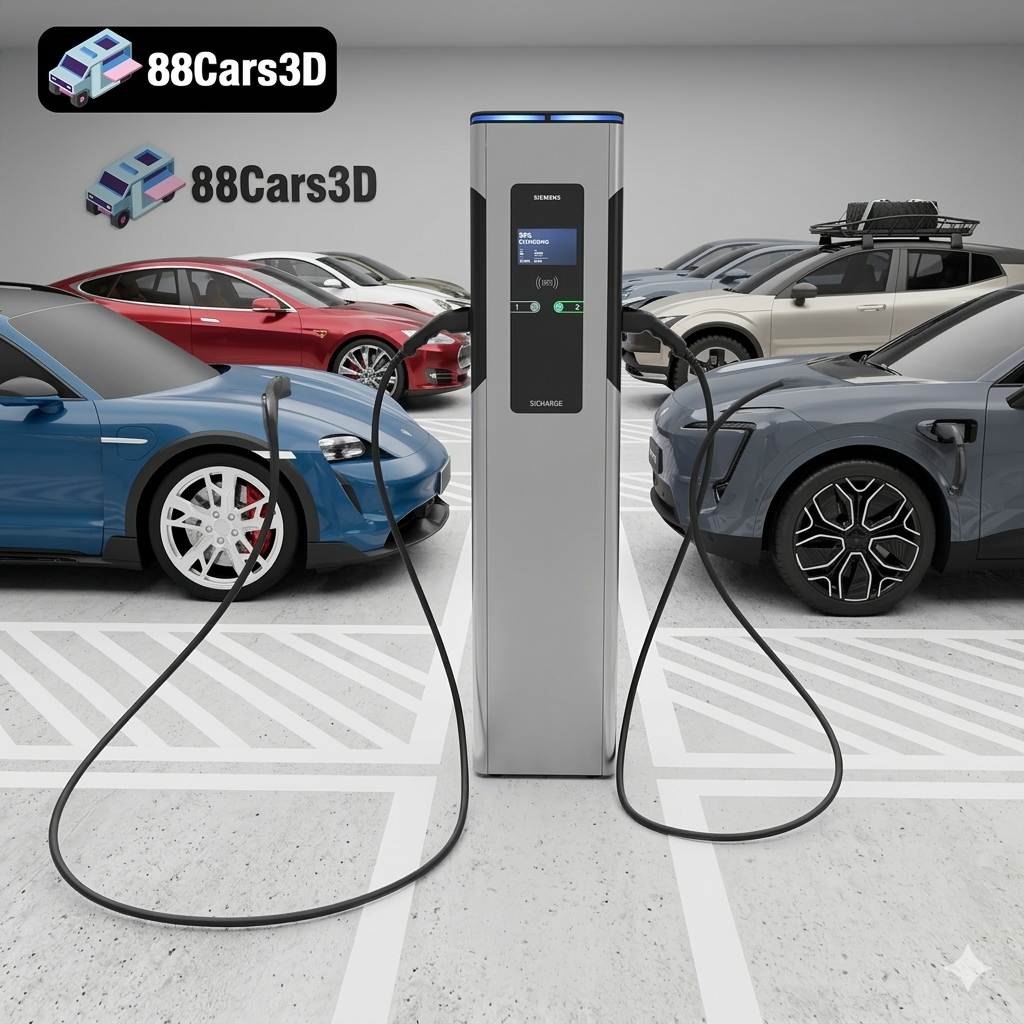
Download the Future of Mobility EV 3D Models Bundle. Includes the Volvo EX30, Tesla Model S, AVATR 11, Porsche Taycan, and a Siemens EV Charger. Save big on this highly optimized 5-in-1 pack for ArchViz and game development!
Price: $89.99

