Get 50% OFF All Premium 3D & STL Models!

The pursuit of ultimate realism in real-time rendering has always been the driving force behind advancements in game engines and visualization tools. For professionals working with high-fidelity 3D car models, whether for automotive configurators, marketing visualizations, or next-generation games, achieving photorealism for complex materials like multi-layered car paint, advanced glass, and intricate interiors has been a persistent challenge. Traditional Physically Based Rendering (PBR) workflows, while revolutionary, often hit limitations when trying to accurately represent materials with complex light interactions, such as interference coatings or translucent effects.
Enter Unreal Engine’s Substrate Material System: a groundbreaking paradigm shift in real-time shading. Substrate moves beyond the simplified PBR assumptions, offering a modular, energy-conserving framework that empowers artists and developers to craft materials with unprecedented physical accuracy and visual richness. This long-form technical guide will deep dive into Substrate, exploring its core philosophy, practical implementation for automotive visualization, performance considerations, and how it’s shaping the future of real-time rendering. We’ll discuss how to leverage this powerful system to bring your 3D car models, especially those meticulously crafted assets from platforms like 88cars3d.com, to life with unparalleled realism in Unreal Engine.
For years, real-time rendering in Unreal Engine relied heavily on a traditional PBR shading model. While highly effective and widely adopted, this model often represented materials as a single surface with a defined base color, metallicness, roughness, and normal map. This approach works well for many common surfaces but struggles with materials that exhibit complex layering, volumetric properties, or unique light interactions, such as automotive paint with its clear coat, metallic flake layer, and base color, or intricate refractive glass with chromatic dispersion. Simulating these effects often required complex shader workarounds, sacrificing either accuracy or performance.
Substrate fundamentally redefines how materials are built and rendered in Unreal Engine. Instead of a monolithic surface, Substrate introduces a modular, node-based system where materials are composed of layers and volumes, each contributing to the final appearance based on physically accurate principles. It’s a complete rewrite of Unreal Engine’s shading model, allowing for sophisticated material definitions that truly mimic real-world light behavior. This means artists can now accurately represent complex phenomena like thin-film interference, sub-surface scattering, volumetric absorption, and multiple specular lobes, all within an energy-conserving framework. The goal is not just to look good, but to be physically plausible, leading to more robust and believable materials across varying lighting conditions. This foundational change allows for a level of fidelity previously only achievable in offline renderers, bringing unparalleled realism directly into the real-time viewport.
Traditional PBR models, while fantastic for a wide range of materials, are based on simplifying assumptions. They typically treat materials as opaque surfaces with a single, unified set of properties (diffuse, specular, metallic, roughness). This becomes problematic for materials like automotive paint, where a transparent clear coat sits atop a metallic base coat, or for objects like car headlights, which combine reflective surfaces, refractive elements, and even subtle light dispersion. Trying to achieve these effects with standard PBR often means baking complex lighting interactions into textures, using multiple meshes, or resorting to intricate and often performance-heavy shader hacks. These workarounds can break energy conservation, leading to unnatural lighting or reflections, especially in dynamic real-time environments. Furthermore, replicating fine details such as iridescent effects or complex micro-surface scattering—critical for high-end automotive visualization—was either impossible or extremely cumbersome.
The power of Substrate lies in its modularity. It provides a library of fundamental building blocks, or Bidirectional Scattering Distribution Functions (BSDFs), each representing a specific way light interacts with a surface or volume. Instead of a single “PBR material,” you combine these BSDFs in a graph, much like you build a shader network. Examples include the `Standard Lit` BSDF for opaque surfaces, `ClearCoat` for transparent top layers, `ThinFilm` for iridescent effects, `Volumetric` for scattering and absorption, and `Subsurface Scattering` for translucent objects. These BSDFs can be layered, blended, and masked, allowing for the construction of incredibly complex materials. Crucially, Substrate ensures that these combinations remain physically plausible and energy-conserving, meaning that light reflected, absorbed, or transmitted through one layer correctly interacts with subsequent layers. This node-based approach, accessible directly within the Unreal Engine Material Editor, gives artists unprecedented control and flexibility, allowing them to define materials not just by their appearance, but by their physical composition.
For automotive visualization, Substrate is nothing short of a revelation. The intricate surface qualities of modern vehicles—from the multi-layered depth of their paintwork to the precision of their glass and the tactile nature of their interior finishes—can now be recreated with an accuracy that was previously unimaginable in real-time. The ability to stack and blend different physical properties naturally within the material graph allows for a more intuitive and physically correct representation of complex automotive surfaces. This means an end to faking effects like metallic flake variations under a clear coat or the subtle volumetric absorption in thick glass components; instead, these are now inherent properties of the Substrate material setup. When sourcing premium 3D models from marketplaces such as 88cars3d.com, which are known for their clean topology and meticulously prepared UVs, Substrate allows you to elevate their material fidelity to truly cinematic levels.
Consider the typical automotive paint, which consists of several layers: a base coat (often metallic or pearlescent), a color coat, and a protective clear coat. Traditional PBR would struggle to represent this accurately as a single material. With Substrate, you can define each of these layers as a distinct BSDF within your material graph, controlling their individual properties like roughness, IOR (Index of Refraction), and color, then combine them naturally. Similarly, interior materials like leather, carbon fiber, or various plastics, each with their unique light response, can be composed with greater fidelity. This extends to advanced glass, where volumetric absorption, dispersion, and multiple reflection/refraction events can be accurately modeled. The process begins in the Material Editor, where you connect Substrate nodes, define their properties, and output to the Substrate material pin, opening up a world of possibilities for hyper-realistic car visuals.
Creating photorealistic car paint with Substrate involves defining its multiple physical layers. A common approach for automotive paint is to combine a `Standard Lit` or `Metallic` BSDF for the base coat and a `ClearCoat` BSDF for the top layer. First, establish your base layer: this would handle the diffuse color, metallic properties (if any), and base roughness. You can introduce a `ThinFilm` BSDF or a custom node to simulate metallic flakes and their iridescent reflections. This base layer’s output is then fed into the base input of a `ClearCoat` node. The `ClearCoat` node itself has properties for its own roughness (often very low for a shiny car), its tint, and its IOR, which defines how light bends as it enters and exits the clear coat. For example, a typical clear coat might have an IOR around 1.5. You can also add subtle absorption within the clear coat layer for darker, more saturated paint finishes. This layered construction ensures energy conservation, meaning light accurately reflects off the clear coat and then, if transmitted, interacts correctly with the underlying base coat, producing truly believable reflections and specular highlights. For even more complex paints, you could introduce additional layers or masks to simulate effects like dirt, scratches, or localized material wear, all integrated seamlessly within the same Substrate material.
Unreal Engine’s Substrate also elevates the rendering of transparent and refractive materials, which are crucial for automotive visualization. For car windows, headlights, and taillights, artists can now model light absorption within the volume of the glass, controlling how light gradually diminishes as it passes through thicker sections. This is achieved using `Volumetric` BSDFs, where you can define absorption coefficients and scattering properties. Additionally, Substrate allows for the accurate simulation of dispersion (the prism effect where light separates into colors), which is a subtle but vital cue for photorealistic glass, particularly in complex headlight lenses. The `IOR` property is more critical than ever, influencing not just reflection strength but also the degree of light bending. By combining `Standard Lit` BSDFs (for reflective surfaces like headlight bezels), `ClearCoat` (for protective lenses), and `Volumetric` BSDFs (for the glass itself), you can construct headlights that not only look visually stunning but also interact with light in a physically plausible manner, adding immense depth and realism to your 3D car models. Refer to the official Unreal Engine documentation at https://dev.epicgames.com/community/unreal-engine/learning for detailed guides on advanced material creation.
A common apprehension with any system promising higher visual fidelity is the potential impact on performance. While Substrate allows for incredibly complex materials, its architecture is designed with optimization in mind. It’s not simply “more expensive PBR”; it’s a fundamentally different approach that, when used wisely, can be more performant than trying to fake complex materials with traditional PBR workarounds. The key lies in understanding that Substrate shifts the computational burden from runtime shader hacks to compile-time optimizations and a more efficient rendering pipeline. Instead of compiling a massive, monolithic shader for every complex material, Substrate’s modularity means that only the necessary BSDFs and their interactions are compiled, often leading to more streamlined shader instructions. However, just like any powerful tool, it requires a thoughtful approach to material construction to ensure optimal real-time performance, especially for demanding applications like high-end automotive configurators or virtual production environments where frame rates are critical.
The synergy between Substrate, Nanite virtualized geometry, and Lumen global illumination is particularly potent. Nanite handles vast polygon counts efficiently, meaning your high-detail car models won’t bottleneck the scene. Substrate then ensures these geometrically rich models have equally rich and accurate materials. Lumen, in turn, provides dynamic, photorealistic global illumination and reflections, which beautifully showcase Substrate’s material fidelity without needing extensive pre-baked lighting. The combination creates a visually stunning and performant real-time experience. While Substrate materials might have a higher instruction count than the simplest PBR materials, the gains in realism and the efficiency of its underlying architecture often justify the cost. Strategic layering and careful profiling are paramount to balancing visual quality with performance targets. For instance, less critical materials might use simpler Substrate setups, while hero assets like the main car body can leverage its full potential.
To maintain optimal performance when using Substrate, especially in automotive visualization projects where many highly detailed materials are present, profiling is essential. Unreal Engine provides robust tools to help identify and address performance bottlenecks within your materials. The “Shader Complexity” viewmode (accessible via the viewport’s “Show > Visualize” menu) is your first line of defense, visually indicating materials with high instruction counts. Green typically means low complexity, while red indicates high complexity. Materials with complex Substrate graphs will naturally lean towards higher complexity, but you should aim for a balanced distribution. For a deeper dive, the “Material Analyzer” (accessible via the Material Editor’s toolbar) provides a detailed breakdown of instruction counts for each BSDF, layer, and operation within your Substrate material. This allows you to pinpoint specific nodes or layering techniques that are proving costly. Furthermore, using the “Stat GPU” command in the console will give you real-time GPU performance metrics, helping you understand the overall impact of your materials on rendering time. Regular profiling during development ensures that the visual gains from Substrate don’t come at an unacceptable performance cost.
While Substrate offers immense flexibility, unbridled layering can quickly lead to performance issues. Strategic layering is about achieving visual complexity without unnecessary computational overhead. The first principle is to only use the layers and BSDFs you genuinely need. For example, not every material requires a `ThinFilm` or `Volumetric` component. Secondly, leverage masks effectively. Instead of creating distinct, complex layers for small variations, use texture masks to blend between simpler Substrate BSDFs or to define areas where certain layers are active. This often allows for a single, more efficient material graph to handle multiple material properties across a surface. Material Functions are also incredibly valuable here; by encapsulating common material layer setups into reusable functions, you can ensure consistency and prevent redundant work, leading to cleaner and potentially more optimized graphs. For instance, a complex car paint setup can be a Material Function, allowing you to easily apply consistent paint properties across multiple car models without duplicating the entire Substrate graph each time. Finally, be mindful of texture resolutions. While high-resolution textures are crucial for quality, using overly large textures where not needed can impact memory and performance. Balance fidelity with practicality.
Substrate’s capabilities extend far beyond simply making pretty pictures; it’s a foundational technology for next-generation automotive visualization workflows. The consistent, physically accurate rendering it provides is critical for applications where visual integrity is paramount across diverse viewing conditions and interactive scenarios. In the realm of virtual production, for example, consistent material quality across LED volumes and on-screen renders is crucial for seamless integration of virtual and physical elements. Substrate ensures that car models rendered on an LED wall maintain their accurate material properties, responding realistically to real-world lighting, making the composite shots incredibly believable. For interactive automotive configurators, Substrate empowers users to dynamically change paint colors, material trims, and finishes, knowing that each change will be rendered with full physical accuracy, maintaining the integrity of reflections, refractions, and complex layered effects. This level of fidelity significantly enhances the user experience and provides a true-to-life representation of the vehicle.
In AR/VR applications for automotive design and marketing, Substrate contributes to a much higher sense of immersion. When a user can virtually walk around a car model and see its materials react realistically to the virtual environment’s lighting, the experience transcends mere digital representation. The precision offered by Substrate means fewer “uncanny valley” moments where materials appear artificial under certain angles or lighting conditions, which is especially important for high-stakes design reviews. By providing a unified material definition framework, Substrate also streamlines the asset pipeline. Once a high-fidelity Substrate material is created for a 3D car model from a reputable source like 88cars3d.com, it can be repurposed across various applications—from cinematic sequences in Sequencer to interactive demos built with Blueprint scripting, ensuring visual consistency and reducing the need for application-specific material tweaks. The power of Substrate accelerates the creation of truly compelling automotive experiences.
Automotive configurators are pivotal sales and design tools, and Substrate revolutionizes their visual quality and interactivity. With Substrate, implementing dynamic material changes for car paint, interior fabrics, or wheel finishes becomes significantly more robust. Instead of simply swapping out base color textures, you can now swap entire Substrate material instances, each representing a complex paint finish (e.g., metallic flake, pearlescent, solid gloss) with its unique layered properties. This allows for truly realistic representation of different paint options, where each finish reacts differently to light, showcasing its depth and texture accurately. Blueprint visual scripting can be used to drive these material swaps, updating parameters on the fly based on user selection. For example, a single Blueprint node could apply a new Substrate material instance, dynamically adjusting the clear coat roughness or metallic flake density based on pre-defined presets. This ensures that every configuration, from a vibrant red metallic to a subtle matte grey, is rendered with cinematic quality, greatly enhancing the user’s perception of the virtual vehicle and informing their purchase decisions.
Substrate’s impact on virtual production (VP) and pixel streaming for automotive content is profound. In VP, where virtual cars are integrated with live-action footage on LED volumes, material consistency between the virtual asset and the physical set is paramount. Substrate’s physically accurate materials ensure that the virtual vehicle reacts to the LED volume’s lighting and reflections in a manner consistent with real-world objects, minimizing visual discrepancies and enhancing compositing realism. This eliminates the need for complex, often lossy, post-production color correction. For pixel streaming, which allows high-fidelity Unreal Engine experiences to be delivered to any device via a web browser, Substrate enables breathtaking visual quality without requiring powerful local hardware. Imagine streaming an ultra-realistic automotive configurator or an interactive driving experience, complete with Substrate-powered materials, directly to a client’s tablet. The server-side rendering handles the computational load of the complex Substrate materials, and the optimized stream delivers a visually rich, interactive experience, democratizing access to high-end real-time automotive visualization. This combination opens up new avenues for marketing, collaboration, and remote design reviews.
Adopting any new, powerful technology like Substrate comes with its own set of best practices and potential challenges. While the artistic freedom and physical accuracy are immense, a disciplined approach is key to harnessing its full potential effectively. The initial learning curve can be steep, as artists transition from a single-surface PBR mindset to a layered, volumetric approach. Understanding how different BSDFs interact and the implications of energy conservation across layers requires experimentation and a deeper grasp of material physics. However, the investment in this learning pays dividends in the form of unparalleled visual quality. When starting a new project with Substrate, it’s often best to begin simple, building up complexity gradually. Create a solid base material first, then add layers and effects one by one, verifying the results at each step. Clear naming conventions for your BSDFs and nodes within the Material Editor are crucial for managing complex graphs, especially in team environments. Leveraging Material Functions for reusable layer setups will significantly streamline your workflow and ensure consistency across your entire automotive asset library. For comprehensive learning resources, always refer to the official Unreal Engine documentation at https://dev.epicgames.com/community/unreal-engine/learning.
The future of Substrate is bright, with Epic Games continually refining and expanding its capabilities. We can anticipate even more specialized BSDFs, further integration with other Unreal Engine systems like Niagara for material-driven particle effects, and continued performance optimizations. As more artists and studios embrace Substrate, the community will develop and share a wealth of knowledge, best practices, and advanced techniques. The shift towards Substrate signals a broader industry trend towards physically accurate, modular material definitions, moving beyond the approximations of previous generations. For professionals in automotive visualization, this means staying ahead of the curve, embracing this powerful tool, and continuously pushing the boundaries of real-time realism for 3D car models. The transition requires dedication, but the resulting visual fidelity is a game-changer, setting a new standard for realism in interactive and cinematic content.
One of the practical challenges when transitioning to Substrate is integrating existing assets and their PBR textures. While Substrate fundamentally changes the shading model, it doesn’t render your existing PBR texture maps obsolete. Tools and workflows are emerging to help bridge this gap. For instance, your base color, metallic, roughness, and normal maps are still highly relevant. You’ll typically feed these into a `Standard Lit` BSDF or other appropriate base layers within your Substrate graph. The challenge comes in converting what might have been “baked” effects or approximations in your old PBR material into physically accurate Substrate layers. For example, if your old material tried to fake a clear coat effect, you’d now want to apply a dedicated `ClearCoat` BSDF. This often involves a manual conversion process where you deconstruct the old material’s intent and reconstruct it using Substrate’s modular nodes. Fortunately, high-quality assets from sources like 88cars3d.com often come with clean, well-separated texture maps and logical material groups, making this conversion process much more straightforward than with poorly prepared models, giving you an excellent foundation to build sophisticated Substrate materials upon.
Material Functions are indispensable when working with Substrate, especially for large projects involving multiple car models or variations. They allow you to encapsulate complex Substrate layer setups into reusable nodes, promoting consistency, reducing redundancy, and speeding up workflow. Imagine you’ve crafted the perfect multi-layered car paint for one vehicle. Instead of rebuilding that entire graph for every other car in your scene or configurator, you can turn that complex Substrate setup into a Material Function. This function can then expose parameters like base color, flake density, clear coat roughness, and IOR, allowing artists to easily tweak the material without diving into the intricate underlying graph. This not only makes your material library more manageable but also enhances performance by enabling more efficient shader compilation. Furthermore, Material Functions facilitate collaboration in team environments, as artists can share and reuse standardized material components, ensuring a unified visual style across the entire project. This modular approach is key to harnessing Substrate’s power efficiently and scalably for comprehensive automotive visualization pipelines.
The Unreal Engine Substrate Material System marks a pivotal moment in real-time rendering, offering unprecedented control and accuracy in material authoring. For automotive visualization professionals, game developers, and 3D artists striving for the pinnacle of photorealism, Substrate provides the tools to move beyond approximations and craft materials that are not just visually compelling, but physically plausible. From the nuanced reflections of a multi-layered car paint to the intricate refractions of advanced glass, Substrate enables a level of fidelity previously reserved for offline renderers, bringing cinematic quality directly into interactive, real-time environments.
Embracing Substrate requires a shift in mindset, a willingness to delve deeper into material physics, and a commitment to best practices in material optimization. However, the visual rewards are immense, unlocking new creative possibilities for automotive configurators, virtual production workflows, and next-generation games. As you embark on your journey with Substrate, remember that a strong foundation is key. Sourcing high-quality 3D car models with clean topology and expertly crafted UVs, like those available on 88cars3d.com, will provide you with the ideal canvas to apply these advanced material techniques and truly bring your automotive visions to life in Unreal Engine. The future of real-time realism is here, and Substrate is leading the way.

Texture: Yes | Material: Yes | 3D Printable: Yes. Download the Italian Thoroughbreds Bundle featuring 5 iconic 3D models: Lamborghini Huracán Performante, Ferrari 458 Italia, Lamborghini Urus, Diablo SV, and Maserati GT. Optimized for 4K rendering and 3D printing (STL included). Save 50% with this ultimate Italian vehicle collection.
Price: $199.99

Download the Elite Future Mobility Bundle featuring 4 highly optimized 3D models: Tesla Model S, Avatr 11, Li L9, and Zoox Robotaxi. Perfect for ArchViz, Smart City renders, and game dev. Optimized for Unreal Engine and Blender. Includes .fbx, .obj, and .max formats.
Price: $99

🚗 5 Iconic German Cars (BMW M4 G82, M5 CS, X3, 1 Series & Mercedes E-Class). ✅ Optimized for ArchViz: Ready for Corona & V-Ray. 💰 Save €71 with this limited-time collection! 🚀 Instant Download after purchase.
Price: $119

Download the Extreme Off-Road & Survival 3D Models Bundle! Includes the Brabus 800 Adventure, Dodge Ram Bigfoot, Spec Truck, and a Caravan. Save over €210 on this premium 4-in-1 off-grid vehicle pack for ArchViz and game development.
Price: $149.99

Download the Heavy Duty & Commercial Logistics 3D Models Bundle! Includes the Ford Sterling, Caterpillar CT680, Mercedes Citaro Bus, and Vito Van. Save over €130 on this massive, game-ready 4-in-1 industrial vehicle pack.
Price: $109.99

Download the Ultimate Custom Motorcycles 3D Models Bundle. Includes a Custom Chopper, Ducati 916 Café Fighter, Harley XR1200X, and BMW K100. Perfect premium props for luxury ArchViz garages. Save over €250 today!
Price: $159.99

Download the ultimate JDM Street Racing 3D Models Bundle! Includes the Nissan GT-R, Toyota Supra, Mazda RX-7, Lancer Evo IX, and Honda NSX. Save big on this highly optimized, game-ready 5-in-1 Japanese legend car pack.
Price: $129.99

Download the ultimate American Muscle & Cinematic Classics 3D Models Bundle! Includes the Dodge Charger ’68, Mustang Eleanor GT500, Camaro Z28 ’79, and a custom ’69 Mustang. Save over €240 on this game-ready, premium 4-in-1 pack.
Price: $149.99
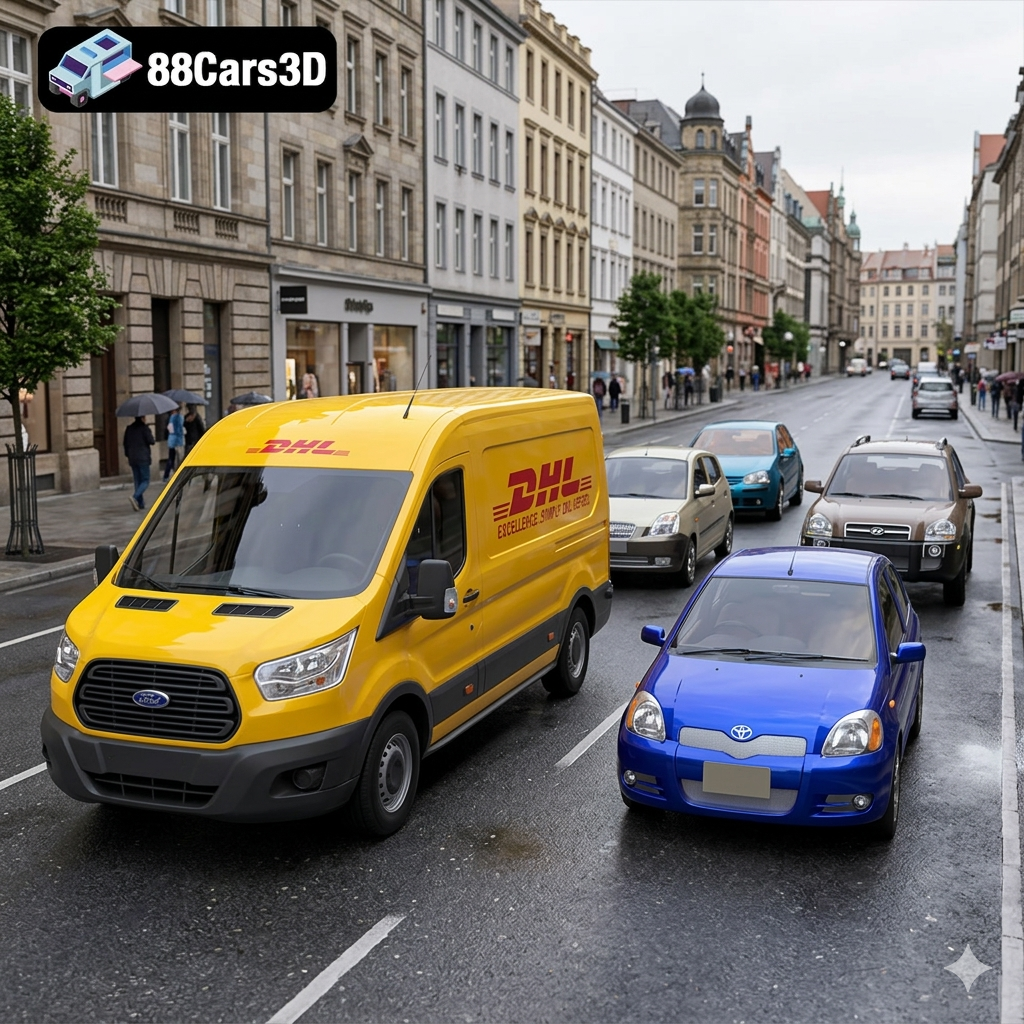
Download the Everyday City Traffic 3D Models Bundle. Includes the VW Golf, Kia Picanto, Hyundai Tucson, Toyota Yaris, and a DHL Ford Transit Van. Save big on this 5-in-1 pack, perfectly optimized for realistic ArchViz streets and game traffic.
Price: $99.99
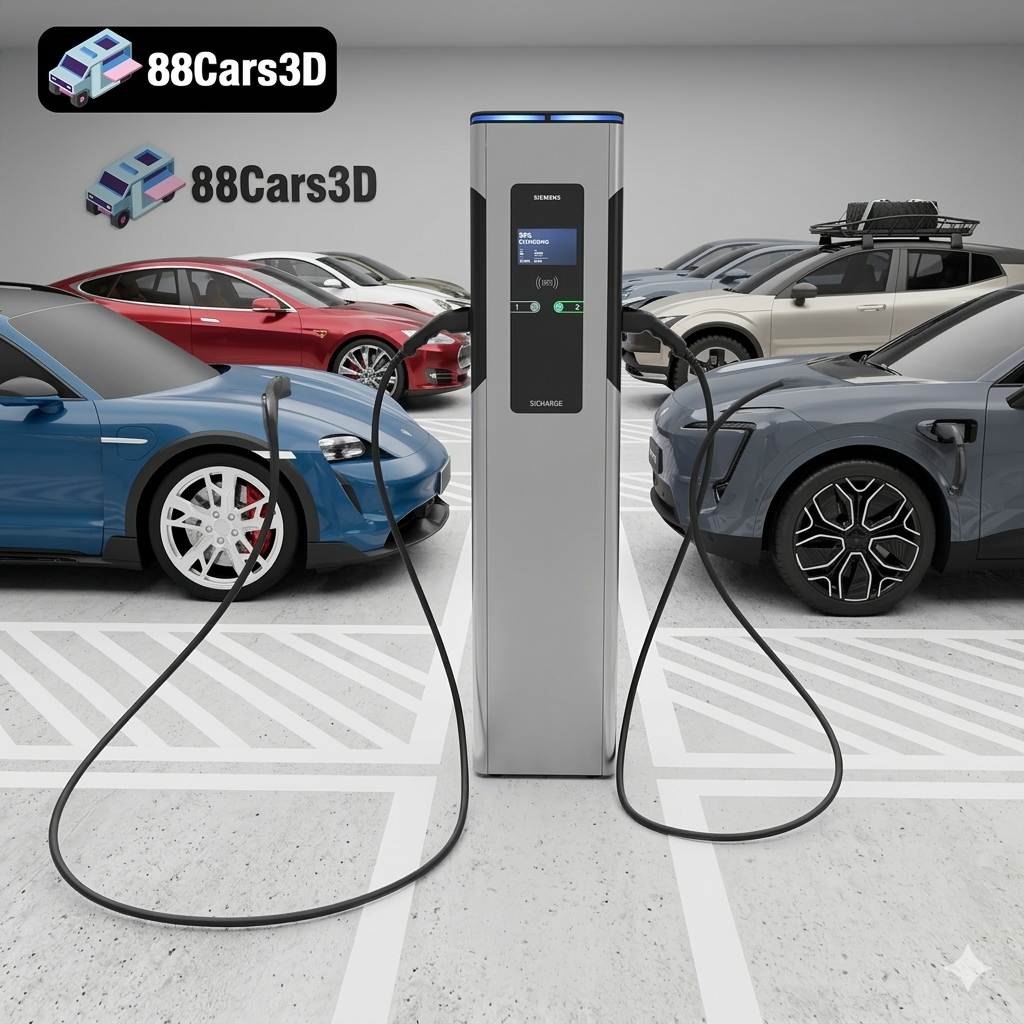
Download the Future of Mobility EV 3D Models Bundle. Includes the Volvo EX30, Tesla Model S, AVATR 11, Porsche Taycan, and a Siemens EV Charger. Save big on this highly optimized 5-in-1 pack for ArchViz and game development!
Price: $89.99

