Get 50% OFF All Premium 3D & STL Models!

“`html
Welcome, 3D printing enthusiasts and automotive modelers! If you’ve ever dreamed of bringing your favorite cars to life in miniature form, or perhaps prototyping a custom car part, then mastering the art of printing intricate automotive components is key. From the detailed tread on a tire to the complex geometry of a wheel rim, these parts present unique challenges and exciting opportunities for 3D printing. This comprehensive guide will equip you with the knowledge and techniques needed to successfully transform STL files of car wheels, tires, and other automotive parts into stunning, high-quality prints. We’ll delve deep into file preparation, slicing strategies, material selection, print settings, and post-processing, ensuring you can achieve professional-grade results, whether you’re printing for display, functional prototyping, or hobbyist collections. Get ready to elevate your 3D printing game and build your dream car, one precisely printed part at a time!
The journey to a successful 3D print begins long before your machine whirs to life; it starts with the STL file. For intricate automotive parts like wheels and tires, the quality of the underlying mesh data is paramount. STL (Stereolithography) files represent a 3D model’s surface geometry as a collection of triangular facets. The resolution of this mesh directly impacts the level of detail and smoothness you can achieve in your final print. A low-resolution STL might result in faceted edges on a smooth tire sidewall or a polygonal wheel rim, detracting from the realism. Conversely, an excessively high-resolution mesh can lead to massive file sizes, making slicing and printing unwieldy.
When downloading printable car models from platforms like 88cars3d.com, look for descriptions that highlight the quality of the mesh. High-quality models are typically designed with clean topology, meaning the triangles are well-formed and oriented correctly, without holes or non-manifold edges. Non-manifold geometry, where edges are shared by more than two triangles or where a vertex is shared by disconnected faces, is a common culprit of printing failures. Slicer software often struggles to interpret and process these errors, leading to corrupted toolpaths or incomplete prints.
Before you even think about slicing, it’s wise to inspect your STL files for potential issues. Software like Meshmixer (free) or Netfabb (paid) are invaluable tools for this. Common repair tasks include filling holes, removing disconnected or stray triangles, and correcting inverted normals (where the triangle’s outward-facing direction is incorrect). For wheels with intricate spokes or tires with deep tread patterns, ensuring that all elements have sufficient wall thickness is crucial. A wall thickness of at least 0.8mm to 1.2mm is generally recommended for FDM printing to ensure structural integrity and prevent parts from breaking during printing or post-processing. Some slicers have built-in mesh repair tools, but manual intervention with dedicated software often yields more reliable results, especially for complex geometries.
While STL is the industry standard for 3D printing, you might encounter other file formats like OBJ or FBX. OBJ files can store color and texture information, which is useful for rendering but less relevant for direct 3D printing unless your slicer can interpret these attributes (some advanced workflows utilize them for multi-material printing). FBX is a proprietary format often used in animation and game development, and while some 3D modeling software can export to it, STL is almost universally supported by slicers. When choosing models, prioritize STL for direct printability. If you receive files in other formats, your first step should be to convert them to STL, ensuring the conversion process preserves mesh integrity.
The slicer is your digital workshop, translating your 3D model into layer-by-layer instructions for your 3D printer. For printing car wheels, tires, and other detailed automotive parts, the slicing parameters you choose are critical. The goal is to balance print quality (detail, smoothness) with print time and structural integrity. This often involves fine-tuning settings that might seem like small adjustments but can have a significant impact on the final outcome. Think of it as tuning an engine – small changes can unlock performance.
When downloading models from marketplaces such as 88cars3d.com, you’ll find they are often optimized for printing. However, understanding how to adjust your slicer settings will allow you to tailor the print to your specific printer, material, and desired level of detail. For instance, printing a highly detailed wheel rim might require a smaller layer height and slower print speed to capture intricate spokes and textures, while a functional prototype of a car chassis might prioritize strength with a slightly larger layer height and robust infill.
The layer height setting determines the thickness of each printed layer. For small, intricate parts like detailed tire treads or delicate wheel spokes, a smaller layer height (e.g., 0.1mm or even 0.08mm for resin printers) is essential to capture fine details and achieve a smoother surface finish. However, reducing layer height significantly increases print time, as the printer must lay down many more layers to complete the model. For larger, less detailed parts, or where print time is a constraint, a larger layer height (e.g., 0.2mm or 0.3mm for FDM) can be used, often with minimal perceptible loss in quality, especially if the part will be post-processed.
Pro Tip: For parts like tire sidewalls with text or logos, experiment with different layer heights. Sometimes, a slightly larger layer height can make the embossed or debossed features stand out more clearly if the printer struggles with very fine details at low layer heights.
Printing too fast can lead to ringing artifacts, poor layer adhesion, and loss of detail, especially on curves and intricate features. For high-detail automotive parts, reducing print speed is often necessary. A general starting point for detailed FDM prints is around 40-60 mm/s for outer walls and 50-70 mm/s for inner walls. Print speed for smaller features like infill can often be higher. Acceleration settings also play a role; lower acceleration values mean the printer changes speed more gradually, reducing vibrations that can cause artifacts. Experiment with reducing both speed and acceleration, particularly for the initial layers and outer perimeters, to achieve a cleaner finish.
Automotive parts often feature significant overhangs (e.g., wheel wells, suspension components) and bridges (e.g., between spokes). Support structures are vital to prevent these features from collapsing during printing. However, poorly generated or difficult-to-remove supports can mar the surface finish of your print, requiring extensive post-processing. Most slicers offer various support types (normal, tree/organic) and parameters like support density, pattern, and Z-distance (the gap between the support and the model). For intricate models, “tree” or “organic” supports (available in Cura and PrusaSlicer) are often preferable as they touch the model only where necessary and are typically easier to remove than traditional linear supports. Adjusting the support interface settings can create a denser, smoother surface directly atop the supports, making removal cleaner.
Workflow for Support Optimization:
The choice of 3D printing technology and material significantly impacts the outcome, especially for detailed car parts. Both FDM (Fused Deposition Modeling) and resin printing (SLA/DLP/MSLA) have their strengths and weaknesses when it comes to automotive models.
FDM Printing: This is the most common and accessible 3D printing technology, using spools of thermoplastic filament. FDM is excellent for larger parts, functional prototypes, and when using a variety of durable materials like PLA, PETG, and ABS. For automotive models, PLA is a good starting point due to its ease of printing and low warping. PETG offers better temperature resistance and durability, making it suitable for parts that might experience some stress or heat. ABS provides the highest temperature resistance and impact strength but can be challenging to print due to warping and requires good ventilation. When printing wheels and tires with FDM, a smaller nozzle size (e.g., 0.2mm or 0.3mm) can help capture finer details like tire tread patterns and thinner wheel spokes. Bed adhesion is critical; ensure your build plate is clean and use adhesion aids like glue stick or specialized sprays if necessary.
Resin printers use UV light to cure liquid photopolymer resin layer by layer. This technology offers significantly higher resolution and smoother surface finishes than FDM, making it ideal for highly detailed car models, intricate emblems, and miniature components where fine details are paramount. Different types of resins are available, including standard resins for general use, tough resins for increased durability, and flexible resins for parts like tires that need some give. However, resin printing involves more post-processing, including washing the prints in isopropyl alcohol (IPA) or specialized cleaners and then post-curing them under UV light to achieve their final strength. Ventilation is crucial due to the fumes emitted by resins, and safety precautions (gloves, eye protection) are mandatory.
When printing tire models on a resin printer, you can achieve incredibly detailed tread patterns. For wheels, the high resolution allows for the capture of even the most delicate spoke designs. The primary considerations are print orientation to minimize visible layer lines on crucial surfaces and ensuring supports are placed strategically to avoid damaging delicate details during removal.
Regardless of the technology, a well-calibrated printer is non-negotiable for quality results. For FDM, this includes calibrating the extruder (E-steps), ensuring the bed is perfectly level, and performing temperature and retraction towers to find optimal settings for your chosen filament. For resin printers, calibration often involves ensuring the build plate is level and performing exposure tests to dial in the correct curing times for your specific resin and printer. Regular maintenance, such as cleaning the nozzle, checking belts and leadscrews on FDM printers, or cleaning the FEP film on resin printers, prevents print failures and ensures consistent performance.
How you orient your model on the build plate and how well it adheres are fundamental to a successful print, especially for automotive parts that can be top-heavy or have delicate features. The orientation choice affects print time, the amount of support material needed, and the surface quality of critical areas.
For FDM printing, consider how the layer lines will appear on the final model. For a wheel, orienting it flat on its back might create visible layer lines on the tire tread, while printing it upright might require extensive supports inside the wheel rim. Often, a slight angle (e.g., 5-15 degrees) can help reduce the need for supports on some features and minimize the visual impact of layer lines on flatter surfaces. Experimentation is key here. For tires, printing them upright often yields the best tread detail, provided sufficient supports are used for the overhangs.
Bed adhesion is the first line of defense against print failure. For FDM, ensuring your build surface is clean (using IPA) and appropriately prepared is vital. Options include printing directly on glass, PEI sheets, or using adhesion aids like glue stick, hairspray, or specialized adhesion promoters. Sometimes, adding a brim or raft in your slicer can significantly improve adhesion for parts with a small contact area or those prone to warping, such as ABS. A brim is a single layer of material printed around the base of your object, increasing the surface area in contact with the build plate. A raft is a thicker base printed underneath your object, providing a stable platform.
Warping, the lifting of corners or edges of a print from the build plate, is a common issue, especially with materials like ABS. It occurs due to uneven cooling and thermal contraction. To combat warping on car parts:
For resin printing, ensuring the build plate is perfectly level and clean is paramount. Insufficient exposure time can lead to prints detaching from the build plate during the print, while over-exposure can make supports difficult to remove. Using the “exposure calibration” features available in many slicer programs is crucial for dialing in the perfect settings.
Once your print is complete, the work isn’t over. Post-processing is essential for achieving a professional finish, especially for collectible models or functional parts. The steps involved will vary depending on the printing technology and the desired outcome.
For FDM prints, the primary post-processing steps often involve support removal and surface smoothing. Carefully remove supports using pliers, hobby knives, or specialized tools. Be patient to avoid damaging the model. For visible layer lines, sanding is the most common method. Start with a coarser grit sandpaper (e.g., 120-220 grit) and progressively move to finer grits (e.g., 400, 800, 1000+ grit) for a smooth finish. Filler primers or specialized smoothing compounds can further fill layer lines before painting. For ABS prints, acetone vapor smoothing can create an incredibly smooth, glossy finish, but it requires caution and proper ventilation.
Achieving a smooth surface on 3D printed car parts often requires a multi-step sanding process. For detailed areas like wheel rims or intricate body panels, using files, small sanding sticks, or even Dremel tools with sanding attachments can be helpful. After sanding, applying a filler primer (available in spray cans) is highly recommended. This helps to fill any remaining microscopic imperfections and provides a uniform surface for subsequent painting. Multiple light coats are better than one heavy coat. Sand lightly between primer coats with fine-grit sandpaper (e.g., 400-600 grit) to reveal imperfections that still need attention.
Painting can be done with acrylic paints (brush-on or airbrush), spray paints, or lacquers. For automotive models, metallic paints for wheels and body panels, gloss blacks for tires, and specific colors for calipers or accents can bring your prints to life. Remember to use appropriate primers for the paint type you are using and apply thin, even coats. Clear coats can add protection and a desired sheen (matte, satin, or gloss).
Many car models, especially those from sources like 88cars3d.com, are designed to be printed in multiple parts for easier printing and better detail (e.g., separate bodies, chassis, wheels, and tires). Assembly will require adhesives. Cyanoacrylate (super glue) is excellent for most plastics, while 3D pen adhesive or specific plastic cements might be needed for certain materials or larger joints. For resin prints, UV-activated adhesives or CA glue are commonly used. Ensure you have a clean workspace and consider using clamps or jigs to hold parts together while the adhesive cures. Don’t forget small details like adding decals or even tiny LEDs for headlights to further enhance the realism of your finished model.
As you gain experience, you’ll want to explore more advanced techniques to push the boundaries of your 3D prints. This might involve multi-material printing (if your printer supports it) to achieve different colors or material properties in a single print, or exploring techniques like creating flexible tires directly from flexible filaments. Understanding common failures and how to prevent or fix them is also part of becoming a proficient 3D printer.
Common Failures and Solutions:
Beyond basic mesh repair, software like Blender or Fusion 360 can be used to modify existing STL files. You could, for instance, split a complex wheel model into separate rim and tire sections for easier printing with different materials or colors. You might also want to thicken thin spokes, add mounting points for assembly, or even design custom modifications for your favorite car models. Learning basic 3D modeling principles can unlock a new level of customization for your 3D printed automotive projects.
For resin printing, specialized slicing software often offers more advanced support generation options and curing controls that can be crucial for intricate models. Understanding how supports interact with the resin and the build plate is a key skill to develop for reliable resin printing.
The 3D printing world thrives on experimentation. Don’t be afraid to try different print settings, materials, and techniques. Keep a log of your settings and results to learn what works best for your printer and the types of models you print. Online communities, forums, and social media groups dedicated to 3D printing and automotive modeling are invaluable resources. You can find troubleshooting advice, share your successes, and discover new techniques from fellow makers.
Key Takeaways for Success:
Printing intricate 3D models of car wheels, tires, and other automotive parts is a rewarding endeavor that bridges the gap between digital design and tangible reality. By understanding the nuances of STL file integrity, mastering your slicing software, carefully selecting your printing technology and materials, and dedicating time to post-processing, you can achieve breathtaking results. Whether you’re building a scale replica of a classic car, prototyping a custom aerodynamic component, or simply expanding your collection of printable car models from great sources like 88cars3d.com, the principles outlined in this guide will serve as your roadmap to success. Remember that practice, patience, and a willingness to experiment are your greatest allies in this exciting field. So, download that perfect STL file, dial in your settings, and start bringing your automotive dreams into the physical world, layer by precise layer!
“`

Texture: Yes | Material: Yes | 3D Printable: Yes. Download the Italian Thoroughbreds Bundle featuring 5 iconic 3D models: Lamborghini Huracán Performante, Ferrari 458 Italia, Lamborghini Urus, Diablo SV, and Maserati GT. Optimized for 4K rendering and 3D printing (STL included). Save 50% with this ultimate Italian vehicle collection.
Price: $199.99

Download the Elite Future Mobility Bundle featuring 4 highly optimized 3D models: Tesla Model S, Avatr 11, Li L9, and Zoox Robotaxi. Perfect for ArchViz, Smart City renders, and game dev. Optimized for Unreal Engine and Blender. Includes .fbx, .obj, and .max formats.
Price: $99

🚗 5 Iconic German Cars (BMW M4 G82, M5 CS, X3, 1 Series & Mercedes E-Class). ✅ Optimized for ArchViz: Ready for Corona & V-Ray. 💰 Save €71 with this limited-time collection! 🚀 Instant Download after purchase.
Price: $119

Download the Extreme Off-Road & Survival 3D Models Bundle! Includes the Brabus 800 Adventure, Dodge Ram Bigfoot, Spec Truck, and a Caravan. Save over €210 on this premium 4-in-1 off-grid vehicle pack for ArchViz and game development.
Price: $149.99

Download the Heavy Duty & Commercial Logistics 3D Models Bundle! Includes the Ford Sterling, Caterpillar CT680, Mercedes Citaro Bus, and Vito Van. Save over €130 on this massive, game-ready 4-in-1 industrial vehicle pack.
Price: $109.99

Download the Ultimate Custom Motorcycles 3D Models Bundle. Includes a Custom Chopper, Ducati 916 Café Fighter, Harley XR1200X, and BMW K100. Perfect premium props for luxury ArchViz garages. Save over €250 today!
Price: $159.99

Download the ultimate JDM Street Racing 3D Models Bundle! Includes the Nissan GT-R, Toyota Supra, Mazda RX-7, Lancer Evo IX, and Honda NSX. Save big on this highly optimized, game-ready 5-in-1 Japanese legend car pack.
Price: $129.99

Download the ultimate American Muscle & Cinematic Classics 3D Models Bundle! Includes the Dodge Charger ’68, Mustang Eleanor GT500, Camaro Z28 ’79, and a custom ’69 Mustang. Save over €240 on this game-ready, premium 4-in-1 pack.
Price: $149.99

Download the Everyday City Traffic 3D Models Bundle. Includes the VW Golf, Kia Picanto, Hyundai Tucson, Toyota Yaris, and a DHL Ford Transit Van. Save big on this 5-in-1 pack, perfectly optimized for realistic ArchViz streets and game traffic.
Price: $99.99
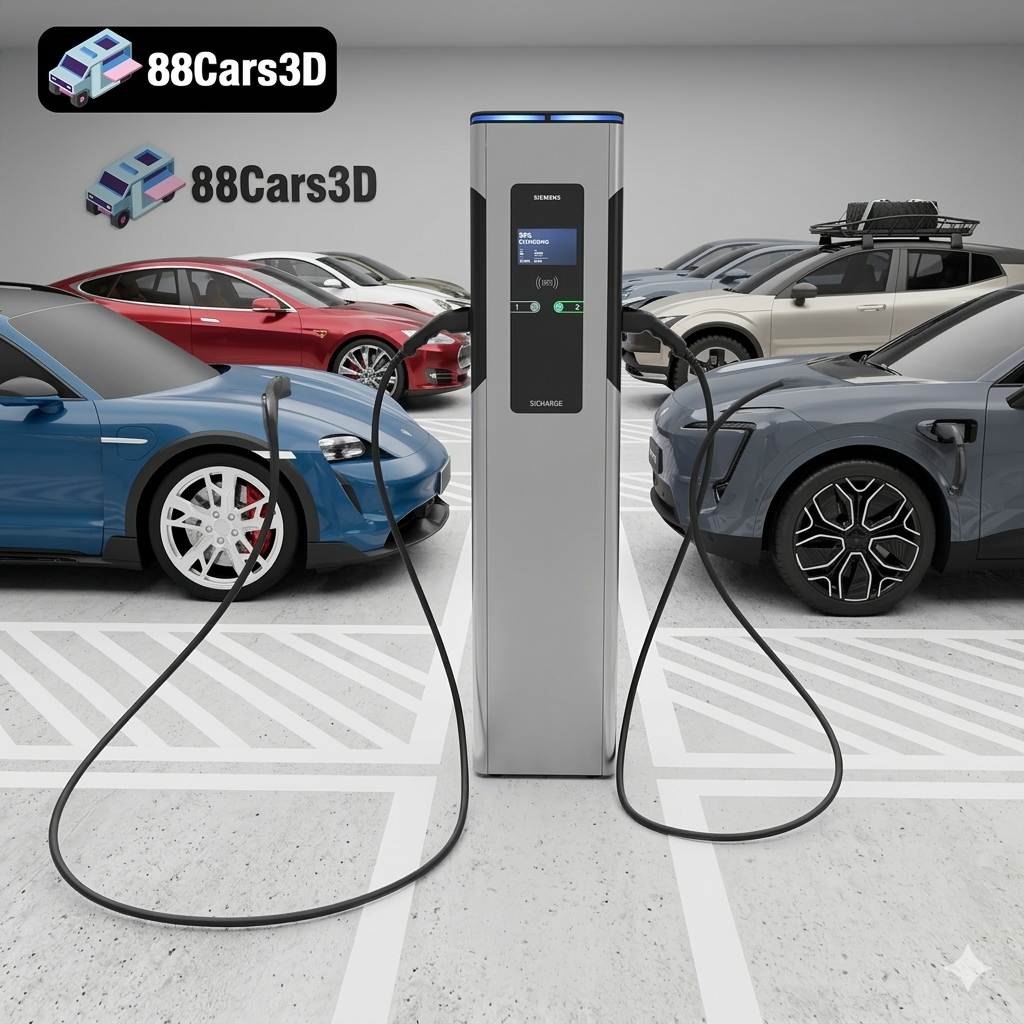
Download the Future of Mobility EV 3D Models Bundle. Includes the Volvo EX30, Tesla Model S, AVATR 11, Porsche Taycan, and a Siemens EV Charger. Save big on this highly optimized 5-in-1 pack for ArchViz and game development!
Price: $89.99

