Get 50% OFF All Premium 3D & STL Models!

In the dynamic world of real-time rendering, game development, and high-fidelity automotive visualization, the demand for rich, detailed, and expansive environments is ever-growing. Manually placing every tree, rock, or building across vast landscapes can be a monumental and time-consuming task, often leading to artistic burnout and project delays. This is where Procedural Content Generation (PCG) in Unreal Engine steps in as a game-changer. PCG empowers artists and developers to create intricate, believable, and varied worlds with unparalleled efficiency, transforming static scenes into living, breathing backdrops for your stunning 3D car models. Imagine rapidly prototyping diverse environments for a new vehicle launch, populating an open-world racing game, or building detailed urban scenes for architectural visualization – all with intelligent, rule-based systems.
This comprehensive guide will delve deep into the technical intricacies of Unreal Engine’s PCG framework. We’ll explore how to harness its power to craft sophisticated environments that not only look incredible but also perform optimally in real-time. From initial project setup and core graph operations to advanced techniques, optimization strategies, and real-world applications in automotive visualization and interactive experiences, you’ll gain the knowledge to revolutionize your content creation pipeline. Prepare to unlock a new level of efficiency and creativity, ensuring your meticulously crafted 3D car models, perhaps sourced from 88cars3d.com, always have the perfect stage.
Procedural Content Generation (PCG) refers to the algorithmic creation of data, such as textures, 3D models, terrains, or entire game levels, rather than manual design. In Unreal Engine, the PCG Framework provides a powerful, node-based system to achieve this. It allows you to define rules and conditions for generating, distributing, and manipulating assets within your scene, enabling the rapid construction of complex environments. For automotive visualization, this means being able to instantly generate a diverse array of settings – from serene natural landscapes and bustling cityscapes to controlled studio environments – ensuring your 3D car models are always showcased in a compelling context.
The core philosophy behind PCG is to replace repetitive manual tasks with intelligent automation. Instead of dragging and dropping hundreds of trees or rocks, you define parameters: “place trees on slopes less than 30 degrees,” or “distribute streetlights every 50 meters along this spline.” The engine then executes these rules, producing a coherent and dynamic scene. This not only dramatically accelerates the content creation process but also fosters artistic iteration. You can tweak parameters in real-time, instantly seeing the impact on your environment, and experiment with different aesthetic outcomes without significant rework. This iterative power is invaluable when striving for perfection in real-time rendering projects.
At the heart of the Unreal Engine PCG Framework lies a visual, node-based graph editor, similar to Blueprint or Material Editor. This graph is where you construct your procedural logic, connecting various nodes that perform specific functions. These functions range from generating initial points, sampling terrain height, filtering points based on specific criteria, and transforming assets, to finally spawning static meshes, foliage, or even other PCG graphs. Understanding the flow of data through these nodes – typically starting with input points and ending with output instances – is fundamental to mastering PCG.
PCG graphs operate on a concept of “points,” which are essentially data structures containing location, rotation, scale, and various custom attributes. Nodes manipulate these points in sequence. For instance, a “Generate Surface Points” node might create a grid of points on a terrain. Subsequent nodes could then “Filter Points” to remove those on water, “Transform Points” to randomize their rotation, and finally, “Static Mesh Spawner” to place actual meshes at the remaining point locations. This modular approach allows for complex logic to be broken down into manageable, reusable components. For more in-depth technical details on specific nodes and their functionalities, consult the official Unreal Engine documentation on PCG at dev.epicgames.com/community/unreal-engine/learning.
For automotive visualization, PCG offers unparalleled advantages. Imagine needing to present a new car model in five different environments: a forest, a desert, an urban setting, a mountain pass, and a coastal road. With PCG, you can design reusable graph modules for each environment type and quickly apply them, generating diverse backdrops on demand. This speed allows artists to focus on the fine details of the car model itself, knowing the environment can be rapidly iterated and optimized.
These benefits translate directly into faster development cycles, higher quality output, and greater creative flexibility, making PCG an indispensable tool for anyone working with high-quality assets like those found on marketplaces like 88cars3d.com.
Before diving into the intricacies of procedural generation, proper project setup and understanding the foundational elements of PCG graphs are crucial. This initial configuration ensures that your workflow is streamlined and your PCG systems integrate seamlessly with your existing Unreal Engine project, especially when working with high-fidelity 3D car models and complex environments. Getting these steps right lays the groundwork for efficient and scalable procedural content creation.
The PCG Framework is available as a plugin in Unreal Engine 5. To get started, navigate to Edit > Plugins, search for “PCG,” and enable the “PCG” plugin. Restart the editor when prompted. Once enabled, you can create new PCG graphs. Right-click in your Content Browser, select Miscellaneous > PCG Graph, and give it a descriptive name like “PCG_ForestEnvironment.”
PCG graphs don’t exist in isolation; they need a context to operate within. You can add a PCG Volume to your scene, which acts as a bounding box defining the area where your graph will generate content. Alternatively, you can directly place a PCG Graph component onto an Actor (e.g., a landscape Actor or an empty Blueprint Actor). This approach provides more control and allows for dynamic manipulation via Blueprint. For most environmental generation, using a PCG Volume or attaching the component to the landscape is a common starting point, as it provides an intuitive spatial boundary for your procedural operations.
A PCG graph typically begins with an input and ends with an output. The most common input is the “Self” node, which represents the context of the PCG component or volume itself (e.g., the landscape it’s attached to). This “Self” input provides initial points, typically based on the bounds or surface of the associated Actor.
The first step in many PCG graphs is to generate a set of points. Key nodes for this include:
Once points are generated, they become the foundation for all subsequent operations. Think of these initial points as potential locations for your assets. The goal is to refine and modify these points until they perfectly represent where you want your various environment elements to appear around your 88cars3d.com vehicle models.
While PCG focuses on generating environments, the ultimate goal for automotive visualization is to showcase 3D car models. Ensure your car models are imported and set up correctly in your Unreal Engine project first. For example, high-quality 3D car models from platforms like 88cars3d.com often come optimized with clean topology, realistic PBR materials, and proper UV mapping. Before using them, confirm they are ready for real-time rendering, potentially leveraging Nanite for extreme detail if they are hero assets for close-up shots.
Similarly, for the PCG-generated environments, you’ll need a library of static meshes to populate your scenes. These “game assets” can include:
These assets should also be prepared for real-time rendering, ideally with appropriate LODs, Nanite support where beneficial, and optimized PBR materials. The efficiency of your PCG graph depends not just on its logic, but also on the performance characteristics of the assets it spawns.
The true power of PCG lies in its ability to manipulate the “points” generated in the initial stages. These points carry all the data necessary to place assets intelligently within your scene. By combining various operators for filtering, transforming, and blending, you can create incredibly intricate and realistic environmental distributions. Understanding these core operations is vital for crafting environments that visually complement your high-quality 3D car models.
After generating an initial set of points, the next critical step is to refine their distribution. Filtering nodes allow you to remove points based on specific criteria, creating natural-looking gaps and clusters. Common filtering operations include:
Density control is paramount for performance and realism. Nodes like “Density Noise” can introduce organic variations, creating areas of high and low density, which is far more natural than a uniform distribution. You can layer multiple noise functions and filters to sculpt very specific distributions, ensuring your environments feel handcrafted rather than procedurally generated.
Each point in a PCG graph isn’t just a location; it’s a data container that can hold various attributes. These attributes can be anything from a specific scale, rotation, color, or even a custom identifier. “Attribute Forcing” nodes allow you to add, modify, or transfer these attributes to points, significantly expanding your control over spawned assets.
For example, you might:
This data manipulation is incredibly powerful. By combining filters with attribute forcing, you can create rules like: “On grass layers, spawn Tree_A with a random scale between 0.8 and 1.2, and on dirt layers, spawn Rock_C with a random rotation and a darker tint.” This level of granular control ensures your PCG environments are rich in detail and variation, providing perfect contexts for your 88cars3d.com car assets.
Rarely will a single PCG graph create an entire complex environment. The true strength of the framework lies in its ability to blend multiple graphs, allowing for a layered approach to content generation. You can have separate graphs for:
Each graph can operate independently, but their combined effect creates a cohesive scene. “Merge” and “Difference” nodes are critical here. A “Difference” node, for instance, can remove points from one graph that overlap with points from another, ensuring trees don’t spawn inside buildings. You can also use “Bounds” nodes from one graph to influence filters in another, creating natural transitions and exclusion zones.
Furthermore, PCG graphs can call other PCG graphs using the “PCG Graph” node, allowing for hierarchical generation. Imagine a “Forest” graph that then calls a “Undergrowth” graph at each tree’s base, or an “Urban Block” graph that calls a “Building Placement” graph. This modularity makes large-scale environment creation manageable, highly organized, and incredibly efficient, which is crucial for delivering stunning automotive visualization projects on time.
With a solid understanding of PCG operations, we can now focus on applying these techniques to create compelling and dynamic environments specifically tailored for automotive visualization and real-time rendering. The goal is to build scenes that not only look fantastic but also provide diverse and believable backdrops for your 3D car models, enhancing their presentation in configurators, cinematics, or interactive demos.
The real magic of PCG shines in intelligently distributing a wide array of assets. Instead of scattering props uniformly, PCG enables contextual placement based on environmental cues. For automotive scenes, this means:
By leveraging nodes like “Get Spline Data” and “Sample Landscape,” you can feed environmental context directly into your PCG graph. Then, using “Static Mesh Spawner” or “Foliage Spawner” nodes, you can assign different asset collections (e.g., a “City_Props” collection, “Forest_Trees” collection) to points that meet specific criteria. This ensures assets are placed logically, contributing to a believable and immersive scene for your automotive presentations.
Roads are often central to automotive visualization. PCG can streamline their creation and integration. While splines are typically used for road paths, PCG can:
Beyond roads, PCG can also be used for broader terrain modifications. For instance, generating erosion patterns, creating riverbeds, or carving out specific features like quarry pits. The “Landscape Edit” nodes within PCG graphs provide capabilities for adding or subtracting height, painting layers, and even applying noise, all driven by your procedural logic. This level of control allows for incredibly detailed and varied terrain generation, essential for realistic outdoor shots of high-fidelity 3D car models.
Realism in environments often comes from subtle variations rather than perfect uniformity. PCG excels at introducing this natural diversity:
By intelligently varying scale, rotation, and material properties, PCG helps achieve that coveted “hand-placed” look without the manual effort. This attention to subtle detail is crucial for making automotive visualization scenes believable and immersive, drawing the viewer’s focus to the car model itself while providing a rich, supportive environment.
While the core PCG graph nodes offer extensive functionality, the true power of the framework can be unleashed by integrating it with Unreal Engine’s Blueprint visual scripting system and developing custom logic. This allows for dynamic, interactive, and highly tailored procedural content, expanding PCG beyond static environment generation into interactive experiences and game mechanics relevant to automotive demonstrators.
The PCG Framework allows developers to extend its capabilities by creating custom PCG nodes using Blueprint. This is incredibly powerful when you need specialized logic that isn’t covered by the default nodes or when you want to encapsulate complex operations into a single, reusable node. For example, you might create a custom node to:
To create a custom Blueprint PCG node, you’ll inherit from PCGBlueprintGeneratedData or a similar class, overriding specific functions to define its input/output types and its execution logic. This level of customization ensures that PCG can adapt to virtually any procedural content challenge you encounter, making it a flexible tool for various automotive visualization scenarios.
Most PCG graphs are evaluated in the editor, producing static meshes or foliage instances. However, PCG also supports runtime generation and dynamic updates, opening up possibilities for interactive environments and responsive game worlds. By marking a PCG component as “Generates at Runtime,” its graph will execute when the game starts or when triggered by game logic.
This is particularly useful for:
For automotive configurators, imagine a toggle that instantly changes the car’s environment from a sunny desert to a rainy city, with PCG dynamically adjusting ground details, vegetation, and weather effects. Performance considerations are crucial for runtime generation, as the graph needs to execute efficiently within game loops. Leveraging techniques like asynchronous generation and smart caching is essential here.
Integrating PCG with Blueprint extends beyond custom nodes; you can use Blueprint to drive and interact with PCG graphs and components. For example:
This powerful synergy between PCG and Blueprint allows for highly interactive and responsive procedural content, moving beyond static scene generation into truly dynamic and user-driven experiences, which is paramount for modern real-time rendering applications and advanced automotive visualization.
While PCG offers incredible power for generating complex environments, maintaining optimal performance is critical, especially for real-time rendering, virtual production, and interactive automotive applications. Unoptimized procedural content can quickly lead to high draw calls, excessive memory usage, and ultimately, poor frame rates. This section focuses on best practices and technical strategies to ensure your PCG-generated scenes run smoothly, even with high-fidelity assets like those from 88cars3d.com.
Nanite, Unreal Engine’s virtualized geometry system, is a game-changer for PCG. It allows you to use extremely high-polygon meshes (millions of triangles) for your environmental assets without a significant performance hit. This means you can use highly detailed trees, rocks, and architectural elements within your PCG graphs, pushing visual fidelity to new heights.
When preparing assets for PCG with Nanite:
PCG naturally complements Nanite by enabling the widespread distribution of these high-fidelity assets. A PCG graph can place thousands of Nanite-enabled trees across a vast landscape, achieving stunning visual density without the crippling performance costs of traditional LODs for distant geometry. This combination allows for unprecedented detail in your automotive visualization backdrops.
Despite Nanite’s capabilities, traditional Level of Detail (LOD) and culling remain crucial for non-Nanite assets (like foliage or decals) and for overall scene optimization. PCG offers mechanisms to manage these efficiently:
Aggressive culling of small, non-essential details at a distance is a key strategy for maintaining high frame rates. Balancing visual fidelity with culling is an art, but PCG provides the tools to automate this optimization.
For ultimate performance and flexibility, especially in final production environments or for specific platforms like AR/VR, it’s often beneficial to “bake out” your PCG-generated content into static meshes or Instanced Static Meshes (ISM). This converts the dynamic, procedural generation into static, optimized geometry that Unreal Engine can render very efficiently.
By judiciously applying Nanite, managing LODs and culling, and strategically baking out PCG content, you can create breathtakingly detailed and expansive environments that run flawlessly in real-time, providing the perfect stage for the high-quality 3D car models crucial for your automotive visualization projects.
The applications of PCG extend far beyond static environment generation. Its ability to create and manipulate complex scenes rapidly makes it an invaluable tool for various production workflows, from crafting cinematic sequences to building dynamic, interactive experiences. For automotive visualization, PCG can dramatically enhance virtual production pipelines, configurators, and even AR/VR demonstrations, ensuring your 3D car models are presented in the most engaging ways possible.
Unreal Engine’s Sequencer is a powerful non-linear editor for creating cinematic experiences. PCG can be integrated seamlessly into this workflow to build dynamic set pieces and evolving environments for your automotive films and trailers. Imagine:
The combination of PCG’s rapid environment generation and Sequencer’s precise timing and animation capabilities allows virtual production teams to iterate on cinematic shots with unprecedented speed and artistic control, essential for high-impact automotive advertising and presentations.
AR/VR experiences for automotive visualization demand highly optimized environments. Every frame counts, and draw calls must be minimized. PCG offers several advantages for creating performant AR/VR scenes:
By carefully designing your PCG graphs with AR/VR constraints in mind, you can deliver immersive, high-quality automotive demonstrations without compromising on performance, ensuring your 3D car models look stunning even on resource-constrained devices.
Modern automotive configurators go beyond simple color and trim changes; they often allow users to explore the vehicle in various environments. PCG is an ideal tool for creating these dynamic scenarios:
The ability to procedurally generate and modify environments in real-time makes PCG an indispensable asset for creating highly interactive and visually rich automotive configurators and driving experiences, pushing the boundaries of what’s possible in real-time rendering and interactive product visualization.
The Procedural Content Generation (PCG) Framework in Unreal Engine represents a paradigm shift in how we approach environment creation for real-time rendering, game development, and especially high-fidelity automotive visualization. By enabling artists and developers to define rules and algorithms for asset distribution and scene construction, PCG empowers teams to craft vast, detailed, and believable worlds with unprecedented speed and efficiency. Gone are the days of manually placing every environmental element; with PCG, you define the logic, and the engine builds the world.
We’ve traversed the journey from understanding the foundational concepts of PCG and setting up your initial graphs to mastering advanced operations like point filtering and attribute manipulation. We then explored its direct application in populating dynamic automotive scenes, complete with context-aware asset distribution and terrain modification. Crucially, we delved into the powerful synergy of PCG with Blueprint for creating custom logic, dynamic runtime generation, and interactive experiences, alongside essential optimization strategies leveraging Nanite, LODs, and baking to ensure peak performance for any platform.
Embracing PCG means unlocking a new level of creative freedom and production efficiency. It allows you to rapidly prototype, iterate, and refine environments, ensuring that your meticulously crafted 3D car models, perhaps sourced from 88cars3d.com, always reside within a stunning and performance-optimized backdrop. Whether you’re aiming for breathtaking cinematics, engaging interactive configurators, or immersive AR/VR demonstrations, the PCG Framework is an indispensable tool in your Unreal Engine arsenal. Start experimenting with PCG today, and transform the way you build worlds for your automotive masterpieces.

Texture: Yes | Material: Yes | 3D Printable: Yes. Download the Italian Thoroughbreds Bundle featuring 5 iconic 3D models: Lamborghini Huracán Performante, Ferrari 458 Italia, Lamborghini Urus, Diablo SV, and Maserati GT. Optimized for 4K rendering and 3D printing (STL included). Save 50% with this ultimate Italian vehicle collection.
Price: $199.99

Download the Elite Future Mobility Bundle featuring 4 highly optimized 3D models: Tesla Model S, Avatr 11, Li L9, and Zoox Robotaxi. Perfect for ArchViz, Smart City renders, and game dev. Optimized for Unreal Engine and Blender. Includes .fbx, .obj, and .max formats.
Price: $99

🚗 5 Iconic German Cars (BMW M4 G82, M5 CS, X3, 1 Series & Mercedes E-Class). ✅ Optimized for ArchViz: Ready for Corona & V-Ray. 💰 Save €71 with this limited-time collection! 🚀 Instant Download after purchase.
Price: $119

Download the Extreme Off-Road & Survival 3D Models Bundle! Includes the Brabus 800 Adventure, Dodge Ram Bigfoot, Spec Truck, and a Caravan. Save over €210 on this premium 4-in-1 off-grid vehicle pack for ArchViz and game development.
Price: $149.99

Download the Heavy Duty & Commercial Logistics 3D Models Bundle! Includes the Ford Sterling, Caterpillar CT680, Mercedes Citaro Bus, and Vito Van. Save over €130 on this massive, game-ready 4-in-1 industrial vehicle pack.
Price: $109.99

Download the Ultimate Custom Motorcycles 3D Models Bundle. Includes a Custom Chopper, Ducati 916 Café Fighter, Harley XR1200X, and BMW K100. Perfect premium props for luxury ArchViz garages. Save over €250 today!
Price: $159.99

Download the ultimate JDM Street Racing 3D Models Bundle! Includes the Nissan GT-R, Toyota Supra, Mazda RX-7, Lancer Evo IX, and Honda NSX. Save big on this highly optimized, game-ready 5-in-1 Japanese legend car pack.
Price: $129.99

Download the ultimate American Muscle & Cinematic Classics 3D Models Bundle! Includes the Dodge Charger ’68, Mustang Eleanor GT500, Camaro Z28 ’79, and a custom ’69 Mustang. Save over €240 on this game-ready, premium 4-in-1 pack.
Price: $149.99
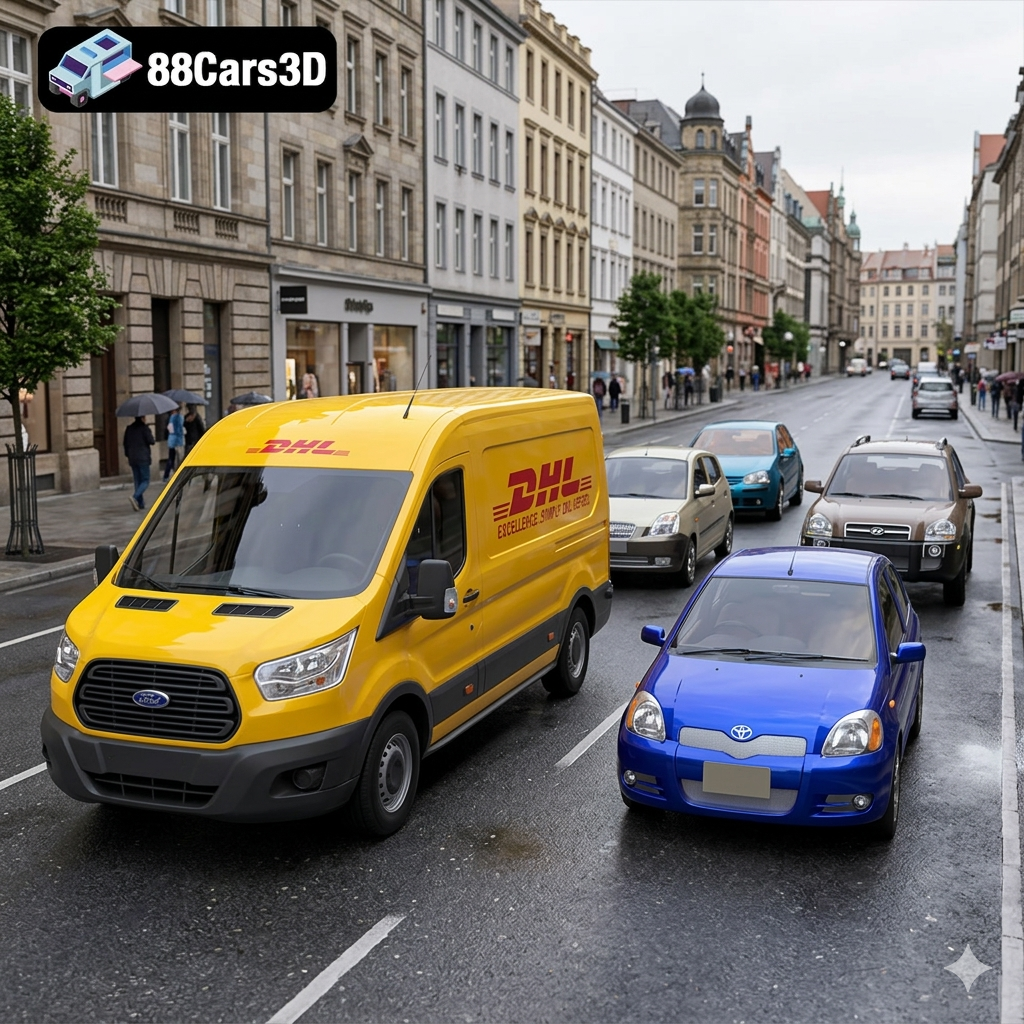
Download the Everyday City Traffic 3D Models Bundle. Includes the VW Golf, Kia Picanto, Hyundai Tucson, Toyota Yaris, and a DHL Ford Transit Van. Save big on this 5-in-1 pack, perfectly optimized for realistic ArchViz streets and game traffic.
Price: $99.99
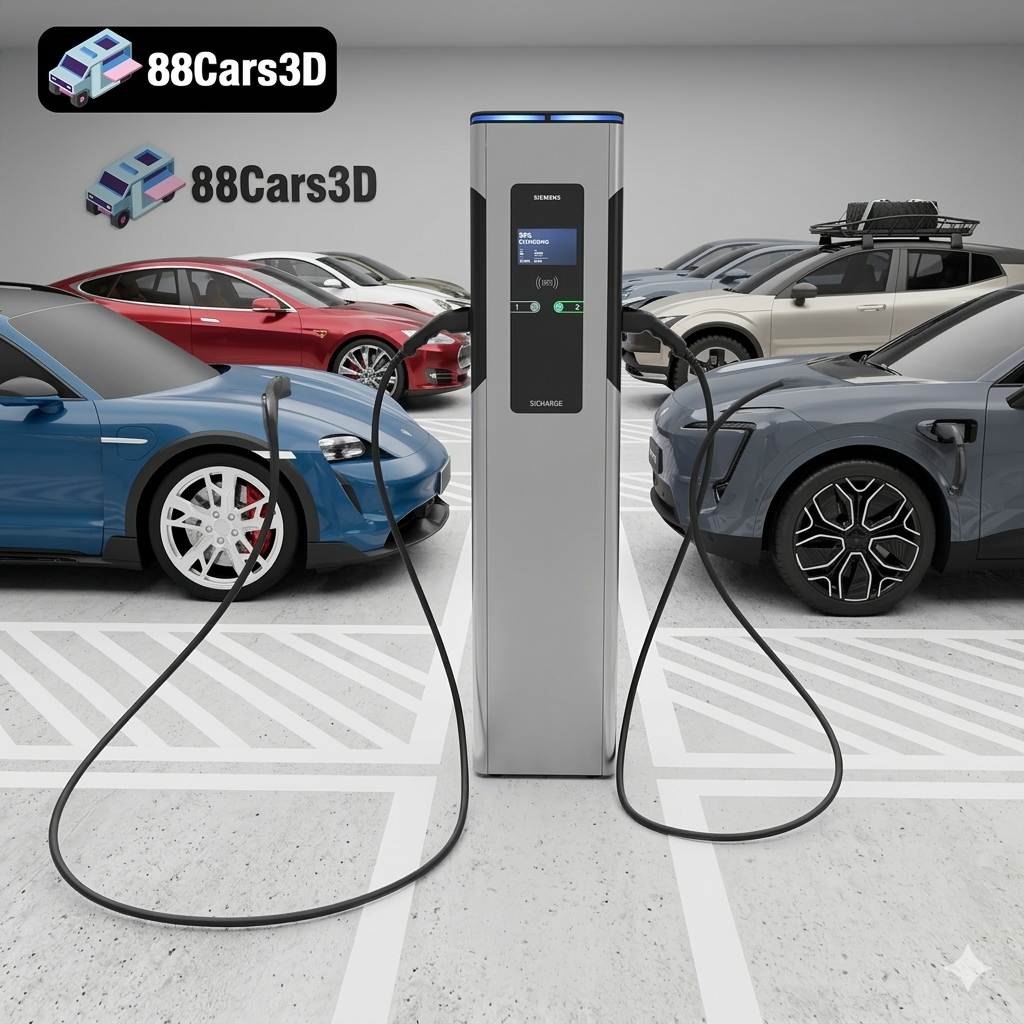
Download the Future of Mobility EV 3D Models Bundle. Includes the Volvo EX30, Tesla Model S, AVATR 11, Porsche Taycan, and a Siemens EV Charger. Save big on this highly optimized 5-in-1 pack for ArchViz and game development!
Price: $89.99

