Get 50% OFF All Premium 3D & STL Models!

In the vibrant world of 3D visualization and digital creation, the demand for high-quality, meticulously crafted assets continues to grow. Whether you’re an architect populating an urban street scene, a game developer building an immersive open-world environment, or a product designer creating compelling marketing visuals, the authenticity of your assets is paramount. This is especially true for vehicles, which often serve as focal points or essential background elements in a wide array of projects. Today, we’re diving deep into an exceptional offering that perfectly encapsulates this blend of technical precision and aesthetic realism: the Velik Bicycle 3D Model.
Far beyond a simple prop, the Velik Bicycle 3D Model is a testament to detailed digital craftsmanship. It’s designed not just to look good, but to perform flawlessly across diverse technical pipelines, from photo-realistic renders to real-time game engines and even physical 3D prints. Its intricate mechanical details, accurate proportions, and clean topology make it a versatile cornerstone for any digital library. Developed with versatility in mind, this model from 88cars3d.com is poised to elevate your projects, providing a robust foundation for everything from a serene park environment to dynamic cycling simulations.
The journey of a 3D model, from creation to final deployment, often involves navigating a landscape of diverse file formats. Each format is engineered with specific strengths, catering to different stages of the production pipeline and various end-use cases. Understanding these formats is crucial for maximizing workflow efficiency and ensuring compatibility. The Velik Bicycle 3D Model is exemplary in its broad format support, offering files tailored for virtually any professional scenario.
The .blend file format is Blender’s native project file. It’s more than just a model; it’s a complete scene, encapsulating meshes, materials, textures, lighting, cameras, animation data, and even the viewport settings used during its creation. For users deeply embedded in the Blender ecosystem, a .blend file offers unparalleled flexibility. It allows for full editability, from modifying the mesh topology and UVs to adjusting shader networks, physics simulations, and animation timelines. This makes it ideal for artists who wish to customize the Velik Bicycle extensively, perhaps changing its frame geometry, adding new accessories, or integrating it into complex Blender-specific rigging and animation setups.
Autodesk’s .fbx (Filmbox) format is arguably the most prevalent interchange format in the 3D industry, particularly for real-time applications. It excels at transferring 3D model data, including geometry, materials (with basic properties), textures, bone animations, and blend shapes, between different 3D software and game engines like Unreal Engine and Unity. For the Velik Bicycle, an .fbx export ensures that its clean topology, proper pivot setups for wheel rotation and pedal animation, and applied materials translate seamlessly into your chosen engine, making it a truly game-ready asset. Its robust support for skeletal animations also means that any future rigging of a rider would integrate smoothly.
The .obj (Wavefront Object) format is a classic and highly universal standard primarily for transferring geometric data. It’s a plain-text format that describes 3D geometry using vertices, vertex normals, texture coordinates, and faces. While it can reference external .mtl (material) files for basic material properties and textures, it doesn’t store advanced shader networks, animation, or scene hierarchy. The .obj format for the Velik Bicycle is perfect for cross-software compatibility, serving as a reliable backbone for importing the model into almost any 3D application for rendering or further processing where detailed scene information isn’t immediately necessary.
.glb (GL Transmission Format Binary) is the binary version of glTF, a royalty-free specification for the efficient transmission and loading of 3D scenes and models by applications. It’s designed to be a compact, self-contained format that embeds all necessary assets (models, textures, animations) into a single file. This makes .glb an excellent choice for web-based 3D viewers, augmented reality (AR), and virtual reality (VR) applications, where fast loading times and single-file distribution are paramount. The Velik Bicycle in .glb format would be perfect for interactive cycling demonstrations in a browser, virtual showroom displays, or integrating into AR apps for realistic product placement.
The .stl (STereoLithography) format is the de facto standard for 3D printing. It represents a 3D object as a series of connected triangles, forming the surface geometry of the object. It contains no color, material, or texture information, focusing solely on the object’s shape. When preparing the Velik Bicycle for physical fabrication, the .stl file ensures manifold geometry, critical for successful slicing and printing. Its presence underscores the model’s suitability for producing scale bicycle models and display miniatures, offering a tangible representation of this finely detailed digital asset.
The .ply (Polygon File Format or Stanford Triangle Format) is another format primarily used to store 3D data from 3D scanners. It supports the storage of geometry, color, transparency, normals, texture coordinates, and other data for polygonal objects. While less common for direct artistic production than .fbx or .obj, its ability to store precision mesh data makes it valuable in specific workflows, such as reverse engineering, scientific visualization, or scenarios where direct capture data needs to be integrated. For the Velik Bicycle, the .ply format offers an alternative for highly precise geometry transfer, potentially useful for CAD or analysis applications.
The inclusion of an .unreal format, often referring to an asset directly packaged or optimized for Unreal Engine, highlights the model’s readiness for high-fidelity real-time environments. While Unreal Engine primarily imports .fbx, an “unreal” specific file might imply a pre-setup asset within an Unreal project structure, complete with optimized materials, collision meshes, and LODs (Levels of Detail). This dramatically speeds up integration for game developers and real-time visualization artists using Unreal, offering a drop-in solution for populating open-world city games or creating realistic environmental props with the Velik Bicycle.
Finally, the .max file format is the native project file for Autodesk 3ds Max. Similar to .blend for Blender, it contains all scene data relevant to 3ds Max, including geometry, modifiers, materials (especially V-Ray or Corona setups), lighting, cameras, animations, and render settings. For professionals working within 3ds Max, the .max file provides maximum editability and full access to the original scene setup. This allows for deep customization of the Velik Bicycle for complex animation sequences, advanced rendering techniques, and integration into intricate architectural or automotive rendering projects, leveraging 3ds Max’s powerful toolset.
This comprehensive array of file formats for the Velik Bicycle 3D Model underscores its versatility and quality, ensuring that users across various disciplines can seamlessly integrate and utilize this exceptional asset from 88cars3d.com within their preferred professional workflows.
The true measure of a high-quality 3D model lies in its ability to convincingly replicate real-world objects. The Velik Bicycle 3D Model exemplifies this principle, meticulously engineered to reflect the nuances of a classic road-style urban bicycle. Every curve, every joint, and every component has been carefully considered to ensure both visual fidelity and functional accuracy, making it an ideal asset for scenarios demanding authenticity, such as automotive rendering scenes where bicycles might be parked.
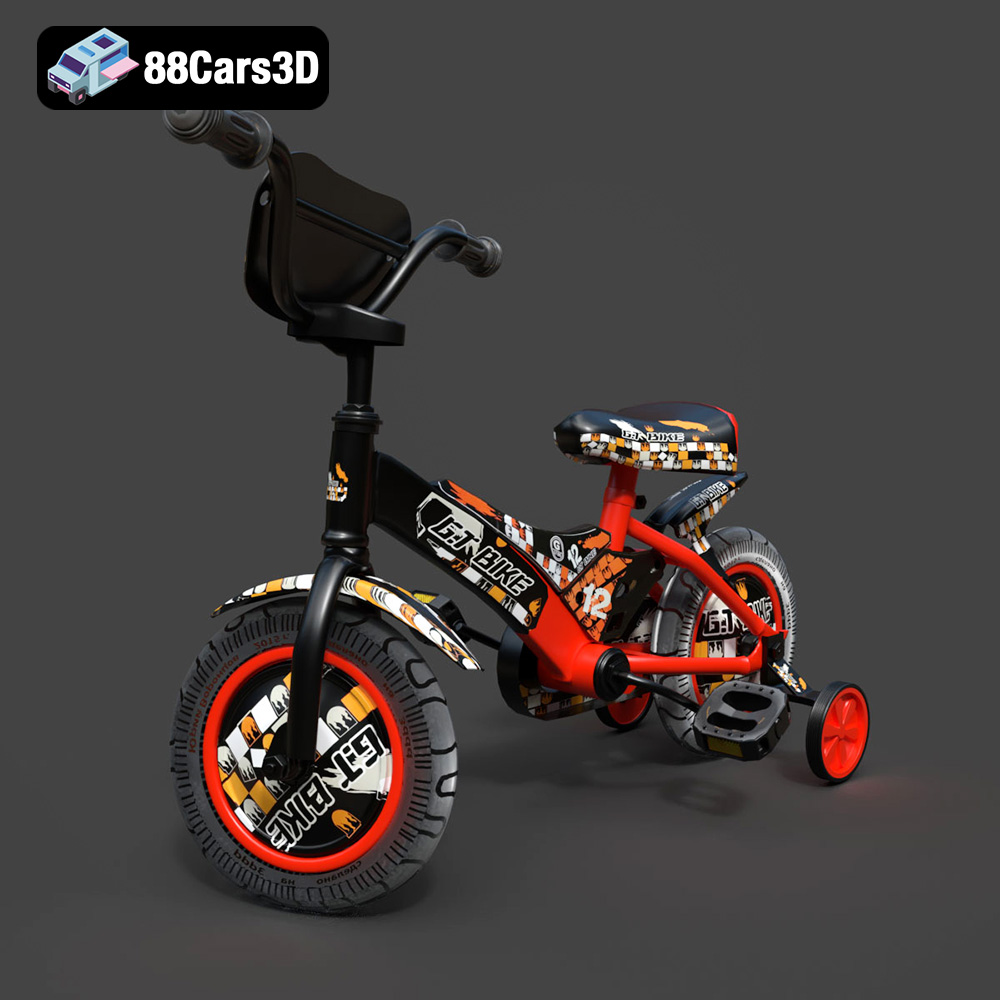
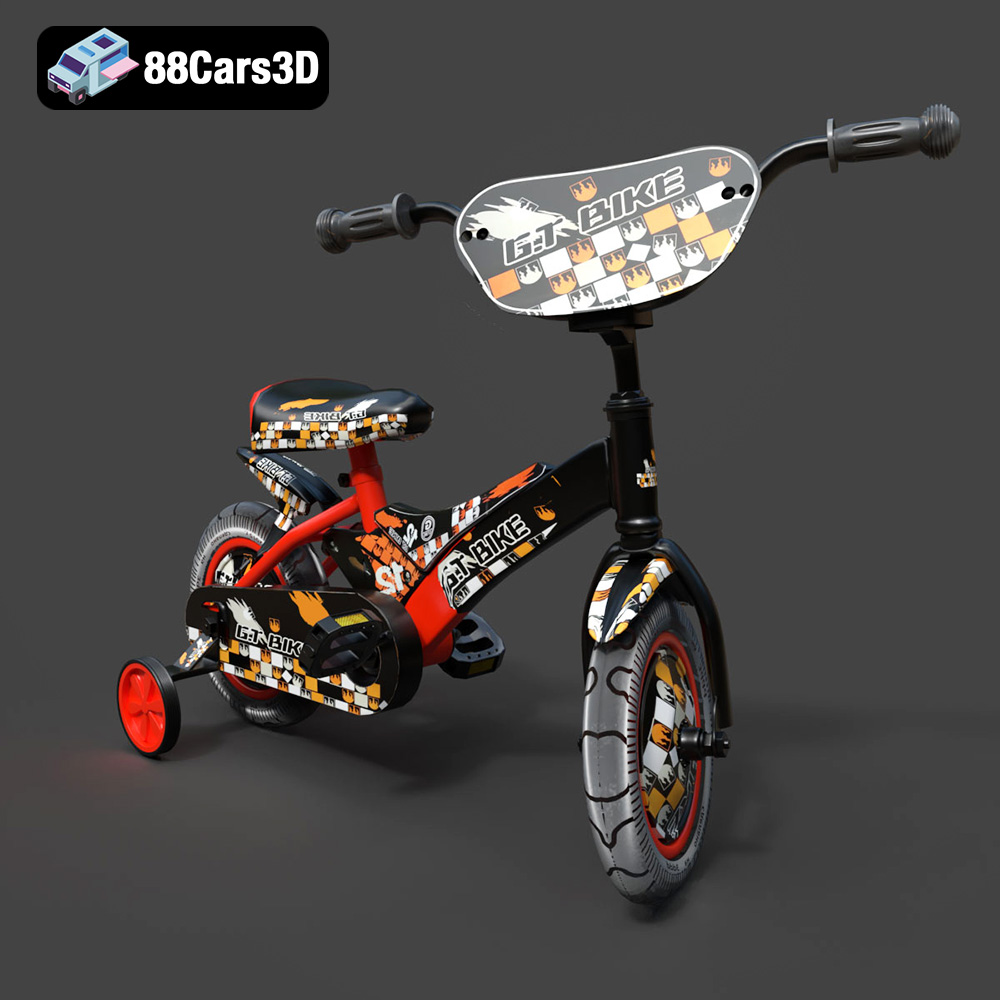
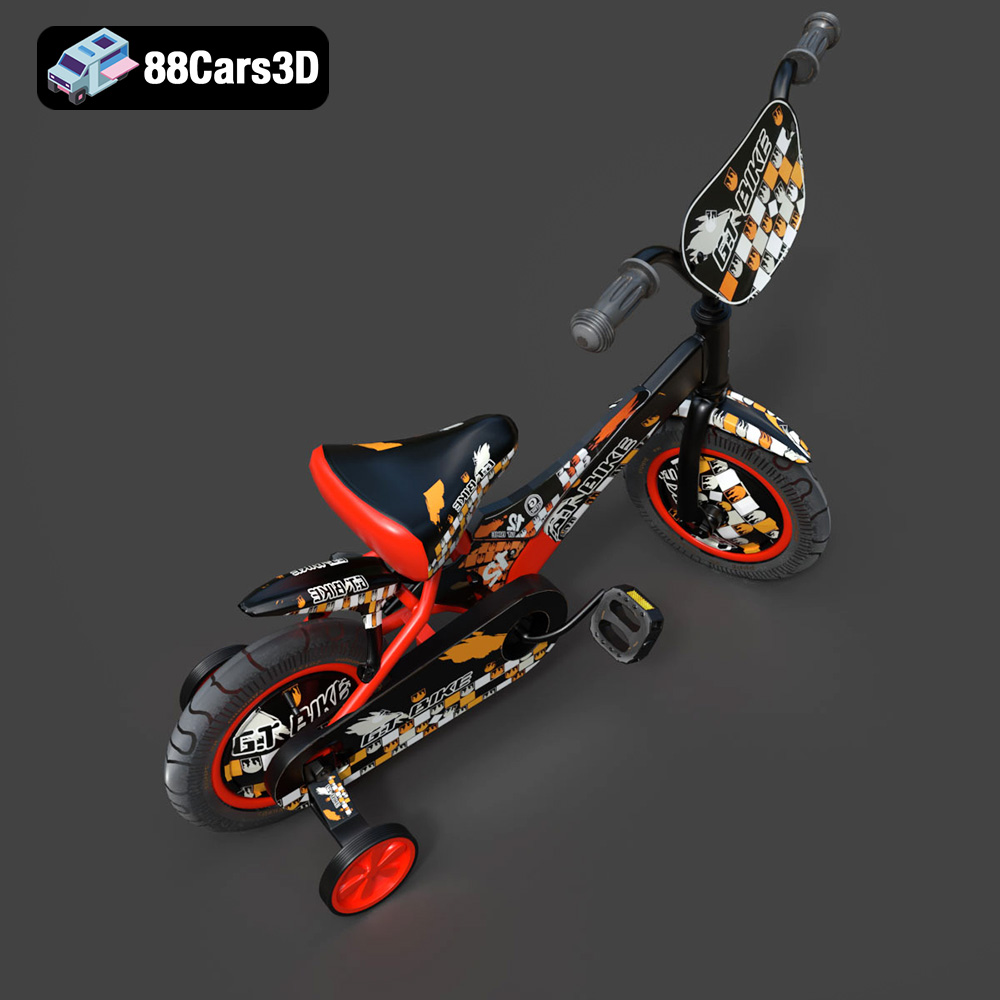
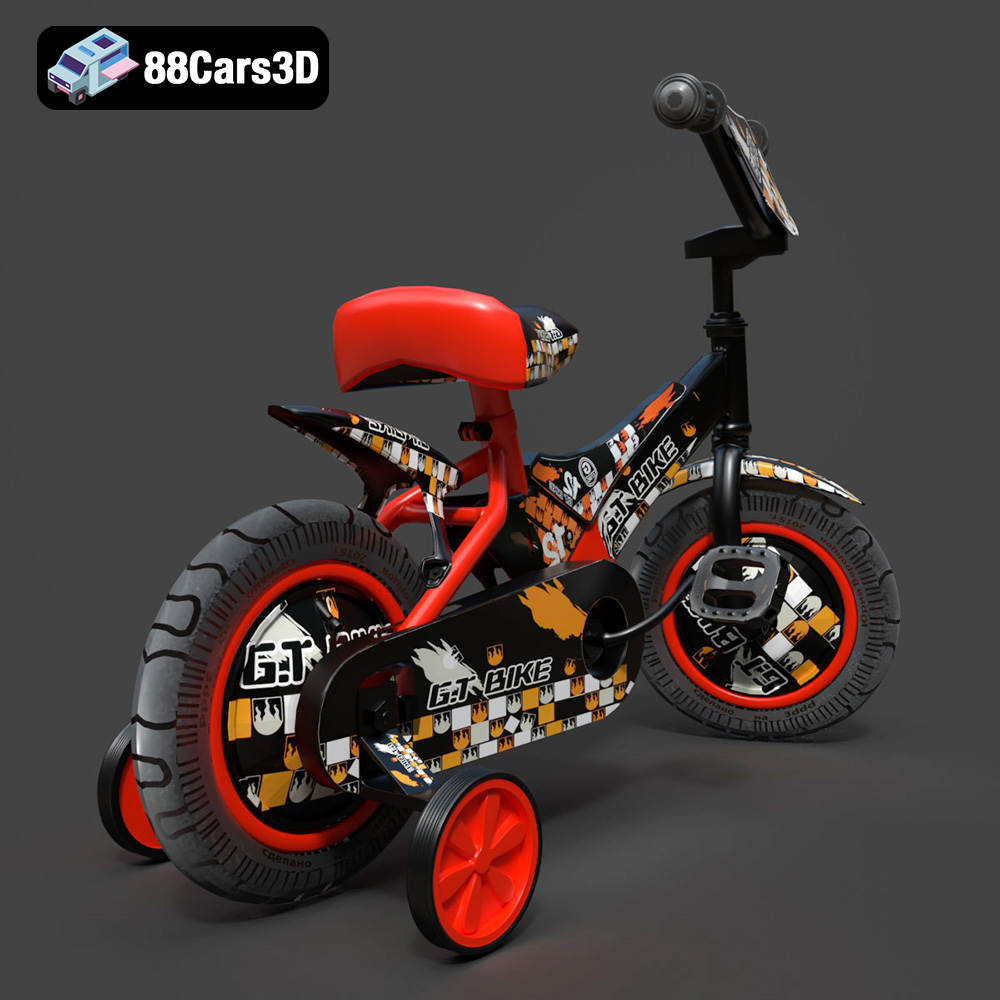
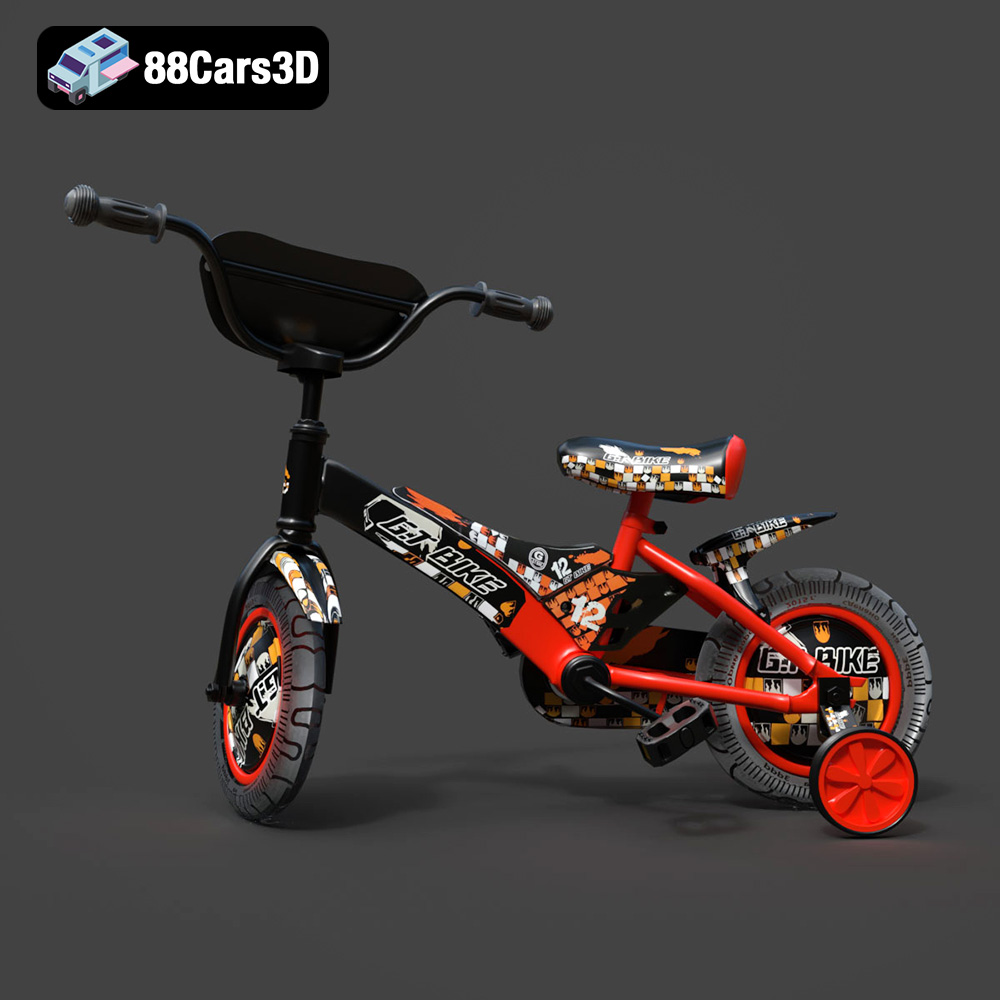
The aesthetic appeal of the Velik Bicycle stems from its accurate representation of a lightweight frame structure, designed for urban commuting and recreational riding. The model features precise frame geometry, capturing the tubular design that gives real bicycles their strength and characteristic appearance. From the detailed front fork assembly that dictates steering to the rear triangle structure supporting the drivetrain and wheel, every element contributes to a believable and balanced form. The realistic spoked wheels, complete with hubs, add a layer of intricate detail, while the slim road tires further emphasize its purpose for city streets and paved paths. Even subtle elements like the ergonomic saddle design and the detailed handlebar and grip structure are faithfully recreated, ensuring that from any angle, the bicycle holds up to scrutiny. These careful exterior features make the Velik Bicycle 3D Model a standout asset for product advertisements, urban lifestyle presentations, or as a sophisticated prop within a larger scene.
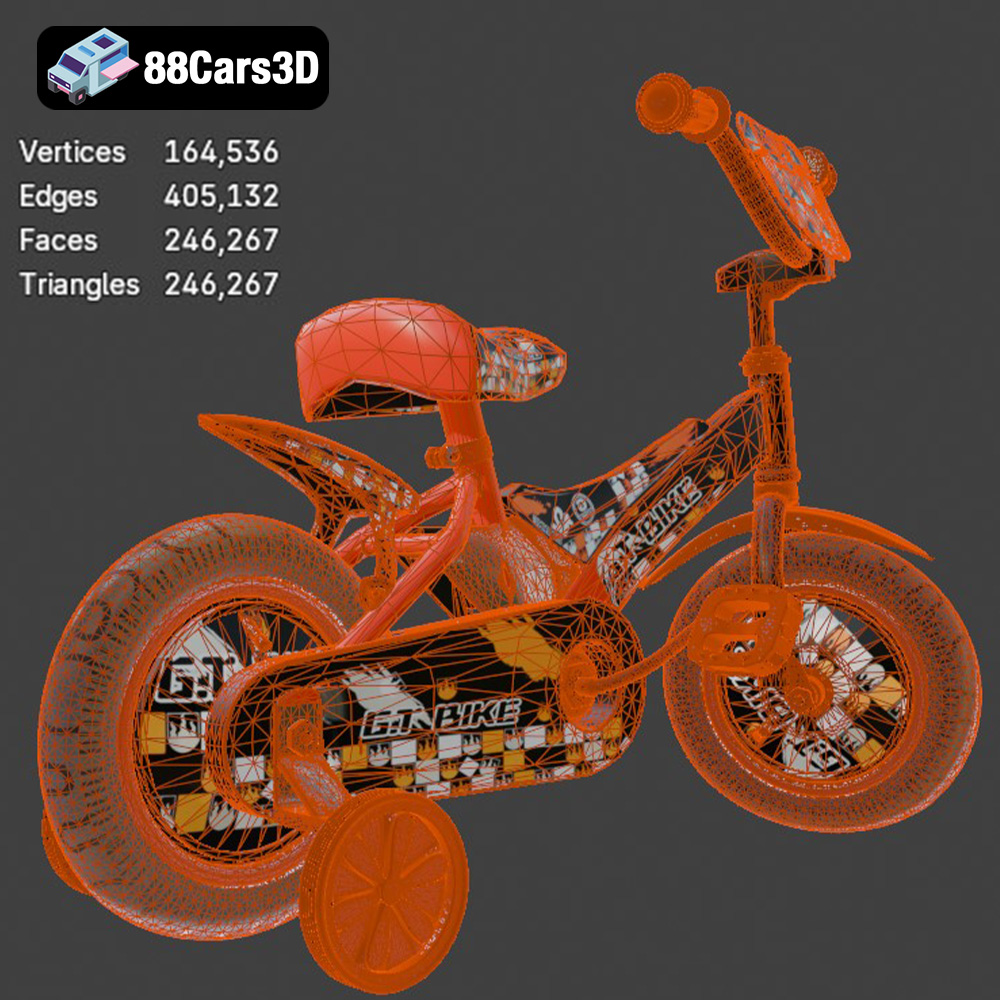
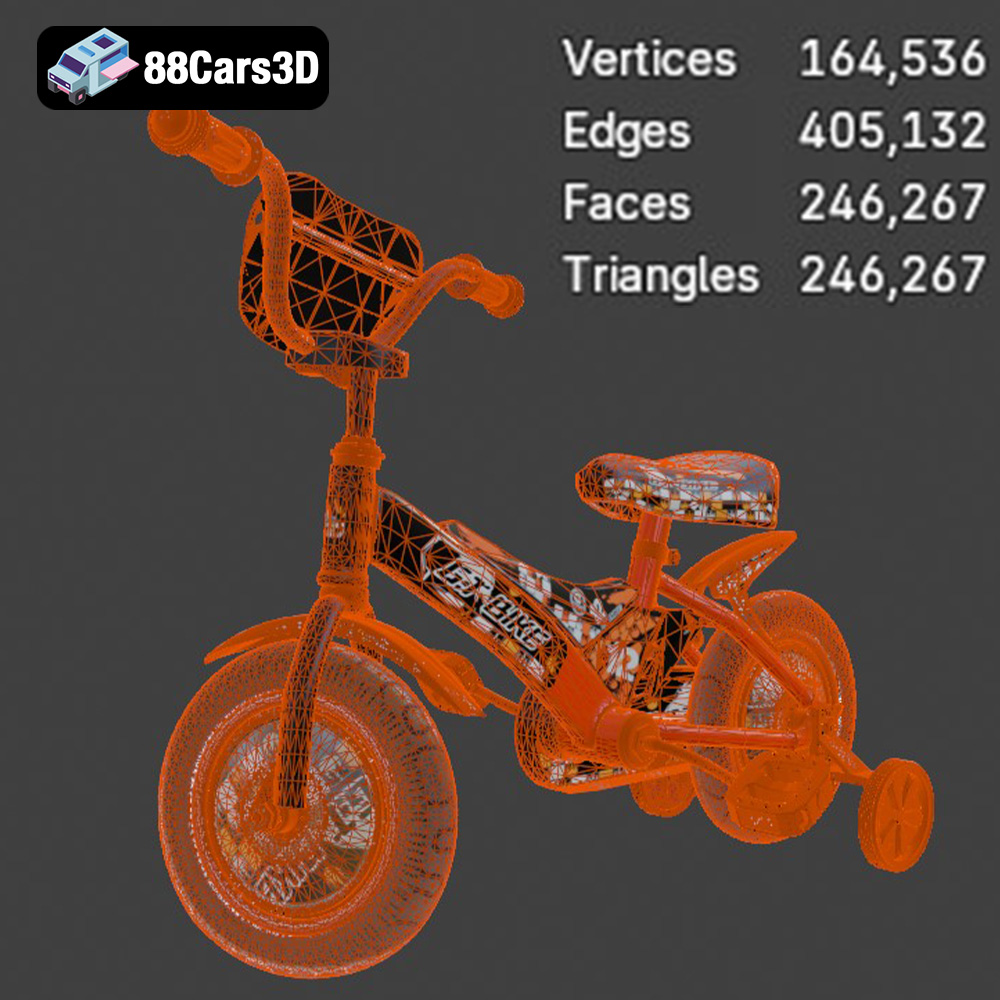
Beyond its static beauty, the Velik Bicycle is built with a keen eye on mechanical accuracy, making it functional for animation and simulation. The chain-driven drivetrain system is fully modeled, including the intricate chain mechanism, the crankset, and the pedals. Gear cassette detailing further enhances the realism, suggesting a fully operational system. Critically, components like the wheels and pedals are designed as separate objects with properly aligned pivots. This foresight allows animators to easily rotate the wheels for cycling sequences or articulate the pedals for a dynamic scene. The braking system, including front and rear brake assemblies and realistic brake cable routing, is also accurately represented, adding to the mechanical depth. This attention to mechanical detail ensures the Velik Bicycle 3D Model is not just visually appealing but also technically robust, capable of being integrated into complex cycling simulations or educational projects where mechanical demonstration is key. The optimized geometry ensures it performs well even in demanding real-time environments, such as those found in game development.
The versatility of a 3D model is often measured by its ability to seamlessly integrate into various professional pipelines. The Velik Bicycle 3D Model shines in this regard, providing artists, designers, and developers with a flexible asset that can be deployed across a spectrum of applications, from cinematic rendering to interactive game environments. Its clean mesh structure and real-world scale accuracy make it a valuable addition to any professional toolkit, especially for projects requiring detailed vehicle 3D models.
For professionals in architectural visualization, product design, or advertising, rendering is where the Velik Bicycle truly comes to life. With included native files like .max for 3ds Max and .blend for Blender, users gain full control over materials, lighting, and rendering engines. In 3ds Max, artists can leverage V-Ray or Corona Renderer to achieve photo-realistic results, creating stunning visuals for sports marketing or urban lifestyle presentations. The model’s optimized polygon flow and clean mesh ensure smooth subdivisions, allowing for incredibly detailed close-ups without artifacts. Similarly, Blender users can utilize Cycles or Eevee, crafting exquisite scenes with precise reflections, refractions, and global illumination. The ability to modify frame color, decal style, and configure lighting for studio or outdoor scenes offers endless creative possibilities, making the Velik Bicycle an invaluable asset for producing captivating automotive rendering and visualization projects.
The demands of game development require assets that are not only visually appealing but also highly optimized for real-time performance. The Velik Bicycle 3D Model, with its well-organized mesh and optimized geometry, is perfectly suited for modern game engines. The inclusion of .fbx and potentially .unreal formats streamlines the integration process into platforms like Unreal Engine and Unity. Game developers can easily import the model, apply engine-specific materials, and set up collision meshes. The separate wheels and pedals, with their proper pivot setups, allow for straightforward animation rigging, whether for player-controlled bicycles, AI-driven cyclists, or static environmental props in an open-world city game. Its performance-optimized nature means it can be used extensively without significant impact on frame rates, making it an ideal choice for populating virtual urban environments, sports simulators, or creating dynamic transportation projects.
The burgeoning fields of Augmented Reality (AR) and Virtual Reality (VR) demand lightweight, high-quality models for interactive experiences. The .glb format included with the Velik Bicycle 3D Model makes it perfectly adapted for these cutting-edge applications. Its compact nature, embedding all necessary data into a single file, ensures quick loading times and smooth performance in AR/VR environments. Imagine interactive cycling demonstrations where users can examine the bicycle from every angle in a virtual showroom, or an AR application that allows customers to virtually place the Velik Bicycle in their own living space. For educational purposes, it can be used in VR simulations to demonstrate mechanical functions or cycling mechanics, offering an immersive learning experience. This forward-thinking format support ensures the Velik Bicycle remains relevant for the most innovative visualization and interaction platforms.
While the digital realm offers limitless possibilities, there’s a unique satisfaction in transforming a virtual creation into a tangible object. The Velik Bicycle 3D Model extends its utility into the physical world through its suitability for 3D printing. The inclusion of the .stl format is a clear indication that this model is designed to transcend the screen, allowing hobbyists and professionals alike to produce intricate scale models and display miniatures.
The process of 3D printing begins with careful preparation. The Velik Bicycle 3D Model, provided in the standard .stl format, offers manifold geometry – a crucial characteristic for successful printing as it ensures a watertight mesh without gaps or internal structures that could confuse a slicer. Users can choose from recommended scales like 1:18, 1:12, 1:10, or 1:8, allowing for varying levels of detail and physical presence. For smaller scales, resin (SLA/DLP) printing is often recommended to capture the finer details of spokes, chain links, and brake cables. For larger scales, FDM (Fused Deposition Modeling) printers can also yield excellent results with appropriate settings. The recommended layer height of 0.08–0.16 mm ensures a good balance between print speed and surface quality, while a wall thickness of 1.2–2 mm and infill of 15–25% provide structural integrity without excessive material usage. The model is intelligently designed for print, with wheels printed separately from the main frame, and the frame itself recommended to be angled for optimal surface finish, minimizing support marks on prominent areas.
Once printed, the physical Velik Bicycle model enters the post-processing stage, where its true character can be brought out. Supports, which are required for frame overhangs, pedals, and handlebar sections to prevent drooping during printing, need to be carefully removed. This is followed by sanding to smooth out any layer lines or imperfections. Applying a primer prepares the surface for painting, ensuring better adhesion and a more even color application. Finally, a gloss or matte paint finish can be applied, allowing for customization of the bicycle’s appearance to match various styles or preferences. This entire process, from digital file to physical object, allows creators to engage with the Velik Bicycle 3D Model in a hands-on manner, producing miniature collectibles, prototypes, or unique display pieces that stand as a testament to the model’s comprehensive design and 88cars3d.com’s commitment to quality assets.
In the dynamic world of 3D production, a truly valuable asset offers more than just static perfection; it provides a canvas for creativity and adaptation. The Velik Bicycle 3D Model is built with customization in mind, offering extensive flexibility that allows artists and designers to tailor it precisely to their project’s unique requirements. This adaptability ensures that the model remains relevant and versatile across countless applications, from distinct automotive rendering scenarios to specific game asset needs.
One of the immediate benefits of the Velik Bicycle’s design is the ease with which its aesthetics can be altered. Users can effortlessly change frame color and decal style to match corporate branding, artistic vision, or scene context. Imagine a vibrant red bicycle leaning against a cafe in an urban architectural render, or a sleek black one in a minimalist product advertisement. This simple modification can dramatically change the model’s impact. Beyond color, the ability to modify tire thickness opens up possibilities for different bicycle types – from slim road tires for speed to slightly thicker hybrid or sport tires for varied terrain. This means the same base model can convincingly portray different cycling disciplines within your digital world. The clean, well-organized mesh structure facilitates these changes, ensuring that any modifications can be made without compromising the model’s integrity or performance.
The Velik Bicycle 3D Model is not just a standalone object; it’s a foundation for a richer scene. The product description highlights the potential to add accessories such as water bottle holders, rear racks, or lights. This capability allows artists to personalize the bicycle, making it appear lived-in, functional, and tailored to a specific narrative. For example, a bicycle with a rear rack and panniers could tell a story of a commuter, while one with a water bottle holder might suggest a recreational rider. Additionally, the option to adjust handlebar type (drop bar or flat bar) offers further ergonomic and stylistic customization, catering to different rider preferences or vintage styles. For advanced users, the technical advantage of optimized pivot setup for wheel rotation and pedal animation extends to any added accessories, ensuring they can also be animated convincingly if needed. Finally, the ability to configure lighting for studio or outdoor scenes within your 3D software of choice means the Velik Bicycle can always be presented in its best light, perfectly integrated into its virtual environment, be it a brightly lit studio for a product shot or a softly lit evening street scene. This level of customizable detail ensures the Velik Bicycle 3D Model from 88cars3d.com offers lasting value and adaptability for any creative endeavor.
In the vast landscape of 3D assets, finding a model that truly marries aesthetic excellence with technical robustness can be a challenge. The Velik Bicycle 3D Model unequivocally rises to this challenge, standing out as a premier example of a meticulously crafted asset designed for the modern digital creator. From its accurate frame geometry and detailed mechanical components to its comprehensive file format support, this model offers a truly versatile solution for a multitude of applications.
Whether your project demands high-fidelity automotive rendering, efficient game assets for real-time environments, immersive AR/VR experiences, or even tangible 3D printed miniatures, the Velik Bicycle delivers. Its thoughtful design, evident in details like separate, properly pivoted wheels and pedals, ensures ease of animation and seamless integration into complex workflows across industry-standard software like 3ds Max, Blender, and game engines such as Unreal. The inclusion of specific formats like .stl and .glb further expands its utility, catering to niche applications like physical manufacturing and web-based interactivity.
For professionals seeking an asset that saves precious production time without compromising on quality or flexibility, the Velik Bicycle 3D Model is an intelligent investment. It empowers artists and developers to bring their visions to life with unparalleled realism and technical efficiency. Explore this exceptional model and more high-quality vehicle 3D models at 88cars3d.com, where attention to detail and professional-grade assets are always paramount.
The Velik Bicycle 3D Model is a high-detail digital recreation of a classic road-style bicycle designed for urban commuting and recreational riding. Built with realistic proportions and mechanical accuracy, this model captures the lightweight frame structure, slim road tires, chain-driven drivetrain system, and ergonomic handlebar configuration. This 3D model accurately represents the tubular frame geometry, front fork assembly, spoked wheels, braking system, pedals and crankset, chain mechanism, saddle design, and handlebar controls. Designed with clean topology and real-world scale accuracy, it is ideal for rendering, animation, simulation, game development, and AR/VR visualization. Perfect for urban street scenes, park environments, cycling simulations, advertising visuals, and transportation projects.
$15.9
.arvr
.bicycle
.bicycle3dmodel
.bike
.blend
.cycling
.fbx
.gameasset
.glb
.max
.obj
.ply
.rendering
.simulation
.sportsvehicle
.stl
.unreal
.urbanvehicle
.velik