Get 50% OFF All Premium 3D & STL Models!

In the dynamic world of 3D visualization, game development, and digital media, the quality and versatility of your assets are paramount. Whether you’re crafting an intricate urban landscape, animating a lifelike scene, or designing the next big game title, every detail contributes to the overall immersive experience. High-fidelity 3D models are the building blocks of these digital worlds, and choosing the right assets can significantly streamline your workflow and elevate your projects.
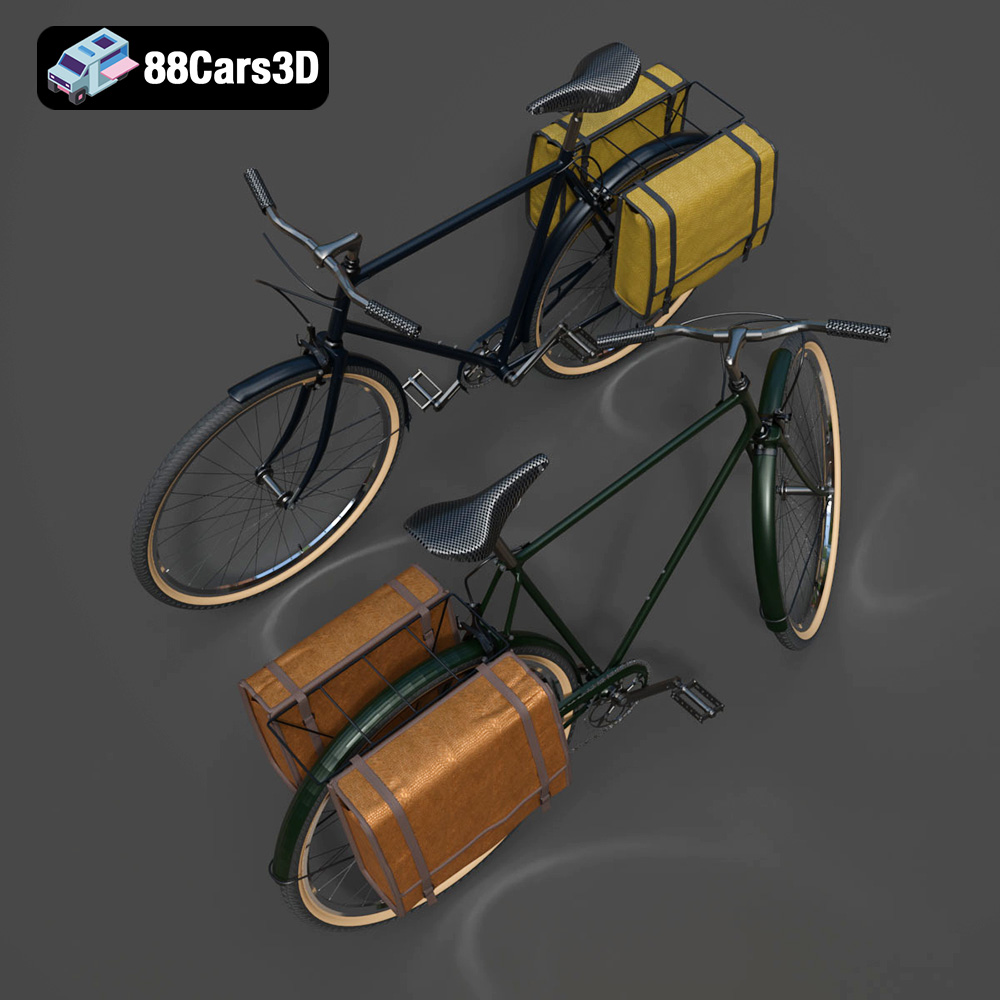
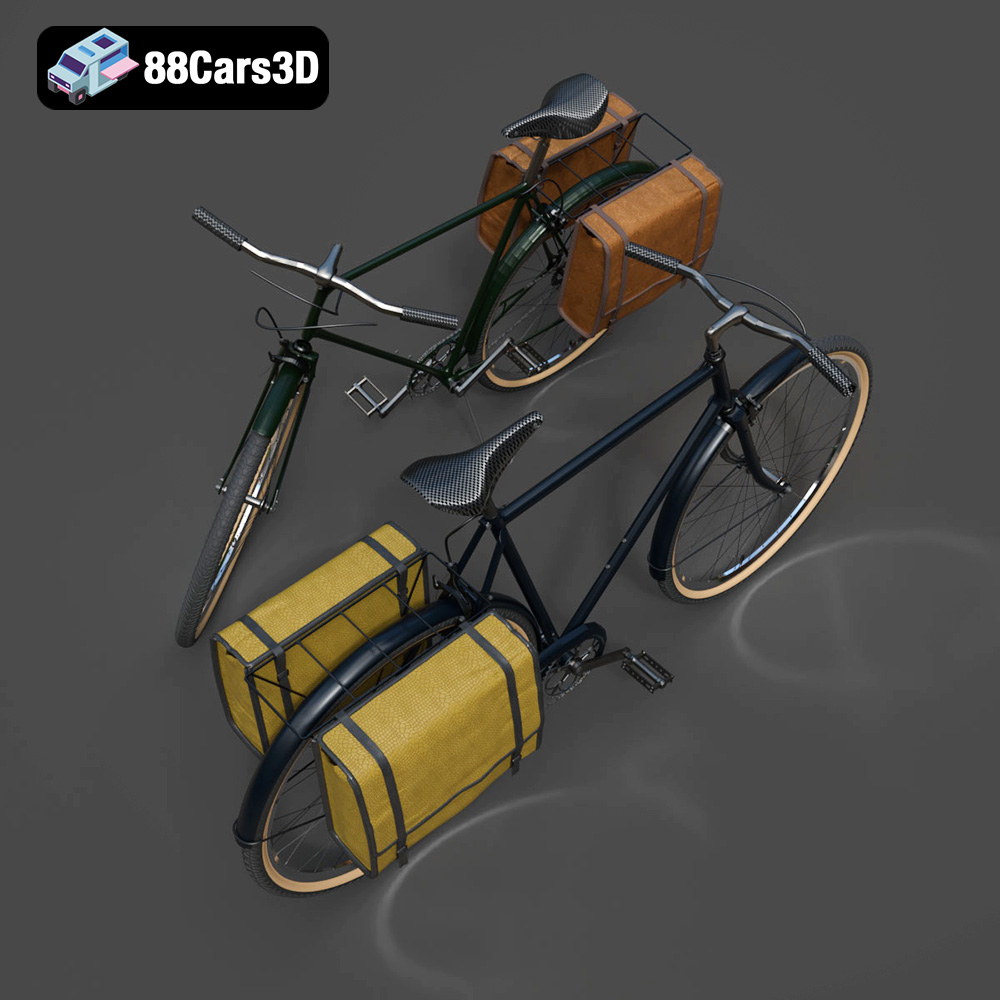
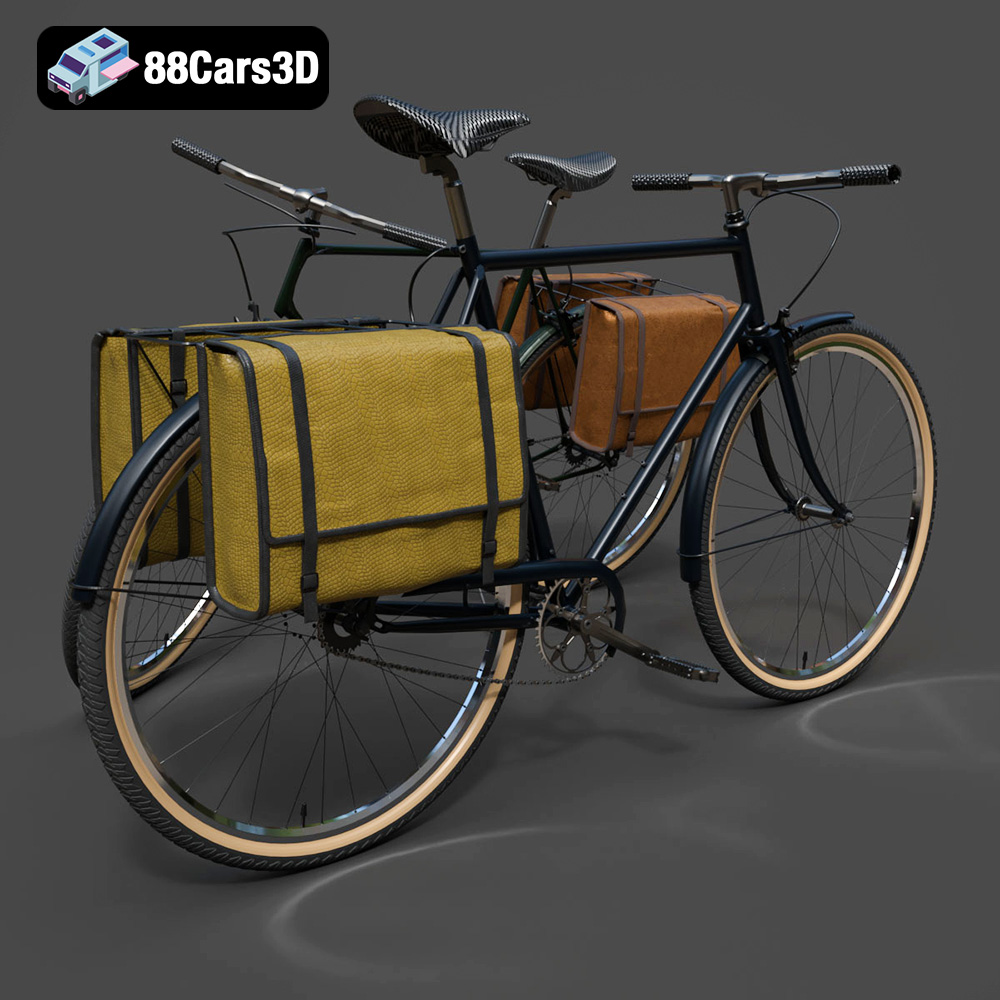
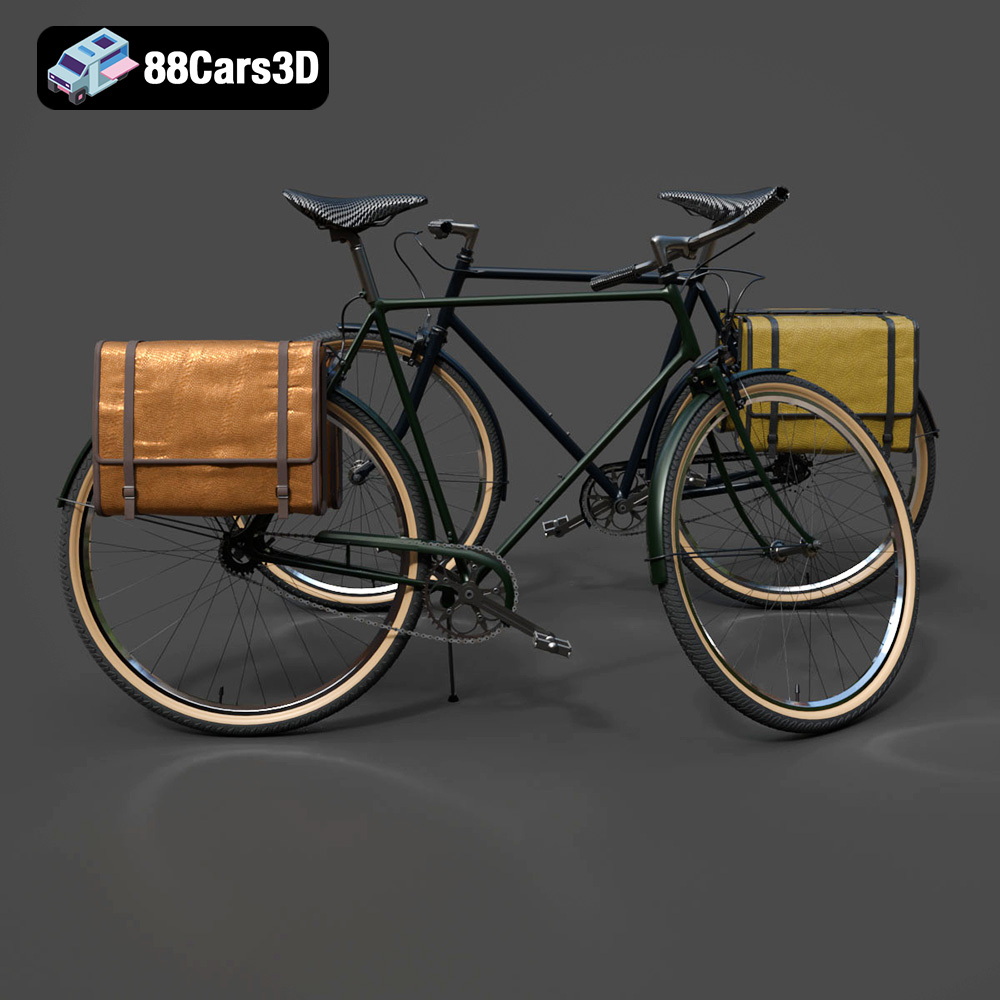
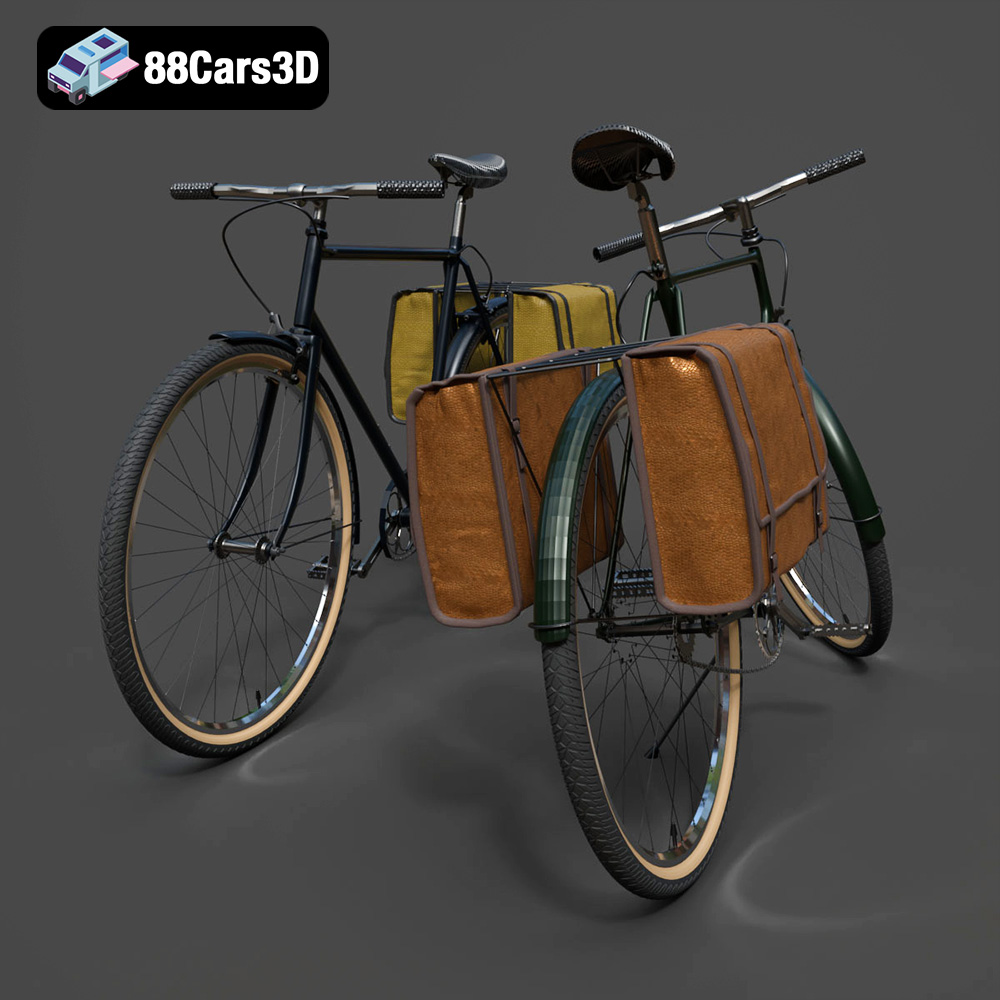
Today, we delve into an exemplary asset that embodies precision, charm, and adaptability: the Bicycle Classic 3D Model. This meticulously crafted vintage-style bicycle, available on 88cars3d.com, is far more than just a decorative prop. It’s a robust, production-ready asset designed to seamlessly integrate into diverse professional pipelines, offering unparalleled detail for rendering, real-time applications, and even physical fabrication through 3D printing. Its timeless European commuter design, featuring a curved steel frame, upright riding position, and retro detailing, brings authentic character to any digital environment, making it a perfect companion for a range of 3D car models and urban scenes.
Before diving into the specifics of this remarkable model, it’s crucial to understand what truly defines a “high-quality” 3D asset. It’s not just about visual appeal; it’s about technical robustness, optimization, and compatibility. A superior model boasts clean topology, efficient UV mapping, accurate real-world scale, and thoughtful pivot points for animation. These characteristics ensure that the asset performs optimally across various software platforms and use cases, from cinematic automotive rendering to interactive game environments, laying the groundwork for professional-grade results.
The Bicycle Classic 3D Model exemplifies these principles. Its detailed tubular steel frame, realistic spoked wheels, chain-driven drivetrain, and classic saddle are all rendered with meticulous attention to detail. This level of fidelity is critical for close-up shots in architectural visualizations, character interactions in animations, or simply enhancing the realism of a busy city street scene. The model’s inherent quality means less time spent on rework and more time focused on creative output, a significant advantage in demanding production schedules.
The true power of a versatile 3D model lies not only in its aesthetic and structural integrity but also in its accessibility across various software ecosystems. This is where file formats become critically important. The Bicycle Classic 3D Model is offered in a comprehensive suite of formats, each tailored for specific applications, ensuring maximum compatibility and utility for professionals. Understanding these formats is key to optimizing your workflow, whether you’re working on advanced automotive rendering projects or developing interactive game assets.
The .blend format provides a fully editable Blender scene, complete with materials, textures, and scene setup. For artists and studios primarily working within Blender, this is the most advantageous format. It allows for complete customization, from modifying mesh geometry and adding new components to adjusting material properties through Blender’s powerful node-based shader editor. This format is ideal for deep integration, allowing users to leverage Blender’s comprehensive toolset for animation, sculpting, and advanced rendering with cycles or Eevee, maintaining full non-destructive editing capabilities.
As a widely adopted proprietary format developed by Autodesk, .fbx is an undisputed industry standard for 3D asset interchange. It’s particularly ideal for Unreal Engine, Unity, and a vast array of other 3D software due to its ability to store not just geometry, but also materials (often as basic properties or mapped textures), animations, cameras, and even skeletal rigs. For game development and real-time pipelines, .fbx ensures that assets like the Bicycle Classic can be imported with minimal fuss, preserving hierarchies and transformations crucial for interactivity and animation. It often requires some material setup post-import but provides a robust foundation.
The .obj format stands as a universal staple for cross-software compatibility. It’s a simple, text-based format primarily designed to store geometric data, including vertices, normals, UV coordinates, and faces. While it typically doesn’t carry complex material or animation data directly within the .obj file (materials are often referenced by an accompanying .mtl file), its ubiquity makes it an excellent choice for straightforward mesh transfer between virtually any 3D application. It’s perfect when you need a clean mesh to start a new project or port an asset to a less common software package, offering unparalleled stability in geometry preservation.
.glb (GLB format, often referred to as glTF Binary) is quickly becoming the standard for web-based 3D, AR, and VR applications. It’s a single-file version of the glTF (GL Transmission Format) standard, efficiently packaging 3D model data, including geometry, materials, animations, and even embedded textures. Its compact size and optimized structure make it perfect for rapid loading and display in browsers and mobile AR/VR experiences, offering a highly efficient way to showcase assets like the Bicycle Classic interactively without significant performance overhead.
The .stl (Stereolithography) format is the de facto standard for 3D printing output. It represents a 3D model as a series of connected triangles (a triangulated surface). While it doesn’t store color or texture information, its simplicity makes it universally compatible with 3D slicing software. For physical reproductions of the Bicycle Classic, the .stl format is indispensable, ensuring manifold geometry suitable for additive manufacturing processes. The included .stl option for the Bicycle Classic makes it ready for creating tangible scale models or collectibles.
The .ply (Polygon File Format) is another popular format for storing 3D data, particularly useful for scanned data, CAD, or scientific analysis. It can store a variety of properties including color, transparency, normals, texture coordinates, and even reliability information. While less common for everyday asset exchange than .fbx or .obj, it offers a robust solution for precision mesh representation and detailed attribute storage, making it valuable in specialized workflows where data integrity and additional mesh properties are paramount.
The .unreal format, or more accurately, an Unreal Engine project file or asset package optimized for the engine, signifies an asset that is truly engine-ready. While not a standalone file format in the same way .fbx or .obj are, its inclusion implies that the model has been pre-configured with Unreal-specific materials (e.g., PBR shaders), proper collision geometry, LODs (Levels of Detail), and potentially even Blueprint scripting for interactivity. This saves significant time for game developers by providing a drop-in solution that is already optimized for Unreal’s real-time rendering pipeline.
The .max format is the native file type for Autodesk 3ds Max, a powerhouse for architectural visualization, advanced rendering, and animation. Like .blend, it contains the complete scene data, including full geometry, materials, lighting, cameras, animation timelines, and modifiers. For professionals entrenched in the 3ds Max ecosystem, the .max file provides the highest degree of flexibility for further editing, rigging, or integrating the Bicycle Classic into complex scenes for high-quality renderings and detailed animations.
By offering the Bicycle Classic 3D Model across such a diverse range of formats, 88cars3d.com ensures that users have the right tool for every job, minimizing conversion headaches and maximizing project efficiency. This approach caters to the varied technical requirements of modern 3D production, from high-end automotive rendering to fast-paced game development.
Achieving true realism in 3D is a delicate balance of artistic vision and technical execution. The Bicycle Classic 3D Model stands out as a testament to this philosophy, meticulously designed to capture the essence of a vintage European commuter bicycle while adhering to professional 3D modeling standards. Every curve, component, and material choice contributes to its authentic appearance and functional versatility.
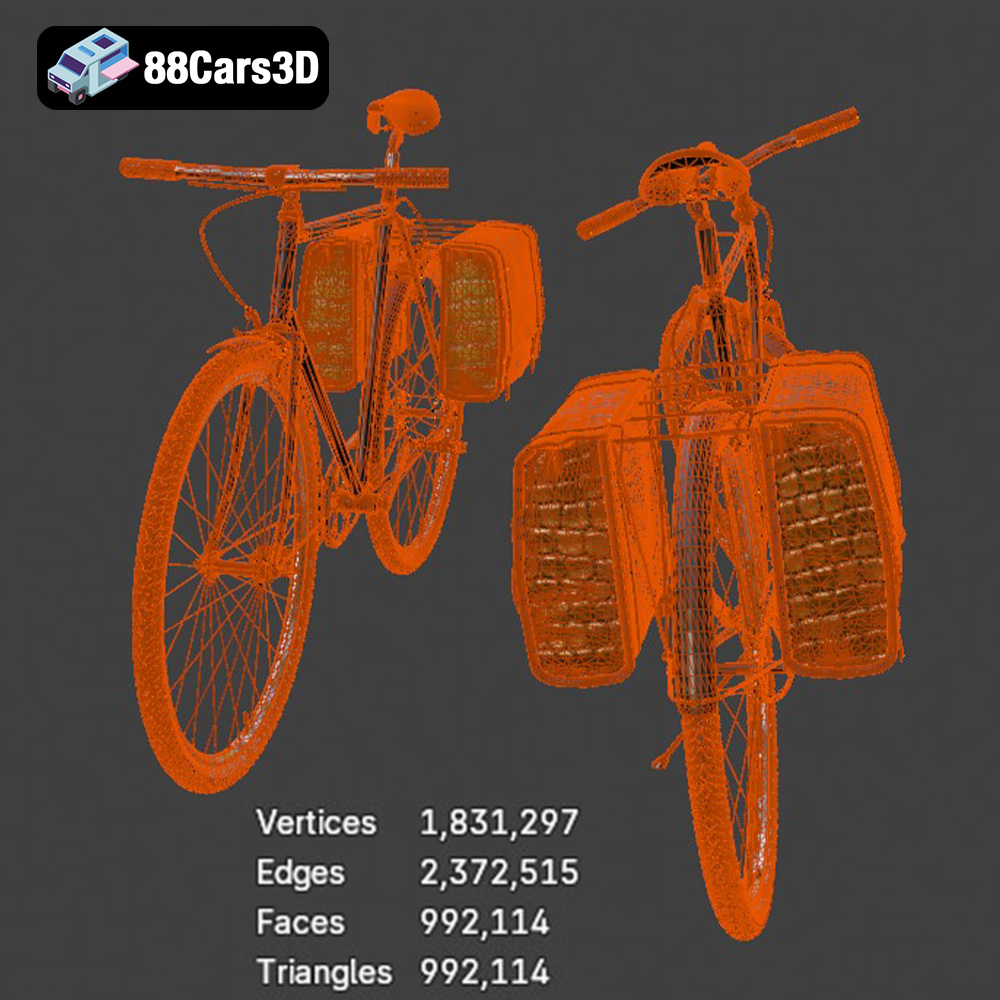
The foundation of any high-quality 3D model is its geometry. The Bicycle Classic features a “clean and well-organized mesh structure” with “optimized polygon flow.” This means the model uses polygons efficiently, avoiding unnecessary density where details aren’t needed, and concentrating resolution where intricate forms like the curved steel frame, spoked wheels, and drivetrain assembly demand it. The topology is carefully constructed, primarily using quads, which facilitates smooth deformation for animation and clean subdivision for high-resolution rendering. This attention to detail ensures that the model looks excellent even in close-up shots and renders without artifacts.
For any asset intended for animation, correct setup is crucial. The Bicycle Classic 3D Model excels here with “proper pivot setup for wheel rotation and pedal animation” and “separate wheels and pedals for animation.” This seemingly small detail is a huge advantage for animators. Instead of manually correcting pivot points, artists can immediately rig and animate the wheels spinning, pedals rotating, and steering mechanisms turning, allowing for dynamic and lifelike movements. This thoughtful preparation makes the model highly functional for character interactions, transportation simulations, or dynamic scene setups.
The true measure of a high-quality 3D asset is its seamless integration into diverse professional pipelines. The Bicycle Classic 3D Model is designed with this in mind, providing a flexible foundation for a multitude of projects, from high-end visualization to interactive media. Its technical advantages ensure it can be dropped into existing workflows with minimal friction, allowing artists and designers to focus on creative execution.
For architects, urban planners, and environmental designers, conveying a sense of scale, activity, and lifestyle is paramount. The Bicycle Classic is an invaluable asset for populating visualizations, adding a human touch and contextual realism to otherwise sterile scenes. Whether placed in a bustling city square, leaned against a cafe wall, or ridden through a park, it instantly enhances the narrative. Combined with other 3D car models from 88cars3d.com, it helps create a vibrant, believable streetscape.
Beyond urban scenes, the Bicycle Classic is perfect for product visualization or lifestyle advertising where an elegant, nostalgic aesthetic is desired. Imaging the bicycle as a central element in an advertisement for a coffee shop, a vintage clothing brand, or even as a complementary item to showcase a newly designed piece of urban furniture. Its inherent charm draws the eye and evokes a specific mood.
The demands of real-time environments, such as game engines and AR/VR experiences, are distinct from those of offline rendering. Assets must be highly optimized for performance while maintaining visual fidelity. The Bicycle Classic 3D Model is engineered with these requirements in mind, making it an excellent choice for dynamic, interactive applications.
For game developers, performance is key. The Bicycle Classic’s “optimized polygon flow” means it strikes a balance between detail and efficiency. While the exact poly count isn’t specified, a well-optimized model would typically feature multiple Levels of Detail (LODs) to ensure it performs well whether seen up close or far away. The .fbx and .unreal formats are particularly beneficial here.
Augmented Reality (AR) and Virtual Reality (VR) thrive on immersive, low-latency experiences. The .glb format, included with the Bicycle Classic, is specifically optimized for these applications.
The utility of a high-quality 3D model extends far beyond digital screens. The Bicycle Classic 3D Model is not just for rendering or games; it’s also designed for physical manifestation through 3D printing. This opens up entirely new avenues for collectors, hobbyists, and prototype designers.
The inclusion of the .stl format, specifically tailored for 3D printing, means that the Bicycle Classic can be transformed into a physical object. This offers unique possibilities for creating scale bicycle models, collectible miniatures, or even detailed components for dioramas. The “manifold geometry” of the .stl export ensures printability, a crucial technical consideration for any model intended for physical output.
Once printed, the physical model offers a new canvas for customization, much like its digital counterpart. Post-processing is key to achieving a professional finish.
In the vast landscape of 3D assets, the Bicycle Classic 3D Model distinguishes itself through its exceptional detail, technical robustness, and unparalleled versatility. It is a prime example of how a well-crafted asset can serve a multitude of purposes, from enriching high-definition renders and animating complex scenes to powering real-time game environments and even producing tangible 3D prints.
Its meticulously designed geometry, optimized polygon flow, real-world scale, and thoughtful preparation for animation underscore its value as a professional-grade asset. The comprehensive range of included file formats—from .blend and .max for full editability, to .fbx and .unreal for game engines, .glb for AR/VR, and .stl for 3D printing—ensures that artists, developers, and designers across various disciplines can seamlessly integrate this model into their workflows. Whether you’re enhancing an urban visualization with realistic transportation elements, designing a compelling game level, or creating a unique physical collectible, the Bicycle Classic provides the quality and flexibility you need.
For those seeking top-tier 3D car models, vehicle assets, and complementary props like this charming bicycle, 88cars3d.com stands as a reliable source. The Bicycle Classic 3D Model, available at 88cars3d.com, is more than just a model; it’s an investment in quality, efficiency, and creative potential. It allows you to focus on bringing your visions to life, confident that your foundational assets are of the highest standard.
The Bicycle Classic 3D Model is a high-detail digital recreation of a traditional vintage-style bicycle, inspired by timeless European commuter designs. Featuring a curved steel frame, upright riding position, slim road tires, and retro detailing, this model captures the charm and practicality of classic city bicycles. This 3D model accurately represents the step-through or diamond frame geometry, spoked wheels, chain-driven drivetrain, front and rear fenders, rear cargo rack, chain guard, classic saddle seat, and curved handlebars. Built with clean topology and real-world scale accuracy, it is ideal for rendering, animation, urban visualization, game development, and AR/VR applications.
$15.99
.arvr
.bicycle3dmodel
.bicycleclassic
.blend
.citybike
.classicbike
.fbx
.gameasset
.glb
.max
.obj
.ply
.rendering
.retrobike
.simulation
.stl
.unreal
.urbanvehicle
.vintagebicycle