Get 50% OFF All Premium 3D & STL Models!

In the vast landscape of 3D modeling, precision and detail are paramount, especially when dealing with the intricate world of automotive design and visualization. From the sleek lines of a supercar to the rugged utility of a heavy-duty workhorse, every curve, every component, and every material nuance contributes to an authentic and immersive experience. Professional artists, game developers, and visualization specialists constantly seek high-quality 3D car models that can serve as the bedrock for their ambitious projects. Whether for stunning marketing renders, interactive game environments, or even functional 3D prints, the demand for meticulously crafted assets is unwavering.
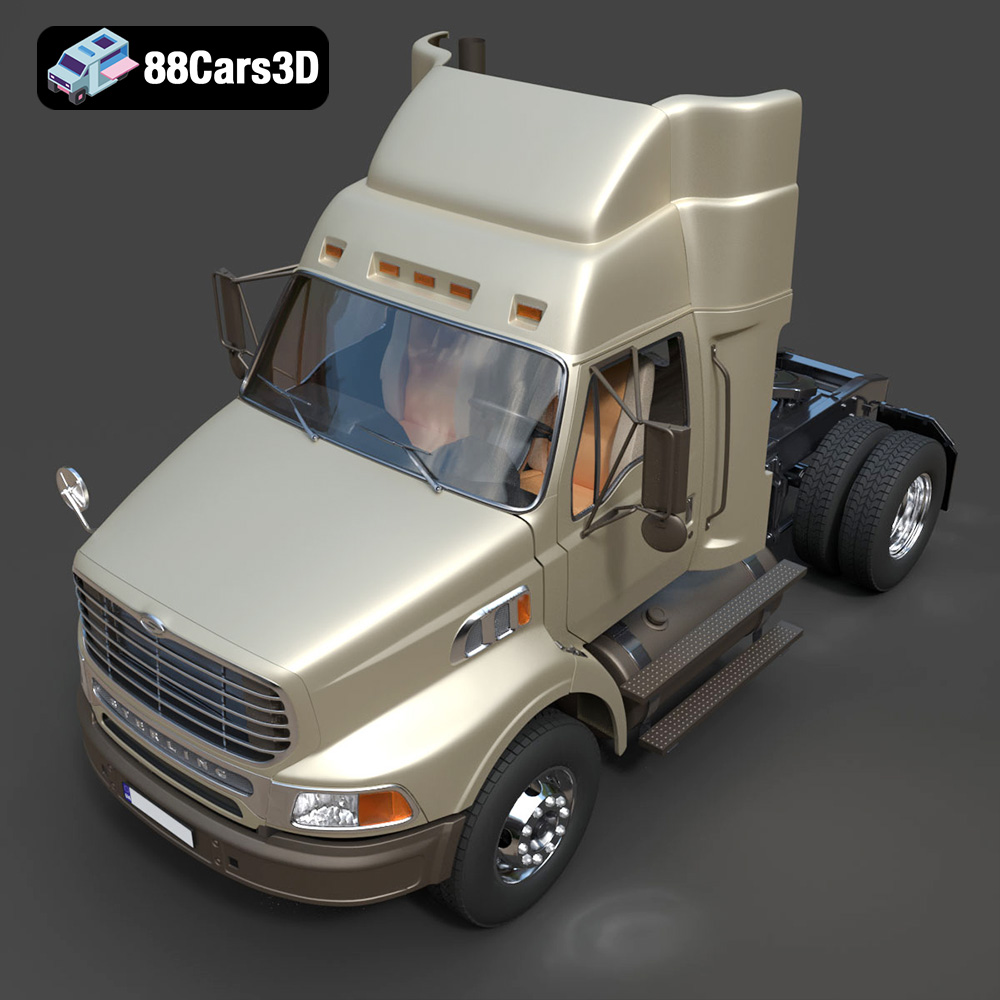
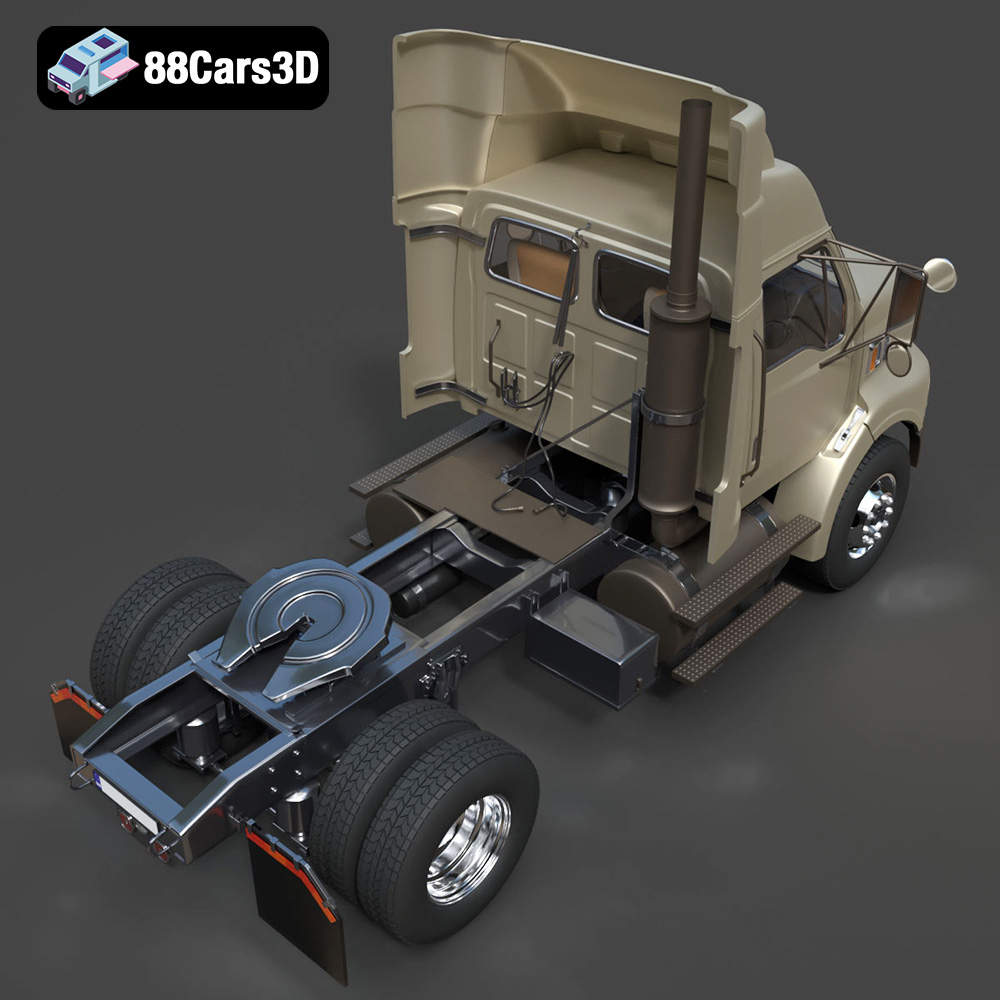
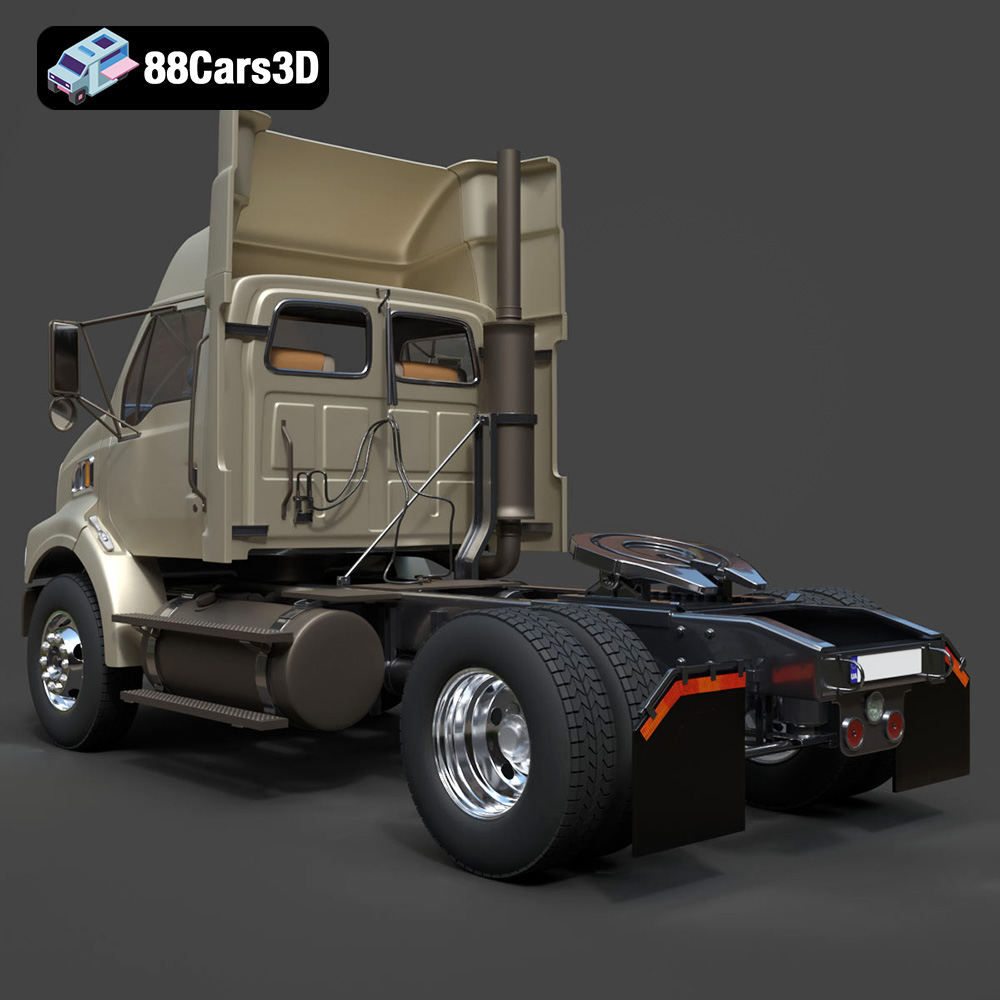
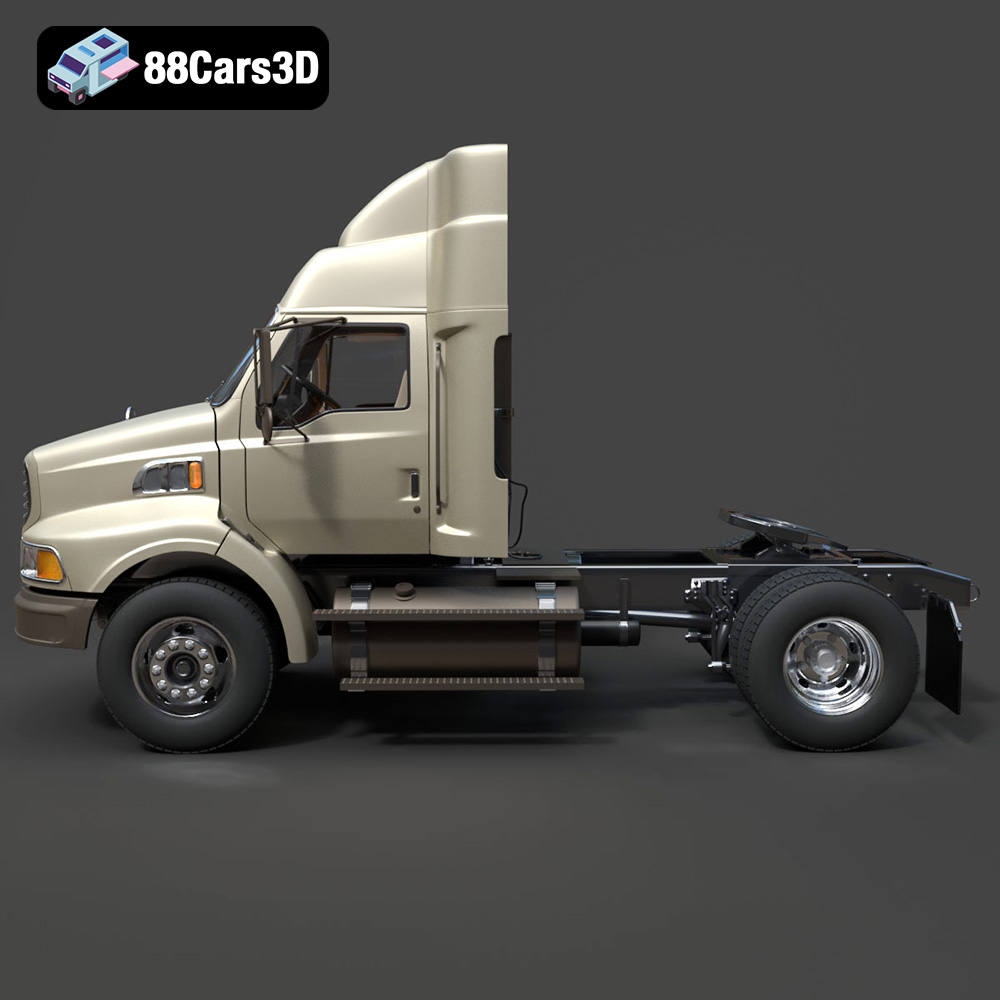
Today, we’re diving deep into an exemplary piece of automotive 3D artistry: the Ford Sterling A9500 Tractor Truck 2006 3D Model. This isn’t just any digital truck; it’s a testament to detail, designed to meet the rigorous demands of various professional applications. We’ll explore what makes a heavy-duty commercial vehicle model like this indispensable, from its complex topology and material fidelity to its adaptability across diverse 3D pipelines. This model, available on 88cars3d.com, encapsulates the essence of the robust Class 8 semi-truck, offering unparalleled realism for any project requiring a commanding presence on the digital highway.
The versatility of a 3D model often hinges on the range and quality of its supported file formats. Each format has its strengths, optimized for specific workflows, software, or end-use applications. For a premium asset like the Ford Sterling A9500 Tractor Truck 2006 3D Model, providing a comprehensive suite of formats ensures maximum compatibility and utility for professionals across various disciplines.
The .blend file format is the native project file for Blender, one of the most powerful and widely used open-source 3D creation suites. When you download a .blend file, you’re getting a fully editable scene, complete with materials, textures (if packed), lighting, cameras, and even animation data. For the Ford Sterling A9500, this means artists can immediately open the model in Blender, tweak shaders, adjust the mesh, or even re-rig components with all native Blender features readily accessible. It’s ideal for those deeply integrated into the Blender ecosystem, allowing for quick iterations and custom modifications without format conversion headaches.
.fbx (Filmbox) is a proprietary file format owned by Autodesk, but it has become an undeniable industry standard for exchanging 3D data between different software applications. Its strength lies in its ability to store a wide array of 3D information, including geometry, materials, textures, animations, and bone structures, making it highly versatile. For integrating the Ford Sterling A9500 into game engines like Unreal Engine or Unity, or into other DCC (Digital Content Creation) software like 3ds Max or Maya, .fbx is often the go-to choice. It ensures a relatively smooth transfer of complex hierarchies and animated parts, crucial for a model with separate wheels, steering, and fifth-wheel components.
.obj (Wavefront OBJ) is perhaps the most universal of all 3D file formats. While it doesn’t support advanced features like animation or rigging, it excels at storing pure geometric data (vertices, normals, texture coordinates) and references to material files (.mtl). Its simplicity ensures excellent cross-software compatibility, making it a reliable fallback if more complex formats encounter issues. For artists needing just the raw mesh of the Sterling A9500 for sculpting, retopology, or importing into less common 3D applications, the .obj format is invaluable.
The .glb (GL Transmission Format Binary) format is a relatively newer standard designed for efficient transmission and loading of 3D scenes and models in web-based applications, augmented reality (AR), and virtual reality (VR) environments. It encapsulates geometry, materials, textures, and animation into a single, compact binary file. This makes the Ford Sterling A9500 model instantly viewable and interactive in web browsers, ideal for product configurators or online portfolios, and perfectly suited for deploying into AR/VR experiences where file size and loading speed are critical.
.stl (STereoLithography) is the de facto standard format for 3D printing. It represents a 3D model as a series of connected triangles, defining only the surface geometry of an object without color, texture, or other CAD attributes. For hobbyists and professionals looking to physically manifest the Ford Sterling A9500, the .stl file is essential. The product description highlights its excellent base for large-scale custom RC semi-truck bodies or diecast hobbyist displays, offering specific print settings for optimal results. This format translates the digital detail into a tangible form.
The .ply (Polygon File Format or Stanford Triangle Format) is a versatile file format for storing 3D data, particularly suitable for raw 3D scans and precision mesh data often used in CAD, reverse engineering, or scientific analysis. It can store a wider range of properties than .obj, including color, transparency, and even normal vectors per vertex or face. While less common for everyday artistic exchange, its inclusion provides a robust option for engineers or researchers who might use the Ford Sterling A9500 model for scale studies, aerodynamic simulations, or integration into specialized industrial design software.
The .unreal format, or more accurately, assets imported and packaged within an Unreal Engine project, signifies a model that has been optimized and prepared specifically for real-time environments. While the Ford Sterling A9500 is a high-poly “hero” asset that would require significant optimization (retopology or decimation) for efficient real-time use in game engines, providing a pre-configured Unreal asset means that the initial import, material setup, and possibly even basic collision definitions are already handled. This can save game developers considerable time in the integration pipeline, allowing them to focus on the necessary performance optimizations.
Finally, the .max file format is the native scene file for Autodesk 3ds Max, another industry-leading 3D modeling, animation, and rendering software. Similar to .blend, a .max file offers the complete project, including geometry, modifiers, materials, lighting, cameras, and animation. For 3ds Max users, this provides the highest level of editability and allows them to leverage the model’s full fidelity within their preferred software, making it straightforward to integrate into complex architectural visualizations, product animations, or cinematic sequences.
The comprehensive inclusion of these formats with the Ford Sterling A9500 Tractor Truck 2006 3D Model showcases a deep understanding of professional workflows, offering unparalleled flexibility and immediate utility across a broad spectrum of 3D disciplines. It’s a hallmark of a truly professional-grade 3D asset found on platforms like 88cars3d.com.
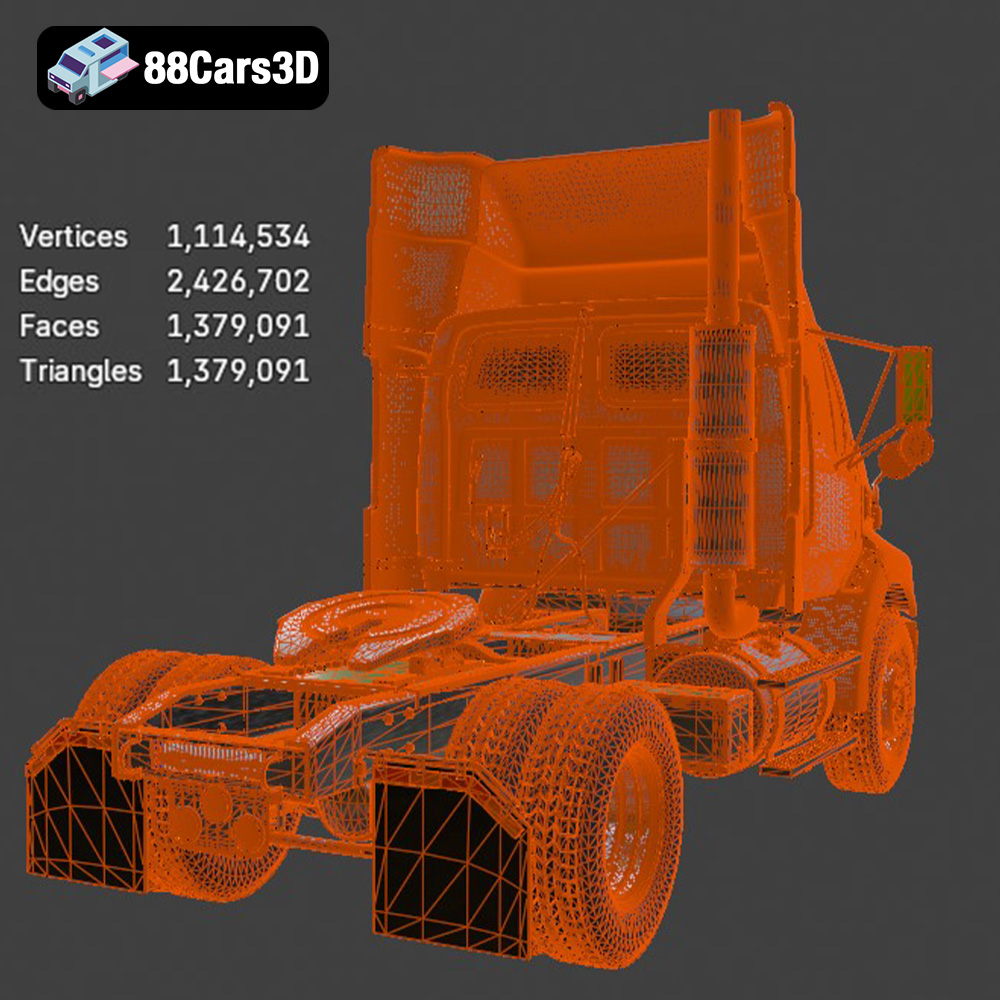
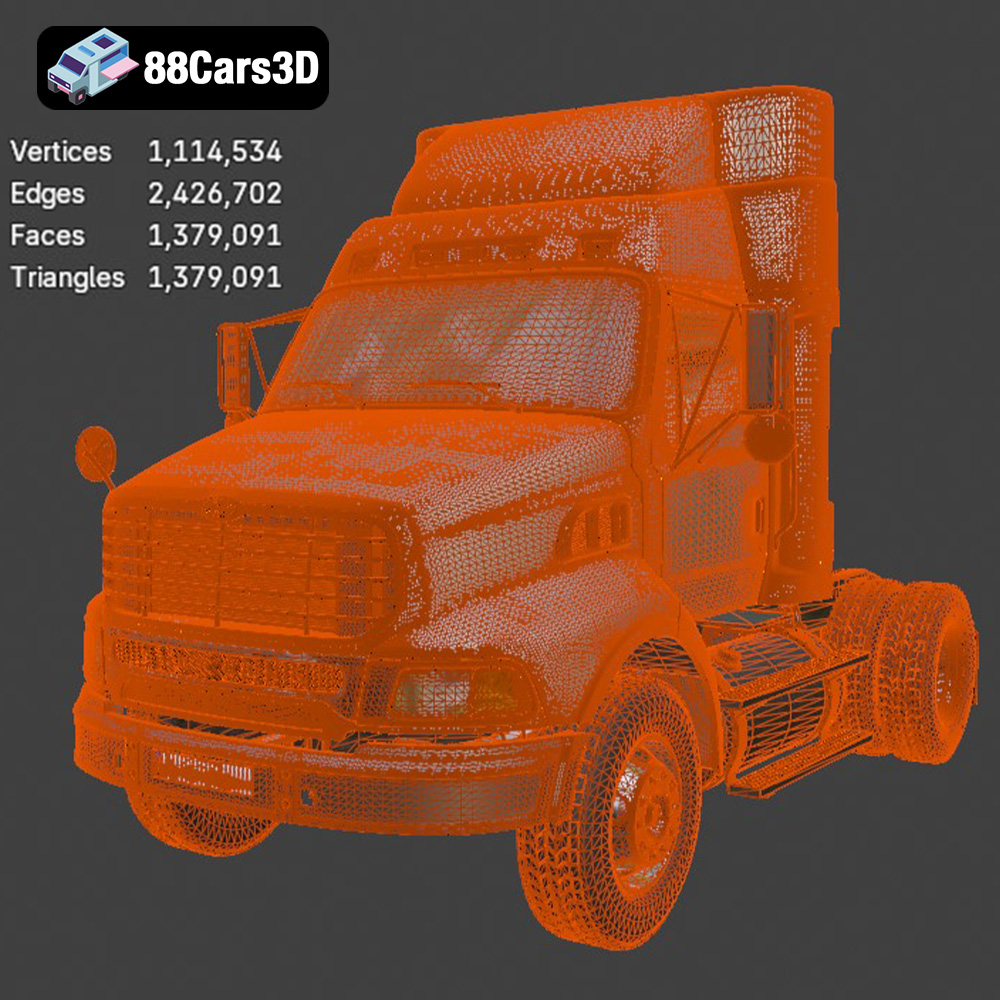
In the realm of professional 3D content creation, a high-fidelity model isn’t just a luxury; it’s a necessity. The Ford Sterling A9500 Tractor Truck 2006 3D Model exemplifies this principle, offering an incredibly dense and uncompromising topology. With nearly 1.6 million triangles, this model is engineered for maximum visual impact, making it a cornerstone for projects where realism is non-negotiable.
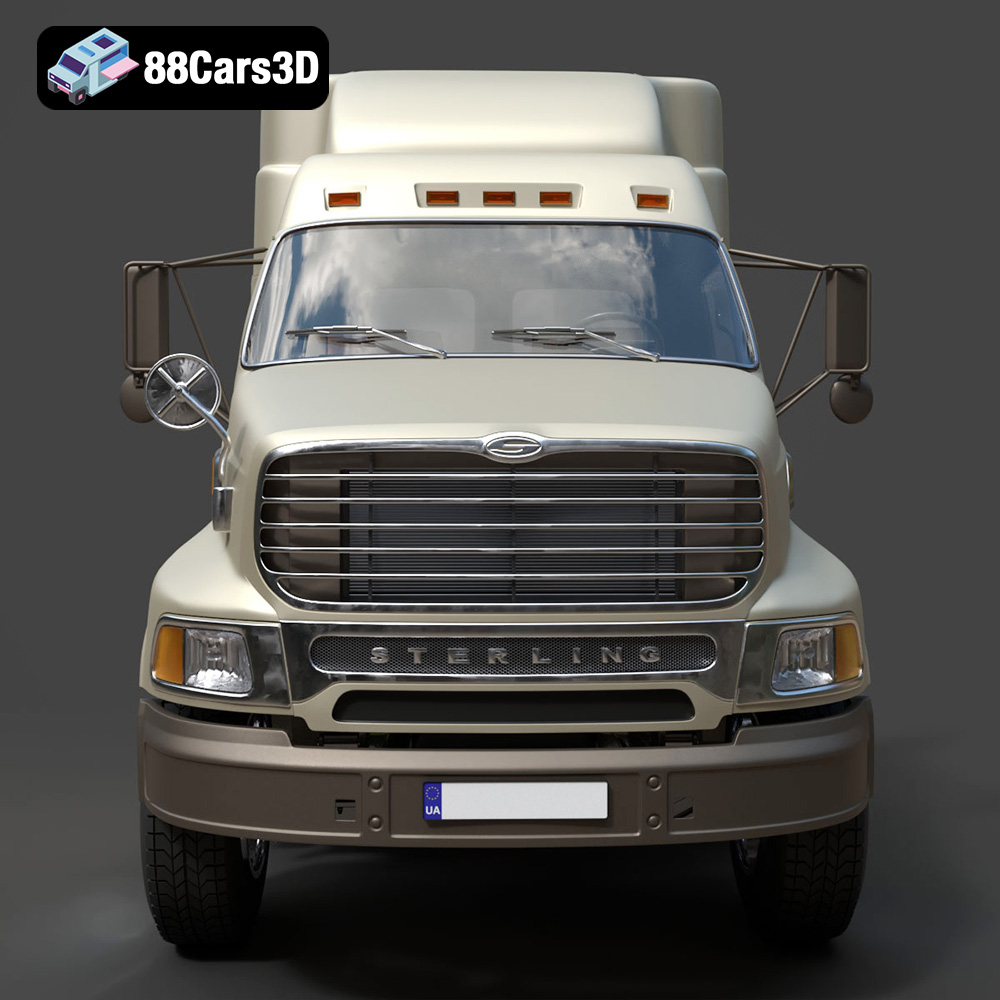
The meticulous craftsmanship of the Sterling A9500 model means that every bolt, every weld line, and every panel gap is accurately represented. This level of detail is critical for scenarios demanding extreme close-up rendering. Imagine a cinematic sequence where the camera slowly tracks along the chrome grille, revealing the intricate mesh, or a product visualization showing off the rugged texture of the tires and the heavy-duty suspension components. Low-polygon models simply cannot hold up under such scrutiny. The high triangle count ensures that even when zoomed in, surfaces remain smooth, contours stay sharp, and small details don’t dissolve into pixelated artifacts. This makes it an ideal 3D car model for high-end advertising, industrial presentations, and virtual photography.
Beyond visual fidelity, real-world scale accuracy is vital for commercial applications. The Ford Sterling A9500 is built to factory commercial dimensions, ensuring it fits perfectly into architectural visualizations, logistics planning mockups, or urban environment simulations. For businesses needing to visualize fleet branding on their trucks, design new logistics hubs, or even train drivers in simulators, an accurately scaled model is indispensable. This precision allows for seamless integration into existing scenes and provides a reliable foundation for any visualization that needs to convey genuine scale and proportion.
Integrating a complex 3D car model like the Ford Sterling A9500 into various professional workflows requires an understanding of diverse software environments and technical considerations. This model provides the flexibility needed, whether you’re crafting stunning static renders or aiming for interactive experiences.
For rendering and cinematic production, software like Autodesk 3ds Max and Blender are industry powerhouses. The Ford Sterling A9500 model, with its comprehensive .max and .blend file formats, is immediately ready for these environments. In 3ds Max, artists can leverage advanced rendering engines like V-Ray or Corona to produce hyper-realistic images. This involves setting up complex lighting scenarios, fine-tuning material properties (e.g., the reflective chrome, the matte paint, the rubber tires), and adding environmental effects like atmospheric haze or road reflections. The model’s “high-poly, well-organized mesh structure” simplifies this process, providing a clean base for material assignments and UV mapping, even if additional texture work is desired. Similarly, Blender users can harness Cycles or Eevee, utilizing its node-based material system to create breathtaking visuals that capture the heavy-duty presence of the truck.
While the Ford Sterling A9500 is presented as a high-poly “hero” asset, its potential for game development and real-time applications like Unreal Engine or Unity is significant, albeit with specific considerations. A model with 1.58 million triangles is too dense for direct real-time use in most interactive scenarios, especially in a game where performance is critical. However, its high detail makes it an excellent source for creating lower-polygon versions (retopology) or baked normal maps. Developers can decimate the mesh or manually retopologize the model to create a game-ready asset, then bake the high-fidelity details from the original model onto the new, optimized mesh using normal, ambient occlusion, and displacement maps. The inclusion of an .fbx and .unreal format means the base is ready for import, and the pivot setup for steering and wheel rotation saves considerable time in the rigging phase for interactive driving mechanics. This workflow transforms a cinematic asset into a dynamic game component, showcasing its adaptability.
The Ford Sterling A9500 Tractor Truck 2006 3D Model isn’t confined to digital displays. Its robust geometry and attention to detail make it an excellent candidate for physical manifestation through 3D printing. The inclusion of an .stl file format and detailed print settings speaks directly to the growing community of hobbyists and professionals who bridge the gap between digital design and tangible models.
Imagine holding a meticulously detailed 1:14 or 1:24 scale replica of the Sterling A9500. This model provides the perfect foundation for such creations. For RC semi-truck enthusiasts, this means custom-printing a unique body that captures every nuance of the original vehicle, from the bold chrome grille to the heavy-duty tandem axles. The separation of components like the cab, chassis frame, wheels, and fuel tanks for printing is a thoughtful detail, allowing for easier assembly, painting, and potentially incorporating moving parts. This transforms a static digital model into a dynamic, physical project, opening avenues for customized paint jobs, LED lighting, and even functional mechanics, truly embodying the spirit of a “3D printable” asset.
3D printing, especially for detailed automotive models, requires careful consideration of various settings. The provided recommendations for layer height (0.08–0.16 mm), wall thickness (1.5–2.5 mm), and infill (15–25%) are crucial for achieving structural integrity and capturing fine details. Supports, often a point of contention in 3D printing, are clearly identified as necessary for intricate areas like exhaust stacks, side mirrors, fuel tanks, and undercarriage suspension, ensuring overhangs and delicate features print correctly. Post-processing suggestions, such as sanding, priming, and specific paint colors, guide the user toward a professional finish, bringing the digital fidelity into the physical world with stunning accuracy. This detailed guidance ensures that even those new to 3D printing can achieve impressive results with this automotive 3D model.
Understanding the technical specifications of a 3D model is crucial for artists and developers to make informed decisions about its integration and optimization. The Ford Sterling A9500 Tractor Truck 2006 3D Model provides transparent and impressive statistics that underscore its premium quality.
With 1,114,534 vertices, 2,426,702 edges, 1,379,091 faces/polygons, and ultimately 1,579,091 triangles, the Sterling A9500 is definitively a high-polygon model. This “uncompromising topology” is the direct reason for its ability to deliver “maximum visual fidelity for extreme close-up rendering.” For cinematic productions and high-resolution visualization, this poly count is not just acceptable but desirable, as it avoids the need for complex normal mapping tricks to simulate geometry that simply isn’t there. The emphasis on a “well-organized mesh structure” is equally important. A clean, quad-based (or triangularized quad-based) mesh is easier to modify, subdivide, and UV unwrap, leading to better results during texturing and animation. For heavy-duty vehicles with many hard surfaces and distinct components, clean topology ensures crisp edges and smooth surfaces under various lighting conditions, making this an ideal 3D car model for top-tier projects.
The mention of “proper pivot setup for steering, wheel rotation, and trailer coupling articulation” is a critical technical advantage. In 3D animation and interactive applications, correctly positioned pivots are essential for realistic movement. Without them, animating wheels to rotate around their central axis, steering the front wheels, or connecting a trailer via the fifth-wheel coupling becomes a cumbersome and time-consuming task. This pre-configuration saves animators and riggers countless hours, allowing them to jump straight into creating compelling sequences where the truck performs authentically. It means the Ford Sterling A9500 model is not just a static display piece, but a dynamic asset ready for action in simulated logistics scenarios or vehicular animations.
The utility of a highly detailed 3D model like the Ford Sterling A9500 extends across numerous industries, proving its value in diverse professional contexts. Its design and specifications make it suitable for a range of specialized applications, from high-stakes advertising to industrial training.
One of the primary applications for this heavy-duty 3D car model is in commercial visualization. Logistics companies, truck manufacturers, and advertising agencies can utilize the Sterling A9500 to create compelling marketing materials. Imagine a scenario where a company needs to pitch a new fleet of trucks, showcasing their branding and capabilities. With this model, artists can render the truck in various environments – on a bustling highway, at a serene truck stop, or pulling into a modern distribution center. Customization options, such as changing exterior paint colors to match classic fleet logistics branding or modifying wheel setups, further enhance its utility for tailored presentations. The realistic detailing allows for the creation of persuasive visuals that resonate with clients and stakeholders.
For cinematic productions, whether for films, documentaries, or high-budget commercials, the demand for highly detailed hero vehicles is constant. The Ford Sterling A9500 Tractor Truck 2006 3D Model, with its nearly 1.6 million triangles, is perfectly suited for pre-rendered cinematic sequences. It can serve as a pivotal element in a scene depicting a cross-country journey, a dramatic industrial accident, or a gritty portrayal of the trucking industry. The ability to achieve extreme close-ups without loss of fidelity means directors and cinematographers can frame shots with complete freedom, knowing that every detail, from the textured dashboard to the polished chrome grille, will hold up on the big screen. The authentic commercial driver’s cabin layout and detailed analog gauge clusters also facilitate immersive interior shots, adding depth to storytelling.
Beyond entertainment and marketing, accurate 3D models of heavy vehicles are invaluable for educational and training purposes. Driving simulators for commercial truck drivers require realistic vehicle models to provide effective training. While the high poly count might require optimization, the underlying accuracy of the Sterling A9500’s chassis geometry, interior layout, and articulated parts makes it an excellent base for developing high-fidelity training modules. Students can learn about vehicle dynamics, practice maneuvering in various conditions, and even identify specific components, all within a realistic digital environment. The model’s real-world scale and detailed mechanics contribute significantly to creating an authentic learning experience, proving the immense value of such a professional 3D car model.
The Ford Sterling A9500 Tractor Truck 2006 3D Model, available on 88cars3d.com, stands as a testament to the power of high-quality 3D assets in bridging imagination and reality. From intricate renders to tangible 3D prints, its versatility and fidelity make it a truly indispensable tool for any professional artist or developer.
The journey through the technical specifications and application possibilities of the Ford Sterling A9500 Tractor Truck 2006 3D Model reveals the immense value a high-quality 3D asset brings to various industries. We’ve seen how its impressive polygon count and meticulous detailing translate into unparalleled visual fidelity for cinematic renders and industrial visualizations, standing up to the closest scrutiny. The comprehensive range of file formats—from .blend and .max for native software users to .fbx and .obj for universal compatibility, and specialized formats like .stl for 3D printing and .glb for web/AR/VR—underscores its adaptability across diverse professional pipelines.
Whether you’re crafting a photorealistic commercial for a logistics company, building an immersive game environment (with proper optimization), or fabricating a detailed scale model for a hobbyist display, the Ford Sterling A9500 provides a robust and reliable foundation. Its accurate geometry, detailed interior, and thoughtfully prepared components, including proper pivot setups, ensure that it’s not just a beautiful model but a functional and production-ready asset. For professionals seeking premium 3D car models that combine historical accuracy with technical excellence, the Ford Sterling A9500 Tractor Truck 2006 3D Model from 88cars3d.com is an exceptional choice, ready to accelerate your creative projects.
The Ford Sterling A9500 Tractor Truck 2006 3D Model is a highly detailed digital recreation of the iconic heavy-duty Class 8 commercial semi-truck. Born from the legacy of Ford’s heavy truck division, the Sterling A-Line series is renowned for its rugged durability, versatile chassis, and commanding presence on the highway. This model captures the classic aerodynamic yet muscular styling that made it a staple of regional hauling, vocational fleets, and industrial logistics across North America.
$79.99
.automotive
.blend
.fbx
.obj
.rendering
.stl
3d printing
a9500
big-rig
car-3d-model
class-8
commercial-vehicle
ford-trucks
heavy-duty
high poly
semi-truck
sterling-truck
tractor-truck