Get 50% OFF All Premium 3D & STL Models!

In today’s visually driven world, the demand for high-quality 3D assets is paramount across industries ranging from automotive design and cinematic production to game development and architectural visualization. A meticulously crafted 3D car model is far more than just a digital object; it’s a powerful tool that enables designers, artists, and engineers to bring their visions to life with unparalleled realism and precision. From concept validation and marketing campaigns to immersive simulations and interactive experiences, the fidelity of your 3D assets directly impacts the quality and effectiveness of your final output.
Creating such intricate models from scratch demands significant time, specialized skills, and advanced software knowledge. This is where a curated marketplace for professional-grade 3D car models becomes invaluable. It offers immediate access to assets that embody technical excellence, allowing professionals to bypass lengthy modeling processes and instead focus on creative direction, scene composition, and project delivery.
Imagine needing a robust, iconic heavy-duty truck to anchor a logistics visualization, a gritty urban game environment, or a detailed model for 3D printing. The search for a model that combines historical accuracy with technical prowess can be challenging. Fortunately, solutions like the Ford Sterling A9500 Tractor Truck 2006 3D Model exemplify the kind of detailed, versatile asset that streamlines complex workflows. This particular model, available on 88cars3d.com, stands as a testament to what’s possible when a legacy of engineering is meticulously translated into a digital format, ready for a myriad of professional applications.
Navigating the diverse landscape of 3D software and applications requires a solid understanding of the various file formats used to package and exchange 3D models. Each format serves a specific purpose, excelling in different scenarios based on factors like software compatibility, data preservation, and intended application (e.g., rendering, real-time, 3D printing). For a complex asset like the Ford Sterling A9500 Tractor Truck 2006 3D Model, having a comprehensive set of formats is crucial for professional users.
The .blend format is the native file type for Blender, the popular open-source 3D creation suite. A .blend file typically contains the entire Blender scene, including the 3D model geometry, materials (with node setups), textures (often packed within the file), lights, cameras, animations, and even modifiers. It offers the most flexibility for users working within Blender, allowing for full editing and reconstruction of the model’s setup. For the Ford Sterling A9500, a .blend file means artists can delve deep into the material definitions, adjust lighting scenarios, or even modify the model’s mesh directly within Blender’s powerful environment, making it ideal for high-end rendering with Cycles or Eevee.
.fbx (Filmbox) is a proprietary file format developed by Autodesk, widely recognized as one of the most robust and versatile formats for 3D data exchange across different software packages. It supports geometry, materials, textures, animations, skeletons, morph targets, and more. This makes it particularly ideal for transferring assets between 3D modeling software (like 3ds Max, Maya, Blender) and game engines such as Unreal Engine and Unity. When using the Ford Sterling A9500 in .fbx format, users can expect a high degree of fidelity in material assignments and potentially rigged elements like wheels or steering, ensuring a smooth transition into real-time pipelines or other rendering applications.
The .obj (Wavefront Object) format is a classic, widely supported 3D geometry definition file. It’s known for its simplicity and universal compatibility, making it an excellent choice for basic mesh exchange between virtually any 3D software. An .obj file primarily stores vertex positions, UV coordinates, normals, and polygon faces. Material definitions are typically handled by an accompanying .mtl (Material Template Library) file. While .obj doesn’t support complex features like animation or rigging, its widespread support ensures that the raw geometry of the Ford Sterling A9500 can be opened and utilized in almost any 3D application, serving as a reliable fallback or a starting point for new projects.
.glb (GL Transmission Format Binary) is the binary version of the glTF (GL Transmission Format) specification, designed for efficient transmission and loading of 3D scenes and models in web and real-time applications. It packages textures, animations, and mesh data into a single, compact file, making it perfect for augmented reality (AR), virtual reality (VR), and browser-based 3D viewers. The Ford Sterling A9500 in .glb format would be highly optimized for interactive experiences, showcasing its intricate details in a performance-friendly package on mobile devices or in web browsers without sacrificing visual quality.
The .stl (STereoLithography) format is the undisputed industry standard for 3D printing. It represents a 3D model as a series of connected triangles, describing only the surface geometry without color, texture, or other CAD attributes. For the Ford Sterling A9500, an .stl file is crucial for transforming the digital model into a physical object. The model’s high polygon count makes it an excellent candidate for highly detailed 3D prints, especially for larger scales, ensuring intricate features like the grille, exhaust stacks, and chassis components are accurately reproduced on a 3D printer.
.ply (Polygon File Format) is another common format for storing 3D data, particularly scan data and meshes. It can store a variety of properties including color, transparency, surface normals, texture coordinates, and scalar values for each vertex or face. While not as universally used as .obj or .fbx for general exchange, it’s often preferred in scientific, engineering, and 3D scanning contexts where precision and a wide array of attribute storage are important. For advanced users, the Ford Sterling A9500 in .ply format could be used for specific mesh analysis or conversion processes within specialized CAD or simulation software.
While not a standard open format, a file labeled .unreal typically implies an asset pre-packaged or optimized for direct import into Unreal Engine, often referencing specific asset configurations or scene files from the engine. It could be an .uasset file or a pre-configured .fbx intended for Unreal. For assets like the Ford Sterling A9500, a .unreal ready file saves significant setup time within the engine, potentially having proper material assignments, collision meshes, or even basic LODs (Levels of Detail) already configured, accelerating its deployment into interactive scenes or game environments, although heavy retopology may still be necessary for efficient real-time performance.
Similar to .blend for Blender, .max is the native file format for Autodesk 3ds Max, a leading software for 3D modeling, animation, and rendering. A .max file contains the complete 3ds Max scene, including all models, materials, lights, cameras, animations, and render settings. For professionals using 3ds Max, this format provides full editability and access to the original scene setup of the Ford Sterling A9500. This is invaluable for cinematic rendering, architectural visualization integration, or complex animation projects where the model needs to be deeply integrated and manipulated within the 3ds Max ecosystem.
The inclusion of such a comprehensive array of file formats for the Ford Sterling A9500 Tractor Truck 2006 3D Model underscores its versatility and professional readiness, catering to a broad spectrum of user needs and software preferences across the industry.
When it comes to specialized 3D car models, particularly heavy-duty commercial vehicles, accuracy and detail are paramount. The Ford Sterling A9500 Tractor Truck 2006 3D Model exemplifies this commitment to fidelity, meticulously recreating a robust Class 8 semi-truck renowned for its industrial strength and classic American trucking aesthetic. This isn’t just a generic truck model; it’s a digital homage to a workhorse that defined a generation of logistics and hauling.
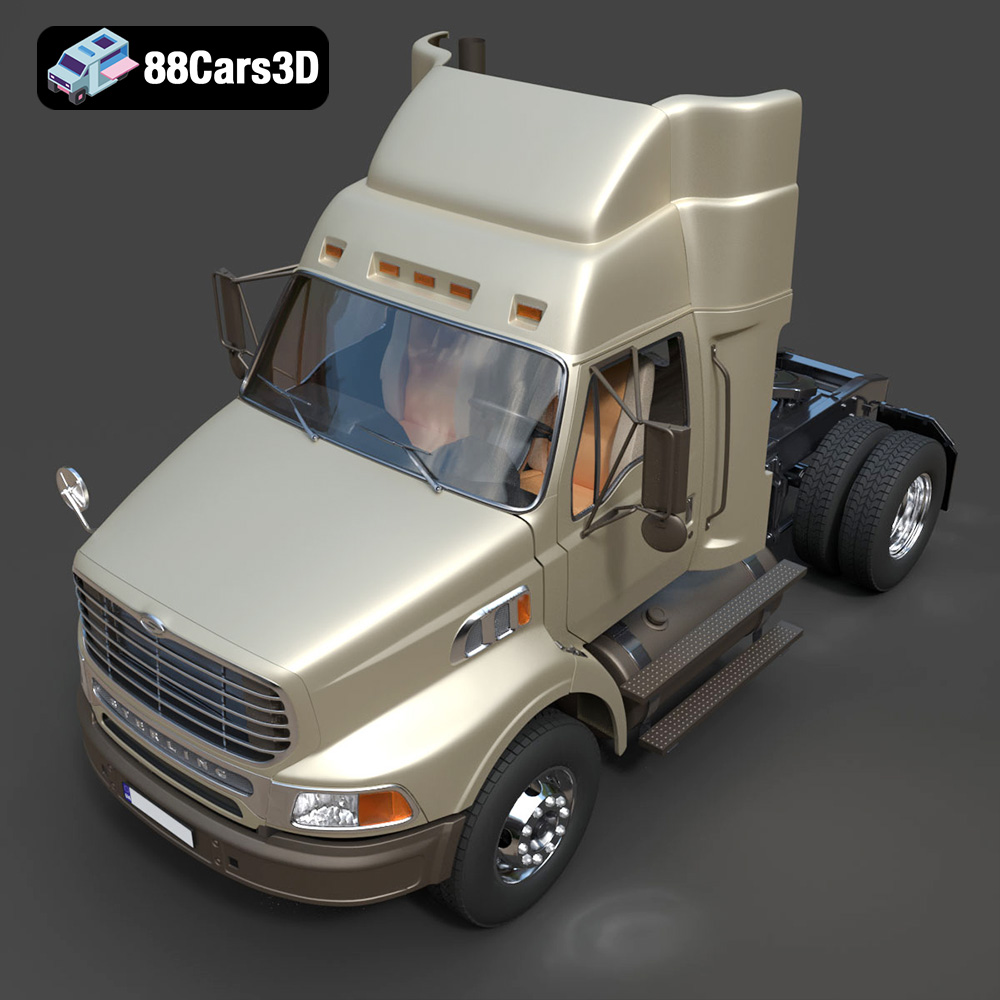
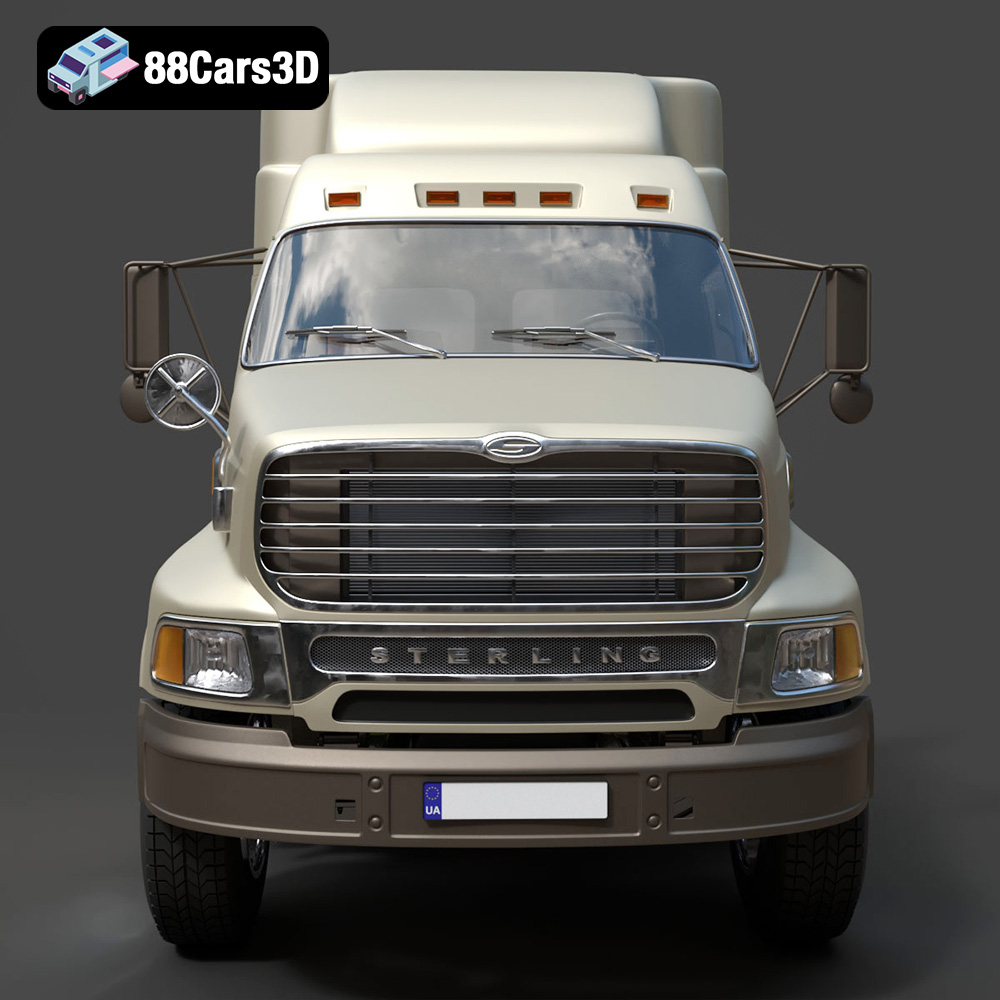
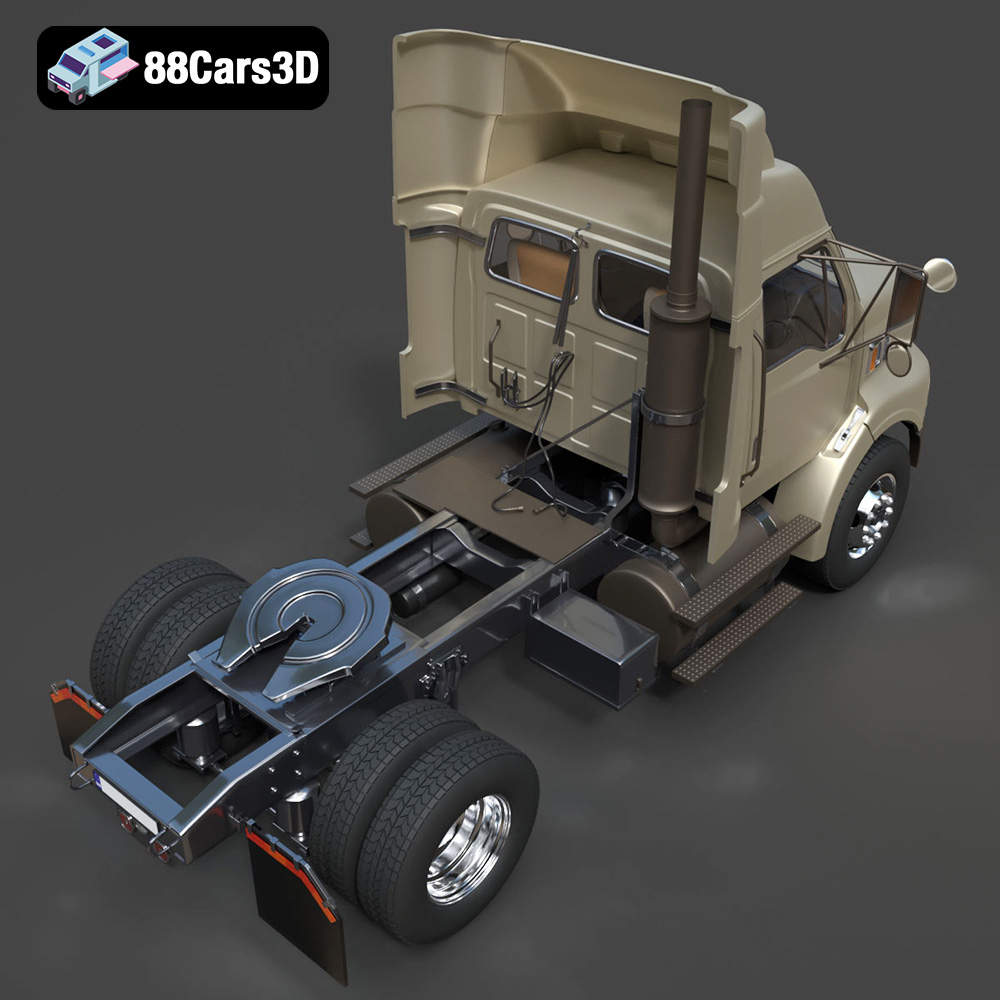
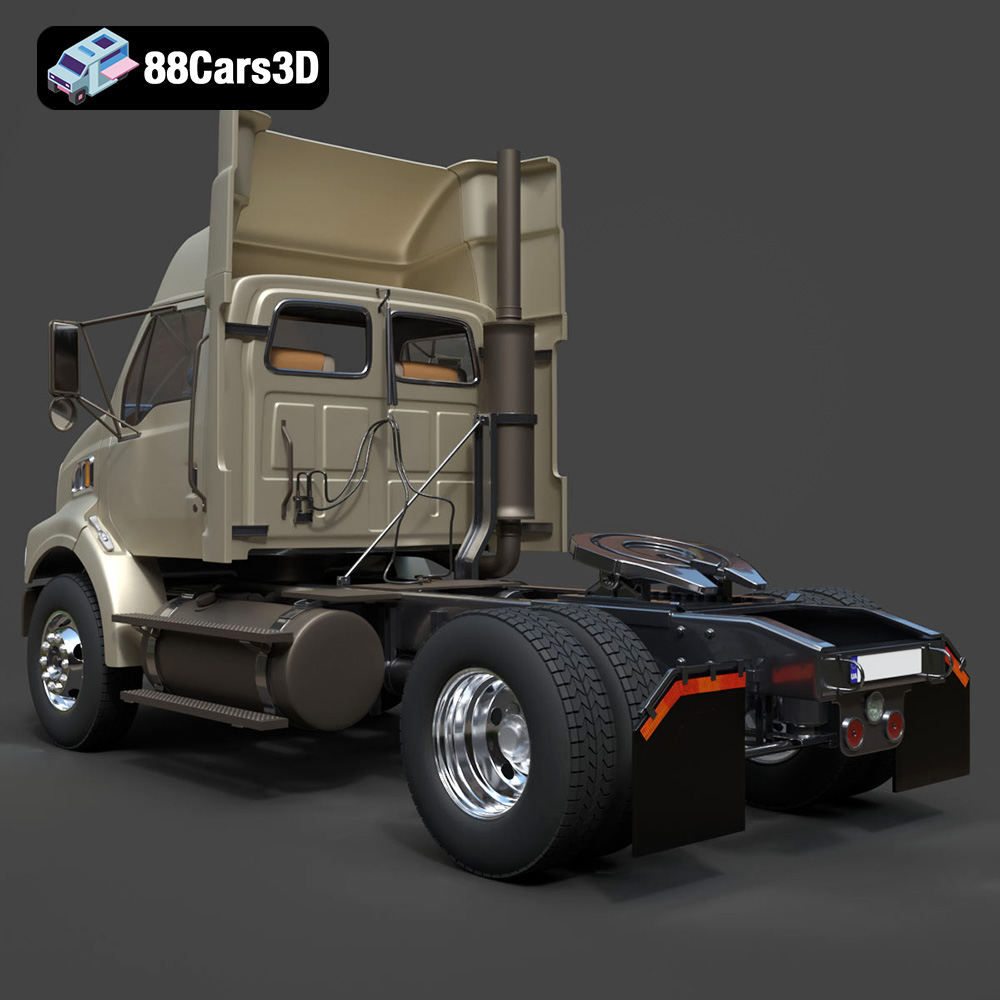
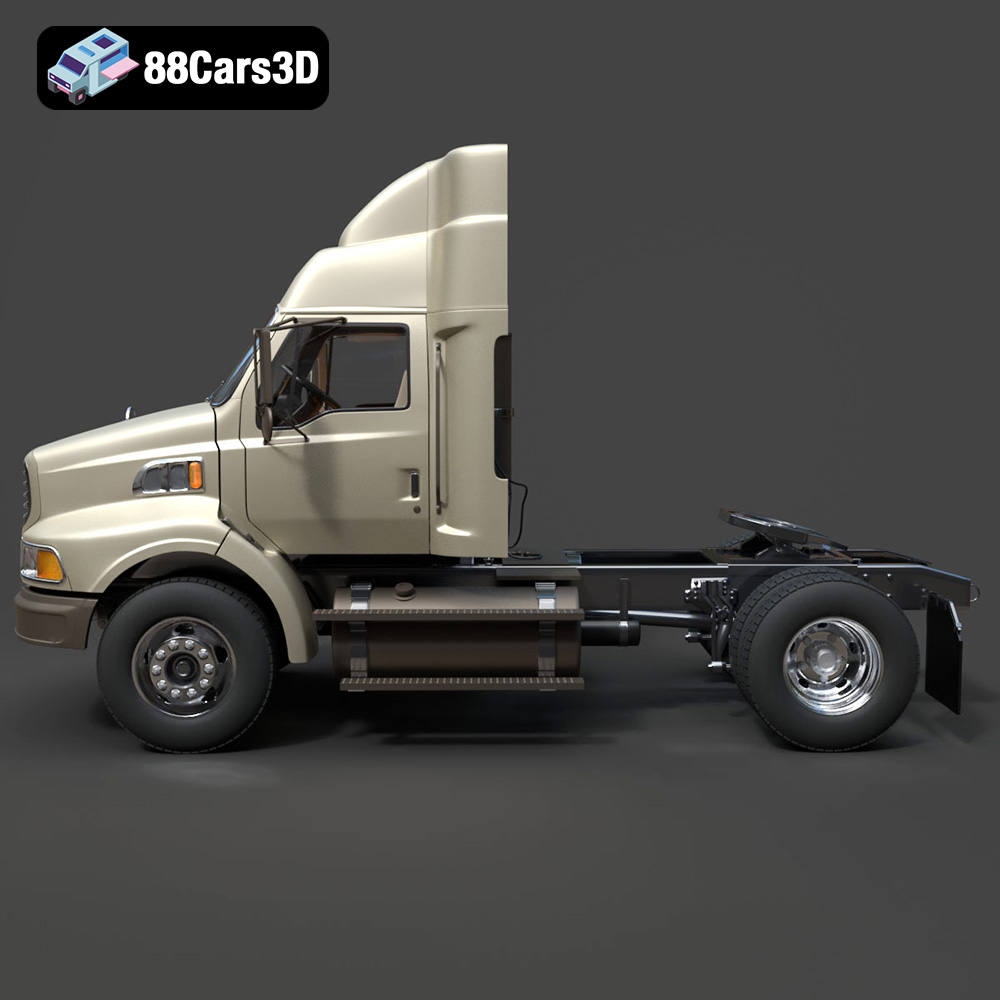
The exterior of this 3D model is a celebration of the Sterling A9500’s distinctive design. The model accurately captures the vehicle’s characteristic sloped hood, engineered for aerodynamics, and its bold chrome Sterling grille – an unmistakable visual signature. Every panel, from the detailed cab exterior (designed to be adaptable for both Day Cab and Sleeper configurations) to the heavy-duty rear tandem axles, reflects painstaking attention to real-world proportions and geometry. The inclusion of industrial fifth-wheel coupling is crucial for realistic trailer attachment scenarios, while the large cylindrical diesel fuel tanks, side steps, and towering exhaust stacks add a layer of practical authenticity that brings the model to life in any scene. Separate geometric elements for wheels, steering, doors, and the fifth-wheel pivot are not just cosmetic; they are critical enablers for realistic animation and interactive simulations, making this a truly dynamic asset.
The commitment to detail extends well beyond the surface, with a fully realized interior that offers an authentic commercial driver’s cabin experience. Designed with long-haul ergonomics in mind, the wrap-around dashboard features detailed analog gauge clusters and heavy-duty switches, allowing for convincing first-person POV rendering. Air-ride driver and passenger seating, complete with authentic upholstery textures, further enhances the realism. The large industrial steering wheel and heavy-duty transmission shifter contribute to an immersive environment, ideal for close-up shots, virtual walkthroughs, or even simulated training scenarios. This optimized geometry ensures that even in high-resolution renders, the interior stands up to intense scrutiny, offering a complete and convincing digital replica.
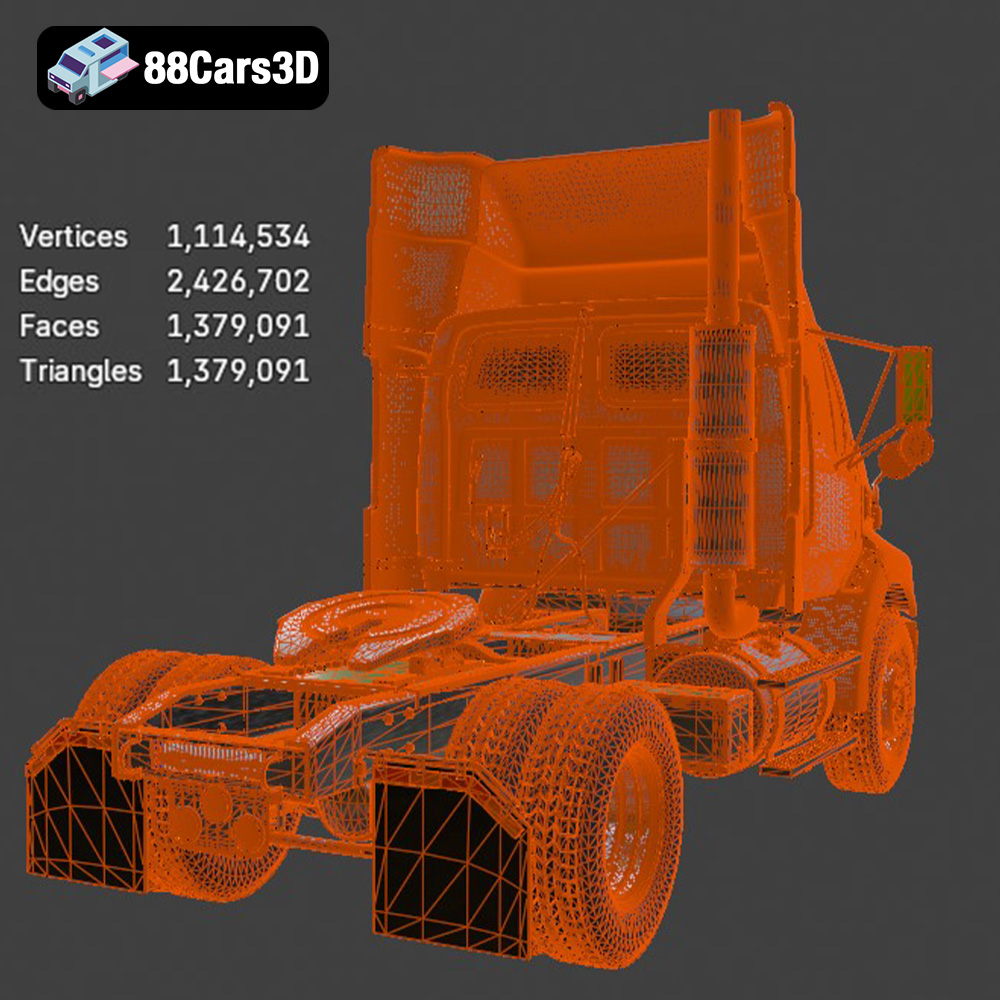
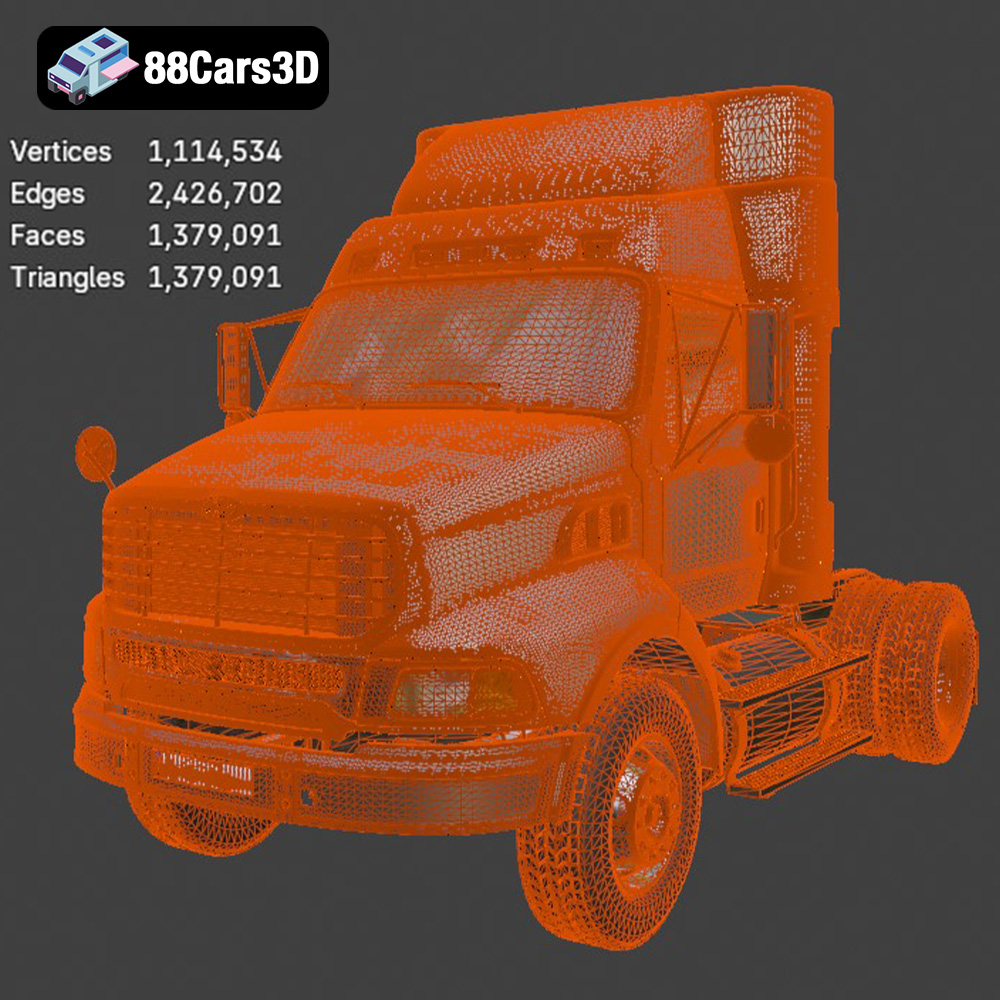
The underlying technical specifications of the Ford Sterling A9500 Tractor Truck 2006 3D Model are where its true professional value lies. With an impressive 1,114,534 vertices, 2,426,702 edges, 1,379,091 faces/polygons, and a total of 1,579,091 triangles, this is undeniably a high-poly asset. This dense mesh structure is not an arbitrary number; it’s a deliberate choice to provide maximum visual fidelity, especially for extreme close-up rendering and cinematic industrial visualization. Such detail ensures that subtle curves, sharp edges, and intricate mechanical components are rendered with photorealistic precision, making it perfect for commercial fleet mockups and high-end productions where every pixel counts.
Furthermore, the model boasts real-world scale accuracy, based on factory commercial dimensions, guaranteeing its seamless integration into scenes without awkward resizing issues. Proper pivot setups for steering, wheel rotation, and trailer coupling articulation are fundamental for animation workflows, allowing for believable motion and dynamic interactions. This blend of meticulous detail and technical precision makes the Ford Sterling A9500 a standout asset for anyone seeking top-tier automotive rendering and visualization capabilities.
The inherent quality of a high-fidelity 3D car model like the Ford Sterling A9500 Tractor Truck 2006 truly shines when integrated into professional rendering and visualization pipelines. Whether you’re an architectural visualization artist needing realistic vehicles for a logistics hub, a product designer showcasing a new trailer system, or a marketing agency creating a captivating commercial, this model offers a robust foundation.
For artists working with industry-standard renderers like V-Ray, Corona, Arnold (via 3ds Max), or Cycles and Eevee (via Blender), the Ford Sterling A9500 Tractor Truck 2006 3D Model is ready to be a hero asset. The inclusion of both .max and .blend formats provides direct access to native scene files, complete with well-organized mesh structures and potentially pre-configured materials. Professionals can leverage these starting points to:
An architectural visualization studio, for example, might place this Sterling A9500 model in a sprawling industrial park render to add realism and scale to their proposed development. The sheer detail allows the truck to hold up even in high-resolution print marketing materials, truly enhancing the project’s credibility.
The demand for realistic heavy-duty vehicles in cinematic productions, particularly for pre-rendered sequences, is constant. The Ford Sterling A9500, with its nearly 1.6 million triangles, is perfectly suited for such demanding applications. Filmmakers and animators can:
The robust geometry and detailed features make it an ideal “hero” asset for productions where visual impact and authenticity are paramount, far exceeding the requirements of typical background elements.
The versatility of a well-constructed 3D car model extends beyond purely digital realms. The Ford Sterling A9500 Tractor Truck 2006 3D Model, notably available in .stl format, bridges the gap between virtual and physical, offering exceptional potential for 3D printing, prototyping, and even hobbyist model making.
The high-poly nature of the Sterling A9500, with its detailed exterior and interior, makes it an excellent candidate for highly accurate 3D prints. For enthusiasts and professionals alike, this means the ability to produce physical scale models for a variety of purposes:
The model’s explicit inclusion of an .stl file and detailed 3D print settings demonstrates a clear understanding of this application, guiding users on optimal layer heights, wall thicknesses, infill, and crucial support structures for successful prints.
To ensure a successful 3D print of the Ford Sterling A9500, several technical aspects must be considered, and the product description provides valuable guidance:
This attention to detail in the product’s description not only aids hobbyists but also shows the thoroughness expected of professional-grade 3D car models found on platforms like 88cars3d.com.
The landscape of interactive experiences, from blockbuster video games to cutting-edge augmented and virtual reality applications, relies heavily on optimized game assets. While the Ford Sterling A9500 Tractor Truck 2006 3D Model is an undisputed hero asset for rendering, its substantial polygon count (nearly 1.6 million triangles) necessitates strategic optimization for efficient real-time performance in engines like Unreal Engine and Unity.
A high-poly model designed for cinematic rendering aims for maximum detail, often at the expense of polygon efficiency. In a real-time engine, every triangle contributes to the processing load, and an unoptimized 1.6-million-triangle truck could severely impact frame rates, especially if multiple instances are present or if it’s rendered alongside other complex assets. The product description frankly addresses this: “Note: At nearly 1.58M triangles, this is a heavy ‘hero’ asset. It will require manual retopology or decimation to be used efficiently in real-time driving simulators or game engines like Unreal or Unity.” This transparency is crucial for developers.
Leveraging a high-fidelity model like the Sterling A9500 for real-time applications involves a well-defined pipeline of optimization:
For AR/VR experiences, where performance is even more critical due to stereoscopic rendering and high frame rate requirements, these optimization steps are non-negotiable. A well-optimized version of the Ford Sterling A9500 could serve as an interactive exhibit, a vehicle in a training simulator, or an engaging element in an augmented reality advertisement.
For Unreal Engine, after optimizing the mesh and baking textures, the model (often exported as an .fbx) can be imported. Materials would then be recreated using Unreal’s PBR material editor, connecting the baked normal, albedo, roughness, and metallic maps. Collision meshes would also need to be generated or custom-modeled for realistic physics interactions. While the initial asset from 88cars3d.com provides the high-fidelity source, the subsequent optimization process is a testament to the skill and technical expertise required for professional game development.
Investing in a high-quality 3D car model like the Ford Sterling A9500 Tractor Truck 2006 from 88cars3d.com is not just about acquiring a static asset; it’s about gaining a versatile tool that can be adapted and re-purposed across numerous projects. The ability to customize and extend the model’s utility ensures its long-term value in a dynamic creative environment.
The detailed and well-organized structure of the Sterling A9500 model provides ample opportunity for extensive customization, allowing artists to make it uniquely suited to their specific project needs:
These customization capabilities ensure that the Ford Sterling A9500 remains a flexible asset, capable of fulfilling a wide range of creative briefs without requiring entirely new models.
A comprehensive asset library is essential for any professional creative studio. The Ford Sterling A9500 contributes significantly to this by offering a foundation that is built to last:
By providing a meticulously crafted, technically robust, and highly adaptable 3D car model, 88cars3d.com empowers professionals to not only meet their current project demands but also to build a resilient and valuable asset library for years to come.
In the demanding world of 3D content creation, the difference between a good project and an outstanding one often lies in the quality of its foundational assets. The journey from concept to final render, or from digital model to physical print, is streamlined and elevated when starting with highly detailed, technically sound 3D car models. The Ford Sterling A9500 Tractor Truck 2006 3D Model exemplifies this principle, offering a comprehensive solution for professionals in automotive rendering, game development, AR/VR, and 3D printing.
We’ve explored how its meticulous exterior and interior detailing, coupled with impressive technical specifications, make it an ideal “hero” asset for high-resolution studio rendering and cinematic productions. We’ve delved into the critical importance of understanding various file formats, showcasing how the Sterling A9500’s broad compatibility, including .blend, .fbx, .obj, .glb, .stl, .ply, .unreal, and .max, empowers diverse professional workflows. Furthermore, we highlighted its potential for physical manifestation through 3D printing, offering detailed guidance for hobbyists and prototypers alike. Lastly, we addressed the strategic optimization required for its integration into real-time game engines and immersive AR/VR experiences, ensuring its utility across the entire spectrum of digital media.
The Ford Sterling A9500 Tractor Truck 2006 3D Model is more than just a digital file; it’s a testament to professional craftsmanship and a versatile tool designed to accelerate creative projects and enhance visual fidelity. For studios and individual artists seeking top-tier automotive rendering solutions and robust game assets, this model, available on 88cars3d.com, represents a smart investment in quality and efficiency.
Ford Sterling A9500 Tractor Truck 2006 3D Model
The Ford Sterling A9500 Tractor Truck 2006 3D Model is a highly detailed digital recreation of the iconic heavy-duty Class 8 commercial semi-truck. Born from the legacy of Ford’s heavy truck division, the Sterling A-Line series is renowned for its rugged durability, versatile chassis, and commanding presence on the highway. This model captures the classic aerodynamic yet muscular styling that made it a staple of regional hauling, vocational fleets, and industrial logistics across North America.
This 3D model accurately represents the signature sloped hood, bold chrome Sterling grille, large diesel fuel tanks, heavy-duty fifth-wheel coupling, and tandem rear axle configuration. Built with incredibly dense, uncompromising topology (nearly 1.6 million triangles), it provides maximum visual fidelity for extreme close-up rendering, cinematic industrial visualization, commercial fleet mockups, and high-end 3D printing.
Perfect for highway logistics scenes, industrial construction site environments, commercial transport pitches, and high-end cinematic productions.
Accurate 2006 Sterling A9500 Class 8 tractor proportions and heavy-duty chassis geometry
Distinctive bold chrome front grille and aerodynamic sloped hood design
Detailed cab exterior (adaptable for Day Cab or Sleeper configurations)
Heavy-duty rear tandem axles with detailed suspension and air brake components
Accurate industrial fifth-wheel coupling for trailer attachment
Large cylindrical diesel fuel tanks, side steps, and towering exhaust stacks
Separate wheels, steering components, doors, and fifth-wheel pivot for animation
Authentic commercial driver’s cabin layout built for long-haul ergonomics
Wrap-around dashboard with detailed analog gauge clusters and heavy-duty switches
Air-ride driver and passenger seating with authentic upholstery textures
Large industrial steering wheel and heavy-duty transmission shifter
Optimized geometry suitable for high-resolution first-person POV rendering
Vertices: 1,114,534
Edges: 2,426,702
Faces / Polygons: 1,379,091
Triangles: 1,579,091
High-poly, well-organized mesh structure optimized for maximum exterior, interior, and chassis realism
Real-world scale accuracy based on factory commercial dimensions
Proper pivot setup for steering, wheel rotation, and trailer coupling articulation
Suitable for high-resolution studio rendering and commercial visualization
Compatible with major 3D software platforms and rendering engines
Rendering & Visualization: Ideal for highway trucking scenes, industrial fleet branding mockups, and commercial logistics showcases.
Cinematic Production: Perfect for pre-rendered cinematic sequences requiring highly detailed, heavy-weight hero vehicles.
Game Development / AR / VR: Note: At nearly 1.58M triangles, this is a heavy “hero” asset. It will require manual retopology or decimation to be used efficiently in real-time driving simulators or game engines like Unreal or Unity.
3D Printing: Excellent base for highly detailed, large-scale custom RC semi-truck bodies or diecast hobbyist displays.
Recommended scale: 1:32 / 1:24 / 1:14 (Popular for RC semi-truck builds)
Layer height: 0.08–0.16 mm
Wall thickness: 1.5–2.5 mm
Infill: 15–25%
Supports: Required for exhaust stacks, side mirrors, fuel tanks, and undercarriage suspension details
Print orientation: Cab and chassis frame printed separately for structural integrity; wheels and fuel tanks printed separately
Post-processing: Sanding, primer, standard commercial fleet paint colors (Fleet White, Viper Red, Cobalt Blue), and silver metalizer for the chrome accents
Change exterior paint colors to match classic fleet logistics branding
Modify wheel setups (swap standard steel wheels for highly polished Alcoa-style aluminum alloys)
Adjust rear chassis accessories (mudflaps, pogo sticks for air lines, and rear work lights)
Adapt lighting for sunny highway stretches or moody, rain-slicked night runs at the truck stop
.blend, .fbx, .obj, .glb, .stl, .ply, .unreal, .max
Sterling A9500 Tractor Truck 2006 High-Poly 3D Model
Texture: Yes | Material: Yes Download the highly detailed Ford Sterling A9500 Tractor Truck 2006 3D Model (1.58M Triangles). Features rugged Class 8 heavy-duty styling, a detailed commercial interior, chrome grille, and accurate chassis geometry. Includes .blend, .fbx, .obj, .glb, .stl, .ply, .unreal, and .max formats for rendering, visualization, and 3D printing.
sterling-truck, a9500, ford-trucks, tractor-truck, semi-truck, class-8, heavy-duty, commercial-vehicle, big-rig, high-poly, car-3d-model, automotive, rendering, 3d-printing, blend, fbx, obj, stl
3D Print Setting: • Recommended scale: 1:24 / 1:32 / 1:43 • Layer height: 0.04–0.12 mm (Resin printing recommended for the smaller scale details like the Thor’s Hammer headlights) • Wall thickness: 1.2–2.0 mm • Infill: 15–25% • Supports: Required for side mirrors, wheel arches, and the subtle rear roof spoiler • Print orientation: Body printed angled for a smooth surface finish; wheels printed separately • Post-processing: Sanding, primer, and modern Volvo factory colors (like Sage Green, Glacier Silver, or Crystal White) paired with a gloss black roof.3D Printing, STL, 3D Printable, Miniature Car, Scale Model, FDM Ready, Resin Print, SLA, Digital Manufacture, Car Prototype, Automotive Collectible, 3D Print Model, Physical Asset, Tabletop Display, Manifold Geometry.
$79.99
.automotive
.blend
.fbx
.obj
.rendering
.stl
3d printing
a9500
big-rig
car-3d-model
class-8
commercial-vehicle
ford-trucks
heavy-duty
high poly
semi-truck
sterling-truck
tractor-truck