Get 50% OFF All Premium 3D & STL Models!

The world of 3D visualization is a dynamic and ever-evolving landscape, particularly within the automotive sector. Whether you’re an architect needing realistic vehicles for a sprawling urban scene, a game developer crafting immersive open-world environments, or a designer looking to prototype a physical model, the demand for high-quality 3D car models is constant. These digital assets are the backbone of compelling visuals, interactive experiences, and tangible prototypes, requiring both artistic skill and technical precision.
At the heart of this digital craftsmanship lies the ability to accurately represent complex machinery like automobiles. A truly exceptional 3D model goes beyond mere aesthetics; it embodies precise measurements, clean topology, and intelligent organization, making it versatile across a myriad of applications. This technical excellence is precisely what we aim to explore, using the highly detailed Jeep Commander 3D Model as our prime example. This robust SUV, known for its distinctive boxy styling and rugged capability, serves as an excellent case study for dissecting what makes a 3D automotive asset indispensable in today’s creative and engineering pipelines.
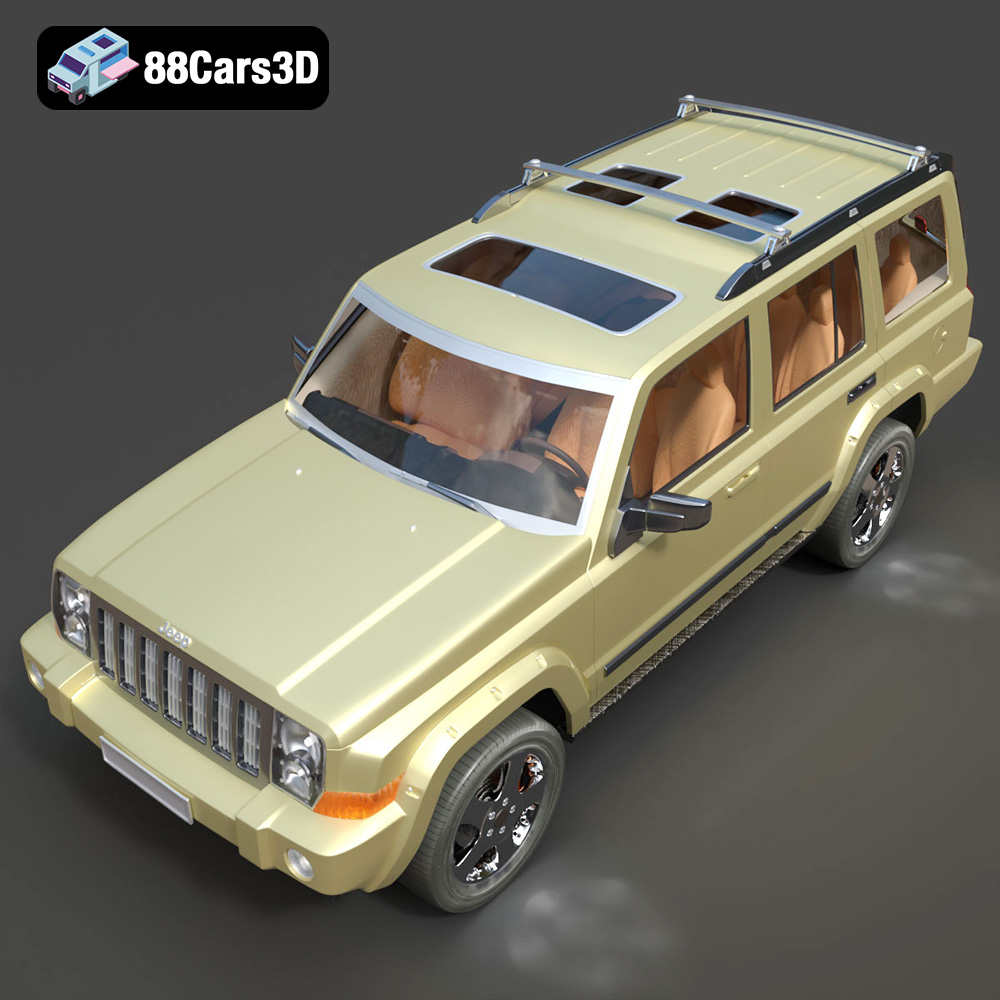
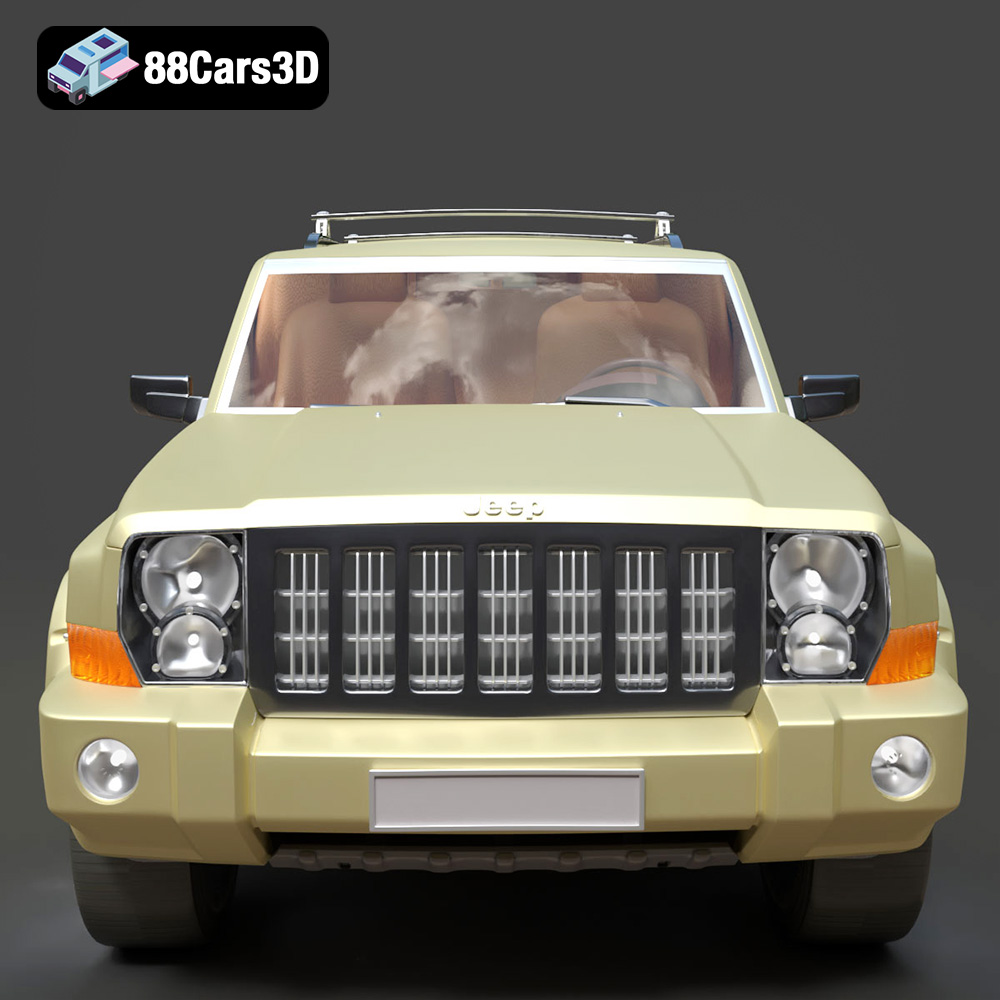
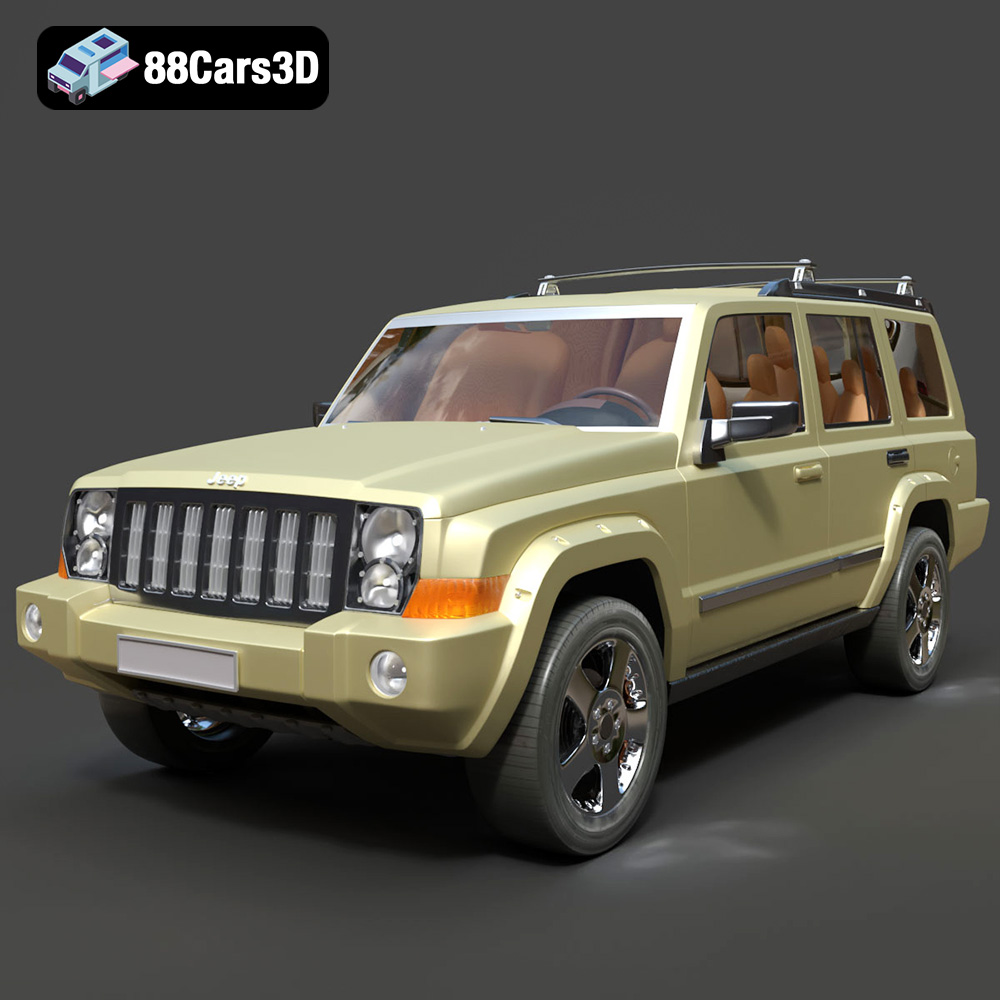
From the intricacies of its seven-slot grille to the nuanced curves of its roof rails, the Jeep Commander 3D Model available at 88cars3d.com offers a robust foundation for projects ranging from photorealistic automotive rendering to being a foundational element in a new generation of game assets. We’ll delve into the formats that unlock its potential, the workflows that bring it to life, and the various ways it can elevate your professional endeavors.
When working with 3D car models, selecting the correct file format is paramount. Each format is designed with specific applications, software compatibility, and data integrity in mind. Understanding their nuances allows professionals to optimize their workflows, ensure fidelity, and maximize performance across different platforms. The Jeep Commander 3D Model, for instance, is offered in a comprehensive suite of formats, each serving distinct purposes.
The .blend format is the native file type for Blender, the popular open-source 3D creation suite. When you acquire a .blend file, you’re getting a fully editable scene, complete with all its associated data: mesh geometry, materials, textures, lighting setups, cameras, animations, and even physics simulations. For artists deeply integrated into the Blender ecosystem, a .blend file offers unparalleled flexibility for customization, material adjustments using Cycles or Eevee renderers, and fine-tuning topology. It’s the ideal starting point for intricate scene composition and rendering within Blender.
.fbx (Filmbox) is arguably one of the most widely adopted proprietary file formats for 3D data interchange. Developed by Autodesk, it excels at storing not just geometry, but also materials, textures, animations, and rigging information. Its robustness and widespread support make it the go-to format for transferring assets between different 3D applications and, crucially, for integration into game engines like Unreal Engine and Unity. For the Jeep Commander, an .fbx file ensures that all animated components, like opening doors or rotating wheels, translate seamlessly into real-time pipelines, making it an excellent game asset.
The .obj (Wavefront OBJ) format is a classic, widely supported open standard primarily used for storing 3D geometry data (vertices, normals, texture coordinates, and faces). While it supports basic material and texture information through an accompanying .mtl (Material Template Library) file, it does not typically store animation or rigging data. Its strength lies in its universal compatibility, making it an excellent choice for cross-software transfers where only the core mesh is needed. If you’re importing the Jeep Commander into a less common 3D application or simply need the raw mesh data, .obj is a reliable option.
.glb (GL Transmission Format Binary) is the binary version of the glTF (Graphics Language Transmission Format) standard, which is rapidly becoming the “JPEG of 3D.” Optimized for efficient transmission and loading of 3D scenes and models, .glb files encapsulate geometry, materials, textures, and even animations into a single, compact file. This makes it perfect for AR/VR applications, interactive web viewers, and other browser-based displays where quick loading times and PBR (Physically Based Rendering) material support are essential. For showcasing the Jeep Commander in an interactive virtual showroom, .glb is the format of choice.
.stl (Stereolithography) is the de facto standard file format for 3D printing. It represents a 3D model as a series of connected triangles, defining only the surface geometry of an object without color, texture, or other CAD data. While simplistic, its ubiquity ensures compatibility with virtually all 3D printers and slicing software. When preparing the Jeep Commander for a physical scale model, the .stl format is indispensable, though careful preparation is needed to ensure manifold geometry for successful printing.
.ply (Polygon File Format) is a versatile file format that stores geometric objects as a collection of polygons. It can store a wider range of properties than .obj or .stl, including color, transparency, normals, texture coordinates, and even reliability information. While less common for general 3D assets, .ply is often used in scientific and engineering applications, such as 3D scanning, CAD software, and finite element analysis, where precise mesh data and attribute storage are critical.
The .unreal format, or more accurately, assets packaged for Unreal Engine, signifies an asset specifically optimized and ready for direct import or use within the Unreal Engine ecosystem. This often means the model has already been set up with appropriate materials, LODs (Levels of Detail), collision meshes, and potentially even blueprint functionality. This pre-optimized state significantly reduces setup time for game developers and real-time visualization specialists, making the Jeep Commander 3D Model a truly plug-and-play solution for creating compelling real-time environments.
Similar to .blend for Blender, .max is the native file format for Autodesk 3ds Max, a powerful 3D modeling, animation, and rendering software. A .max file contains the complete scene data, including geometry, materials, textures, lighting, cameras, animation keyframes, and plugins. For professionals heavily invested in 3ds Max for high-end automotive rendering and complex animation sequences, having the Jeep Commander in its native .max format offers maximum editability and integration into existing scene files and studio pipelines.
The availability of such a diverse array of formats for the Jeep Commander 3D Model underscores its versatility and quality, ensuring it can be utilized effectively across virtually any professional 3D workflow.
Creating a production-ready 3D car model is a meticulous process that bridges artistic vision with engineering precision. It demands an understanding of real-world vehicle design, mechanical functionality, and optimal polygon flow for various applications. The Jeep Commander 3D Model exemplifies this synthesis, offering a robust foundation for a multitude of creative and technical projects.
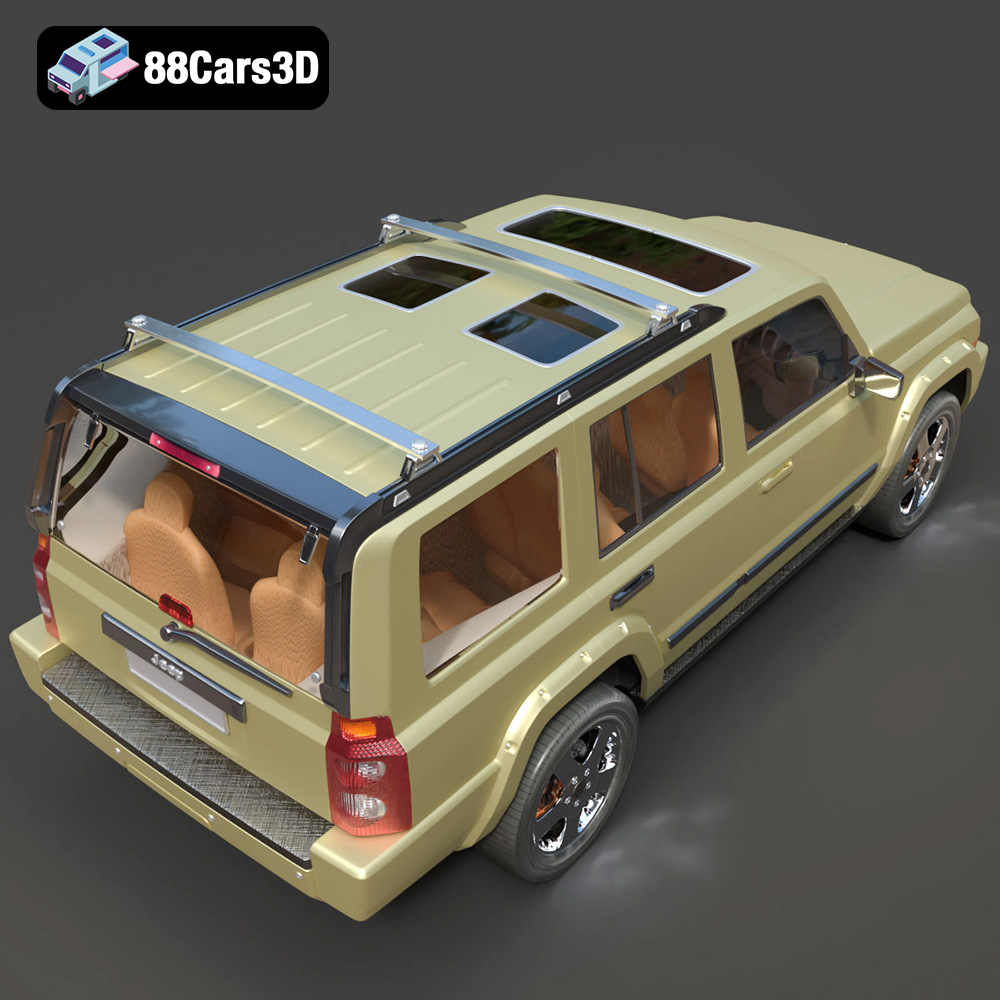
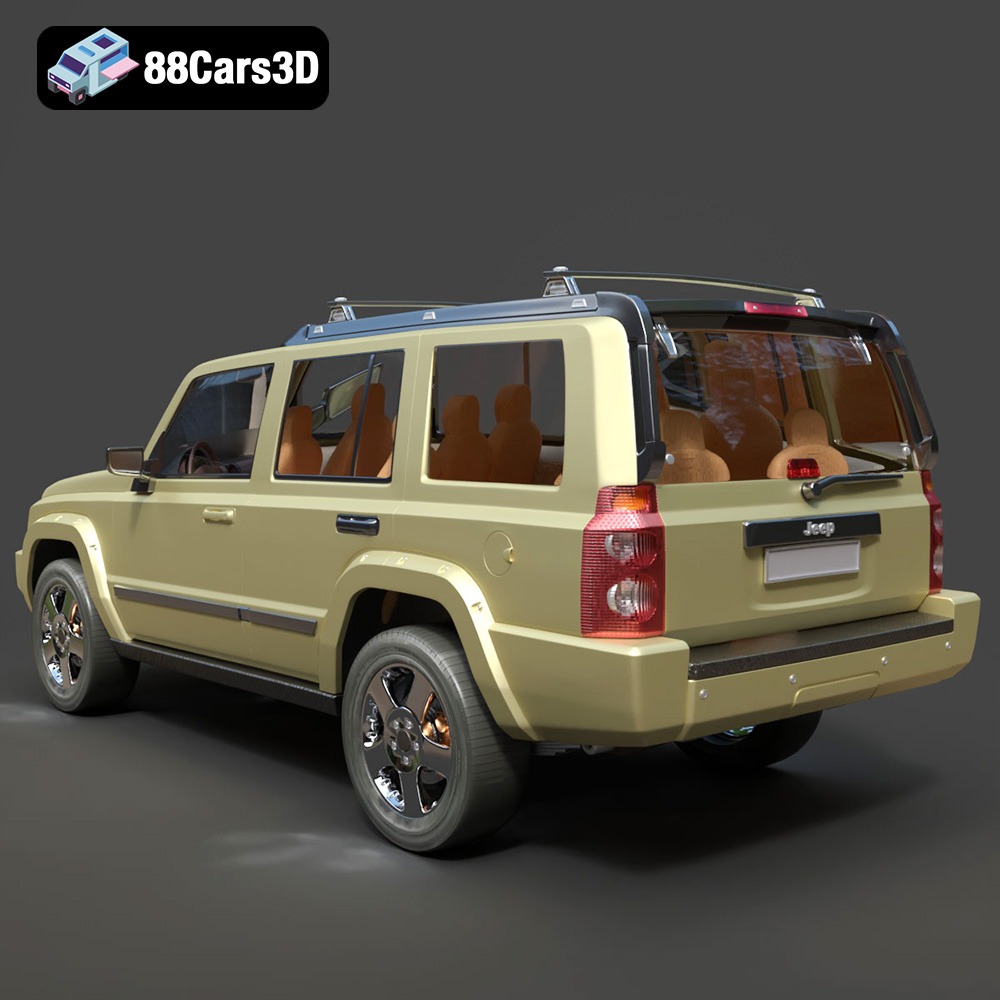
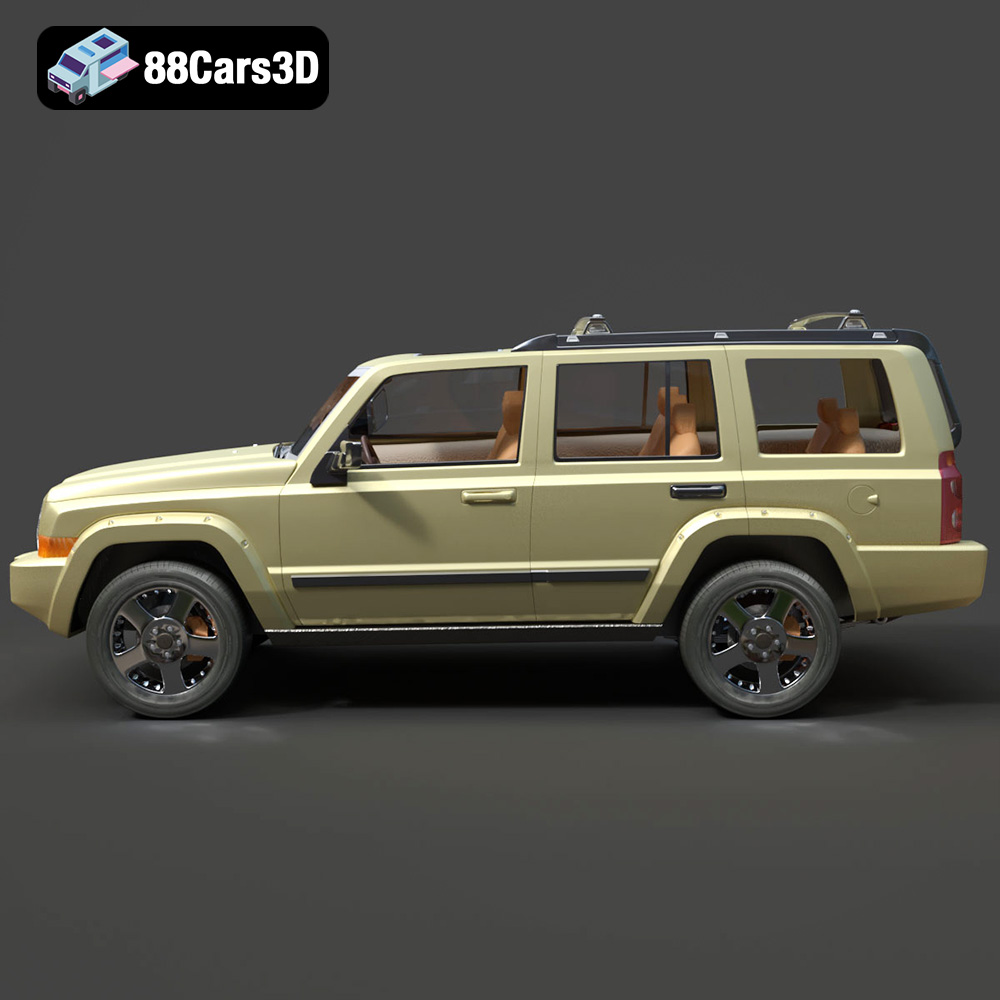
The first impression of any automotive model comes from its exterior. For the Jeep Commander 3D Model, authenticity begins with accurate body proportions. Every curve, panel gap, and hard edge is meticulously reproduced to mirror the real-world SUV. Crucial design elements like the signature seven-slot grille and rectangular headlight styling are faithfully recreated. This level of detail extends to the front and rear bumpers, integrated fog light areas, realistic roof rails, side mirrors, and even the subtle contours of door handles and window trims. Furthermore, the model includes accurately depicted wheels, tires, suspension clearance, and a foundational underbody structure, ensuring it holds up under close scrutiny for automotive rendering and simulation.
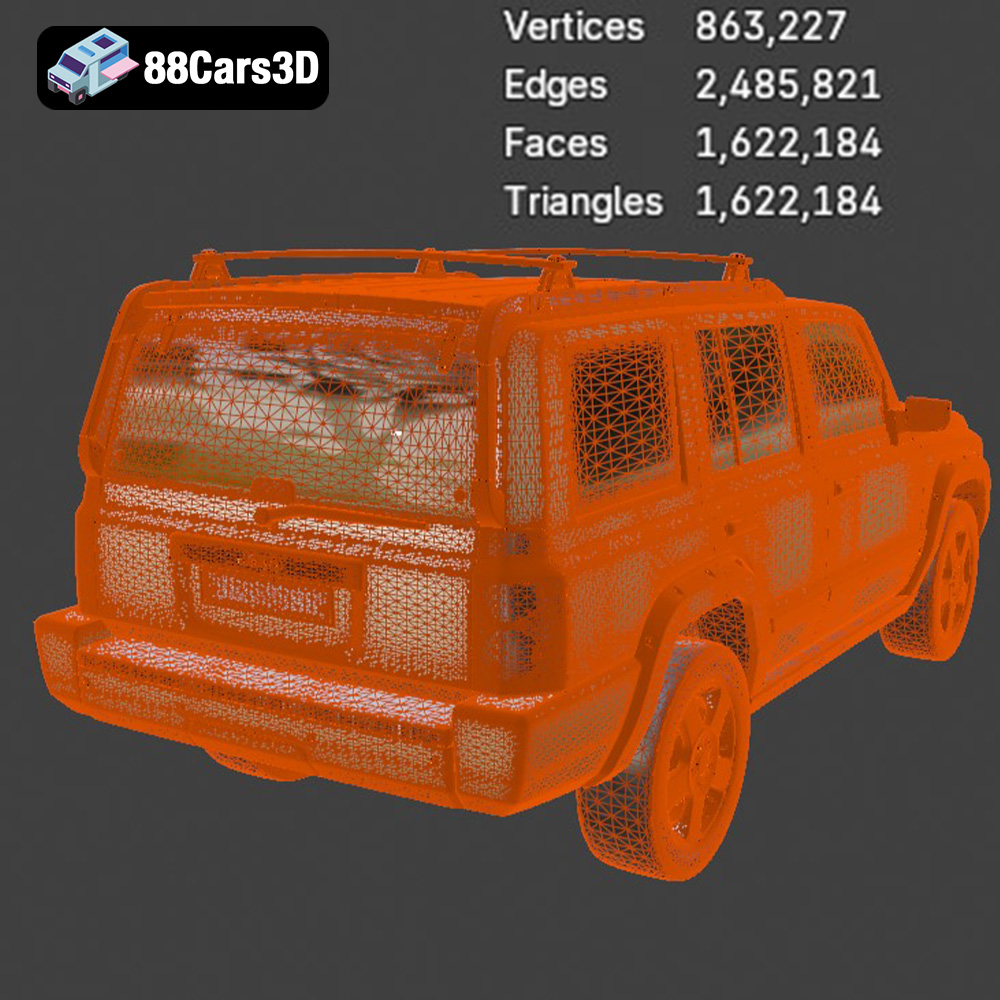
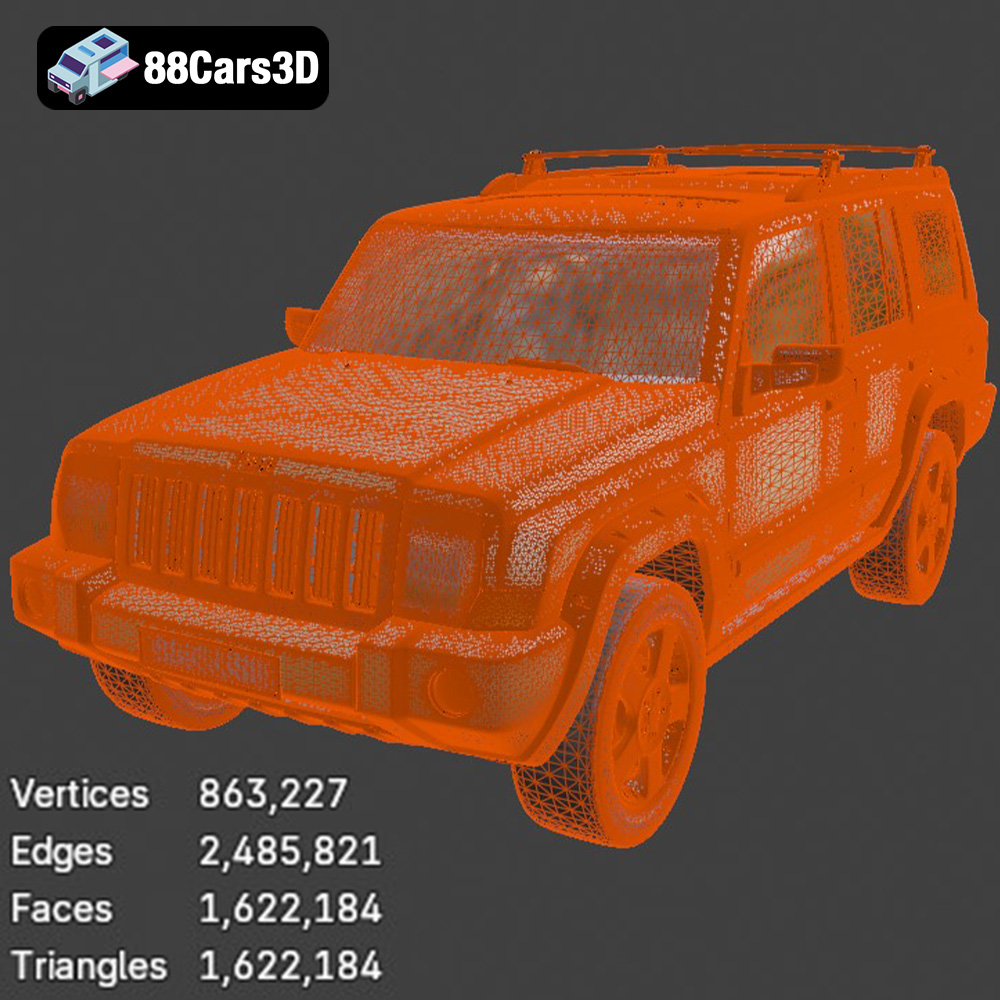
Beyond static fidelity, the model’s design considers practical use. Separate mesh components for doors, hood, tailgate, and wheels are not just aesthetic choices; they are technical advantages. This modularity is essential for animation workflows, allowing independent movement and interaction, which is vital for dynamic scenes, interactive configurators, or even crash simulations in specialized applications. Clean mesh structure with proper edge flow is another technical pillar, ensuring smooth subdivisions and deformations, preventing artifacts during rendering or animation.
While the exterior captures attention, a well-modeled interior provides a sense of immersion, particularly in VR, AR, or first-person game views. The Jeep Commander 3D Model features a carefully modeled dashboard with a center console and infotainment area, steering wheel, and instrument cluster detailing. Crucially, the three-row seating layout is represented, adding to the vehicle’s character as a family-oriented SUV. Door panels and interior trim elements complete the look, providing enough detail for believable interior shots without overburdening the polygon count. This optimization is key for maintaining high frame rates in real-time engines while still offering sufficient visual fidelity for close-up renders.
The organized hierarchy of components, both interior and exterior, is a significant technical advantage. It allows artists and developers to easily select, manipulate, and animate specific parts of the vehicle, streamlining complex production pipelines. This thoughtful construction ensures the Jeep Commander 3D Model isn’t just a static object, but a flexible tool ready for professional manipulation.
The true value of a premium 3D car model like the Jeep Commander lies in its seamless integration into diverse professional workflows. Its clean geometry, real-world scale, and optimized polygon count make it suitable for a spectrum of applications, from high-fidelity visualizations to demanding real-time environments.
For studios specializing in photorealistic automotive rendering, the Jeep Commander 3D Model provides an excellent starting point. In Autodesk 3ds Max, artists can leverage its .max format to dive directly into detailed material assignments using renderers like V-Ray or Corona. The clean mesh structure ensures smooth reflections and accurate light bounces, critical for believable vehicle paint and chrome. Customization options, such as changing paint colors (metallic silver, black, white, dark green, etc.), modifying wheel designs, or adding roof cargo boxes, are easily implemented, allowing for bespoke marketing visuals or architectural visualizations.
Similarly, Blender users benefit from the native .blend file, enabling full customization within Cycles or Eevee. The model’s real-world scale accuracy ensures it fits perfectly into existing scene environments, whether it’s an urban street scene or a rugged off-road landscape. Professional artists can experiment with different lighting setups – from studio softboxes to HDR environment maps – to achieve stunning cinematic productions. The organized hierarchy further simplifies the process of rigging and animating components like doors or wheels for dynamic renders, enhancing storytelling and visual impact.
The requirements for game assets are stringent, demanding both visual quality and optimal performance. The Jeep Commander 3D Model, especially in its .fbx and .unreal formats, is tailored for game development. Its optimized polygon count strikes a balance, allowing for detailed visuals without excessively burdening game engine resources. For developers working with Unreal Engine, the .unreal asset can be dropped directly into a project, often pre-configured with materials and possibly even basic collision. This significantly accelerates development cycles for open-world games, SUV driving simulators, or realistic vehicle environments.
The model’s clean topology and proper UV mapping (essential for texture application) ensure that it performs well under various lighting conditions and view distances within a game engine. Developers can easily implement LODs (Levels of Detail) to further optimize performance for players, ensuring the Jeep Commander looks great up close and remains efficient in the distance. Its suitability for real-time driving simulations extends to its potential for integration with physics engines, offering a realistic driving experience.
The burgeoning fields of Augmented Reality (AR) and Virtual Reality (VR) demand efficient, high-quality 3D assets. The Jeep Commander 3D Model, particularly when delivered in .glb format, is ideal for these applications. Its compact size and PBR material support make it perfect for virtual showrooms, interactive configurators, or immersive vehicle demos where users can explore the vehicle in a virtual space. Imagine a customer interacting with a virtual Jeep Commander on their tablet, changing colors, opening doors, and examining the interior from any angle – all powered by a precisely engineered 3D model.
For training simulations or educational visualization, the model can be integrated into interactive experiences, allowing users to learn about vehicle components, practice maintenance procedures, or simulate driving scenarios in a safe, virtual environment. The model’s organized hierarchy makes it simple to isolate and highlight specific parts for instructional purposes, transforming a static model into an interactive learning tool.
While digital visualization is powerful, the ability to transition a 3D car model from virtual space to physical form opens up a world of possibilities for prototyping, collectibles, and educational tools. The Jeep Commander 3D Model’s availability as an .stl file makes it perfectly suited for 3D printing, enabling users to create tangible replicas.
The journey from digital .stl to physical print requires careful consideration of scale and print settings. The recommended scales for the Jeep Commander (1:32 / 1:24 / 1:18 / 1:12) allow for a range of physical model sizes, from tabletop display pieces to larger, more detailed collector builds. For smaller scales, resin printing (SLA/DLP) is often recommended to capture finer details, such as the signature rectangular headlights and subtle body lines. For larger scales, FDM (Fused Deposition Modeling) can be viable, especially with careful calibration.
Key print settings provided, such as layer height (0.12–0.20 mm for FDM, 0.04-0.12mm for resin), wall thickness (2–3 mm), and infill (15–30%), are crucial for achieving structural integrity and surface quality. Supports are almost always required for complex automotive models, particularly for elements like side mirrors, roof rails, and any intricate underbody details that would otherwise defy gravity during printing. Print orientation is also vital; for the Jeep Commander, printing the body upside-down can result in a smoother roof finish, minimizing visible layer lines on a prominent surface, while printing wheels separately ensures better detailing and reduces the need for supports on their complex geometry.
Once printed, the physical Jeep Commander model enters the realm of post-processing, where it truly comes to life. This typically involves sanding to smooth out layer lines and imperfections, followed by priming to create an even surface for paint. Automotive-style paint, applied with an airbrush or spray cans, can replicate the vehicle’s factory finish. Options like metallic silver, black, white, or dark green can be chosen to match various real-world Commander iterations. An optional clear coat provides a glossy, protective layer, mimicking a genuine car’s paint job and adding depth to the finish. This hands-on process allows for a unique blend of digital design and traditional model-making skills, resulting in impressive physical automotive collectibles or functional prototypes.
Beyond initial integration, the hallmark of a high-quality 3D car model from a trusted source like 88cars3d.com is its inherent versatility and ease of customization. The Jeep Commander 3D Model excels in this regard, offering professionals the flexibility to adapt it to an endless array of project requirements.
One of the most impactful ways to customize a 3D car model is through its materials and textures. While the Jeep Commander 3D Model comes with pre-configured materials, artists have full control to modify them to suit specific artistic visions or project needs. This includes changing paint colors to any hue imaginable, applying custom metallic flakes, or adjusting the roughness and reflectivity for different environments – from a showroom gleam to a dust-covered off-road vehicle. Interior materials can also be swapped, perhaps changing seat upholstery from fabric to leather, or modifying dashboard textures to reflect wear and tear. This level of control is essential for creating unique renders that stand out, aligning perfectly with branding guidelines or narrative requirements for automotive rendering projects.
Furthermore, the clean UV mapping of the model allows for effortless application of custom decals, branding logos, or even intricate patterns, opening up possibilities for special edition vehicles or company fleet visualizations. The ability to fine-tune every surface detail ensures that the Jeep Commander can transform from a stock SUV into a highly personalized asset.
The versatility of the Jeep Commander 3D Model extends to its ease of integration into complex 3D scenes. Its real-world scale and organized hierarchy mean it can be seamlessly placed into architectural visualizations, urban streetscapes, or expansive natural environments. Adjusting lighting setups is a powerful customization option, dramatically altering the mood and realism of a render. Artists can simulate various times of day – a vibrant midday sun, a dramatic sunset, or the subtle glow of streetlights at night. Studio lighting setups, using virtual softboxes and reflectors, can highlight the vehicle’s form for product showcases.
Adding environmental context, such as puddles reflecting the vehicle, dust swirling around tires, or snow accumulating on the roof rails, further enhances realism. The model serves as a robust canvas upon which a professional artist can paint an entire scene, whether for a commercial advertisement, a film pre-visualization, or a detailed gaming environment. This adaptability makes the Jeep Commander 3D Model a truly invaluable game asset and rendering tool, capable of meeting diverse project demands.
The landscape of 3D modeling for automotive applications is increasingly sophisticated, demanding assets that are not only visually appealing but also technically sound and highly versatile. As we’ve explored, the Jeep Commander 3D Model stands as a prime example of such an asset, offering unparalleled quality for a wide range of professional needs.
From its meticulously crafted exterior and interior details to its clean topology and optimized geometry, this model is designed to excel. Whether your project calls for stunningly realistic automotive rendering in 3ds Max or Blender, robust and performant game assets for Unreal Engine, immersive experiences in AR/VR, or tangible prototypes through 3D printing, the Jeep Commander provides a reliable and flexible foundation. The comprehensive selection of file formats ensures maximum compatibility, empowering artists and developers to integrate it seamlessly into their preferred workflows.
Investing in high-quality 3D car models like the Jeep Commander is an investment in efficiency, fidelity, and creative freedom. It allows professionals to focus on artistic direction and project innovation, rather than spending countless hours on foundational modeling. For those seeking to elevate their automotive visualizations, game development projects, or physical prototyping endeavors, a visit to 88cars3d.com offers a gateway to an extensive library of exceptional 3D vehicles, ready to drive your next project forward.
The Jeep Commander 3D Model is a precise digital recreation of the full-size SUV produced by Jeep. Known for its boxy styling, three-row seating configuration, and rugged 4×4 capability, the Commander blends classic Jeep DNA with family-oriented practicality. This 3D model captures the Commander’s distinctive squared body design, seven-slot grille, roof rails, elevated stance, and strong off-road character. Designed with clean topology and accurate proportions, it is ideal for rendering, animation, simulation, AR/VR applications, and game development.
$0
.4x4vehicle
.arvr
.blend
.car3dmodel
.commander
.familySUV
.fbx
.gameasset
.glb
.jeep
.max
.obj
.ply
.rendering
.simulation
.stl
.suv3dmodel
.unreal
.vehicleasset