Get 50% OFF All Premium 3D & STL Models!

In the highly competitive world of automotive design and sales, captivating your audience goes beyond static images and pre-rendered videos. Today’s consumers demand immersive, interactive experiences that allow them to explore products in unprecedented detail. This is where Unreal Engine steps in, transforming high-quality 3D car models into dynamic, real-time product demos. Imagine a prospective buyer not just seeing a car, but customizing its paint, swapping out wheels, opening doors, and even test-driving it within a virtual environment, all in stunning photorealism. This level of engagement significantly elevates the perceived value and understanding of a product.
Unreal Engine, with its powerful rendering capabilities, extensive toolset, and flexible visual scripting, provides the ideal platform for building these next-generation interactive experiences. Whether you’re an automotive designer, a game developer, a visualization artist, or an Unreal Engine enthusiast, mastering these techniques can unlock new possibilities for showcasing vehicles. From meticulous material creation to advanced lighting and intuitive user controls, every aspect contributes to a truly compelling demo. In this comprehensive guide, we’ll delve into the technical workflows, best practices, and essential Unreal Engine features needed to create spectacular interactive automotive product demos, leveraging high-fidelity 3D car models like those found on marketplaces such as 88cars3d.com.
The journey to an immersive automotive demo begins with a robust Unreal Engine project setup and the seamless integration of high-quality 3D assets. A well-structured foundation ensures optimal performance, scalability, and ease of development throughout the project lifecycle. This initial phase involves configuring the engine for high-fidelity automotive visualization and efficiently importing your 3D car models, ensuring they are primed for real-time rendering.
Setting up your Unreal Engine project correctly is paramount for automotive visualization. Start by selecting a suitable project template, such as the “Blank” or “Architecture, Engineering, and Construction” templates, as they provide a clean slate or relevant base assets without unnecessary game-specific features. Crucially, navigate to Edit > Project Settings to fine-tune essential rendering features. For photorealistic automotive rendering, consider enabling Ray Tracing under the “Rendering” section, as it dramatically enhances reflections, shadows, and global illumination, especially when combined with Lumen. Ensure your target hardware meets the specifications for Ray Tracing before enabling it. For projects targeting high-end PCs or virtual production setups, configure Default Post Process Settings within your project to allow for advanced color grading, exposure controls, and cinematic effects. Enabling Large World Coordinates (LWC) can also be beneficial for vast exterior environments, preventing precision issues over large distances, though it may not be strictly necessary for smaller, confined demo spaces.
Furthermore, managing scalability settings is key. Under Project Settings > Engine > Scalability Settings, you can define different quality levels. While your primary demo might target “Cinematic” or “Epic” quality, understanding these settings is crucial for optimizing potential exports to lower-spec platforms or for debugging performance issues. Regularly consulting the official Unreal Engine documentation at https://dev.epicgames.com/community/unreal-engine/learning is highly recommended for keeping abreast of the latest best practices and feature configurations.
Once your project is configured, the next step is to import your 3D car models. Platforms like 88cars3d.com offer meticulously crafted models, often optimized for Unreal Engine, which streamlines this process. The most common formats for importing into Unreal Engine are FBX and USD (Universal Scene Description). USD is increasingly popular for its ability to handle complex scene hierarchies, materials, and animations across different software, making it an excellent choice for collaborative workflows and future-proofing your assets. When importing via File > Import Into Level… or by dragging and dropping into the Content Browser, pay close attention to the import options:
Upon import, conduct an initial optimization pass. Inspect the polygon count; while Nanite (discussed later) handles high-poly meshes gracefully, traditional static meshes benefit from reasonable poly counts for optimal performance. Check for clean topology and proper UV mapping, as these are critical for realistic material application and lighting. If your model lacks proper UVs or has overlapping UVs, address these in your 3D modeling software before re-importing, or use Unreal Engine’s built-in UV unwrapping tools for simpler adjustments.
The visual fidelity of an interactive car demo hinges significantly on the quality and realism of its materials. Unreal Engine’s Physically Based Rendering (PBR) system, combined with its powerful Material Editor, allows artists to create incredibly lifelike surfaces that react accurately to light, mirroring real-world automotive finishes. This section explores how to craft these intricate materials and apply advanced techniques for stunning results.
PBR materials are fundamental to achieving photorealism in Unreal Engine. They simulate how light interacts with surfaces in a physically accurate way, relying on a set of texture maps that define a material’s properties. For an automotive model, these typically include:
To create a PBR material in Unreal Engine, right-click in the Content Browser, select Material, and open it in the Material Editor. Here, you’ll connect your texture maps to the corresponding input pins of the main Material node. For example, connect your Base Color texture’s RGB output to the Base Color input, and similarly for Normal, Roughness, and Metallic. Using texture resolutions of at least 2048×2048 or 4096×4096 is recommended for primary vehicle components to maintain crisp detail, especially for close-up views. Ensure texture compression settings are appropriate for the type of map (e.g., “Normalmap” for normal maps, “VectorDisplacementmap” for specific grayscale maps). This careful construction ensures that your materials respond realistically to Unreal Engine’s lighting, providing a visually authentic foundation for your interactive demo.
Automotive finishes are complex, often involving multiple layers of paint, clear coats, and metallic flakes. Unreal Engine’s Material Editor allows for advanced techniques to simulate these intricacies. A common approach is to create a Master Material that can be instanced for various parts of the car. This master material might include parameters for paint color, metallic flake intensity, clear coat thickness, and roughness, allowing artists to create countless variations from a single base.
For realistic car paint, you’ll often use a layered material setup. One common technique involves blending a standard PBR metallic material with an additional clear coat layer. This can be achieved using a Lerp (Linear Interpolate) node to blend between different roughness values or normal map intensities based on a custom masking texture or even view angle. For metallic flake effects, you can sample a noise texture, combine it with a Fresnel effect, and plug it into the Emissive Color or Normal input with a very small normal map intensity to simulate tiny reflective particles embedded in the paint. Utilizing a “Clear Coat” shading model in the Material properties can greatly simplify the process, offering dedicated inputs for Clear Coat Roughness and Normal. Experiment with these advanced settings to fine-tune the reflectivity, metallic sheen, and subtle nuances that make automotive paint truly shine. This level of detail, combined with efficient material instancing, ensures both visual fidelity and optimal performance in your interactive experience.
Lighting is arguably the most critical element in establishing mood, realism, and visual appeal for any 3D scene, especially in automotive visualization. Unreal Engine 5’s Lumen global illumination and hardware-accelerated Ray Tracing offer unparalleled photorealism, bringing your 3D car models to life. Understanding how to harness these powerful features, alongside traditional lighting methods and environmental setups, is essential for a captivating interactive demo.
Lumen is Unreal Engine 5’s revolutionary real-time global illumination and reflections system, designed to deliver immediate diffuse interreflection with infinite bounces and indirect specular reflections from emissive surfaces. For automotive visualization, Lumen means your car models will be illuminated realistically by their surroundings – a red wall will cast a red bounce light onto the car, and light from the sky will gently fill shadowed areas. To enable Lumen, navigate to Project Settings > Engine > Rendering > Global Illumination and set Dynamic Global Illumination Method to “Lumen.” Do the same for Reflections Method. For optimal visual quality, especially with complex automotive geometry, consider setting the Lumen Scene Detail higher, though this will impact performance. Placing a Post Process Volume in your scene is crucial; within its settings, search for “Lumen” and ensure its settings are tweaked for your environment. Adjusting parameters like Lumen Final Gather Quality and Reflections > Max Trace Distance can significantly impact the visual fidelity and performance trade-off. Lumen dynamically adapts to lighting changes, making it perfect for interactive demos where light sources might move, or the environment might change based on user choices.
While Lumen handles global illumination, hardware-accelerated Ray Tracing complements it by providing highly accurate reflections, shadows, and ambient occlusion, particularly for transparent and highly reflective surfaces like car windows, chrome, and clear coats. To enable Ray Tracing, go to Project Settings > Engine > Rendering and enable Ray Tracing. After restarting the editor, you can then set specific rendering features to use Ray Tracing. For instance, within a Post Process Volume, under “Rendering Features,” you can select Reflections Method > Ray Tracing, Global Illumination Method > Ray Tracing (though often Lumen provides a good balance for GI), and Ambient Occlusion Method > Ray Tracing. Ray-traced reflections are especially critical for automotive applications, as they capture the environment with pixel-perfect accuracy on glossy car surfaces, making the vehicle feel truly grounded in its surroundings. Similarly, ray-traced shadows offer contact-hardened, soft shadows that enhance realism significantly. While computationally intensive, combining Ray Tracing with Nanite (for geometry) and Lumen (for GI) provides an unmatched level of visual fidelity for high-end interactive experiences.
A realistic environment is key to making the car model truly pop. High Dynamic Range Images (HDRIs) are indispensable for this. An HDRI captures real-world lighting and reflections, providing both background imagery and illumination data. Import an HDRI into Unreal Engine as a texture and then create a Skylight actor in your scene. In the Skylight’s details panel, set its Source Type to “SLS Specified Cubemap” and assign your HDRI texture to the Cubemap slot. Ensure the Skylight is set to “Movable” for dynamic lighting with Lumen. Adjusting the Skylight’s intensity and color temperature can fine-tune the overall ambient lighting. To provide a visual background that matches the HDRI, use a Sky Sphere or create a custom static mesh dome with an unlit material displaying the HDRI. For indoor studio environments, strategically placed Rect Lights or Spot Lights can simulate studio softboxes and accent lights, emphasizing the car’s contours and design features. Remember to use light sources that interact correctly with Lumen and Ray Tracing – typically “Movable” lights will provide the best results, although they come with a higher performance cost compared to “Stationary” or “Static” lights.
The true power of an interactive product demo lies in its ability to respond to user input and dynamically change. Unreal Engine’s Blueprint Visual Scripting system makes this level of interactivity accessible even to those without extensive coding knowledge. Blueprint allows developers to create complex gameplay mechanics, UI interactions, and dynamic scene changes through a node-based visual interface, perfect for building a custom automotive configurator or an engaging virtual showroom.
At its core, Blueprint uses events, functions, and variables to define behavior. For interactive demos, common events include user input (e.g., mouse clicks, key presses) and overlap events (e.g., character walking into a trigger volume). To begin, you’ll often create an Actor Blueprint for interactive elements, or modify the Level Blueprint for scene-wide interactions. For example, to change a car’s color, you might set up an Input Action mapping in Project Settings > Engine > Input for a mouse click. Then, in your car’s Blueprint, you could implement an Event On Clicked node for a specific mesh component. This event could then trigger a function that changes the material of the car body. Variables are crucial for storing states, such as the currently selected color or wheel type. For instance, an Integer variable could represent the index of the active material in an array of car paint materials. Understanding the flow of execution, from event triggers to sequential actions, is the foundation of building any interactive system in Blueprint. For more in-depth learning on Blueprint, refer to the extensive tutorials and documentation available on https://dev.epicgames.com/community/unreal-engine/learning.
A car configurator is a prime example of an interactive product demo. Using Blueprint, you can empower users to customize various aspects of the vehicle.
User Interface (UI) is integral to a configurator. Use Unreal Engine’s UMG (Unreal Motion Graphics) Editor to design buttons, sliders, and text displays. These UMG widgets can then communicate with your car’s Blueprint logic through Event Dispatchers or direct function calls, allowing users to trigger customization options with ease. For example, a “Change Color” button in your UMG widget could call a custom event in your car’s Blueprint that cycles through the paint material array.
Beyond vehicle customization, an interactive demo should offer dynamic camera controls, allowing users to explore the car from various angles. A common approach is to use a Spring Arm Component attached to your camera, which allows the camera to orbit around a target (the car) while automatically avoiding collisions. Blueprint can then be used to control the Spring Arm’s rotation and length based on mouse input or predefined camera angles (e.g., exterior view, interior view). You can implement a Set View Target with Blend node on the Player Controller to smoothly transition between different camera positions or even pre-animated camera sequences made in Sequencer. For scene interactions, consider adding elements like interactive lighting adjustments (e.g., turning on/off studio lights), environment changes (e.g., day/night cycle, changing showroom backdrop), or even rudimentary physics simulations for a test drive. These interactions, all driven by Blueprint, transform a static model into a captivating, controllable experience, truly setting your product demo apart.
Achieving photorealistic visuals in real-time, especially with complex automotive models, demands meticulous attention to performance. Unreal Engine 5 introduces game-changing technologies like Nanite, while traditional optimization techniques like Level of Detail (LOD) management remain crucial. This section delves into these strategies, ensuring your interactive demo runs smoothly without sacrificing visual fidelity.
Nanite is Unreal Engine 5’s virtualized geometry system, designed to handle incredibly high polygon counts with extreme detail and minimal performance impact. For automotive visualization, Nanite is a paradigm shift. It allows artists to import detailed CAD data or high-poly sculpts with millions of polygons directly into Unreal Engine without the need for manual retopology or LOD generation for the core vehicle body. Nanite intelligently streams and renders only the necessary detail based on camera distance, effectively eliminating traditional polygon budget constraints. To enable Nanite on a Static Mesh, simply select the mesh in the Content Browser, right-click, and choose Nanite > Enable Nanite. Once enabled, the mesh will have a “Nanite” flag in its details. When working with Nanite, focus on maximizing geometric detail without worrying about performance on the CPU side. However, remember that Nanite primarily optimizes geometry. Materials, lighting (especially Ray Tracing), and texture streaming still require optimization. While Nanite is revolutionary, certain elements like animated meshes (e.g., car doors opening via skeletal animation) or specific transparent meshes may not be compatible and will require traditional optimization approaches. Understanding these limitations is key to judiciously applying Nanite where it offers the most benefit.
Even with Nanite, Level of Detail (LOD) management remains a vital optimization strategy for several reasons. Firstly, not all meshes can be Nanite-enabled (e.g., certain animated or transparent meshes). Secondly, if your interactive demo targets platforms that don’t support Nanite (like mobile or older hardware), or if you’re exporting for external use, traditional LODs are indispensable. LODs are simplified versions of a mesh that are swapped in at increasing distances from the camera, reducing polygon count and draw calls. Unreal Engine provides robust tools for automatic LOD generation within the Static Mesh Editor. You can specify the number of LODs, screen size thresholds for swapping, and even customize settings for polygon reduction and material simplification. For example, a car wheel might have LOD0 (full detail, ~50k polygons), LOD1 (reduced detail, ~15k polygons), and LOD2 (low detail, ~3k polygons). Manually fine-tuning LODs, especially for critical components, ensures that visible details are preserved while distant objects are aggressively simplified. Good LOD management is a cornerstone of scalable real-time rendering, guaranteeing your automotive assets look great and perform well across a range of viewing distances and hardware configurations.
Optimization is an ongoing process that involves identifying and addressing performance bottlenecks. Unreal Engine offers a suite of profiling tools to help. Use the in-game console commands `stat unit` (for overall CPU/GPU/draw time), `stat gpu` (for detailed GPU timings), and `stat rhi` (for rendering hardware interface stats) to get immediate feedback. For deeper analysis, the Session Frontend (accessible via Window > Developer Tools) provides comprehensive profiling data, including CPU and GPU frame timing, memory usage, and texture streaming. Common optimization culprits in automotive demos include:
Regularly profile your project on target hardware to ensure it meets desired frame rates. Optimizing is a balance between visual fidelity and performance, and a systematic approach using Unreal Engine’s powerful profiling tools is key to achieving that balance for your interactive automotive demo.
Beyond basic interactivity, an advanced automotive demo can incorporate cinematic flair, realistic physics, and even extend into augmented or virtual reality. These elements elevate the user experience, making the product showcase truly unforgettable and pushing the boundaries of real-time visualization.
Unreal Engine’s Sequencer is a powerful non-linear editor that allows you to create cinematic sequences, complete with camera movements, actor animations, material parameter changes, and lighting transitions. For an automotive demo, Sequencer can be used to craft an impressive intro video, showcase key design features with dynamic camera angles, or create a guided tour of the vehicle. To use Sequencer, simply click the “Cinematics” button in the toolbar and select “Add Level Sequence.” In the Sequencer editor, you can add tracks for your car’s mesh, various cameras, lights, and even the Post Process Volume. Keyframe properties like camera position and rotation, material parameters (e.g., fading a car’s transparency to reveal its interior), and light intensities to create smooth transitions. You can also import external camera animations (e.g., from motion tracking data) or skeletal animations for opening doors or retracting convertible roofs. For virtual production workflows, Sequencer is essential for controlling LED wall content and camera tracking data, allowing for stunning in-camera visual effects. The ability to render these sequences out as high-quality video or use them live within the interactive experience adds a professional polish that dramatically enhances the presentation of your 3D car models.
For a truly immersive interactive demo, especially one simulating a test drive, realistic vehicle dynamics are paramount. Unreal Engine’s built-in Chaos physics engine provides robust tools for this. To implement vehicle physics, you’ll typically use a Chaos Vehicle Pawn. This involves creating a skeletal mesh for your car (even if it’s just for wheel rotation) and configuring its physics asset and wheel colliders. The Chaos Vehicle Component allows you to define engine torque curves, gear ratios, suspension settings, and tire friction, closely mimicking real-world vehicle behavior. You can expose these parameters in Blueprint, allowing users to tweak handling characteristics in real-time. For example, a user could adjust suspension stiffness or engine power through a UI slider, instantly seeing and feeling the changes. Integrating a basic environment with varied terrain, inclines, and obstacles further enhances the test-drive experience. While setting up complex vehicle physics can be challenging, starting with a basic template and gradually adjusting parameters can lead to a highly engaging and realistic driving simulation, far beyond what static renders can offer.
Taking your automotive demo into Augmented Reality (AR) or Virtual Reality (VR) unlocks new levels of immersion and utility. Imagine walking around a life-sized virtual car in your living room (AR) or stepping inside a virtual dealership (VR). Unreal Engine offers powerful tools for both. For AR (e.g., mobile AR with ARCore/ARKit), performance optimization is critical. You’ll need to reduce polygon counts for non-Nanite assets, simplify materials, use baked lighting where possible, and target efficient rendering paths (like Forward Shading) to maintain a high frame rate on mobile devices. Consider using simplified LODs for AR deployments. For VR, maintaining a consistent high frame rate (e.g., 90 FPS or more) is crucial to prevent motion sickness. This often means aggressive optimization, baking indirect lighting (Lightmass), and leveraging features like instanced stereo rendering. Blueprint can be used to create VR-specific interactions, such as grabbing and opening car doors with VR controllers or telepresence features in a multi-user VR showroom. Platforms like 88cars3d.com often provide models pre-optimized for various uses, including AR/VR, reducing the burden of asset preparation. By carefully considering the specific constraints and advantages of AR/VR, you can transform your interactive automotive demo into a truly groundbreaking immersive experience.
Creating interactive product demos with Unreal Engine for automotive visualization represents the pinnacle of modern product showcasing. We’ve journeyed through the entire process, from setting up your Unreal Engine project and integrating high-quality 3D car models from sources like 88cars3d.com, to mastering physically based materials and illuminating your scenes with Lumen and Ray Tracing. We delved into the power of Blueprint for building dynamic interactivity and explored advanced optimization techniques like Nanite and LODs to ensure stunning visuals at real-time speeds. Finally, we touched upon elevating your presentation through cinematic sequences, realistic physics, and the expansive possibilities of AR/VR.
The ability to offer users a truly immersive and customizable experience not only captivates their attention but also provides a deeper understanding and appreciation for the product. Unreal Engine empowers developers and artists to move beyond traditional, passive viewing, offering a dynamic platform where customers can interact with a vehicle as if it were right in front of them. The future of automotive visualization is interactive, real-time, and stunningly photorealistic. By embracing the workflows and features outlined in this guide, you are well-equipped to create compelling, cutting-edge interactive automotive demos that set new industry standards. Start experimenting with these powerful tools today, and unlock the full potential of your 3D car models within Unreal Engine.
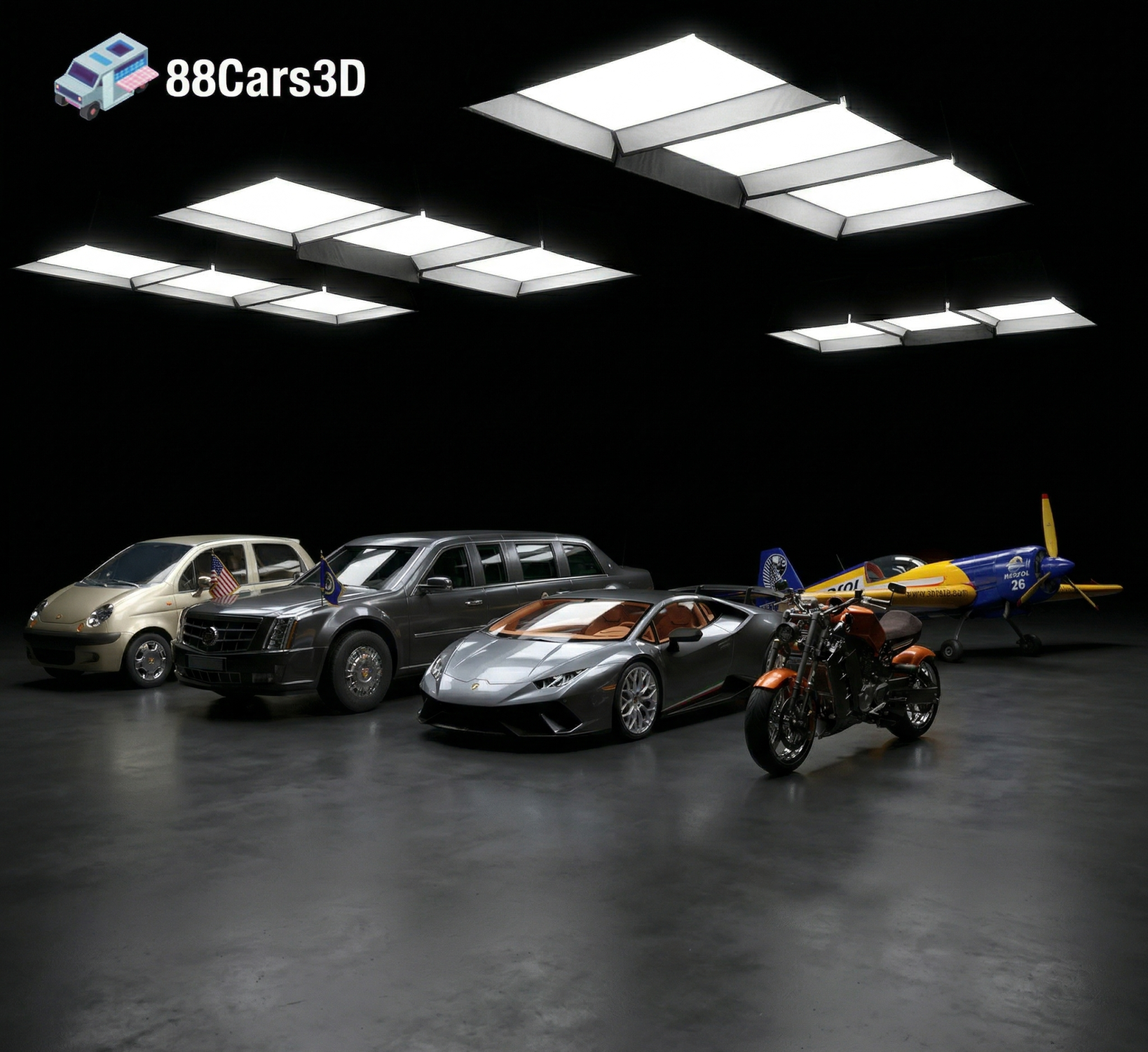
Texture: Yes | Material: Yes | 3D Printable: Yes. Download the Ultimate Creators’ Showcase featuring 5 premium 3D models: Lamborghini Huracan, ZAV Concept Motorcycle, Sukhoi SU-26, Presidential Limousine, and Daewoo Damas. Optimized for 4K CGI rendering and 3D printing. Save massive with this exclusive multi-category bundle!
Price: $99.99

Texture: Yes | Material: Yes | 3D Printable: Yes. Download the Italian Thoroughbreds Bundle featuring 5 iconic 3D models: Lamborghini Huracán Performante, Ferrari 458 Italia, Lamborghini Urus, Diablo SV, and Maserati GT. Optimized for 4K rendering and 3D printing (STL included). Save 50% with this ultimate Italian vehicle collection.
Price: $199.99

Download the Elite Future Mobility Bundle featuring 4 highly optimized 3D models: Tesla Model S, Avatr 11, Li L9, and Zoox Robotaxi. Perfect for ArchViz, Smart City renders, and game dev. Optimized for Unreal Engine and Blender. Includes .fbx, .obj, and .max formats.
Price: $99

🚗 5 Iconic German Cars (BMW M4 G82, M5 CS, X3, 1 Series & Mercedes E-Class). ✅ Optimized for ArchViz: Ready for Corona & V-Ray. 💰 Save €71 with this limited-time collection! 🚀 Instant Download after purchase.
Price: $119

Download the Extreme Off-Road & Survival 3D Models Bundle! Includes the Brabus 800 Adventure, Dodge Ram Bigfoot, Spec Truck, and a Caravan. Save over €210 on this premium 4-in-1 off-grid vehicle pack for ArchViz and game development.
Price: $149.99

Download the Heavy Duty & Commercial Logistics 3D Models Bundle! Includes the Ford Sterling, Caterpillar CT680, Mercedes Citaro Bus, and Vito Van. Save over €130 on this massive, game-ready 4-in-1 industrial vehicle pack.
Price: $109.99

Download the Ultimate Custom Motorcycles 3D Models Bundle. Includes a Custom Chopper, Ducati 916 Café Fighter, Harley XR1200X, and BMW K100. Perfect premium props for luxury ArchViz garages. Save over €250 today!
Price: $159.99

Download the ultimate JDM Street Racing 3D Models Bundle! Includes the Nissan GT-R, Toyota Supra, Mazda RX-7, Lancer Evo IX, and Honda NSX. Save big on this highly optimized, game-ready 5-in-1 Japanese legend car pack.
Price: $129.99

Download the ultimate American Muscle & Cinematic Classics 3D Models Bundle! Includes the Dodge Charger ’68, Mustang Eleanor GT500, Camaro Z28 ’79, and a custom ’69 Mustang. Save over €240 on this game-ready, premium 4-in-1 pack.
Price: $149.99
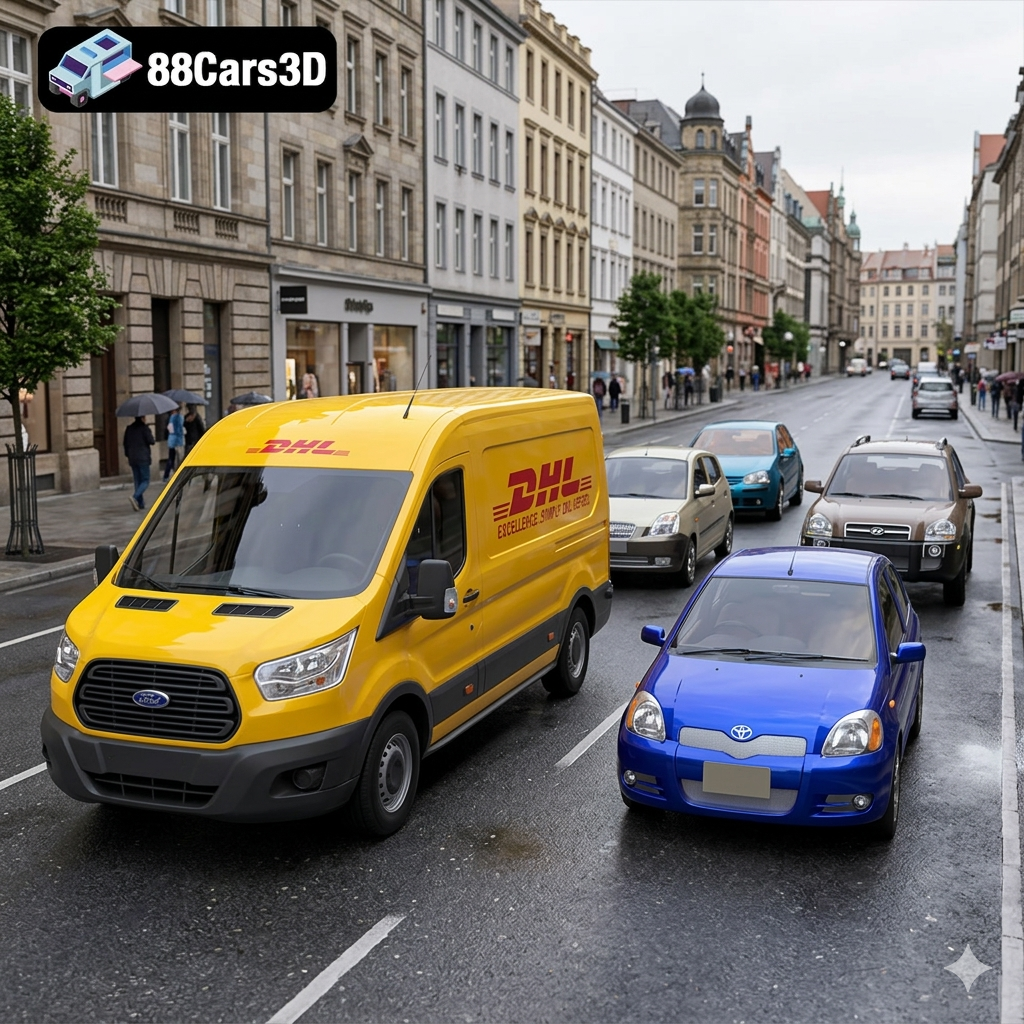
Download the Everyday City Traffic 3D Models Bundle. Includes the VW Golf, Kia Picanto, Hyundai Tucson, Toyota Yaris, and a DHL Ford Transit Van. Save big on this 5-in-1 pack, perfectly optimized for realistic ArchViz streets and game traffic.
Price: $99.99

