Get 50% OFF All Premium 3D & STL Models!

In the dynamic world of 3D visualization, automotive design, and game development, the demand for highly detailed, authentic 3D car models is constant. These digital assets form the backbone of everything from photorealistic marketing campaigns to immersive virtual experiences. Few vehicles command the presence and timeless appeal of the Mercedes-Benz G-Class, an icon blending rugged utility with luxurious sophistication. For professionals seeking to integrate this legendary vehicle into their projects, the Mercedes-Benz G Class 2013 3D Model available on 88cars3d.com offers an unparalleled foundation.
This comprehensive article will explore the critical technical aspects of working with premium 3D car models, using the G-Class 2013 as our prime example. We’ll delve into file formats, professional workflows in popular software like 3ds Max, Blender, and Unreal Engine, and even venture into the exciting realm of 3D printing. Whether you’re a seasoned automotive rendering artist, a game developer crafting realistic open worlds, or an AR/VR innovator, understanding the nuances of such an asset is crucial for maximizing its potential.
Automotive design often transcends mere functionality, evolving into art and cultural statements. Certain vehicles, like the Mercedes-Benz G-Class, achieve iconic status through their distinctive aesthetics, engineering prowess, and a legacy that spans decades. Translating this real-world gravitas into the digital realm requires meticulous attention to detail and a deep understanding of 3D modeling principles.
Classic and iconic vehicles hold a special place in the hearts of enthusiasts and the portfolios of designers. They represent design philosophies, technological milestones, and often, a sense of nostalgia. In 3D, these models serve multiple purposes: preserving automotive history, providing authentic visual context for architectural or urban scenes, and offering a compelling subject for artistic expression. A well-crafted 3D model of a revered vehicle is more than just geometry; it’s a digital artifact imbued with character and history. It allows creators to tell stories, evoke emotions, and ground their virtual worlds in recognizable reality.
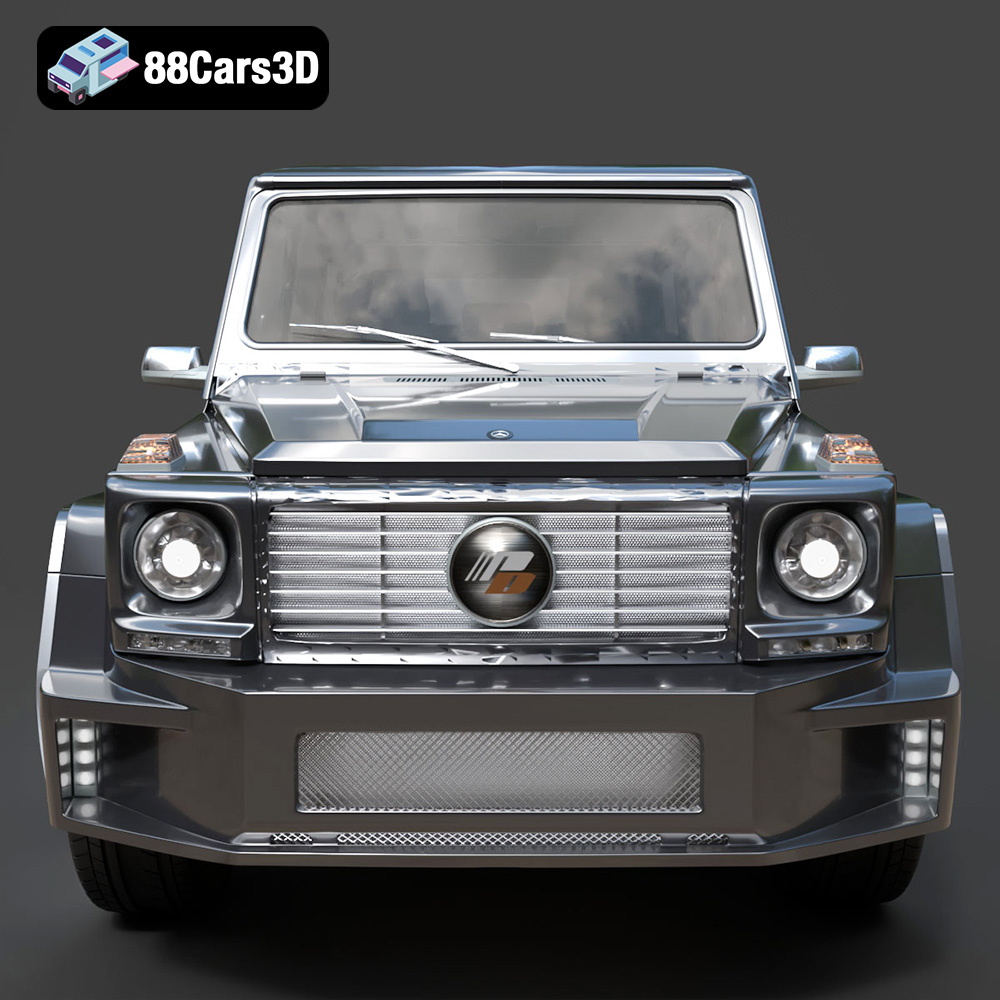
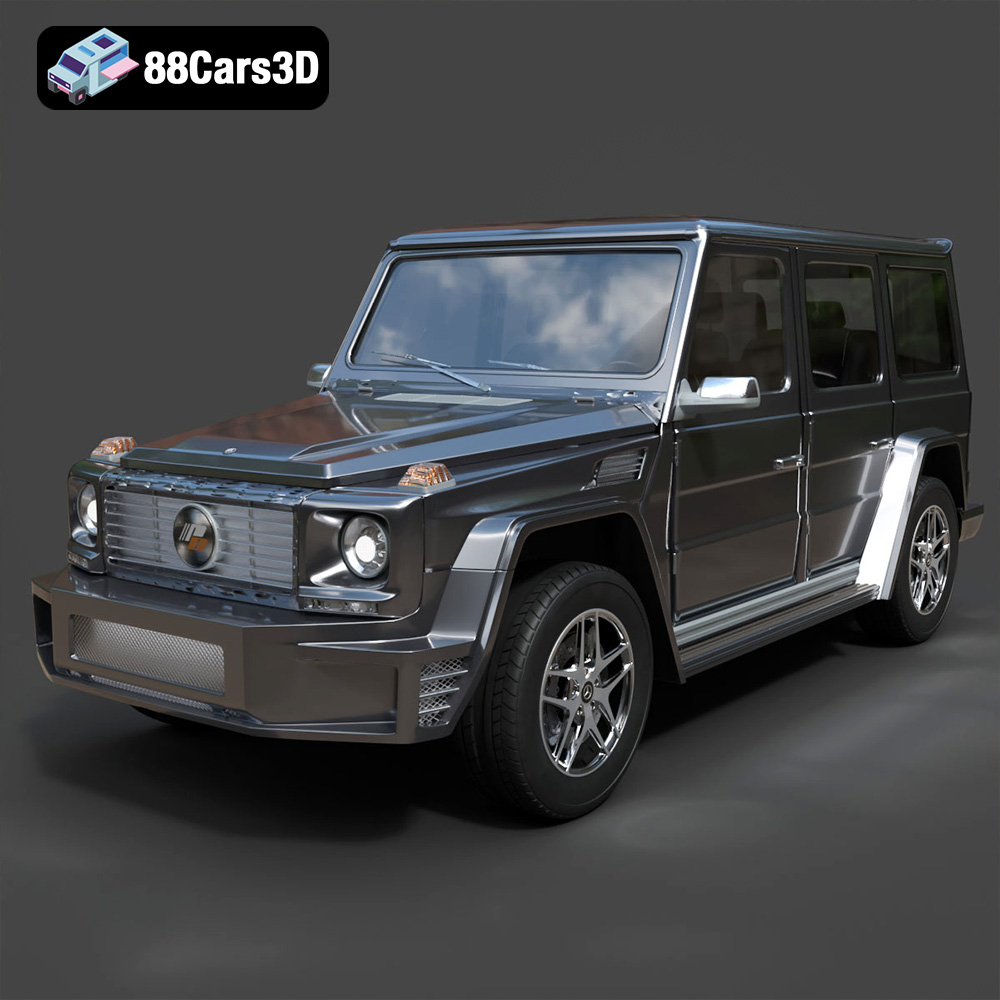
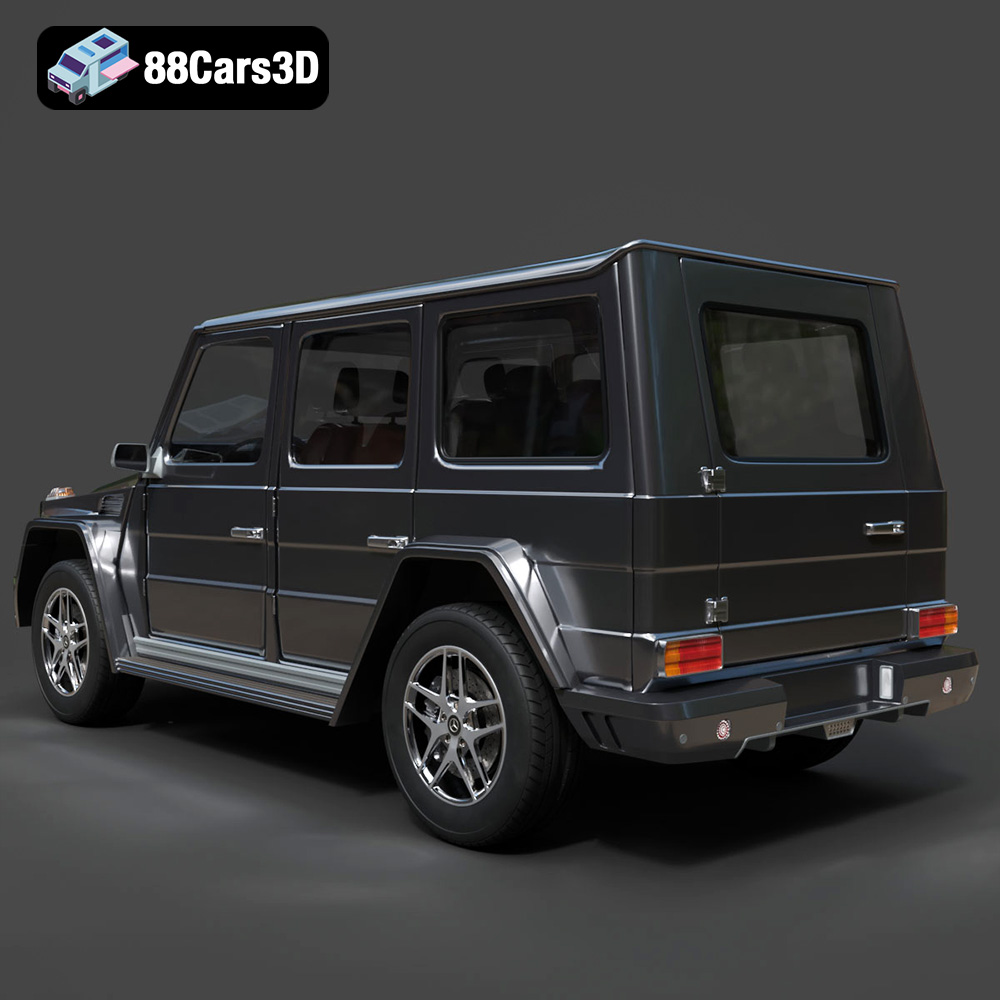
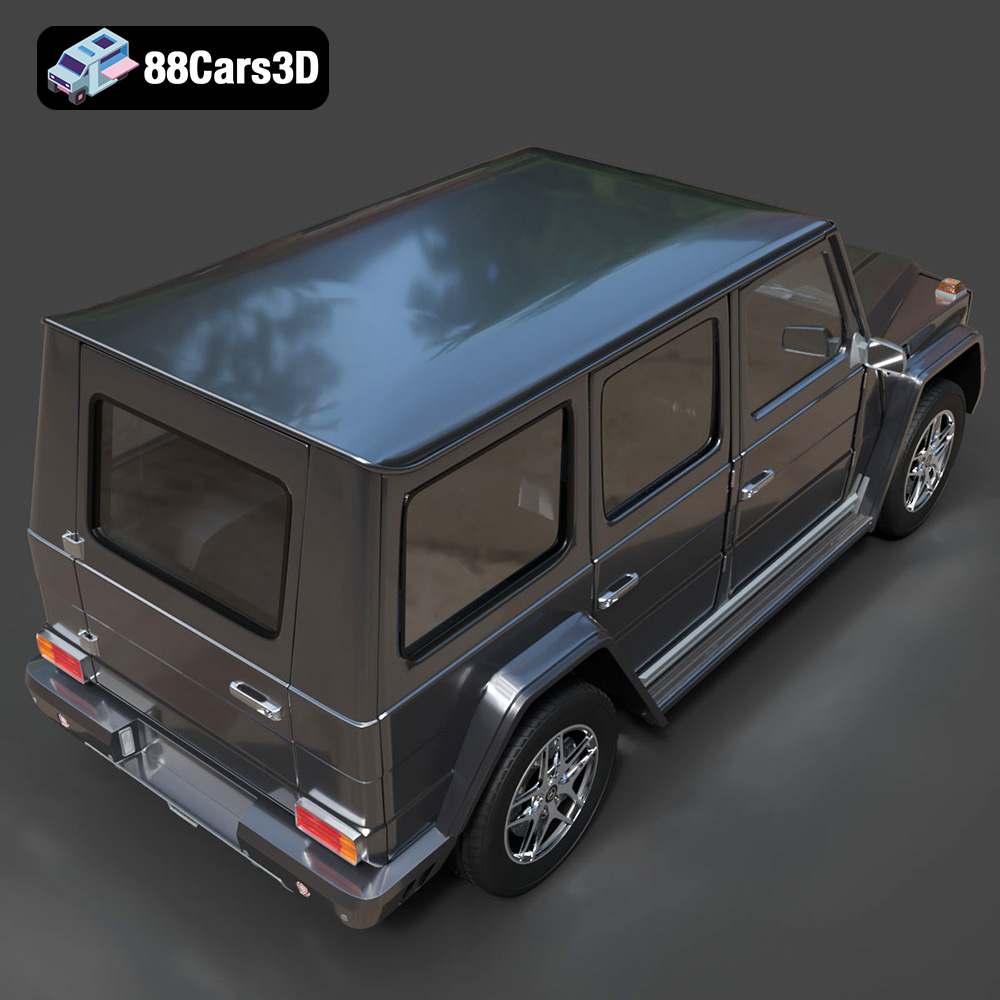
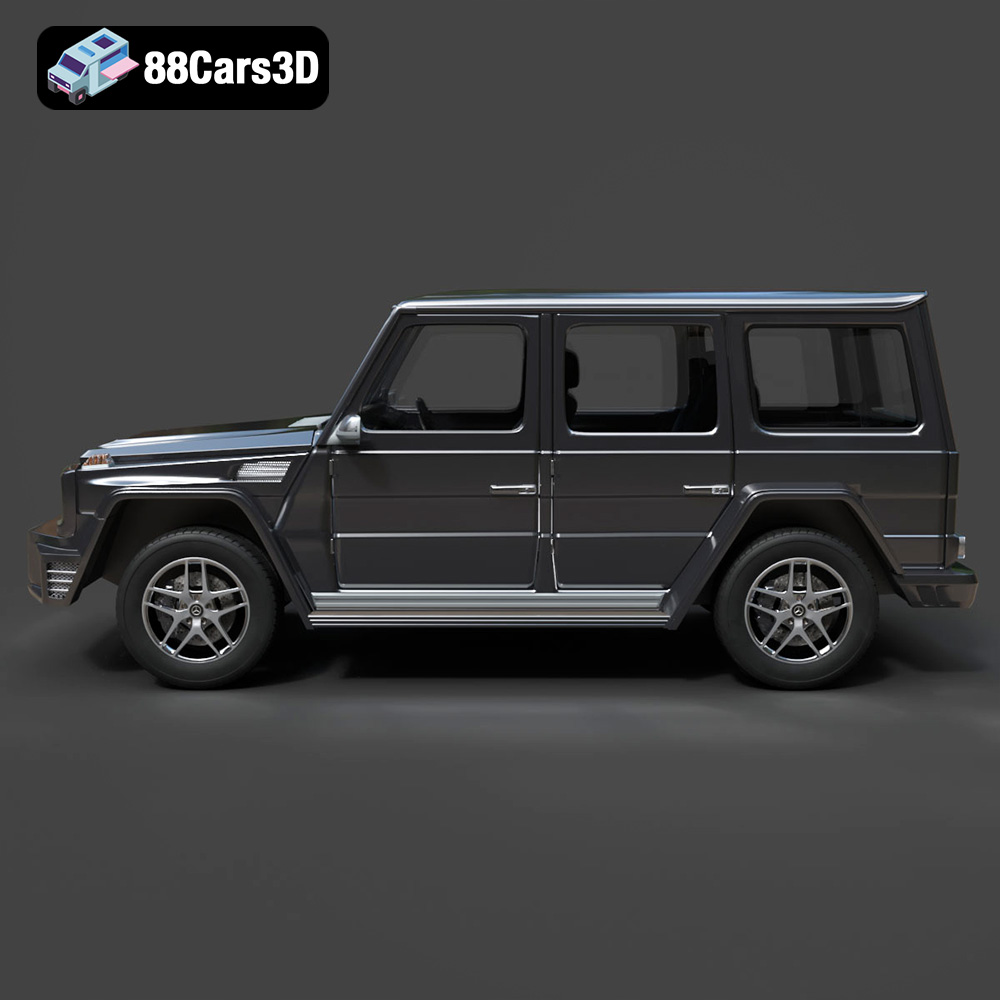
The 2013 iteration of the Mercedes-Benz G-Class is a prime example of a vehicle whose design has matured while retaining its foundational strengths. Known for its distinctive squared body, bold front grille, signature round headlights, and exposed door hinges, the G-Class exudes an undeniable presence. The Mercedes-Benz G Class 2013 3D Model accurately captures these defining characteristics, providing a foundation that is both rugged and refined. From the precise proportions of its body panels to the intricate detailing of its alloy wheels and roof rails, every element is designed to reflect the real-world vehicle. This fidelity is essential for achieving photorealistic results in automotive rendering and for creating believable experiences in game environments or AR/VR applications. The interior, too, reflects this dedication, showcasing the luxury dashboard, multifunction steering wheel, and detailed seat geometry, optimized for both close-up renders and real-time interaction.
The choice of file format for a 3D model is not merely a technicality; it’s a strategic decision that impacts compatibility, workflow efficiency, and the ultimate application of the asset. The Mercedes-Benz G Class 2013 3D Model is notable for its extensive range of included formats, ensuring maximum flexibility for any project. Understanding the strengths and ideal use cases for each is paramount for professional users.
The .blend format is the native file type for Blender, an increasingly popular open-source 3D creation suite. A .blend file typically encapsulates the entire Blender scene, including mesh data, materials, textures, lighting setups, cameras, animation data, and even modifiers. For users entrenched in the Blender ecosystem, this format offers the most editable and complete version of the model. It allows for direct manipulation of the clean topology, easy modification of PBR (Physically Based Rendering) materials using Blender’s node editor (Cycles or Eevee), and seamless integration into existing Blender projects. Artists can quickly adjust vehicle colors, add custom accessories, or re-rig components for specialized animations, all within a familiar environment.
Autodesk’s .fbx format is arguably the most widely adopted interchange format across the 3D industry. It’s designed to carry a vast amount of 3D data, including geometry, materials, textures (often linked, not embedded), animation, skinning, and even camera and lighting information. Its robust support in major software like Maya, 3ds Max, Cinema 4D, and critically, game engines like Unreal Engine and Unity, makes it indispensable. For game developers and real-time visualization specialists, .fbx is often the go-to format for exporting animated game assets due to its efficient handling of complex hierarchies and keyframe data. The .fbx version of the G-Class model would be ideal for immediate import into an engine, ready for setting up physics and interactive elements.
The .obj (Wavefront OBJ) format is a near-universal standard for exchanging 3D geometry data. While it’s older and generally less comprehensive than .fbx (it primarily stores geometry, UV coordinates, and normals, often referencing external .mtl files for basic material properties), its simplicity is its strength. Almost every 3D software can import and export .obj files, making it a reliable fallback for cross-software compatibility when more complex formats fail or are unnecessary. For the G-Class model, the .obj provides a clean mesh that can be easily re-textured and re-materialized in any renderer, making it perfect for custom architectural visualization scenes where the vehicle needs to be integrated into a specific rendering pipeline without complex animations.
.glb (GL Transmission Format Binary) is a relatively newer format specifically optimized for efficient transmission and loading of 3D scenes and models in web and extended reality (XR) contexts (AR/VR). It’s a self-contained, single-file format that embeds geometry, materials, textures, and animation data, making it incredibly convenient for sharing and deployment. Its compact size and ease of integration with web APIs and mobile AR platforms make it ideal for interactive virtual showrooms, product configurators, and mobile game experiences. For showcasing the Mercedes-Benz G Class 2013 3D Model on a website or in an AR application, the .glb format offers the best performance and user experience.
The .stl (STereoLithography) format is the standard for 3D printing and computer-aided manufacturing. It represents a 3D model as a series of connected triangles (a tessellation of the surface) without color, texture, or material information. Its sole purpose is to define the surface geometry for fabrication. When preparing the G-Class for 3D printing, the .stl file will be the direct input for slicing software. The model’s manifold geometry ensures it’s “watertight,” a critical requirement for successful 3D printing, allowing users to create physical scale models or prototypes of the iconic SUV.
The .ply (Polygon File Format, or Stanford Triangle Format) is a file format for storing 3D data from 3D scanners, CAD software, and other sources. It can store a variety of properties, including color, transparency, surface normals, texture coordinates, and data confidence values for each vertex or face. While not as universally used as .fbx or .obj for general asset exchange, .ply is valuable in specific applications like scientific visualization, reverse engineering, and certain CAD workflows where precise, detailed mesh information (potentially with per-vertex color) is critical. For the G-Class, it provides an additional layer of data integrity and compatibility for specialized engineering or analysis tasks.
The .unreal format signifies an asset specifically optimized and packaged for direct import into the Unreal Engine. This often means pre-configured materials, collision meshes, LODs (Levels of Detail), and potentially even skeletal meshes or blueprints. While technically .fbx is often used as the intermediate for Unreal, a dedicated .unreal file ensures the smoothest, most engine-ready integration, minimizing setup time and potential conversion issues. For game developers and real-time configurator creators, having the G-Class available in this format means a true plug-and-play experience within their Unreal projects, accelerating development significantly.
The .max format is the native file type for Autodesk 3ds Max, a powerful 3D modeling, animation, and rendering software widely used in architectural visualization, automotive design, and film production. Like .blend, a .max file contains the complete scene, including complex hierarchies, animation rigs, sophisticated V-Ray or Corona Renderer materials, lighting, and camera setups. For professionals working within the 3ds Max ecosystem, this format offers full editability, allowing for advanced rigging, detailed shader adjustments, complex animation sequences, and high-end photorealistic automotive rendering without any data loss during conversion. The Mercedes-Benz G Class 2013 3D Model in .max format ensures access to the highest level of detail and production readiness.
By offering this diverse array of formats, 88cars3d.com ensures that the Mercedes-Benz G Class 2013 3D Model is not just a high-quality asset but a truly versatile one, adaptable to virtually any professional 3D pipeline.
The true value of a premium 3D asset lies in its seamless integration into various professional workflows. The Mercedes-Benz G Class 2013 3D Model is engineered for versatility, making it a powerful tool for artists, designers, and developers across different industries.
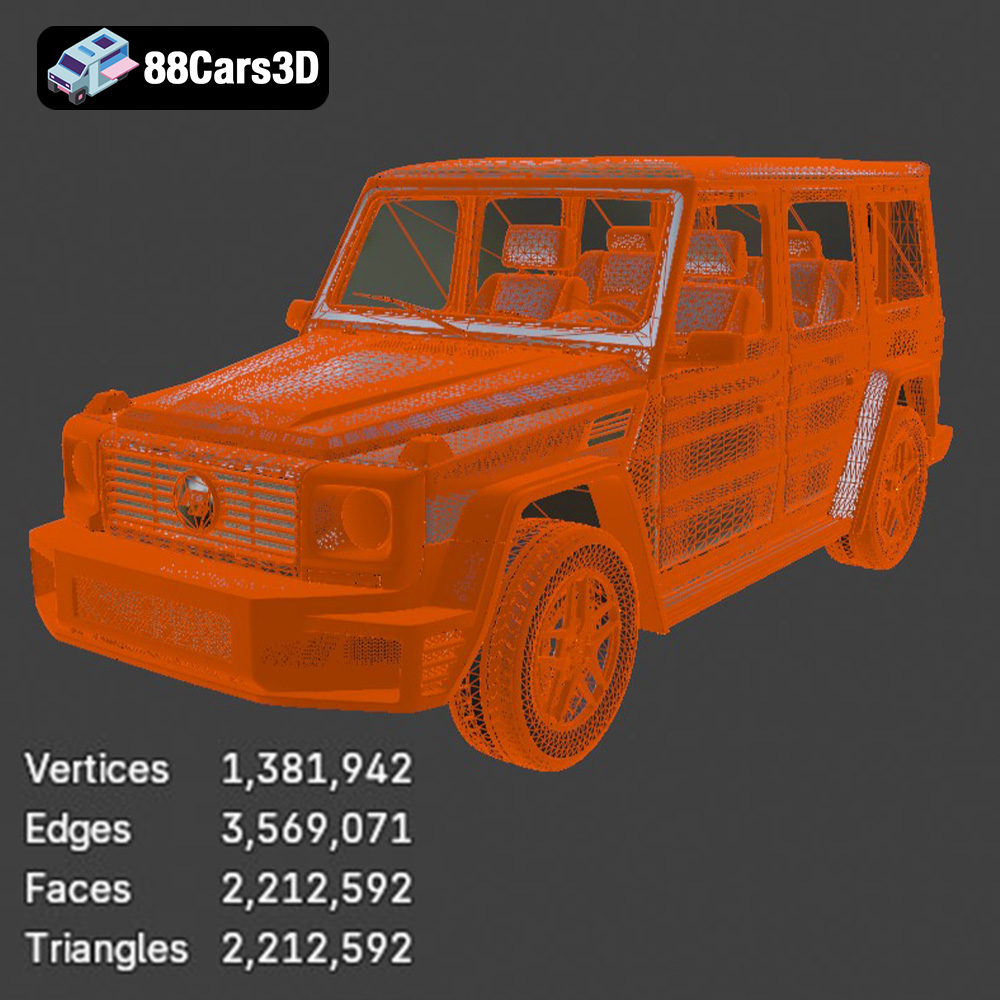
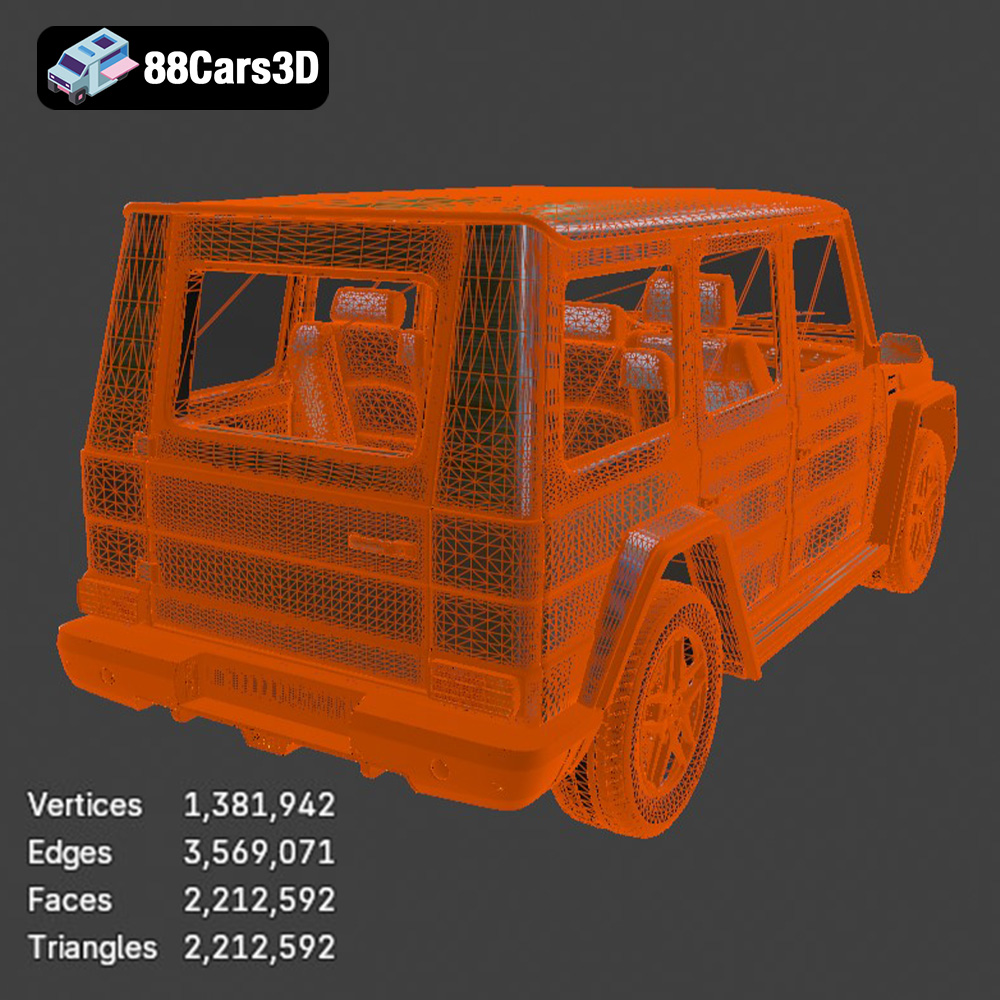
For automotive marketing, product showcases, or architectural visualizations, photorealistic rendering is paramount. The G-Class model excels here, thanks to its clean and well-organized mesh structure, real-world scale accuracy, and proper pivot setups for animation. In environments like 3ds Max (using V-Ray or Corona Renderer) or Blender (with Cycles), artists can leverage the model’s clean topology and material definitions to achieve stunning visuals. PBR materials, when applied correctly, allow for accurate representation of paint reflectivity, chrome glint, glass transparency, and tire texture. The detailed front grille with its emblem, the distinctive round headlights, and the luxury interior components all contribute to a believable scene. Imagine the G-Class parked majestically in a contemporary architectural setting, or navigating a stylized desert landscape, rendered with exquisite detail – this model provides the canvas.
The demands of real-time engines like Unreal and Unity are unique, prioritizing performance alongside visual quality. The Mercedes-Benz G Class 2013 3D Model is designed with these considerations in mind, making it an excellent game asset.
The versatility of a high-quality 3D model extends far beyond digital screens. The Mercedes-Benz G Class 2013 3D Model offers compelling opportunities for physical creation through 3D printing, transforming a virtual asset into a tangible collectible.
The inclusion of the .stl format makes this model immediately ready for 3D printing. This capability allows enthusiasts and professionals alike to create detailed scale models of the iconic SUV. Imagine a meticulously printed G-Class miniature gracing a desk or becoming part of a larger diorama. The process involves sending the .stl file to a 3D printer slicing software, which then generates instructions for the printer layer by layer.
The provided 3D print settings are invaluable:
Beyond collectibles, 3D printable models can serve as physical prototypes for design reviews or educational tools. For simulation and training, the G-Class 3D Model, whether in its digital form or a physical print, can be used for:
A truly professional 3D asset provides ample room for customization, allowing artists and developers to adapt it to specific project needs. The Mercedes-Benz G Class 2013 3D Model offers a wealth of options for tailoring its appearance and integrating it into diverse digital environments.
The base model provides a high-quality foundation, but the ability to modify its aesthetics opens up endless creative possibilities. Artists can:
The G-Class model’s optimization for various platforms, particularly with the inclusion of the .glb format, makes it an excellent candidate for cutting-edge AR/VR applications.
In a saturated market, the choice of where to acquire 3D car models is critical. 88cars3d.com stands out by providing assets like the Mercedes-Benz G Class 2013 3D Model, which embody technical excellence and creative potential.
Investing in a high-quality 3D model is an investment in efficiency and professional credibility. Poorly optimized models can lead to wasted development time, rendering artifacts, and ultimately, an inferior end product. The G-Class model from 88cars3d.com, with its “clean and well-organized mesh structure,” “real-world scale accuracy,” and “proper pivot setup,” guarantees a streamlined workflow. It means less time spent fixing geometry, re-UV mapping, or struggling with animation setups, and more time focused on creative output. For projects requiring precision in automotive rendering, game development, or 3D printing, the technical advantages of such an asset are immeasurable.
Beyond mere technical specifications, a premium 3D model serves as a catalyst for creativity. It empowers artists to explore new ideas, push visual boundaries, and bring their visions to life with confidence. Whether it’s crafting a hyper-realistic advertisement, building an expansive virtual world, or designing a unique physical collectible, the Mercedes-Benz G Class 2013 3D Model provides a solid, inspiring foundation. By choosing assets from 88cars3d.com, creators gain access to a curated selection of high-fidelity 3D car models that meet the rigorous demands of today’s professional production pipelines.
The digital automotive landscape is continually evolving, demanding assets that are not only visually stunning but also technically robust and versatile. The Mercedes-Benz G Class 2013 3D Model exemplifies these qualities, offering an exceptional foundation for a myriad of projects, from advanced automotive rendering to dynamic game assets and tangible 3D prints. Its comprehensive file format support, meticulous attention to design detail, and optimization for diverse professional workflows make it an invaluable resource.
Whether you’re aiming for cinematic realism, interactive immersion in AR/VR, or precision manufacturing through 3D printing, this model provides the quality and flexibility needed to achieve outstanding results. It underscores the commitment of platforms like 88cars3d.com to deliver premium 3D car models that empower creators to push the boundaries of digital and physical design. Explore the possibilities, unleash your creativity, and bring the iconic Mercedes-Benz G-Class to life in your next project. Visit 88cars3d.com today to discover this model and a wealth of other high-quality automotive assets designed for the discerning professional.
The Mercedes-Benz G Class 2013 3D Model is a high-detail digital recreation of the iconic luxury off-road SUV known for its boxy design, rugged capability, and premium craftsmanship. The 2013 G-Class blends military-inspired durability with refined interior comfort, making it a timeless symbol of performance and prestige. This 3D model accurately represents the distinctive squared body shape, bold front grille, round headlights, exposed door hinges, roof rails, spare wheel rear mount, and elevated ground clearance. Designed with clean topology and real-world scale accuracy, it is ideal for rendering, animation, automotive visualization, game development, and AR/VR experiences. Perfect for urban luxury scenes, off-road environments, desert simulations, cinematic projects, and SUV driving games.
$0