Get 50% OFF All Premium 3D & STL Models!

In the realm of real-time rendering and automotive visualization, the quality of your 3D assets is paramount. High-fidelity 3D car models, like those meticulously crafted and available on 88cars3d.com, provide an exceptional foundation. However, to truly elevate your visual projects from impressive to utterly captivating, you need to master the art of post-processing. Unreal Engine offers a robust suite of post-process effects that can transform raw renders into cinematic masterpieces, imbuing them with mood, atmosphere, and professional polish.
This comprehensive guide delves deep into Unreal Engine’s post-process capabilities, specifically focusing on how to harness them for cinematic look development in automotive visualization, game development, and high-end rendering. We’ll explore everything from fundamental concepts like the Post Process Volume to advanced techniques such as custom post-process materials and Sequencer integration. By the end of this article, you’ll have the knowledge and actionable strategies to fine-tune your projects, achieve stunning visual fidelity, and create truly immersive experiences that resonate with your audience.
At the heart of Unreal Engine’s post-processing system lies the Post Process Volume. This versatile actor acts as a container for all the visual adjustments and effects you wish to apply to your scene. Think of it as your virtual camera’s control panel, allowing you to manipulate how the final rendered image looks before it hits the screen. Understanding its mechanics is the first step towards achieving a professional cinematic aesthetic for your 3D car models.
A Post Process Volume can be added to your level like any other actor (Place Actors panel > Visual Effects > Post Process Volume). Once placed, you can configure its properties in the Details panel. The most crucial setting to remember is the ‘Infinite Extent (Unbound)’ checkbox. When enabled, this volume will affect the entire scene, regardless of its physical location or size. This is ideal for global aesthetic changes, such as setting a universal color grade or bloom intensity. If unchecked, the volume will only affect areas within its defined bounds, making it perfect for localized effects, like a specific interior shot of a car, or an interactive sequence where a user enters a distinct visual zone. For further foundational reading on Post Process Volumes, refer to the official Unreal Engine documentation on Post Process Effects.
The choice between a global (unbound) and a bounded Post Process Volume largely depends on your project’s needs. For a universal look, like a consistent brand aesthetic across all automotive renders or a game’s overarching visual style, an unbound volume is the most efficient choice. You set its parameters once, and they apply everywhere. However, for more granular control, bounded volumes are indispensable. Imagine an automotive configurator where entering a showroom area applies one set of post-process effects (e.g., brighter lighting, higher contrast), while stepping into a virtual driving environment applies another (e.g., motion blur, different color grading). These specific visual shifts are best managed with bounded volumes. You can even use multiple bounded volumes with overlapping areas, allowing for complex transitions.
When multiple Post Process Volumes overlap, Unreal Engine needs a system to decide which one takes precedence. This is where ‘Priority’ comes into play. A volume with a higher priority value will override the settings of a lower-priority volume in areas where they overlap. This is vital for managing intricate visual states. Furthermore, the ‘Blend Radius’ and ‘Blend Weight’ properties allow for smooth transitions between volumes. The Blend Radius defines the distance over which the volume’s effects will blend with others, creating a seamless visual flow rather than abrupt changes. Blend Weight determines the strength of the volume’s influence, allowing you to gradually fade effects in or out. For instance, as a virtual camera moves from a bright exterior shot of a car to a dimly lit interior, you can use blend volumes to smoothly transition the exposure and color grading, ensuring a consistent and natural viewing experience.
Color grading and exposure are arguably the most impactful post-process effects, serving as the backbone of cinematic look development. They dictate the mood, time of day, and overall photographic quality of your automotive scenes. Achieving realism and artistic intent requires a deep understanding of these parameters, allowing you to transform raw renders into evocative visual narratives. For instance, a sleek, modern electric car might benefit from cool, slightly desaturated tones with sharp contrast, while a classic muscle car could shine with warm, slightly gritty hues and softer lighting.
Unreal Engine provides extensive controls within the Post Process Volume under the ‘Color Grading’ and ‘Exposure’ sections. These tools allow you to emulate real-world camera behavior and apply sophisticated color science. When working with 3D car models that boast PBR materials, the accuracy of your base lighting and material response is already strong. Color grading and exposure then become the final layer of polish, enhancing that realism to a cinematic standard. Understanding how these settings interact with your scene’s lighting (especially with Lumen Global Illumination) is crucial for a cohesive final image.
Exposure dictates the overall brightness of your scene, mimicking the f-stop and shutter speed of a real camera. Unreal Engine offers several ways to manage this. ‘Auto Exposure’ is enabled by default and dynamically adjusts brightness based on the scene content. While convenient, it can sometimes lead to distracting shifts in brightness during camera movements. For cinematic control, it’s often better to disable auto-exposure and manually control ‘Exposure Compensation’ for a fixed brightness, or utilize ‘Min/Max Brightness’ to constrain the auto-exposure range. ‘Histogram based’ exposure allows for more precise control based on the luminance distribution of your image. A professional tip for automotive visualization is to set exposure based on the vehicle itself, ensuring it is always well-lit and clearly visible, even if the background is slightly over or underexposed to create dramatic effect. This ensures your key subject, the car, remains the focal point.
Color grading is where you infuse personality into your visuals. Unreal Engine breaks down color grading into several powerful components: ‘White Balance,’ ‘Color Saturation,’ ‘Contrast,’ ‘Gamma,’ ‘Gain,’ and ‘Offset’ (often referred to as Lift/Gamma/Gain). ‘White Balance’ adjusts the color temperature, crucial for correcting unwanted color casts or achieving specific moods (e.g., warm sunset vs. cool moonlight). The ‘Lift/Gamma/Gain’ controls allow for precise adjustment of shadows, midtones, and highlights respectively, providing a level of control akin to professional color grading software. You can desaturate shadows for a grittier look or boost the vibrancy of highlights to make chrome elements pop. Beyond manual adjustments, ‘Look-Up Tables’ (LUTs) are incredibly powerful. A LUT is a texture that remaps input colors to output colors, allowing you to apply complex color grades instantly. You can create LUTs in image editing software like Photoshop or DaVinci Resolve, import them into Unreal Engine, and apply them via the ‘Color Grading > Look’ property. This enables rapid iteration of artistic styles and consistency across multiple shots, an essential technique for larger automotive projects or game levels.
Beyond the fundamental aspects of color and exposure, Unreal Engine’s post-process effects offer a suite of tools to add nuanced atmospheric and camera-specific touches. Bloom, lens flares, and vignettes, when used judiciously, can significantly enhance the cinematic quality of your automotive renders, bringing them closer to the look of live-action cinematography. They introduce subtle imperfections and optical effects that our eyes are accustomed to from film and photography, making the digital image feel more natural and immersive.
These effects often work in concert. A bright car headlight might generate bloom and a subtle lens flare, while a vignette guides the viewer’s eye towards the vehicle. The key is balance; overusing these effects can quickly lead to an artificial or “over-processed” look. Instead, aim for subtle enhancements that contribute to the overall mood and realism. Remember, the goal is not to hide imperfections in your 3D car models but to add artistic flair and emulate real-world camera optics. When working with High Dynamic Range (HDR) content, these effects become even more pronounced and realistic.
Bloom is the visual phenomenon where very bright areas in an image appear to bleed light into surrounding darker areas, creating a soft glow. In Unreal Engine, bloom is highly customizable. The ‘Intensity’ parameter controls the strength of this glow, while ‘Threshold’ determines how bright a pixel must be before it starts blooming. Setting a higher threshold means only the brightest parts (like headlamps, tail lights, or reflections on chrome) will bloom, resulting in a more refined effect. The ‘Convolution’ and ‘Gaussian’ methods offer different bloom looks, with Convolution often providing a more photographic, “anamorphic” bloom if you provide a custom kernel texture. You can also apply a ‘Dirt Mask’ texture, which simulates dust and smudges on a camera lens, adding organic imperfections to your bloom and lens flares. For automotive scenes, carefully tuned bloom can make emissive elements like LED headlights or glowing digital dashboards feel incredibly vibrant and integrated, especially in low-light environments.
Lens Flares mimic the internal reflections and scattering of light within a camera lens, often appearing as streaks or circles when a strong light source hits the lens directly. Unreal Engine’s lens flare options allow you to control ‘Intensity,’ ‘Tint,’ and ‘Stretch’ (for an anamorphic look). While they can easily be overdone, subtle lens flares from a car’s headlamps or the sun glinting off its polished surface can add a powerful sense of realism and atmosphere. They simulate the presence of a camera, making the viewer feel more immersed in the scene. ‘Vignette’ is another subtle but effective tool. It darkens the edges of the screen, subtly drawing the viewer’s attention towards the center of the frame, which is typically where your automotive subject resides. The ‘Intensity’ and ‘Color’ of the vignette can be adjusted. A dark, barely perceptible vignette can enhance a dramatic shot, while a lighter, colored vignette might add warmth or cool tones to a particular aesthetic. Used together, bloom, lens flares, and vignette contribute significantly to creating a distinct cinematic atmosphere that perfectly complements high-quality 3D car models.
In the world of filmmaking and photography, Depth of Field (DoF) and Motion Blur are indispensable tools for conveying focus, scale, and movement. Their accurate implementation in real-time rendering is crucial for achieving a cinematic feel, especially in dynamic automotive visualizations. These effects guide the viewer’s eye, emphasize the subject, and communicate speed and power, transforming a static render into a compelling visual experience.
When presenting high-quality 3D car models, DoF can beautifully isolate the vehicle from its background, while motion blur can inject a sense of velocity into driving sequences. Integrating these effects thoughtfully ensures that your visuals not only look impressive but also tell a story effectively. Both DoF and Motion Blur are computationally intensive, so careful optimization is key, particularly for interactive or real-time game applications.
Depth of Field simulates the limited focus range of a real camera lens, where objects at a specific distance are sharp, while those closer or further away appear blurred. Unreal Engine’s DoF controls are incredibly powerful, rivaling those found in offline renderers. Key parameters include ‘Focus Method’ (e.g., Manual, Tracking, or PostProcess Volume), ‘Focal Distance’ (the distance at which objects are perfectly sharp), and ‘Aperture F-stop’ (controlling the strength and quality of the blur). A smaller F-stop value (e.g., 1.2-2.8) results in a shallower depth of field with more pronounced blur, ideal for dramatic close-ups of a car’s badge or intricate interior details. ‘Bokeh Shape’ allows you to define the shape of the out-of-focus highlights, mimicking different lens designs (e.g., circular, hexagonal, or custom textures). For automotive visualization, DoF is excellent for creating “hero” shots, drawing the viewer’s attention directly to the car and its exquisite details, or for separating the vehicle from a complex environment, making it stand out as the primary subject. Using ‘Tracking’ focus with Sequencer can ensure your car remains in sharp focus as the camera or vehicle moves.
Motion Blur is the visual streaking that occurs when an object or camera moves rapidly during a camera’s exposure time. It’s a fundamental aspect of how we perceive movement in film and photography. In Unreal Engine, motion blur can dramatically enhance the perceived speed and dynamism of your automotive scenes. The ‘Amount’ parameter controls the overall intensity of the blur. ‘Max’ quality determines the number of samples used to render the blur, directly impacting visual fidelity and performance. ‘Shutter Speed’ (simulated) can be adjusted to mimic different real-world camera shutter settings; a slower shutter speed will result in more pronounced blur. For fast-paced driving simulations or cinematic car chases, motion blur is essential for conveying a sense of velocity. It also helps to smooth out choppy animation frames, making the movement appear more fluid. For example, a sports car drifting around a corner will feel significantly more impactful with realistic wheel and background motion blur. However, excessive motion blur can make scenes difficult to interpret, so finding the right balance is crucial for maintaining clarity while enhancing dynamism. Always test motion blur with actual animation or gameplay to ensure it feels natural and responsive.
While Unreal Engine’s built-in post-process effects are extensive, there are times when you need a truly unique visual signature or a highly specific artistic filter. This is where custom post-process materials come into play, offering unparalleled creative freedom. However, with great power comes the responsibility of performance management. Post-processing can be one of the most demanding aspects of a real-time rendering pipeline, especially when aiming for high frame rates in applications like AR/VR or interactive experiences featuring high-quality 3D car models.
Achieving a stunning cinematic look while maintaining optimal performance requires a strategic approach to both effect creation and optimization. Understanding how to create efficient custom materials and which built-in effects to prioritize (or even disable) for different platforms is a hallmark of professional real-time rendering. This section delves into these advanced techniques, equipping you with the knowledge to push visual boundaries without compromising on fluidity.
Unreal Engine allows artists and developers to extend its post-processing capabilities by creating custom Post-Process Materials in the Material Editor. This is done by setting a Material’s ‘Domain’ to ‘Post Process’. Once created, these materials can be assigned to a Post Process Volume under the ‘Rendering Features > Post Process Materials’ section. This opens up a world of creative possibilities:
The material graph for a post-process material takes the scene color as an input and outputs a modified color. You can sample the scene color using the ‘SceneTexture’ node set to ‘SceneColor’. You can then manipulate this color using various material nodes, applying mathematical operations, texture lookups, or conditional logic. For example, to create a subtle film grain, you might blend a Perlin noise texture with the scene color, driven by a Time node for animation. This level of customization allows you to develop truly bespoke visual treatments that differentiate your automotive visualizations from the rest.
Every post-process effect adds to the rendering overhead. While modern GPUs are powerful, balancing visual quality with performance is crucial, particularly for interactive applications, AR/VR experiences, or when deploying to less powerful hardware. Here are key optimization strategies:
By applying these optimization techniques, you can ensure your automotive projects deliver stunning visuals without sacrificing the smooth, responsive experience expected in real-time applications.
For automotive visualization, cinematic sequences are paramount. Whether showcasing a new vehicle design, creating an engaging product configurator demo, or crafting a thrilling game trailer, the ability to control and animate every visual parameter is key. Unreal Engine’s Sequencer, a powerful non-linear editor, becomes an indispensable tool for integrating post-processing into these sophisticated workflows. It allows you to animate post-process settings over time, craft dynamic visual narratives, and ensure every frame contributes to the overall cinematic impact of your 3D car models.
Sequencer facilitates the precise timing and artistic control necessary to achieve a polished, professional look. From subtle changes in exposure to dramatic shifts in color grading or depth of field, animating these effects brings your automotive scenes to life, guiding the viewer’s emotional response and highlighting key features of the vehicle. This integration is where the technical understanding of post-process effects truly meets the art of cinematic storytelling.
One of Sequencer’s most powerful features is its ability to keyframe virtually any property of any actor in your scene, including the parameters of a Post Process Volume. This allows for dynamic look development, where the visual aesthetic evolves alongside the narrative or camera movement.
This level of control enables highly refined visual storytelling, ensuring every moment of your cinematic sequence contributes to the desired artistic and emotional impact.
Beyond linear cinematics, post-processing with Sequencer (or even Blueprint for real-time interactions) plays a critical role in interactive automotive configurators and virtual showrooms. Imagine a user changing the paint color of a car: you could trigger a subtle change in the scene’s color grading to complement the new hue, or a brief bloom effect to highlight the change. When users explore different environments (e.g., a city street, a mountain road, a studio), different Post Process Volumes can be activated or blended via Blueprint scripting, dynamically altering the mood and lighting. For example:
These dynamic adjustments, driven by both Sequencer for authored experiences and Blueprint for interactive ones, allow for a truly immersive and responsive automotive visualization that adapts to user input and narrative flow, making your 3D car models shine in any context.
The journey from a high-quality 3D car model to a cinematic masterpiece in Unreal Engine is one of meticulous detail and artistic vision. While assets from marketplaces like 88cars3d.com provide an unparalleled foundation of realism and clean topology, it’s the strategic application of post-process effects that truly unlocks their full potential for storytelling and immersion. We’ve explored the power of the Post Process Volume, delved into the intricacies of color grading and exposure to set the perfect mood, and harnessed bloom, lens flares, and vignettes to add photographic authenticity.
Mastering Depth of Field and Motion Blur allows you to guide the viewer’s eye and inject dynamic energy into your automotive scenes, while custom post-process materials offer boundless creative freedom. Crucially, we emphasized the importance of optimization, ensuring your stunning visuals run smoothly across various platforms, from high-end virtual production stages to accessible AR/VR experiences. Finally, integrating these techniques with Sequencer empowers you to craft compelling cinematic narratives and dynamic interactive experiences that truly showcase the elegance and power of your vehicles.
The art of post-processing is an iterative process of experimentation and refinement. We encourage you to dive into Unreal Engine, experiment with the parameters, and find the unique visual language that best tells your story. With the insights and techniques shared in this guide, you are well-equipped to elevate your Unreal Engine projects, transforming them into unforgettable automotive visualizations that captivate and inspire. Your next cinematic masterpiece awaits!
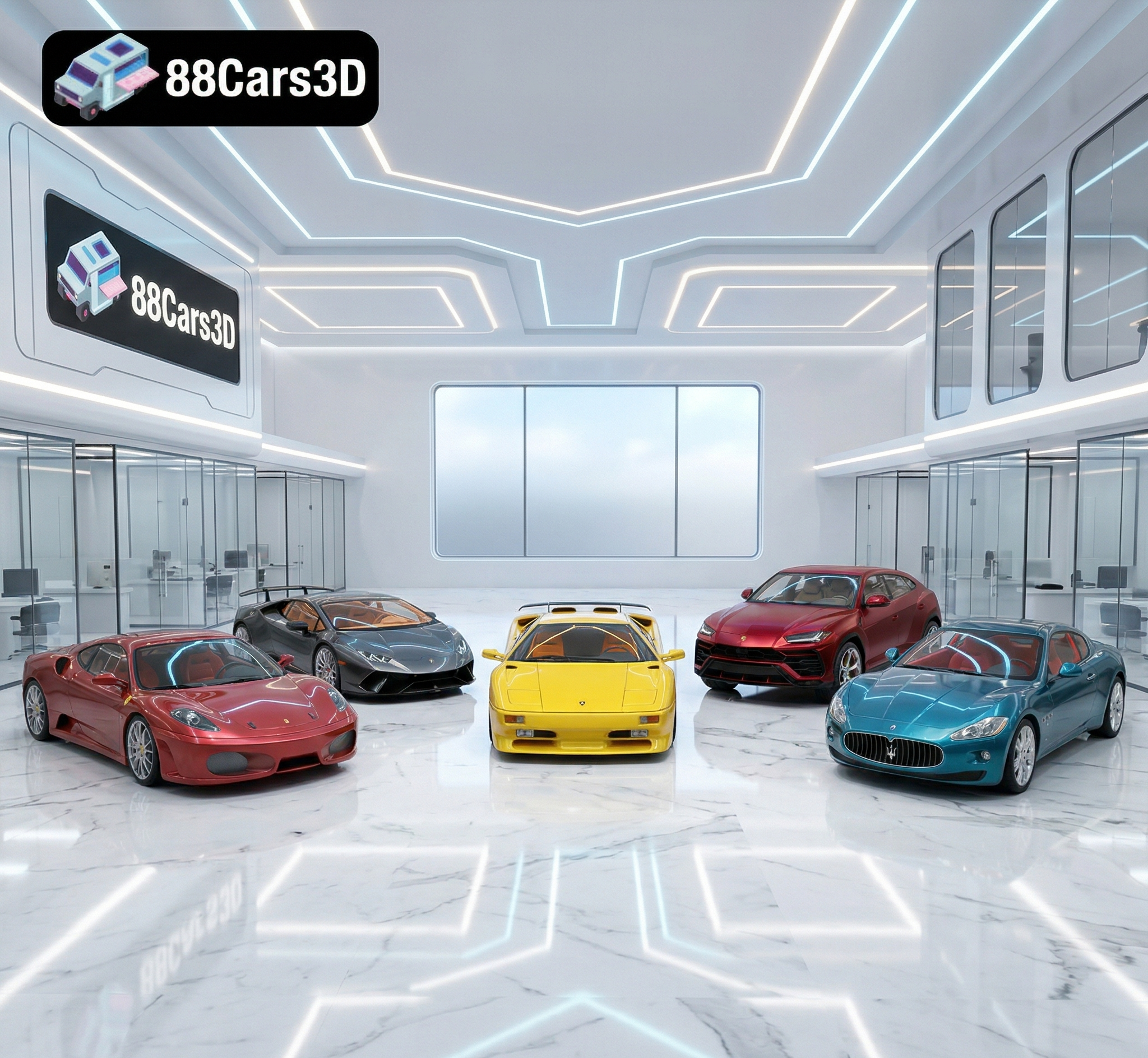
Texture: Yes | Material: Yes | 3D Printable: Yes. Download the Italian Thoroughbreds Bundle featuring 5 iconic 3D models: Lamborghini Huracán Performante, Ferrari 458 Italia, Lamborghini Urus, Diablo SV, and Maserati GT. Optimized for 4K rendering and 3D printing (STL included). Save 50% with this ultimate Italian vehicle collection.
Price: $199.99

Download the Elite Future Mobility Bundle featuring 4 highly optimized 3D models: Tesla Model S, Avatr 11, Li L9, and Zoox Robotaxi. Perfect for ArchViz, Smart City renders, and game dev. Optimized for Unreal Engine and Blender. Includes .fbx, .obj, and .max formats.
Price: $99
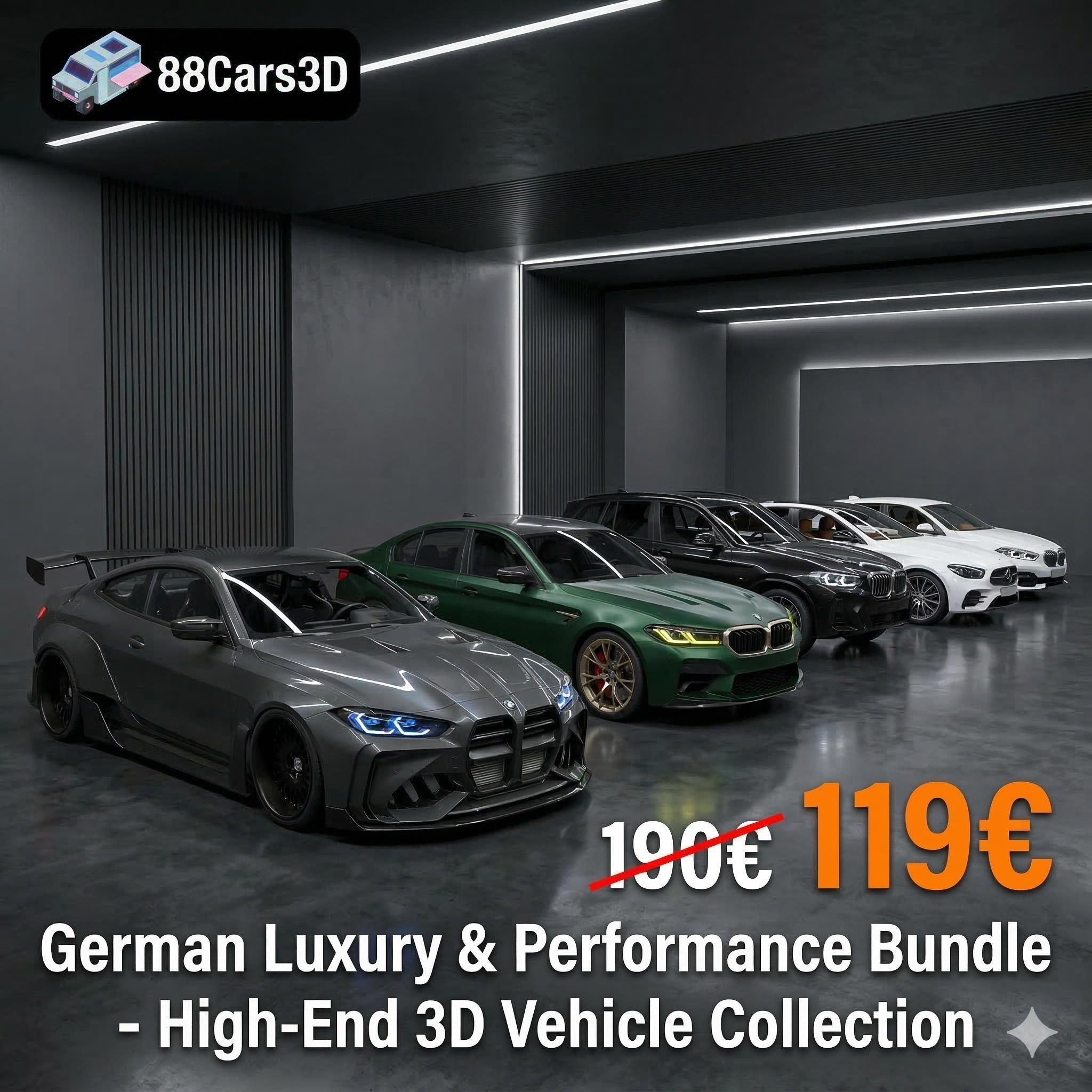
🚗 5 Iconic German Cars (BMW M4 G82, M5 CS, X3, 1 Series & Mercedes E-Class). ✅ Optimized for ArchViz: Ready for Corona & V-Ray. 💰 Save €71 with this limited-time collection! 🚀 Instant Download after purchase.
Price: $119
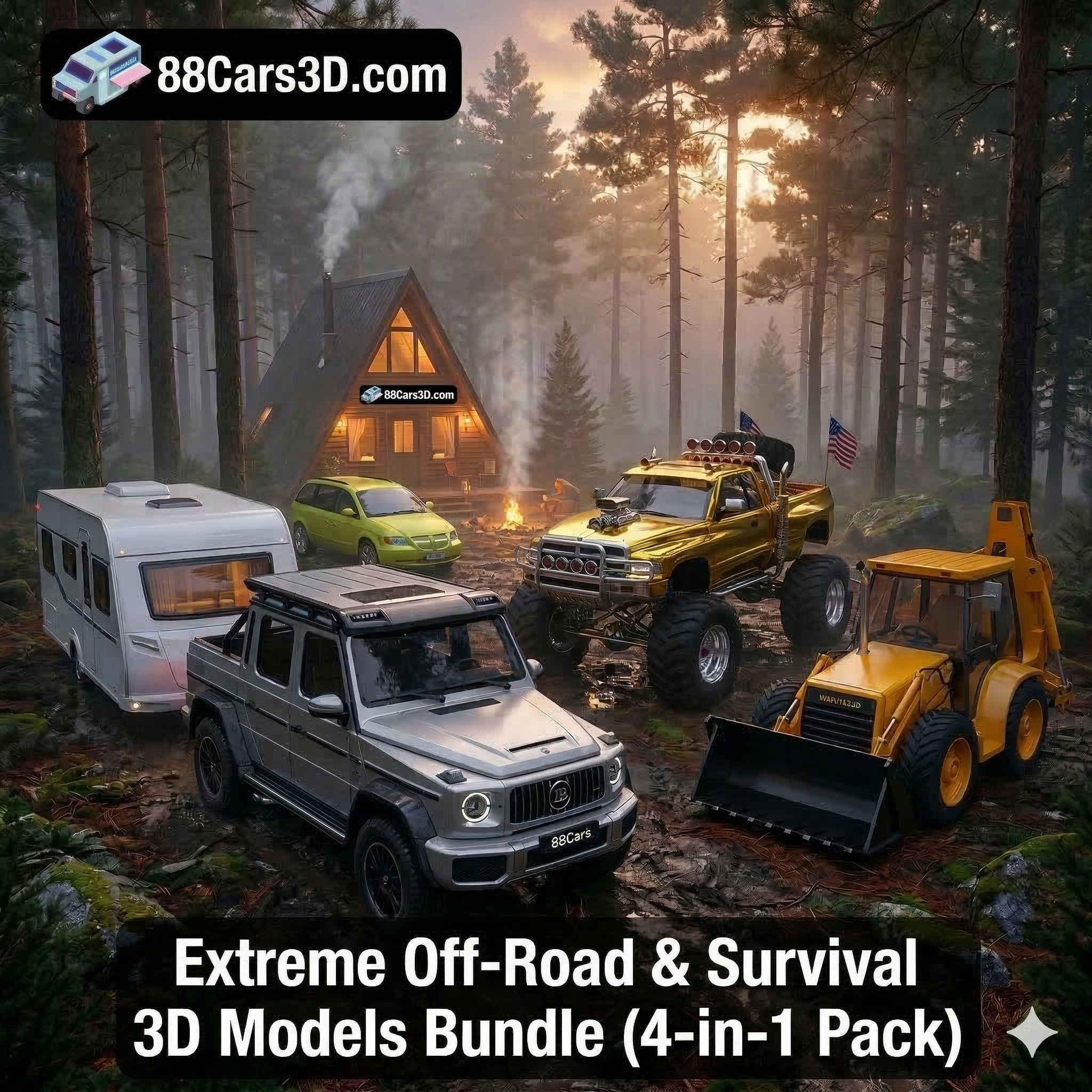
Download the Extreme Off-Road & Survival 3D Models Bundle! Includes the Brabus 800 Adventure, Dodge Ram Bigfoot, Spec Truck, and a Caravan. Save over €210 on this premium 4-in-1 off-grid vehicle pack for ArchViz and game development.
Price: $149.99
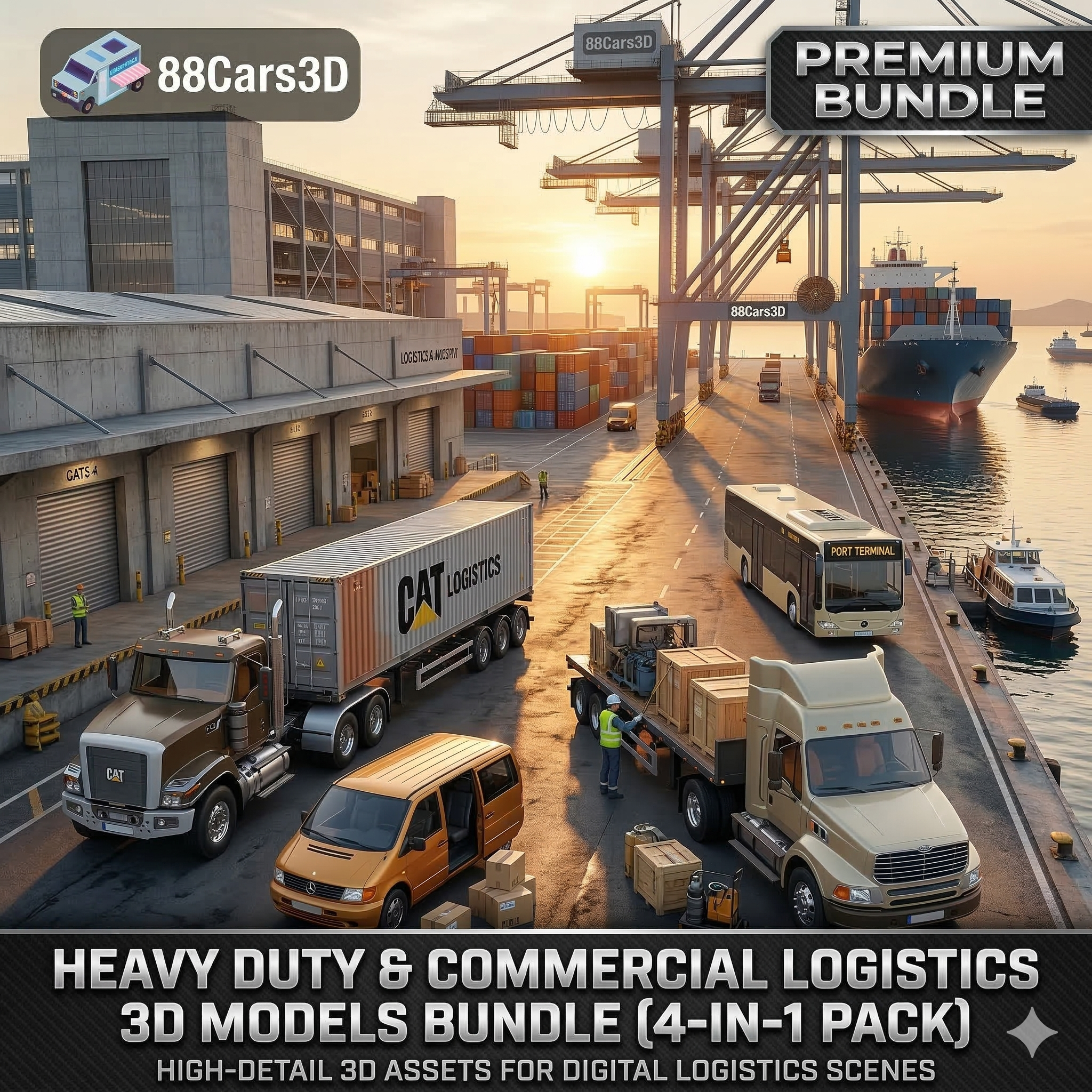
Download the Heavy Duty & Commercial Logistics 3D Models Bundle! Includes the Ford Sterling, Caterpillar CT680, Mercedes Citaro Bus, and Vito Van. Save over €130 on this massive, game-ready 4-in-1 industrial vehicle pack.
Price: $109.99

Download the Ultimate Custom Motorcycles 3D Models Bundle. Includes a Custom Chopper, Ducati 916 Café Fighter, Harley XR1200X, and BMW K100. Perfect premium props for luxury ArchViz garages. Save over €250 today!
Price: $159.99

Download the ultimate JDM Street Racing 3D Models Bundle! Includes the Nissan GT-R, Toyota Supra, Mazda RX-7, Lancer Evo IX, and Honda NSX. Save big on this highly optimized, game-ready 5-in-1 Japanese legend car pack.
Price: $129.99

Download the ultimate American Muscle & Cinematic Classics 3D Models Bundle! Includes the Dodge Charger ’68, Mustang Eleanor GT500, Camaro Z28 ’79, and a custom ’69 Mustang. Save over €240 on this game-ready, premium 4-in-1 pack.
Price: $149.99
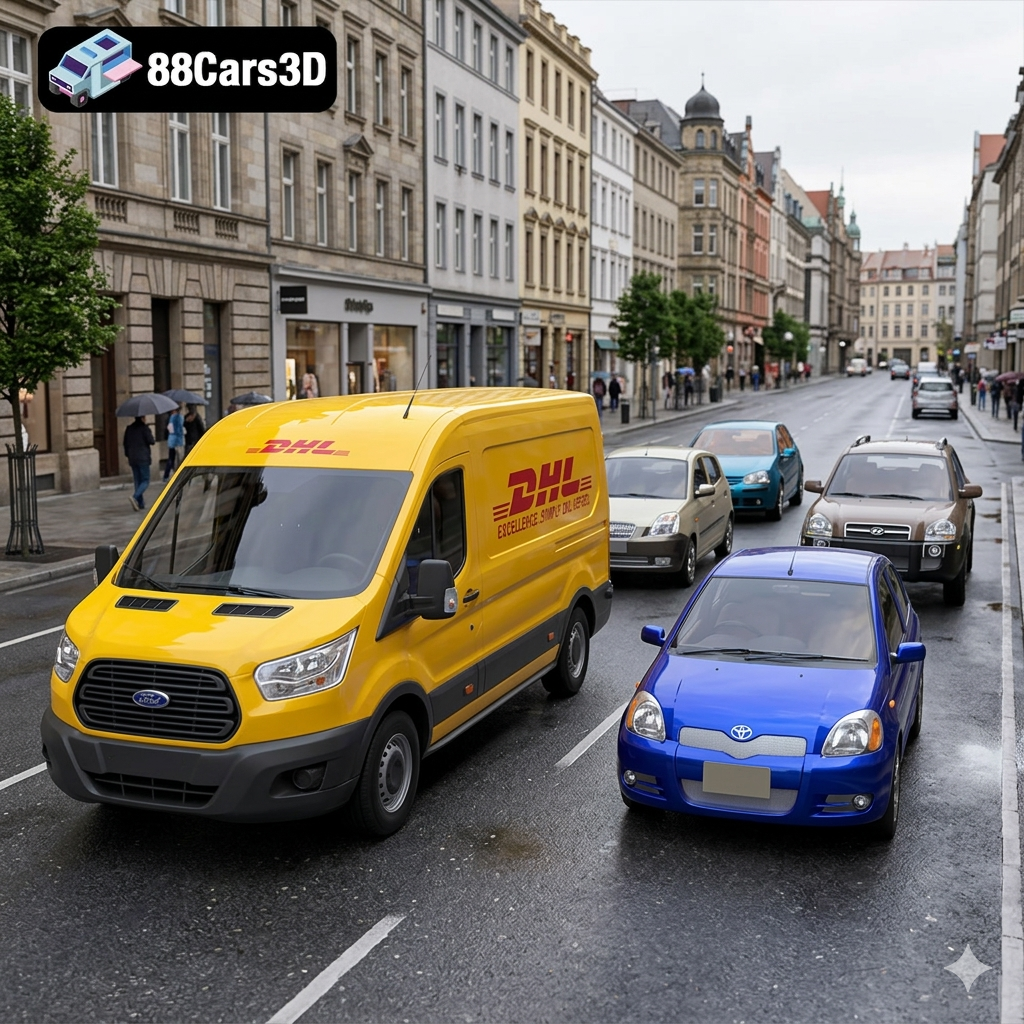
Download the Everyday City Traffic 3D Models Bundle. Includes the VW Golf, Kia Picanto, Hyundai Tucson, Toyota Yaris, and a DHL Ford Transit Van. Save big on this 5-in-1 pack, perfectly optimized for realistic ArchViz streets and game traffic.
Price: $99.99
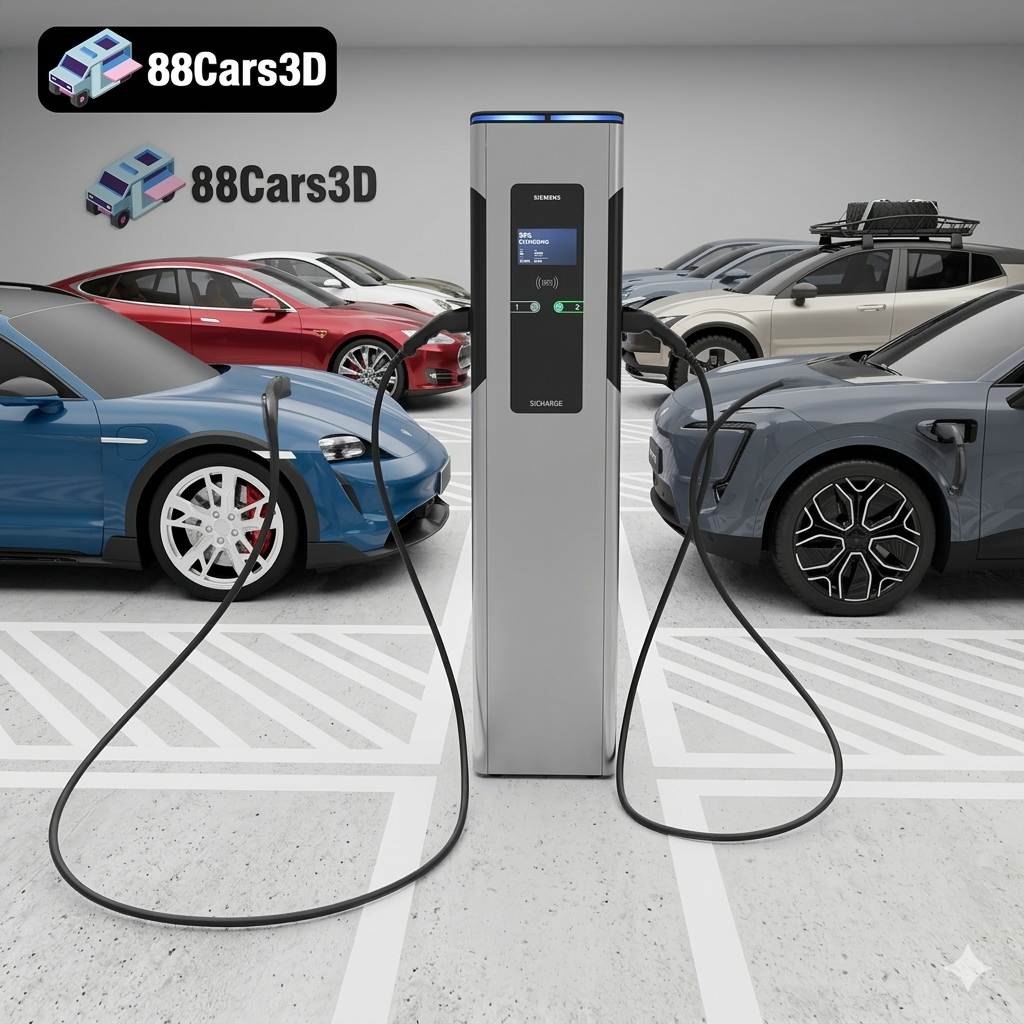
Download the Future of Mobility EV 3D Models Bundle. Includes the Volvo EX30, Tesla Model S, AVATR 11, Porsche Taycan, and a Siemens EV Charger. Save big on this highly optimized 5-in-1 pack for ArchViz and game development!
Price: $89.99

