Get 50% OFF All Premium 3D & STL Models!

In the rapidly evolving landscape of 3D visualization, the demand for highly detailed and technically accurate industrial assets is soaring. From simulating complex logistics operations to crafting immersive virtual reality training environments, the need for precision models that can perform across diverse platforms is paramount. Professionals in automotive rendering, game development, and architectural visualization constantly seek assets that save development time without compromising on realism or technical integrity.
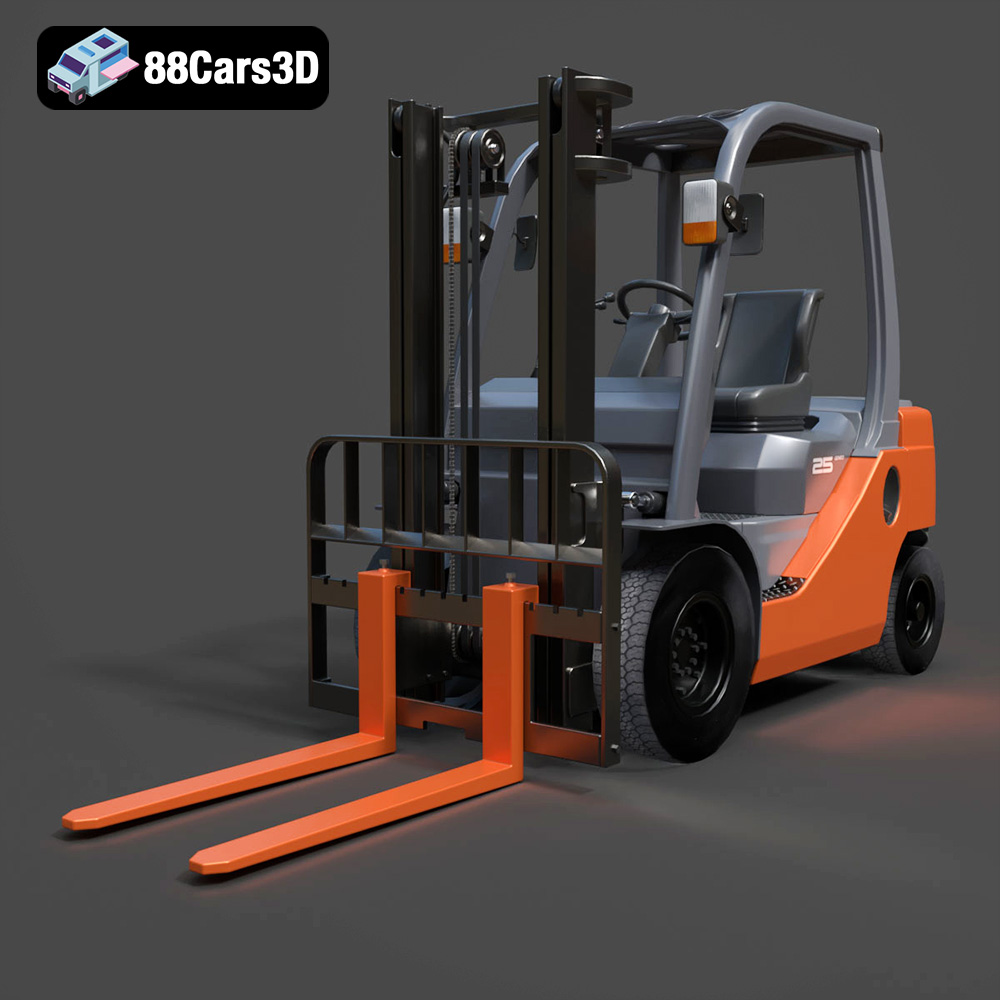
Enter the Toyota Forklift 3D Model, a meticulously crafted digital recreation designed to meet these exacting standards. This isn’t just another generic industrial vehicle; it’s a faithful representation of a modern Toyota forklift, engineered for seamless integration into a myriad of professional workflows. Whether you’re populating a vast warehouse scene, developing a sophisticated simulation, or creating striking marketing visuals, this model provides the foundational quality you need. Its comprehensive design, covering everything from the reinforced mast assembly to the intricate operator controls, positions it as an indispensable asset for any project requiring robust industrial vehicle presence. Sourced from expert platforms like 88cars3d.com, this 3D model exemplifies the caliber of 3D car models and industrial assets available to elevate your creative endeavors.
The versatility of a 3D model often hinges on its availability in various file formats, each optimized for different stages of a professional workflow. The Toyota Forklift 3D Model, offered through 88cars3d.com, exemplifies this by providing a comprehensive suite of formats, ensuring maximum compatibility and utility across the spectrum of 3D applications. Understanding these formats is crucial for designers, animators, and developers to leverage assets effectively.
The .blend format is Blender’s native file type, a robust and fully editable scene file. When you acquire the Toyota Forklift model in .blend format, you gain access to the entire Blender project, including all mesh data, materials, textures, lighting, cameras, and even animation rigs. This is ideal for artists who primarily work in Blender, offering unparalleled flexibility for customization, tweaking materials with Cycles or Eevee, modifying geometry, or preparing the model for advanced simulations. It’s an excellent choice for a project that demands full creative control within a powerful open-source environment.
.fbx (Filmbox) is arguably the most widely adopted format for exchanging 3D data between different software applications and game engines. It supports not only geometry but also materials, textures, animations, and even rigging information. For the Toyota Forklift, the .fbx format is ideal for transitioning the model into real-time pipelines like Unreal Engine and Unity, making it a go-to for game assets. Its robust nature ensures that the intricate details of the forklift, including its separate wheels and lifting components, retain their structural integrity and animation readiness when imported into your preferred engine or 3D package.
The .obj (Wavefront Object) format is a universal standard, renowned for its excellent cross-software compatibility. While it primarily focuses on geometry (vertices, normals, texture coordinates) and references external material files (.mtl), it is a highly stable and reliable choice for transferring mesh data. For the Toyota Forklift, .obj provides a clean, raw mesh that can be easily imported into virtually any 3D software for further processing, texturing, or conversion. It’s particularly useful when you need a pure geometric representation without the complexities of scene data or animations.
.glb (GLB format, a binary form of glTF) is quickly becoming the standard for 3D models in AR, VR, and web-based applications. It’s a self-contained, single-file format that includes geometry, materials, and textures, all optimized for efficient loading and rendering in real-time environments. The Toyota Forklift as a .glb asset would be perfect for interactive online product viewers, augmented reality experiences (e.g., placing the forklift in a real-world warehouse via a phone), or virtual reality training simulations where performance and rapid deployment are critical.
The .stl (STereoLithography) format is the cornerstone of 3D printing. It represents a 3D model as a series of connected triangles, defining only the surface geometry. While it lacks color, texture, or material information, its simplicity makes it universally compatible with 3D printers and slicing software. The Toyota Forklift 3D Model, specifically highlighted as “3D Printable STL,” is meticulously prepared for physical fabrication, allowing users to create tangible scale models for display, prototyping, or educational purposes. Its manifold geometry ensures a successful print, ready for the post-processing stages.
.ply (Polygon File Format) is a versatile format often used for storing 3D data from 3D scanners and for applications requiring precision mesh representation, such as CAD or scientific analysis. It supports properties like color and transparency per vertex or face, offering more detail than .obj or .stl in certain contexts. For the Toyota Forklift, a .ply file might be used in specialized engineering or simulation software where accurate geometric and color data at a granular level is important for analysis or precise digital manufacturing workflows.
The inclusion of the .unreal format signifies an asset specifically packaged and optimized for direct import into Unreal Engine. This typically means the model has undergone specific preparation, potentially including proper scaling, collision setups, and material configurations that are native to Unreal. For developers integrating the Toyota Forklift into a high-fidelity game or an industrial visualization in Unreal Engine, this format streamlines the import process, ensuring the model is ready for real-time environments with minimal setup, maximizing performance and visual quality.
The .max format is Autodesk 3ds Max’s native scene file. Similar to .blend for Blender, it encapsulates the entire 3ds Max project, including geometry, modifiers, materials (like V-Ray or Corona materials), lighting, cameras, and animation keyframes. For professionals whose primary DCC (Digital Content Creation) tool is 3ds Max, having the Toyota Forklift in .max format offers complete editability and the ability to leverage 3ds Max’s powerful modeling, rendering, and animation capabilities, making it an invaluable asset for complex automotive rendering projects and cinematic sequences.
Creating a 3D model that truly stands out requires a deep understanding of both aesthetics and engineering. The Toyota Forklift 3D Model is a testament to this philosophy, meticulously designed to capture the essence of its real-world counterpart while offering robust technical advantages for professional use cases.
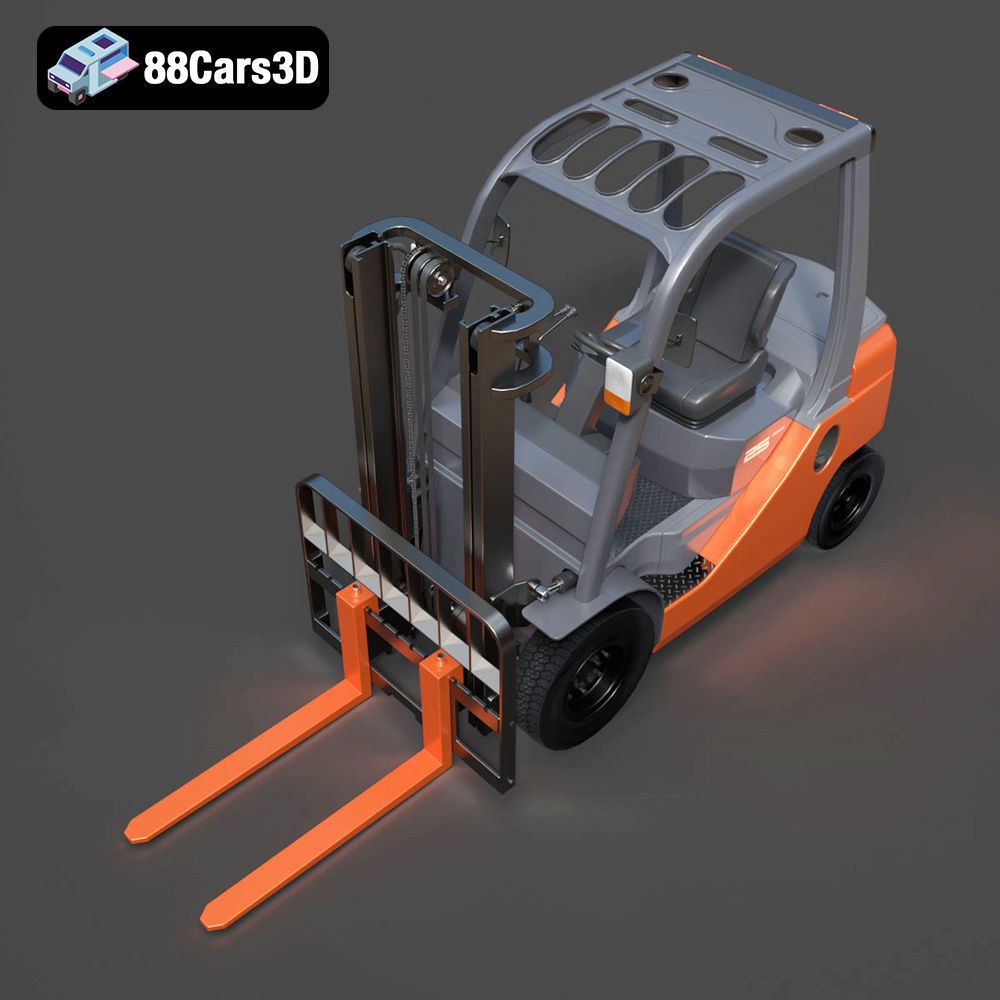
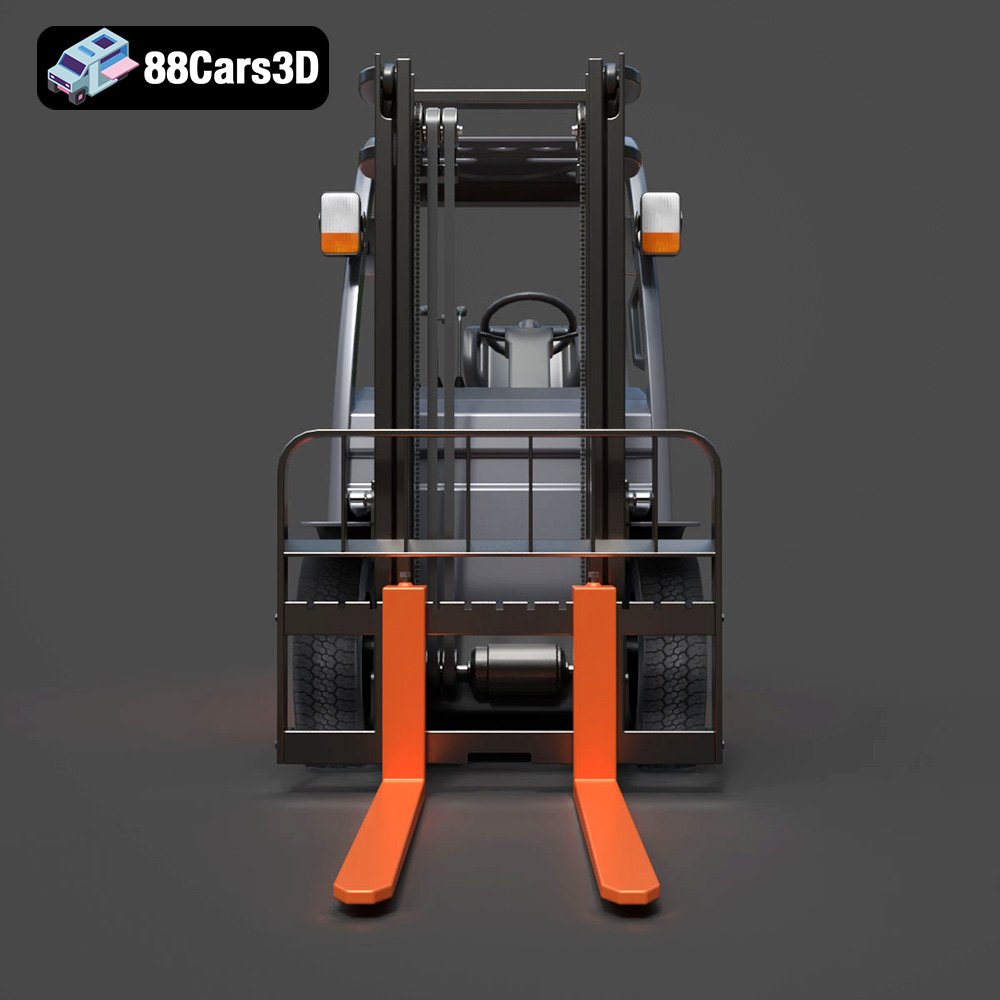
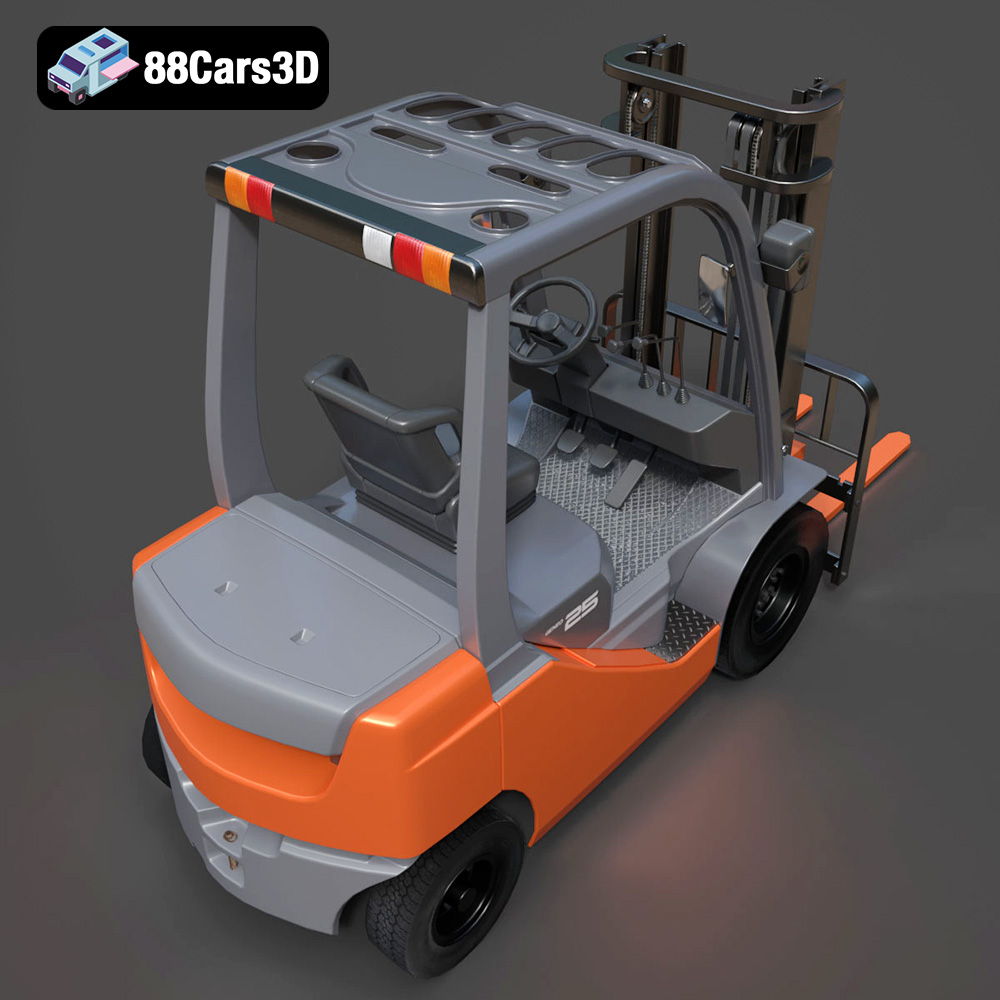
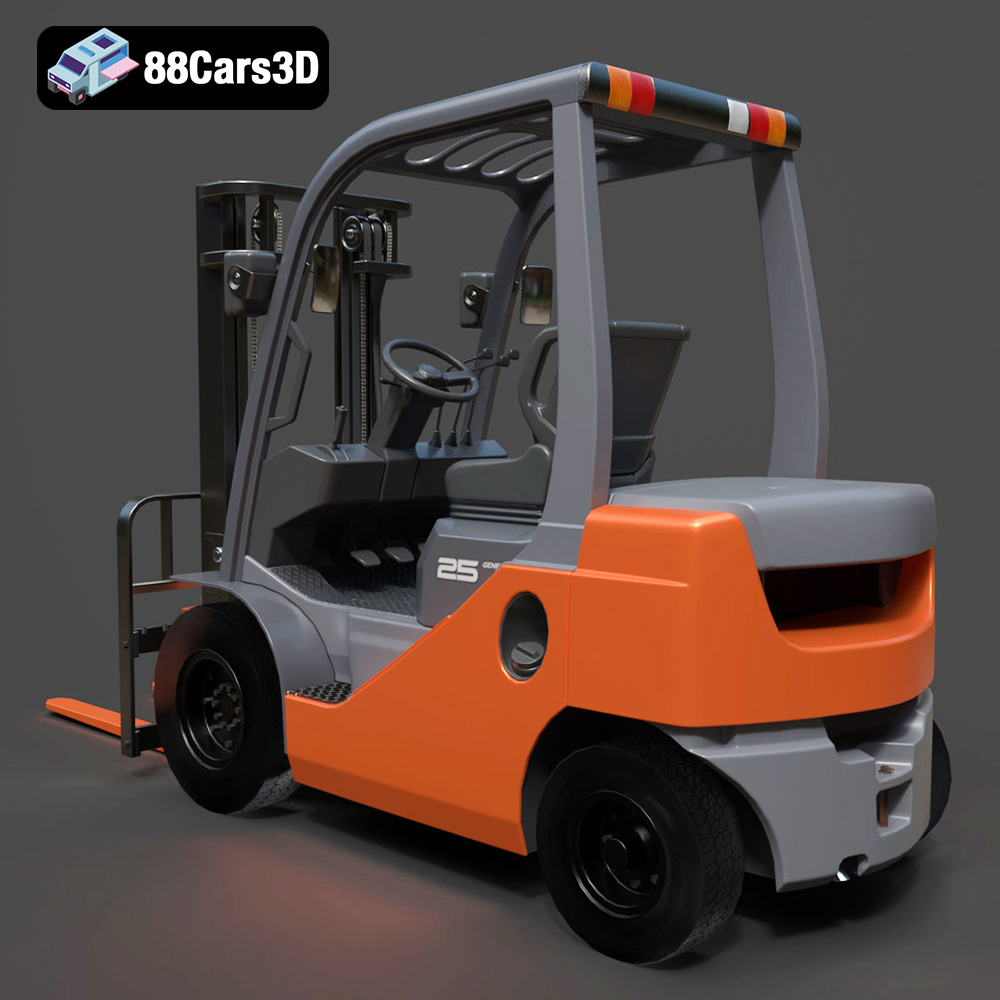
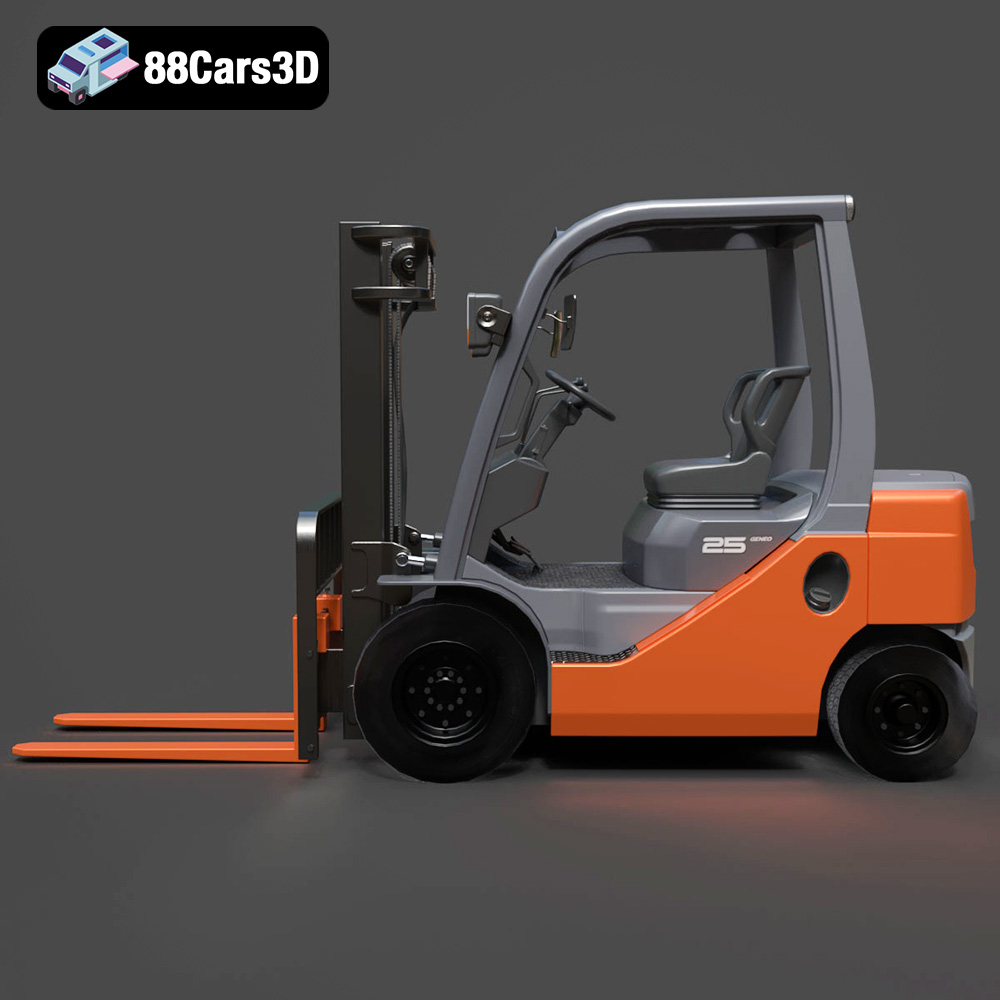
The initial impact of any industrial asset comes from its exterior fidelity, and this Toyota Forklift excels here. Its accurate body proportions are immediately apparent, reflecting the ergonomic and functional design principles of real Toyota forklifts. Crucially, the model features a detailed mast assembly with realistic lift rails, hydraulic cylinders, and chain detailing. These components are not merely ornamental; they are structured to allow for proper pivot setup, crucial for animation and simulation of real-world lifting operations. The realistic fork arms boast adjustable spacing, adding another layer of practical utility for diverse scenarios. Beyond the functional elements, the overhead safety guard structure and the counterweight rear body design are replicated with precision, contributing to both visual authenticity and structural integrity in the digital realm. Even the industrial tire geometry includes discernible tread detail, demonstrating the commitment to comprehensive realism down to the smallest elements.
The operator’s environment is often overlooked in generic models, but for simulation, AR/VR, and training applications, it is paramount. This 3D car model extends its detail into the cockpit, featuring a accurately modeled driver seat and backrest, a functional steering wheel, and a complete array of control levers. The dashboard and instrument panel are present, along with a realistic pedal layout and operator floor platform, enhancing the sense of immersion. Safety bars and structural framing within the operator’s area further reinforce the authenticity, making the model suitable for use in vocational forklift operation training simulations where accurate visual cues are critical for effective learning. This level of detail ensures that whether you’re performing a static render or navigating a virtual warehouse, the experience remains credible and engaging.
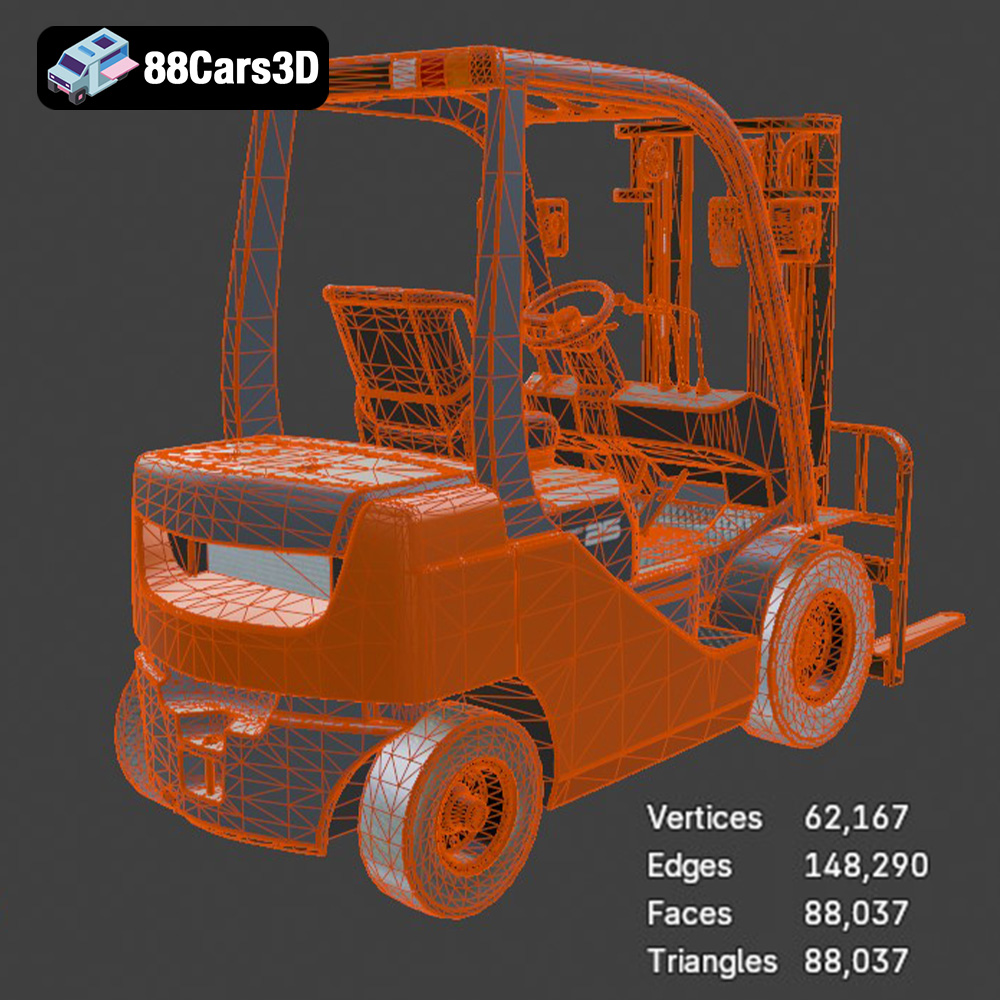
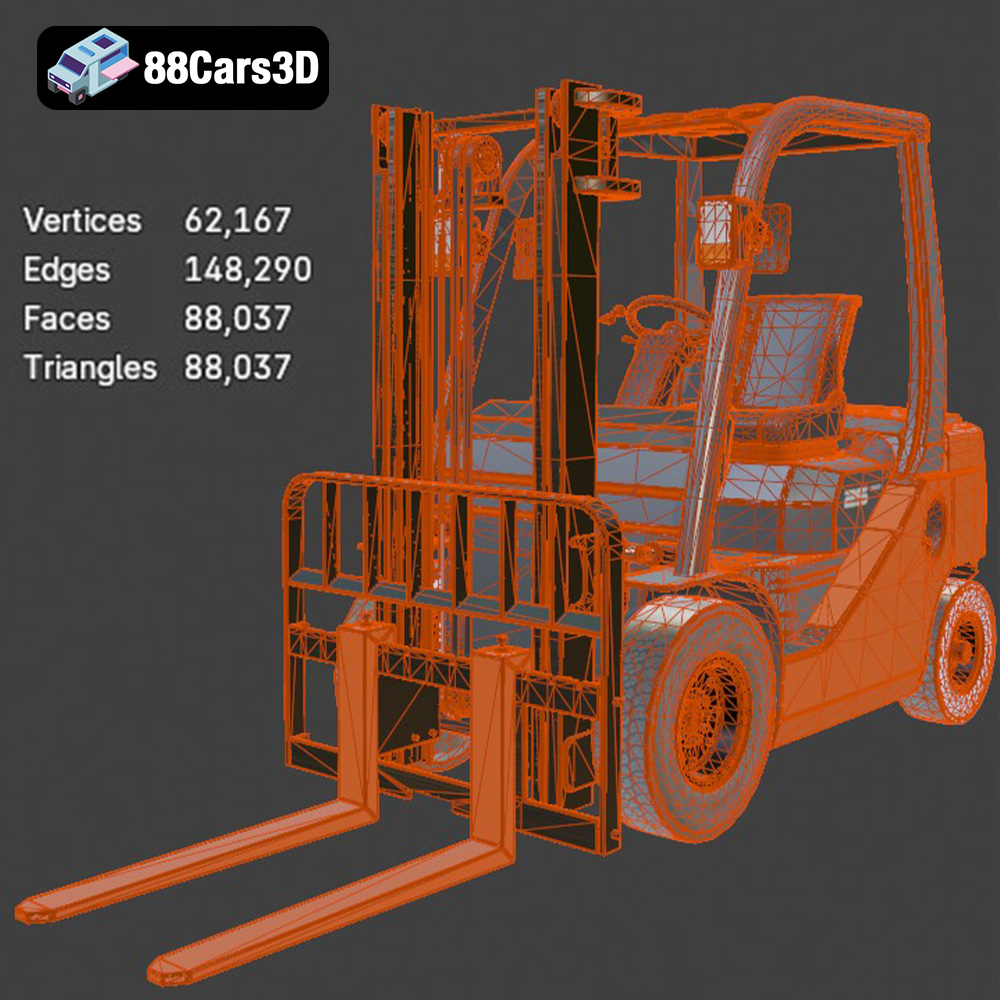
Beneath the detailed surface lies a robust technical foundation. The model boasts a clean and well-organized mesh structure, characterized by optimized polygon flow that strikes an excellent balance between performance and visual realism. This attention to topology is vital for ensuring smooth deformations during animation and efficient rendering in real-time engines. Furthermore, the model adheres to real-world scale accuracy, a non-negotiable for projects that demand precision, such as architectural visualizations or engineering simulations. Proper pivot setup for steering and mast lift animation is a key technical advantage, simplifying the animation process and enabling realistic mechanical movements. This meticulous engineering ensures that the Toyota Forklift 3D Model is not just visually appealing but also a highly functional and versatile asset for any professional workflow.
A truly valuable 3D asset transcends static imagery, offering dynamic capabilities that expand its utility across diverse industries. The Toyota Forklift 3D Model is engineered with this versatility in mind, proving its worth from cinematic automotive rendering to interactive game environments and cutting-edge AR/VR experiences.
For professionals in automotive rendering and industrial visualization, the forklift model is an indispensable tool. It’s ideal for crafting compelling industrial marketing materials, providing a realistic context for products or services. Imagine a high-resolution render of a new warehouse design, populated with these meticulously detailed forklifts efficiently moving goods. This model is perfect for warehouse planning visuals, demonstrating logistical flows and operational efficiencies. For commercial presentations, the Toyota Forklift 3D Model can animate complex material handling scenarios, making abstract concepts tangible and engaging. Integration into complex scenes, perhaps alongside other 3D car models available on 88cars3d.com, allows for the creation of rich, believable environments. Artists can leverage its clean topology and optimized geometry with industry-standard rendering engines like V-Ray, Corona, or Cycles, focusing on advanced lighting and material shaders to achieve photorealistic results that captivate and inform.
The gaming industry constantly seeks high-quality game assets that can contribute to immersive gameplay without bogging down performance. The Toyota Forklift is perfectly suited for warehouse simulators, allowing players to experience the intricacies of logistics and material handling. In construction games, it can play a vital role in moving supplies and equipment, adding a layer of realism and strategic depth. For logistics management systems, the model provides a visual representation of operational assets, enhancing user engagement and understanding. Its optimized geometry is specifically designed for real-time engines such as Unreal Engine and Unity, ensuring smooth performance even in crowded scenes. Developers can implement various Levels of Detail (LODs) to manage poly counts effectively, from distant background elements to close-up interactive vehicles, making it a truly versatile game asset for any scale of project.
The rise of Augmented Reality (AR) and Virtual Reality (VR) has opened new frontiers for industrial training and interactive demonstrations. The Toyota Forklift 3D Model is a prime candidate for such applications. Its accurate representation of controls, mast assembly, and overall proportions makes it perfect for immersive forklift training modules. Operators can learn safety protocols, maneuverability techniques, and load handling in a risk-free virtual environment, significantly reducing training costs and increasing effectiveness. For interactive industrial demonstrations, the model can be placed within a real-world setting via AR, showcasing potential equipment layouts or workflow improvements. The attention to detail in the operator area, including the dashboard and control levers, translates directly into a more realistic and actionable VR experience, enabling practical skill development in a virtual space. This model serves as a foundational component for creating truly impactful AR/VR solutions.
The journey of a 3D model doesn’t always end on a screen. For many, the ability to translate digital artistry into a tangible, physical object is a powerful extension of their creative work. The Toyota Forklift 3D Model offers this exciting possibility, optimized for 3D printing to create detailed scale models and miniatures.
The inclusion of the .stl format is critical for 3D printing. This format simplifies the complex mesh into a printable shell, ready for slicing software. When preparing to print the Toyota Forklift, understanding the recommended scales is key: 1:32, 1:24, 1:18, or 1:12. These scales allow for varying levels of detail and physical size, catering to different display or functional needs. Recommended layer heights (0.12–0.20 mm) ensure a balance between print speed and surface finish, while wall thicknesses (2–3 mm) provide structural integrity for the printed model. An infill of 20–35% typically offers sufficient strength without excessive material usage. These parameters are crucial for achieving a successful and robust physical reproduction of the industrial vehicle.
Successful 3D printing, especially for complex mechanical assets like a forklift, requires strategic planning. Supports are essential for elements like the forks, overhead guard, and mast assembly, preventing sagging and ensuring accuracy during the printing process. The recommended print orientation, with the body printed flat and the mast printed separately, is designed to optimize surface quality and minimize the need for extensive support structures, particularly for intricate parts. Once printed, post-processing elevates the raw print into a display-worthy automotive collectible. This includes sanding to remove layer lines and support marks, applying a primer for a smooth base, and then painting with industrial yellow/orange finishes or other custom colors. Adding safety decals, company logos, or weathering effects can further enhance the realism and personalization of the physical model, making it a unique piece for any enthusiast or professional display.
The true value of a professional-grade 3D model lies not just in its initial detail but also in its adaptability and seamless integration into existing creative pipelines. The Toyota Forklift 3D Model is built to be a flexible foundation, allowing artists and developers to tailor it precisely to their project’s unique demands.
One of the most significant advantages of a well-structured 3D model is the ease with which it can be customized. Users can readily change the body color and branding to match specific company guidelines or scene requirements. This could involve applying a client’s corporate colors for a marketing visualization or integrating bespoke company logos or warehouse decals for a simulation environment. For applications requiring specific operational capabilities, the model allows for modifications to fork length or width, making it adaptable for different load sizes. Adjusting the mast height configuration is also straightforward, enabling the forklift to accurately represent various lifting capacities or to fit within specific architectural constraints. Furthermore, artists can configure lighting, adding spotlights for indoor warehouse scenes or adjusting environmental lighting for outdoor yard scenarios, ensuring the forklift always looks its best within its intended context. This level of customization ensures the asset remains relevant and versatile across numerous projects.
The availability of multiple file formats (like .max, .blend, .fbx, .unreal) ensures the Toyota Forklift 3D Model can be effortlessly integrated into virtually any industry-standard software. For users of Autodesk 3ds Max, the .max file provides a fully editable project, perfect for complex animation sequences, advanced rendering with high-end engines, and intricate scene setup. Blender users benefit from the native .blend file, offering powerful tools for advanced material setup, procedural texturing, and rendering with Cycles or Eevee. For real-time applications, importing the .fbx or .unreal format into Unreal Engine is a streamlined process. This allows game developers and visualization artists to quickly integrate the forklift into interactive experiences, cinematics, or high-performance architectural walkthroughs. By starting with a high-quality, pre-optimized asset from 88cars3d.com, professionals gain immense efficiency. It eliminates the time-consuming process of modeling from scratch, allowing more focus on creative direction, lighting, animation, and final polish, ultimately delivering superior results faster.
The pursuit of excellence in 3D visualization demands not only creative vision but also access to technically superior assets. The Toyota Forklift 3D Model stands as a prime example of such an asset, meticulously designed and optimized to serve a broad spectrum of professional applications. From its highly detailed exterior and immersive operator area to its robust technical foundations, this model is built for performance and realism.
Whether your project involves cutting-edge automotive rendering, developing complex industrial game assets, creating immersive AR/VR training experiences, or even bringing digital designs to life through 3D printing, this forklift model offers unparalleled versatility. Its compatibility with major 3D software and engines, coupled with extensive customization options, ensures it can seamlessly integrate into and elevate any professional workflow. By providing a clean mesh, real-world scale, and animation-ready components, it empowers artists and developers to focus on innovation rather than foundational modeling tasks.
For those seeking to enhance their projects with high-quality 3D car models and industrial vehicles, the Toyota Forklift 3D Model from 88cars3d.com represents a smart investment. It’s more than just a model; it’s a catalyst for efficiency, realism, and creative freedom in the demanding world of 3D production.
The Toyota Forklift 3D Model is a high-detail digital recreation of a modern industrial forklift designed for warehouse, logistics, and material handling operations. Known for reliability, maneuverability, and industrial durability, Toyota forklifts are widely used in factories, storage facilities, and distribution centers worldwide. This 3D model accurately represents the reinforced mast assembly, lifting forks, hydraulic cylinders, overhead guard, operator seat, steering controls, counterweight body, industrial tires, and rear steering configuration. Built with clean topology and real-world scale proportions, it is ideal for rendering, animation, simulation, game development, and AR/VR industrial visualization. Perfect for warehouse scenes, logistics centers, factory environments, cargo loading simulations, and commercial presentations.
$29.99
.arvr
.blend
.fbx
.forklift
.forklift3dmodel
.gameasset
.glb
.industrialvehicle
.logistics
.materialhandling
.max
.obj
.ply
.rendering
.simulation
.stl
.toyota
.unreal
.warehouseequipment