Get 50% OFF All Premium 3D & STL Models!

“`html
In the world of 3D printing, particularly when working with intricate models like those found on 88cars3d.com, the right hardware settings are paramount. While many focus on slicing software and filament types, the foundational elements – your nozzle size and your printer’s build volume – play a crucial role in print quality, speed, and success. This post will dive deep into how to select the optimal nozzle diameter and effectively utilize your build plate dimensions for everything from miniature collectible cars to larger prototypes. We’ll explore the technical considerations, tradeoffs, and practical advice to ensure your 3D printer is perfectly configured for your specific project.
The nozzle is your 3D printer’s literal point of contact with the world, extruding molten plastic layer by layer. Its diameter is arguably the most significant factor influencing the resolution, speed, and strength of your prints. The standard nozzle size for most FDM printers is 0.4mm, a versatile choice that balances detail and print time. However, understanding the implications of choosing smaller or larger nozzles is key to optimizing your workflow, especially when printing complex geometries like those in high-quality printable car models.
Opting for a smaller nozzle, such as 0.2mm or even 0.1mm, unlocks a new level of detail. This is invaluable when printing intricate parts of a model car where small features like grilles, badges, or panel gaps need to be precisely replicated. With a 0.2mm nozzle, you can achieve layer heights as low as 0.05mm, producing incredibly smooth surfaces and sharp edges that rival injection-molded parts. The extrusion width is typically set to be slightly larger than the nozzle diameter (e.g., 0.2mm nozzle with 0.24mm extrusion width) to ensure good layer adhesion. However, this comes at a significant cost: print time. Printing at such fine resolutions can increase print duration by a factor of 4x or more compared to a 0.4mm nozzle. Furthermore, smaller nozzles are more prone to clogging, especially with non-standard filaments, and require meticulous printer calibration and maintenance. Ensure your extruder is capable of consistent, fine filament feeding and that your motion system is precise enough to handle these minuscule movements.
Conversely, larger nozzles, such as 0.6mm, 0.8mm, or even 1.0mm, are designed for speed and structural integrity. A 0.6mm nozzle, for instance, allows for higher layer heights (e.g., 0.25mm to 0.3mm) and wider extrusion widths (e.g., 0.72mm), significantly reducing print times. This is ideal for printing larger prototypes, functional parts, or even base structures where fine detail is less critical. The increased extrusion width also leads to stronger layer adhesion, resulting in more robust prints. However, the trade-off is a loss of fine detail. Small features will be smoothed over, and layer lines will become more pronounced. When using larger nozzles, it’s crucial to adjust your slicer settings accordingly. You’ll need to increase flow rate and potentially adjust retraction settings to prevent stringing. For STL files with complex overhangs or delicate features, a larger nozzle might render the model unprintable or require extensive support structures. Many users find a 0.4mm nozzle to be the sweet spot, but for rapid prototyping or very large models, experimenting with larger nozzles can be highly beneficial.
To determine the best nozzle for your next project, consider these steps:
Your 3D printer’s build volume, often referred to as the bed size, dictates the maximum dimensions of a single-piece print you can achieve. Common build plate sizes range from small desktop printers (e.g., 150x150x150mm) to larger industrial machines. Effectively utilizing your build volume is crucial for both single-part prints and for efficiently arranging multiple smaller models. Understanding how to orient and position your models on the print bed can prevent common issues like warping, poor adhesion, and print failures.
For hobbyists and collectors who download multiple STL files from marketplaces like 88cars3d.com, arranging several models on the build plate can save considerable time and resources. Slicing software like Cura or PrusaSlicer offers powerful tools for automatically or manually arranging parts. When placing multiple objects, ensure there’s adequate space between them to allow for cooling and prevent parts from fusing together if they are very close. Also, consider the orientation of each individual model for optimal printing (more on this later). If you’re printing several identical car models, arrange them in a grid-like pattern, but be mindful of potential heat buildup from the nozzle passing over the same area repeatedly, which could lead to thermal runaway or uneven cooling. Advanced users might use software like Netfabb or even Blender to pre-arrange models in a more complex, interlocking fashion to maximize bed utilization for larger batches.
If your desired model exceeds your printer’s build volume, the solution lies in splitting the STL file into smaller, manageable parts. This requires careful planning and often involves using 3D modeling software like Blender or Meshmixer. When splitting a model, aim for flat, easily printable surfaces where the parts will join. Consider adding registration keys or alignment pins to ensure accurate assembly after printing. For example, a large-scale 1969 Ford Mustang model might need to be split into body panels, chassis, and interior components. Each part must then be sliced and printed individually. Post-processing becomes critical here; meticulous sanding, filling, and gluing are necessary to achieve a seamless final product. The key is to plan your cuts strategically to minimize visible seams and maximize structural integrity of the assembled piece. When splitting, ensure that all resulting meshes are manifold (watertight) and free of intersecting geometry before slicing.
The size of your print directly impacts the importance of bed adhesion. Larger prints, especially those with a significant footprint, are more susceptible to warping due to uneven cooling and internal stresses. This is where materials like ABS, which require an enclosure and higher bed temperatures, pose a greater challenge than PLA. For large parts, ensuring a clean build surface is paramount. Common adhesion methods include:
For very large prints, consider using a brim or raft in your slicer settings. A brim adds a single layer of material around the base of your print, increasing surface area contact with the bed. A raft prints a disposable base layer underneath your object, providing a stable foundation but consuming more material and potentially leaving a rougher surface on the bottom of your part. Always calibrate your Z-offset meticulously; the first layer is the most critical for successful adhesion and print integrity, regardless of print size.
Once you’ve chosen your nozzle and considered your build plate, the slicing software becomes your digital workshop. Here, you translate the 3D model into machine instructions, defining layer height, infill, supports, and much more. Effective slicing is an art and a science, especially when optimizing for specific nozzle sizes and bed utilization.
The layer height setting directly correlates with the detail and smoothness of your final print. A lower layer height (e.g., 0.08mm-0.12mm) will produce smoother surfaces and capture finer details, ideal for small, intricate parts or when using a smaller nozzle. However, this dramatically increases print time. A higher layer height (e.g., 0.2mm-0.3mm) leads to faster prints but more visible layer lines. For typical printable car models, a layer height of 0.1mm to 0.15mm often provides a good balance between detail and reasonable print times, especially with a standard 0.4mm nozzle. When using a smaller nozzle (e.g., 0.2mm), you can push layer heights down to 0.05mm for exceptional detail. Conversely, with a larger nozzle (e.g., 0.8mm), even a 0.3mm layer height might look quite smooth.
Key Considerations:
Infill determines the internal structure of your print, affecting its strength, weight, and material consumption. For display models, low infill densities (5-15%) are often sufficient, mainly to provide a solid base for top layers and prevent infill showing through. For functional parts or models requiring durability, higher infill densities (20-50% or more) are necessary. Different infill patterns offer varying levels of strength and print speed:
When printing small, detailed printable car models, consider using a pattern that doesn’t create too much stringing or travel moves within the infill, such as Grid or Lines, at a low density (e.g., 10%). For larger, more robust components, Gyroid at 20-30% can provide ample strength without excessively long print times.
Support structures are vital for bridging overhangs and unsupported areas. Their generation and removal can significantly impact print quality and post-processing effort. When printing models from 88cars3d.com, they often come pre-supported or with recommendations for support placement. However, manual tuning is frequently required.
Experiment with different support types (tree supports vs. standard) available in slicers like Cura or PrusaSlicer. Tree supports can be more material-efficient and easier to remove in certain situations.
The choice of filament is as critical as your hardware and slicing settings. Different materials have unique properties that affect printability, durability, and appearance. Understanding these characteristics is key to selecting the right filament for your specific project, whether it’s a display piece or a functional component.
PLA (Polylactic Acid): The most popular and beginner-friendly material. It’s easy to print, biodegradable, and available in a vast array of colors and finishes. PLA has good detail capabilities, making it excellent for intricate printable car models requiring high visual fidelity. However, it has a lower heat resistance (around 50-60°C) and can become brittle over time. Ideal for display pieces and non-stressed parts.
PETG (Polyethylene Terephthalate Glycol): Offers a good balance between ease of printing (similar to PLA) and improved mechanical properties. PETG is stronger, more durable, and has higher temperature resistance (around 70-80°C) than PLA. It’s also more flexible and impact-resistant, making it suitable for parts that might experience some stress or require more resilience. PETG can be prone to stringing, requiring careful retraction tuning.
ABS (Acrylonitrile Butadiene Styrene): Known for its strength, temperature resistance (up to 100°C), and impact resistance, ABS is a staple in engineering and automotive applications. However, it’s more challenging to print. ABS requires higher temperatures (nozzle and bed) and an enclosed printer to prevent warping and cracking due to rapid cooling. It also emits fumes that require good ventilation. For robust car components or parts exposed to higher temperatures, ABS is a solid choice if your printer setup can handle it.
TPU (Thermoplastic Polyurethane): A flexible filament, TPU is ideal for creating rubber-like parts such as tires for model cars, flexible suspension components, or impact-absorbing elements. Printing TPU can be challenging due to its flexibility; it often requires slower print speeds and direct-drive extruders to prevent jamming. Larger nozzles (0.5mm or 0.6mm) can also improve TPU printability.
Beyond the basics, the market offers specialty filaments that can elevate your prints:
Each filament type requires specific printer settings. Always refer to the manufacturer’s recommendations, but here are general guidelines:
Fine-tuning these settings, especially temperature towers and retraction tests, is crucial for each material and even for different brands of the same material. When downloading models from marketplaces such as 88cars3d.com, consider the intended application and choose a filament that best suits those needs.
Before any STL file even reaches your slicer, its digital integrity is paramount. A corrupted or improperly formed mesh can lead to slicing errors, failed prints, and hours of frustration. Ensuring your files are “watertight” and manifold is a critical step in the 3D printing workflow, especially for complex models like those offered by 88cars3d.com.
The STL (STereoLithography) file format represents a 3D object’s surface geometry using a collection of interconnected triangles (facets). Each triangle is defined by its three vertices and a normal vector indicating which side is “outside” the object. For a 3D printer to understand and slice a model correctly, the mesh must adhere to certain topological rules:
Fortunately, software tools exist to diagnose and repair common mesh errors. When you download STL files, it’s good practice to run them through a repair process, especially if they originate from complex modeling or scanning processes.
When repairing, prioritize fixing holes and ensuring manifold geometry. For reversed normals, you can often select all faces and flip them, or select specific faces and reverse their normals. If downloading pre-prepared files from a reputable source like 88cars3d.com, many of these issues should already be resolved, but understanding the process is still valuable.
Beyond fixing the mesh itself, choosing the correct print orientation on the build plate is a form of “file preparation” that significantly impacts print quality, strength, and support requirements. This is especially true for automotive models where aesthetics and structural integrity are key.
Experimenting with different orientations in your slicer is a quick way to discover the best settings for your specific model and printer. For complex shapes like car bodies, you might need to split the model into sections, print each section in its optimal orientation, and then assemble them.
Even with the perfect nozzle, bed size, slicing strategy, and filament, a poorly calibrated or maintained 3D printer will produce subpar results. Calibration and routine maintenance are the unsung heroes of successful 3D printing, ensuring consistency and reliability, especially when working with detailed printable car models.
Before embarking on any significant print job, especially a complex one, performing a few key calibrations can save you immense time and filament:
Regular maintenance prevents issues before they arise:
By investing time in calibration and maintenance, you ensure your printer, whether it’s an entry-level FDM machine or a high-end resin printer, operates at its peak performance. This attention to detail is what separates frustrating print failures from the seamless creation of high-quality models, such as those available on 88cars3d.com.
“`
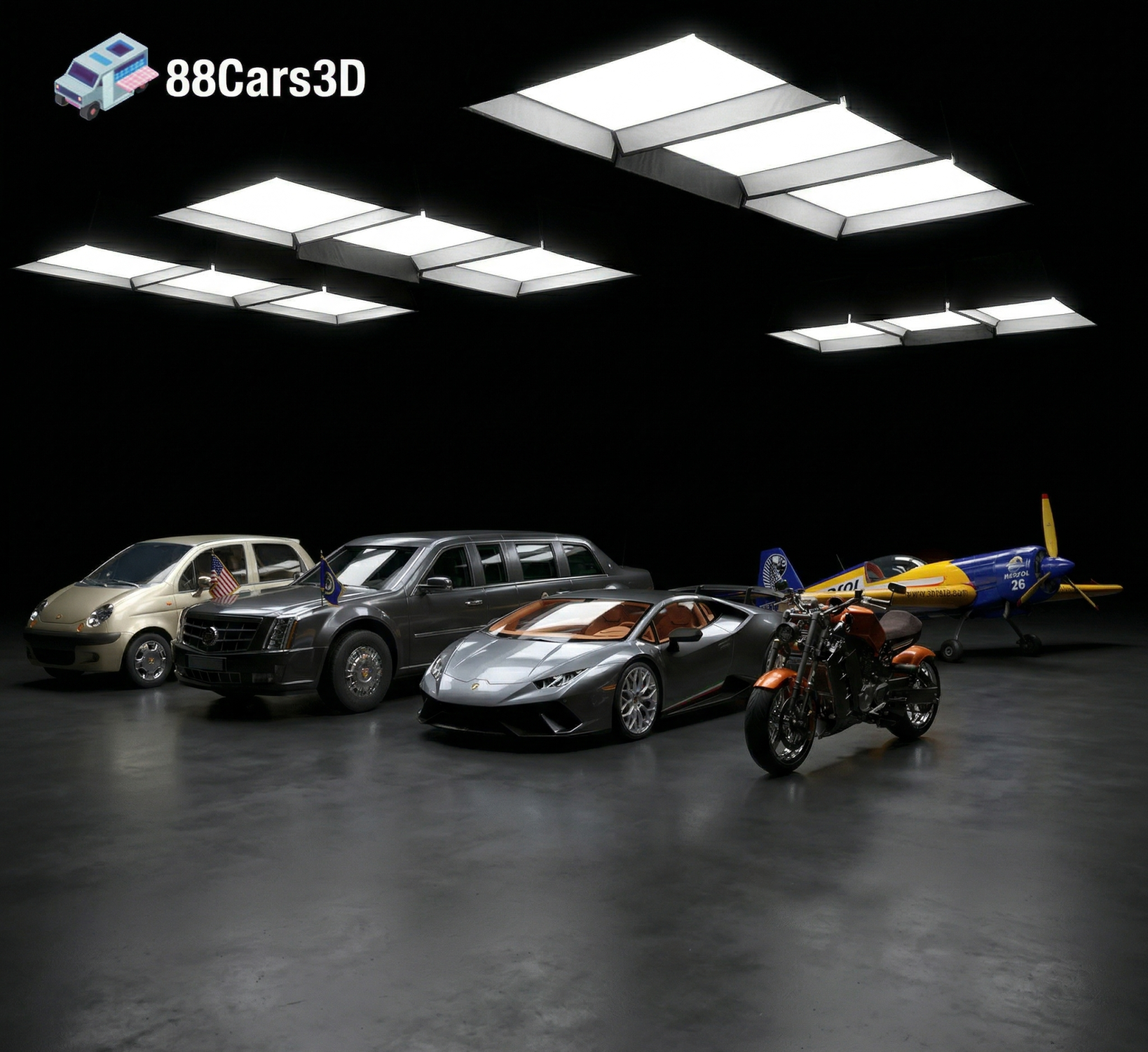
Texture: Yes | Material: Yes | 3D Printable: Yes. Download the Ultimate Creators’ Showcase featuring 5 premium 3D models: Lamborghini Huracan, ZAV Concept Motorcycle, Sukhoi SU-26, Presidential Limousine, and Daewoo Damas. Optimized for 4K CGI rendering and 3D printing. Save massive with this exclusive multi-category bundle!
Price: $99.99

Texture: Yes | Material: Yes | 3D Printable: Yes. Download the Italian Thoroughbreds Bundle featuring 5 iconic 3D models: Lamborghini Huracán Performante, Ferrari 458 Italia, Lamborghini Urus, Diablo SV, and Maserati GT. Optimized for 4K rendering and 3D printing (STL included). Save 50% with this ultimate Italian vehicle collection.
Price: $199.99

Download the Elite Future Mobility Bundle featuring 4 highly optimized 3D models: Tesla Model S, Avatr 11, Li L9, and Zoox Robotaxi. Perfect for ArchViz, Smart City renders, and game dev. Optimized for Unreal Engine and Blender. Includes .fbx, .obj, and .max formats.
Price: $99

🚗 5 Iconic German Cars (BMW M4 G82, M5 CS, X3, 1 Series & Mercedes E-Class). ✅ Optimized for ArchViz: Ready for Corona & V-Ray. 💰 Save €71 with this limited-time collection! 🚀 Instant Download after purchase.
Price: $119

Download the Extreme Off-Road & Survival 3D Models Bundle! Includes the Brabus 800 Adventure, Dodge Ram Bigfoot, Spec Truck, and a Caravan. Save over €210 on this premium 4-in-1 off-grid vehicle pack for ArchViz and game development.
Price: $149.99

Download the Heavy Duty & Commercial Logistics 3D Models Bundle! Includes the Ford Sterling, Caterpillar CT680, Mercedes Citaro Bus, and Vito Van. Save over €130 on this massive, game-ready 4-in-1 industrial vehicle pack.
Price: $109.99

Download the Ultimate Custom Motorcycles 3D Models Bundle. Includes a Custom Chopper, Ducati 916 Café Fighter, Harley XR1200X, and BMW K100. Perfect premium props for luxury ArchViz garages. Save over €250 today!
Price: $159.99

Download the ultimate JDM Street Racing 3D Models Bundle! Includes the Nissan GT-R, Toyota Supra, Mazda RX-7, Lancer Evo IX, and Honda NSX. Save big on this highly optimized, game-ready 5-in-1 Japanese legend car pack.
Price: $129.99

Download the ultimate American Muscle & Cinematic Classics 3D Models Bundle! Includes the Dodge Charger ’68, Mustang Eleanor GT500, Camaro Z28 ’79, and a custom ’69 Mustang. Save over €240 on this game-ready, premium 4-in-1 pack.
Price: $149.99

Download the Everyday City Traffic 3D Models Bundle. Includes the VW Golf, Kia Picanto, Hyundai Tucson, Toyota Yaris, and a DHL Ford Transit Van. Save big on this 5-in-1 pack, perfectly optimized for realistic ArchViz streets and game traffic.
Price: $99.99

