Get 50% OFF All Premium 3D & STL Models!

“`html
Embarking on the journey of 3D printing is an exciting venture, especially when the destination is crafting intricate and detailed car models. Platforms like 88cars3d.com offer a fantastic gateway into this world, providing high-quality STL files designed for optimal printing. However, the path isn’t always smooth. Beginners often stumble upon common pitfalls that can lead to frustrating failures. This comprehensive guide aims to illuminate these potential roadblocks, offering practical solutions and best practices to ensure a successful and rewarding 3D printing experience. We’ll explore crucial aspects like STL file preparation, slicer settings, support structures, and post-processing techniques, equipping you with the knowledge to transform digital designs into stunning physical realities. Whether you’re using an FDM or resin printer, understanding these nuances is key to achieving professional-looking results. Prepare to level up your 3D printing game and avoid these top 10 beginner mistakes.
The foundation of a successful 3D print lies in the integrity of the STL file itself. An STL file represents a 3D model as a collection of triangles, forming a mesh. Errors in this mesh, such as non-manifold edges, flipped normals, or holes, can wreak havoc during the slicing process, leading to print failures. Imagine trying to build a house on a cracked foundation – the same principle applies to 3D printing.
Non-manifold geometry refers to situations where edges are shared by more than two faces, or faces are disconnected. This is a common cause of slicing errors. Software like Netfabb Basic (free) or Meshmixer can identify and automatically repair these issues. In Netfabb, use the “Extras -> Repair” function. Meshmixer offers a similar “Make Solid” command. Run these repair tools *before* you even think about slicing the file.
Surface normals define the direction a face is pointing. Incorrectly oriented normals (flipped normals) tell the slicer that the inside of the model is the outside, leading to printing errors or hollow parts. Most repair tools can detect and correct flipped normals. In Meshmixer, you can visualize normals using “View -> Show Normals.” Red indicates a flipped normal; the “Edit -> Flip Normals” tool can correct them.
Tip: A good practice is to always run your STL files through a mesh repair tool, even if they appear visually sound. This proactive step can save you hours of wasted printing time and filament.
Print orientation is a critical factor often underestimated by beginners. The way you orient your model on the build plate significantly impacts print quality, support structure requirements, and overall printing time. For complex car models downloaded from places like 88cars3d.com, careful consideration is crucial.
Support structures are necessary for overhangs, but they add extra printing time and require post-processing for removal. Orient your model to minimize the areas that require support. For instance, orienting a car body with the roof facing down often reduces the need for supports on the more intricate details of the body.
A stable base is essential. Orient the model to maximize the contact area with the build plate, enhancing adhesion. Consider adding a brim or raft if necessary, especially for models with small footprints. For car models, orienting the chassis horizontally can provide a large, stable base.
Example: For a car body, avoid printing it vertically. This requires extensive supports and increases the risk of layer shifting due to a small contact area with the bed. Printing it horizontally on its side (with appropriate support) is usually a better strategy.
The slicer is the bridge between your digital model and the physical print. Incorrect slicer settings can lead to a multitude of problems, from poor layer adhesion to warped prints. Understanding the key settings is paramount.
Layer height dictates the resolution and print time. Lower layer heights (e.g., 0.1mm) produce smoother surfaces but increase printing time. Higher layer heights (e.g., 0.3mm) print faster but sacrifice detail. A good starting point for car models is 0.2mm. For extremely detailed areas, consider adaptive layer height settings in PrusaSlicer, which automatically adjusts layer height based on the geometry.
Infill provides internal support. Higher infill densities (e.g., 20-25%) increase strength but also material usage and print time. For car models that need structural integrity, a rectilinear or gyroid infill pattern is suitable. For purely cosmetic models, a lower density (10-15%) may suffice.
Tip: Experiment with different infill patterns. Gyroid infill offers excellent strength-to-weight ratio and is often a good choice for functional parts.
Support structures are the unsung heroes of 3D printing, but poorly designed or implemented supports can ruin a print. Optimizing supports is a balancing act between providing sufficient support and minimizing material waste and post-processing effort.
There are various support types, including tree supports, linear supports, and grid supports. Tree supports are often preferred for complex geometries as they use less material and are easier to remove. Manually placing supports in critical areas (e.g., under overhangs on the car’s body) can prevent print failures.
Support density affects the strength and ease of removal. Higher densities provide more support but are harder to remove. Adjust the overhang angle threshold to control where supports are generated. An angle of 45 degrees is a common starting point.
Example: For a car model with intricate side mirrors, consider using tree supports with a low density to minimize damage during removal.
A common frustration for beginners is prints detaching from the build plate mid-print. This is usually due to poor bed adhesion. A stable and properly prepared build surface is crucial for success.
Ensure your print bed is perfectly level. Use a leveling tool (e.g., a piece of paper) to calibrate the distance between the nozzle and the bed. Most printers have automatic bed leveling features, but manual adjustments may still be necessary.
Clean the build plate with isopropyl alcohol before each print to remove oils and contaminants. Use a build plate adhesive (e.g., glue stick, hairspray, or specialized adhesive) to enhance adhesion, especially for materials like ABS.
Tip: If you’re consistently experiencing bed adhesion issues, consider using a textured PEI build plate. These plates provide excellent adhesion for a wide range of materials.
Printing temperature is a critical parameter that directly affects layer adhesion, surface finish, and material properties. Using the wrong temperature can lead to warping, stringing, or weak prints.
Each filament material has its optimal temperature range. PLA typically prints well between 200-220°C, while PETG requires higher temperatures, around 230-250°C. Consult the filament manufacturer’s recommendations for the best results.
Increasing the first layer temperature can improve bed adhesion. For example, printing the first layer of PLA at 210°C and subsequent layers at 200°C can provide a stronger foundation.
Warning: Overheating can cause excessive stringing and warping, while underheating can lead to poor layer adhesion and brittle prints. Calibrate your temperature settings for each new filament.
Print speed affects both the quality and duration of your prints. Printing too fast can lead to poor layer adhesion and reduced detail, while printing too slow can unnecessarily extend printing time.
For detailed car models, a slower print speed generally yields better results. A speed of 40-60 mm/s is a good starting point. Reduce the speed for the outer walls to improve surface finish.
Increase the travel speed (the speed the nozzle moves when not extruding) to reduce stringing. Adjust the speed for different features, such as infill and support structures, to optimize for both speed and quality.
Tip: Experiment with different print speeds to find the sweet spot for your printer and filament. The optimal speed will depend on various factors, including the printer’s capabilities, the material used, and the desired level of detail.
Extruder calibration, also known as E-steps calibration, ensures that your printer extrudes the correct amount of filament. An uncalibrated extruder can lead to over- or under-extrusion, resulting in poor print quality.
Measure and mark 100mm of filament. Command the printer to extrude 100mm of filament. Measure the actual amount extruded. Adjust the E-steps value in your printer’s firmware based on the difference. Many online guides detail this process.
Fine-tune the flow rate in your slicer to compensate for minor variations in filament diameter or extruder performance. A flow rate of 95-105% is usually sufficient.
Importance: Proper extruder calibration is fundamental for achieving accurate and consistent prints. Make it a regular part of your printer maintenance routine.
A well-maintained 3D printer is a reliable 3D printer. Neglecting maintenance can lead to various problems, from clogged nozzles to loose belts, impacting print quality and reliability.
Clean the nozzle regularly to remove accumulated debris. Lubricate moving parts, such as lead screws and bearings, to ensure smooth operation. Check and tighten belts to prevent layer shifting.
Replace the nozzle periodically, especially if you’re printing abrasive materials like carbon fiber-filled filaments. A worn nozzle can negatively affect print quality.
Tip: Create a maintenance schedule to ensure your printer remains in optimal condition. Regular maintenance can prevent costly repairs and extend the lifespan of your printer.
Post-processing is the final step in transforming a 3D print from a raw object into a finished product. Rushing this stage can undo all the hard work you’ve put in.
Carefully remove support structures using appropriate tools, such as pliers, knives, or specialized support removal tools. Take your time to avoid damaging the model.
Sand the surface to smooth out layer lines. Apply primer and paint to achieve the desired finish. Consider using clear coats to protect the paint and enhance the appearance.
Enhancement: For car models, consider techniques like wet sanding for an ultra-smooth finish and using automotive-grade paints for a realistic look. When downloading models from marketplaces such as 88cars3d.com, the detailed designs often warrant extra care during post-processing to truly bring them to life.
Avoiding these top 10 mistakes can significantly improve your 3D printing success rate, particularly when working with detailed STL files of car models. Remember to prioritize file integrity, optimize print orientation and slicer settings, and pay attention to bed adhesion and temperature control. Regular printer maintenance and careful post-processing are also essential. By mastering these techniques, you’ll be well on your way to creating stunning 3D printed car models that you can be proud of. Now, take this knowledge, revisit your next print, and watch your creations come to life with newfound precision and quality. Happy printing!
“`
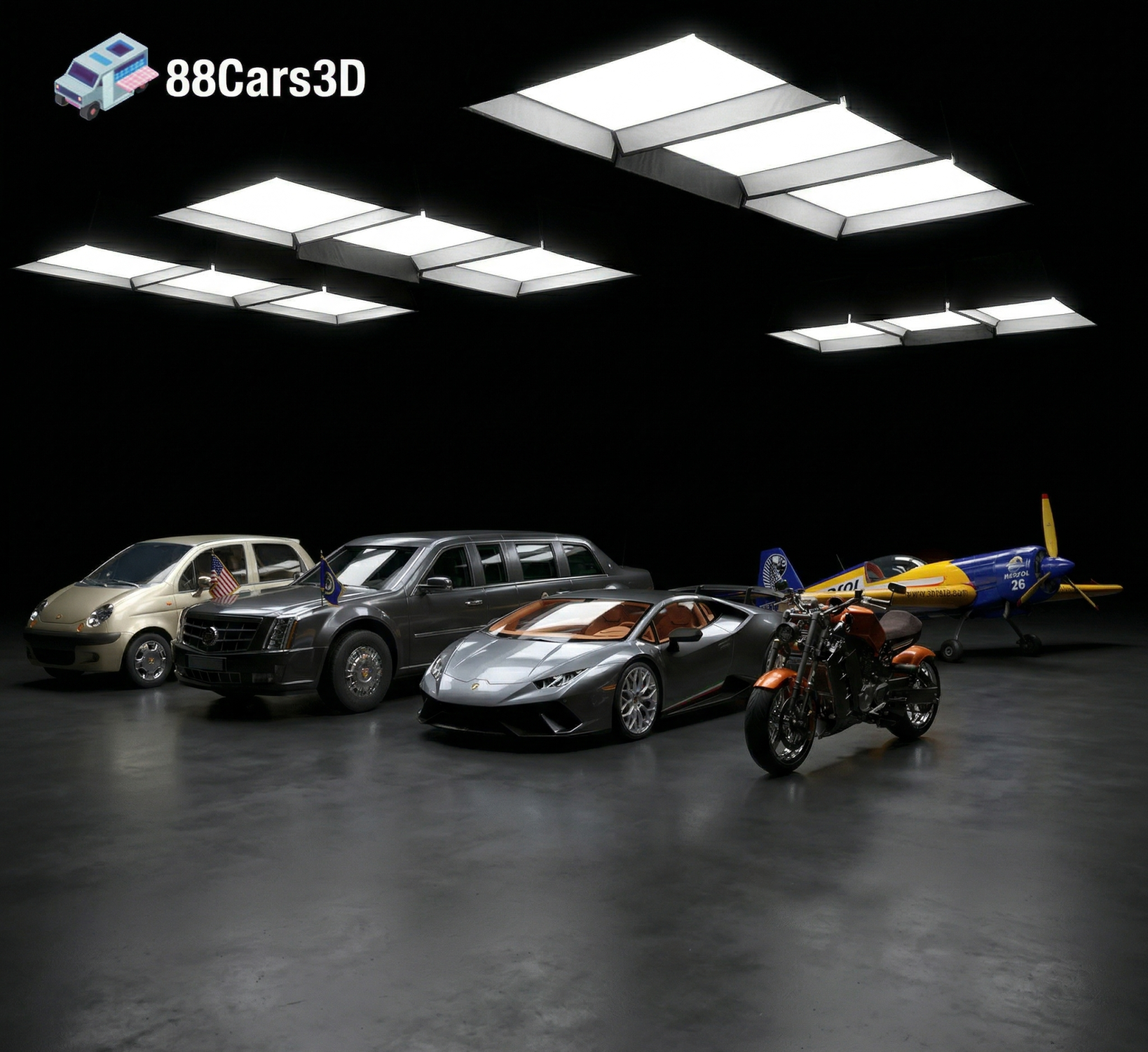
Texture: Yes | Material: Yes | 3D Printable: Yes. Download the Ultimate Creators’ Showcase featuring 5 premium 3D models: Lamborghini Huracan, ZAV Concept Motorcycle, Sukhoi SU-26, Presidential Limousine, and Daewoo Damas. Optimized for 4K CGI rendering and 3D printing. Save massive with this exclusive multi-category bundle!
Price: $99.99

Texture: Yes | Material: Yes | 3D Printable: Yes. Download the Italian Thoroughbreds Bundle featuring 5 iconic 3D models: Lamborghini Huracán Performante, Ferrari 458 Italia, Lamborghini Urus, Diablo SV, and Maserati GT. Optimized for 4K rendering and 3D printing (STL included). Save 50% with this ultimate Italian vehicle collection.
Price: $199.99

Download the Elite Future Mobility Bundle featuring 4 highly optimized 3D models: Tesla Model S, Avatr 11, Li L9, and Zoox Robotaxi. Perfect for ArchViz, Smart City renders, and game dev. Optimized for Unreal Engine and Blender. Includes .fbx, .obj, and .max formats.
Price: $99

🚗 5 Iconic German Cars (BMW M4 G82, M5 CS, X3, 1 Series & Mercedes E-Class). ✅ Optimized for ArchViz: Ready for Corona & V-Ray. 💰 Save €71 with this limited-time collection! 🚀 Instant Download after purchase.
Price: $119

Download the Extreme Off-Road & Survival 3D Models Bundle! Includes the Brabus 800 Adventure, Dodge Ram Bigfoot, Spec Truck, and a Caravan. Save over €210 on this premium 4-in-1 off-grid vehicle pack for ArchViz and game development.
Price: $149.99

Download the Heavy Duty & Commercial Logistics 3D Models Bundle! Includes the Ford Sterling, Caterpillar CT680, Mercedes Citaro Bus, and Vito Van. Save over €130 on this massive, game-ready 4-in-1 industrial vehicle pack.
Price: $109.99

Download the Ultimate Custom Motorcycles 3D Models Bundle. Includes a Custom Chopper, Ducati 916 Café Fighter, Harley XR1200X, and BMW K100. Perfect premium props for luxury ArchViz garages. Save over €250 today!
Price: $159.99

Download the ultimate JDM Street Racing 3D Models Bundle! Includes the Nissan GT-R, Toyota Supra, Mazda RX-7, Lancer Evo IX, and Honda NSX. Save big on this highly optimized, game-ready 5-in-1 Japanese legend car pack.
Price: $129.99

Download the ultimate American Muscle & Cinematic Classics 3D Models Bundle! Includes the Dodge Charger ’68, Mustang Eleanor GT500, Camaro Z28 ’79, and a custom ’69 Mustang. Save over €240 on this game-ready, premium 4-in-1 pack.
Price: $149.99

Download the Everyday City Traffic 3D Models Bundle. Includes the VW Golf, Kia Picanto, Hyundai Tucson, Toyota Yaris, and a DHL Ford Transit Van. Save big on this 5-in-1 pack, perfectly optimized for realistic ArchViz streets and game traffic.
Price: $99.99

