Get 50% OFF All Premium 3D & STL Models!

“`html
The world of 3D modeling has revolutionized industries ranging from automotive design and architecture to game development and visual effects. At the heart of this digital revolution lies the meticulously crafted 3D car model – a versatile asset with applications spanning far beyond simple visualization. Whether you’re aiming for photorealistic automotive rendering, developing immersive game environments, or prototyping for 3D printing, understanding the nuances of 3D car models is paramount. This comprehensive guide will explore the key areas surrounding these digital assets, from selecting the right model to optimizing it for your specific needs.
Choosing the correct file format for your 3D car model is crucial for seamless integration into your chosen workflow. Different formats offer varying levels of compatibility, data retention, and optimization capabilities. Here’s a detailed look at some of the most common formats you’ll encounter:
.blend files are the native format for Blender, the popular open-source 3D creation suite. These files contain the entire scene, including the mesh geometry, textures, materials, lighting, and animation data. The .blend format is ideal if you plan to make extensive modifications to the model within Blender, as it preserves all editable information. However, compatibility with other software can be limited without exporting to a more universal format.
Filmbox (.fbx) is a widely supported format developed by Autodesk. It’s designed for interoperability between different 3D applications, especially those used in game development and real-time rendering. .fbx files can store mesh geometry, textures, materials, animation, and even skeletal rigging. Its ability to retain animation data makes it the go-to choice for importing 3D car models into game engines like Unreal Engine and Unity. However, the exact implementation and support for specific features can vary between different software versions.
The Wavefront .obj format is one of the oldest and most universally recognized 3D file formats. It primarily stores the mesh geometry (vertices, faces, and normals) along with basic material information. While .obj doesn’t support animation or rigging, its simplicity and widespread compatibility make it excellent for transferring static 3D car models between different software packages. It’s often used as an intermediary format when other more complex formats are not supported. Be aware that .obj files often require separate texture files (.mtl) for material definitions.
.glb is a binary file format representing 3D models using the glTF (GL Transmission Format) standard. It’s designed for efficient delivery and loading of 3D models, particularly in web browsers and augmented/virtual reality (AR/VR) applications. A .glb file packages all the necessary data – geometry, textures, materials, and animations – into a single, compact file, minimizing load times and improving performance. This makes it ideal for displaying 3D car models directly on websites or in AR/VR environments. Consider this format when optimizing for mobile or web-based experiences.
Stereolithography (.stl) is a file format primarily used for 3D printing. It represents the surface geometry of a 3D object as a collection of triangles. While .stl files are simple and widely supported by 3D printing software, they don’t contain any information about color, textures, or materials. It’s a good option if you need to create a physical prototype of your 3D car model. However, be mindful that the accuracy and smoothness of the printed model will depend on the resolution (number of triangles) in the .stl file.
The Polygon File Format (.ply) stores 3D data using various properties such as vertices, faces, and normals. In addition to geometry, .ply files can also store color, texture coordinates, transparency, and other attributes. .ply is often used in CAD applications and scientific visualization due to its ability to store additional data attributes and is a good choice for high precision analysis.
This is not a standard file format, but refers to an asset directly prepared and saved within Unreal Engine. It would be a .uasset file. An “engine-ready” asset generally implies that the 3D car model has been imported into Unreal Engine, its materials have been configured, and it’s ready for use in a game or simulation environment. These assets are highly optimized for Unreal Engine’s rendering pipeline and take advantage of its features. Working with these assets requires Unreal Engine experience. You would generally not be able to export this file type to another program directly without going through a process of exporting the mesh again in a different format.
.max files are the native format for 3ds Max, another industry-standard 3D modeling and animation software package. Similar to .blend files, .max files contain the entire scene setup, including the model’s geometry, materials, textures, lighting, animation, and rigging. If you intend to modify the 3D car model extensively within 3ds Max, using the .max format is the most efficient approach. Like .blend, compatibility with other software might require exporting to a different format.
Achieving photorealistic automotive rendering requires careful optimization of your 3D car model. This involves managing polygon counts, creating high-quality textures, and implementing realistic materials. Here’s a breakdown of key optimization strategies:
High-poly models can strain rendering resources and slow down the viewport performance. Polygon reduction techniques aim to simplify the mesh without sacrificing visual quality. Methods include decimation (reducing the number of faces), edge collapsing, and polygon dissolving. It’s crucial to identify areas where detail is less noticeable and selectively reduce the polygon count in those regions. Aim for a balance between visual fidelity and performance. For rendering, models can typically support higher polygon counts than for game development.
Proper UV unwrapping is essential for applying textures to your 3D car model without distortions. UV unwrapping involves projecting the 3D surface onto a 2D plane, allowing you to paint or create textures that accurately map onto the model. The seams created during UV unwrapping should be carefully placed in inconspicuous areas. High-resolution textures are crucial for realistic rendering. Consider using PBR (Physically Based Rendering) workflows, which utilize textures like albedo (color), metallic, roughness, and normal maps to simulate realistic material properties. Many high-quality 3D car models available at 88cars3d.com include professionally crafted UV maps and PBR texture sets.
Accurate material definition is critical for photorealistic rendering. This involves defining the surface properties of the car’s various components, such as paint, chrome, glass, and rubber. In rendering software like V-Ray or Corona Renderer, you can create realistic materials by adjusting parameters like reflectivity, glossiness, refraction, and subsurface scattering. PBR shaders are a powerful tool for creating physically accurate materials. Experiment with different shader settings to achieve the desired look for your automotive rendering.
Developing 3D car assets for games requires a different set of optimization priorities compared to rendering. Performance is paramount in real-time environments, so model optimization is crucial.
Level of Detail (LOD) is a technique used to dynamically adjust the complexity of a 3D model based on its distance from the camera. Farther away objects can be represented with simplified versions of the mesh, reducing the rendering load. Implementing LODs for your 3D car model can significantly improve performance in game environments. Typically, three to four LOD levels are sufficient for most game scenarios.
For realistic vehicle handling in games, it’s essential to create accurate collision meshes. Collision meshes are simplified versions of the 3D car model used for collision detection. They don’t need to be visually detailed, but they should accurately represent the shape and size of the car’s body. Integrating your 3D car model with the game engine’s physics engine allows for realistic interactions with the environment. Setting up the vehicle’s suspension, friction, and other physical properties is crucial for creating a compelling driving experience.
Using texture atlases, which combine multiple textures into a single image, can reduce the number of draw calls and improve rendering performance. Optimize your materials by minimizing the number of unique materials used in the scene. Sharing materials between different parts of the car can further reduce the rendering overhead. Carefully balance texture resolution with performance requirements. Mobile games, for example, may require lower-resolution textures than high-end PC games.
Augmented and Virtual Reality applications demand highly optimized 3D car models that can be rendered efficiently on mobile devices or VR headsets. The glTF and .glb formats are particularly well-suited for these environments. Here’s how to prepare your 3D car models for AR/VR:
Real-time rendering in AR/VR applications places significant constraints on performance. Optimizing your 3D car model for real-time performance is crucial for achieving a smooth and immersive experience. Minimize the polygon count, reduce the number of materials, and use efficient shaders to reduce the rendering load.
Mobile devices have limited processing power and memory compared to desktop computers. When targeting mobile AR applications, it’s essential to optimize your 3D car model aggressively. Use lower-resolution textures, simplify the mesh geometry, and minimize the number of draw calls. Baking lighting into textures can also improve performance on mobile devices.
Consider how users will interact with the 3D car model in the AR/VR environment. Designing intuitive controls for zooming, rotating, and inspecting the model is essential for a positive user experience. Implementing interactive features, such as opening doors or customizing the car’s color, can further enhance the user’s engagement. Make sure to test the model extensively on target devices to ensure smooth performance and a comfortable viewing experience.
3D printing allows you to create physical prototypes of your 3D car models. Preparing a 3D model for 3D printing involves ensuring it’s watertight, properly oriented, and has sufficient wall thickness.
Watertight models are essential for successful 3D printing. This means that the mesh must be closed and have no holes or gaps. Use software like MeshMixer or Netfabb to repair any mesh errors and ensure that the model is printable. Orient the model in a way that minimizes the need for support structures, which can add to printing time and material cost. Check that the model has sufficient wall thickness to ensure structural integrity after printing.
Different 3D printing technologies are suitable for different applications. Fused Deposition Modeling (FDM) is a common and affordable technology for printing plastic models. Stereolithography (SLA) offers higher resolution and smoother surface finishes. Selective Laser Sintering (SLS) can print complex geometries without the need for support structures. Choose the printing technology and material that best suits your needs and budget. Consider the material’s strength, flexibility, and heat resistance when selecting a material for your 3D car model.
3D car models are used in a wide range of industries and applications. Here are a few real-world examples:
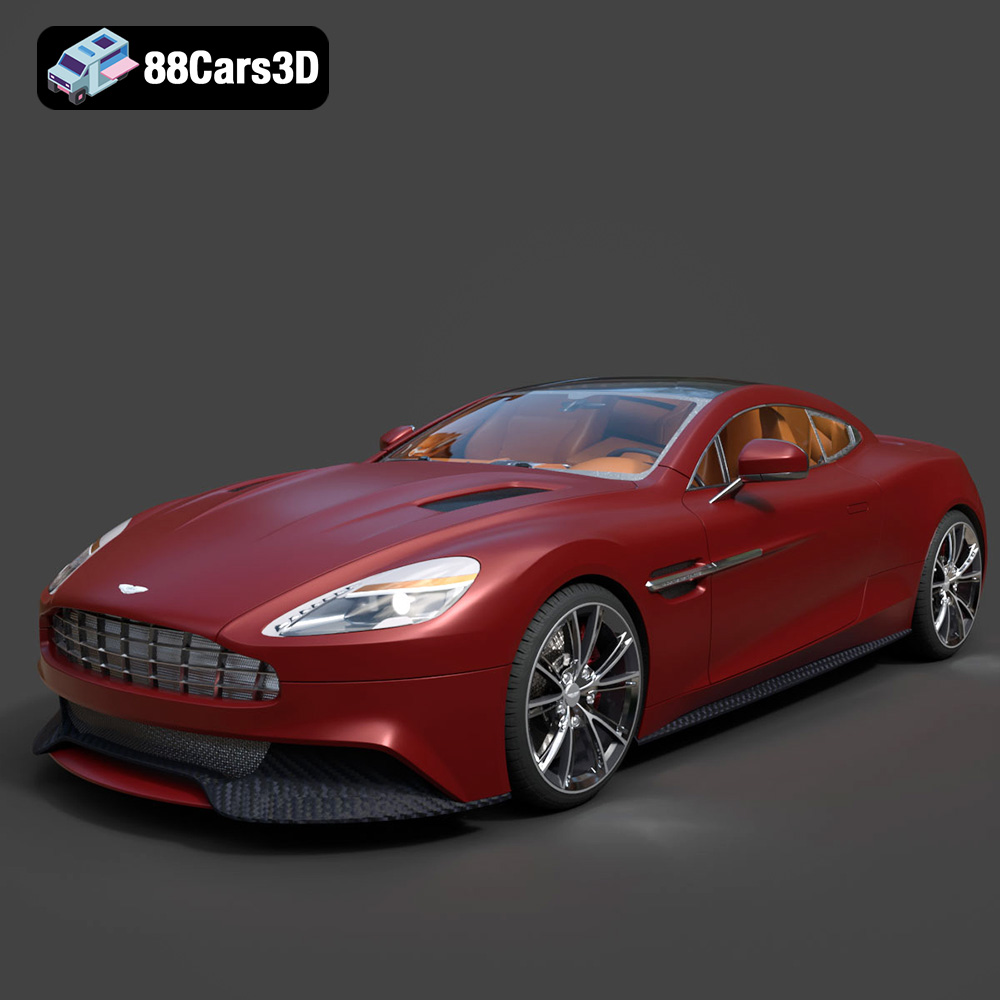
Automotive designers use 3D car models to visualize and refine their designs. 3D models allow them to explore different styling options, test aerodynamic performance, and create photorealistic renderings for marketing materials. Virtual reality is also increasingly used in automotive design reviews, allowing designers to experience their creations in a more immersive way. High-quality 3D car models are also used by companies like 88cars3d.com to showcase their extensive selection.
3D car models are essential assets in racing games and driving simulators. Game developers use 3D models to create realistic vehicle representations and immersive driving experiences. Accurate physics simulation and detailed interior models are crucial for creating a compelling gaming experience. Many games also utilize 3D car models for vehicle customization, allowing players to personalize their cars with different paint jobs, wheels, and body kits.
3D car models are used extensively in advertising and marketing campaigns. Photorealistic renderings and animations of 3D car models can be used to create compelling visuals for print, online, and television advertising. Interactive 3D models can also be used to engage customers on websites and social media platforms. Virtual showrooms allow potential buyers to explore different car models and configurations from the comfort of their own homes.
3D car models are versatile assets with applications spanning automotive design, game development, AR/VR, 3D printing, and more. Understanding the nuances of different file formats, optimization techniques, and industry-specific requirements is essential for maximizing the potential of these digital assets. Whether you’re aiming for photorealistic rendering, real-time performance, or physical prototypes, mastering the art of 3D car modeling will open up a world of creative possibilities. Remember to leverage online resources such as 88cars3d.com to find high-quality models tailored to your specific project needs. By carefully considering the technical aspects and creative potential outlined in this guide, you can unlock the full potential of 3D car models and elevate your projects to new heights.
“`

Price: $129.99

Price: $99.99

Price: $89.99