Get 50% OFF All Premium 3D & STL Models!

The world of 3D modeling has revolutionized how we interact with history, design, and entertainment. From intricate architectural visualizations to immersive game environments, high-quality 3D assets are the backbone of digital creativity. Few subjects command as much passion and meticulous detail as automotive design, especially when delving into the iconic vehicles that shaped history. Imagine bringing a legendary racing car, a true titan of its era, to life in stunning digital fidelity. This is precisely what a meticulously crafted 3D car model of a classic like the BMW 328 Mille Miglia Touring Coupe offers.
The BMW 328 Mille Miglia Touring Coupe is not just a car; it’s a testament to pre-war engineering prowess and aerodynamic innovation. Its victory in the 1940 Mille Miglia endurance race cemented its place in motorsport legend, thanks to its lightweight tubular frame and the streamlined aluminum body designed by Touring of Milan. For automotive enthusiasts, historians, game developers, and visualization artists, having a precise digital replica of such a vehicle is invaluable. The BMW 328 Mille Miglia Touring Coupe 3D Model available on 88cars3d.com encapsulates this legacy, providing a versatile and technically robust asset for a myriad of applications.
This article delves deep into the technical intricacies and creative possibilities offered by professional-grade 3D car models, using the BMW 328 Mille Miglia Touring Coupe as our prime example. We’ll explore the critical role of file formats, discuss professional workflows in rendering and game development, examine the fascinating realm of 3D printing automotive miniatures, and highlight how such an asset fuels boundless creative customization.
One of the most crucial aspects of working with 3D car models, or any 3D asset, is understanding the various file formats available. Each format serves specific purposes, offering different levels of compatibility, data retention, and optimization for distinct workflows. The BMW 328 Mille Miglia Touring Coupe 3D Model provides a comprehensive suite of these formats, ensuring maximum flexibility for any project.
The .blend format is the native file type for Blender, the powerful open-source 3D creation suite. A .blend file typically includes everything within the Blender scene: the 3D mesh, materials, textures, lighting setups, cameras, animation data, and even physics simulations. For artists primarily working in Blender, this format offers full editability. You can dissect the model, adjust its topology, modify materials, fine-tune UV maps, and integrate it seamlessly into complex Blender scenes for high-quality rendering using Cycles or Eevee. It’s the ultimate starting point for detailed customization and integration within a Blender-centric pipeline, providing the original creator’s vision fully intact.
.fbx (Filmbox) is an Autodesk-developed proprietary file format widely considered the industry standard for exchanging 3D data between various software applications. It’s particularly ideal for real-time pipelines like Unreal Engine and Unity due to its robust support for mesh data, skeletal animations, blend shapes, lights, and cameras. When dealing with animated automotive rendering or interactive game assets, .fbx ensures that pivot points, hierarchical structures (like separate wheels and steering components), and basic material assignments are preserved accurately upon import. Its efficiency and broad adoption make it indispensable for collaborative projects and cross-platform development.
The .obj (Wavefront OBJ) format is a universal, open-standard file type known for its simplicity and wide compatibility. It primarily stores geometric data—vertices, normals, texture coordinates, and faces—along with references to external material files (.mtl). While it doesn’t support animation or rigging, its widespread support across virtually all 3D software makes it excellent for static mesh exchange. For straightforward scene assembly, visualization, or as a fallback option when other formats encounter compatibility issues, .obj remains a reliable choice for robust 3D car models.
.glb (GL Transmission Format Binary) is the binary version of glTF, a royalty-free specification for the efficient transmission and loading of 3D scenes and models by applications. It’s specifically optimized for web-based 3D, augmented reality (AR), and virtual reality (VR) experiences. A .glb file packages all necessary assets (geometry, materials, textures, animations) into a single, compact file, making it incredibly efficient for streaming and display in browser-based viewers, AR apps, and lightweight VR environments. Its focus on real-time performance makes it perfect for showcasing interactive classic automotive rendering on websites or in mobile AR experiences.
The .stl (Stereolithography) format is the de facto standard for 3D printing. It represents a 3D model as a series of connected triangles, describing only the surface geometry without color, texture, or material information. For designers and hobbyists looking to bring the BMW 328 Mille Miglia Touring Coupe to life as a physical collectible or scale model, an .stl file is essential. The product description highlights its suitability for 3D printing, recommending specific scales and settings for optimal results, making this format particularly valuable for tactile enthusiasts.
.ply (Polygon File Format or Stanford Triangle Format) is a file format for storing three-dimensional data from 3D scanners. It can store a wide range of properties, including color, transparency, surface normals, and texture coordinates, in addition to the standard polygonal mesh data. While less common for general 3D asset exchange than .fbx or .obj, .ply is often used in scientific visualization, reverse engineering, and CAD applications where precise mesh data, often originating from scanning, is critical. It offers a more detailed representation of vertices and faces, suitable for analytical purposes or specialized manufacturing processes.
While not a universal file extension in the same way as .fbx or .obj, the inclusion of an .unreal file implies a pre-prepared, engine-ready asset specifically for Unreal Engine. This often means the model has already been imported, optimized, and potentially set up with basic materials, collision meshes, LODs (Levels of Detail), and blueprint functionality within an Unreal Engine project. This significantly accelerates workflow for game developers and real-time visualization artists, minimizing the need for manual setup and ensuring the model is immediately usable in dynamic game assets environments.
Similar to .blend for Blender, the .max format is the native file type for Autodesk 3ds Max. This file contains the complete 3ds Max scene, including all geometry, materials, textures, lighting, cameras, animation, and any applied modifiers or plugins. For users of 3ds Max, this provides the most comprehensive and editable version of the model, allowing for deep customization, advanced rendering setups with V-Ray or Corona, and intricate animation sequences. It’s the professional’s choice for high-end cinematic automotive rendering and architectural visualization integration.
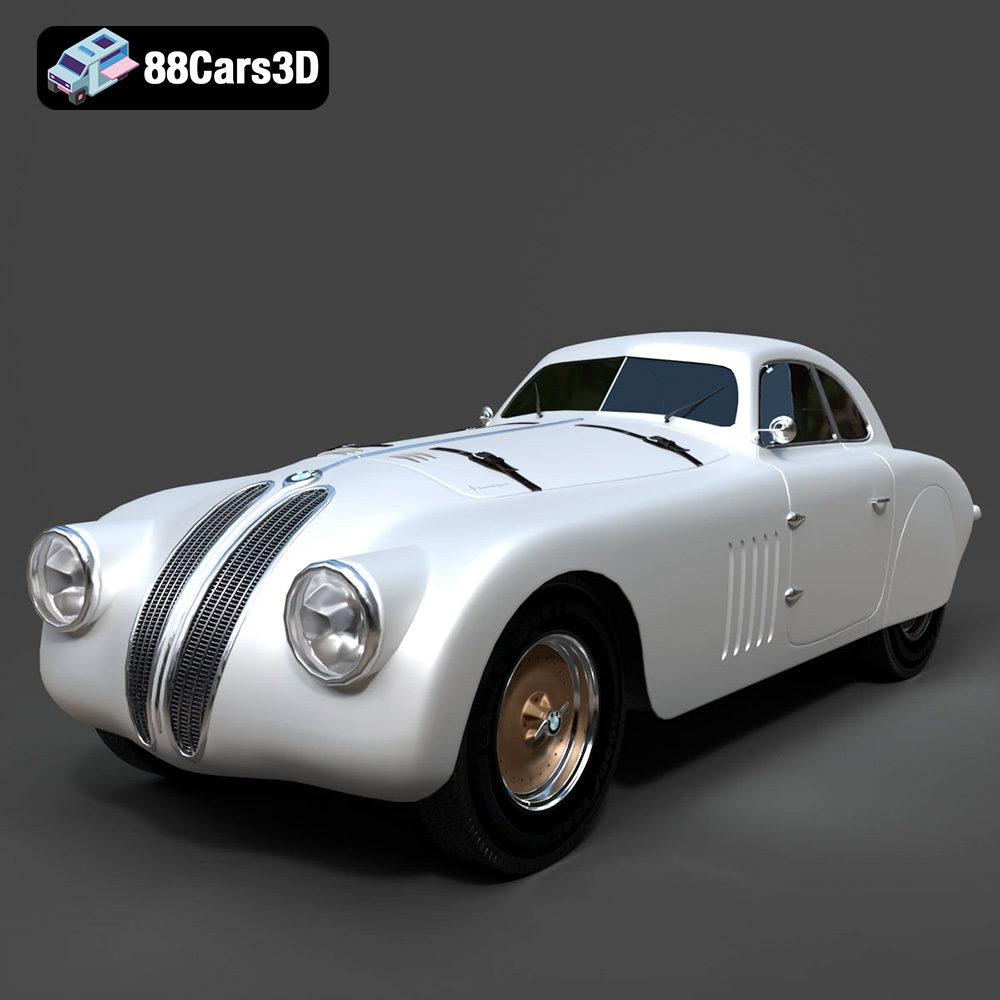
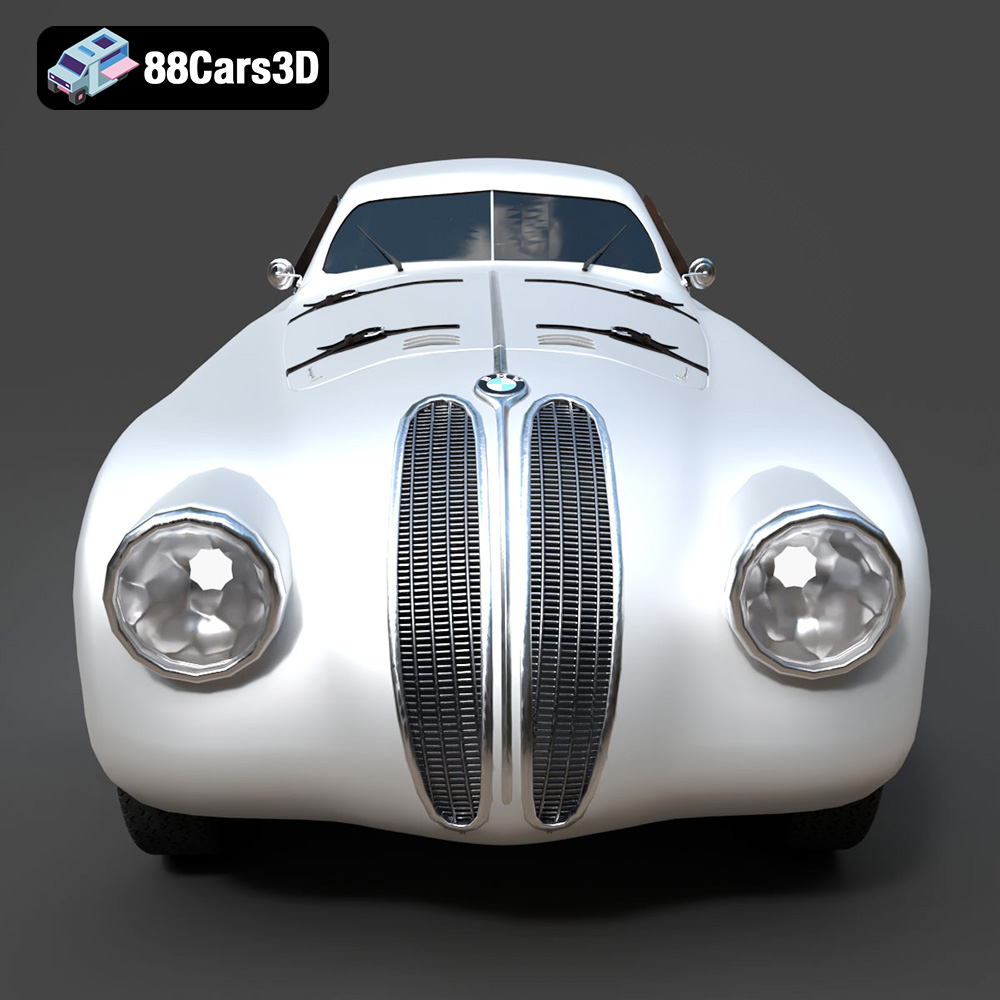
The allure of vintage racing machines lies not just in their performance, but in their distinctive design and historical significance. The BMW 328 Mille Miglia Touring Coupe 3D Model meticulously recreates this legendary vehicle, capturing every curve and detail that made it an icon. This attention to detail is paramount for any project seeking authenticity.
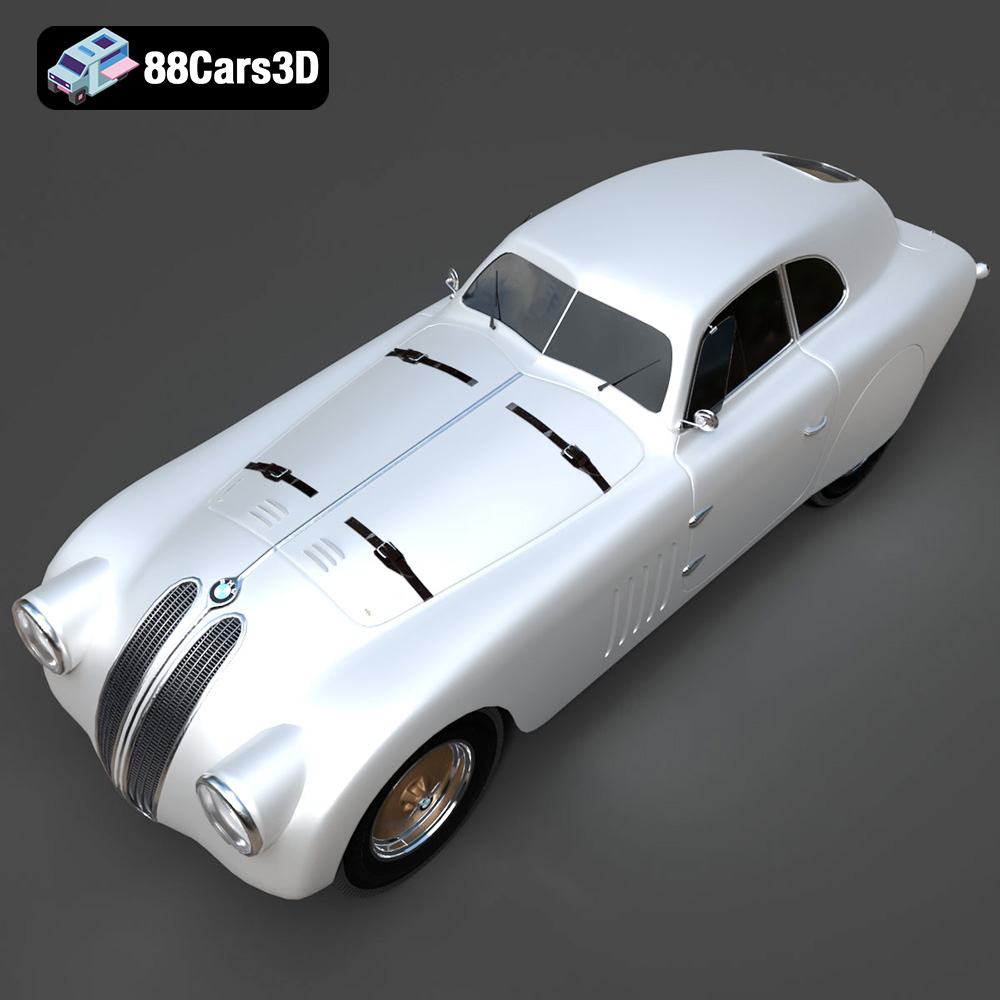
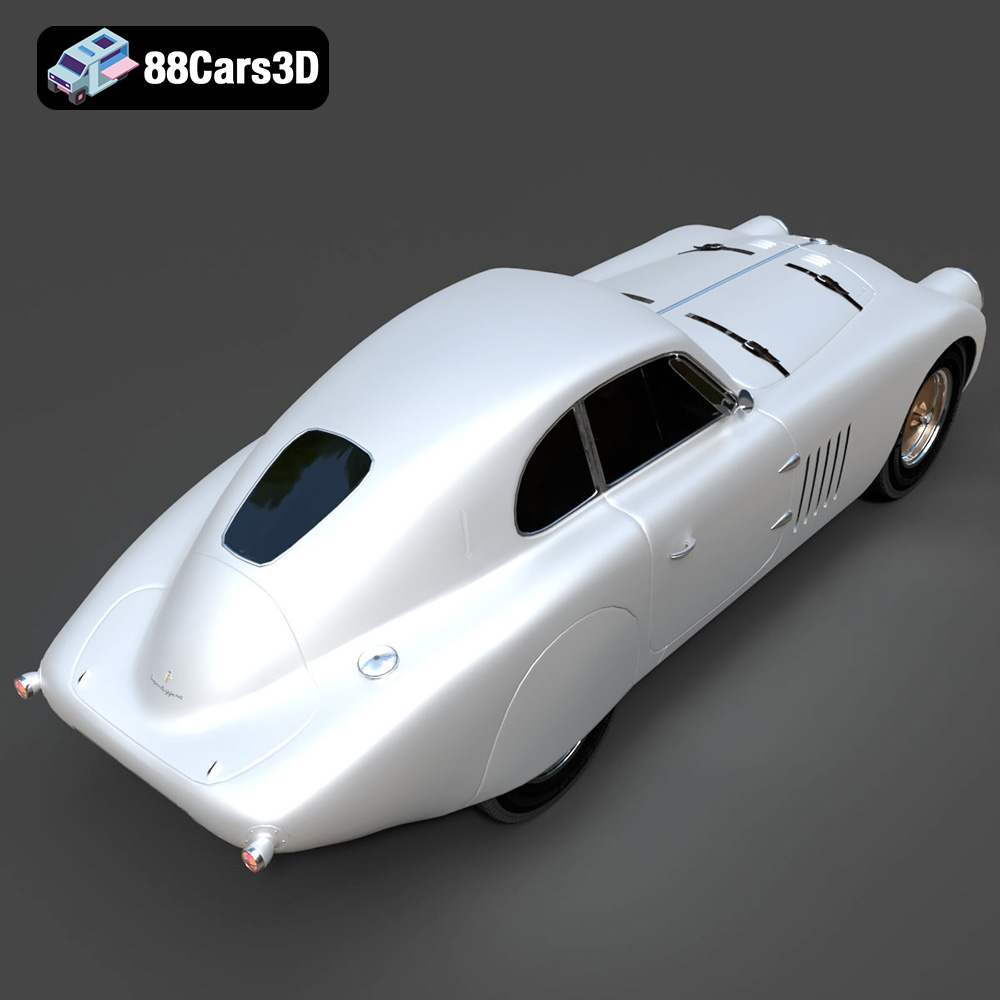
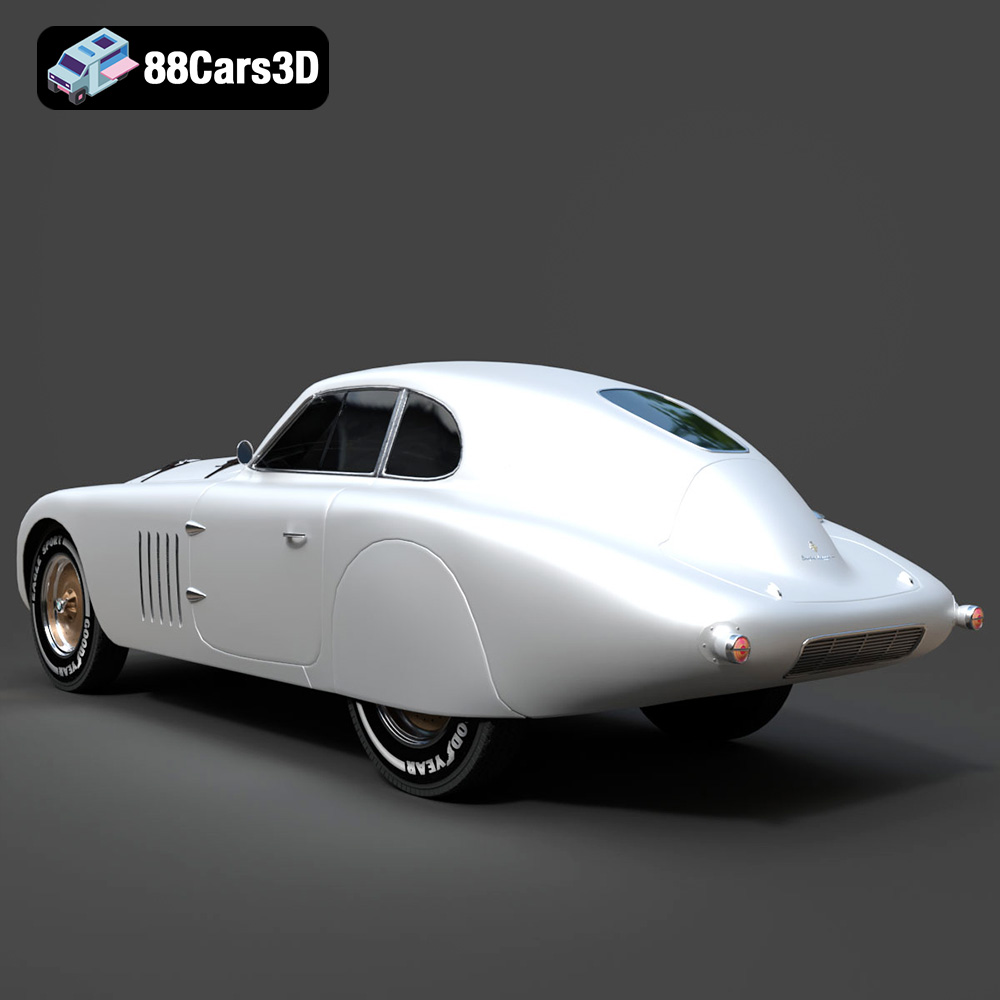
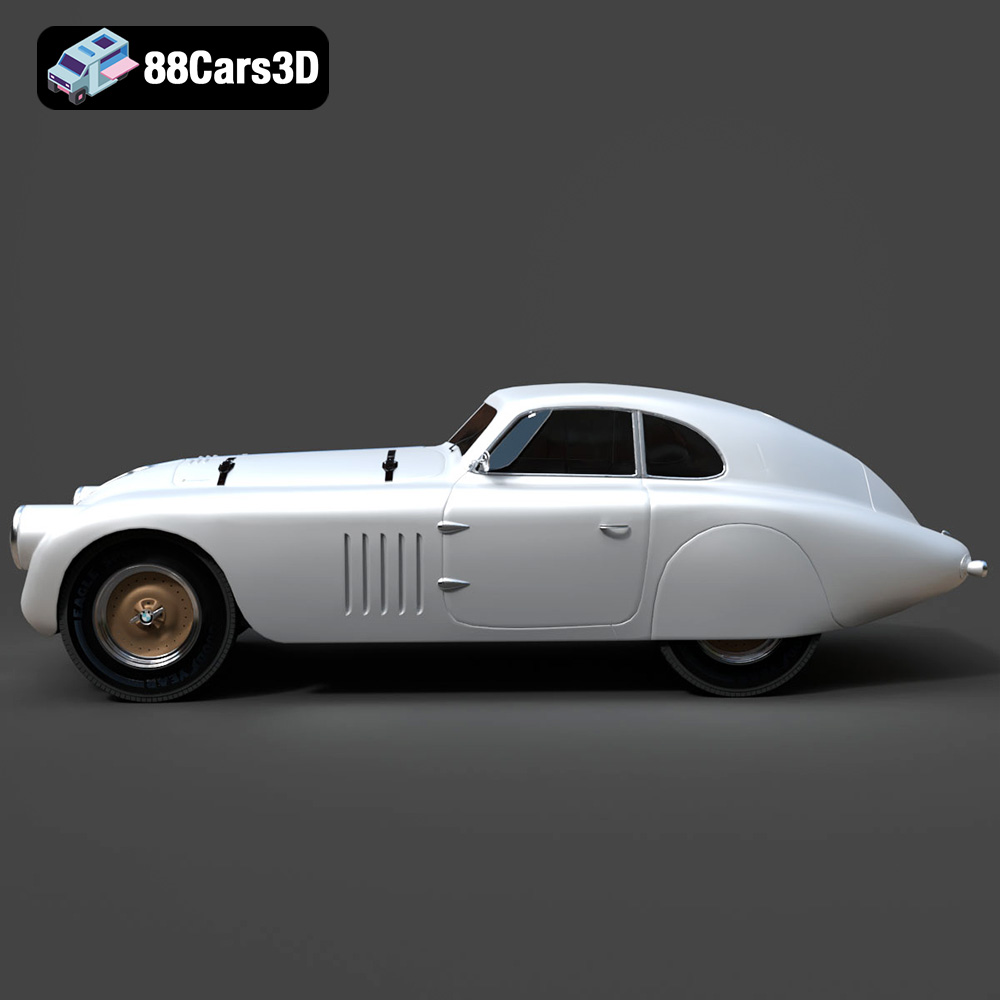
The Touring Superleggera body of the BMW 328 Mille Miglia was a marvel of pre-war aerodynamics. The 3D model faithfully represents its streamlined fastback design, ensuring that the visual impact of its revolutionary shape is preserved. From the detailed kidney grille and front fascia, which were hallmark BMW design elements, to the distinctive covered or faired-in headlight configuration, every exterior feature is accurately replicated. The smooth aluminum-style body panels and period-correct racing wheels with their aerodynamic covers contribute to a compelling visual narrative. Separate wheels and steering components are a crucial technical advantage, allowing for realistic animation in cinematics or interactive simulations, enhancing the authenticity of any automotive rendering.
Beyond the stunning exterior, the interior of a classic racer tells its own story. The 3D model provides a minimalist vintage racing cockpit, reflecting the functional focus of a car built for endurance. Details like the period-style steering wheel, analog instrument cluster, and racing seat configuration immerse the viewer in the historical context. The dashboard and control detailing, while optimized for efficient geometry, maintain a high level of fidelity suitable for both close-up renders and integration into real-time environments. Such details are vital for historical visualizations and ensuring the model feels truly authentic as a 3D car model.
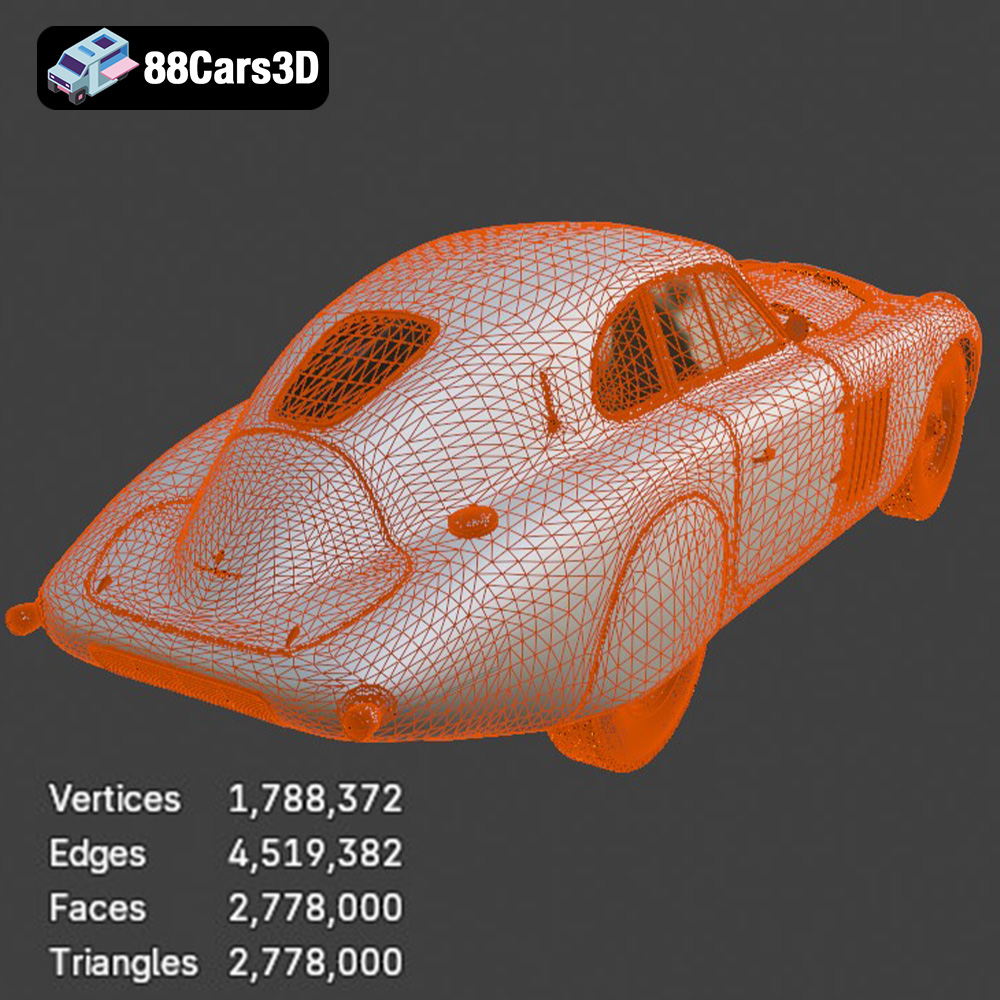
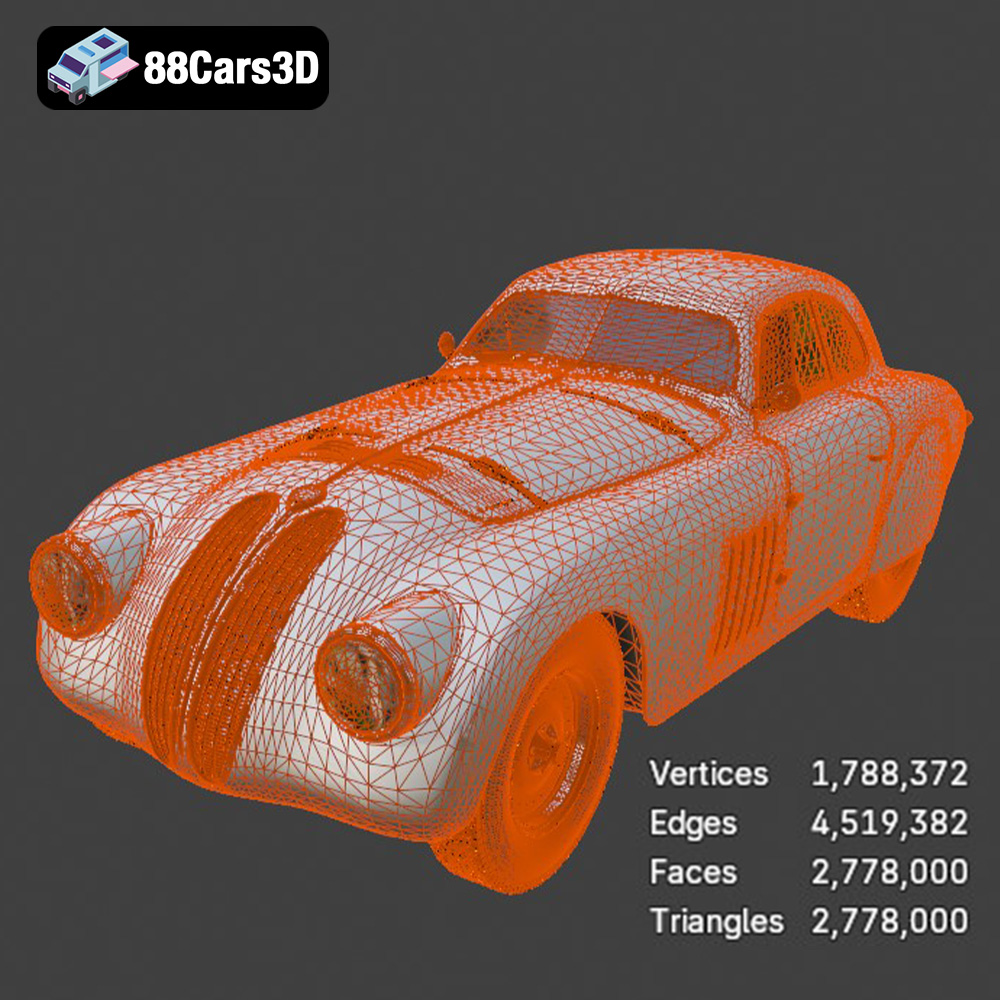
High-quality 3D assets are built on a solid technical foundation. The BMW 328 model boasts a clean and well-organized mesh structure, which is crucial for smooth deformation during animation and efficient rendering. Real-world scale accuracy ensures that the model integrates seamlessly into any scene without scaling issues, maintaining correct proportions relative to other objects. Furthermore, proper pivot setup for steering and wheel rotation simplifies the animation process, saving artists countless hours. Optimized polygon flow balances performance with realism, making the model suitable for everything from cinematic pre-renders to demanding real-time applications like game assets.
In professional creative industries, time is money, and the quality of assets directly impacts the final product. A pre-built, high-quality 3D car model like the BMW 328 Mille Miglia Touring Coupe from 88cars3d.com provides an immediate advantage, allowing artists and developers to focus on creativity rather than foundational modeling.
For advertising agencies, design studios, and automotive brands, photorealistic automotive rendering is indispensable. The BMW 328 Mille Miglia model is perfectly suited for creating stunning visuals for classic automotive marketing, museum displays, and historical promotional materials. In software like 3ds Max or Blender, artists can apply physically based rendering (PBR) materials, set up sophisticated lighting rigs, and utilize advanced renderers like V-Ray, Corona, or Cycles to achieve breathtaking realism. The model’s clean topology and detailed geometry ensure that reflections, shadows, and surface details are rendered flawlessly, making it ideal for vintage racing scenes, concours displays, and cinematic historical projects.
The demand for realistic vehicles in video games and interactive experiences has never been higher. For game developers, the BMW 328 Mille Miglia Touring Coupe serves as an excellent game asset for vintage racing games, historical open-world environments, and motorsport simulations. Its optimized geometry and inclusion of formats like .fbx and .unreal ensure compatibility and performance within engines such as Unreal Engine and Unity. Developers can easily implement LODs (Levels of Detail) to manage polygon count based on distance from the camera, optimize collision meshes, and create interactive elements for a truly immersive driving experience. The separate components for animation are particularly valuable for realistic vehicle physics and control.
Augmented Reality (AR) and Virtual Reality (VR) are transforming how we interact with digital content. The BMW 328 model is perfect for creating immersive classic car exhibitions and interactive racing history experiences in AR/VR. With formats like .glb, it can be seamlessly integrated into web-based AR viewers or mobile applications, allowing users to place a virtual Mille Miglia car in their real environment. In simulation and education, the model can be used for automotive history visualization and engineering study projects, providing students and enthusiasts with a tangible (digitally) representation of a significant piece of automotive heritage for in-depth analysis and exploration.
Beyond the digital realm, the BMW 328 Mille Miglia Touring Coupe 3D Model offers the unique opportunity to bring this historic vehicle into the physical world through 3D printing. This process transforms a digital file into a tangible collectible, perfect for display or diorama building.
The inclusion of the .stl format is crucial for 3D printing. This format represents the model’s surface as a series of triangles, which 3D printers understand. Before printing, the model needs to be “manifold,” meaning it has no holes or inverted normals, ensuring a watertight mesh. Users can convert the provided formats (like .blend or .max) to .stl, performing any necessary checks and repairs in their slicing software. The product recommends scales like 1:32, 1:24, 1:18, or 1:12, allowing for flexibility based on the desired level of detail and display size. For smaller scales, resin printing (SLA/DLP) is often recommended to capture the finer details, while larger scales can be achieved with FDM printers.
Successful 3D printing relies on careful configuration. Recommended settings for the BMW 328 model include a layer height of 0.08–0.16 mm, ensuring a smooth surface finish, particularly important for automotive body panels. A wall thickness of 1.5–2.5 mm provides structural integrity, while an infill of 15–25% balances strength and material usage. Supports are critical for overhanging features like mirrors, underbody details, and wheel arches, preventing print failures. Print orientation is also key; printing the body angled can optimize surface quality, with wheels printed separately for better detail and articulation. Post-processing, involving sanding, primer, and a classic vintage racing paint finish—perhaps with optional historical race decals—transforms the raw print into a stunning miniature collectible, celebrating the legacy of the Mille Miglia.
The true power of a versatile 3D car model lies in its potential for customization. Artists and developers aren’t just limited to displaying the model as-is; they can adapt it to fit any creative vision or narrative, breathing new life into this historical vehicle.
With the BMW 328 Mille Miglia Touring Coupe 3D Model, users have the freedom to change body colors and racing numbers to represent different historical liveries or fictional scenarios. Applying specific Mille Miglia race livery, such as those worn by its legendary drivers, can transport the model back to its triumphant past. The ability to modify wheel styles or finishes, from polished chrome to painted steel, further enhances historical accuracy or allows for speculative design. Applying a polished aluminum or painted body finish can evoke different eras or states of preservation, from a pristine museum piece to a battle-hardened racer. This level of granular control over visual elements empowers creators to craft unique stories and presentations around their automotive rendering projects.
Beyond static appearance, the model facilitates dynamic scene creation. Configuring lighting for museum or historic race track scenes can dramatically alter the mood and focus, highlighting the car’s sculptural qualities or placing it in a dramatic racing context. Integrating the model into various environments, from a dusty vintage garage to a sun-drenched Italian countryside, allows for limitless storytelling. The clean geometry and separate animated parts make it ready for complex animation sequences, depicting it in motion, racing across historic tracks, or performing elegant maneuvers. This adaptability ensures the BMW 328 Mille Miglia Touring Coupe 3D Model remains a highly valuable asset for any project requiring historical accuracy blended with creative flair.
The journey through the intricate details and vast applications of a premium 3D car model like the BMW 328 Mille Miglia Touring Coupe reveals its indispensable value to a wide array of creative and technical professionals. From enabling breathtaking automotive rendering and visualization in cinematic projects to serving as robust game assets in immersive simulations, this model is a testament to the power of high-quality digital craftsmanship. Its support for multiple industry-standard file formats ensures seamless integration into any workflow, whether you’re animating in Blender, developing in Unreal Engine, or preparing for a detailed 3D print.
The ability to accurately recreate a piece of automotive history, down to its aerodynamic form and racing cockpit, offers unparalleled opportunities for education, entertainment, and artistic expression. The flexibility for customization, combined with the detailed technical advantages, makes it a cornerstone asset for anyone passionate about classic cars and 3D design. Whether you’re an experienced professional or an aspiring artist, exploring the possibilities with such a model can elevate your projects to new heights. You can find this exceptional model and many other high-quality 3D car models at 88cars3d.com, your premier destination for automotive digital assets.
The BMW 328 Mille Miglia Touring Coupe 3D Model is a high-detail digital recreation of the legendary pre-war racing coupe that achieved historic success in the 1940 Mille Miglia endurance race. Renowned for its aerodynamic aluminum body crafted by Touring of Milan and its lightweight tubular frame, the BMW 328 Mille Miglia Coupe stands as an icon of classic motorsport engineering. This 3D model accurately represents the streamlined fastback body, covered headlamps, signature kidney grille design, aerodynamic wheel covers, racing cockpit layout, and period-correct detailing. Built with clean topology and real-world scale accuracy, it is ideal for rendering, animation, historical visualization, game development, and AR/VR classic automotive showcases.
$9.99
.arvr
.blend
.bmw328
.car3dmodel
.classicracecar
.fbx
.gameasset
.glb
.max
.millemiglia
.motorsport
.obj
.ply
.prewarcar
.rendering
.simulation
.stl
.touringcoupe
.unreal
.vintagecar