Get 50% OFF All Premium 3D & STL Models!

In the dynamic worlds of automotive design, entertainment, and digital visualization, the quality of 3D assets can make or break a project. From breathtaking cinematic sequences to hyper-realistic gaming environments and precise engineering simulations, a meticulously crafted 3D car model is the foundation upon which immersive experiences are built. It’s not merely about polygons and textures; it’s about capturing the soul of a vehicle, its distinctive lines, and its presence, translating it into a versatile digital form.
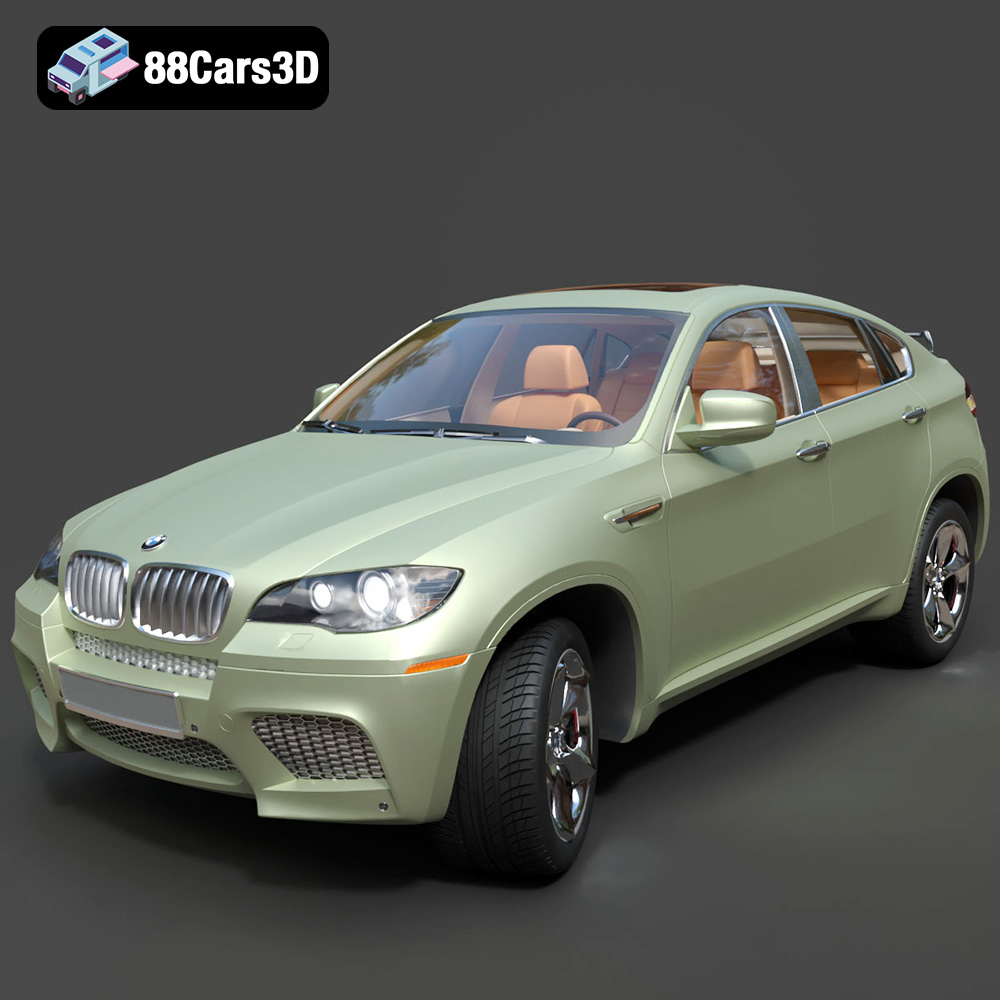
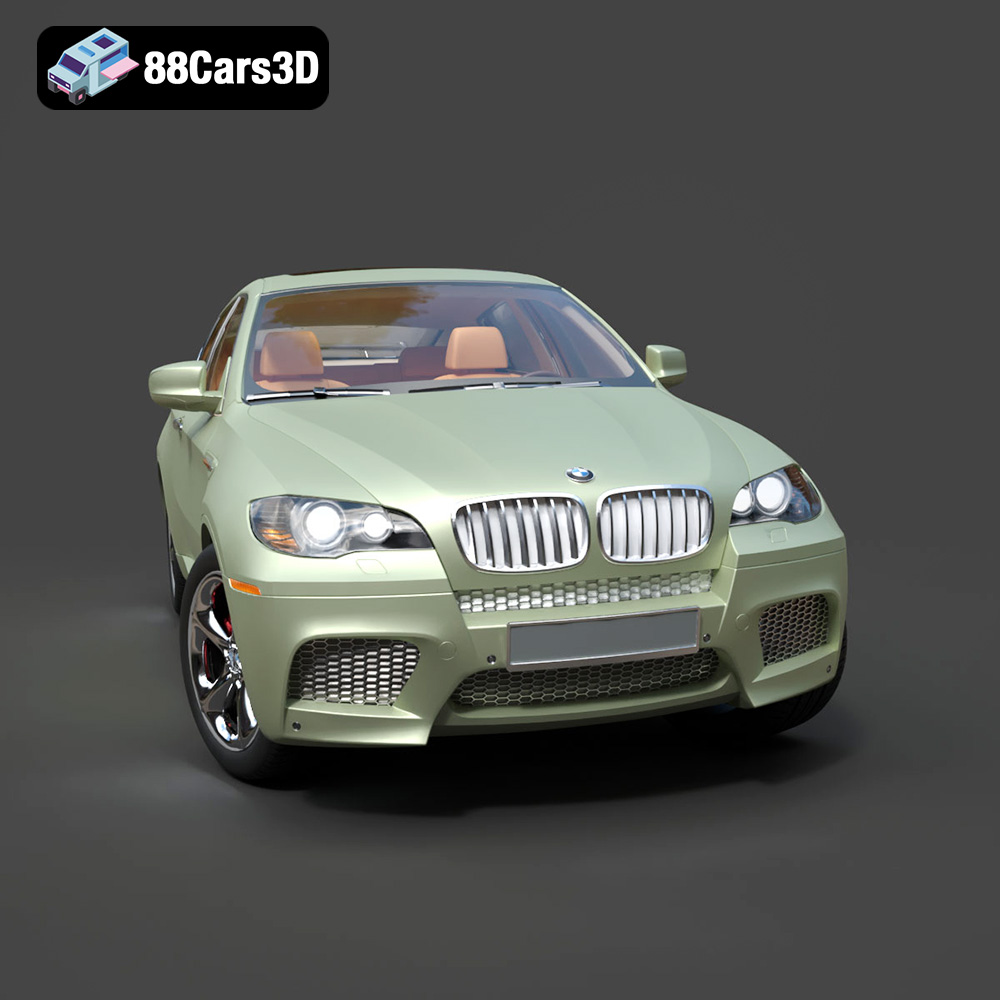
This quest for digital perfection leads us to products like the exceptional BMW X6 3D Model, a prime example of a premium asset engineered to meet the stringent demands of professional workflows. The BMW X6, known for its audacious blend of SUV practicality and coupe-like elegance, presents a unique challenge for 3D artists. Its aggressive stance, sloping roofline, and muscular contours require an expert touch to recreate digitally, ensuring every curve and detail resonates with the real-world luxury Sports Activity Coupe. This level of detail and versatility is precisely what professionals seek, driving the demand for high-quality 3D car models available through marketplaces like 88cars3d.com.
Creating a truly outstanding 3D car model involves a delicate balance between artistic interpretation and technical precision. It’s a process that demands an understanding of form, light, and material, combined with an acute awareness of geometry, topology, and optimization.
The first step in crafting any high-quality automotive 3D model, such as the BMW X6 3D Model, is an obsessive attention to detail. This begins with extensive reference gathering, analyzing every angle, curve, and surface of the actual vehicle. For the BMW X6, this means meticulously recreating its iconic bold kidney grille, the intricate patterns of its LED-style headlights and taillights, and the subtle aerodynamic profile that defines its unique character. Every panel gap, every vent, and every emblem must be accurately represented, not just for visual fidelity but also for structural integrity within the digital space.
The complexity of modern car designs, with their sculpted bumpers, aggressive air intakes, and sophisticated lighting elements, necessitates advanced modeling techniques. Artists must skillfully translate these complex forms into clean, efficient polygon meshes. This ensures that the model not only looks correct but also deforms predictably if animated and renders efficiently across different software packages and renderers.
Beyond visual accuracy, technical precision is paramount. A professional 3D car model must adhere to real-world scaling, meaning its dimensions in the 3D software accurately reflect those of the actual vehicle. This is critical for applications like architectural visualization, product design integration, and simulation, where the car needs to fit seamlessly into an environment or interact correctly with physics engines. The BMW X6 3D Model, for instance, is built with “real-world scale accuracy,” making it immediately useful in diverse scenarios without needing tedious adjustments.
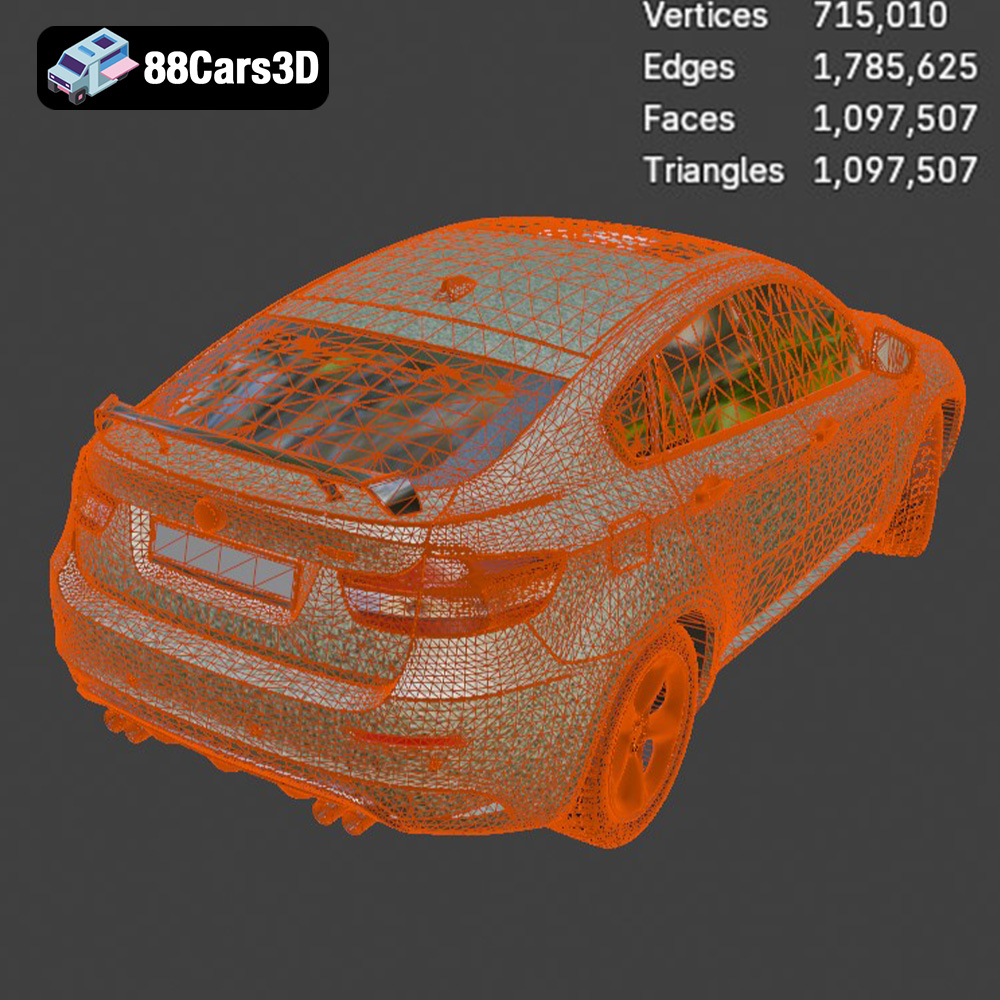
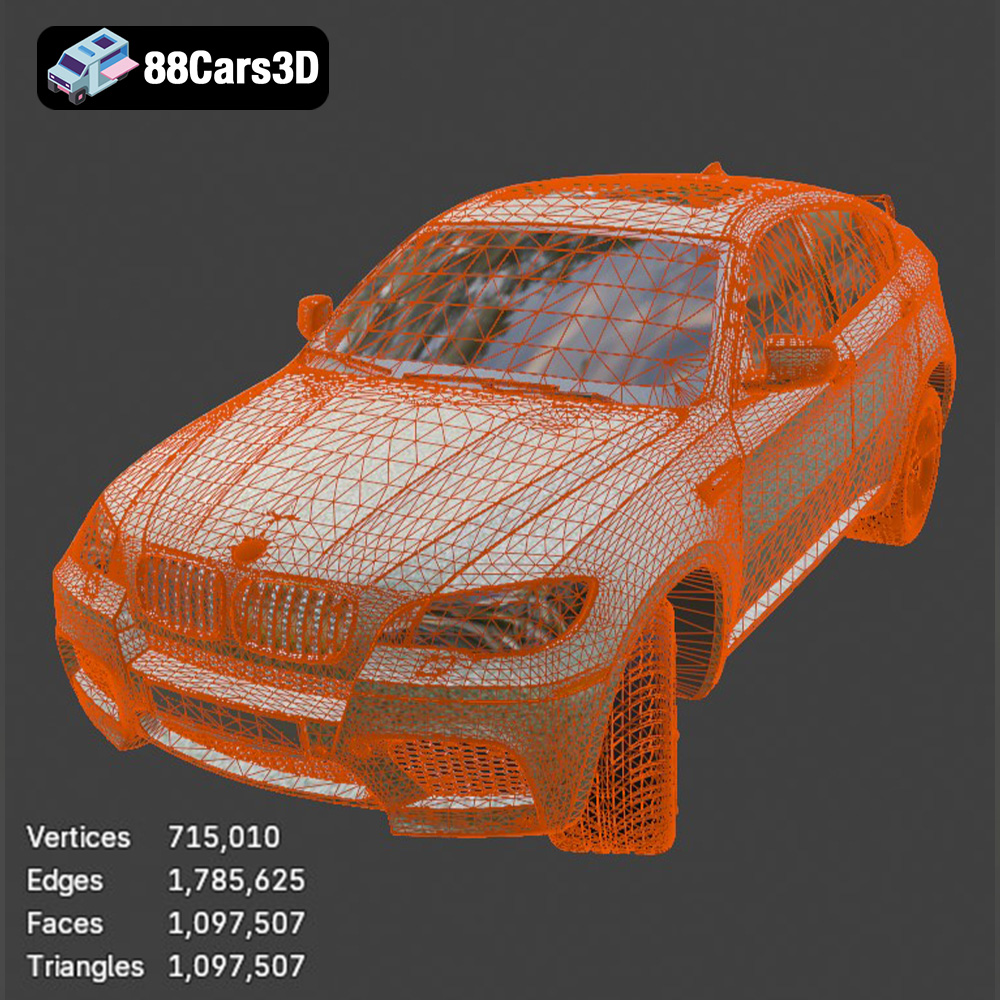
Equally important is clean topology. This refers to the arrangement of polygons and edges on the model’s surface. Good topology ensures smooth subdivisions, prevents rendering artifacts, and allows for flexible modifications and animations. Models with “clean, organized mesh structure” and “proper hierarchy and pivot placement for animation” significantly reduce workflow friction for artists and developers, allowing them to focus on creative tasks rather than fixing underlying mesh issues. For gaming or real-time applications, an “optimized polygon count for performance” is crucial, ensuring the model runs smoothly without sacrificing visual quality.
The versatility of a 3D car model is heavily reliant on the file formats it supports. A premium asset, like the BMW X6 3D Model available on 88cars3d.com, is often provided in a multitude of formats to ensure maximum compatibility across various software ecosystems and specialized applications. Understanding these formats is key to selecting the right asset for your specific project needs.
The .blend format is native to Blender, the popular open-source 3D creation suite. When you receive a .blend file, you’re not just getting the model; you’re getting a fully editable Blender scene. This typically includes the model’s geometry, materials, textures, lighting setups, cameras, and even animations if present. For users deeply integrated into the Blender ecosystem, this offers unparalleled flexibility for customization, rendering, and further development. It’s ideal for projects where extensive modification, re-texturing, or animation within Blender is anticipated.
The .fbx (Filmbox) format is a widely adopted proprietary file format for 3D content interchange, developed by Autodesk. It’s highly favored in the game development industry due to its robust support for geometry, materials, textures, rigging, skinning, and animation data. Engines like Unreal Engine and Unity leverage .fbx extensively for importing complex assets efficiently. Its versatility makes it a go-to format for transferring assets between different DCC (Digital Content Creation) tools and into real-time applications, making it crucial for game assets and interactive experiences.
The .obj (Wavefront Object) format is one of the oldest and most universally supported 3D file formats. It’s known for its simplicity and excellent compatibility across almost all 3D software packages. An .obj file primarily stores geometry data (vertices, normals, texture coordinates, and faces) and can reference an accompanying .mtl (Material Template Library) file for basic material properties. While it doesn’t support advanced features like animation or rigging, its universal nature makes it a reliable choice for mesh interchange, particularly when the primary need is clean geometry for rendering or further modeling.
The .glb (GL Transmission Format Binary) is the binary version of the glTF format, specifically designed for efficient transmission and loading of 3D scenes and models by applications. It’s often referred to as the “JPEG of 3D” due to its optimization for web, AR (Augmented Reality), and VR (Virtual Reality) experiences. A .glb file contains the 3D model, textures, and animations in a single, self-contained file, making it incredibly easy to share and display across various platforms, especially web browsers without the need for additional files. This makes it perfect for “virtual showrooms and interactive car configurators.”
The .stl (Stereolithography) format is the industry standard for 3D printing. It represents a 3D model as a series of connected triangles (a tessellated surface) without any color, texture, or material information. Its primary purpose is to define the surface geometry of a 3D object for manufacturing processes like FDM, SLA, and SLS. For models like the BMW X6, the .stl format is essential for transforming the digital design into a physical “scale SUV coupe miniature” or “collector build.”
The .ply (Polygon File Format or Stanford Triangle Format) is a file format for storing 3D data, particularly from 3D scanners. It can store a variety of properties, including color, transparency, surface normals, and range data, in addition to geometry. While .stl is purely geometrical, .ply can hold richer data, making it useful for high-precision applications like CAD, scientific visualization, and analysis where detailed mesh data with attributes is required. It’s a robust format for data exchange in specialized engineering and scientific fields.
The .unreal format typically refers to an asset that has been specifically prepared and exported for use directly within the Unreal Engine. This often means the asset includes optimized meshes, materials configured for Unreal’s physically based rendering (PBR) system, collision meshes, LODs (Levels of Detail), and potentially Blueprints or animation sequences. While .fbx is the common import format, an asset described as .unreal-ready usually implies that additional setup and optimization steps have been taken, making it an “engine-ready asset for real-time environments” and minimizing import issues and maximizing performance for game developers.
The .max format is native to Autodesk 3ds Max, one of the leading professional 3D modeling, animation, and rendering software packages. Similar to .blend files for Blender, a .max file contains the complete scene data, including geometry, materials (with complex shaders), textures, lighting, camera setups, and animation. For professionals working in architectural visualization, cinematic rendering, or product design within 3ds Max, having the original .max file for the BMW X6 allows for complete creative freedom and access to all the original scene components.
The true value of a high-quality 3D car model lies in its adaptability across various professional workflows. Whether it’s crafting a stunning marketing visual or integrating a vehicle into an interactive experience, the asset must perform flawlessly.
For cinematic sequences, luxury automotive presentations, and advertising visuals, high-fidelity rendering is non-negotiable. Software like Autodesk 3ds Max, paired with powerful renderers such as V-Ray or Corona, and Blender with its Cycles or Eevee render engines, can produce photorealistic results. The BMW X6 3D Model provides a solid foundation for such work. Its “clean topology” and “real-world scale” ensure that when light interacts with its surfaces, the reflections and refractions behave accurately.
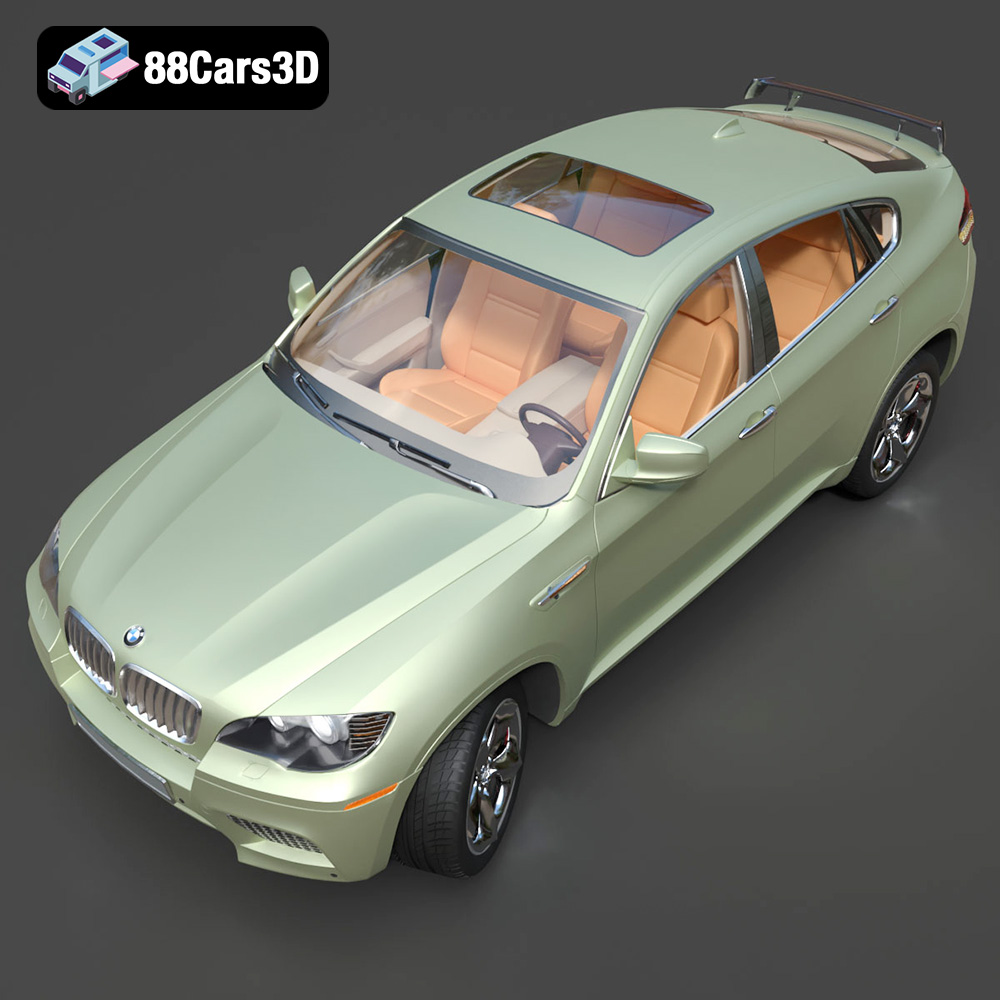
Artists begin by setting up intricate studio lighting, mimicking real-world photographic environments. Then, they apply sophisticated materials – the “transparent materials for windows and lighting components,” for instance, require precise refractive and reflective properties. The ability to “Change paint finishes (metallic, matte, gloss)” and “Add M Sport styling elements” directly translates into custom rendered outputs that can match specific brand guidelines or creative visions. Features like a “fully modeled premium dashboard layout” and “steering wheel with instrument cluster detail” ensure that even interior shots maintain an exceptional level of realism, crucial for “automotive visualization” and “commercial presentations.”
The demands of real-time environments, like those found in Unreal Engine and Unity, are different but equally rigorous. Here, performance is paramount, and every polygon, texture, and shader instruction counts. The BMW X6 3D Model is explicitly “Optimized for both real-time engines and high-quality renders,” a crucial advantage for game developers looking for high-quality game assets.
Optimizing for real-time typically involves techniques such as polygon reduction, meticulous UV mapping for efficient texture packing, and the creation of LODs (Levels of Detail). LODs ensure that as the player moves further from the vehicle, simpler versions of the model are swapped in, reducing rendering overhead without a noticeable drop in visual quality. Physically Based Rendering (PBR) materials are essential for realism in game engines, and assets like the X6 model come with materials ready to be hooked up to PBR shaders. The included `.unreal` and `.fbx` formats are specifically geared towards seamless integration into game development pipelines, making it “Suitable for open-world driving games, racing simulations, and traffic systems.”
The utility of a detailed 3D car model extends far beyond traditional rendering and game development. It’s a foundational asset for emerging technologies and specialized engineering applications.
Augmented Reality (AR) and Virtual Reality (VR) are transforming how we interact with digital content, especially in the automotive sector. Imagine potential buyers exploring a virtual showroom, walking around and even inside a car from the comfort of their home. A high-quality 3D car model is the centerpiece of such an experience. The BMW X6 3D Model, with its “Optimized polygon count for performance” and inclusion of the web-friendly `.glb` format, is “Perfect for virtual showrooms and interactive car configurators.” These immersive experiences not only provide a rich customer engagement tool but also serve as powerful marketing and sales aids, offering a level of interactivity previously unattainable.
In the realm of engineering and training, accurate 3D models are indispensable. Automotive manufacturers use these models for various simulations, from aerodynamic testing to crash analysis and vehicle dynamics visualization. The “real-world scaling” and “clean, organized mesh structure” of the BMW X6 model make it an ideal candidate for such rigorous analytical environments. It can be integrated into advanced simulation systems to study how the vehicle performs under different conditions, aiding in research, development, and even training future mechanics or drivers. It’s “Useful for vehicle dynamics visualization and automotive simulation systems.”
One of the most exciting and tangible applications of 3D models is 3D printing. The BMW X6 3D Model is explicitly designed with 3D printing in mind, allowing enthusiasts and professionals to create physical miniatures and scale models. The inclusion of the `.stl` format is crucial here, as it’s the standard for sending models to 3D printers. The detailed product description even offers specific “3D Print Settings,” demonstrating the model’s readiness for physical fabrication:
This attention to detail in the printing specifications ensures that converting the digital BMW X6 3D Model into a tangible “scale SUV coupe miniature” or “collector build” is a straightforward and rewarding process.
The true power of a versatile 3D asset, like the BMW X6 3D Model from 88cars3d.com, lies in its capacity for adaptation and customization, allowing artists and developers to tailor it precisely to their project’s needs.
One of the significant advantages of starting with a high-quality base model is the ability to personalize it without compromising on fundamental quality. The included customization options provide immense creative freedom:
These customization options transform a single asset into a flexible tool, enabling creators to extract maximum value and adapt to evolving project requirements.
The versatility of the BMW X6 3D Model makes it an invaluable asset across a spectrum of industries:
This wide array of applications underscores why investing in high-quality 3D car models is a strategic decision for any professional creative endeavor.
The realm of 3D visualization and content creation is constantly evolving, driven by an insatiable demand for realism, performance, and versatility. In this landscape, the BMW X6 3D Model stands out as a testament to the meticulous craftsmanship and technical prowess required to meet professional standards. Its faithful recreation of a luxury icon, combined with its optimized topology, real-world scaling, and extensive file format support, positions it as an indispensable asset for a diverse range of projects.
Whether your goal is to produce breathtaking automotive rendering, develop immersive game assets, build interactive AR/VR experiences, run critical simulations, or even bring the digital design to life through 3D printing, this model provides the robust foundation you need. The foresight to include various formats like .blend, .fbx, .obj, .glb, .stl, .ply, .unreal, and .max ensures that users across different software ecosystems can integrate it seamlessly into their workflows, saving invaluable time and resources.
For designers, artists, and developers seeking to elevate their projects with premium 3D car models, the BMW X6 3D Model from 88cars3d.com represents an investment in quality, flexibility, and creative potential. It’s more than just a model; it’s a gateway to realizing your most ambitious digital visions, ensuring your work always stands at the forefront of innovation.
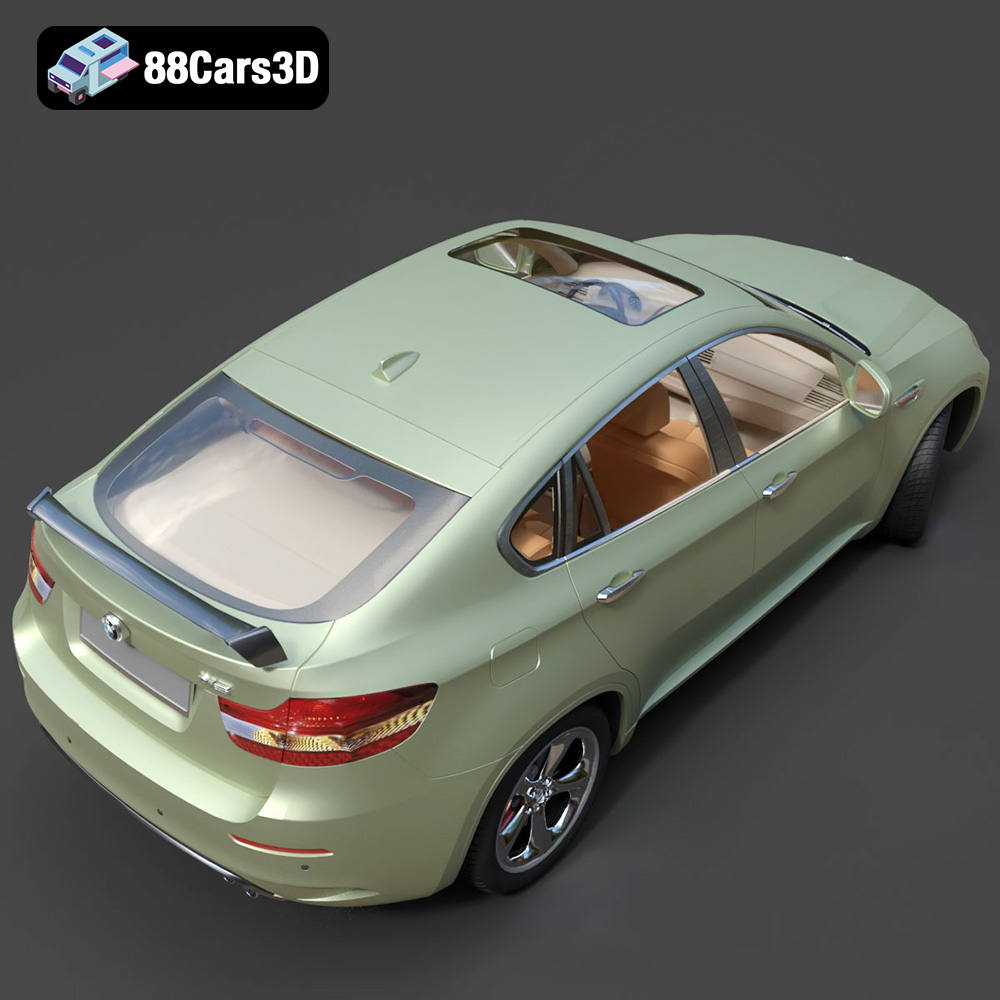
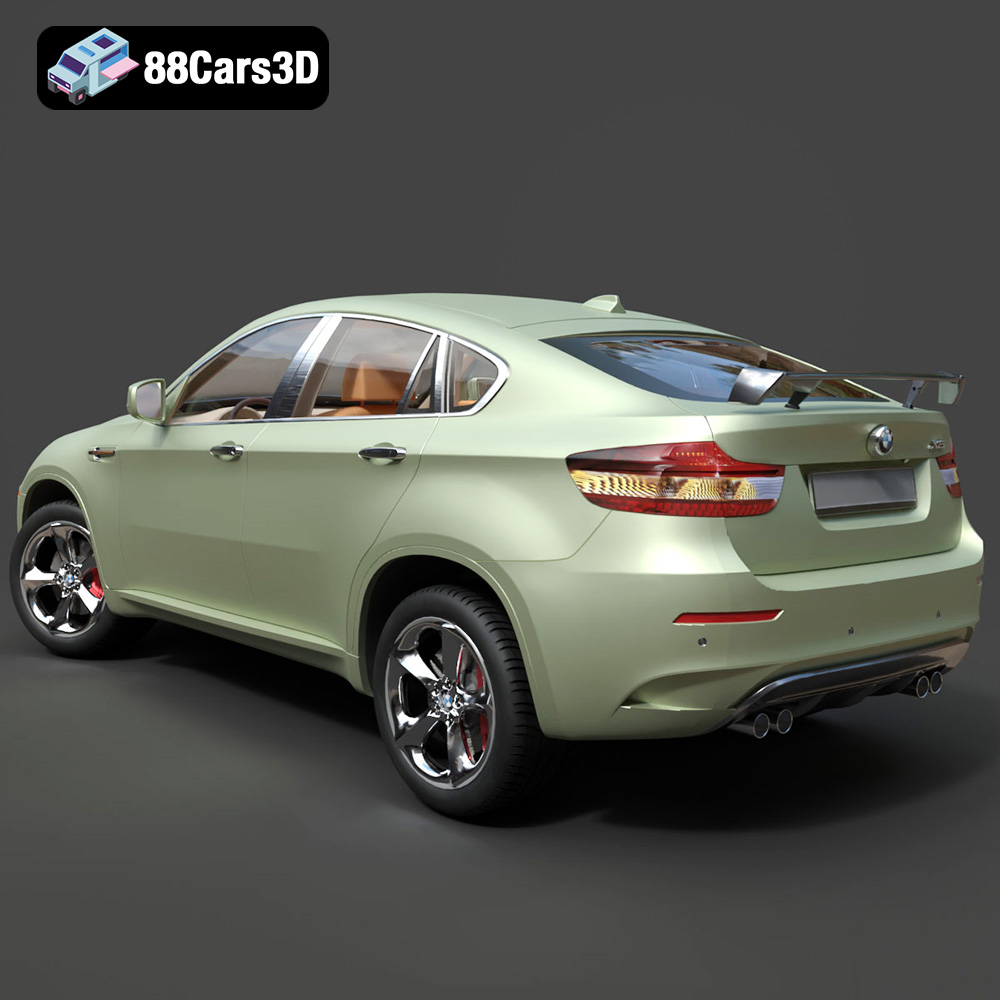
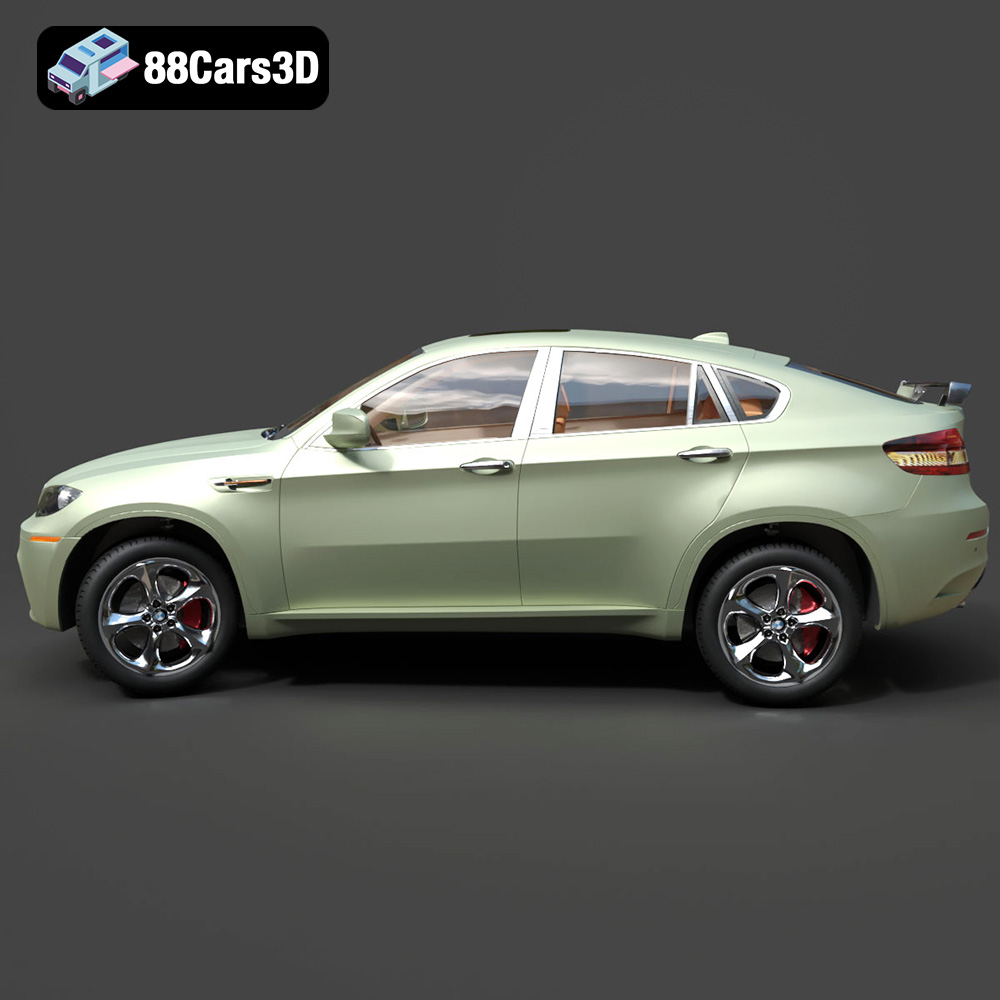
The BMW X6 3D Model is a high-quality digital recreation of the luxury Sports Activity Coupe developed by BMW. Known for blending SUV capability with coupe-like styling, the X6 features an aggressive stance, sloping roofline, muscular body contours, and premium detailing. This 3D model accurately captures the bold kidney grille, sculpted hood, aerodynamic profile, and performance-oriented proportions that define the BMW X6. Built with clean topology and real-world scale accuracy, it is ideal for rendering, animation, automotive visualization, game development, AR/VR applications, and simulation environments. Includes .blend, .fbx, .obj, .glb, .stl, .ply, .unreal, and .max formats for rendering, simulation, AR/VR, game development, and 3D printing.
$9.99
.arvr
.blend
.bmw
.car3dmodel
.coupesuv
.fbx
.gameasset
.glb
.luxurysuv
.max
.obj
.ply
.rendering
.simulation
.stl
.unreal
.vehicleasset
.x6
automotive3d