Get 50% OFF All Premium 3D & STL Models!

In the rapidly evolving landscape of digital creation, high-quality 3D models are no longer a luxury but a fundamental necessity. From blockbuster video games to cinematic automotive advertisements, cutting-edge architectural visualizations, and interactive AR/VR experiences, the demand for realistic, optimized, and versatile digital assets is paramount. Automotive 3D models, in particular, stand at the forefront of this revolution, enabling designers, developers, and artists to bring their visions to life with unparalleled precision and efficiency.
Imagine populating a bustling urban street scene, designing the next generation of open-world game environments, or showcasing an architectural masterpiece with a touch of authentic realism. This is where meticulously crafted 3D car models shine. They provide the foundational elements that breathe life into static scenes, adding context, scale, and dynamic visual interest. Today, we’ll delve into the intricacies of professional 3D car models, exploring their technical specifications, diverse applications, and the workflows that transform raw data into stunning visual narratives. As a prime example of versatility and optimization, we’ll frequently reference the Chevrolet Spark LT 3D Model – a testament to how efficient design can meet broad industry needs.
Choosing the right 3D model file format is crucial for workflow efficiency and compatibility across different software and platforms. Each format serves distinct purposes, offering specific advantages depending on whether your project targets real-time rendering, high-fidelity visualization, physical production, or cross-software exchange. Understanding these distinctions is key to a seamless production pipeline.
The .blend format is the native file type for Blender, a powerful and free open-source 3D creation suite. A .blend file contains everything within a Blender scene: mesh data, materials, textures, animations, lighting, camera setups, and even modifiers. It offers the highest degree of editability and flexibility if you’re working within Blender. When you acquire a model in .blend format, like the Chevrolet Spark LT 3D Model, you gain access to the original project file, allowing for deep customization, adjustments to topology, material tweaks, and integration with Blender’s extensive toolset, including its Cycles and Eevee render engines. It’s ideal for artists who want full creative control and plan to use Blender as their primary DCC (Digital Content Creation) application.
.fbx (Filmbox) is arguably the most widely adopted proprietary file format for 3D data exchange, developed by Autodesk. Its strength lies in its ability to encapsulate a broad range of 3D data, including geometry, materials, textures, animations, and bone rigs, while maintaining hierarchical relationships. This makes .fbx incredibly versatile for transferring assets between different 3D software (like 3ds Max, Maya, Blender, Cinema 4D) and, critically, into game engines such as Unreal Engine and Unity. For the Chevrolet Spark LT 3D Model, the .fbx format ensures that all separate parts (wheels, doors, steering components) are properly exported with their pivots, ready for rigging and animation in a real-time environment. It’s the go-to format for game developers and those requiring robust cross-platform compatibility with animation support.
.obj (Wavefront Object) is one of the oldest and most universal 3D file formats. It’s a simple, human-readable format that primarily stores geometric data: vertices, faces, normals, and UV coordinates. While it’s excellent for mesh data transfer and widely supported across virtually all 3D software, it typically doesn’t natively embed material properties or animations directly within the file; these are often referenced in an accompanying .mtl (material) file. For models like the Chevrolet Spark LT, .obj offers a reliable fallback for importing geometry into almost any application, making it a foundational format for general cross-software compatibility when animation or complex material setups aren’t the primary concern for transfer.
.glb (GL Transmission Format Binary) is the binary version of glTF, a royalty-free specification for the efficient transmission and loading of 3D scenes and models by applications. It’s specifically designed for web-based 3D, AR (Augmented Reality), and VR (Virtual Reality) experiences due to its compact size and efficiency. A .glb file packages geometry, materials, textures, animations, and more into a single, self-contained binary file, simplifying deployment. This makes the Chevrolet Spark LT 3D Model in .glb format perfect for interactive digital showrooms, web-based configurators, or lightweight AR/VR applications where quick loading and optimized performance are crucial.
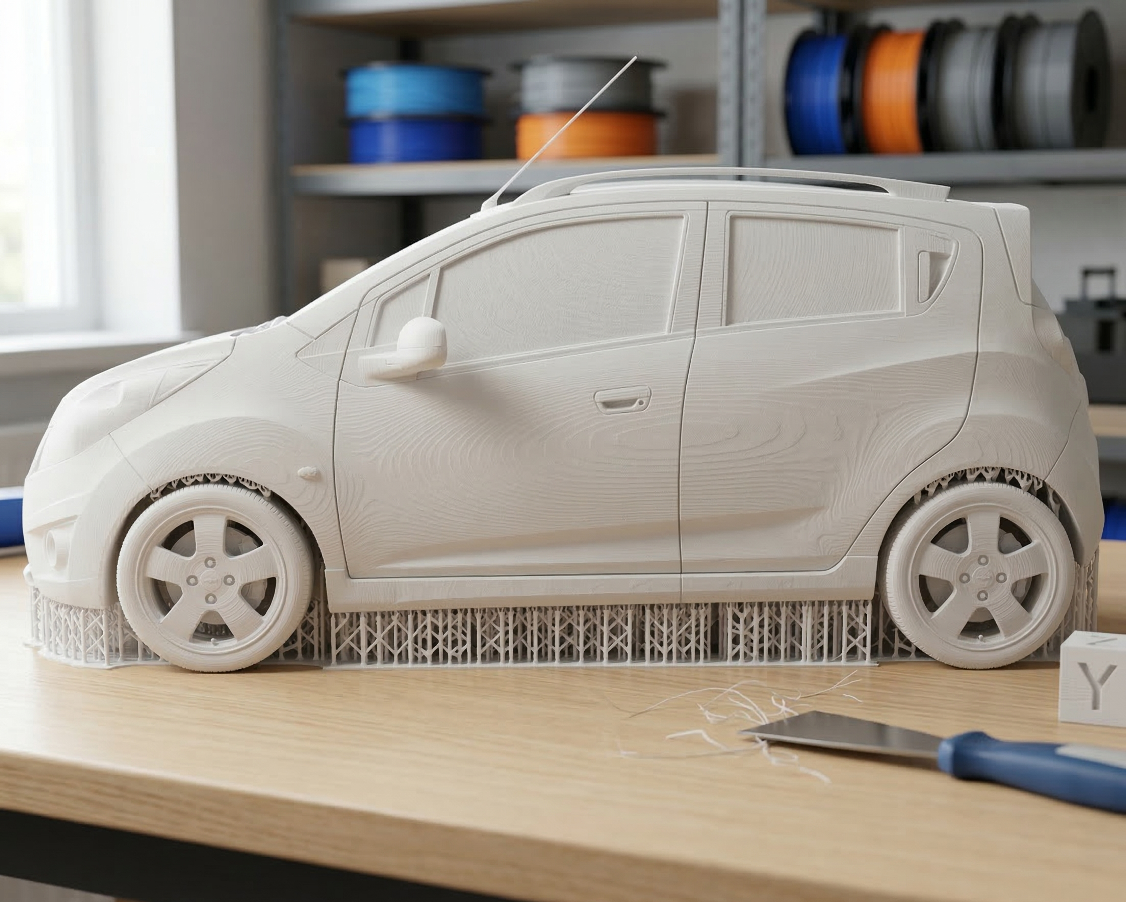
.stl (Stereolithography) is the de facto standard file format for 3D printing. It represents a 3D model as a series of connected triangles (a tessellated surface) without any color, texture, or material information. The simplicity of .stl makes it universally compatible with 3D printers and slicing software. For the Chevrolet Spark LT 3D Model, providing an .stl version means it’s immediately ready for hobbyists and professionals to convert into a physical object, whether it’s a display-scale model for a diorama or a collectible. Proper preparation of the model for .stl export, ensuring manifold geometry and appropriate wall thickness, is critical for successful printing.
.ply (Polygon File Format) is another format used to store 3D data from 3D scanners, CAD applications, or for scientific analysis. Like .obj, it primarily stores geometric information, but it can also store additional properties like color, transparency, normals, texture coordinates, and even reliability information for each vertex or face. While less common for general asset exchange than .fbx or .obj, .ply is valuable when high precision and detailed vertex/face attributes are necessary, making it useful in workflows involving reverse engineering or scientific visualization of the Chevrolet Spark Spark LT’s geometry.
The .unreal designation often refers to assets that are specifically packaged or configured for direct import and optimal performance within Unreal Engine. While not a standalone file extension in the same way as .fbx or .obj, it signifies a package (e.g., an .uasset file or a set of optimized files within an Unreal project structure) that has been carefully prepared for Unreal’s real-time rendering pipeline. This includes proper material setups, LODs (Levels of Detail), collision meshes, and skeletal meshes where applicable. An “engine-ready” Chevrolet Spark LT 3D Model for Unreal means it’s been optimized to leverage Unreal’s features, making integration seamless for game developers and real-time visualization artists.
Similar to .blend for Blender, .max is the native file format for Autodesk 3ds Max, a leading software for 3D modeling, animation, and rendering in architectural visualization, product design, and game development. A .max file contains the complete scene data, including geometry, lights, cameras, modifiers, materials, and animation. Providing the Chevrolet Spark LT 3D Model in .max format gives 3ds Max users the ability to directly open, edit, and render the model within their preferred environment, leveraging 3ds Max’s powerful modeling tools and industry-standard renderers like V-Ray or Corona for high-fidelity automotive rendering.
The Chevrolet Spark LT 3D Model exemplifies how a single, well-crafted digital asset can serve a multitude of professional applications. This isn’t just a generic car model; it’s a meticulously detailed recreation of a popular subcompact city car, designed with both visual fidelity and performance optimization in mind. It hits that sweet spot that allows it to be utilized across demanding industries without compromise.
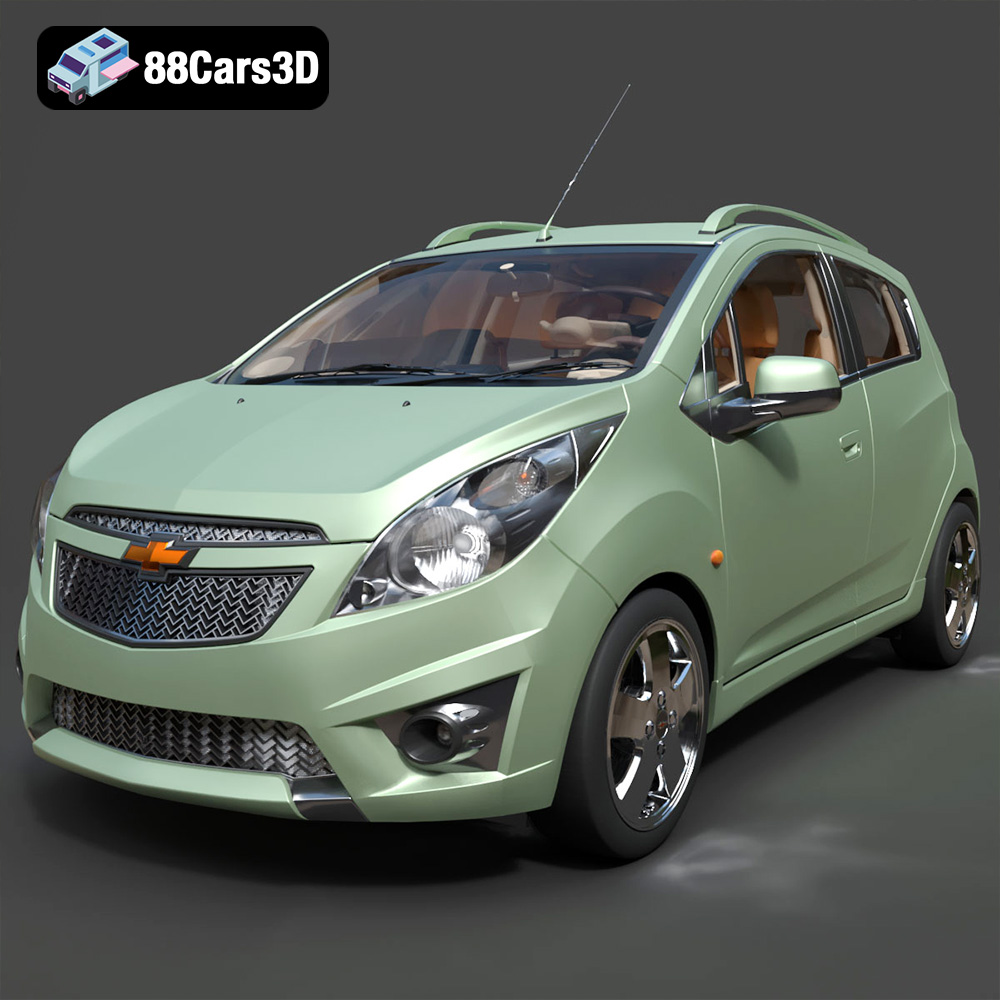
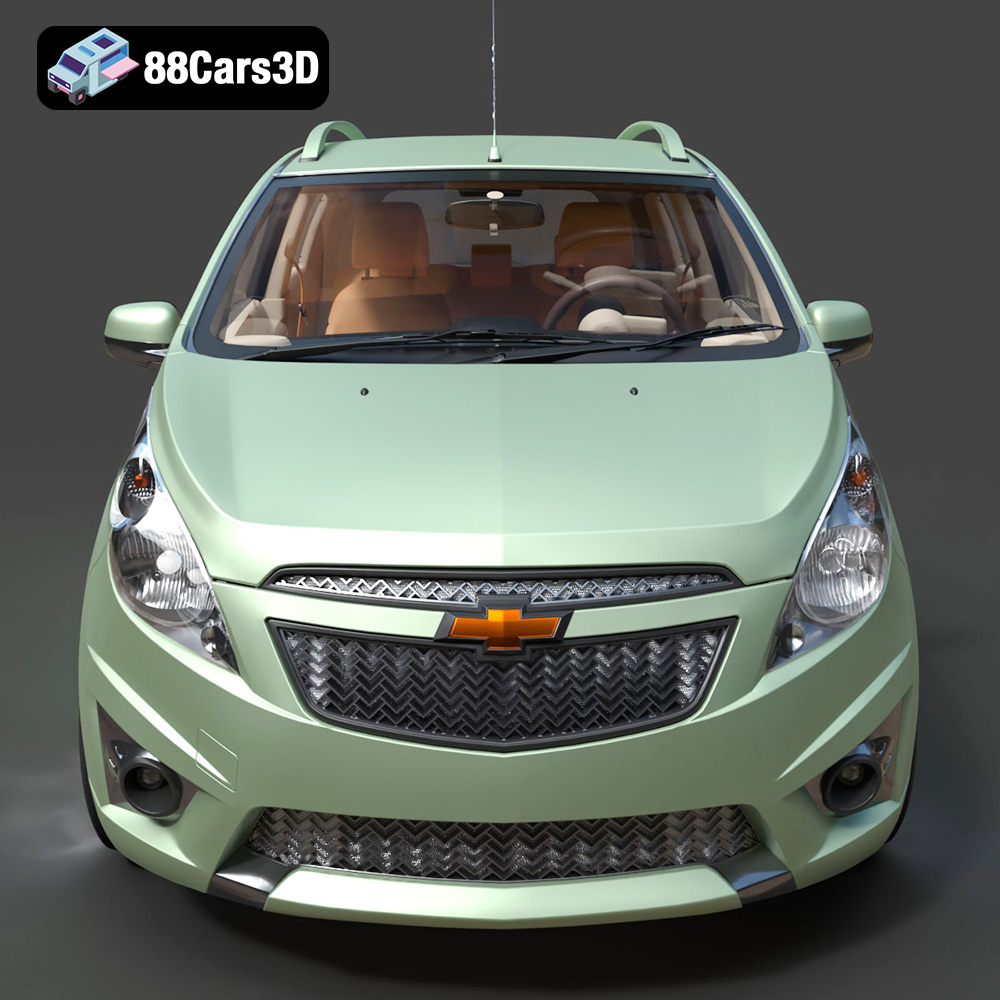
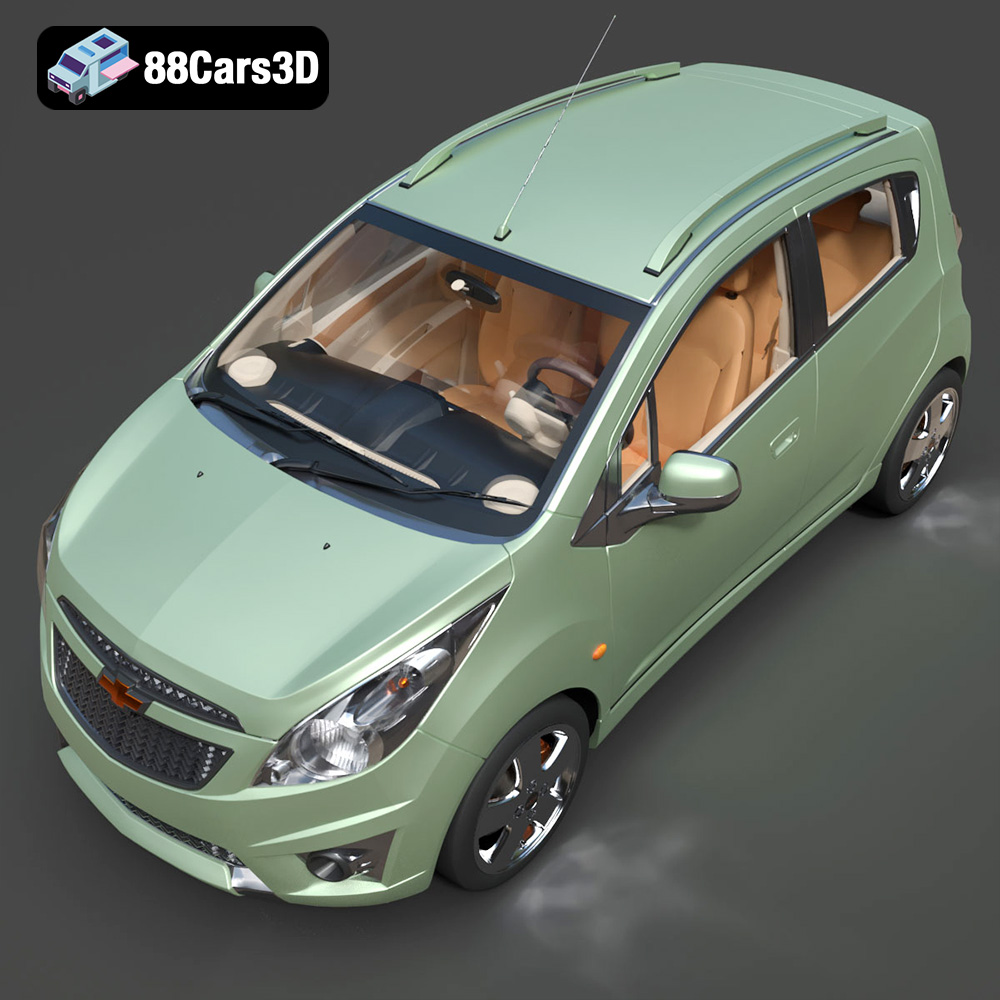
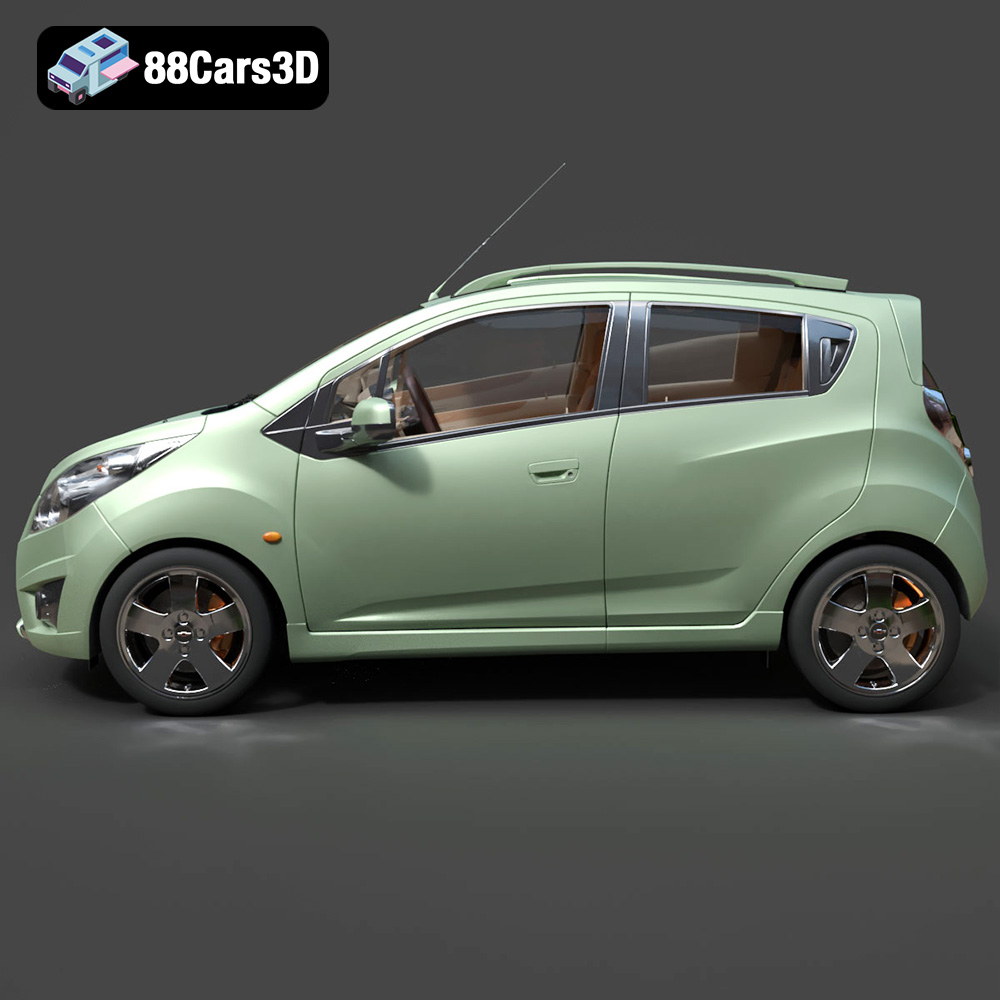
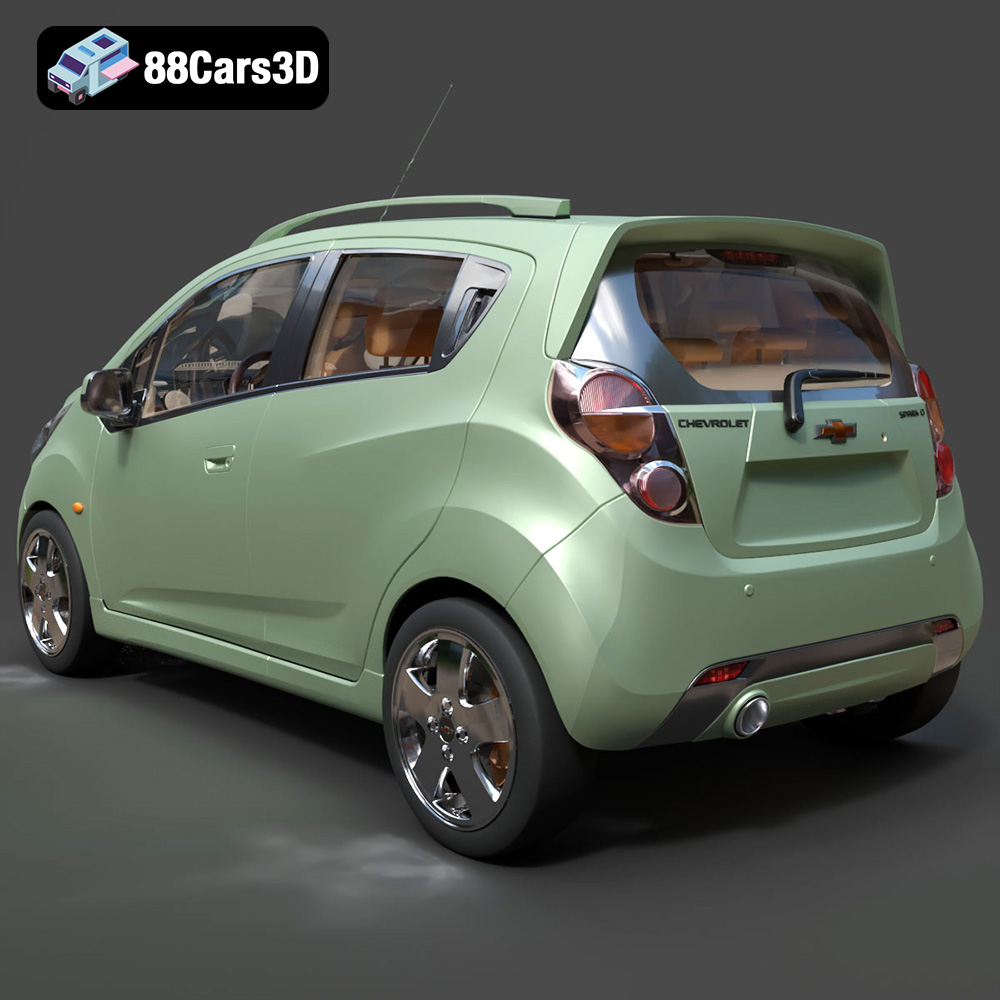
The Spark LT is instantly recognizable in urban landscapes globally, and this 3D model accurately captures its essence. From the signature swept-back headlight housings and distinctive dual-port Chevrolet grille to its compact hatchback profile and cleverly integrated rear door handles, every exterior feature is replicated with precision. This attention to detail is crucial for projects requiring a high degree of realism, whether it’s an architectural visualization needing a convincing street scene or a game environment striving for authentic traffic vehicles. The model’s real-world scale accuracy, based on Chevrolet factory dimensions, ensures it integrates seamlessly into any scene without appearing out of place or disproportionate.
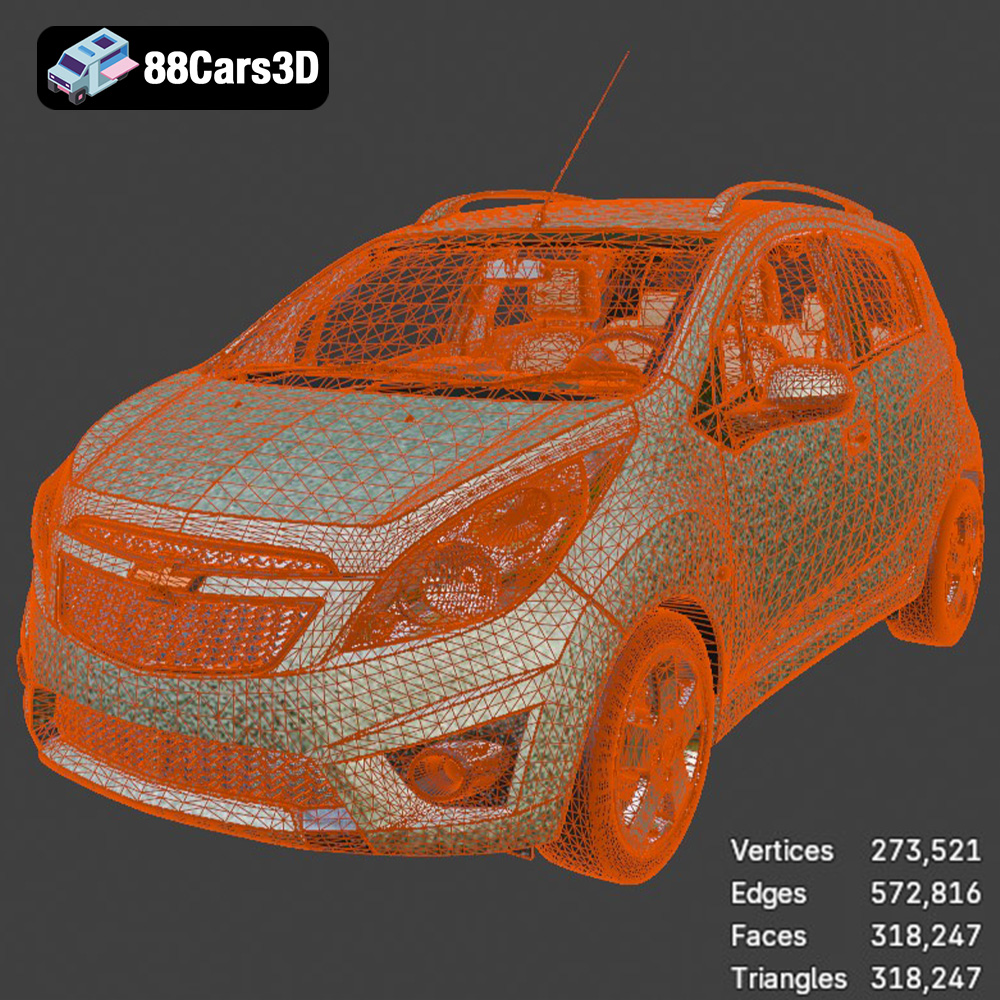
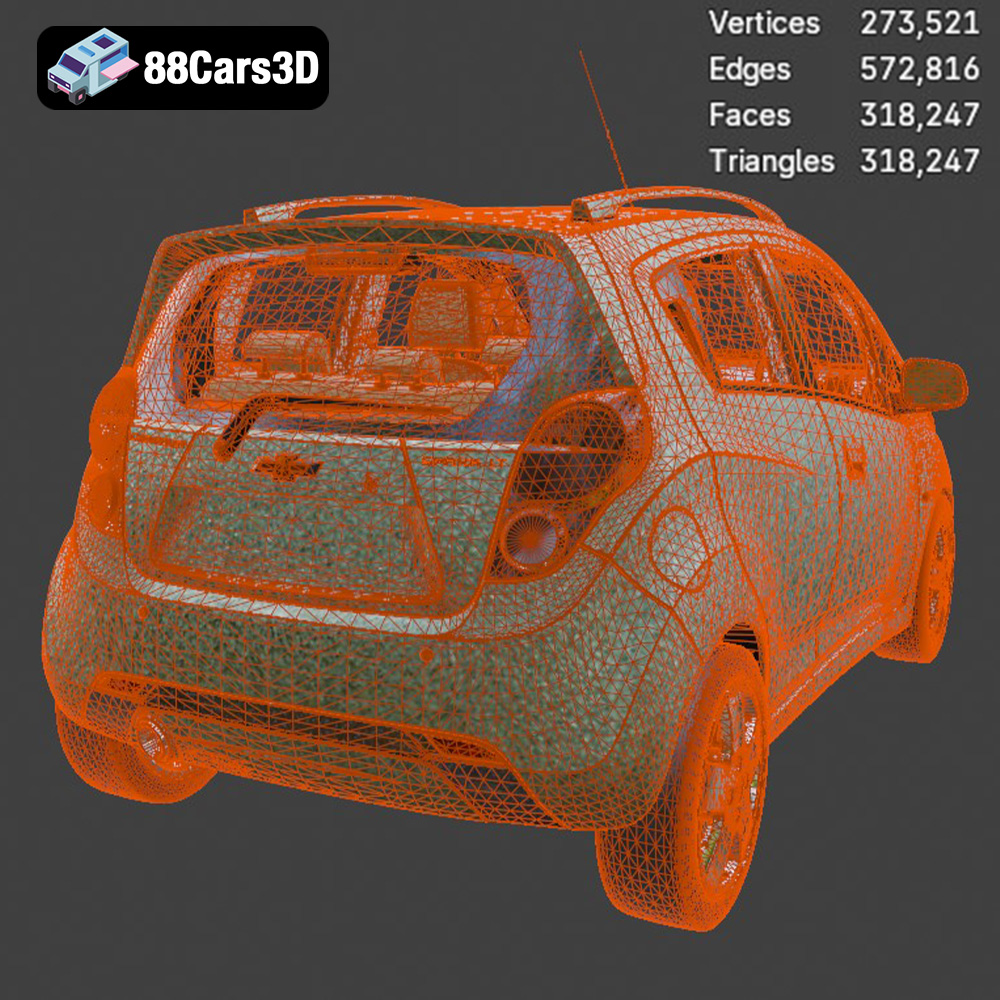
One of the standout technical advantages of the Chevrolet Spark LT 3D Model is its highly optimized, clean mid-polygon topology. With just over 318,000 triangles, it strikes a near-perfect balance. This “mid-poly” approach means it’s visually detailed enough for close-up renders and detailed shots, yet lightweight enough to be duplicated dozens of times as background traffic without bogging down render times or causing performance issues in real-time game engines. The clean, quad-heavy structure evident in its wireframe is a hallmark of professional modeling, facilitating easy UV unwrapping, deformation, and further topology adjustments if needed. This optimization is what makes it a genuine “game-ready” asset, ideal for populating virtual worlds efficiently.
Integrating a high-quality 3D car model like the Chevrolet Spark LT into various production pipelines requires an understanding of specific software workflows. Whether you’re aiming for photorealistic renders or dynamic real-time experiences, the process involves more than just importing the file.
For architectural visualization (ArchViz), realism is paramount. In environments like 3ds Max or Blender (using renderers like V-Ray, Corona, or Cycles), the Chevrolet Spark LT 3D Model can be imported via its .max or .blend files for full editability, or .fbx/.obj for broad compatibility. Once imported, the workflow typically involves:
Game development demands a different set of optimizations and considerations, prioritizing real-time performance. For Unreal Engine, the .fbx or the dedicated .unreal format of the Chevrolet Spark LT is ideal:
The utility of 3D car models extends far beyond digital screens. With the advent of accessible 3D printing technology, these digital assets can be transformed into tangible, physical objects. The Chevrolet Spark LT 3D Model is specifically designed with 3D printing in mind, offering a unique avenue for hobbyists and professionals alike.
Converting a high-detail 3D model for successful 3D printing requires careful preparation, especially when aiming for fine details on a small scale. The Chevrolet Spark LT 3D Model in its .stl format provides a foundation ready for this process:
A successful 3D print is often just the beginning. Post-processing can elevate a raw print into a professional-grade physical model:
At 88cars3d.com, the commitment to quality is evident in the technical craftsmanship of models like the Chevrolet Spark LT. Understanding these underlying specifications is key to appreciating its value and suitability for professional pipelines.
The Chevrolet Spark LT 3D Model boasts impressive technical specifications that underscore its optimization:
This “mid-poly” count of 318,247 triangles represents a strategic balance. It’s detailed enough to hold up in close-up renders and demanding AR/VR environments, capturing the nuances of the Spark LT’s design without relying purely on normal maps for surface detail. Simultaneously, it’s lightweight enough to be duplicated across extensive scenes—imagine dozens of these cars populating a vast urban environment in a game or an ArchViz project without causing significant performance drops. This highly optimized, clean, quad-heavy topology simplifies UV mapping and texturing, reducing potential headaches for artists downstream.
Accuracy is paramount in professional 3D modeling. The Chevrolet Spark LT is built to real-world scale, adhering to Chevrolet factory dimensions. This crucial detail ensures that when imported into any 3D environment, the car will immediately fit proportionally with other assets, architectural designs, or character models, eliminating the need for tedious scaling adjustments. Furthermore, the model features a proper pivot setup for crucial components like the steering and wheels. This means that animating the car’s movement – wheel rotation for driving, steering for turning – is straightforward and realistic, making it an invaluable asset for simulations, game development, and complex animations.
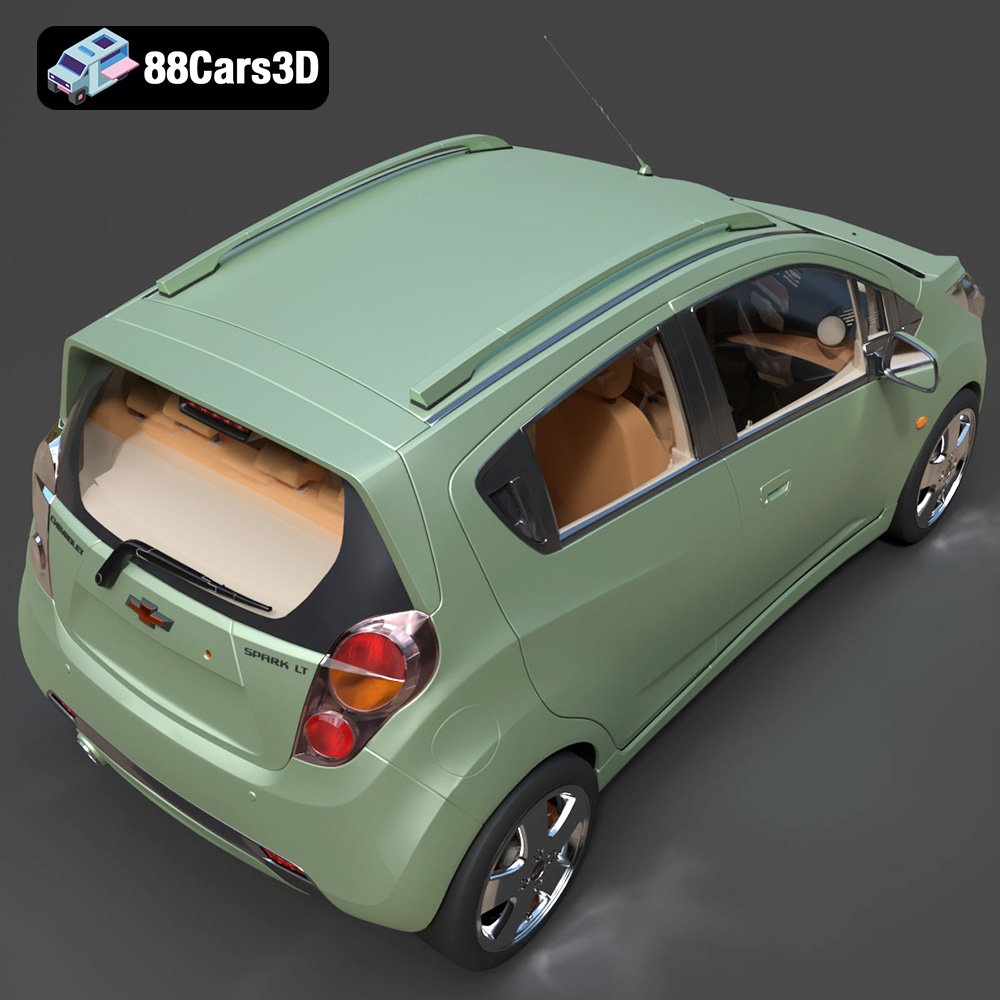
Beyond the raw poly count, the thoughtful construction of the model’s interior and exterior adds significant value. The exterior features accurate subcompact hatchback proportions, the distinctive dual-port front grille, and cleverly integrated “hidden” rear door handles. Detailed factory alloy wheels wrapped in realistic street tires further enhance its visual credibility. Inside, there’s a practical, modern driver-centric cabin layout, a detailed dashboard with a central infotainment screen housing, and a sporty motorcycle-inspired instrument cluster representation. The realistic seating geometry for a four-passenger layout is optimized to look great not just from an exterior view but also for use in VR or for interior shots where performance still matters. This level of detail, both inside and out, ensures the model is versatile for a wide range of use cases, from cinematic close-ups to background traffic.
A great 3D model isn’t just about its initial fidelity; it’s about its potential for customization and its applicability across various professional fields. The Chevrolet Spark LT 3D Model provides a robust foundation for extensive creative exploration.
The flexibility of the Chevrolet Spark LT 3D Model allows artists and developers to adapt it to their specific project needs:
The practical applications of the Chevrolet Spark LT 3D Model span a broad spectrum of industries:
The versatility and technical excellence of this model make it an invaluable asset for any creative professional seeking high-quality 3D car models for their projects, demonstrating the breadth of offerings available at 88cars3d.com.
In the digital age, the power of a well-executed 3D model cannot be overstated. It serves as the cornerstone for immersive experiences, captivating visuals, and efficient production workflows across industries ranging from game development and architectural visualization to AR/VR and 3D printing. The journey from conceptualization to a fully realized digital asset is intricate, demanding expertise in topology, material science, and optimization techniques, all of which are embodied in a professional product.
The Chevrolet Spark LT 3D Model stands as a prime example of such craftsmanship. Its meticulously detailed design, balanced mid-polygon topology, and extensive format compatibility—including .blend, .fbx, .obj, .glb, .stl, .ply, .unreal, and .max—make it an exceptionally versatile asset. Whether you’re an ArchViz artist aiming for photorealism, a game developer building a bustling city, or a hobbyist eager to 3D print a scale model, this Spark LT model offers the precision and performance you need.
By investing in high-quality 3D car models, creators can elevate their projects, save valuable production time, and deliver experiences that truly resonate. The flexibility for customization, combined with an understanding of diverse file formats and their specific use cases, empowers artists to push boundaries and achieve their creative visions. For those seeking premium 3D car models that meet the rigorous demands of professional production, 88cars3d.com provides a curated selection of assets designed to integrate seamlessly into any pipeline, making the complex world of 3D content creation accessible and efficient.
The Chevrolet Spark LT 3D Model is a highly accurate, efficiently modeled digital recreation of the popular subcompact city car. Known for its nimble handling, practical dimensions, and expressive styling, the Spark is a staple of modern urban environments across the globe. This 3D model beautifully captures the sleek, modernized aesthetic of the latest-generation Spark, featuring its signature swept-back headlight housings, the distinctive dual-port Chevrolet grille, its compact hatchback profile, and the cleverly integrated rear door handles that give it a sporty, two-door appearance. Built with a highly optimized, clean mid-polygon topology (just over 318k triangles), it strikes the perfect balance between visual fidelity for close-up renders and lightweight performance for real-time game engines. Perfect for populating modern city streets, architectural visualizations, urban traffic simulations, and mobile game development.
$9.99
.archviz
.automotive
.blend
.chevrolet
.fbx
.hatchback
.obj
.rendering
.subcompact
car-3d-model
chevy-spark
city-car
game-ready
mid-poly
spark-lt
traffic-car