Get 50% OFF All Premium 3D & STL Models!

In the dynamic realms of 3D visualization, game development, automotive design, and architectural rendering, the quality of your digital assets can be the deciding factor between a mediocre project and a truly immersive experience. Professional-grade 3D car models are no longer just static props; they are integral components that drive realism, facilitate storytelling, and enhance interactivity across a myriad of applications. From populating bustling cityscapes in open-world games to adding authentic regional flavor in architectural visualizations, a well-crafted vehicle model acts as a cornerstone for compelling digital environments.
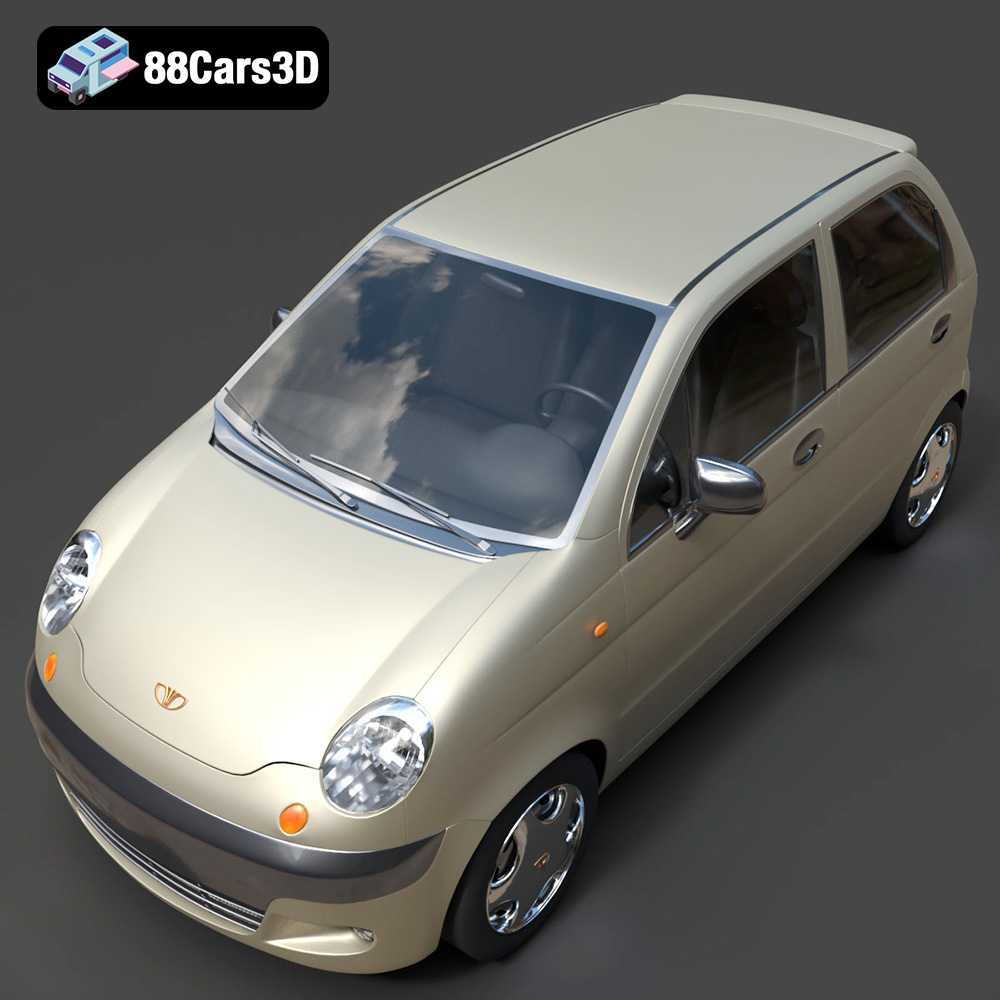
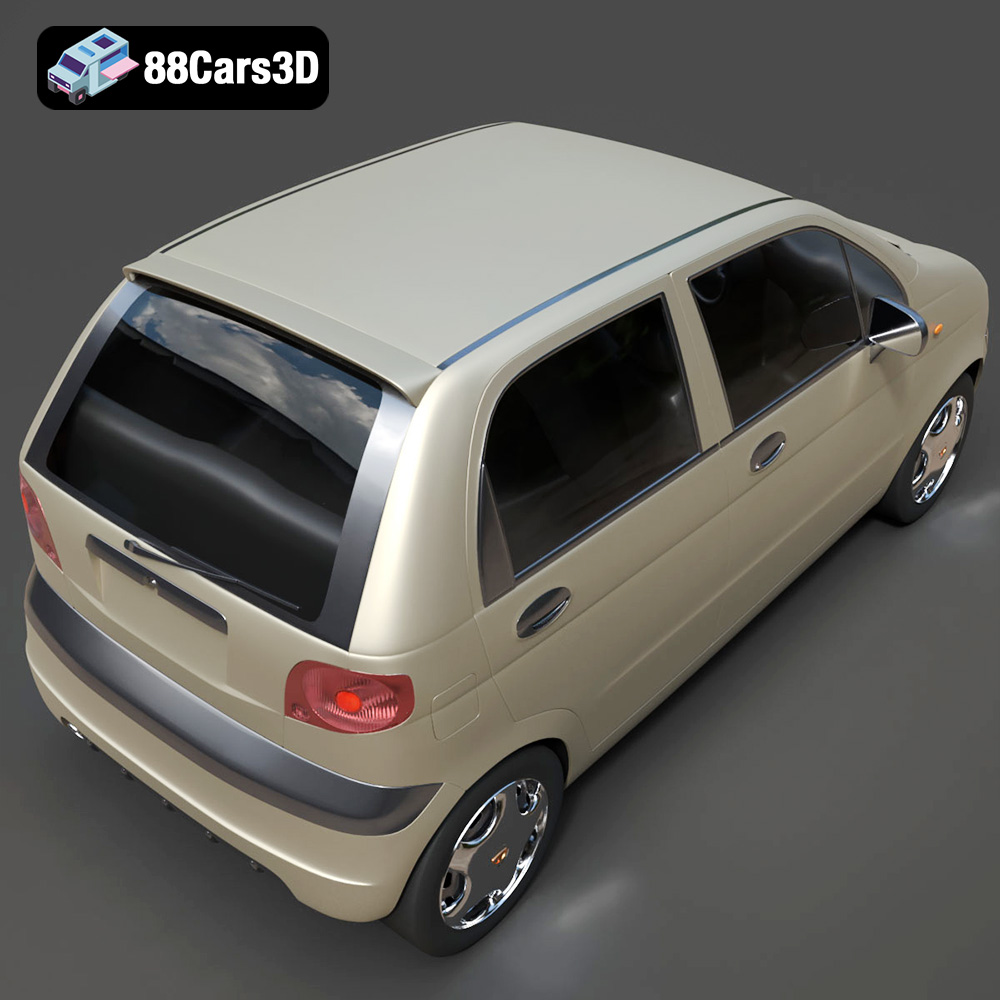
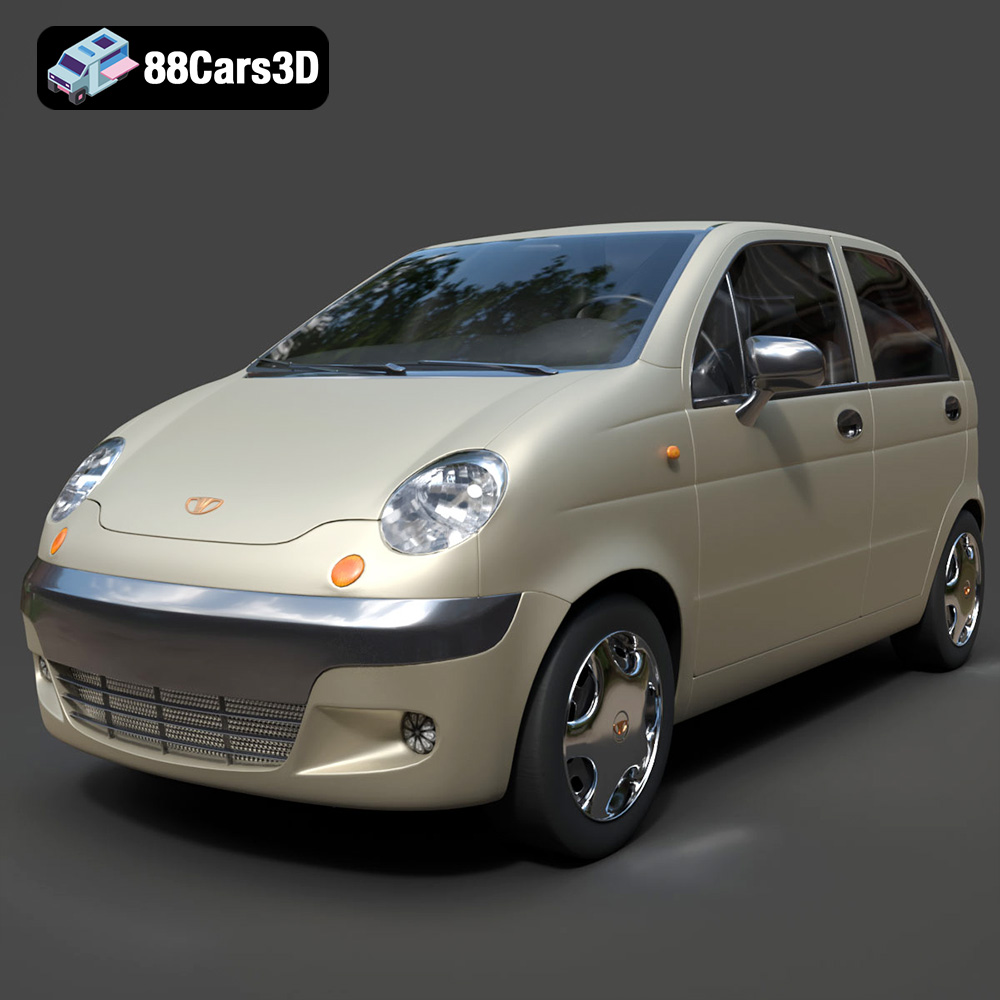
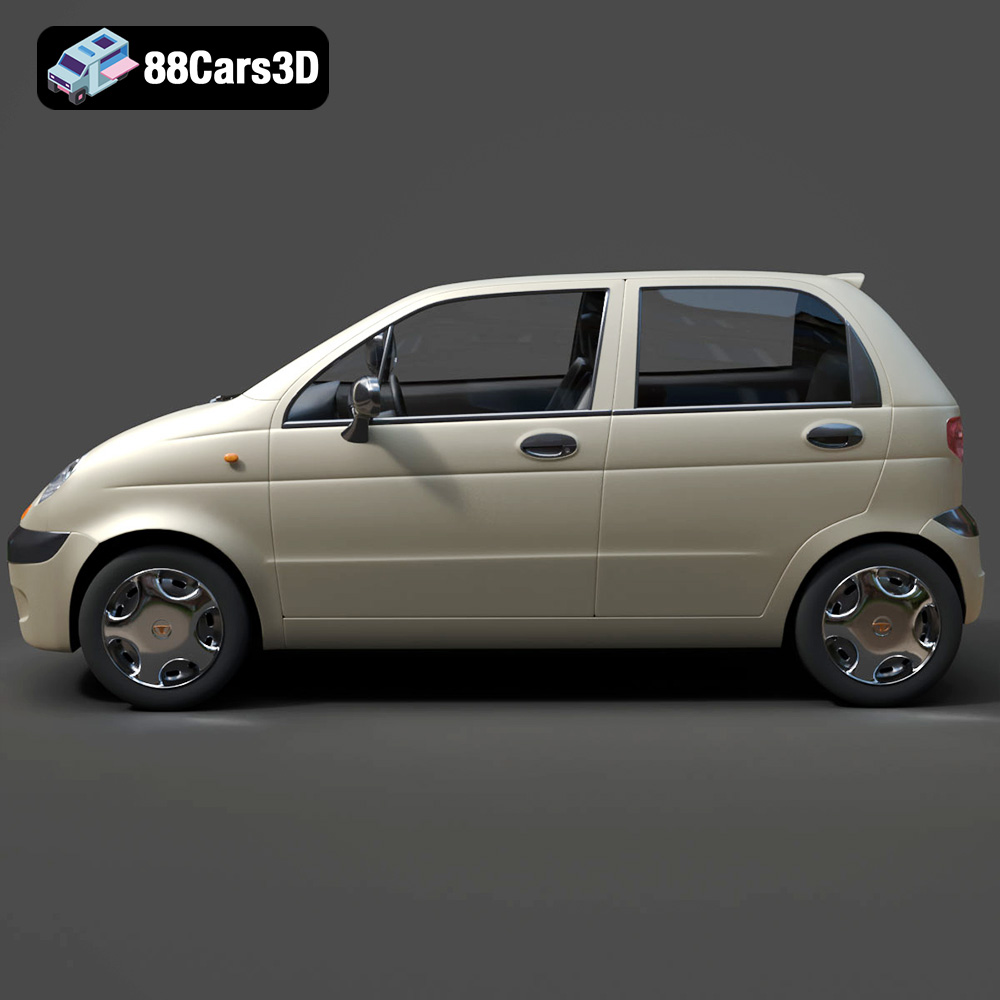
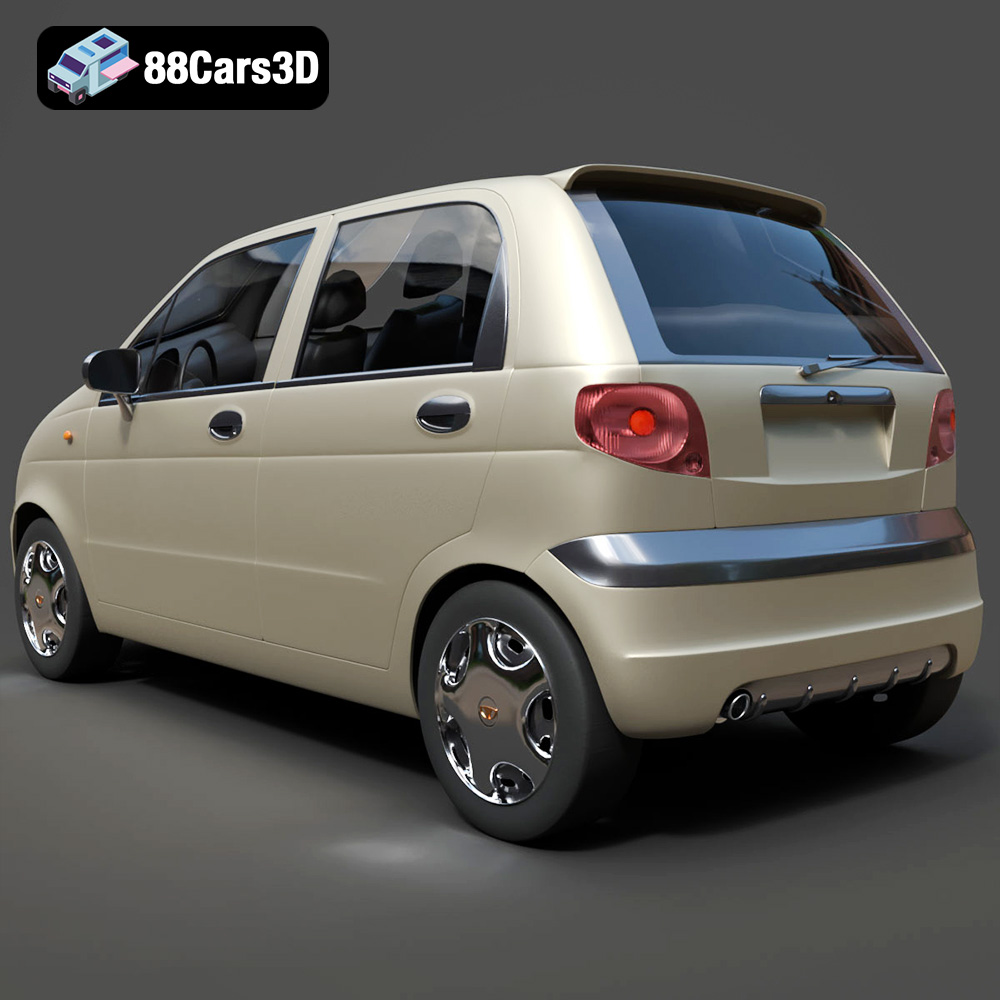
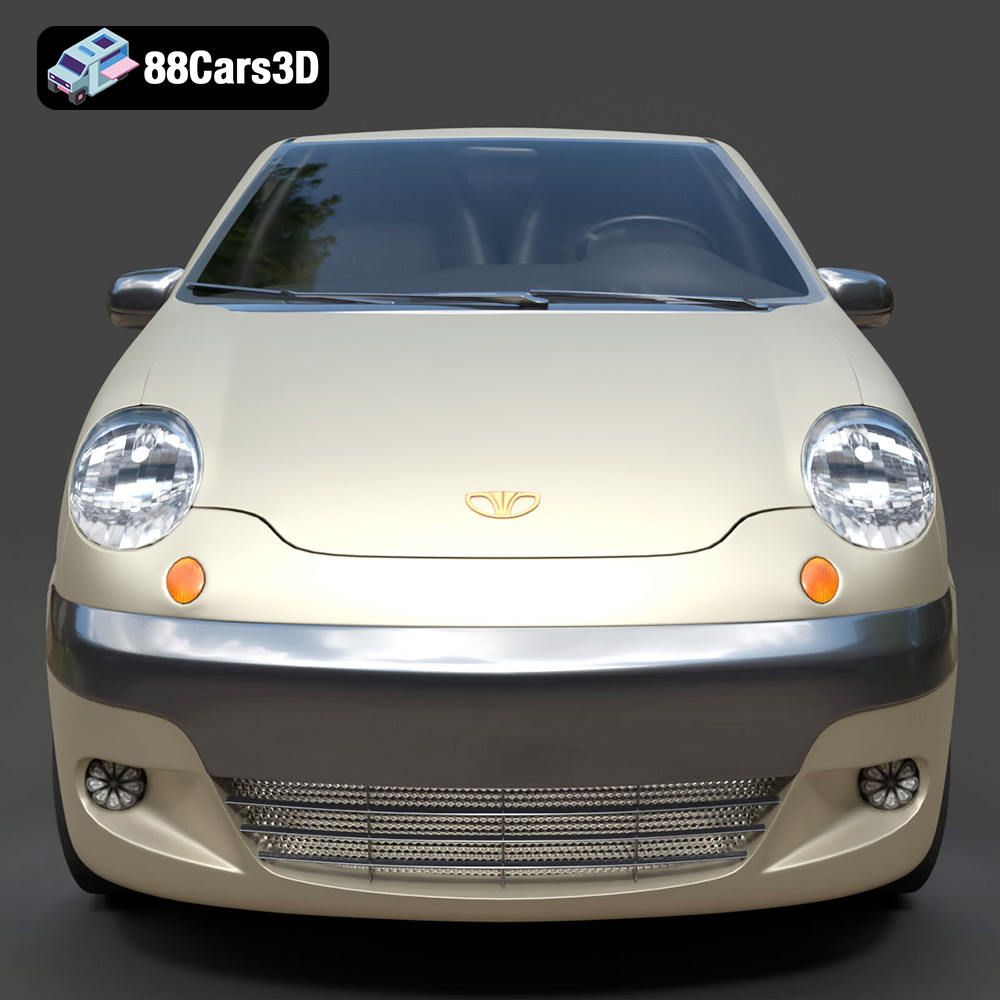
Understanding the intricate balance between visual fidelity and performance optimization is crucial for any 3D artist or developer. This equilibrium is especially pertinent when dealing with complex assets like vehicles, which often feature detailed exteriors, functional interiors, and dynamic components. Our focus today is on a prime example of such a versatile asset: the Daewoo Damas Microvan 3D Model. This particular model, available at 88cars3d.com, encapsulates the essence of an everyday workhorse, providing an ideal foundation for countless creative projects demanding authenticity and efficiency. We will delve into how such a model integrates into various workflows, the technical considerations behind its design, and why having access to a diverse array of file formats is paramount for professional success.
The world of 3D modeling is rich with diverse software applications and specialized pipelines, each with its preferred method for handling and exchanging data. This is precisely why high-quality 3D car models, like the Daewoo Damas, are offered in a multitude of file formats. Choosing the correct format is not merely a matter of compatibility; it’s about optimizing your workflow, preserving essential data, and ensuring the asset performs as intended in its target environment. Let’s break down the most common and crucial formats provided with models from 88cars3d.com:
The `.blend` file is Blender’s native format and offers the most comprehensive data encapsulation for users of this powerful open-source 3D suite. When you receive a `.blend` file, you’re getting the entire scene exactly as the artist created it, including all mesh data, materials (often set up with Cycles or Eevee nodes), textures, lighting, cameras, animation data, and even modifiers. For Blender artists, this means full editability, allowing for deep customization, tweaking, and re-purposing of every aspect of the model without any loss of information that might occur during export to other formats. It’s the ideal starting point for intricate modifications or rendering within Blender itself.
Autodesk’s `.fbx` (Filmbox) format is arguably the most widely adopted 3D exchange format in the industry, particularly favored in game development. Its strength lies in its ability to store not just geometry, but also complex animation data, skeletal rigs, textures, light, and camera information in a single, compact file. This makes it invaluable for transferring assets between different DCC (Digital Content Creation) applications like Maya, 3ds Max, Cinema 4D, and most importantly, game engines like Unreal Engine and Unity. For a model like the Daewoo Damas, an `.fbx` export ensures that separate components like wheels and doors retain their hierarchical relationships and pivot points, critical for rigging and animation in a real-time environment.
The `.obj` (Wavefront OBJ) format is a venerable and highly universal 3D file format. It’s renowned for its simplicity and wide compatibility across virtually all 3D software. An `.obj` file primarily stores geometry data, including vertex positions, UV coordinates, and normal vectors. It can reference external `.mtl` (material library) files for basic material properties and texture maps. While `.obj` does not support animation, rigging, or advanced material setups, its text-based, open standard nature makes it an excellent choice for straightforward mesh exchange, archiving, or when you need a clean mesh devoid of complex software-specific data.
GL Transmission Format (GLTF) and its binary counterpart `.glb` are rapidly becoming the “JPEG of 3D” dues to their efficiency and web-friendliness. `.glb` files package geometry, materials, textures, and even animation into a single, compact binary file, making them highly optimized for fast loading and display in augmented reality (AR), virtual reality (VR) applications, and interactive web experiences. For visualizing a 3D car model directly in a browser or an AR app on a mobile device, `.glb` offers excellent performance and visual fidelity with minimal file size overhead.
The `.stl` (Stereolithography) format is the de facto standard for 3D printing. Unlike other formats that store various types of 3D data, `.stl` files exclusively represent the surface geometry of a 3D object using a collection of triangular facets. It contains no color, texture, or material information, focusing solely on the object’s physical shape. For anyone planning to bring a digital model like the Daewoo Damas into the physical world through 3D printing, an `.stl` export is essential for communicating the precise geometry to the slicer software.
The `.ply` (Polygon File Format) is another format for storing 3D data, often associated with 3D scanning and high-precision models. It can store a wider range of properties than `.obj`, including color per vertex, surface normals, texture coordinates, and even transparency. While not as universally used for general asset exchange as `.fbx` or `.obj`, `.ply` is particularly useful in applications requiring highly detailed mesh data, such as reverse engineering, scientific visualization, or CAD/CAM workflows where accuracy and comprehensive attribute storage are paramount.
The `.unreal` format isn’t a traditional file extension that you’d find on your hard drive. Instead, it represents an asset that has been specifically prepared, optimized, or even natively exported/migrated into an Unreal Engine project. This often means the asset, typically an `.fbx`, has been imported, had its materials and textures set up within Unreal’s node-based editor, collision meshes generated, and LODs (Levels of Detail) configured. When a model is supplied as “.unreal,” it implies a degree of pre-configuration, making it an “engine-ready” asset that can be directly integrated into an Unreal project with minimal additional setup, saving significant development time for real-time applications.
Similar to `.blend` for Blender, the `.max` file is the native project file for Autodesk 3ds Max. It preserves the complete scene data, including complex modeling modifiers, advanced material setups (V-Ray, Corona, Arnold), lighting rigs, camera animations, and intricate scene hierarchies specific to 3ds Max. For artists and studios heavily invested in the 3ds Max ecosystem, the `.max` file offers unparalleled flexibility for further refinement, rendering, and integration into existing 3ds Max-centric pipelines. It guarantees that the model’s full capabilities, as designed by the artist, are accessible for any high-end rendering or animation task.
By providing the Daewoo Damas Microvan 3D Model in this extensive range of formats, 88cars3d.com ensures that users have the ultimate flexibility, regardless of their preferred software, target platform, or specific project requirements. This meticulous attention to file format compatibility is a hallmark of professional asset provision, streamlining workflows and maximizing the utility of every purchase.
The Daewoo Damas Microvan is more than just a vehicle; it’s a cultural icon in many parts of the world. Known for its compact efficiency, robust utility, and unmistakable “cabover” design, the Damas (and its Chevrolet Damas rebadge) has served as an indispensable tool for commerce and transportation across South Korea, Central Asia, and the Middle East for decades. Recreating such a recognizable and vital vehicle in 3D requires a deep understanding of its real-world presence and practical application.
When artists seek to build truly immersive and believable virtual worlds, especially those set in specific geographical or cultural contexts, generic assets simply won’t suffice. The Daewoo Damas 3D Model fills a crucial niche, providing an instantly recognizable piece of regional authenticity. Imagine a bustling street scene in Tashkent, Uzbekistan, or a market alley in Seoul – the presence of a Damas microvan immediately roots the visualization in reality. It’s not just a car; it’s a signifier of local life, an unstoppable workhorse, and a common sight that adds layers of credibility to any scene. This cultural resonance makes the model incredibly valuable for projects that prioritize realism and regional accuracy.
The Daewoo Damas is defined by its utilitarian, space-maximizing design. The 3D model accurately captures these key aesthetic and functional aspects:
These detailed features ensure that the Daewoo Damas Microvan 3D Model is not just a general vehicle asset but a specific, culturally relevant, and highly functional digital twin of its real-world counterpart.
Creating a 3D model that excels in both visual detail and operational efficiency is a challenging feat. The Daewoo Damas Microvan 3D Model from 88cars3d.com demonstrates a masterful balance, making it suitable for a wide array of demanding applications. Its technical specifications are carefully curated to ensure peak performance without sacrificing visual integrity.
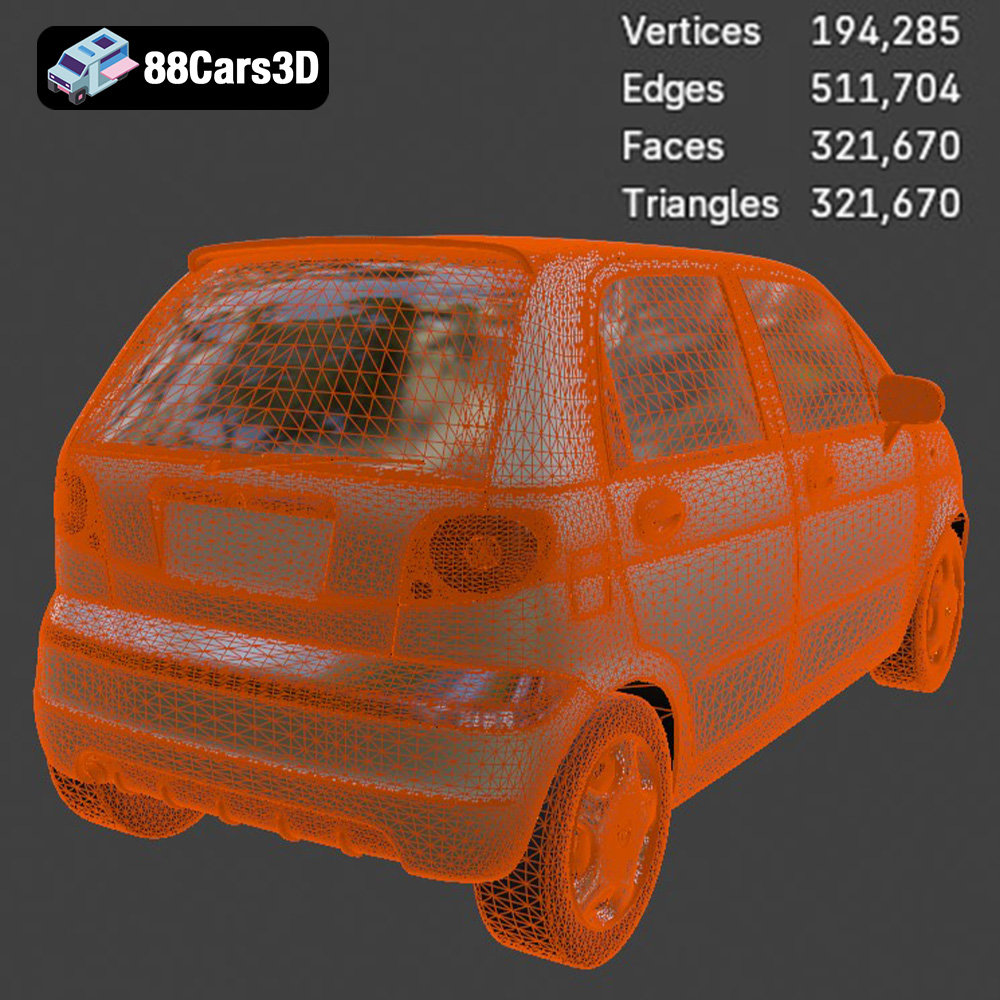
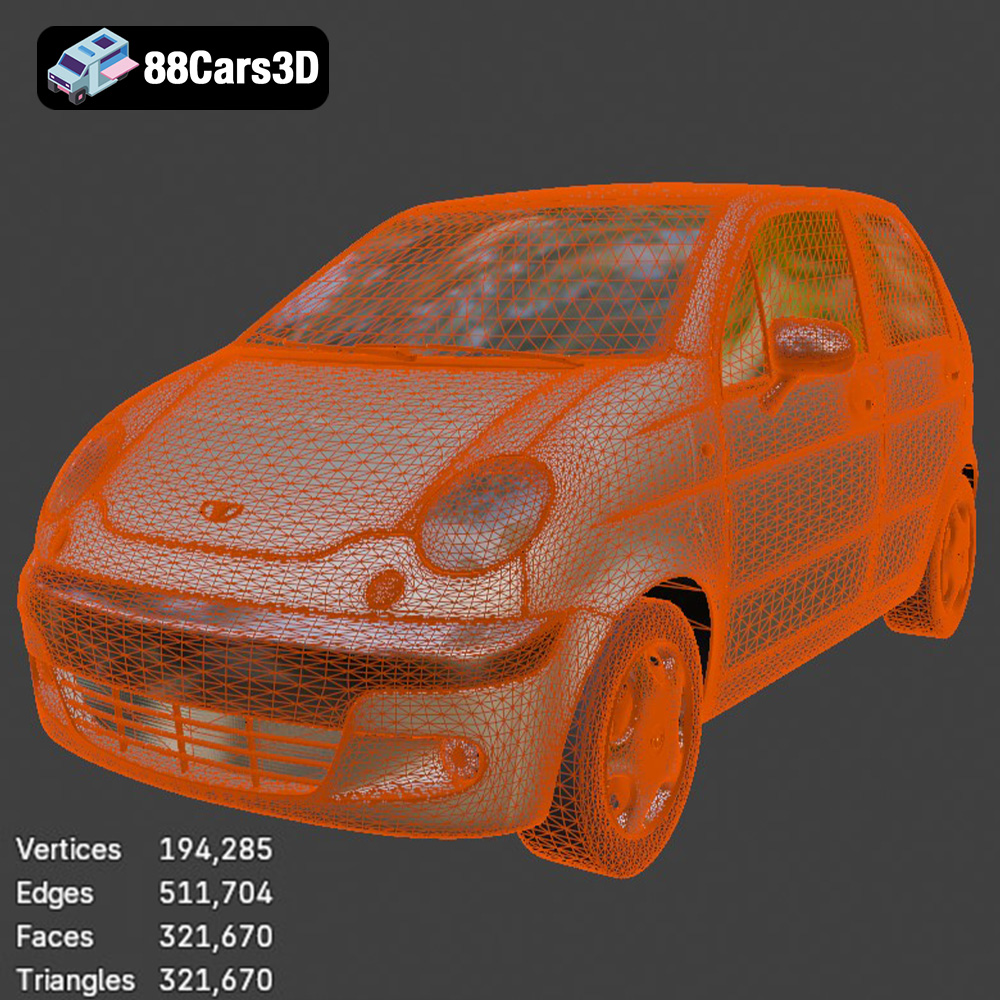
At the heart of any high-performing 3D asset is its topology – the arrangement of vertices, edges, and faces that form the mesh. The Daewoo Damas model boasts an incredibly efficient and clean mid-polygon topology, weighing in at approximately 321,670 triangles (or faces/polygons, as the count is identical here). This isn’t just a number; it represents a deliberate design choice:
This careful optimization ensures that the Daewoo Damas model is not only aesthetically pleasing but also a pragmatic choice for large-scale projects requiring multiple instances of the vehicle.
Accuracy is paramount in professional 3D modeling, especially for vehicles. The Daewoo Damas 3D Model adheres to real-world scale based on factory commercial dimensions. This attention to detail is critical for:
Such technical foresight significantly reduces production time and effort, allowing artists and developers to focus on creative tasks rather than remedial asset preparation.
The true value of a versatile 3D asset lies in its adaptability across various professional pipelines. The Daewoo Damas Microvan 3D Model, with its optimized topology, accurate detailing, and wide format support, is perfectly poised for integration into several demanding fields.
In modern game development, particularly for open-world titles, the need for diverse and performance-friendly 3D car models is immense. The Daewoo Damas serves as an ideal “everyday traffic” vehicle or a key delivery asset.
Architectural visualizations often strive for photorealism, and part of that realism comes from accurate contextual elements. Generic vehicles can detract from a project’s specificity.
As AR and VR technologies become more prevalent, the demand for well-optimized, visually appealing 3D assets grows.
The adaptability of the Daewoo Damas Microvan 3D Model ensures it’s a valuable asset for any professional seeking to enhance their projects with high-quality, regionally accurate 3D car models.
The journey of a 3D model doesn’t always end on a screen. For many enthusiasts and professionals, bringing a digital asset into the physical world through 3D printing offers a unique and tangible connection. The Daewoo Damas Microvan 3D Model is not only optimized for digital rendering but also meticulously prepared for physical fabrication, offering a fantastic opportunity for collectors, diorama builders, and miniature enthusiasts.
The `.stl` file format, as discussed earlier, is the industry standard for 3D printing. It translates the complex surfaces of the digital model into a series of interconnected triangles, forming a watertight mesh that 3D printers can interpret. Once you have the `.stl` file, the typical workflow involves:
The Daewoo Damas 3D Model provides all the necessary information and recommendations to navigate this process successfully.
To achieve the best possible physical representation of the Daewoo Damas, specific 3D printing settings are recommended:
By following these guidelines, enthusiasts can transform the digital Daewoo Damas Microvan 3D Model into a high-quality, tangible collectible or diorama piece.
While the Daewoo Damas Microvan 3D Model is provided as a highly accurate and optimized asset, its true potential often lies in the hands of the artist who customizes it to fit a specific narrative or scene. The design offers ample opportunities for personalization, enabling creators to push the boundaries of realism and storytelling.
A single 3D model can serve many roles simply by altering its visual properties. The Daewoo Damas is a chameleon in this regard:
These modifications breathe life into the model, transforming it from a generic asset into a unique element of a larger story.
Realistic 3D scenes are rarely pristine. Adding environmental wear and tear can dramatically increase a model’s believability.
By combining intelligent customization with dynamic environmental effects, the Daewoo Damas Microvan 3D Model becomes an incredibly versatile tool, capable of adapting to almost any creative vision and technical requirement, enhancing the realism of any project where it is deployed.
In the complex ecosystem of 3D modeling, game development, and visualization, the demand for high-quality, versatile assets is constant. The Daewoo Damas Microvan 3D Model stands as a testament to what a meticulously crafted 3D car model can offer. It’s not just a collection of polygons; it’s a carefully optimized, culturally significant, and technically robust asset designed to integrate seamlessly into a wide range of professional workflows.
From populating expansive open-world games and lending regional authenticity to architectural visualizations, to serving as a perfect candidate for detailed 3D printing projects, this model exemplifies the balance between visual fidelity and performance efficiency. Its clean, mid-polygon topology, real-world scale, and animation-ready components make it a prime choice for artists and developers aiming for both realism and smooth operation. Furthermore, the availability of multiple file formats, including .blend, .fbx, .obj, .glb, .stl, .ply, .unreal, and .max, ensures unparalleled compatibility and flexibility, catering to virtually every software and pipeline.
Whether you’re an indie game developer needing realistic background traffic, an ArchViz artist seeking to ground your scenes in specific global contexts, or a 3D printing enthusiast looking for a unique miniature, the Daewoo Damas Microvan 3D Model from 88cars3d.com offers an invaluable solution. It’s an investment in efficiency, realism, and creative potential, enabling you to build richer, more compelling digital experiences with a touch of authentic, global character.
The Daewoo Damas 3D Model is an incredibly accurate, highly optimized digital recreation of the legendary compact commercial microvan. Based on the classic kei-van architecture, the Damas is a ubiquitous and unstoppable workhorse recognized globally—serving as the ultimate urban delivery vehicle, taxi, and daily commuter, particularly across South Korea, Central Asia (such as Uzbekistan), and the Middle East. Built with a highly efficient, impeccably clean mid-polygon topology (just over 321k triangles), it strikes the absolute perfect balance, providing crisp visual fidelity for close-up automotive rendering while remaining lightweight enough to be duplicated endlessly as background traffic in modern game engines. Perfect for populating realistic global street scenes, commercial fleet simulations, architectural visualizations, and mobile game development.
$9.99