Get 50% OFF All Premium 3D & STL Models!

In today’s interconnected digital landscape, reaching your audience wherever they are is paramount. For automotive enthusiasts, game developers, and visualization professionals, this means delivering stunning, high-fidelity experiences across a myriad of devices – from powerful gaming PCs and consoles to mobile phones, AR/VR headsets, and even web browsers. Unreal Engine stands at the forefront of this revolution, offering an unparalleled toolkit for developing truly cross-platform applications. Its robust architecture, advanced rendering capabilities, and flexible development environment empower creators to build once and deploy to many, ensuring maximum reach and impact.
This comprehensive guide will dive deep into the strategies and techniques required to harness Unreal Engine’s full potential for cross-platform development, with a particular focus on high-quality automotive content. We’ll explore everything from efficient asset management and cutting-edge rendering features like Nanite and Lumen to interactive Blueprint scripting, performance optimization, and deployment best practices for a diverse range of platforms. Whether you’re crafting the next generation of racing games, developing immersive automotive configurators, or pioneering virtual production workflows, understanding these principles will be crucial. Prepare to unlock the power of Unreal Engine and drive your automotive visions across every digital frontier.
Unreal Engine is meticulously engineered to provide a robust foundation for multi-platform development. At its core, it abstracts much of the underlying platform-specific complexities, allowing developers to focus on creative content and gameplay rather than getting bogged down in low-level porting efforts. This doesn’t mean platform-specific considerations are eliminated, but rather that Unreal Engine provides a consistent framework and set of tools that streamline the process significantly. From its highly optimized C++ codebase to its intuitive Blueprint visual scripting, every aspect is designed with scalability and portability in mind. The engine continuously evolves, integrating support for new hardware and software standards, making it a future-proof choice for ambitious projects.
The key to Unreal Engine’s cross-platform prowess lies in its rendering pipeline and asset management systems, which are built to be highly configurable. Developers can leverage global scalability settings to automatically adjust graphical fidelity based on the target device, or dive into granular controls for textures, shadows, and post-processing effects. This level of control is indispensable when targeting devices with vastly different performance envelopes, such as a high-end desktop VR system compared to a standalone mobile AR headset. By embracing these core architectural principles, creators can design their projects with confidence, knowing they have the flexibility to scale up or down as needed, ensuring a consistent and engaging user experience across all supported platforms.
Portability in Unreal Engine refers to the ability to take a single project and compile it for multiple operating systems, hardware architectures, and device types without significant code changes. This is achieved through its modular design and a powerful build system that handles platform-specific compilations. Scalability, on the other hand, is about adapting the visual quality and performance of your application to suit the capabilities of the target device. Unreal Engine provides a sophisticated scalability system that allows artists and designers to define different levels of detail and quality for various graphical features. This includes dynamic resolution scaling, texture streaming, automatic LOD generation, and customizable post-processing effects, all of which contribute to delivering the best possible experience on any given hardware. Understanding how these two principles interweave is fundamental to successful cross-platform development.
While Unreal Engine provides a high degree of abstraction, integrating platform-specific features often requires utilizing proprietary SDKs. For instance, deploying to consoles like PlayStation or Xbox necessitates integrating their respective developer kits for services like networking, achievements, and input handling. Similarly, mobile platforms (iOS, Android) and AR/VR devices (Oculus, OpenXR, SteamVR) require their SDKs for specific functionalities like touch input, augmented reality tracking, or spatial audio. Unreal Engine simplifies this through a modular plugin system. Developers can enable or disable platform-specific plugins, which wrap the native SDK functionalities and expose them to Blueprint or C++ within the engine. This allows for conditional compilation and execution of platform-specific code, ensuring that your project only includes the necessary components for each target, optimizing package size and avoiding compatibility issues. This integration is crucial for leveraging the unique features of each platform while maintaining a unified development workflow.
For automotive projects, visual fidelity is paramount. High-quality 3D car models, like those available on 88cars3d.com, are essential for achieving realism. However, these models often come with intricate details and high polygon counts, which can quickly overwhelm less powerful platforms. Effective asset optimization is not merely a good practice; it’s a critical requirement for ensuring smooth performance and a consistent user experience across diverse hardware. This involves a strategic approach to importing, processing, and managing all visual assets, from the complex geometry of a vehicle to its accompanying textures and materials. Neglecting optimization can lead to stuttering frame rates, slow loading times, and ultimately, a frustrating user experience that detracts from the immersion.
The optimization process begins at the source: how assets are created and exported from 3D modeling software. Clean topology, efficient UV mapping, and judicious use of texture space are all foundational elements that directly impact performance within Unreal Engine. Once imported, the engine provides a wealth of tools to further refine and adapt assets for different performance tiers. This iterative process of importing, analyzing, and optimizing ensures that your beautifully detailed 3D car models retain their visual integrity while remaining performant, whether they’re rendered on a high-end PC with an RTX graphics card or a mobile device with integrated graphics.
When sourcing automotive assets from marketplaces such as 88cars3d.com, you’ll typically receive models in formats like FBX or USD, which are ideal for Unreal Engine. These models often boast clean topology, realistic PBR materials, and efficient UV mapping. However, successful integration requires careful preparation.
First, ensure your model’s scale is correct upon import (1 unit = 1 cm in Unreal Engine). For FBX imports, verify “Combine Meshes” is handled appropriately; sometimes it’s better to import individual components (body, wheels, interior) as separate meshes for greater control over LODs and material assignments.
Polygon count is a significant factor. While high-poly models are great for cinematics, a raw CAD model might have millions of polygons, which is prohibitive for real-time applications, especially mobile. Consider pre-decimating overly dense meshes in your 3D software before import, or rely on Unreal Engine’s built-in tools. Textures also play a crucial role. For PBR workflows, ensure you have Base Color (Albedo), Normal, Metallic, Roughness, and Ambient Occlusion maps. Standard resolutions like 2K or 4K are common, but for mobile, you might need 1K or even 512px. Pack Metallic, Roughness, and Ambient Occlusion into a single RGB texture (e.g., R=Metallic, G=Roughness, B=AO) to reduce draw calls and memory footprint.
Unreal Engine 5 introduced Nanite, a virtualized geometry system that revolutionizes how high-fidelity assets are handled. With Nanite, you can import cinematic-quality 3D car models with millions of polygons directly into your project without traditional LODs or baking normal maps for detail. Nanite intelligently streams and processes only the necessary geometry at a per-pixel level, enabling unprecedented detail at real-time frame rates on compatible platforms (primarily PC and next-gen consoles). This means artists can focus on creation rather than worrying excessively about poly count budgets. For detailed guidance on Nanite, refer to the official Unreal Engine documentation.
However, Nanite is not universally available; it doesn’t currently support mobile, WebGL, or older console generations. For these platforms, traditional Levels of Detail (LODs) remain essential. Unreal Engine provides robust tools for generating and managing LODs automatically or manually. You can define multiple LOD levels for each static mesh, specifying different polygon counts and even simpler materials or swapped meshes for distant objects. For example, a high-detail car model might have LOD0 (full detail, 100k+ polys), LOD1 (reduced, 30k polys), LOD2 (further reduced, 5k polys), and LOD3 (simple box mesh, <1k polys). Proper LOD setup ensures that less complex geometry is rendered when objects are far from the camera, significantly improving performance. Utilize Unreal Engine's "Mesh Simplification" tools or import pre-optimized LODs from your 3D software. Effective LOD management, combined with intelligent culling distances, is vital for achieving scalable performance across all target platforms.
Realistic materials and lighting are the bedrock of visual immersion in automotive visualization. Unreal Engine’s Physically Based Rendering (PBR) pipeline ensures that your 3D car models react to light in a scientifically accurate way, resulting in stunning, lifelike surfaces. From the reflective sheen of polished paintwork to the subtle texture of interior fabrics, PBR materials translate real-world properties into digital fidelity. However, achieving this realism while maintaining cross-platform performance requires a nuanced understanding of material creation and lighting techniques within the engine. It’s a balance between visual fidelity and computational efficiency, especially when targeting devices with varying graphical capabilities.
Dynamic lighting, in conjunction with PBR materials, brings your scenes to life. Modern Unreal Engine features like Lumen and Ray Tracing offer unparalleled realism, but they come with a performance cost. For cross-platform development, understanding when and how to leverage these advanced techniques, or when to rely on more traditional and performant baked lighting solutions, is crucial. The goal is always to deliver the most visually compelling experience possible for each specific platform without compromising on frame rate or stability. This section delves into the best practices for crafting stunning materials and illuminating your automotive scenes, ensuring they look great on any device.
The PBR workflow in Unreal Engine relies on a set of standardized textures: Base Color (Albedo), Normal, Metallic, Roughness, and Ambient Occlusion. These maps define how light interacts with the surface. The Material Editor is where you connect these textures and define material properties. For efficient cross-platform development, use Material Instances extensively. Create a master material with all common parameters (like color tints, roughness multipliers, normal map strength) exposed as parameters. Then, create instances for each unique car part or paint variation. This reduces the number of unique shaders, improves draw calls, and makes iteration much faster.
Consider texture packing for optimizing performance. For example, you can combine Metallic, Roughness, and Ambient Occlusion maps into the RGB channels of a single texture, saving memory and texture lookups. This is a common industry best practice. Pay attention to texture compression settings; DXT1/BC1 for non-alpha textures and DXT5/BC3 for textures with alpha (like window decals) are standard for PC, while ETC2 or ASTC are often used for mobile. Also, remember that resolution matters. While 4K textures look great on high-end PCs, they can quickly exhaust memory on mobile devices. Implement texture streaming and utilize Unreal Engine’s texture LOD bias settings to automatically reduce texture quality on less powerful platforms. For more details on material creation, the Unreal Engine learning portal (https://dev.epicgames.com/community/unreal-engine/learning) provides extensive resources.
Unreal Engine offers a spectrum of lighting solutions, each with its own performance characteristics. For top-tier platforms (PC, next-gen consoles), Lumen Global Illumination and Reflections deliver incredibly realistic dynamic lighting and reflections. Lumen captures and propagates light bounces in real-time, meaning changes to lights, materials, or geometry are instantly reflected in the scene. Coupled with hardware-accelerated Ray Tracing for highly accurate shadows, reflections, and ambient occlusion, you can achieve cinematic levels of realism. However, both Lumen and Ray Tracing are computationally intensive and generally not suitable for mobile, AR/VR, or older-generation consoles due to their high performance demands.
For cross-platform compatibility, especially for mobile and lower-spec devices, baked lighting (using Lightmass or GPU Lightmass) becomes crucial. Here, global illumination and indirect lighting are pre-calculated and stored in lightmaps, which are then applied to static geometry. This approach is highly performant at runtime, as the lighting calculations are offloaded to design time. While baked lighting doesn’t react dynamically to moving objects or changing time of day, it provides excellent static lighting fidelity with minimal runtime cost. You can combine baked static lighting with dynamic direct lights (e.g., headlights) for a hybrid approach. For AR/VR applications, consider using mobile HDR, forward shading, and disabling features like real-time global illumination for optimal performance. The key is to leverage Unreal Engine’s scalability settings and platform-specific overrides to select the appropriate lighting solution for each target platform, ensuring a visually appealing yet performant experience across the board.
Beyond stunning visuals, true immersion in automotive applications comes from interactivity and realistic behavior. Whether it’s a dynamic vehicle configurator, a compelling driving simulation, or an interactive demonstration, Unreal Engine’s robust toolset allows developers to breathe life into their 3D car models. Central to this is Blueprint Visual Scripting, a powerful and intuitive system that empowers artists and designers to create complex gameplay mechanics and interactive elements without writing a single line of code. This accessibility is invaluable for rapid prototyping and iteration, especially in a team environment where various disciplines collaborate.
Complementing Blueprint is Unreal Engine’s integrated physics system, which allows for the simulation of realistic vehicle dynamics. From tire friction and suspension behavior to engine torque and gear shifts, accurate physics are critical for conveying the feel and responsiveness of a real automobile. Achieving a convincing driving experience, or simply ensuring that doors open and close naturally, requires careful configuration and optimization of these physics systems. For cross-platform development, it’s about striking the right balance between simulation fidelity and computational cost, ensuring that the interactive elements feel responsive and engaging on all target devices.
Blueprint Visual Scripting is arguably one of Unreal Engine’s most powerful features for creating interactive content quickly and efficiently. For automotive applications, Blueprint is indispensable for:
* **Automotive Configurators:** Driving logic for swapping car parts (wheels, spoilers, interiors), changing paint colors, and applying material variations. You can create UI elements that trigger Blueprint events to dynamically update the car model.
* **Interactive Demonstrations:** Scripting door openings, trunk lids, engine hood animations, and even showcasing interior features like dashboard displays or seat adjustments.
* **Gameplay Mechanics:** If building a game, Blueprint handles vehicle controls, AI drivers, lap timers, scoring systems, and UI overlays.
* **Virtual Production Controls:** Interfacing with external data sources or controlling virtual cameras.
When developing cross-platform with Blueprint, aim for platform-agnostic logic where possible. Use “Switch on Platform” nodes for specific platform behaviors, such as different input methods (touch vs. gamepad) or specific API calls. For UI, Unreal Engine’s UMG (Unreal Motion Graphics) is highly adaptable, allowing you to design user interfaces that automatically scale for different screen resolutions and aspect ratios, crucial for mobile and desktop alike. Blueprint’s ease of use accelerates development cycles, allowing for rapid iteration and testing of interactive features across all target platforms.
Unreal Engine’s Chaos Vehicles system provides a robust framework for simulating realistic vehicle physics. It allows for detailed configuration of engine curves, transmission ratios, suspension settings, tire properties, and aero dynamics. This level of control is essential for crafting a convincing driving experience in games or for simulating specific vehicle behaviors in visualization tools.
* **Engine & Transmission:** Define torque curves, RPM limits, gear ratios, and differential types to mimic real-world performance.
* **Suspension:** Configure spring and damper rates, suspension travel, and anti-roll bars for accurate handling.
* **Tires:** Adjust friction, grip, and slip characteristics for different terrains.
* **Aerodynamics:** Implement downforce and drag to influence high-speed stability.
For cross-platform projects, particularly those targeting mobile, optimizing vehicle physics is critical. High-fidelity physics simulations can be computationally expensive. Consider these tips:
* **Simplify Collision:** Use simplified collision meshes for complex car geometry instead of per-poly collision.
* **Reduce Wheel Traces:** Limit the number of wheel ray casts if possible, especially for non-player vehicles.
* **Optimize Vehicle Types:** If you have many AI vehicles, consider using simpler physics profiles for them compared to the player vehicle.
* **Chaos Vehicle Substeps:** Adjust the number of physics substeps to balance accuracy and performance. Fewer substeps mean less accurate simulation but better performance.
* **Physics Tick Rate:** Modify the overall physics tick rate in project settings.
While Chaos Vehicles offers great depth, remember that mobile platforms have significant limitations. You might need to make trade-offs, prioritizing stable frame rates over absolute physical accuracy. Thorough testing on all target devices is essential to fine-tune the balance.
Developing a graphically intensive application like an automotive visualization or game requires a deep understanding of performance optimization, especially when targeting multiple platforms. Each device, from a high-end gaming PC to a mobile phone or an AR headset, presents unique constraints and opportunities. Effective deployment hinges on a proactive approach to optimizing every aspect of your project, ensuring that the user experience is fluid and engaging, regardless of the hardware. This section delves into the specific strategies and Unreal Engine features that enable you to fine-tune your project for optimal performance and navigate the complexities of cross-platform deployment.
The packaging and distribution process itself is another critical stage. Unreal Engine provides comprehensive tools for building platform-specific executables, but knowing how to configure project settings, leverage platform-specific overrides, and troubleshoot common deployment issues is key to a smooth release. By mastering these strategies, you can ensure that your high-quality 3D car models and immersive experiences reach their audience efficiently and effectively on any device.
Optimizing for diverse platforms requires a targeted approach, as each has different bottlenecks and capabilities:
* **PC/Next-Gen Consoles:** Leverage features like Nanite, Lumen, Hardware Ray Tracing, and advanced post-processing effects. Focus on maintaining high frame rates (60 FPS+) at high resolutions. Optimize for VRAM usage, draw calls, and CPU-bound game logic. Use Unreal Engine’s Scalability Settings to allow users to adjust graphical quality based on their hardware.
* **Older Consoles (PS4/Xbox One):** These platforms are more constrained. Avoid Lumen and Ray Tracing. Rely on baked lighting or simpler dynamic lighting. Carefully manage polygon counts (LODs are critical), texture resolutions, and particle effects. Profile extensively to identify CPU/GPU bottlenecks.
* **Mobile (iOS/Android):** This is the most challenging.
* **Rendering:** Use the mobile renderer. Disable most post-processing. Use forward shading, mobile HDR. Avoid expensive screen-space effects.
* **Geometry:** Heavily rely on LODs. Use Nanite only if explicitly supported by a future UE release or custom setup. Prioritize merged meshes to reduce draw calls.
* **Materials:** Keep materials simple, avoid complex shader networks. Pack textures.
* **Lighting:** Baked lighting is preferred. Use a minimal number of dynamic lights.
* **Draw Calls:** This is a primary bottleneck. Merge static meshes, use instanced static meshes, and reduce dynamic objects.
* **Memory:** Optimize texture memory, mesh memory, and actor count.
* **CPU:** Optimize Blueprint logic, physics calculations, and AI.
* **AR/VR Optimization (especially for automotive applications):**
* **Target Frame Rate:** Aim for 72-90 FPS per eye for comfort.
* **Forward Renderer:** Often preferred for VR due to better performance and MSAA support.
* **Single-Pass Stereo:** Render both eyes in a single pass to reduce draw calls.
* **Resolution:** Prioritize resolution for clarity, but be ready to scale down.
* **Post-Processing:** Minimize or disable expensive effects. Bloom, lens flares, and motion blur can cause discomfort.
* **Occlusion Culling:** Crucial for complex environments to only render visible geometry.
* **No Lumen/Ray Tracing:** Avoid these on standalone VR headsets.
* **Aggressive LODs:** Even more critical than for mobile.
* **Texture Streaming:** Essential to manage VRAM.
* **WebGL (Pixel Streaming/Lumen in the Land of Nanite):**
* Requires a powerful server to stream a desktop-quality Unreal Engine application to a web browser.
* Optimization largely shifts to server-side rendering performance. Client-side requires good network bandwidth.
Utilize Unreal Engine’s built-in profiling tools (Stat FPS, Stat Unit, GPU Visualizer, Session Frontend) to identify performance bottlenecks on each platform. For more detailed information, consult the Unreal Engine documentation on optimizing projects.
The final step in cross-platform development is packaging your project for distribution. Unreal Engine’s **Project Launcher** and **Packaging Settings** provide extensive control over this process.
1. **Project Settings:** Navigate to `Edit > Project Settings`. Under “Platforms,” you’ll find platform-specific settings for Android, iOS, Windows, etc. Here you can configure:
* **SDK Versions:** Specify target SDKs for mobile platforms.
* **Package Name/Bundle Identifier:** Unique identifiers for your app.
* **Icons and Splash Screens:** Platform-specific visual assets.
* **Rendering Features:** Enable/disable features like mobile HDR, instanced stereo, or specific shader options.
* **Cooked Content:** Define which content gets included.
* **Supported Platforms:** Explicitly list which platforms your project targets.
2. **Packaging Process:** Go to `File > Package Project`. Select your desired platform. Unreal Engine will then “cook” your content (optimize and compress assets) and build the executable or package.
* **Cook by the Book:** For complex projects, use `Edit > Project Launcher` to create custom build profiles, specifying precise cooking rules, maps to include, and content filters for each platform. This is powerful for reducing package size.
* **Build Configurations:** Choose between “Development,” “Shipping,” or “Debug” builds. “Shipping” builds are highly optimized and lack debugging symbols, making them smaller and faster for release.
When dealing with platform-specific content (e.g., higher-resolution textures for PC, simpler UI for mobile), you can use platform-specific asset directories or `if` conditions in Blueprint/C++ to load different assets based on the detected platform. This ensures that only relevant content is bundled for each target, significantly reducing package size and improving loading times. Consistent testing of packaged builds on actual hardware for each target platform is non-negotiable to catch any unforeseen issues before release.
Unreal Engine’s capabilities extend far beyond traditional games, especially in the automotive sector. The engine is increasingly becoming the backbone of high-end virtual production workflows and sophisticated cinematic content creation. These advanced applications, while often targeting more powerful hardware initially, frequently have cross-platform output requirements—from creating stunning marketing videos for web distribution to developing interactive experiences for showrooms or events. Understanding these workflows positions you at the cutting edge of automotive visualization.
The synergy between physically accurate 3D car models (like those found on 88cars3d.com) and Unreal Engine’s real-time rendering power enables unparalleled creative freedom. Designers and filmmakers can iterate rapidly, visualize concepts instantly, and produce photorealistic content with unprecedented efficiency. This section explores how to harness Unreal Engine for these advanced scenarios, showcasing its versatility from a cinematic perspective to innovative live production environments.
Virtual production, particularly with large LED volumes (LED Walls), has revolutionized filmmaking and broadcast. Unreal Engine is the core technology driving these environments. In an LED wall setup, high-resolution Unreal Engine scenes are rendered in real-time onto massive LED screens that form the backdrop of a physical set. Actors and physical props are filmed against this dynamic virtual environment, creating immersive in-camera visual effects.
For automotive visualization, this means:
* **Live Car Shoots:** Instead of green screens or expensive location shoots, you can place a physical car in front of an LED wall displaying a virtual environment (e.g., a bustling city, a serene countryside, an alien planet). The reflections on the car’s surface will accurately pick up the virtual environment, enhancing realism dramatically.
* **Interactive Design Reviews:** Automotive designers can “drive” a virtual prototype through various virtual environments displayed on an LED wall, observing real-time reflections and lighting changes.
* **Marketing Content:** Producing high-quality commercials or promotional videos with unprecedented speed and flexibility.
The technology behind this is **nDisplay**, an Unreal Engine framework that allows for synchronized rendering across multiple GPUs and display devices (like LED panels). nDisplay handles view frustum adjustments, color calibration, and performance synchronization across the cluster of machines driving the LED wall. While resource-intensive, the ability to produce final-pixel content in-camera in real-time is a game-changer for high-fidelity automotive content, enabling iterative changes and creative flexibility that traditional methods cannot match.
For creating high-quality, pre-rendered or real-time cinematics, trailers, and marketing materials, Unreal Engine’s **Sequencer** is an indispensable tool. Sequencer is a multi-track, non-linear editor that allows you to orchestrate complex scenes, animate cameras, characters, vehicles, and effects over time.
Key features for automotive cinematics:
* **Camera Animation:** Create sophisticated camera movements, dolly shots, crane shots, and dynamic sweeps around your 3D car models.
* **Vehicle Animation:** Animate car doors opening, engines starting, wheels turning, or custom transformations. You can even record Chaos Vehicle physics simulations directly into Sequencer tracks.
* **Material Parameter Animation:** Animate paint colors, roughness values, or custom shader effects to showcase car features dynamically.
* **Lighting and Environment:** Keyframe changes in lighting (e.g., time of day), fog, and other environmental elements to create dramatic mood shifts.
* **Particle Effects:** Orchestrate Niagara particle systems (e.g., exhaust smoke, dust kicked up by wheels) for added realism.
* **Audio Integration:** Add sound effects and music tracks to enhance the cinematic experience.
Once a cinematic is created in Sequencer, it can be rendered out in various formats (image sequences, video files) for use in marketing, presentations, or even integrated directly into your cross-platform game or interactive experience. The ability to create stunning cinematics directly within the engine, utilizing the same high-fidelity assets as your real-time application, significantly streamlines content production and ensures visual consistency across all your deliverables. This makes Sequencer an invaluable tool for automotive visualization and game development, regardless of the target platform.
The journey through building cross-platform applications and visualizations with Unreal Engine reveals a powerful, versatile, and continuously evolving ecosystem. We’ve explored how crucial asset optimization, particularly for detailed 3D car models from platforms like 88cars3d.com, forms the bedrock of performance. We’ve delved into crafting immersive PBR materials, adapting lighting strategies from Lumen and Ray Tracing to baked solutions, and creating rich interactivity using Blueprint and realistic Chaos Vehicle physics. Furthermore, we’ve outlined targeted optimization and deployment strategies for a spectrum of devices, from high-end PCs to mobile and AR/VR, and touched upon cutting-edge workflows like virtual production with LED walls and cinematic storytelling with Sequencer.
Unreal Engine empowers developers and artists to achieve stunning visual fidelity and engaging interactivity while providing the flexibility to reach a global audience across diverse hardware. The key lies in strategic planning, a deep understanding of the engine’s features, and a commitment to iterative optimization. By embracing these principles, you can push the boundaries of what’s possible in real-time rendering and deliver unparalleled automotive experiences that resonate with users everywhere. The future of interactive content is cross-platform, and with Unreal Engine, you’re equipped to drive it. Start building your next groundbreaking project today and bring your automotive visions to life across every screen.
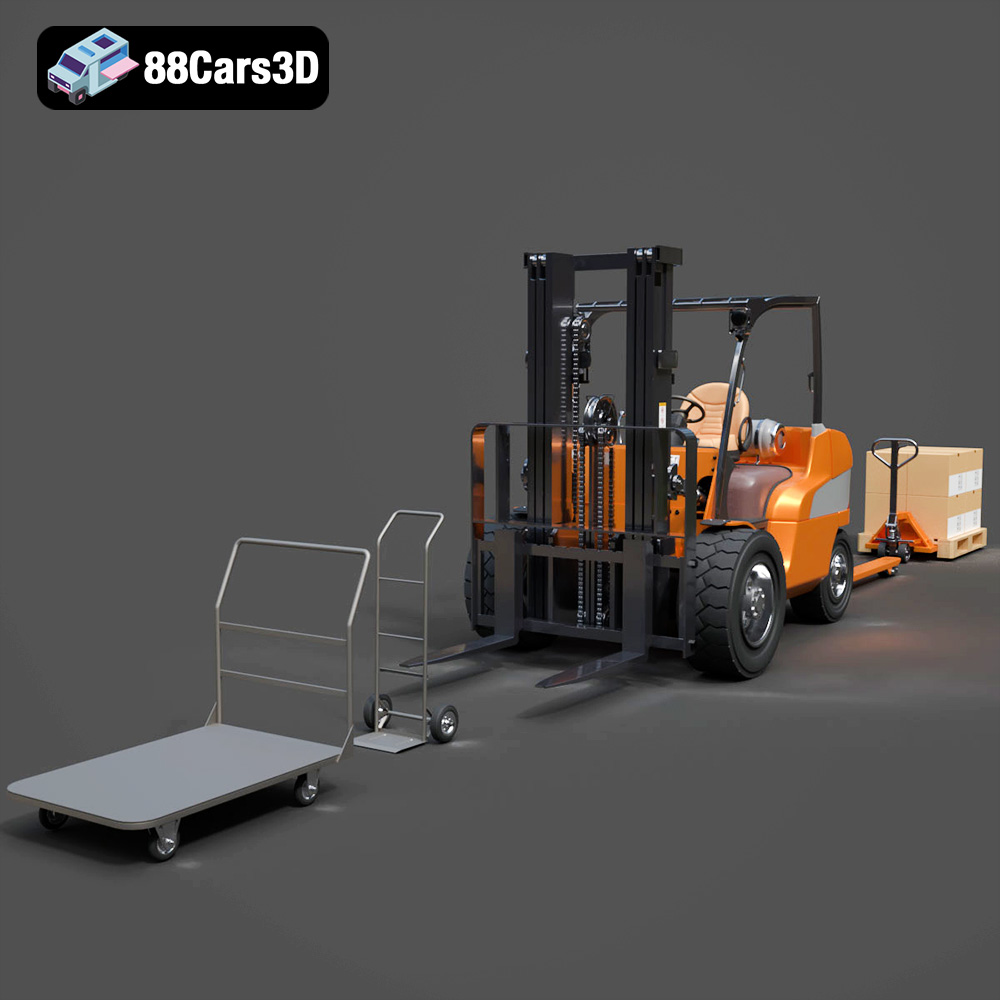
Texture: Yes | Material: Yes Download the highly detailed CAT Manual Loader & Warehouse Carts Kit 3D Model (2.4M Triangles). Features a macro-detailed hydraulic pallet jack, heavy-duty forks, and transport carts. Perfect for industrial ArchViz, factory rendering, and logistics simulations. Includes .blend, .fbx, .obj, .glb, .stl, and .max formats.
Price: $19.99
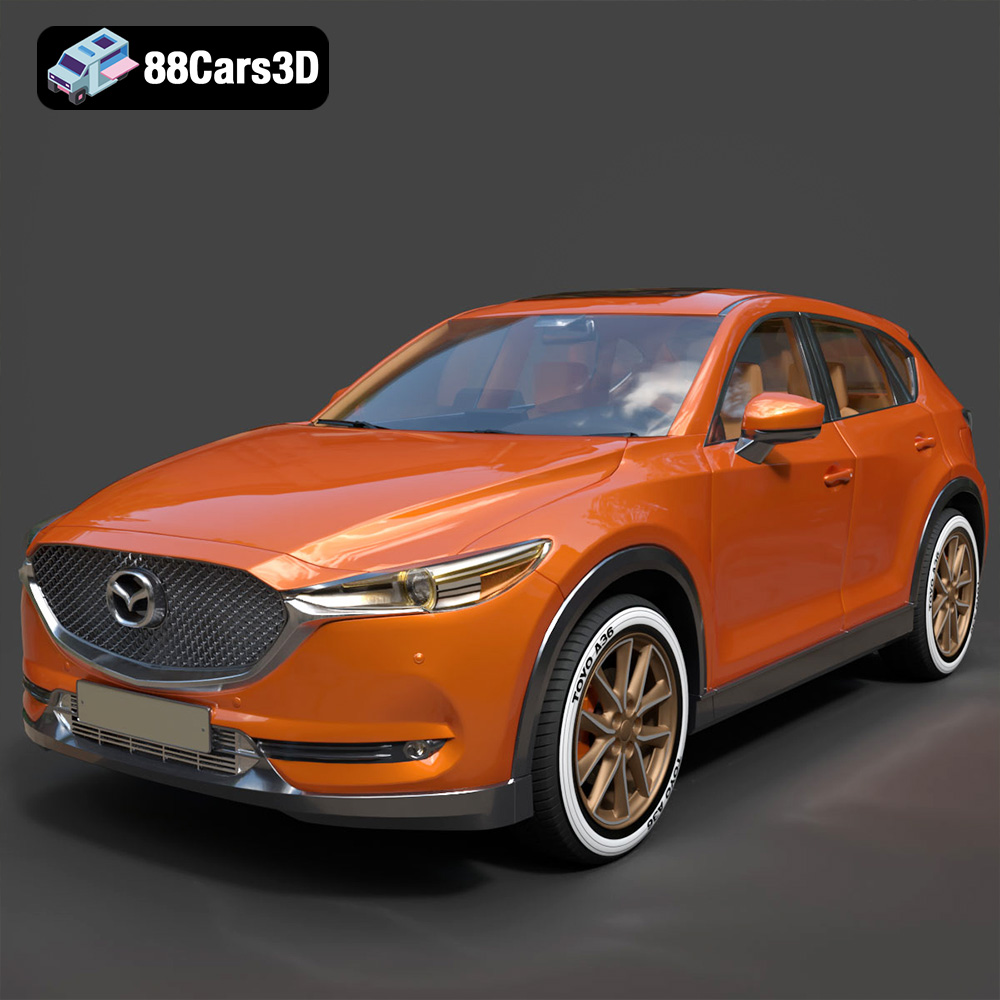
Texture: Yes | Material: Yes
Download the highly optimized Mazda CX-5 2014 3D Model (294k Triangles). Features the dynamic Kodo design language, signature grille, and a clean interior. Perfectly balanced for ArchViz, background traffic, and game development. Includes .blend, .fbx, .obj, .glb, .stl, and .max formats.
Price: $19.99
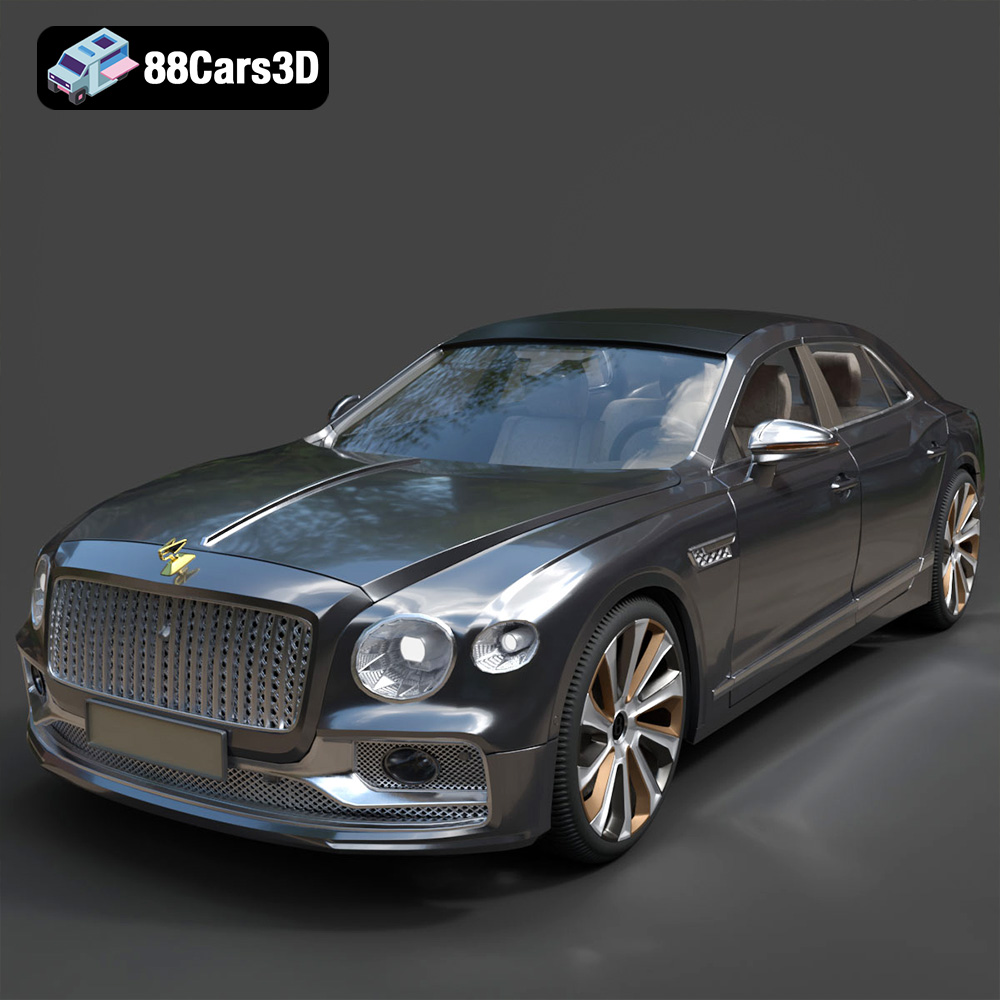
Texture: Yes | Material: Yes Download the ultra-high-detail Bentley Flying Spur Mulliner 2022 3D Model (2.94M Triangles). Features the bespoke Double Diamond grille, a fully modeled diamond-quilted interior, and exquisite luxury styling. Perfect for high-end ArchViz, VFX, and cinematic rendering. Includes .blend, .fbx, .obj, .glb, .stl, and .max formats.
Price: $19.90
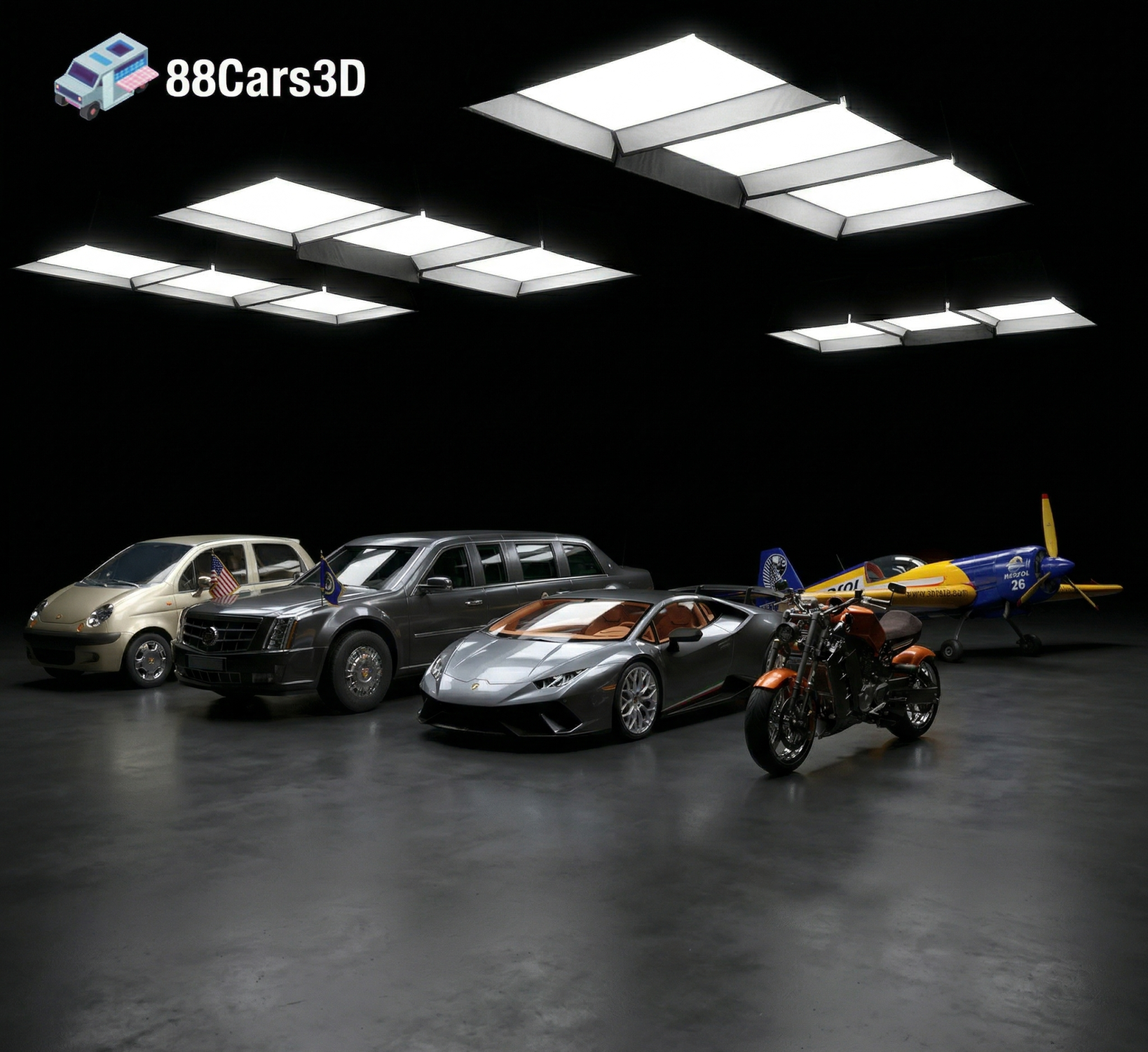
Texture: Yes | Material: Yes | 3D Printable: Yes. Download the Ultimate Creators’ Showcase featuring 5 premium 3D models: Lamborghini Huracan, ZAV Concept Motorcycle, Sukhoi SU-26, Presidential Limousine, and Daewoo Damas. Optimized for 4K CGI rendering and 3D printing. Save massive with this exclusive multi-category bundle!
Price: $99.99

Texture: Yes | Material: Yes | 3D Printable: Yes. Download the Italian Thoroughbreds Bundle featuring 5 iconic 3D models: Lamborghini Huracán Performante, Ferrari 458 Italia, Lamborghini Urus, Diablo SV, and Maserati GT. Optimized for 4K rendering and 3D printing (STL included). Save 50% with this ultimate Italian vehicle collection.
Price: $199.99

Download the Elite Future Mobility Bundle featuring 4 highly optimized 3D models: Tesla Model S, Avatr 11, Li L9, and Zoox Robotaxi. Perfect for ArchViz, Smart City renders, and game dev. Optimized for Unreal Engine and Blender. Includes .fbx, .obj, and .max formats.
Price: $99

🚗 5 Iconic German Cars (BMW M4 G82, M5 CS, X3, 1 Series & Mercedes E-Class). ✅ Optimized for ArchViz: Ready for Corona & V-Ray. 💰 Save €71 with this limited-time collection! 🚀 Instant Download after purchase.
Price: $119

Download the Extreme Off-Road & Survival 3D Models Bundle! Includes the Brabus 800 Adventure, Dodge Ram Bigfoot, Spec Truck, and a Caravan. Save over €210 on this premium 4-in-1 off-grid vehicle pack for ArchViz and game development.
Price: $149.99

Download the Heavy Duty & Commercial Logistics 3D Models Bundle! Includes the Ford Sterling, Caterpillar CT680, Mercedes Citaro Bus, and Vito Van. Save over €130 on this massive, game-ready 4-in-1 industrial vehicle pack.
Price: $109.99

Download the Ultimate Custom Motorcycles 3D Models Bundle. Includes a Custom Chopper, Ducati 916 Café Fighter, Harley XR1200X, and BMW K100. Perfect premium props for luxury ArchViz garages. Save over €250 today!
Price: $159.99

