Get 50% OFF All Premium 3D & STL Models!

The world of automotive design and visualization has undergone a revolutionary transformation, driven by advancements in 3D modeling and rendering technologies. From conceptualizing groundbreaking vehicles to creating immersive virtual experiences, high-quality 3D car models are the bedrock of innovation across industries. Whether you’re a seasoned game developer crafting the next racing simulator, an architect integrating vehicles into a stunning visualization, a marketing professional showcasing a new model, or an enthusiast bringing a digital design to life through 3D printing, the demand for precision, detail, and versatility is paramount.
At the heart of this digital revolution lies the ability to procure and utilize expertly crafted assets. Today, we’re taking a closer look at a prime example of such an asset: the Ferrari 450 Italia 2013 3D Model. This particular model stands out for its meticulous detail, clean topology, and broad compatibility, making it an invaluable addition to any professional’s toolkit. Offered through platforms like 88cars3d.com, such high-quality 3D car models empower creators to achieve unparalleled realism and efficiency in their projects.
The Ferrari 450 Italia, a masterpiece of Italian engineering and design, represents the pinnacle of supercar performance and aesthetics. Recreating this icon in 3D requires a deep understanding of its aerodynamic curves, intricate mechanical components, and luxurious interior. A well-executed 3D model, like the one we’ll explore, captures this essence, providing a digital twin ready for a myriad of applications from cinematic automotive rendering to real-time game environments.
When working with 3D car models, one of the most critical aspects to understand is the array of available file formats. Each format is designed with specific use cases, software compatibility, and technical advantages in mind. Choosing the right format for your project can significantly streamline your workflow, optimize performance, and ensure the integrity of your asset. The Ferrari 450 Italia 2013 3D Model, available on 88cars3d.com, impressively offers a comprehensive suite of formats, ensuring maximum adaptability.
The .blend format is the native file type for Blender, the powerful open-source 3D creation suite. When you receive a .blend file, you’re getting a complete Blender scene, often fully editable with materials, textures, lighting, and even animations already set up. This is ideal for artists who primarily work in Blender, allowing for direct access to the model’s original construction, modifiers, and PBR (Physically Based Rendering) materials. It provides the most flexibility for customization and iteration within the Blender environment, from refining the body’s curves to adjusting the intricate interior details of the Ferrari 450 Italia.
Autodesk’s .fbx (Filmbox) format has become an industry standard for exchanging 3D data between different software applications and game engines. It is particularly revered for its ability to store a wide range of data, including geometry (meshes), materials, textures, animations, cameras, and even skeletal rigs. This makes it an ideal choice for pipelines involving Unreal Engine, Unity, 3ds Max, Maya, and many others. When exporting an .fbx, it’s crucial to consider settings like embedded media, smoothing groups, and scene scale to ensure a smooth import into your target software without missing data or scaling issues. For game developers, .fbx is often the go-to for importing high-quality game assets like the Ferrari 450 Italia into real-time environments.
The .obj (Wavefront OBJ) format is one of the oldest and most universally supported 3D file formats. It primarily stores geometry data (vertices, normals, UV coordinates, and faces) and references to external material files (.mtl). While it doesn’t typically store advanced features like animation or rigging, its simplicity and wide compatibility make it an excellent choice for basic mesh exchange across virtually any 3D software. If you need a clean mesh of the Ferrari 450 Italia for sculpting, retopology, or simply as a base for custom materials in a new environment, .obj is a reliable option.
.glb (GL Transmission Format Binary) is a modern, compact, and efficient format designed specifically for the transmission and loading of 3D scenes and models in web, AR (Augmented Reality), and VR (Virtual Reality) applications. It bundles all necessary assets (geometry, materials, textures, animations) into a single binary file, making it incredibly easy to share and integrate. Its optimization for real-time viewing and smaller file sizes makes it perfect for interactive web experiences, virtual showrooms, or displaying 3D car models like the Ferrari 450 Italia directly in a browser or AR viewer without heavy processing.
The .stl (STereoLithography) format is the ubiquitous standard for 3D printing. It represents a 3D model as a collection of unconnected triangular facets, defining the surface geometry of an object. While it lacks color or texture information, its simplicity makes it ideal for rapid prototyping and additive manufacturing. For hobbyists and professionals looking to produce a physical scale model of the Ferrari 450 Italia, an .stl file is the essential starting point for slicing software and 3D printers.
The .ply (Polygon File Format or Stanford Triangle Format) is another format that describes a 3D object as a polygon mesh. It can store not only geometry but also properties like color, transparency, normals, texture coordinates, and even reliability information. Often used in scientific applications, CAD, and 3D scanning, .ply offers a more robust data representation than .obj for certain analytical or precise manufacturing pipelines. If your project involves detailed analysis or integration with CAD software, the .ply version of the Ferrari 450 Italia could be highly valuable.
The .unreal format, while less of a universal file type and more of an export/import configuration specific to Unreal Engine, signifies an asset specifically optimized and prepared for the Unreal ecosystem. This usually means the model is packaged with appropriate materials, textures, LODs (Levels of Detail), and potentially collision meshes, ready for immediate use within Unreal Engine. Having a dedicated .unreal file for the Ferrari 450 Italia 2013 3D Model streamlines development for racing games, architectural visualizations, and interactive experiences, bypassing common import challenges.
Finally, the .max format is the native file type for Autodesk 3ds Max, a leading software for 3D modeling, animation, and rendering. Similar to .blend for Blender, a .max file provides full access to the original scene, including hierarchies, modifiers, materials, lighting, and animation data. It’s the preferred format for users who work within the 3ds Max ecosystem, offering the highest level of detail and customization for creating high-end automotive rendering and cinematic sequences with the Ferrari 450 Italia.
Understanding these formats allows artists and developers to make informed decisions, ensuring their 3D car models are perfectly suited for their intended application, whether it’s a high-fidelity render or a real-time interactive experience.
Automotive rendering is an art form, blending technical precision with artistic vision to create photorealistic images and animations. The Ferrari 450 Italia 2013 3D Model provides an exceptional foundation for such endeavors, offering the detailed geometry and clean topology necessary for stunning visual output. Whether you’re aiming for a sleek studio shot or a dynamic trackside scene, this model is built to shine.
Achieving photorealism heavily relies on Physically Based Rendering (PBR) materials and accurate lighting setups. The Ferrari 450 Italia model is designed to work seamlessly with PBR workflows. This means its geometry is clean and optimized for applying sophisticated materials that react realistically to light. Think about the iconic Rosso Corsa paint – a PBR material would accurately simulate its metallic flakes, reflectivity, and subtle imperfections under various lighting conditions. Setting up an HDRI (High Dynamic Range Image) environment or a studio lighting rig (using area lights and reflectors) in 3ds Max or Blender can dramatically impact the final look. Experiment with different light intensities, colors, and positions to highlight the car’s sculpted aerodynamic body, the intricate alloy wheels with brake calipers, and the premium interior layout. Paying close attention to reflections on the transparent glass materials and mirror detailing will further enhance the realism, allowing the environment to interact naturally with the vehicle.
Beyond materials and lighting, compelling automotive rendering requires thoughtful composition and cinematic camera work. The Ferrari 450 Italia is a highly photogenic subject. Utilize cinematic aspect ratios (e.g., 2.35:1) and principles like the rule of thirds to frame your shots. Experiment with depth of field to draw attention to specific details, such as the detailed front grille or the quad exhaust system. Dynamic camera angles, such as low-angle shots emphasizing speed and power, or high-angle views showcasing the car’s overall form, can inject life into your renders. For animations, consider camera moves that track the car’s movement, or slow, sweeping glides that reveal its beauty from all angles, making full use of the separate wheels and steering components for realistic animation.
Game development demands a unique balance of visual fidelity and performance optimization. The Ferrari 450 Italia 2013 3D Model is crafted to meet these rigorous demands, making it an excellent asset for racing simulators, open-world driving games, and high-performance vehicle systems. Its optimized geometry ensures that even high-detail assets can run smoothly in real-time environments.
When integrating a high-detail 3D car model into Unreal Engine, optimization is key. While the Ferrari 450 Italia model boasts optimized geometry, further steps might be necessary for specific game scenarios. Implementing Levels of Detail (LODs) is crucial. This involves creating multiple versions of the model with varying polygon counts – a high-poly version for close-ups, medium-poly for mid-distance, and low-poly for far distances. Unreal’s automatic LOD generation can assist, but manual refinement often yields better results, especially for performance-critical assets like playable vehicles. Additionally, ensure proper collision meshes are created, either simplified primitives or a more complex mesh, to handle physics interactions accurately without bogging down the engine. The ‘unreal’ file format, if provided specifically, can significantly expedite this process by delivering a pre-optimized and configured asset.
For truly immersive driving simulations, the Ferrari 450 Italia needs to be fully rigged for animation. The product description notes separate wheels and steering components, which is a significant advantage. This allows for realistic rotation of wheels, independent suspension movement, and accurate steering wheel rotation synchronized with the front wheels. In Unreal Engine, this typically involves setting up a Skeletal Mesh for the car and animating its various components using control rigs or blueprints. Implementing realistic vehicle physics, tire deformation, and suspension travel through Unreal’s Vehicle Blueprint system, combined with the model’s proper pivot setup, can create a highly believable driving experience. The clean and well-organized mesh structure of the Ferrari 450 Italia 3D Model simplifies this complex rigging process, making it more efficient for developers.
One of the most exciting applications of 3D car models extends beyond the digital realm: 3D printing. The ability to convert a virtual asset into a tangible object opens up possibilities for collectors, modelers, and educators. The Ferrari 450 Italia 2013 3D Model, with its provided .stl format and detailed print settings, is perfectly suited for this purpose, transforming an iconic supercar into a collectible scale model or display miniature.
The .stl file format is the standard for 3D printing, representing the model’s surface geometry. However, a good .stl is just the beginning. The product description provides excellent guidance for 3D print settings, which are crucial for a successful print. For instance, recommended scales like 1:32, 1:24, 1:18, or 1:14 offer flexibility. For smaller, highly detailed parts such as side mirrors, the rear diffuser, or spoiler edges, supports are explicitly recommended. Print orientation also plays a vital role; printing the body angled or upright can significantly improve surface quality and minimize visible layer lines. Resin printing (SLA/DLP) is often recommended for finer details at smaller scales, while FDM (Fused Deposition Modeling) can be suitable for larger models. The availability of a manifold .stl from 88cars3d.com ensures that the model is watertight and ready for slicing, preventing common printing errors.
While the 3D printer does the heavy lifting, post-processing is where the model truly comes to life. The product details suggest sanding, priming, and applying a gloss automotive paint finish, along with optional racing decals. This meticulous finishing work elevates a raw 3D print into a display-worthy collectible. For the Ferrari 450 Italia, achieving that signature high-gloss, deep red finish requires patience and skill. Separately printing components like wheels, as suggested, allows for distinct detailing – perhaps different colors for brake calipers or fine painting on the alloy wheel spokes. The process transforms a functional 3D print into an art piece, echoing the craftsmanship of the real Ferrari.
Augmented Reality (AR) and Virtual Reality (VR) are reshaping how we interact with products, especially in the automotive sector. High-quality 3D car models are the core of these immersive experiences, enabling everything from interactive configurators to virtual test drives. The Ferrari 450 Italia 2013 3D Model, with formats like .glb, is perfectly positioned to excel in this frontier.
Imagine stepping into a virtual showroom, where the Ferrari 450 Italia awaits you, rendered in stunning detail. VR applications can transport potential buyers or enthusiasts directly into the driver’s seat, allowing them to explore the detailed dashboard, digital instrument cluster, and racing-style bucket seats. With the model’s optimized geometry and realistic proportions, developers can create truly convincing virtual test drives, simulating the feeling of being behind the wheel of this iconic supercar. The .glb format, optimized for real-time and web-based applications, is crucial for delivering these interactive experiences directly to users’ devices, whether through a web browser or a dedicated AR/VR app. These virtual experiences can significantly enhance automotive advertising and showroom presentations.
One of the most powerful applications of 3D car models in AR/VR is the creation of interactive configurators. Users can dynamically change body colors (red, yellow, black, or custom metallic finishes), add racing stripes or sponsor decals, modify wheel designs, and even adjust ride height or add track package components in real-time. The Ferrari 450 Italia 3D Model’s clean structure and easily separable components facilitate this level of dynamic customization. This not only offers an engaging experience but also empowers potential buyers to visualize their dream car before it’s even manufactured, providing an unparalleled level of personalization and engagement in the sales process.
The true value of a premium 3D model lies in its underlying technical craftsmanship. It’s not just about visual appeal but also about the integrity and usability of the digital asset. The Ferrari 450 Italia 2013 3D Model showcases several key technical advantages that set it apart for professional use across various disciplines.
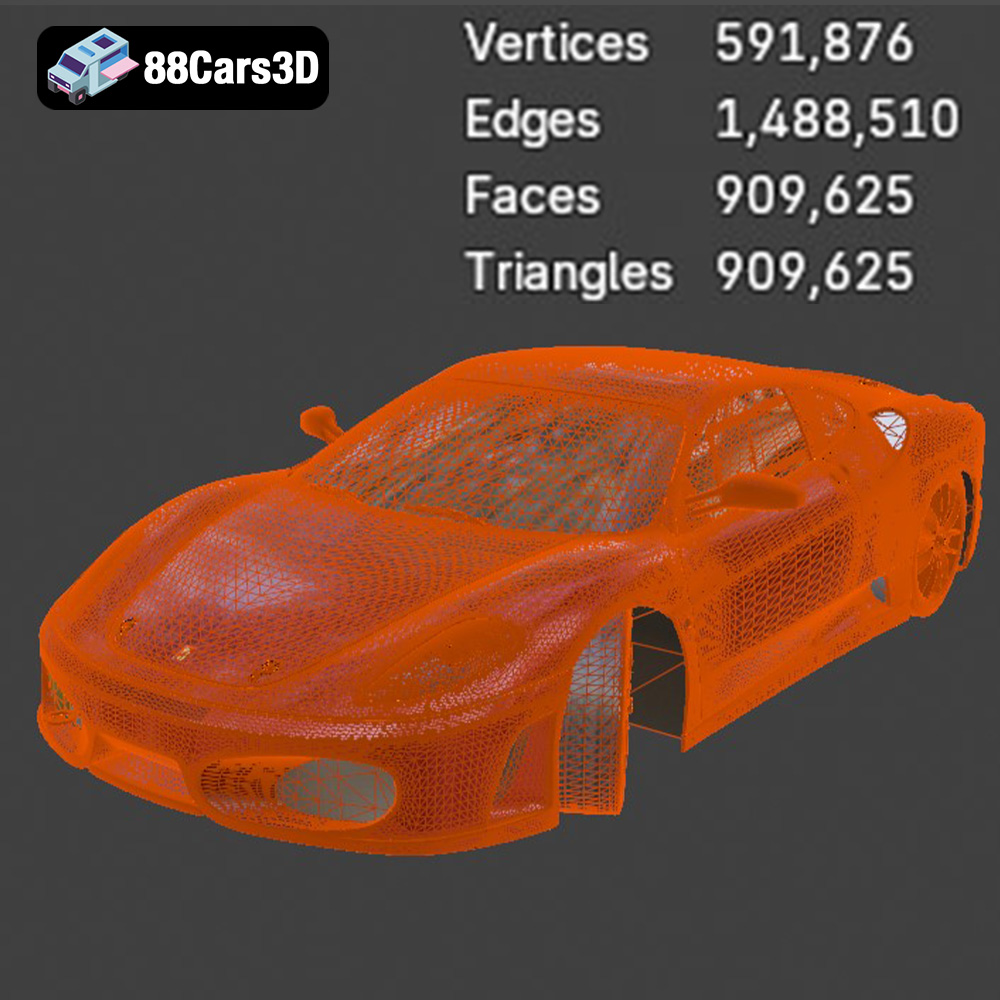
The product description highlights “clean and well-organized mesh structure” and “optimized polygon flow for performance and realism.” This is critical. A high-quality model will typically feature quad-based topology (four-sided polygons), which allows for smoother deformations during animation and easier subdivision for higher detail. For a detailed car model like the Ferrari 450 Italia, a polycount in the range of 200,000 to 500,000 triangles for a render-ready version is common, balancing detail with manageability. For game-ready assets, this would likely be much lower, utilizing LODs to manage fidelity. The “optimized geometry for real-time engines and high-quality renders” implies that the model has been carefully constructed to avoid issues like n-gons (polygons with more than four sides) or overlapping faces, which can cause rendering artifacts or difficulties in game engines. This meticulous approach ensures the model is robust for diverse professional workflows.
Effective UV mapping is just as important as clean geometry. UVs (often called UV coordinates) are 2D coordinates that tell the 3D software how to project a 2D texture onto the 3D surface. “Accurate UV mapping” means that the model’s UVs are laid out efficiently, without stretching, overlapping, or excessive seams, allowing textures to appear crisp and undistorted. This is crucial for applying detailed textures for headlights, taillights, tire sidewalls, or interior materials like carbon fiber and leather. For the Ferrari 450 Italia, proper UVs enable the application of high-resolution PBR textures (Albedo/Base Color, Metallic, Roughness, Normal, Ambient Occlusion maps) that accurately represent the materials, contributing significantly to the photorealistic automotive rendering. The presence of materials and textures, as indicated in the meta description, confirms this attention to detail.
The demand for high-quality 3D car models continues to grow across an expanding array of industries, from cutting-edge game development to immersive AR/VR experiences and detailed automotive rendering. Assets like the Ferrari 450 Italia 2013 3D Model demonstrate the pinnacle of digital craftsmanship, offering meticulous detail, clean topology, and unparalleled versatility.
By understanding the nuances of different file formats – from the editable power of .blend and .max to the interoperability of .fbx and the 3D printing readiness of .stl – professionals can confidently integrate these assets into their pipelines. Whether you’re aiming for photorealistic renders, smooth real-time performance, or tangible scale models, a well-engineered 3D model serves as a robust foundation. The Ferrari 450 Italia 2013 3D Model is not just a digital representation; it’s a powerful tool designed to accelerate creativity and elevate projects to new heights. For those seeking premium 3D car models to drive their next big project, resources like 88cars3d.com offer an excellent starting point for finding assets that meet the highest technical and aesthetic standards.
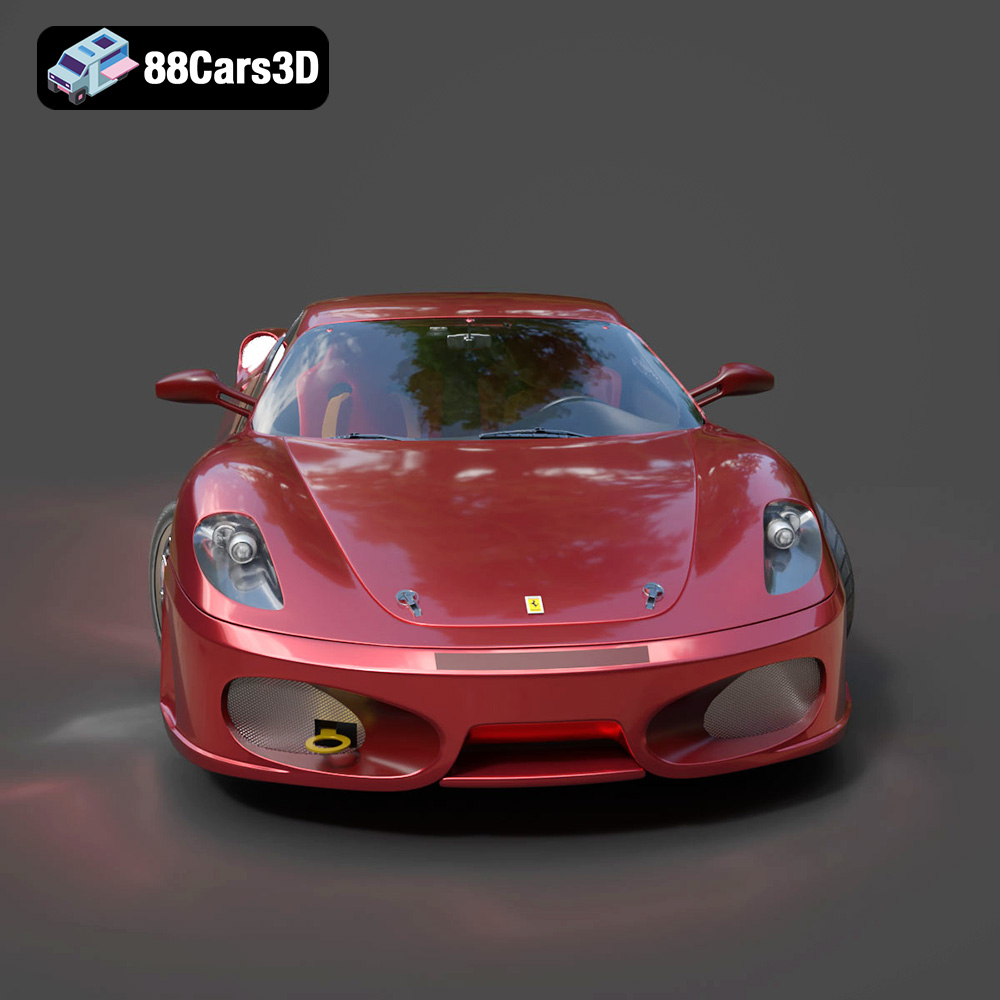
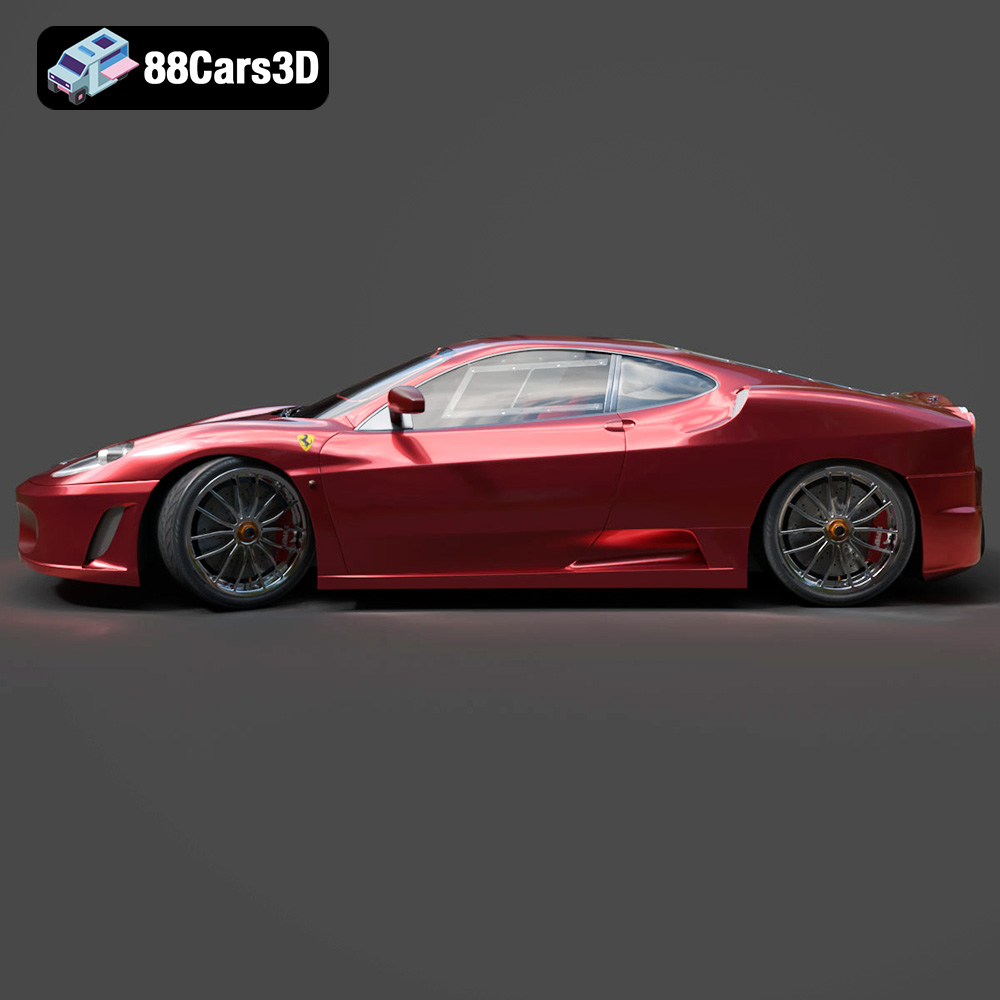
The Ferrari 450 Italia 2013 3D Model is a high-detail digital recreation of the iconic mid-engine Italian supercar engineered for performance, precision, and aerodynamic excellence. Known for its aggressive styling and track-inspired engineering, the 450 Italia delivers a perfect balance of speed, luxury, and driving dynamics. This 3D model accurately represents the vehicle’s sculpted aerodynamic body, signature front fascia, side air intakes, quad exhaust system, detailed alloy wheels, and premium interior layout. Designed with clean topology and real-world proportions, it is ideal for rendering, animation, simulation, game development, and AR/VR automotive visualization.
$9.99
.450italia
.arvr
.automotive
.blend
.car3dmodel
.fbx
.ferrari
.gameasset
.glb
.italiansupercar
.max
.obj
.ply
.racingcar
.rendering
.simulation
.sportsCar
.stl
.supercar
.unreal